South Carolina Hog Trapping Success Rates
The relentless destruction caused by feral hogs can be incredibly frustrating for landowners and hunters across South Carolina. These intelligent, prolific creatures can decimate food plots, root up pastures, and even threaten native wildlife, leaving a trail of costly damage and despair. This guide aims to pull back the curtain on South Carolina hog trapping success rates, offering realistic expectations and practical strategies to increase your odds of reducing these destructive populations on your property.
Understanding What "Success" Truly Means in Hog Trapping
When we talk about "success rates" in hog trapping, it's not as simple as a clear percentage you can look up in a book. Unlike, say, a manufacturing process where success is easily quantifiable, hog trapping is a dynamic endeavor influenced by countless variables. Your personal success rate might look very different from your neighbor's, even just a few miles down the road. It's less about a magic number and more about consistent effort, adaptability, and understanding the local hog population.
Defining Your Trapping Goals
Before you even think about success, you need to define what success looks like for you. Are you trying to eliminate an entire sounder that's been destroying your cornfields? Are you aiming for ongoing population control to minimize damage? Or perhaps you're simply trying to catch a few pigs for the freezer? Each of these goals requires a different approach and will naturally lead to different perceptions of "success." A trapper focused on total eradication of a specific sounder might consider anything less than that a failure, even if they catch a dozen hogs. Meanwhile, someone focused on general population reduction might be thrilled with a consistent trickle of two or three hogs a month.
It's important to be realistic. Feral hogs are incredibly resilient and reproduce at an astonishing rate. Complete eradication is often a monumental, long-term challenge, especially if you're dealing with larger tracts of land or if your neighbors aren't actively managing their hog populations. Think of trapping as a continuous management effort, not a one-and-done solution. Setting clear, achievable goals from the outset will help you manage expectations and celebrate the smaller victories that contribute to overall control.
Why "Success Rates" Are So Variable
The reason there's no easy number for hog trapping success rates boils down to the sheer number of variables at play. Imagine trying to give a single "success rate" for fishing—it depends on the species, the bait, the water, the weather, and the angler's skill! Hog trapping is much the same. The type of trap you use, the bait, the location, the time of year, weather patterns, adjacent land use, and even the specific temperament of the hogs you're targeting all play a huge role.
Furthermore, hogs are smart. They learn quickly. A trap that worked wonders last year might be completely ignored this year if they've had a negative experience or if pressure from other hunters has made them wary. This constant adaptation means that what constitutes a "successful" trapping program often involves learning, experimenting, and adjusting tactics. It's a perpetual chess match, and staying one step ahead of these wily creatures is key.
Key Factors Influencing Your Trapping Success
Maximizing your trapping success in South Carolina comes down to understanding the animals you're pursuing and the environment you're operating in. There are several critical components that, when managed effectively, can significantly boost your catch rates.
Proper Trap Selection and Setup
The type of trap you deploy is foundational to your success. Each has its pros and cons, and the best choice often depends on your specific situation, budget, and the size of the sounders you're dealing with.
Box Traps vs. Corral Traps
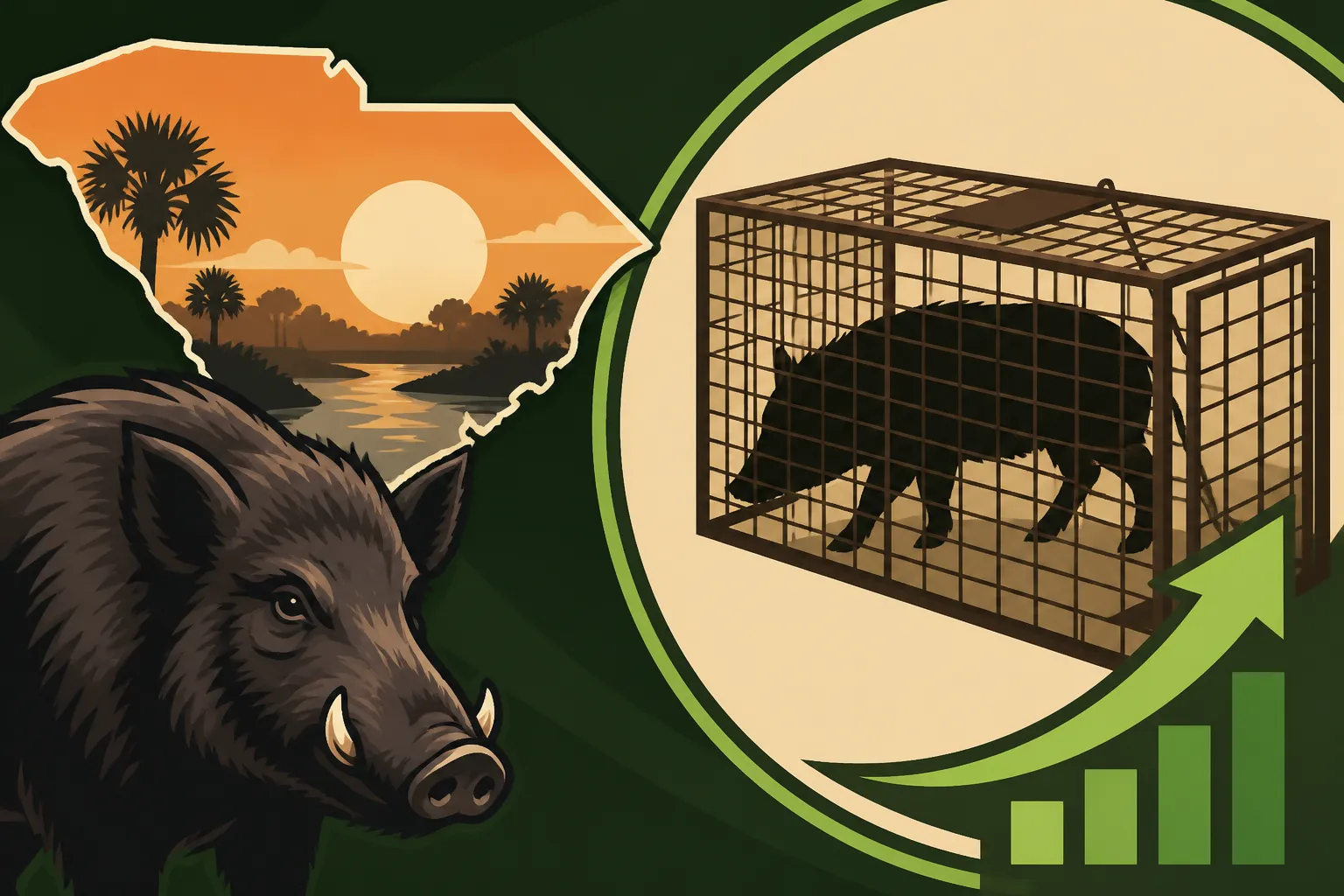
Box traps, typically a single large cage, are common for smaller operations or targeting individual hogs or smaller sounders. They're generally easier to set up and transport, making them a good entry point for many landowners. However, their limited capacity means you might only catch a few hogs at a time, and a large sounder might not all fit inside. If you're consistently catching one or two but seeing twenty hogs in the area, a box trap might be bottlenecking your efforts.
Corral traps, on the other hand, are larger enclosures designed to catch entire sounders. These multi-panel setups can be quite elaborate, often circular or square, with a single, highly sensitive door or gate system. While they require a larger initial investment of time and money to build and deploy, their capacity to remove a whole sounder in one go can dramatically increase your overall success rate in population reduction. Imagine catching 15 hogs in one night versus picking off one or two every few days. The efficiency is undeniable when you're facing significant South Carolina Deer Damage Permits for Farmers and need to make a real dent.
| Trap Type | Advantages | Disadvantages | Best For |
|---|---|---|---|
| Box Trap | Easier to move, lower cost, simpler setup | Limited capacity, hogs can become trap-shy | Individual hogs, small sounders, beginners |
| Corral Trap | Catches entire sounders, highly efficient | Higher cost, complex setup, less portable | Large sounders, long-term population control |
Gate Mechanisms
The gate mechanism is the heart of any hog trap. For box traps, swing gates or guillotine gates are common. For corral traps, continuous catch gates (like saloon doors or a rooter door) are highly effective because they allow multiple hogs to enter over time without resetting the trigger. Snare gates, drop gates, or even remote-controlled gates add another layer of sophistication and can often bypass hog wariness developed from less effective trapping attempts. The key is a mechanism that is reliable, quick, and can't be easily circumvented once triggered. You don't want a smart sow backing out just as the door is dropping.
Strategic Baiting and Pre-Baiting
Bait is your primary attractant, and how you use it can make or break your success. Simply tossing out some corn isn't always enough, especially with wary hogs.
Choosing and Placing Your Bait
Sour corn, often fermented with yeast, is a perennial favorite in South Carolina. The strong scent travels well, and hogs absolutely love it. Other effective baits include cracked corn, acorns (if available naturally and you can collect them), fruits, or even commercial hog attractants. The trick isn't just what you use, but how you present it. Spread bait outside the trap, leading a trail inside, and concentrate a good amount around the trigger mechanism.
Consider the time of year too. In the fall, when acorns are dropping, hogs might be less interested in your corn unless it's truly irresistible. In contrast, during lean times, even plain corn can be a magnet. Late-Season Food Sources for South Carolina Whitetails might also be drawing hogs, so understanding natural food cycles is essential. Don't be afraid to experiment with different baits or mixtures to see what the local sounder prefers.
The Importance of Pre-Baiting
Pre-baiting is arguably one of the most critical, yet often overlooked, steps in successful hog trapping. This involves conditioning hogs to feed regularly and comfortably at a specific location before you ever set the trap. For a week or two (or even longer, depending on how wary the hogs are), you'll bait an open area, allowing the hogs to come and go freely, building their confidence in the food source. Then, you introduce the trap, tying the door open so they can enter and exit without fear, still feeding on the bait inside.
This period of "training" them to the trap's presence is vital. Hogs are incredibly intelligent, and they will avoid anything new or suspicious. By allowing them to repeatedly enter and exit an open trap, they become accustomed to its structure, smell, and feel. Once you see a large portion of the sounder regularly entering and feeding calmly within the trap, that's your cue to set the gate. This patience often yields much higher success rates than simply setting a trap cold.
Strategic Placement and Timing
Where and when you set your trap are just as important as the trap itself. This is where scouting and understanding hog behavior become paramount.
Identifying Prime Trapping Locations
Hogs follow predictable patterns, especially when it comes to food, water, and cover. Look for signs of activity: fresh rooting, wallows, rubs on trees, and tracks. Water sources like creeks, swamps, and ponds are magnets for hogs, especially in warmer months. Food plots, agricultural fields (corn, soybeans, peanuts), and areas with natural mast (oaks, persimmons) are also prime locations. Reading South Carolina Mud for Fresh Deer Movement can also help you identify hog trails, as they often use similar travel corridors.
Think about transition areas—where a thick pine plantation meets a hardwood bottom, or a field edge borders a dense swamp. Hogs often travel these edges for security while moving between bedding and feeding areas. Using tools like GoHunt can be invaluable here. You can look at satellite imagery and topographical maps to identify these natural funnels and likely travel routes before you even step foot on the property. Knowing where those hidden water sources or dense cover areas are can give you a serious leg up.
The Best Time to Trap
While feral hogs are active year-round in South Carolina, certain times can improve your odds. Warmer months often mean increased hog activity around water sources, making those locations particularly effective. Also, consider the agricultural cycle. After crops like corn or peanuts are harvested, hogs lose a major food source and become more reliant on supplemental bait, driving them to your traps.
Conversely, during periods of abundant natural food, like a heavy acorn drop in the fall, hogs might be less interested in your bait. You might still catch some, but your success rate could dip. Pay attention to weather patterns, too. Hogs often increase their feeding activity before a cold front or a heavy rain, so setting your trap with these conditions in mind can be beneficial. Ultimately, consistent trapping efforts throughout the year, adapted to seasonal changes, will yield the best long-term results. South Carolina's Year-Round Hog Rule on Private Land makes it clear you have the flexibility to trap whenever hogs are causing issues.
Optimizing Your Trapping Strategy for South Carolina Hogs
Beyond the basics of trap type and bait, there's a level of nuance and ongoing management required to maintain high success rates and truly impact hog populations.
Adapting to Hog Behavior and Pressure
Hogs are not static targets; they learn and adapt, especially when they feel pressure. What works one month might not work the next.
Dealing with Trap-Shy Hogs
It's almost inevitable that you'll encounter trap-shy hogs. These are individuals, often older boars or sows, who have had a negative experience with a trap or are simply too cautious to enter. This is where patience and persistence really pay off. If hogs are avoiding your trap, revert to pre-baiting mode: tie the door open, make the trap as inviting as possible, and let them feed freely for an extended period. Sometimes, simply moving the trap to a slightly different location can reset their wariness.
Another tactic is to camouflage the trap. Use natural brush, logs, and vegetation to break up its outline and make it blend into the surroundings. The goal is to make it seem like a natural part of their environment. You might even consider using different bait or adding a "cover scent" to mask human odor around the trap. Observing their behavior through trail cameras can provide invaluable clues as to why they're hesitant. A well-placed trail camera can show you exactly who's coming, who's not, and why. Apps like GoHunt can help you mark these camera locations and monitor activity over time.
Managing Ongoing Pressure
If you're hunting or trapping frequently in the same area, hogs will inevitably become more nocturnal and secretive. This is a common challenge, particularly on public lands or smaller private tracts. When hogs become primarily nocturnal, it might be time to shift your strategy. For instance, Night Hunting Hogs With Lights on Private Land can be incredibly effective when trapping alone isn't cutting it. Combining trapping efforts with carefully managed hunting pressure, perhaps only focusing on shooting hogs that are not near your trap, can keep them from becoming entirely trap-shy.
The goal is to maintain pressure without making them completely abandon the area or become so educated that they never enter a trap again. It’s a delicate balance. Sometimes, taking a break from trapping in a particular area for a few weeks can allow them to relax and become more comfortable before you re-introduce the trap.
Leveraging Technology and Best Practices
Modern tools and a commitment to responsible trapping can significantly improve your results.
Trail Cameras and Scouting Tools
Trail cameras are a trapper's best friend. They allow you to monitor bait sites, observe hog traffic patterns, determine sounder size, and identify trap-shy individuals, all without having to disturb the area yourself. Place cameras strategically near your bait site and along travel corridors. The intelligence you gather from these cameras will help you decide when to set your trap, what bait is working best, and how many hogs you might expect to catch.
Beyond cameras, digital mapping tools and scouting apps are invaluable for identifying prime trapping locations. You can use aerial photos to pinpoint thick cover, water sources, and pinch points. Topographical maps help you understand elevation changes that might dictate hog movement. For South Carolina hunters and trappers, understanding the landscape is crucial. Scouting With the Go Outdoors SC App is a great start, and other sophisticated mapping applications can add even more layers of detail, helping you plan your trap placement with precision.
Ethical and Legal Considerations
Responsible hog trapping isn't just about catching hogs; it's about doing so ethically and legally. Always be aware of South Carolina Feral Hog Regulations, which dictate permissible trapping methods and require checking your traps regularly. Regular checks not only ensure the welfare of trapped animals but also allow you to quickly remove caught hogs, preventing them from attracting predators or other hogs becoming wary of a full trap.
It's also crucial to dispatch trapped hogs quickly and humanely. Research and understand the most appropriate methods for your situation. Finally, consider where you will dispose of carcasses or process the meat. Proper disposal helps prevent the spread of disease and reduces attractants for other hogs or predators. South Carolina Carcass Import Restrictions are typically focused on CWD for deer, but good sanitation practices apply across all game.
Learning from Experience and Community
Every trapping effort is a learning opportunity. Keep detailed records of what works and what doesn't.
Documenting Your Efforts
Maintain a logbook of your trapping efforts. Note the date, location, bait used, type of trap, weather conditions, and how many hogs you caught. If a trap failed, try to deduce why. Did the gate malfunction? Did a hog avoid it? Over time, this data will reveal patterns specific to your property and the hogs you're dealing with. You'll start to see which baits are most effective in certain seasons, which trap locations consistently produce, and how long pre-baiting usually takes for your local sounders. This kind of personal data is far more valuable than any generic "success rate" you might find online.
Sharing your experiences (and learning from others) in local hunting clubs or online forums can also be incredibly beneficial. What worked for a fellow trapper in the South Carolina Lowcountry might give you an idea to try. Conversely, you might discover a common challenge that others are also facing, leading to collaborative problem-solving. This community knowledge is a powerful resource in the ongoing battle against feral hogs.
Measuring and Improving Your Personal Success
Ultimately, your success rate in South Carolina hog trapping is a personal metric, one that you measure against your own goals and the unique challenges of your land. Don't get discouraged by low initial numbers; focus on continuous improvement.
Realistic Expectations for Hog Trapping
It's vital to maintain realistic expectations. You're dealing with an incredibly adaptable, fast-reproducing animal. You might catch a dozen hogs one week and then nothing for a month. This isn't necessarily a failure; it might mean you've caught the dominant sounder, and it will take time for a new group to move in or for remaining individuals to relax.
Success in hog trapping often looks like a gradual, sustained reduction in hog damage, rather than an instant eradication. It's a marathon, not a sprint. Celebrate the catches you do make, even if they're small, because every hog removed makes a difference to the land, the wildlife, and your peace of mind. Remember, your local hog population is likely quite high, so even consistent removals might not feel like you're winning, but you are absolutely mitigating damage.
Continuous Improvement and Adaptation
The best trappers are those who are constantly learning and adapting. If a strategy isn't working, don't be afraid to change it. Try a different bait, move the trap, or experiment with a different gate mechanism. Stay informed about new trapping technologies and techniques. Read up on South Carolina Feral Swine Genetics and Origin to better understand their biology, or consider new ways to combine trapping with other management methods.
The battle against feral hogs in South Carolina is ongoing, and while there's no single "success rate" that applies to everyone, a dedicated, informed, and adaptable approach will undoubtedly increase your personal success. It's about patience, observation, and a willingness to learn from every set trap.
Disclaimer
This article is for general informational purposes only and does not constitute professional advice. Laws, prices and regulations vary by location and change over time. Consult a qualified professional for guidance on your specific situation.