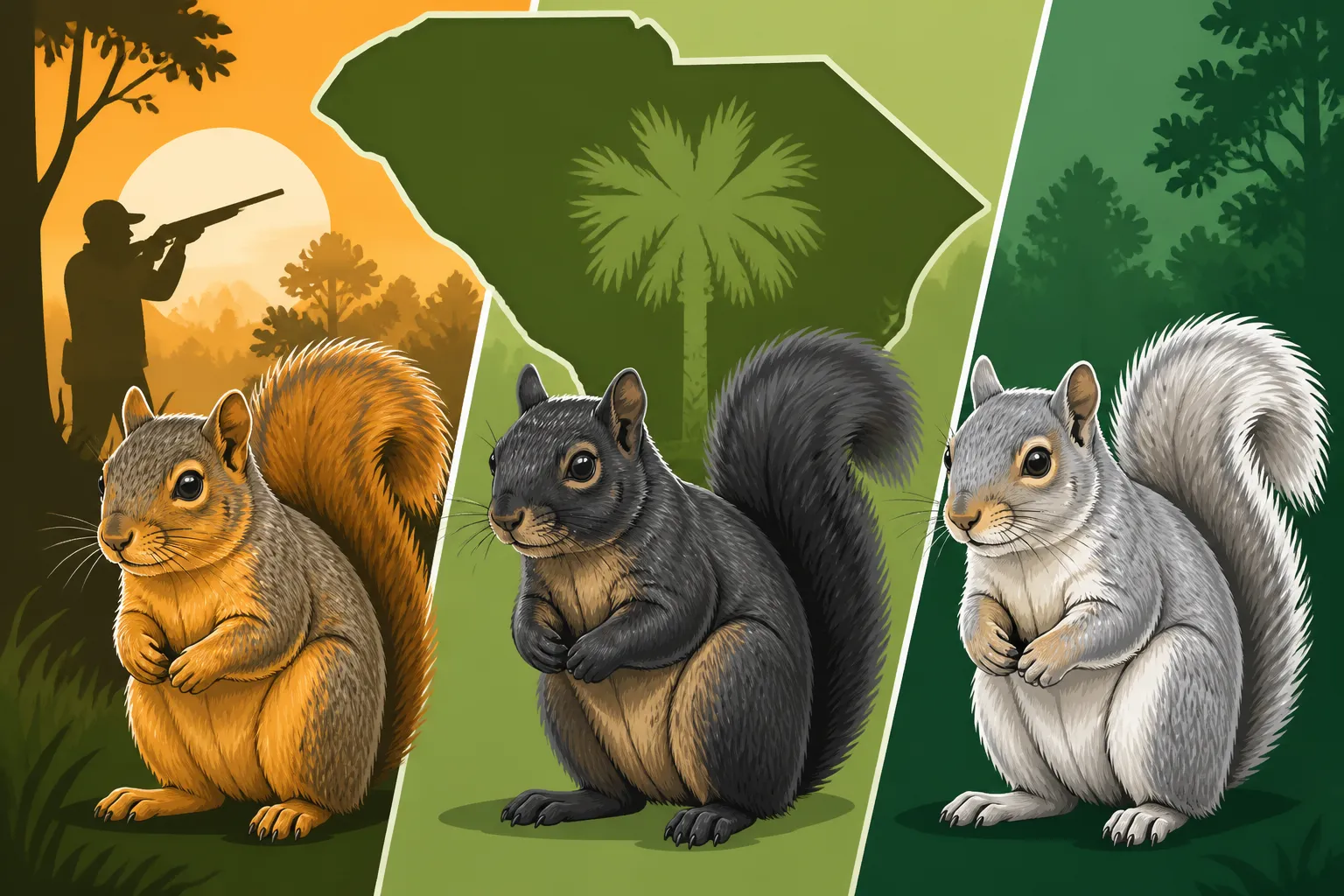
South Carolina Fox Squirrel Color Variations
When you're out in the South Carolina woods, whether you're deer hunting, chasing turkeys, or just enjoying a quiet morning in a treestand, you've probably seen your fair share of squirrels. Most folks picture the common gray squirrel, maybe a little darker or lighter depending on the season, but that's about it. What many hunters don't realize is just how incredibly diverse our fox squirrel populations are, especially when it comes to their striking color variations. It can be a real head-scratcher when you spot one that looks completely different from the last, making you wonder if it's even the same species. This guide is here to shed some light on the fascinating array of coats these magnificent creatures wear, helping you understand what makes them so unique and where you might encounter their many different looks across our beautiful state.
The Striking Diversity of South Carolina Fox Squirrels
It’s easy to lump all squirrels into one category, especially when they’re zipping through the canopy or chattering from a distant oak. But anyone who’s spent enough time really observing our local wildlife knows that the fox squirrel is a species apart, not just in size, but profoundly in its visual presentation. They truly stand out, and their varied coats are a huge part of that distinction.
More Than Just a "Gray" Squirrel
Let's be honest, when most people think "squirrel," they think of the eastern gray squirrel—the common backyard visitor. Grays are smaller, more uniformly colored, typically a salt-and-pepper gray with a lighter belly, and they often travel in groups. Fox squirrels, on the other hand, are the behemoths of the squirrel world in South Carolina. They are significantly larger, often weighing twice as much as a gray, with a much bushier, flatter tail. But beyond their impressive size, it's their astonishing palette of colors that truly sets them apart.
These aren't just subtle shade differences; we're talking about entirely different color patterns that can range from fiery red to deep black, with various markings in between. It's a delightful surprise for any hunter or outdoors enthusiast to stumble upon one of these beautiful animals, and it quickly disabuses you of the notion that all squirrels look alike. They truly add a vibrant splash to the South Carolina landscape. If you're looking for general information on this species, you might be interested in our guide on Gray Versus Fox Squirrels in South Carolina.
Why So Many Colors? Genetics and Geographic Factors
So, why the incredible wardrobe? It boils down to a fascinating interplay of genetics and geography. Fox squirrels, more so than their gray cousins, exhibit a remarkable degree of genetic variation in their coat coloration. This variation is primarily due to different pigment genes at play, influencing the amounts and types of melanin (dark pigment) and pheomelanin (red/yellow pigment) produced in their fur. Some squirrels produce more of one, less of another, leading to a spectrum of colors.
Furthermore, isolated populations or specific environmental pressures over time can lead certain color morphs to become more prevalent in one region than another. While a particular color might help a squirrel camouflage perfectly in a pine savanna, a different shade might offer better concealment in a swampy bottomland. Think about how diverse our state's habitats are—from the mountains to the coast—and it starts to make sense why nature might favor different looks in different locales. The lack of extensive intermingling between some populations can reinforce these localized color patterns, creating truly unique "strains" of fox squirrels.
Common Fox Squirrel Color Phases You'll Encounter
When you're out in the field hunting Squirrel and Small Game Hunting in South Carolina, you're likely to see a few distinct color phases of fox squirrels more often than others. These aren't just random occurrences; they represent common genetic expressions that have proven successful in our diverse South Carolina ecosystems.
The "Typical" Rusty-Bellied Phase
For many South Carolina hunters, the most recognizable fox squirrel is what we might call the "typical" rusty-bellied phase. These squirrels often sport a grayish-brown to reddish-brown coat on their backs, sometimes with a subtle grizzled appearance, and a distinct, vibrant rusty orange or even reddish-brown belly. They'll usually have a dark mask around their eyes, a white nose, and white on the tips of their ears. Their tail is often a mix of black and rusty hairs, creating a beautiful banded effect.
I remember one crisp autumn morning years ago, sitting in a treestand during South Carolina's Zone 4 Coastal Deer Season near McClellanville, when one of these beauties scampered up an old live oak. Its rusty belly was absolutely glowing in the morning sun. You could spot it a mile away against the gray bark. These are the ones you typically find in our vast longleaf pine savannas, mature pine stands, and mixed pine-hardwood forests. They blend surprisingly well into the pine straw and dappled sunlight, but that bright belly is often the dead giveaway when they're climbing or stretching.
The Darker Melanistic and Black Variations
Now, these are the ones that really make people do a double-take! South Carolina is home to some stunning melanistic (all black) fox squirrels. These aren't just dark brown; they are often jet black over their entire body, though sometimes you'll see a flash of white on their nose, muzzle, or the tips of their ears, providing a stark contrast that makes them even more captivating.
Encountering a black fox squirrel is truly a unique experience. I’ve seen them predominantly in parts of the Lowcountry and the Sandhills regions, particularly in areas with dense, shady hardwood bottoms or older pine forests where the understory is dark. They can be incredibly hard to spot in deep shadows, appearing almost like a moving silhouette. These melanistic individuals are a testament to the incredible genetic diversity within the species. While less common statewide than the rusty-bellied morph, if you hunt areas like the Francis Marion National Forest, you might just be lucky enough to catch a glimpse. Remember, no matter the color, their behavior remains the same, so keep an eye out for Reading Cuttings Under an Oak or other signs of their presence.
The Lighter, More Salt-and-Pepper Appearances
On the opposite end of the spectrum from the melanistic morphs, you'll sometimes encounter fox squirrels that are notably lighter in coloration. These can have a more silver-gray or even a faded, "salt-and-pepper" look on their backs, often with a much paler, almost cream-colored or light tan belly. Their facial markings might be less pronounced, and their tails can appear more grayish or blonde with fewer black bands.
These lighter variants tend to blend incredibly well with lighter-barked trees, especially the older, lichen-covered hardwoods, or against the backdrop of drier, sandy soils. I’ve seen these more frequently in the drier, upland parts of the state, though they can pop up anywhere. They're a real challenge to spot sometimes, looking almost ghost-like as they cling motionless to a mottled tree trunk. It's a perfect example of nature's camouflage at work, making you slow down and really study the woods if you want to pick them out.
Spotting the Rarer and Regional Gems
While the common color phases are captivating enough, South Carolina also offers glimpses of truly rare and regionally distinct fox squirrel variations that can make any outdoor excursion feel like a special treasure hunt. These unique individuals are often subjects of local lore and discussion among hunters.
The Nearly White (Leucistic) and Piebald Squirrels
Imagine seeing a flash of white in the deep green woods—it might just be a leucistic or piebald fox squirrel. Leucism is a condition where an animal has reduced pigmentation, resulting in lighter or white fur, but usually with normal eye color (unlike albinism, which involves a total lack of pigment and red eyes). A leucistic fox squirrel might appear creamy white all over, or it might have patches of its typical coloration mixed with large areas of white.
Even rarer are piebald fox squirrels, which exhibit irregular patches of white and pigmented fur. These animals are often striking, with bold patterns of white, black, brown, or rusty orange that can make them look like living mosaics. I’ve only ever seen a couple of these in my decades of hunting in South Carolina, and each sighting felt like winning the wildlife lottery. They are a true marvel to behold and a testament to the endless variations nature can produce. If you ever have the fortune to spot one, it's a moment you won't soon forget, and it reminds you of the incredible diversity within South Carolina Small Game and Furbearers.
Distinct Regional Morphs and Local Legends
Beyond the general color phases, certain regions or even specific counties within South Carolina have earned reputations for hosting fox squirrel populations with particularly distinct morphs. These aren't officially classified subspecies, but rather localized genetic strongholds where a certain color pattern thrives. For instance, some areas in the coastal plain are known for a higher concentration of the darker, almost black individuals with pronounced white noses or "frosty" ears. Hunters who frequent these specific tracts often expect to see these unique squirrels.
There are even anecdotal accounts of "strawberry blond" fox squirrels in some isolated bottomland swamps, with an almost uniform light reddish-orange coat and minimal dark markings. These localized populations often become part of the hunting community's stories, with folks sharing tales of the unique squirrels they’ve seen in their neck of the woods. It's these regional particularities that make exploring new hunting grounds so exciting. You never know what beautiful variation of a fox squirrel you might encounter, adding another layer of intrigue to understanding South Carolina's Four Game Zones and their specific wildlife. To truly appreciate the local nuances of these critters, tools like the 'GoHunt' app can be invaluable for pinpointing specific habitat types and understanding potential areas where these unique squirrels might thrive.
What Fox Squirrel Colors Mean for Hunters
Understanding the diverse color variations of South Carolina's fox squirrels isn't just about appreciation; it can genuinely impact your hunting experience, from identification to strategy, and even to fostering a deeper appreciation for conservation.
Identification Challenges and Opportunities
The sheer variety in fox squirrel coloration can present both challenges and opportunities when you're in the field. Sometimes, in dim light or dense cover, a particularly dark or light morph might briefly trick you into thinking it's a different animal entirely. You might initially mistake a black fox squirrel for a small feral cat or a lighter one for a particularly large gray squirrel, especially if you're not accustomed to the full spectrum of their appearances. This is why positive identification is so crucial for ethical hunting.
However, once you learn to recognize these variations, they become a huge asset. That vibrant rusty belly or stark white nose can be the very feature that helps you quickly and confidently identify a fox squirrel, even at a distance or through scattered foliage. It makes verifying your target much easier, especially during South Carolina Small Game Season Rules when you're looking to fill the pot. This distinctiveness can also make them incredibly fun to pursue, as each successful identification feels like a small victory. When in doubt, a quick check of resources via the Go Outdoors SC App can help confirm species details.
Habitat Clues and Hunting Strategy
While fox squirrels, regardless of color, tend to favor mature woodlands with a good mast crop, observing the predominant color variations in certain areas can sometimes offer subtle habitat clues. For example, if you consistently notice a higher number of dark-phase fox squirrels in a particular river bottom, it might suggest that the dense, shady environment of that Squirrel Hunting South Carolina Bottomland Hardwoods area favors their dark camouflage. Conversely, if the lighter, more grizzled types are common in open pine stands, it might hint at optimal habitat in those Hunting Longleaf Pine Savanna for Deer areas.
This isn't a hard-and-fast rule, but it can be an interesting factor to consider as you scout. Knowing that a certain color morph is common in a specific location can even influence your choice of hunting gear or camouflage, though perhaps more for aesthetic enjoyment than practical necessity. The most crucial factor, of course, is locating their food sources, like oaks dropping acorns. If you understand Squirrel Hunting a South Carolina Oak Ridge, you'll find squirrels of all colors congregating there. Utilizing mapping tools, such as those found on 'GoHunt', can help you scout and identify potential hot spots for all fox squirrel variants by analyzing tree types and terrain features before you even step foot in the woods.
Conservation and Appreciation
Ultimately, the incredible color variations of South Carolina's fox squirrels are a reminder of the rich biodiversity we are so fortunate to have in our state. Every fox squirrel, from the fiery red to the deep black, is part of the same healthy, vibrant population. As hunters, we have a responsibility to appreciate and conserve these fascinating animals. It’s not just about the harvest; it’s about understanding the ecosystem and the unique creatures within it.
Taking the time to observe these differences, perhaps even noting down your sightings or snapping a photo (when not actively hunting), adds an entirely new dimension to your outdoor adventures. It deepens your connection to the land and its inhabitants. The South Carolina Squirrel Harvest Numbers show these populations are robust, and by respecting bag limits and season dates, we ensure that future generations can also marvel at the full spectrum of fox squirrel colors. It’s a testament to the wildness of South Carolina that such varied beauty can be found literally clinging to the trees.
| Fox Squirrel Color Variation | Typical Back Color | Typical Belly Color | Common Markings | Preferred Habitat Tendencies |
|---|---|---|---|---|
| Rusty-Bellied | Gray-brown/Reddish | Bright rusty-orange | Dark face mask, white nose/ear tips | Pine savannas, mixed pine-hardwoods |
| Melanistic (Black) | Jet black | Jet black | White nose/muzzle/ear tips (optional) | Dense, shady hardwood bottoms, older pine forests |
| Lighter/Grizzled | Silver-gray/Faded | Cream/Light tan | Less pronounced facial markings | Drier uplands, lighter-barked trees, sandy areas |
| Leucistic/Piebald | Patches of white/normal | Patches of white/normal | Irregular white patches (piebald) | Rare, can occur anywhere, highly localized |
Disclaimer
This article is for general informational purposes only and does not constitute professional advice. Laws, prices and regulations vary by location and change over time. Consult a qualified professional for guidance on your specific situation.