South Carolina Snapping Turtle Harvest Rules
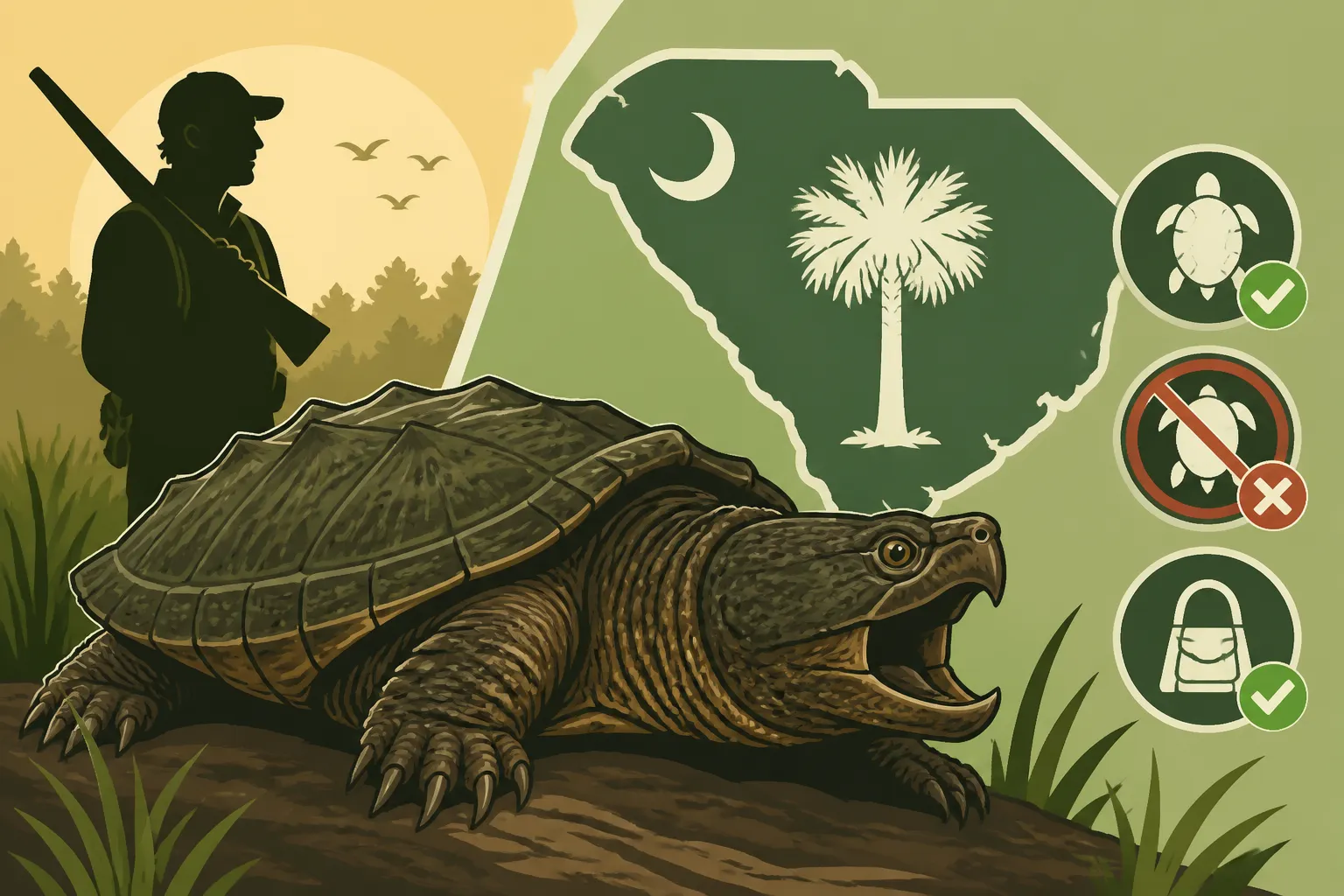
There's a fascinating world of wild game beyond the usual deer and turkey in South Carolina, and for many outdoor enthusiasts, the snapping turtle holds a unique appeal. Whether you're drawn to the challenge of catching them or the legendary flavor of their meat, understanding the rules and regulations for harvesting snapping turtles in our state is absolutely essential. It's not always as straightforward as checking deer season dates, and getting it wrong can lead to serious consequences. This guide is here to clear up the confusion, walking you through the ins and outs of legally and ethically harvesting snapping turtles in the Palmetto State.
Navigating South Carolina's Snapping Turtle Regulations
Many hunters and outdoors folks tend to focus their energy on the big-ticket game species — the whitetails, the gobblers, maybe a few ducks. But if you're like me, you sometimes wonder about the other critters out there, especially those that aren't typically pursued with a rifle or shotgun, but still offer a fantastic connection to the wild and, let's be honest, some mighty fine eating. Snapping turtles, particularly the common snapping turtle, fit this bill perfectly. They're ancient, resilient, and abundant in many of our waterways, making them a curious target for those looking to expand their outdoor repertoire. The thing is, because they're not a "traditional" game animal, the regulations surrounding their harvest can feel a bit murky, leaving many folks scratching their heads.
The South Carolina Department of Natural Resources (SCDNR) is the authority here, and they've got rules in place for almost everything that swims, crawls, or flies in our state. These regulations aren't just there to make things complicated; they're vital for ensuring the sustainable harvest of all our wildlife resources, including snapping turtles. It's a common misconception to think that if an animal isn't classified as game, it's fair game for anything goes. That's a dangerous assumption to make, and it's simply not true, especially when you consider potential impacts on local populations or the methods used for capture. We want to enjoy our natural resources for generations, and that means respecting the framework SCDNR provides.
Understanding these rules isn't just about avoiding a ticket; it's about being a responsible, ethical outdoors person. Nobody wants to unintentionally harm a population or break a law out of ignorance. This is where doing your homework really pays off. While you might use general outdoor platforms like GoHunt for broader hunting information or gear reviews, for specific, up-to-the-minute regulations on snapping turtles, you'll always want to cross-reference with the official SCDNR website or give them a call. They are the definitive source for what's legal and what's not in South Carolina.
The Nuances of Non-Game Species
Snapping turtles fall into that interesting category of "non-game" species, which means they aren't managed with the same season structures and bag limits as deer or ducks. However, that doesn't mean there's a free-for-all. SCDNR often has regulations governing the methods of take, where you can harvest them, and sometimes even commercial harvest limits. The state recognizes the ecological role these creatures play and also the potential for over-harvest if left completely unregulated, especially given their slow reproductive rates compared to, say, a rabbit.
It's tempting to think that since they're common, the rules are lax. But imagine if everyone decided to start trapping turtles indiscriminately without any oversight. Local populations could quickly become strained. SCDNR's approach to non-game species often involves a balance: allowing recreational take with reasonable guidelines, while putting stricter controls on any activity that could lead to widespread commercial exploitation. This protective layer ensures that these fascinating reptiles continue to thrive in our swamps, rivers, and ponds.
So, when you're planning your turtle outing, think of it less like a deer hunt with its precise dates and zones, and more like a fishing trip where certain gear is allowed or prohibited, and some waters have special rules. The details matter, and overlooking them can turn a fun day into a frustrating or even legally troublesome one. Always remember that conservation is everyone's responsibility, whether you're chasing trophy bucks or trying to catch a snapping turtle for a stew.
Defining Recreational Versus Commercial Harvest
One of the most crucial distinctions you'll encounter when looking into snapping turtle harvest in South Carolina is the difference between recreational and commercial activities. This isn't just a minor detail; it's the foundation upon which most regulations are built, and it significantly impacts what licenses you need, what methods you can use, and how many turtles you can take.
For the average person, like you and me, who might want to catch a few snapping turtles for personal consumption, the rules are typically designed to be accessible but still responsible. You'll likely fall under recreational guidelines, which generally require a valid South Carolina fishing or hunting license (it's always best to check if a specific "trapping" or "freshwater commercial fishing" license component is needed for the method you intend to use). These rules might specify legal methods of capture, general operating times, and perhaps some broad possession guidelines. The intent here is to allow individuals to enjoy the resource without creating undue pressure on the population. If you're wondering about South Carolina Hunting Licenses and What They Cost, that's a great place to start your overall understanding, but be prepared for potential additional permits specific to turtle trapping if you delve into those methods.
Commercial harvest, on the other hand, is an entirely different beast. If your intention is to sell snapping turtles, their meat, or any products derived from them, you are entering the realm of commercial fishing/trapping. This requires specific commercial licenses, which come with their own set of fees, application processes, and often very stringent reporting requirements. Commercial operations have the capacity to harvest a much larger volume of animals, and therefore, they are subjected to much closer scrutiny and regulation by SCDNR to prevent overexploitation. These rules might include specific quotas, more detailed trap specifications, tagging systems, and regular reporting of catch numbers. You absolutely cannot assume your recreational license covers commercial activity; that's a surefire way to get into legal trouble.
The distinction is critical because the state's management goals shift dramatically. For recreational take, the goal is often to provide opportunity. For commercial take, the goal is to manage a sustainable industry. If you're ever in doubt about whether your activity crosses the line into commercial, it's always best to err on the side of caution and consult SCDNR directly. Better safe than sorry when dealing with regulations that protect our natural heritage.
Permissible Methods and Locations for Snapping Turtles
Alright, so you've got your license in order and you understand the difference between recreational and commercial harvest. The next big question is: how and where can you actually catch these prehistoric beauties? Just like with any other form of hunting or fishing in South Carolina, there are specific legal methods and designated areas where you can pursue snapping turtles. This isn't a free-for-all, and understanding these specifics is crucial to staying on the right side of the law and ensuring a safe, ethical harvest.
Think about it: you wouldn't go Spring Turkey Hunting in South Carolina with a net, right? Different species, different rules, and that certainly applies to snapping turtles. The methods permitted are designed to be effective for the species while minimizing harm to non-target animals and ensuring a humane take. Ignoring these guidelines isn't just illegal; it's irresponsible.
Legal Means of Taking
When it comes to harvesting snapping turtles in South Carolina, the how is incredibly important. You can't just employ any method that strikes your fancy. SCDNR typically outlines very specific legal means of taking to ensure the welfare of the animals and to manage the resource effectively. Common legal methods often include hand-capture, dip nets, gigs, and various types of traps.
Trapping is by far one of the most popular and effective methods for catching snapping turtles. These aren't your typical cage traps for raccoons; we're talking about specialized turtle traps, often designed as baited hoop nets or box traps that sit submerged in the water. If you're going this route, it's absolutely paramount to understand the specific regulations regarding trap construction. This can include mesh size, entrance design, and even requirements for labeling your traps with your name and address. Why the labeling? So that wildlife officers can easily identify who owns the trap and ensure it's being checked regularly. Leaving a trap unchecked for extended periods is not only unethical, leading to unnecessary suffering for any trapped animal, but it's also often illegal. Regular checks are a sign of a responsible trapper.
While some might consider using firearms, particularly small calibers, for dispatching turtles, this is generally not a method for taking them recreationally in the water, nor is it often permitted in public waterways due to safety concerns and discharge regulations. Firearms are primarily governed by rules related to deer or other game; you'll want to remember that South Carolina Legal Firearms for Deer Hunting doesn't automatically apply to all other species or situations. Gigs or spears, however, can be legal for taking turtles in many areas, particularly at night with the aid of a light, allowing for a direct and often humane dispatch. Again, verify the specifics for your intended location and time of day, as local ordinances can add layers to state regulations.
Where You Can Hunt Them: Public vs. Private Lands
Just like chasing a deer or a hog, where you can legally pursue snapping turtles in South Carolina depends heavily on land ownership. This is a distinction that every hunter and trapper needs to understand intimately, whether they're going after big game or something a little more niche.
On private land, if you have explicit, clear permission from the landowner, your ability to harvest snapping turtles will primarily be governed by the statewide SCDNR regulations. This often means fewer specific local restrictions than you might encounter on public lands. Obtaining Getting Private Land Permission in South Carolina is a foundational step for nearly any hunting or trapping activity, and turtle harvesting is no exception. A verbal "sure, go ahead" might suffice, but a written permission slip is always a better idea to avoid any misunderstandings or potential conflicts. Remember, just because you have permission to hunt deer doesn't automatically mean you have permission to set turtle traps, so be specific in your request.
Public lands and waters, however, are a different ballgame. While many of South Carolina's public waterways are generally open for various forms of fishing and trapping, specific Wildlife Management Areas (WMAs) or other public hunting lands can have their own unique, often more restrictive, regulations concerning turtle harvest. It is never safe to assume that simply because a WMA is open for traditional hunting activities, it is also open for setting turtle traps or gigging. Some WMAs might prohibit it entirely, or only allow certain methods during very specific times. You absolutely need to consult the individual WMA regulations, which are usually available on the SCDNR website or via the Go Outdoors SC app. Understanding the general landscape of Public Hunting Land in South Carolina is a good start, but you must drill down to the specifics for each WMA. For example, some municipal lakes or state parks might have blanket bans on turtle harvesting, regardless of broader state regulations, often for public safety, recreational use conflicts, or local conservation initiatives.
Always, always do your homework before you ever put a trap in the water or wade into a creek. A quick call to the local SCDNR office or a thorough review of their online regulations can save you a world of trouble. Don't let a lack of preparation spoil your outing.
Size, Limits, and Responsible Harvest Practices
You've identified the right species, you know how you can catch them, and you've found a legal spot. Now comes the crucial part: understanding how many you can take and what constitutes responsible harvesting. With snapping turtles, like any wild resource, ethical practice goes hand-in-hand with legal compliance. It's about ensuring that these incredible creatures continue to be a part of South Carolina's ecosystems for years to come.
Many game animals have very clear, easy-to-understand bag limits – one deer per day, three turkeys per season, and so on. Snapping turtles, being a non-game species, can sometimes have slightly different approaches to limits, which means you need to pay even closer attention to the fine print.
Understanding Size and Possession Limits
Unlike deer or turkey, where daily bag limits are strictly defined, snapping turtles in South Carolina sometimes have regulations that focus more on overall possession limits or minimum size requirements for recreational harvest. It's crucial to check if there are any specific minimum carapace (shell) length requirements. These are put in place for a very good reason: to ensure that turtles have the opportunity to reach reproductive maturity before being harvested. Taking only larger, mature individuals helps sustain the population by allowing younger turtles to breed and contribute to the next generation. It's a fundamental principle of wildlife management.
Possession limits are another key factor. This isn't just about how many turtles you can catch in a single day, but the total number you can have in your possession, whether in your cooler, in your freezer at home, or during transit. For recreational harvesters, these limits are generally generous enough for personal use, but they exist to prevent individuals from stockpiling or skirting commercial regulations. For commercial operations, these limits are often much stricter, coupled with precise record-keeping and adherence to quotas that are carefully monitored by SCDNR. It's important to differentiate between a daily catch limit (if one exists) and an overall possession limit, which can be easily exceeded if you're not paying attention.
Beyond specific numbers, you also need to be vigilant about species identification. South Carolina is home to many turtle species, and some look vaguely similar to snapping turtles but are protected. For example, while not abundant, some other large aquatic turtles might be mistaken for snappers. Misidentification, even accidental, can lead to serious legal penalties. Just as you'd never want to accidentally shoot a protected songbird while Waterfowl Hunting South Carolina's Coast, you wouldn't want to harvest a protected turtle. Always be 100% certain of your target species before you take it. When in doubt, let it go.
The Importance of Ethical Harvest and Conservation
Hunting and trapping are time-honored traditions, but they come with a profound responsibility: to respect the animal and the resource. Even with a species as robust and seemingly abundant as the common snapping turtle, practicing ethical harvest is paramount to conservation. This means committing to a quick, humane dispatch of any animal you take. Nobody wants to see an animal suffer unnecessarily. Having the right tools and knowing how to use them effectively for dispatch is part of that responsibility.
Conservation goes beyond just legal limits; it's about understanding the role these animals play in the ecosystem. Snapping turtles are valuable scavengers and opportunistic predators, helping to keep waterways clean and regulate populations of other aquatic life. An unsustainable harvest, even if it technically stays within a poorly defined limit, could disrupt the local ecological balance. This is why SCDNR constantly monitors populations and adjusts regulations when necessary – they're looking at the bigger picture.
Furthermore, responsible practices extend to your equipment. If you're using traps, they should be designed and set to minimize the capture of non-target species. Regular checking of traps is not just a legal requirement but an ethical one, ensuring that any trapped animal, whether a target or non-target species, is not left to suffer. Being a responsible outdoors person means doing your research, checking with official sources, and considering the broader impact of your actions. Just like packing the right Meat Care Gear for South Carolina Hunters is essential for any game, having the right mindset for ethical harvest is equally important for snapping turtles. You want to make sure the resource is there for others, and for yourself, in the years to come.
Practical Considerations and Best Practices
So, you're ready to venture out and try your hand at harvesting snapping turtles. Beyond the licenses and regulations, there are some really practical considerations and best practices that will make your experience more successful, safer, and ultimately more enjoyable. It's about applying common sense and good outdoor skills to a unique pursuit.
From correctly identifying your target to safely handling and processing your catch, these tips can make all the difference. Sometimes, the difference between a successful outing and a frustrating one comes down to the small details and the knowledge you bring with you.
Identifying Your Target: Snappers vs. Other Turtles
I cannot stress this enough: proper identification is absolutely crucial when you're targeting snapping turtles in South Carolina. The common snapping turtle (Chelydra serpentina) is quite distinctive once you know what to look for, but in murky water, low light, or if you're just not familiar with them, it's easy to make a mistake. They have that rugged, almost prehistoric appearance with a coarse, ridged shell, powerful jaws, and a long, often serrated tail.
However, South Carolina is home to a diverse array of other turtle species, many of which are protected and cannot be harvested. You absolutely do not want to accidentally catch a protected species like a bog turtle (though far less likely to be mistaken for a snapper), certain cooters, or even a softshell turtle, which, while not protected, might not be what you're after. While the alligator snapping turtle (Macrochelys temminckii) is mostly found in other states, it's a good example of a highly protected species that, if encountered, should be left alone.
Spend some time studying a good field guide or using a reliable identification app before you head out. Pay close attention to shell shape, color patterns, and specific distinguishing features. The aggressive nature of a common snapping turtle when handled out of water is also a strong clue—they live up to their name! Other large turtles are more likely to retract into their shell when threatened. If you have even an ounce of doubt about the species you've caught, the safest and most ethical choice is always to release it unharmed. This diligence is just as important as Scouting South Carolina Public Land Before Season for deer; knowing your quarry is paramount.
Handling and Processing Your Catch
Once you've successfully harvested a snapping turtle, the job isn't over. In fact, some of the most critical steps, and potentially dangerous ones, come next: handling and processing your catch. These animals are incredibly powerful, and their bite can be severe, even after they appear to be dispatched, due to muscle reflexes. Always approach with extreme caution. Specialized tools, such as turtle tongs or very thick, cut-resistant gloves, are highly recommended. A quick, humane dispatch is essential, often achieved through a sharp, decisive blow to the head or careful severing of the spinal cord.
Processing a snapping turtle for meat is an art form in itself, and it's definitely not for the faint of heart. Many old-timers swear the meat has "seven flavors," referring to the different textures and tastes from various parts of the body. You'll need sturdy knives, possibly a small hatchet or cleaver for the tougher sections, and a solid understanding of turtle anatomy. The main goal is to carefully remove the four leg sections, the neck meat, and sometimes the tail meat, all while separating it cleanly from the shell and internal organs. Be prepared for a messy job; it's best done outdoors with easy access to water for rinsing. Some hunters might even adapt skills learned from Field Dressing a Deer in Warm Weather to keep things clean and cool.
After butchering, the meat needs to be properly cleaned and stored. Many folks advocate for soaking the meat in saltwater, vinegar, or even buttermilk for a period (hours to overnight) to draw out any impurities or "wild" flavor. Like any wild game, proper chilling and storage are absolutely critical to prevent spoilage, especially given South Carolina's often warm and humid climate. Having a good cooler with plenty of ice is non-negotiable. Whether you're researching traditional recipes with a tool like GoHunt or relying on family traditions, knowing how to care for your wild game ensures it becomes a delicious meal rather than wasted effort.
Snapping Turtle Harvest Regulations at a Glance
For a quick reference, here's a summary of general aspects often seen in snapping turtle regulations, contrasting recreational and commercial approaches in South Carolina. Always consult official SCDNR resources for the most current and specific details before harvesting.
| Feature | Recreational Snapping Turtle Harvest | Commercial Snapping Turtle Harvest |
|---|---|---|
| Primary Purpose | Personal consumption, sport, hobby | Sale of meat, products, live animals |
| License Type | General SC hunting/fishing license (verify specific needs for trapping/methods) | Specific SC commercial freshwater fishing/trapping license |
| Season/Limits | Often no statewide closed season; check for possession/size limits | May have specific open/closed seasons, strict quotas, and size limits |
| Methods Allowed | Hand-capture, dip nets, gigs, certain baited traps (verify construction & labeling rules) | Specific trap types, construction, labeling, and check-in frequency often more strictly regulated |
| Reporting | Generally not required for recreational take | Mandatory, detailed harvest reporting often required |
| Equipment | Basic personal gear (gloves, tongs, cooler, knives) | Specialized commercial traps, processing equipment, transport, tags |
| Land Access | Private land with permission; some public waters/WMAs (verify specific WMA rules) | Private land with permission; designated commercial areas often apply to certain public waters |
Disclaimer
This article is for general informational purposes only and does not constitute professional advice. Laws, prices and regulations vary by location and change over time. Consult a qualified professional for guidance on your specific situation.