South Carolina Statewide Antlerless Bag Limit
It's no secret that keeping up with South Carolina's deer hunting regulations can sometimes feel like trying to hit a moving target, especially when it comes to the nitty-gritty of antlerless deer limits. Many of us have stood around the truck after a hunt, scratching our heads, wondering exactly how many does we can legally harvest in a day or throughout the season. The rules can seem to shift depending on where you are or what kind of land you're hunting. This guide is designed to cut through that confusion, offering a clear, comprehensive breakdown of the South Carolina statewide antlerless bag limit so you can hunt confidently and responsibly, always staying within the bounds of the law.
Understanding the "Why" Behind Antlerless Limits
Before we dive deep into the specific numbers and rules, it’s really helpful to understand why these antlerless limits are in place. It's not just about making things complicated for hunters; it's a critical part of a much larger, science-backed effort to keep our deer herd healthy and balanced for generations to come. When you look at the landscape of deer management in South Carolina, every regulation is a piece of a carefully constructed puzzle.
The Role of Does in Deer Population Management
Does are, quite simply, the engine of the deer population. They are the breeders, the fawners, and the primary drivers of herd growth. If you have too many does, the population can explode quickly, leading to a host of problems that impact not just the deer themselves but also their habitat and even human communities. Think about it: an overpopulated area means more mouths competing for the same limited food sources. This can lead to smaller, less healthy deer, reduced antler quality in bucks, and an increased susceptibility to diseases like EHD. We've seen years with significant EHD Die-Offs in South Carolina Deer, and while not solely caused by overpopulation, high densities can exacerbate such outbreaks.
Moreover, an overabundance of deer can cause significant agricultural damage, impacting farmers' livelihoods, and increase deer-vehicle collisions on our roads, which nobody wants. By establishing judicious antlerless limits, wildlife managers can effectively control the reproductive potential of the herd. It’s a proactive measure to prevent these issues, ensuring that the number of deer stays within the carrying capacity of the land. This allows for a more stable, robust population that provides better hunting opportunities and maintains ecological balance. It’s all about finding that sweet spot where the deer thrive without negatively impacting their environment or our communities.
Balancing Harvest with Herd Health
Striking the right balance between hunter opportunity and herd health is a delicate dance, and antlerless limits are a key step in that choreography. The South Carolina Department of Natural Resources (SCDNR) constantly monitors deer populations, looking at factors like fawn recruitment, buck-to-doe ratios, and habitat conditions across the state. This data helps them determine how many antlerless deer can be harvested without jeopardizing the long-term health of the herd. When deer numbers are high, increasing antlerless harvest is a vital tool to bring the population back into balance. It reduces competition for food, which leads to healthier deer, larger body weights, and often, better antler development in bucks because they're getting adequate nutrition.
On the flip side, if certain areas see a decline in deer numbers, perhaps due to habitat loss or severe weather, adjusting the antlerless limits might be necessary to allow the herd to rebound. This isn't just about the current season; it's about sustainable hunting for the future. As hunters, participating in antlerless harvest, especially in areas identified by SCDNR as needing population control, directly contributes to this conservation effort. It ensures that the resource we cherish remains strong and healthy, year after year. Understanding this foundational principle helps us appreciate why these regulations, which might seem cumbersome at first glance, are absolutely essential for the continued vibrancy of South Carolina's deer hunting tradition.
The Statewide Antlerless Bag Limit: What You Need to Know
Alright, let's get down to brass tacks regarding the actual numbers. The core of South Carolina's antlerless deer regulation is designed to be relatively straightforward for private land, though exceptions and specifics certainly exist for public lands. For many hunters, this is the most important part of the puzzle.
The Core Regulation for Private Land
Here's the essential takeaway for most private land hunters: for Zones 2, 3, and 4 in South Carolina, there is no daily bag limit on antlerless deer taken with a valid tag. Yes, you read that right. In these zones, you are permitted to harvest up to two antlerless deer per day, provided you have the appropriate antlerless tags for each deer. This is a significant difference from many other states that have strict daily or even weekly limits regardless of available tags. However, it's crucial to remember that this "two-doe-per-day" rule isn't unlimited; it's constrained by your total number of available antlerless tags.
Each resident hunter typically receives eight individual antlerless tags when they purchase their Big Game Permit, and non-residents receive four. These tags are your currency, so to speak. If you want to take two does in a day, you must have two unused antlerless tags to affix to them. You can't just keep shooting until you run out of daylight; you run out of tags. The goal here is to give hunters flexibility to manage deer on their private property, especially when you consider that South Carolina Deer Season Structure Explained spans a significant portion of the year, particularly in the coastal zones. This flexibility is a powerful tool for landowners and hunters to actively reduce deer numbers where needed, promoting a healthier herd. Just make sure you understand the nuances of how many antlerless deer you can take per day.
WMA Specifics and Special Hunts
Now, where things get a bit more localized and often more restrictive is on Wildlife Management Areas (WMAs) and during specific quota hunts. Unlike the general private land rule, WMAs frequently have their own, more stringent bag limits, often including daily and seasonal caps on antlerless deer that are far lower than what's permitted on private land. This is primarily because WMAs are public lands that experience higher hunting pressure and are managed for broader ecological goals, often with more intensive habitat management strategies.
For example, a WMA might only allow one antlerless deer per day, or even one per season, and often only during specific dates or through special draw hunts. These regulations are designed to distribute hunting pressure, maintain quality deer populations on public land, and ensure fair chase opportunities for a larger number of hunters. Before you ever step foot on a WMA, it is absolutely imperative that you check the specific regulations for that particular WMA. You can find detailed WMA regulations and maps on the SCDNR website or through an application like GoHunt, which can help you stay current on localized rules. These rules can be different even within the same game zone, so don't assume the WMA you hunted last year has the exact same rules this year. Failing to check the specific WMA rules can quickly turn a successful hunt into a costly citation. Always cross-reference your hunting plans with the latest WMA rules to avoid any unwelcome surprises. Remember, knowing your South Carolina WMA Permit Requirements is just as important as knowing the bag limits.
Daily Versus Annual Limits: Clearing Up the Confusion
One of the biggest sources of confusion for hunters in South Carolina revolves around the distinction between daily bag limits and annual tag limits, especially concerning antlerless deer. It's a common point of discussion around the campfire, and getting it right is crucial for legal and ethical hunting.
The "Two-Doe-Per-Day" Rule Explained
Let's really dig into this "two-doe-per-day" rule. On private lands in Game Zones 2, 3, and 4, South Carolina essentially says, "If you have the tags, you can take them." This means if you head out on a prime morning hunt in the Lowcountry, and the does are moving, you could theoretically harvest two antlerless deer before lunch. The key, however, lies entirely with your antlerless deer tags. Each deer harvested, whether antlered or antlerless, must have a valid tag immediately affixed to it. So, if you've got your eight resident antlerless tags at the start of the season, and you take two does on opening day, you've now used two tags, leaving you with six.
There's no additional statewide daily restriction beyond the fact that you need a physical tag for each animal. This system offers incredible flexibility, especially for managing localized overpopulation. For instance, if you're hunting a particular property where deer numbers are high, and browse lines are evident, you can be aggressive in your antlerless harvest, within your tag limits. You don't have to wait days between successful doe harvests, which can be a huge advantage for proactive herd management. This approach also allows hunters to make the most of limited hunting time, turning a productive day into a significant contribution to herd balancing. Just be mindful of your total tag count and ensure you immediately validate and attach the tag to prevent any issues with law enforcement.
When the Statewide Rule Doesn't Apply (Exemptions)
While the "two-doe-per-day" rule applies broadly to private lands in Zones 2, 3, and 4, there are vital exceptions that every hunter needs to be aware of. The most significant exception is Game Zone 1, located in the Upstate. In Zone 1, hunters are limited to a total of two antlerless deer per season, regardless of how many antlerless tags they possess. This is a critical difference and reflects the typically lower deer densities and different habitat characteristics of the mountainous Upstate region compared to the rest of the state. So, if you're used to hunting the Lowcountry, but venture up to the mountains, you absolutely must adjust your expectations and harvest strategy. For a deeper understanding of these geographical distinctions, checking out South Carolina's Four Game Zones can be incredibly helpful.
Beyond Zone 1, the other major exemption, as mentioned earlier, is Wildlife Management Areas (WMAs). WMA regulations are always more restrictive than private land rules. Most WMAs will have their own specific daily and/or seasonal antlerless bag limits, and these are often much lower than the private land allowances. For example, some WMAs might only allow one antlerless deer per hunt, or only during specific hunt dates. Special lottery or quota hunts often have their own unique antlerless rules as well, specified on the permit. It is your responsibility to know these rules before you hunt on any WMA. Always consult the current SCDNR hunting regulations digest for the specific WMA you plan to hunt, or use a reliable app like GoHunt to pull up the regulations quickly. Never assume; always verify. These exceptions are in place to ensure proper management for varying ecological conditions and hunting pressures across the diverse South Carolina landscape.
Zone-Specific Nuances and Tags
South Carolina's diverse geography and varying deer populations mean that while there's a statewide framework, local conditions and specific regulations tied to our four game zones introduce some important nuances. Understanding these zone-specific details, particularly concerning antlerless tags, is paramount for any hunter.
How South Carolina's Four Zones Interact with Antlerless Hunting
South Carolina is famously divided into four distinct game zones, each with its own specific season dates, and critically, different antlerless harvest rules. As discussed, Game Zone 1, covering the mountainous Upstate counties like Oconee, Pickens, and Greenville, has the most restrictive antlerless limit: a total of two per season. This is a hard cap, irrespective of how many general antlerless tags you might have on your license. This more conservative approach reflects the lower deer densities and different habitat challenges in that region, where natural food sources can be more scattered and severe winters, while rare, can impact populations more significantly.
However, in Zones 2, 3, and 4 – which encompass the Midlands, Pee Dee, and Coastal Plain regions, respectively – the statewide antlerless bag limit (two per day, limited by tags) applies to private lands. These zones generally boast higher deer populations, more abundant agricultural fields, and milder winters, allowing for a more liberal antlerless harvest to maintain herd health and reduce agricultural damage. For example, hunters in the coastal zones might find themselves Hunting the Rut in the Coastal Zones, where deer activity is high, and the opportunity to fill multiple antlerless tags is more common. It's a system designed to be responsive to the actual conditions on the ground. Always double-check which zone you are hunting in, especially if you travel across county lines, as some counties can straddle zone boundaries. A quick check of a county map with zone overlays or a reliable hunting app can prevent a costly mistake.
The Importance of Antlerless Deer Tags
Your physical antlerless deer tags are your legal authorization to harvest an antlerless deer. Without a valid, unused tag, you cannot legally take an antlerless deer, even if you're within the "two-per-day" concept. For residents, the standard Big Game Permit package typically includes eight individual antlerless tags. Non-residents, on the other hand, receive four antlerless tags. These tags are issued in a physical booklet or, increasingly, are linked to your Go Outdoors SC account where you can manage them digitally. You are required to physically possess these tags while hunting.
When you successfully harvest an antlerless deer, you must immediately validate the appropriate tag by cutting or notching the designated areas (date, time, sex) and securely affixing it to the deer. This step is absolutely non-negotiable and must be done before you move the deer from the point of kill. These tags are a critical component of the SCDNR's harvest monitoring system, allowing them to track hunter effort and success rates. Understanding and correctly using your tags is just as important as knowing the bag limits themselves. Failing to properly tag a deer can result in fines and loss of hunting privileges, so take this part of the process seriously. This system is a core part of the South Carolina Big Game Permit Requirements that every hunter needs to abide by.
Reporting Your Harvest: Game Check Requirements for Antlerless Deer
Even after you've legally harvested an antlerless deer and correctly affixed your tag, your responsibility as a hunter isn't quite over. South Carolina has a mandatory harvest reporting system, commonly known as Game Check, that applies to all harvested deer, antlerless included. This step is crucial for wildlife management and is a non-negotiable part of the hunting process.
The Mandatory Game Check Process
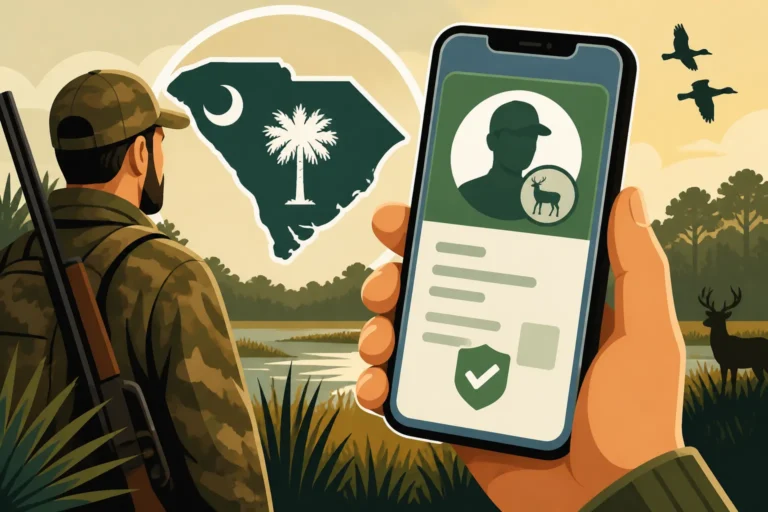
Every deer harvested in South Carolina, whether it's a trophy buck or a doe taken for meat, must be reported to SCDNR through the Game Check system within 24 hours of harvest. This isn't just a suggestion; it's a legal requirement. The Game Check system is accessible online through the SCDNR website or via their "Go Outdoors SC" mobile app. The process is straightforward: you'll need to input your license number, the tag number used for the deer, the date and time of harvest, the county where the deer was harvested, and the sex of the deer (antlered or antlerless). You’ll also need to specify if it was taken on private land or a WMA.
This data is vital for wildlife biologists. It provides real-time information on harvest rates, population trends, and hunter activity across different regions. This collective data is what informs future season structures and bag limits, ensuring sustainable management practices. For instance, if Game Check data reveals a consistent under-harvest of does in certain regions, it might lead to discussions about increasing antlerless opportunities or promoting doe harvest in subsequent seasons. It’s a direct way for hunters to contribute to the scientific management of the deer herd. Don’t wait until the last minute; report your deer as soon as possible after tagging, preferably right there in the field if you have service, or as soon as you get back to camp or cell signal. This is a fundamental part of South Carolina Deer Reporting Requirements and helps ensure the health of our deer population.
Consequences of Not Reporting
Ignoring the Game Check requirement might seem like a small oversight to some, but it carries significant legal consequences in South Carolina. Failure to report a harvested deer within the mandated 24-hour window can result in fines, penalties, and even the suspension of your hunting privileges. Law enforcement officers actively check for compliance, and it's a straightforward violation to prove if a hunter is caught without having reported their kill. This isn't just about revenue generation; it's about the integrity of the state's wildlife management efforts.
Beyond the legal ramifications, not reporting a deer means that crucial data point is missing from the overall picture of the state's deer population. If enough hunters fail to report, the SCDNR's data becomes less accurate, potentially leading to less effective management decisions down the line. This could, ironically, lead to regulations that are less favorable to hunters in the long run. So, while it might feel like an extra step at the end of a long day of hunting, performing the Game Check is an essential part of responsible hunting and a direct contribution to the conservation of our deer resource. Make it a habit, just like checking your license and ensuring you have your tags before you head into the woods.
Ethical Hunting and Responsible Management
Beyond simply following the letter of the law, ethical hunting and responsible management of the deer resource in South Carolina require a deeper commitment from each of us. It’s about making conscious decisions that reflect respect for the animals we pursue and the land they inhabit.
Making Informed Harvest Decisions
When you have the opportunity to take an antlerless deer, especially in Zones 2, 3, and 4 where the "two-doe-per-day" rule applies to private land, it brings a certain responsibility. While the regulations allow for a liberal harvest, it's up to each hunter to make informed decisions based on the conditions of the specific property they're hunting. Are you seeing an abundance of does? Are there signs of overbrowsing, like a distinct browse line on vegetation? Are the deer you're seeing appearing thin or small for their age class? These observations, combined with an understanding of the overall deer density in your area, should guide your decisions.
For many, the primary motivation for harvesting antlerless deer is for meat, which is a fantastic reason. Venison is a lean, organic, and sustainable protein source. However, if you find yourself in an area where deer numbers seem balanced, or even a bit low, exercising restraint and potentially passing on an antlerless deer can be a sound management decision. It’s about thinking beyond just "what's legal" and moving towards "what's best for the herd and the habitat." Tools and resources like those offered by GoHunt can provide regional insights and help you assess population dynamics, further informing your decisions. Consider talking to local landowners or hunting club members about their observations, and remember, sometimes less is more when it comes to long-term herd health. Furthermore, understanding Late-Season Food Sources for South Carolina Whitetails can help you decide when and where an antlerless harvest might be most beneficial.
Supporting Conservation Through Compliance
Ultimately, the entire system of licenses, permits, tags, and reporting requirements for hunting in South Carolina is built upon a foundation of conservation. Every time you purchase your South Carolina Resident Hunting License Options or a Big Game Permit, a portion of those funds goes directly to wildlife management and habitat restoration efforts. By adhering strictly to all regulations, including the statewide antlerless bag limit and mandatory Game Check, you're not just avoiding legal trouble; you're actively supporting the very future of hunting in our state.
Compliance means contributing accurate data to the SCDNR, which in turn enables them to make better, more scientific decisions about deer populations. It means setting a good example for new hunters, especially those learning the ropes through programs that align with South Carolina Hunter Education Requirements. It reinforces the image of hunters as ethical conservationists, which is crucial in today's increasingly scrutinized world. When we talk about the South Carolina Statewide Antlered Bag Limit or antlerless limits, we’re not just talking about arbitrary rules; we’re discussing the framework that protects and sustains our incredible natural resources. Being a responsible hunter means embracing these rules as essential tools for conservation, ensuring that we continue to have healthy deer herds and abundant hunting opportunities for years to come.
South Carolina Antlerless Deer Harvest Summary
To help clarify the core rules we've discussed, here's a quick summary of the antlerless deer bag limits on private land by Game Zone in South Carolina. Remember, WMA rules will always supersede these general private land rules.
| Game Zone | Antlerless Deer Daily Limit (Private Land) | Antlerless Deer Seasonal Limit (Private Land) | Requires Tag | Notes |
|---|---|---|---|---|
| Zone 1 | None (Seasonal Limit Applies) | 2 per season | Yes | Most restrictive zone, mountainous Upstate. |
| Zone 2 | 2 per day | Limited by available tags | Yes | Midlands region. |
| Zone 3 | 2 per day | Limited by available tags | Yes | Pee Dee region. |
| Zone 4 | 2 per day | Limited by available tags | Yes | Coastal Plain region. Earliest season opener. |
This table should give you a clear, concise overview of the primary differences. Always consult the official SCDNR regulations for the most up-to-date and specific information, especially before hunting any WMA, where rules can vary widely. Using the Go Outdoors SC app is also a great way to access current regulations on the go.
Disclaimer
Please remember that hunting regulations can change. While this guide aims to provide accurate and comprehensive information regarding the South Carolina statewide antlerless bag limit, it is your responsibility as a hunter to consult the most current official South Carolina Department of Natural Resources (SCDNR) hunting regulations digest before heading into the field. This article is for informational purposes only and should not be considered a substitute for official legal guidance or the printed SCDNR regulations. Always hunt safely, ethically, and in full compliance with all applicable laws and regulations.