Scrape Lines Along a Logging Road
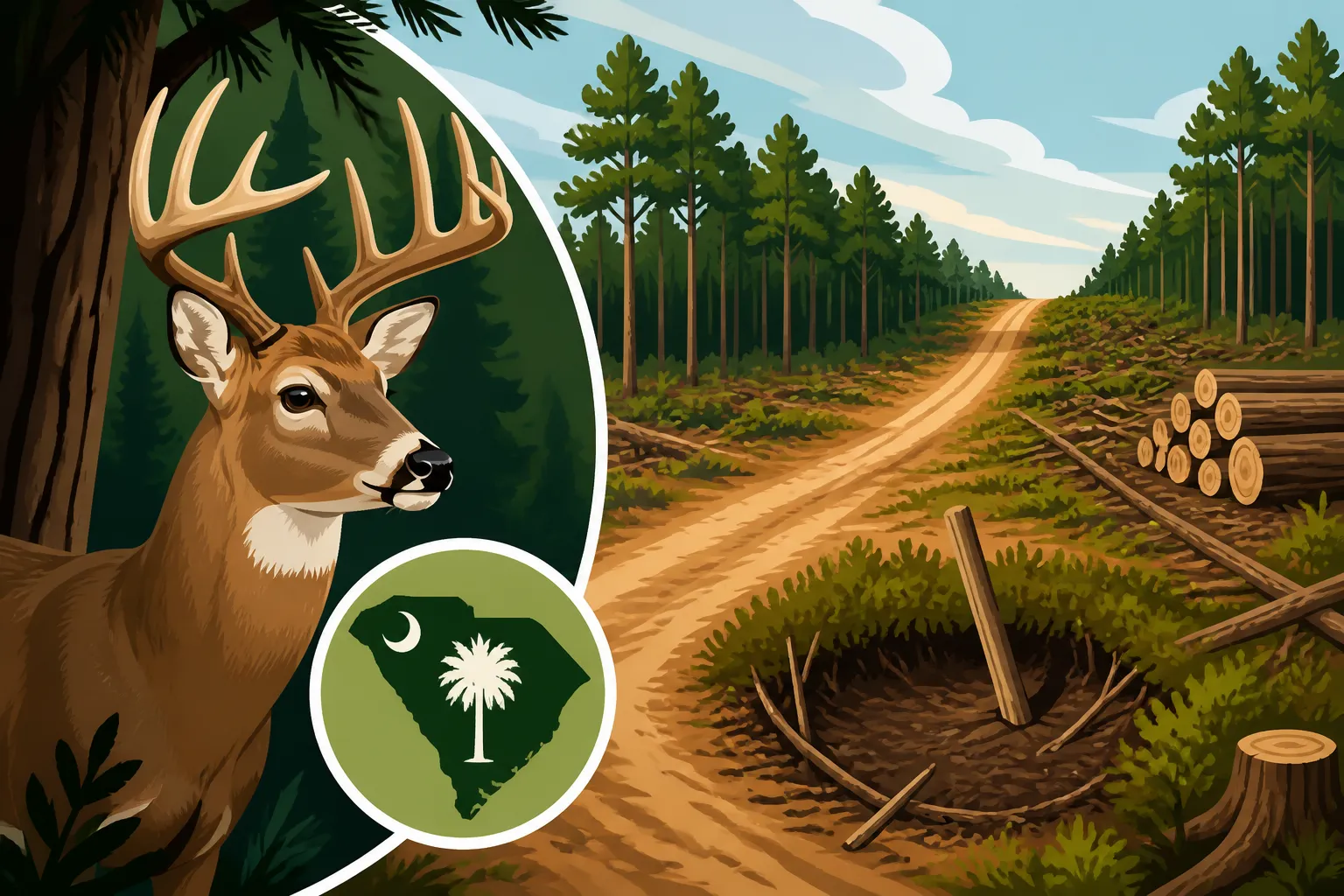
It's a familiar sight for South Carolina deer hunters: a logging road winding through pines or hardwoods, looking like a deer highway. You see tracks, maybe some droppings, and feel the potential, but pinpointing where those elusive bucks are really working can be a challenge. This guide dives deep into understanding and effectively hunting scrape lines found along these logging roads, helping you interpret the signs and set up in the right spots to intercept a South Carolina whitetail.
Understanding Scrape Lines and Their Purpose on Logging Roads
Logging roads, often dismissed as mere access points, are actually dynamic elements in the deer woods, particularly for bucks establishing dominance and communicating during the rut. While they might seem exposed, these corridors offer unique advantages that bucks readily exploit for their scrape lines.
Why Bucks Favor Logging Roads for Scrapes
Bucks are inherently efficient creatures, and logging roads offer a perfectly engineered environment for them to lay down scent and check for does. Think about it: a cleared path creates a natural travel corridor, allowing deer to move with relative ease while still offering cover on either side. A logging road often acts as an "edge" habitat, blending open areas with dense cover, which deer instinctively prefer.
When a buck makes a scrape on a logging road, he's broadcasting his presence and availability to every deer that passes by. The exposed earth of the roadbed makes it easy to paw away leaves and create a visible signpost. Overhead, a low-hanging branch—the "licking branch"—becomes an essential component. Bucks chew, rub their preorbital glands on, and urinate on this branch, depositing scent that can be picked up by other deer. The open nature of many logging roads also makes them excellent places for bucks to check for the scent of does that have recently passed through, especially during the crucial stages of Hunting the Rut in the Coastal Zones or Hunting the Rut in the Upstate Zone.
Differentiating Between Rubs, Primary Scrapes, and Community Scrapes
Not all scrapes are created equal, and understanding the nuances can significantly impact your hunting strategy. Along a logging road, you might encounter a variety of signposts, each telling a different story about deer activity.
Rubs, for instance, are distinct from scrapes. While often found in conjunction with scrapes, rubs are created when a buck scrapes his antlers against a small tree or sapling, depositing scent from his forehead glands and marking his territory. You might see a series of rubs leading to a scrape line, indicating a buck's travel route.
Primary scrapes are typically larger, more intensely worked, and consistently refreshed throughout the rut. These are the "headquarters" of a buck's communication network. On a logging road, a primary scrape will often be located in a strategic spot—perhaps where two logging roads intersect, or where a well-used trail crosses the road. They'll have a heavily pawed-out patch of bare earth, often several feet in diameter, with a prominent licking branch overhead that looks well-gnawed and darkened from frequent interaction.
Community scrapes, on the other hand, are often smaller and may not be consistently maintained by a single buck. Multiple deer, both bucks and does, might visit and refresh these. They act as general information hubs. While not as high-priority as primary scrapes for targeting a specific buck, they indicate significant deer traffic and can be excellent locations for a trail camera to gather intel. Modern tools like the GoHunt app allow hunters to mark these scrape locations with GPS coordinates and even upload photos to track activity over time.
How to Identify and Interpret Scrape Lines Effectively
Finding a scrape is one thing; knowing if it's hot, fresh, and worth hunting is another. South Carolina's varied terrain, from the lowcountry swamps to the upstate mountains, means scrape activity can vary, but the fundamental cues remain the same.
Key Visual Cues for Active Scrapes
When you're walking a logging road, keep your eyes peeled for the unmistakable signs of an active scrape. The most obvious cue is freshly pawed earth. Look for soil that's been recently churned, often darker and looser than the surrounding ground, indicating a buck has dug it up recently. If you see leaves or debris thrown to the side, it's a good sign it was worked within the last day or two.
Above this bare earth, the licking branch is crucial. An active licking branch will show signs of heavy use: broken twigs, rubbed bark, and often a dark, wet appearance from the buck's preorbital glands. Sometimes, you might even catch a faint musky odor, especially from the tarsal glands if the buck has urinated into the scrape recently. This scent is a powerful attractant and a clear indicator of a buck's presence. Many hunters also swear by the ability of trail cameras to confirm activity; Trail Camera Rules on South Carolina Public Land are important to know before deploying them. A good cellular trail camera, connected to a mapping platform like GoHunt, can send you real-time pictures of exactly when a buck is hitting that scrape.
Timing and Seasonal Activity of Scrapes
Understanding the timeline of scrape activity is paramount to hunting them successfully. Scrapes don't just magically appear overnight and stay active all season; they evolve with the deer's reproductive cycle.
Early in the season, often during the late summer and early fall, bucks might make "mock scrapes" or initial rubs as a warm-up. These are usually less intensely worked and serve more as a practice run. As the pre-rut approaches in late September and October in many parts of South Carolina, particularly in Zones 3 and 4, scrape activity intensifies. Bucks are laying down the groundwork, establishing their presence and checking for the first does coming into estrus. These early scrapes are often key indicators of a buck's core area.
The peak rut, which can vary significantly across the state—from mid-October to early November on the coast, and later into November in the Upstate—is when scrapes are most actively worked. This is when bucks are most preoccupied with breeding, and they will consistently revisit these communication hubs. However, paradoxically, during the absolute peak of the rut, when bucks are actively chasing does, scrape activity might temporarily decrease. Why? Because the buck is too busy pursuing does to spend time refreshing scrapes. Once a doe is bred or moves on, the buck will often return to freshen his scrapes, signaling his continued dominance. Post-rut scrapes are rare and usually indicate a late-cycling doe or a buck still looking for one last opportunity.
Tactical Approaches for Hunting Logging Road Scrapes
Once you've identified an active scrape line on a logging road, the real work begins: devising a strategy to hunt it effectively. This involves careful consideration of your stand placement, scent control, and even how you interact with the scrape itself.
Stand Placement and Wind Considerations
The cardinal rule of deer hunting applies doubly when hunting scrapes: play the wind. Bucks are masters of using their nose, and a single whiff of human scent will send them packing. When choosing a stand location near a logging road scrape, always position yourself downwind of where you expect the buck to approach or scent-check the scrape. This often means finding a suitable tree 20-30 yards off the road, allowing you to cover the scrape without being directly over it. Consider the prevailing winds for your area, but also remember how thermals work, especially in the mornings and evenings when they rise and fall respectively. For instance, on an Upstate ridge, morning thermals might carry your scent uphill, while evening thermals carry it downhill. Understanding Wind and Thermals on an Upstate Ridge is critical.
Entry and exit routes are just as important. Plan a route to your stand that keeps you out of the deer's line of sight and scent cone. Often, walking along the side of the logging road, just inside the timber, or even paralleling it through a dense thicket, can minimize disturbance. Whether you're using a traditional ladder stand, a lock-on stand, or a mobile saddle setup, ensure you can get in and out quietly and without alerting any deer using the logging road. Treestand Setups in Francis Marion National Forest, for example, often require careful consideration of open understories and limited stand trees.
Calling, Scents, and Decoys Around Scrapes
Adding an element of attraction can sometimes tip the scales in your favor, especially around active logging road scrapes.
Calling: During the pre-rut and peak rut, grunt calls can be highly effective. A soft grunt can pique a buck's curiosity, making him think another buck is checking his scrape or a doe is nearby. If you've located a particularly large, aggressive primary scrape, even some light rattling can work, mimicking sparring bucks. Be mindful of the volume; in thick South Carolina timber, aggressive calling might be too much. For advice on appropriate sound levels, check out Rattling Volume in Thick Pine Cover or Grunt Calls in Mature South Carolina Timber.
Scents: Scents can be a double-edged sword, but when used correctly around a scrape, they can be potent. Dominant buck urine or tarsal gland scent can challenge a buck, making him more likely to visit and refresh his scrape. During the peak rut, estrous doe urine can be deadly, signaling a receptive doe in the area. Apply these scents sparingly, directly into the scrape or on the licking branch, but never directly on your boots or clothing. Some hunters even create "mock scrapes" near their stand, subtly enhancing existing ones with bottled scent to draw deer closer.
Decoys: Decoys are a more advanced tactic, but a well-placed buck or doe decoy near a logging road scrape can draw a buck in for a closer look. A buck decoy can challenge a dominant buck, while a doe decoy might attract a cruising male. Always place your decoy where it's visible but also gives you a clear, ethical shot. Ensure the wind is in your favor so a buck approaching the decoy doesn't pick up your scent first.
Managing Hunting Pressure and Approach
Deer, especially mature bucks, become incredibly wary under pressure. Logging roads, being easily accessible, can see a fair amount of human activity. Your approach and management of hunting pressure are crucial for success.
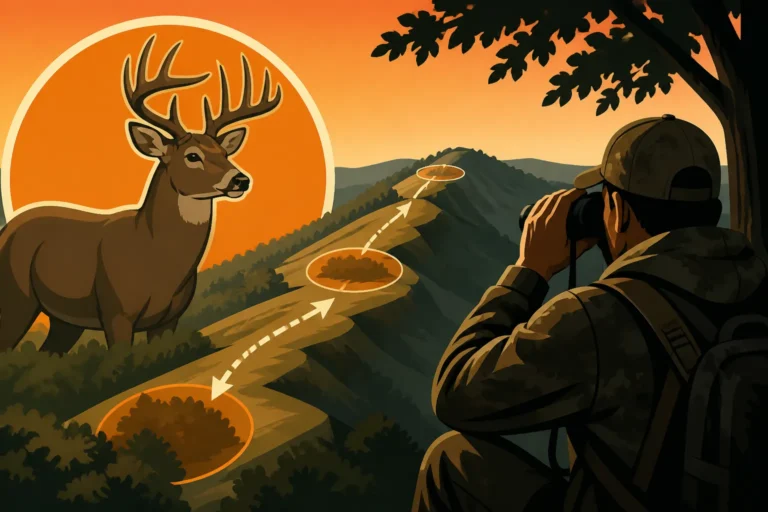
Minimize your presence at the scrape site. Every time you walk to the scrape to check it, you leave scent and visual disturbance. Use binoculars from a distance to observe activity if possible. If you must check a scrape or refresh a camera, do it quickly and quietly, ideally mid-day when deer activity is lowest. The GoHunt app can help you track historical visits to a scrape, allowing you to gauge the best times to hunt without having to check it physically as often.
Don't overhunt a single scrape. If you've had a few unproductive sits, give the area a break for a few days or even a week. Deer patterns can change quickly due to pressure or shifting food sources. Sometimes, a short, intense sit during prime time (first hour of daylight, last hour of evening) is more effective than an all-day sit that might educate deer with repeated human presence. Learning to identify Hunting Pressure on South Carolina Public Land and adapting your strategy is key to long-term success.
Common Mistakes and Advanced Tips for Success
Even seasoned hunters can make mistakes, especially when dealing with the unpredictable nature of wild whitetails. Being aware of common pitfalls and employing some advanced tactics can significantly boost your success rate on logging road scrapes.
Overlooking Subtle Signs and Secondary Scrapes
One of the biggest mistakes hunters make is focusing solely on the most obvious, heavily worked primary scrapes and overlooking the smaller, more subtle signs. Often, a mature buck will have a network of smaller, secondary scrapes or "satellite" scrapes leading to or surrounding his primary scrape. These might be just a small pawing, a broken twig, or a faint rub. These subtle signs can actually indicate a buck's travel route, his "path of least resistance" as he checks his territory.
Always scout the area around a primary scrape thoroughly. Look for parallel trails running just inside the timber line, skirting the logging road. These are often where bucks will travel, pausing occasionally to scent-check the more exposed scrape on the road. Don't dismiss a fresh rub or a small pawing; it could be part of a larger, more complex communication system. Paying attention to these smaller details can reveal a buck's precise movement patterns, especially around areas like a Funnel Between Two Swamps or a natural choke point.
Adapting to Different South Carolina Zones and Terrain
South Carolina's diverse topography, from the flat coastal plains to the rolling hills of the Upstate, means that logging roads and their associated scrapes will present differently. Your strategy needs to adapt accordingly.
In the flat, dense timber of the Lowcountry, logging roads can be more isolated and offer clearer sight lines than tangled swamps. Scrapes here might be a buck's best bet for widely broadcasting his presence. In areas like the Francis Marion National Forest, where cover can be incredibly thick, a logging road provides one of the few open lanes of travel and communication. Here, a scrape could be a magnet.
Conversely, in the more open, undulating terrain of the Upstate, particularly within the Sumter National Forest, logging roads might traverse ridges or connect different elevation levels. Bucks here might use these roads to travel between bedding areas on high ground and feeding areas in bottoms. Scrapes on these roads will often be strategically placed on points or saddles where multiple travel corridors converge. Reading a Ridge for Upstate Deer becomes essential, as thermals and wind patterns can be more complex. The type of logging operation also matters – clear-cuts will eventually grow back into dense thickets where deer seek cover, while mature pine stands offer a different dynamic. The key is to interpret the logging road within the context of the surrounding habitat and how deer are using it in that specific region.
| Scrape Type | Appearance | Buck Behavior Indicated | Best Hunting Strategy |
|---|---|---|---|
| Primary Scrape | Large, deeply pawed, fresh, well-worn licking branch | Dominant buck actively marking, frequently checking | High-priority, setup downwind, trail camera monitoring |
| Community Scrape | Multiple pawings, varied freshness, multiple licking branches | Multiple deer (bucks & does) visiting, information hub | Good for cameras, shows general traffic, less specific for one buck |
| Mock Scrape | Less intense, often early season, sometimes no licking branch | Young buck exploring, pre-rut activity, less commitment | Not a primary target, but indicates presence in the area |
| Rub Line | Scraped trees/saplings, bark removed, vertical marks | Buck traveling, marking territory, often leads to scrape | Follow to find scrapes, understand travel routes |
| Secondary Scrape | Smaller, less defined pawings, subtle licking branch | Buck's ancillary signposts, part of a larger network | Key for pinpointing travel around primary scrape, side trails |
Disclaimer
Always check the latest South Carolina Department of Natural Resources (SCDNR) regulations before heading into the field. Hunting laws, season dates, and specific rules for public land, like those for Wildlife Management Areas, can change annually. This content is for informational purposes only and does not constitute legal advice.