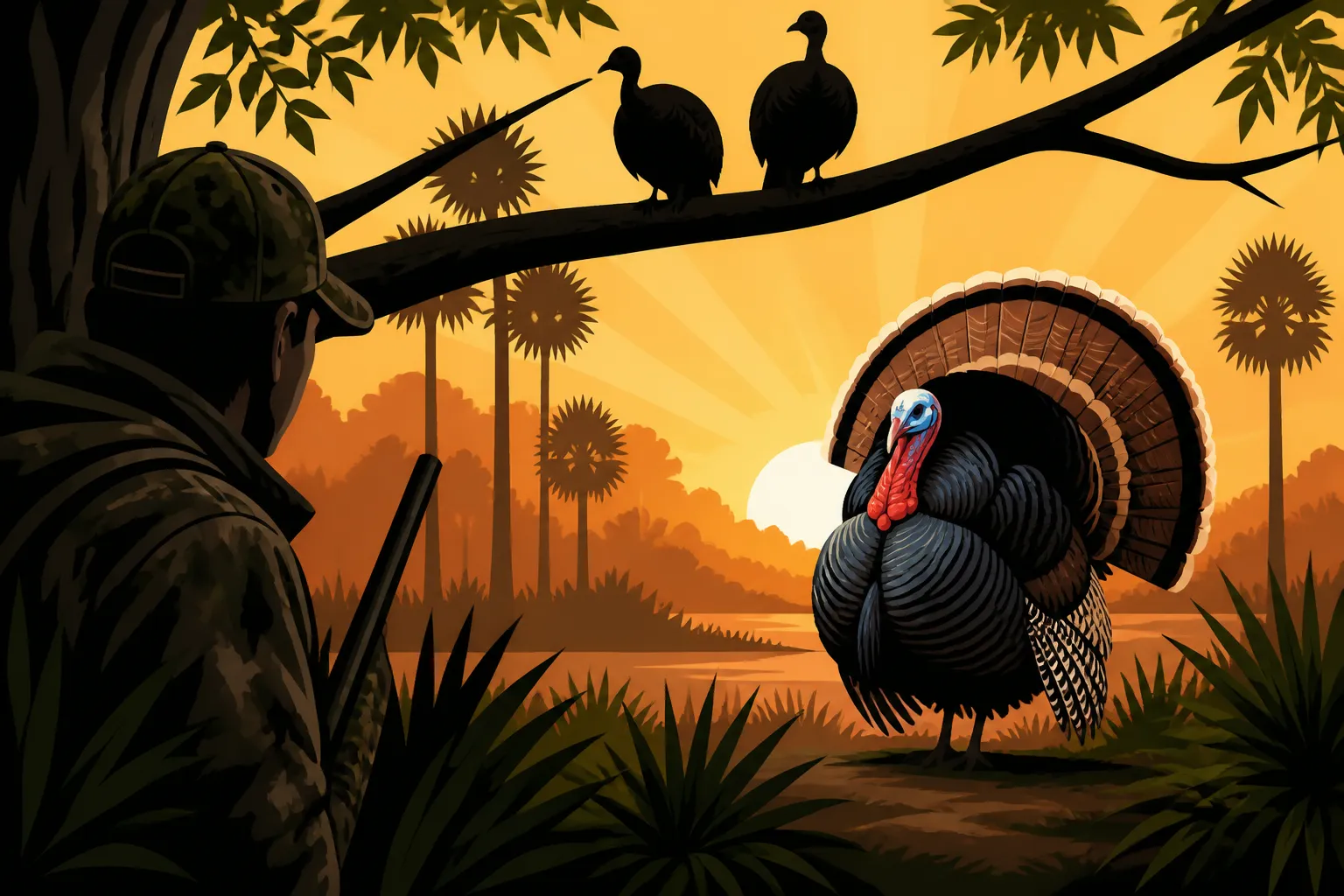
Roost Hunting South Carolina Gobblers
There's nothing quite like the heart-pounding anticipation of a spring morning when you know a gobbler is perched just overhead, waiting for the first rays of sun. But coaxing that tom off the roost and into your lap is a game of skill, patience, and often, sheer frustration. This guide is all about demystifying the art of roost hunting South Carolina gobblers, giving you the real-world tactics you need to turn those early morning hopes into successful harvests, even when those birds seem determined to do anything but cooperate.
Understanding Gobbler Roosting Behavior in South Carolina
Before you can effectively hunt a turkey off the roost, you've got to understand why they do what they do. Turkeys aren't just picking any old tree to sleep in; there's a method to their madness, driven by survival and instinct. Getting inside a gobbler's head when it comes to roosting is the first step to beating him at his own game.
Why Turkeys Roost in Specific Trees
Think about it from a turkey's perspective. The ground is crawling with predators – coyotes, bobcats, foxes, and even feral hogs that would love a turkey dinner. By flying up into trees, especially tall, mature ones, turkeys gain a significant advantage in terms of safety. They're elevated, harder to spot, and often out of reach of most terrestrial threats. This is their fortress for the night. They'll often pick the highest limbs that offer good visibility, allowing them to survey their surroundings both before fly-up and first thing in the morning when they fly down.
Beyond just predator avoidance, trees also offer some thermal regulation. On a chilly spring night, the air up in a dense pine canopy can be a few degrees warmer than the open ground. Conversely, a nice breeze through a mature oak can be a welcome relief on a warm evening. Turkeys are creatures of habit, too. Once they find a roost tree or a small cluster of trees that provides safety and comfort, they'll often return to it night after night, especially if they haven't been disturbed. This consistent behavior is what allows us hunters to even attempt a roost hunt in the first place.
Factors Influencing Roost Site Selection
While safety is paramount, other factors heavily influence where a gobbler decides to spend the night. Topography plays a huge role here in South Carolina. In the Upstate, you'll often find birds roosting along prominent ridge lines, taking advantage of the elevation. In the Lowcountry, it's more common to find them in mature timber stands along swamp edges or river bottoms, where tall trees provide a distinct advantage over the surrounding low-lying areas. These natural features offer excellent escape routes and clear flight paths to open areas.
The type of tree also matters. Mature pines are favorites because their dense canopy provides good cover and their strong limbs can easily support multiple birds. Tall hardwoods, especially those with wide, spreading branches like oaks, are also prime real estate. Proximity to food and water sources is another consideration. Turkeys rarely roost far from where they feed or drink, so a roost tree might be just a short fly-down away from a field edge, a food plot, or a water source. However, as the season progresses and birds face more pressure, they might choose more secluded roosts deeper in the woods, away from human activity, making them harder to pinpoint.
Seasonal and Weather Impacts on Roosting
Turkey roosting habits aren't static; they shift with the seasons and the weather. Early in the spring turkey season in South Carolina, when temperatures can still dip, gobblers might prefer more sheltered spots, like the interior of a dense pine plantation. As the weather warms up, they might opt for more open, breezy locations to stay cool. Rain and strong winds can also influence their choices. Heavy rain often makes them seek out the densest cover they can find, while high winds might push them to roost lower in the trees or in more protected hollows to avoid being buffeted around.
Understanding these shifts is crucial. For instance, if you've patterned a bird on a ridge line but a cold front rolls in, he might have shifted to a more protected draw. Keeping an eye on the forecast and knowing how these changes might affect a gobbler's nightly routine can give you a significant edge. It’s not just about finding a roost, but finding the roost for that particular night, given the conditions.
Scouting for Roost Sites: Pre-Season and In-Season
Successfully Calling a South Carolina Gobbler Off the Roost starts long before you ever step foot in the woods with your shotgun on opening morning. It's a continuous process of observation and deduction, both pre-season and in the moment.
Pre-Season Reconnaissance: Maps and Boots on the Ground
Pre-season scouting is your secret weapon. Before the season even opens, I spend hours poring over aerial maps, looking for those tell-tale features: high ridges, mature timber stands near open fields, river bends with large trees, or dense pine plantations bordering hardwoods. Apps like GoHunt are invaluable for this, allowing you to mark potential roosting areas, measure distances, and identify access points. You're essentially creating a hit list of potential roost spots.
Once you have those spots identified, it's time to put boots on the ground. Walk those areas, especially in the late afternoon. Look for physical sign: turkey droppings, shed feathers, and distinctive scratch marks where they've landed on limbs or around the base of trees. Sometimes you'll even find little "roost pits" where they've scratched out a spot on a limb. This kind of diligent Scouting South Carolina Public Land Before Season can confirm your map-based suspicions and give you solid leads when the season arrives. Remember, turkeys are creatures of habit, so finding old sign increases the odds of them returning.
Listening for the Evening Fly-Up
This is where the real-time scouting comes in. The best way to locate a roosting gobbler is to listen for him as he flies up to roost in the evening. Head to your potential roosting areas an hour or so before sundown. Position yourself in a spot where you can hear a wide area but won't disturb the birds. Listen intently for gobblers making their "gobble-obble-obble" call as they fly up, or even just the loud thump of their bodies hitting a limb. You'll often hear hens clucking and yelping as they settle in as well.
It takes a good ear and a lot of patience. Sometimes, they'll only make a few soft clucks. Other times, a particularly vocal tom will let you know exactly where he's going to spend the night. Once you hear a bird, mark the location on your map, or mentally note it. It's crucial not to push in too close or make too much noise, as you don't want to spook him. Just confirm his location and then slip out quietly, preparing for an early morning approach.
Morning Fly-Down Cues
Just as important as listening for the fly-up is paying attention to the sounds before and during the fly-down. When a gobbler is still on the limb, he'll often gobble vigorously, especially as it gets lighter. This is his way of announcing his presence to hens and other gobblers. Listen not just for the gobble, but also for subtle clucks, tree yelps, and wing beats. These sounds can give you critical clues about his exact position and, more importantly, the direction he's likely to fly down.
A common frustration is when a gobbler gobbles like crazy on the limb but then flies down silently in the opposite direction. Pay attention to how the sound carries. If his gobble sounds like it's coming from slightly to your left, he's likely facing that way. Turkeys often fly down facing the direction they intend to walk or where they see hens. Sometimes, you'll hear the characteristic "thump" of a heavy bird hitting the ground. All these auditory cues are pieces of the puzzle that tell you how to adjust your setup.
Tactics for a Successful Roost Hunt Approach
Once you've pinpointed a gobbler on the roost, the next phase is arguably the most critical and often the most challenging: getting into position without alerting the bird. This is where many hunts go awry, and it requires extreme caution and strategic planning.
The Art of the Silent Approach
Approaching a roosted gobbler in the pre-dawn darkness demands unparalleled stealth. Every rustle, every crunch of a leaf, can give you away. The goal is to get as close as safely possible to the roost tree without the turkey ever knowing you're there. I generally aim to be within 100-150 yards, sometimes closer if the terrain allows for a completely silent approach. Use the darkness, terrain features, and even light drizzle to mask your sounds.
Move slowly, taking deliberate steps, scanning the ground with a headlamp on its lowest setting to avoid obstacles. If you're hunting in areas with dry leaves or pine straw, lift your feet and place them down gently, almost like a stalking cat. If you encounter a patch of noisy leaves, it might be better to go around, even if it adds a few extra yards to your approach. The key is to minimize any unnatural sounds that a sharp-eared gobbler might pick up. If you hear a soft cluck or purr from the roost, freeze immediately. Wait for a few minutes, let the bird settle, and then resume your snail-like pace.
Setting Up Before Legal Light
Timing is everything in a roost hunt. You need to be in your chosen setup, completely still and ready, well before legal shooting light and certainly before the gobbler starts to stir. This means arriving at your spot 30-45 minutes before sunrise, if not earlier, depending on the distance to the roost. The moment a gobbler starts gobbling on the limb, your opportunity for movement is severely restricted.
Once you reach your desired setup location, don't just stand there. Find a wide tree or dense brush that provides excellent concealment, and get comfortable. You'll be there for a while. Clear any leaves or small twigs from around your feet to prevent accidental noise when you shift. Double-check your shooting lanes and ensure your gun is loaded and ready. The more prepared you are when the woods are still dark, the less movement you'll need to make when the action starts. This early positioning ensures you're part of the natural environment, rather than an intrusive element.
Handling Unexpected Gobbler Movements
Even with the best scouting and most careful approach, gobblers have a knack for doing the unexpected. Sometimes, they fly down in a completely different direction than anticipated, or they "pitch out" and sail much further than you thought possible. This is where experience and quick thinking come into play. If a gobbler flies down out of range or in a direction you didn't anticipate, don't panic. Resist the urge to make a sudden move.
Instead, assess the situation. If he's already on the ground and moving away, you might have to shift to a more aggressive, run-and-gun tactic, which is discussed in Run-and-Gun Turkey Tactics on Public Land. If he just flew down but hasn't committed to a direction yet, you might be able to make a very slow, subtle adjustment, using terrain to mask your movement. It's a gamble, but sometimes a small, deliberate repositioning can put you back in the game. If you're using decoys, and he flies down looking for them in the wrong direction, a quick, soft call might turn his head, giving you a chance to adjust.
Calling Strategies for Roosted Birds
Calling a roosted gobbler requires a delicate touch. You don't want to overdo it, but you need to be convincing enough to pull him down to your position. It's a nuanced dance of enticing him without spooking him.
Soft Calls to Gauge Interest
When a gobbler is still on the roost, less is often more. Your initial calls should be soft, subtle, and mimicking a hen just waking up. A few soft tree yelps, a purr or two, or some quiet clucks are usually all you need. The goal isn't to get him to gobble his head off, but to let him know there's a hen in the area. This subtle approach can be incredibly effective, especially on pressured birds.
Listen closely to his response. Does he gobble immediately and loudly? Or does he just offer a soft, half-hearted gobble? His intensity will tell you how much interest he has. If he's just giving soft, polite gobbles, continue with the soft, seductive calls. You want to make him believe a lonely hen is waiting patiently for him below. Avoid loud cuts or aggressive yelps at this stage, as they can sometimes make him suspicious or even fly off in search of a "better" hen.
Aggressive Calling to Spark a Challenge
There are times, however, when a soft approach isn't cutting it. Some gobblers are simply too dominant or too stubborn to come to quiet calls. In these situations, especially if he's gobbling consistently but not committing to fly down in your direction, you might need to try more aggressive calling. This means louder yelps, some sharp cutting, and even some excited cackles. You're trying to create a scenario where he thinks another hen is getting all the attention, or worse, another gobbler is moving in on his territory.
This can sometimes spark a "challenge gobble" from him, indicating he's getting fired up. But be careful not to over-call. Too much aggressive calling can sound unnatural or make him think the "hen" is running around too much. The trick is to use it sparingly, just enough to pique his interest or challenge his dominance. Sometimes a jake gobble tube can be effective here, making him think a young male is trying to steal his ladies. It’s all about getting a reaction and then easing back to more seductive hen calls.
Decoy Placement and Types
Decoys can be a game-changer when roost hunting, but their placement is critical. For most roost setups, a single hen decoy, or a hen and jake decoy combination, works best. You want to position them where the gobbler will see them easily upon flying down, ideally about 15-20 yards from your position and quartering away slightly. This way, when the gobbler approaches, he'll often walk past your shooting lane to get to the decoy, presenting an ideal broadside or slightly quartering-away shot.
Consider the light conditions when placing decoys. In the pre-dawn gloom, a silhouette decoy might be more effective than a full-strut tom that looks unnatural. As the light picks up, realistic feather decoys like those from Avian-X or Mojo can draw him in. Remember that Decoy Placement for Pressured South Carolina Birds often requires more subtlety. If you're in an area where birds are heavily hunted, a single submissive hen might be more effective than a strutting tom and multiple hens, which can sometimes make wary birds hang up. Always be mindful of your shooting lanes and ensure the decoys aren't blocking your view or shot.
Setting Up for the Shot: Positioning and Concealment
Your setup position is paramount to sealing the deal on a roosted gobbler. Even the best calling won't matter if you can't get a shot, or if the turkey spots you first.
Choosing the Right Tree or Blind
When selecting your ambush point, whether it's a tree or a blind, think like a turkey. What would break up your outline? What offers sufficient cover while still providing clear shooting lanes? A wide tree, ideally one with some low-hanging branches or dense foliage, is usually your best bet. Sit directly against the trunk to become part of the tree. Avoid sitting in the open or against a small sapling that offers no real concealment.
For public land or areas where cover is sparse, a ground blind can be an excellent option. Make sure it's brushed in well and set up long before the season, if possible, to allow birds to get accustomed to it. Whether it's a natural or artificial blind, ensure that your setup allows you to comfortably shoulder your shotgun and swing it smoothly in the direction you expect the turkey to approach. Remember, in South Carolina, Using a Ground Blind on South Carolina Public Land is a great tactic, but make sure to check WMA rules, as some areas may have specific regulations regarding temporary structures.
Managing Background and Visibility
Concealment isn't just about what's in front of you; your background is just as important. Avoid sitting where your silhouette is clearly visible against a bright sky or a light-colored field. Instead, try to position yourself in front of a darker background, like a dense thicket, a patch of pines, or a shadowed hillside. This helps you blend in and makes it much harder for a sharp-eyed gobbler to pick out your form.
Also, be mindful of direct sunlight. While it's great for spotting turkeys, if the sun is directly in your eyes, it can impair your vision when the bird finally comes in. Position yourself so the sun is either to your back or off to the side. Ensure you have clear lines of sight to where you expect the bird to fly down and approach. Trim any small branches or weeds that might impede your shot, but do so subtly and well before light, if possible. The goal is to be a ghost in the woods, seen by nothing but your calling.
Adjusting to the Gobbler's Approach
Once that gobbler commits and starts strutting or walking towards your position, patience becomes your ultimate virtue. Resist the urge to move or raise your gun too early. Turkeys have incredible eyesight and can pick up the slightest movement. Wait until the bird is completely obscured by brush or a rise in the terrain before making any small adjustments. If you're Setting Up Against a Big Oak and he's coming from behind a sapling, use that momentary cover.
Focus on the bird's head and neck. When he presents a clean, unobstructed shot, slowly raise your gun, get a good sight picture, and squeeze the trigger. Knowing your effective range is crucial. For most turkey shotguns, this is typically 30-40 yards. Don't risk a marginal shot, especially on a roosted bird you've worked so hard for. Let him come closer, let him strut, and let him give you the perfect opportunity. It’s better to let a bird walk than to wound one.
Post-Roost Break-Up Tactics
Sometimes, despite your best efforts, that roosted gobbler just won't commit. He might fly down and strut 80 yards away, or he might fly off in the opposite direction, leaving you wondering what went wrong. When the initial roost hunt doesn't pan out, it's not over. It just means it's time to shift gears.
Dealing with a Hung-Up Gobbler
Ah, the infamous hung-up gobbler. He gobbles his head off, struts, and even comes to within sight, but simply won't close the last 50-70 yards. This is a common frustration, and there are a few tactics you can try. First, resist the urge to get up and charge him. That rarely works. Instead, try changing your calling strategy. Go silent for a few minutes, then come back with some very soft, non-committal clucks and purrs, almost as if the hen is losing interest and walking away. This can sometimes pique his curiosity enough to make him cover that last distance.
Another option, if the terrain allows and you have a partner, is for one hunter to slowly circle around while the other continues calling softly. This "repositioning" or "fanning" tactic can work wonders. If you're alone, and he's truly hung up, a very slow, subtle crawl towards him, using all available cover, might work, but it's a high-risk, high-reward move. The idea is to make him think the hen is moving away, forcing him to make a decision. Just be absolutely certain you are moving safely and legally, especially if you're attempting a fanning maneuver which can be dangerous if other hunters are around.
Locating Birds After Fly-Down
If your initial roost setup fails and the gobbler flies down and walks off, your job isn't done. The morning is still young, and those birds are still out there. Now it's time to transition from a stationary roost hunt to a more active search. Start by listening intently. Did he gobble again after flying down? Did you hear any wing beats as he moved deeper into the timber? Which direction did he go?
Use locator calls – owl hoots, crow calls, or even a sharp hawk shriek – to try and provoke a shock gobble from a distant bird. Turkeys often respond to these sounds, giving away their position. Once you get a response, quickly try to pinpoint his location and start planning a new approach. This is where your pre-scouted knowledge of the area, including potential travel corridors, food plots, and water sources, becomes invaluable. The gobbler is likely heading to feed or meet up with hens, so try to intercept him.
When to Move On to New Territory
Sometimes, no matter what you do, a particular gobbler just isn't going to cooperate. He might be henned-up, pressured, or simply not interested in playing your game. Knowing when to cut your losses and move on to new territory is a crucial skill in turkey hunting. Don't waste your entire morning chasing a ghost. If a gobbler has gone silent for a prolonged period, or if he's repeatedly ignored your calls and moved off, it's often best to change locations.
Having backup spots or knowing where other potential gobblers might be roosting is key. This is why extensive pre-season scouting and using tools like GoHunt to mark multiple potential areas are so important. Head to another part of the woods, perhaps a different habitat type, and start over with locator calls. A fresh start in a new area can often turn a frustrating morning into a successful one. Remember, South Carolina offers a generous South Carolina Spring Turkey Season Rules, so you have plenty of opportunities to find a more cooperative bird.
| Scenario | Calling Strategy | Decoy Strategy | Movement | Rationale |
|---|---|---|---|---|
| Gobbler on Roost, Responding Softly | Soft tree yelps, clucks, purrs. Minimal calling. | Single hen, 15-20 yards out, quartering away. | Silent approach to 100-150 yards. Stay hidden. | Entice without spooking; mimic natural hen. |
| Gobbler on Roost, Responding Aggressively | Louder yelps, cuts, cackles (sparingly), followed by soft calls. | Hen & jake, or hen, 15-20 yards out. | Silent approach, remain hidden. | Challenge dominance, then revert to seduction. |
| Gobbler Flies Down, Hung Up (50-70 yds out) | Go silent, then soft, disinterested clucks/purrs. | Leave decoys as is. | No movement initially. May attempt subtle crawl if safe. | Pique curiosity, make him think hen is leaving. |
| Gobbler Flies Down, Moves Away | Locator calls (owl, crow, hawk). | Pack up decoys. | Move to new location, try to intercept or set up again. | Find his new position, become mobile hunter. |
| No Gobbling on Roost | Start with soft tree yelps. If no response, use locator calls. | Keep decoys packed until bird is located. | Slip into a good listening spot, then move towards responses. | Locate any birds in the area, avoid wasting time. |
Disclaimer
Please remember that hunting regulations and seasons can change. Always consult the latest South Carolina Department of Natural Resources (SCDNR) regulations and guidelines before planning any hunt. Safety should always be your top priority in the field.