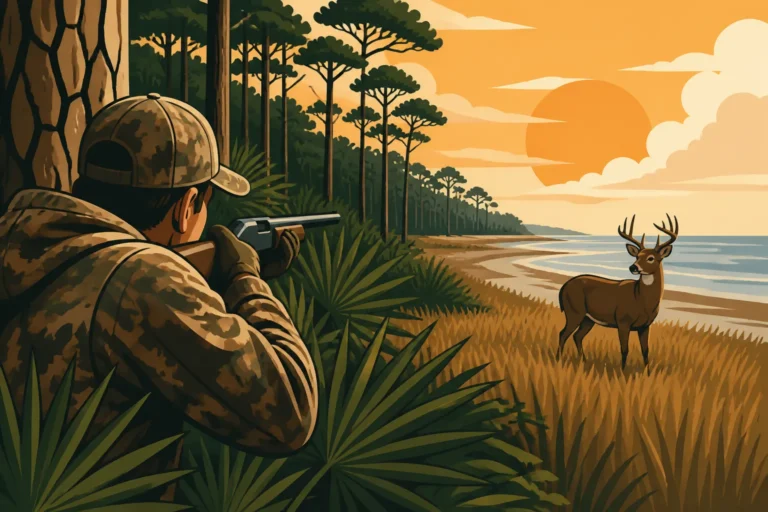
Grunt Calls in Mature South Carolina Timber
Hunting mature timber in South Carolina can feel like searching for a ghost. The vastness of the woods, the dense undergrowth, and the inherent wariness of older deer make clear communication a serious challenge. You know the feeling: you've put in the miles, found a promising sign, but the deer just aren't talking, and those wide-open stands of pine or hardwood can be incredibly tough to hunt. This comprehensive guide dives deep into how grunt calls can be your secret weapon, turning those silent woods into a conversation starter with elusive South Carolina whitetails, helping you break through the timber's hush and draw in that wary buck.
Understanding the Challenge of Mature Timber
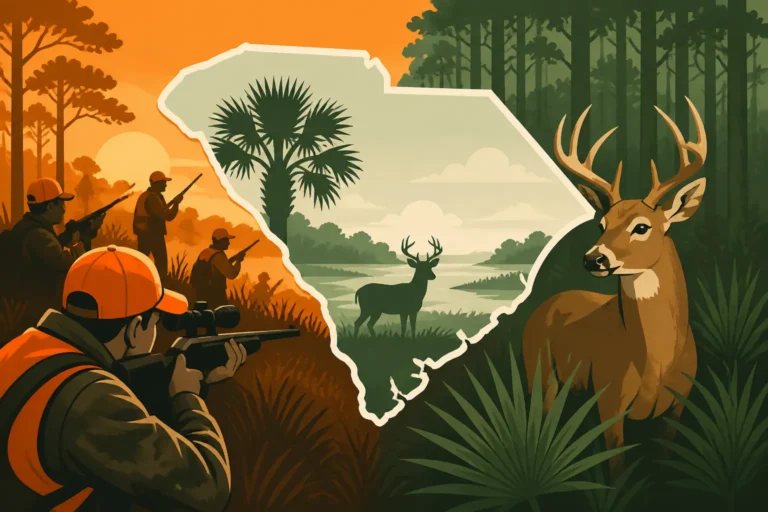
Hunting deer in mature timber, whether it's the sprawling pines of the Francis Marion National Forest or the ancient hardwoods of the Sumter National Forest, presents a unique set of challenges that can leave even seasoned hunters scratching their heads. Deer, especially mature bucks, often move silently, using the thick cover and undulating terrain to their advantage, making them incredibly difficult to intercept.
Why Mature Timber Deer Go Silent
Older bucks in these environments are masters of self-preservation. They've survived multiple hunting seasons by being cautious and discerning. In mature timber, where visibility can be limited to mere yards in places, these deer rely heavily on their sense of smell and hearing, and they're not prone to making unnecessary noise. They're often less vocal than their younger counterparts, reducing their audible footprint and making it harder for you to pinpoint their location. This silence is a defense mechanism; they know the woods hold danger, and drawing attention is a rookie mistake. Imagine trying to track a phantom through a maze – that's often what it feels like when trying to locate a mature buck in vast timber.
Furthermore, the dense foliage and undergrowth in South Carolina's timber stands act like a natural sound dampener. A buck grunting 100 yards away might sound like he's 200 yards, or the sound could be completely absorbed, leaving you unaware he was ever there. This makes traditional visual scouting tough and emphasizes the need for auditory tools that can cut through the natural muffling. When you're trying to figure out how to approach a ridge for an upstate deer, understanding how sound carries is just as important as knowing wind direction.
The Power of Mimicking Natural Deer Sounds
This is where grunt calls become invaluable. A well-executed grunt call breaks the silence and taps into a deer's fundamental instinct to communicate. Deer are social animals, and grunts are a key part of their vocal repertoire. By mimicking these sounds, you're not just making noise; you're speaking their language, offering a familiar, non-threatening, and intriguing sound that can pique their curiosity or invoke a territorial response.
There are several types of grunts, each serving a different purpose, and knowing which one to use and when is crucial. A simple "contact grunt" can simply announce your presence in a non-aggressive way, much like a deer moving through the woods might make a soft grunt to acknowledge another deer's presence. "Tending grunts" are softer, often drawn-out grunts made by a buck actively pursuing a doe. These can be particularly effective during the rut, signaling to other bucks that there's a receptive doe nearby, potentially drawing them in to investigate. Then there are "dominant grunts" or "challenge grunts," deeper and more guttural, often used by larger bucks to assert dominance or challenge rivals. Understanding these nuances allows you to tailor your calling to the specific situation and time of year, whether you're hunting the rut in the Coastal Zones or the later rut in the Upstate Zone.
Choosing the Right Grunt Call for South Carolina Timber
Just like selecting the right rifle caliber for South Carolina deer, choosing a grunt call isn't a one-size-fits-all situation. The vastness and density of South Carolina's mature timber often demand a call with specific characteristics to ensure your message is heard and understood by wary whitetails.
Open Reed Versus Closed Reed Calls
Grunt calls generally fall into two main categories: open reed and closed reed. Both have their advantages and disadvantages, and the best choice often comes down to personal preference and the specific hunting conditions you face.
- Open Reed Calls: These calls typically feature a single or double reed exposed at one end, which you manipulate with your mouth and breath to create different sounds. They offer a tremendous amount of versatility and realism. With practice, you can produce a wide range of grunts, bleats, and even snort-wheezes, adjusting the tone and volume simply by changing your breath pressure and mouth position. This flexibility is a huge plus in diverse timber environments, allowing you to mimic the nuances of real deer vocalizations. However, they can be harder to master, requiring more practice to produce consistent, high-quality sounds. If you're a hunter who enjoys refining your technique and wants ultimate control, an open reed call might be for you.
- Closed Reed Calls: These calls have a reed system enclosed within the call's barrel, often with a mouthpiece at one end and a bell or horn at the other. They are generally much easier to use, often requiring just a simple blow to produce a consistent grunt. Many closed reed calls have adjustable O-rings or bands that allow you to change the pitch, enabling you to switch between fawn, doe, and buck grunts quickly. This ease of use makes them a popular choice for hunters who want reliability and simplicity. The downside is that they might offer slightly less variation in sound compared to a finely tuned open reed call. For hunters who prioritize consistency and quick, easy operation, a closed reed call is often the go-to.
When considering which type to purchase, think about the level of control you want and how much practice you're willing to put in. For most situations in South Carolina's mature timber, a good quality closed reed call with adjustable pitch will serve you well, allowing for quick adjustments between different deer vocalizations.
Volume and Tone Considerations
The ability to control volume and tone is paramount when hunting dense timber. Your call needs to be able to project through the trees, but you also need the finesse to produce softer, more subtle sounds that won't spook a nearby deer.
- Volume: In vast timber, especially on windy days or when you suspect deer are far off, a call that can produce a loud, far-reaching grunt is beneficial. However, constantly blasting loud grunts can quickly educate deer, particularly on public lands where hunting pressure on South Carolina public land is higher. The key is to be able to transition from louder calls (for initial attraction) to softer ones (as a deer gets closer).
- Tone: For mature bucks, a deeper, guttural tone is generally more effective. These sounds mimic the vocalizations of larger, more dominant deer. While a doe or fawn bleat might draw in a curious young buck or doe, it's the deeper grunts that often trigger a territorial response from an older, more established buck. Some calls are designed specifically to produce these deep, raspy sounds, while others allow for a wider range.
Many high-quality grunt calls offer adjustable features, such as expandable tubes or movable O-rings, which allow you to change the pitch and volume. These features are incredibly useful for adapting your calling style on the fly to different situations in the woods. When checking out gear, look for calls that allow for this kind of versatility. Many hunting forums and review sites like GoHunt offer detailed breakdowns of various grunt calls and their performance in real-world scenarios, which can be a valuable resource for finding the right one for you.
| Grunt Call Type | Pros | Cons | Ideal Use in SC Timber |
|---|---|---|---|
| Open Reed | Highly versatile, realistic sounds, great control over pitch and volume. | Requires more practice to master, can be inconsistent for beginners. | Experienced callers, situations requiring nuanced, diverse vocalizations. |
| Closed Reed | Easy to use, consistent sounds, often adjustable for different pitches. | Slightly less natural range of sound, might lack the full realism of an open reed. | Most hunters, quick and reliable grunts, especially for contact and tending. |
| Adjustable | Combines ease of use with pitch versatility, good for all seasons. | Can sometimes be bulkier, might have more moving parts. | All hunters, adaptable to various deer vocalizations and hunting phases. |
Effective Grunt Call Strategies in Mature Timber
Just having a grunt call isn't enough; knowing how and when to use it is where the real magic happens. In mature South Carolina timber, subtlety and timing often separate success from a missed opportunity.
Situational Calling: Matching the Call to the Moment
Deer behavior changes throughout the season, and your calling strategy should evolve with it. There’s no single grunt call that works all the time, which is why a versatile call, or a collection of calls, can be so effective.
- Early Season/Pre-Rut (Late August through September): During the early archery season, bucks are still often in bachelor groups or just starting to break up. They aren't intensely focused on breeding. Soft "contact grunts" are your best bet here. These are simple, quiet grunts that mimic a deer casually moving through the woods. Think of it as a subtle "I'm here" to pique a buck's curiosity without raising alarm. You might use these when still-hunting Sumter Forest ridges or sitting over a quiet transition area, just enough to get a passing deer to pause or look your way. Avoid aggressive calls, as they are out of sync with buck behavior during this phase and can easily spook deer.
- Peak Rut (Late October through December): This is primetime for aggressive calling. Bucks are actively seeking does, challenging rivals, and are generally more responsive. "Tending grunts" are incredibly effective, mimicking a buck closely following a receptive doe. Combine these with doe bleats to really paint a picture. Deeper, more aggressive "challenge grunts" or "dominant grunts" can also work wonders, especially if you see a buck at a distance or know there's a dominant buck in the area. This is also a fantastic time to integrate rattling and grunting in South Carolina, as the sounds of fighting bucks can be irresistible to a cruising whitetail. Remember, during the rut, bucks are willing to take risks they wouldn't normally, so don't be afraid to be a bit more bold, but always be ready for a quick shot.
- Post-Rut (Late December through January): Bucks are often worn out and recovering, but some late estrous does might still be around. Calling becomes more challenging, but soft contact grunts or even fawn bleats can sometimes work by appealing to a buck's inherent curiosity or his desire to find any remaining receptive does. Focus on areas with late-season food sources for South Carolina whitetails, as bucks will be trying to replenish energy reserves.
Always observe the deer's reaction. If a buck stops and looks your way, he's heard you. If he starts walking towards you, keep the calling minimal and subtle. If he turns away, try a different type of grunt or stop calling altogether.
Integrating Grunts with Other Tactics
Grunt calls are powerful on their own, but they become even more potent when combined with other hunting tactics.
- Rattling and Decoys: As mentioned, combining grunts with rattling antlers creates a realistic scenario of bucks fighting, which can draw in curious or territorial bucks. Place a buck decoy with a doe decoy in front of your position, and then grunt and rattle. The visual of the decoys, coupled with the auditory stimulation of the calls, can be irresistible. Always set up with the wind in your favor when using decoys, as deer will often circle downwind to scent-check the scene.
- Scents: Using deer urine or estrous scents can further enhance your calling. A well-placed scent wick near your stand, combined with tending grunts, can make a buck believe a doe is in the area.
- Still-Hunting and Spot-and-Stalk: If you're actively still-hunting or scouting South Carolina public land before season, an occasional soft contact grunt can be a game-changer. It helps break up your movement, and if a deer is nearby, it might pause, offering you a shot. It's a fantastic way to assess if deer are in the area without alarming them. When you're slowly working your way along a ridge or through a funnel between two swamps, an intermittent grunt can reveal a hidden buck.
Sound Projection and Direction in Timber
Mature timber has a way of swallowing sounds. To ensure your grunts are heard by deer you intend to call, you need to think about sound projection and direction.
- Use the Terrain: If you're on a ridge, calling down into a hollow can be effective, as sound often travels well downhill. Conversely, calling uphill can be difficult. Understanding wind and thermals on an Upstate ridge is crucial, as sound, like scent, is carried by air currents.
- Vary Direction: When calling, don't always point the call directly in front of you. Occasionally, turn your head slightly to the left or right, or even slightly behind you if you're in a ground blind or a wide treestand, to mimic a deer moving and calling. This adds realism to the scenario.
- Obstructions: Be mindful of dense thickets or large trees that might block or muffle your sound. Try to call into more open lanes within the timber, if possible, to maximize projection.
- Practice: Take your call into the woods before the season, or even into your backyard. Experiment with different volumes and tones, and listen to how the sound carries. The more familiar you are with your call, the more naturally you'll be able to use it in a real hunting situation.
Common Mistakes and Troubleshooting with Grunt Calls
Even with the best grunt call and a solid understanding of deer behavior, it’s easy to make mistakes that can turn a potential success into a busted hunt. Learning from these common pitfalls is key to becoming a more effective caller in South Carolina's mature timber.
Overcalling and Undercalling: Finding the Balance
One of the most frequent mistakes hunters make is either calling too much or not enough. There's a sweet spot, and finding it often depends on the deer, the time of year, and the hunting pressure.
- Overcalling: This is a surefire way to spook wary mature bucks. Imagine someone yelling at you constantly from a distance; you'd likely become suspicious or annoyed and try to avoid them. The same goes for deer. If you're grunting every minute, especially with aggressive calls, a smart buck will quickly realize something isn't right. Overcalling can also create a static sound profile, making it obvious to a deer that the sound isn't coming from a moving animal. In high-pressure areas or on public land where deer are sensitive to human intrusion, less is almost always more. Start with a series of 2-3 soft grunts, wait 15-20 minutes, and then repeat if you haven't seen a response.
- Undercalling: On the other hand, if you're too timid with your calls, deer might never hear you, especially in dense timber or on windy days. If you only call once every hour, a buck might have moved through your area before you even had a chance to get his attention. The balance lies in being audible enough to draw attention but subtle enough not to alarm. If you're in a thick area or expect deer to be moving, a slightly more frequent calling cadence might be necessary, perhaps a series of calls every 5-10 minutes. Adjusting to the situation is critical.
Ignoring Wind and Thermals
Wind and thermals dictate how scent travels, and they also heavily influence how sound carries through the woods. Ignoring these environmental factors can render your grunt calls useless or, worse, alert deer to your presence.
- Wind Direction: Sound travels with the wind. If you're calling directly into a strong headwind, your grunts won't carry very far. Conversely, if you're calling downwind, the sound will carry, but any deer responding will likely circle downwind of you to scent-check the source, potentially catching your human odor. Always try to position yourself so that any deer responding will approach from a crosswind direction, giving you a shot before they get directly downwind. Knowing how to interpret wind and thermals on an Upstate ridge can give you a significant advantage, ensuring your sound reaches the right ears without betraying your position.
- Thermals: In hilly or mountainous terrain, thermals are air currents that rise as the ground warms and fall as it cools. In the morning, thermals typically rise, carrying sound (and scent) uphill. In the evening, they fall, carrying sound downhill. Understanding this daily cycle helps you predict how your grunts will travel. If you're hunting an early morning stand and call uphill against the rising thermal, your sound might not make it very far. Conversely, calling downhill with a falling thermal in the evening can extend the reach of your grunts considerably.
Misinterpreting Deer Responses
A deer's reaction to your call isn't always a dramatic charge into your lap. Often, it's subtle body language that tells you if your call is working or if you need to adjust your strategy.
- Head Up, Ears Swiveling: This is a good sign. The deer heard you and is trying to locate the source. Stay still, be patient, and be ready. Don't call again too quickly.
- Stops and Stares: Another positive. The deer is interested. Again, hold tight.
- Tail Flick or Stomp: This usually indicates nervousness or suspicion. The deer might be wary. If this happens, stop calling and be ready, as the deer might try to circle or flee.
- Walking Away: If a deer heard your call and then calmly walks away, it likely means it wasn't interested or it was spooked by something else. Reassess your position and calling strategy.
The key is to learn to read the deer and adapt. If a deer is slowly approaching, soften your calls or stop altogether. If it hangs up just out of range, a very soft tending grunt might coax it the last few yards. Many hunters use the Go Outdoors SC App to mark their stand locations and observe deer movement patterns, which helps in predicting how deer might respond to calls in different parts of their core range.
Adapting to Hunting Pressure
South Carolina's public lands, particularly the Wildlife Management Areas and National Forests like Francis Marion National Forest, can see significant hunting pressure. This pressure dramatically impacts how deer respond to calls.
- Pressured Deer: Bucks on public land are often "call-shy." They've heard it all before, and they've learned that aggressive grunts often mean a hunter is nearby. For these deer, less is absolutely more. Focus on soft, subtle contact grunts, or even just doe bleats, to appeal to their curiosity rather than their aggression. Try to sound like a natural deer moving through the woods, not a hunter trying to draw them in.
- Unpressured Deer: On private land or secluded public areas, deer might be more responsive to louder, more aggressive calls, especially during the rut. However, even then, don't overdo it. Start conservatively and increase intensity if you're not getting a response.
Understanding the difference in how deer react to calls depending on where and when you're hunting is crucial. The goal isn't just to make noise; it's to communicate effectively and subtly with a wild animal on its terms.
Disclaimer
Hunting is an inherently dangerous activity. Always prioritize safety, adhere to all South Carolina Department of Natural Resources regulations, and respect private property. The information provided in this guide is for educational purposes only and should not replace proper hunter education or local law enforcement guidance. Be aware of your surroundings and always know what lies beyond your target.