Squirrel and Small Game Hunting in South Carolina
There’s a special kind of satisfaction that comes from hunting small game in South Carolina, isn't there? Whether it’s the quiet thrill of stalking a wily squirrel or the exhilarating flush of a rabbit from a briar thicket, these hunts offer an accessible and incredibly rewarding experience that sometimes gets overshadowed by the pursuit of bigger game. If you've ever felt the itch for a fun, active day in the woods, or simply want to introduce a new hunter to the joys of the outdoors without the intensity of a deer hunt, then this guide is for you. We’re going to dive deep into everything you need to know to successfully pursue squirrels, rabbits, and other small game across our beautiful state.
The Enduring Appeal of Small Game Hunting in South Carolina
In a state celebrated for its deer and turkey populations, it’s easy to overlook the charm and challenge of small game. But for many, including myself, some of the most cherished hunting memories come from chasing squirrels through the hardwoods or busting rabbits out of thick cover with a good dog. It’s a return to basics, a connection to the land that feels timeless.
Why Small Game Still Captures Hunters' Hearts
There's a raw, elemental joy in Squirrel and Small Game Hunting in South Carolina that resonates deeply. For starters, it's incredibly accessible. You don't always need vast tracts of private land or expensive leases. Many public lands offer fantastic small game opportunities, and often, gaining permission on smaller private parcels is much easier than for deer. This accessibility makes it a perfect entry point for new hunters, especially kids. The action is often fast-paced, teaching important lessons about stealth, tracking, shot placement, and field safety in a less intimidating environment than big game hunting.
Beyond the practical aspects, small game hunting is steeped in tradition. It's how many of us learned to hunt, passed down from grandfathers and fathers. The camaraderie of a rabbit drive, the quiet concentration of a squirrel stalk, or the pure joy of watching a well-trained dog work – these are experiences that build character and create lasting bonds. It’s also often a fantastic way to extend your time afield outside of the primary big game seasons, keeping your skills sharp and your freezer stocked with delicious, lean protein.
Beyond Just Squirrels: What Small Game Means Here
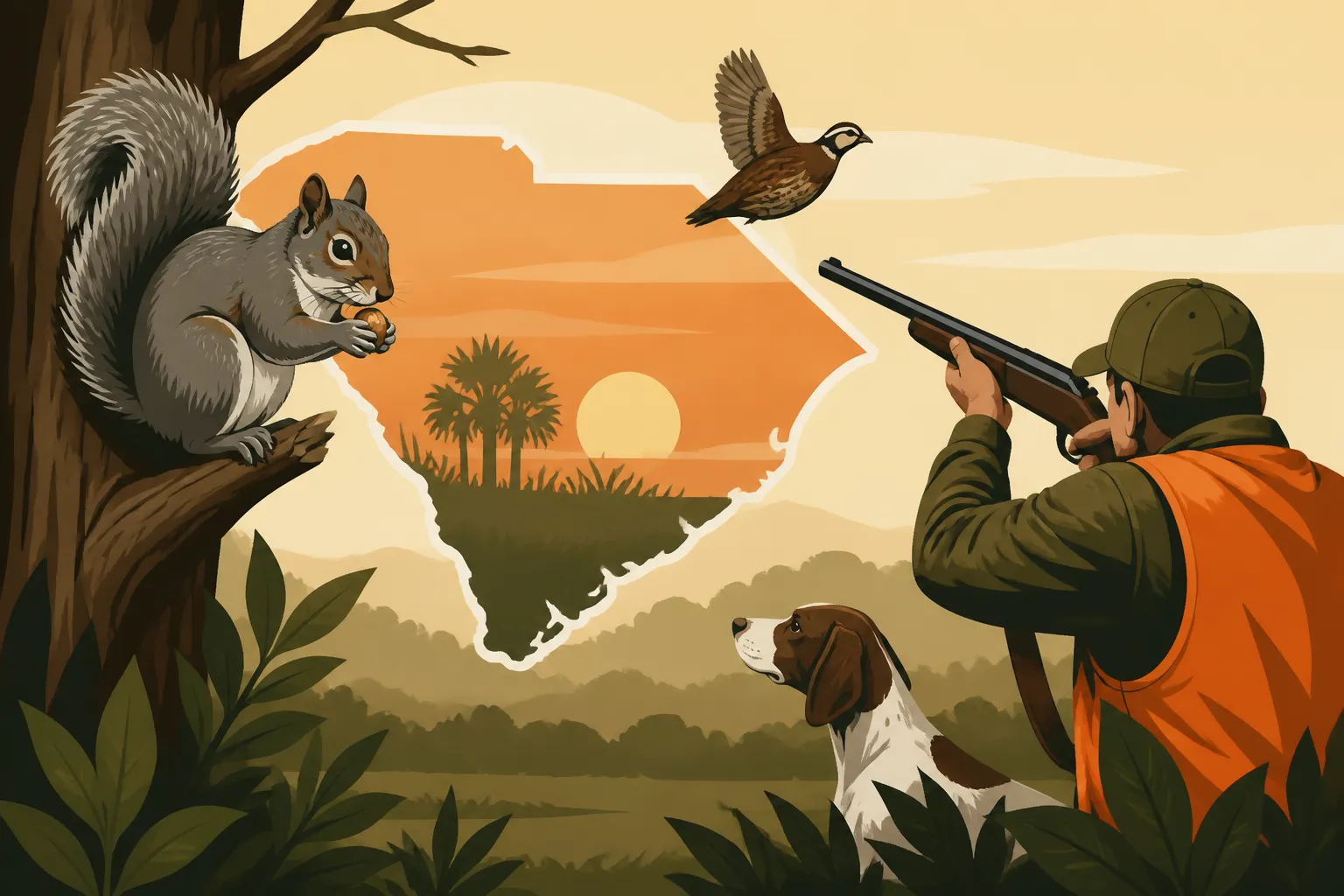
When we talk about small game in South Carolina, squirrels (both gray and fox squirrels) and rabbits (primarily cottontails and swamp rabbits) immediately come to mind. These species represent the backbone of our small game hunting tradition. However, the category also includes other species that, while offering more limited opportunities today, were historically significant. Think about the classic image of bobwhite quail hunters with pointers, or even the rare pursuit of ruffed grouse in the extreme upstate mountains.
Hunting small game is also a powerful way to engage with habitat and ecology. Successful small game hunters learn to read the landscape, understanding how different tree species, undergrowth, and water sources dictate where game will be found. This deep understanding of local ecosystems makes you a more effective hunter for all species, contributing to a more holistic appreciation for wildlife management. It’s not just about the harvest; it’s about understanding the interconnectedness of everything in the woods.
Understanding South Carolina's Small Game Species
Before you can fill your game bag, you need to understand the habits, habitats, and identifying characteristics of the small game you’re pursuing. Each species has its nuances, and knowing them is key to consistent success.
The Ubiquitous Gray Squirrel and Its Habitat
The gray squirrel is, without a doubt, the most common and widely distributed small game animal in South Carolina. These energetic critters thrive in mature hardwood forests, particularly those rich with oaks, hickories, and other mast-producing trees. They're often seen scurrying up and down trunks, leaping from branch to branch, or foraging on the forest floor.
Identifying good gray squirrel habitat is fairly straightforward. Look for mature timber stands with a diverse canopy, ideally close to a water source. You'll often find them in bottomland hardwood areas, along creek bottoms, and on oak ridges in the piedmont and upstate. Learning to read squirrel sign is crucial: look for freshly cut nut shells at the base of trees or on stumps, disturbed leaf litter from their foraging, and even claw marks on tree trunks. Their populations are generally healthy across the state, providing ample opportunities for hunters. They're most active during the early morning and late afternoon, often taking a midday siesta, especially on warmer days.
The Elusive Fox Squirrel: A Bigger Challenge
While gray squirrels are numerous, the fox squirrel offers a different, often more challenging, experience. These are the giants of the squirrel world in South Carolina, sometimes twice the size of their gray cousins, and they come in a stunning array of color phases, from grizzled gray to rusty red to nearly black. What truly sets them apart, however, is their habitat preference and behavior.
Fox squirrels prefer more open, park-like pine forests, pine-oak mixes, and mature longleaf pine savannas. They are less arboreal than grays, spending more time on the ground, often foraging for pine cones and seeds. They are also notoriously warier and move more slowly and deliberately. You'll typically find them in areas like the Sandhills region, parts of the coastal plain, and on the edges of agricultural fields adjacent to suitable timber. Don't expect to see dozens of them in a day; harvesting a fox squirrel is often a testament to patience and careful stalking. When you're Squirrel Hunting a South Carolina Oak Ridge, be sure to keep an eye out for these larger, more colorful squirrels, especially where pines mix with oaks.
Rabbits: Cottontails and Swamp Rabbits
Rabbits, particularly the eastern cottontail, are another cornerstone of South Carolina's small game scene. These fast, elusive game animals provide some of the most exciting, high-energy hunts, often best enjoyed with a group of friends and a good pack of dogs. Cottontails thrive in brushy areas, thickets, fencerows, old fields, and the edges of timber where dense cover provides both food and refuge. They're especially prevalent in areas with overgrown fields and agricultural margins.
The swamp rabbit, as its name implies, prefers wetter, denser habitats like canebrakes, cypress swamps, and low-lying river bottoms. They are larger than cottontails and can be incredibly difficult to dislodge from their preferred cover. Both species offer fantastic table fare and can provide a season-long challenge. For those interested in Rabbit Hunting South Carolina Fencerows, you'll find cottontails are often a prime target, utilizing the linear cover and food sources along property lines.
Other Small Game Opportunities: Quail and Grouse (Status and Prospects)
While historically significant, opportunities for wild bobwhite quail and ruffed grouse in South Carolina are considerably more limited today. The wild bobwhite quail population has seen a significant decline across the Southeast due to habitat loss and fragmentation. Today, pursuing wild quail is often restricted to managed private lands that actively implement specific habitat restoration programs, or very specific public land initiatives. The season for quail, when open, is often shorter and bag limits are conservative.
Ruffed grouse are even rarer, found only in the highest elevations of the Blue Ridge Mountains in the extreme northwestern corner of the state. These birds require very specific young, regenerating forest habitat. Opportunities for grouse hunting are extremely limited and often incidental while pursuing other game. It's wise to check the latest SCDNR regulations meticulously if these species are on your radar, as seasons and bag limits can change based on population surveys and conservation efforts.
Essential Gear for South Carolina Small Game Hunting
One of the great things about small game hunting is that it doesn't always require the extensive, specialized gear list of big game pursuits. However, having the right tools for the job can dramatically increase your comfort, safety, and success in the field.
Firearms for Nimble Targets
When it comes to small game, you have several excellent firearm choices, each with its own advantages:
- Shotguns: Without a doubt, the shotgun is the king of rabbit and bird hunting. A 12-gauge or 20-gauge loaded with small shot (like 6s or 7½s) is ideal for quickly moving targets. The spread of shot makes it more forgiving than a rifle for fast flushes or squirrels leaping through branches. A good pump-action or semi-automatic shotgun offers quick follow-up shots, which can be crucial when multiple rabbits burst from a thicket. The 20-gauge is a fantastic all-around choice, lighter to carry and with less recoil, making it perfect for new hunters or those spending long days in the field.
- 22-Caliber Rifles: For squirrel hunting, a .22 rimfire rifle is a classic for a reason. Its minimal recoil, quiet report, and inexpensive ammunition make it perfect for headshots on treed squirrels, minimizing meat damage. Accuracy is paramount, as you’ll often be shooting at small targets, sometimes at surprising distances. A scope on your .22 can make a huge difference in hitting those vital spots. Just be sure of your backdrop, as .22 rounds can travel farther than many realize.
- Air Rifles: High-powered air rifles are increasingly popular for squirrel hunting, especially in areas where firearms discharge might be sensitive. Modern PCP (pre-charged pneumatic) air rifles can deliver incredible accuracy and sufficient knockdown power for squirrels, often with even less noise than a .22 rimfire. They offer a unique challenge and can be a great option for hunters looking to extend their season or hunt closer to home.
Always ensure your chosen firearm is well-maintained, and you are proficient with it. Regular practice at the range is key.
Clothing and Footwear for Varied Terrain
South Carolina's diverse landscapes, from coastal swamps to upstate mountains, demand versatile clothing and footwear.
- Lightweight Layers: Our hunting seasons often start warm and can remain mild well into winter. Layering is always a smart strategy. Start with moisture-wicking base layers, add a mid-layer for warmth if needed, and a quiet, durable outer layer. Even in cooler months, you’ll be doing a lot of walking, so avoid overly bulky clothing that can hinder movement or cause overheating.
- Snake Boots and Briar Pants: These are non-negotiable for hunting in South Carolina, especially in the lowcountry and piedmont. Rattlesnakes and cottonmouths are present, and snake boots provide vital protection. Similarly, briar pants or chaps will save your legs from painful scratches and tears when pushing through thickets for rabbits or walking through thorny undergrowth in search of squirrels. Look for boots that are comfortable for miles of walking, as you’ll be covering a lot of ground.
- Blaze Orange: Safety is paramount. How Much Blaze Orange South Carolina Requires dictates specific amounts of blaze orange during gun seasons for deer, but it’s a good practice to wear it for small game, especially if you’re hunting with a group or in areas where other hunters might be present. A blaze orange hat and vest are usually sufficient and highly visible.
Beyond the Basics: Calls, Optics, and Carrying Systems
A few additional items can greatly enhance your small game experience:
- Binoculars: Even for small game, a good pair of 8x or 10x binoculars can be invaluable. They help you spot camouflaged squirrels high in the canopy, locate rabbits hunkered down in thickets, or simply scan ahead for movement without having to raise your gun.
- Squirrel Calls: Sometimes, a treed squirrel will freeze. A squirrel call, mimicking the bark or chatter of another squirrel, can often get them to reveal their position, or even come closer.
- Game Vests or Small Packs: A comfortable game vest with a large rear pouch is perfect for carrying your harvest, extra shells, a water bottle, and a snack. For longer treks or if you’re carrying a .22 rifle, a small daypack can offer more carrying capacity and comfort. When scouting new public land or reviewing potential hunting spots from home, online mapping tools like those from GoHunt can give you invaluable insights into terrain, timber types, and access points before you even step foot in the woods. This allows you to plan your routes and identify potential hot spots more efficiently.
- Dog Equipment: If you're Running Beagles on South Carolina Cottontails or hunting squirrels with a dog, you'll need leashes, collars, and potentially GPS tracking collars to keep tabs on your four-legged partners.
Effective Hunting Methods for South Carolina Small Game
Success in small game hunting often comes down to strategy and understanding the behavior of your quarry. Different species and different terrains call for different approaches.
Still-Hunting and Stalking for Squirrels
This is arguably the most common and often most rewarding method for squirrels. It requires patience, keen observation, and silent movement.
- Slow Movement is Key: The name says it all – "still-hunting" means moving very slowly, pausing frequently (often for 5-10 minutes at a time) to scan the trees and ground. Squirrels are masters of camouflage, and they’ll often freeze or try to hide on the opposite side of a tree trunk. By pausing, you give them time to think the "threat" has passed and resume their activity, or you might spot a flicker of movement you would have missed while walking.
- Reading Sign: As you move, constantly look for sign. Freshly cut nuts, particularly acorn and hickory shell fragments, are a dead giveaway that squirrels are active in the area. Look for these "cuttings" under mast trees. Knowing how to interpret Reading Cuttings Under an Oak will tell you if squirrels are feeding there recently. Also, pay attention to the sounds of falling nuts or rustling leaves, which can indicate a squirrel foraging.
- Best Times of Day: Squirrels are most active during the early morning hours, right after daybreak, and again in the late afternoon before dusk. On warm South Carolina days, they often take a long break in the middle of the day. A good Warm-Weather Sitting Strategy in South Carolina can involve targeting these peak activity times and taking a break during the midday heat.
Hunting With Dogs: A Time-Honored Tradition
Hunting small game with dogs is a vibrant tradition in South Carolina, particularly for rabbits and squirrels.
- Beagles for Rabbits: Nothing beats the thrill of hearing a pack of beagles open up on a rabbit track, their baying echoing through the woods. Running Beagles on South Carolina Cottontails is a quintessential Southern hunting experience. Beagles are bred to follow rabbit scent, circling the rabbit back towards the hunters. This method is highly effective in thick cover where rabbits would otherwise be impossible to find. It’s also incredibly social, often involving multiple hunters working together to position themselves for a shot.
- Squirrel Dogs: Cur dogs and certain terrier breeds are trained to find and "tree" squirrels. A good squirrel dog will range out, locate a squirrel, and then bark relentlessly at the base of the tree until the hunter arrives. This method can be incredibly efficient and adds an exciting, interactive element to the hunt. It’s perfect for covering a lot of ground in productive squirrel woods.
Driving and Pushing Cover for Rabbits
This method is particularly effective for rabbits, especially when hunting with a group. It involves strategically positioning "posters" or "blockers" at one end of a thicket or fencerow, while "drivers" walk through the cover, pushing rabbits towards the waiting guns.
- Strategic Placement: Success depends heavily on knowing where rabbits prefer to run when flushed. Often, they’ll follow natural escape routes along the edges of cover, old logging roads, or fencerows.
- Safety First: With multiple hunters moving and shooting, clear communication and strict adherence to safety rules are paramount. Always know where your fellow hunters are and maintain a safe zone of fire. This method can be incredibly productive, yielding multiple rabbits from a single thicket.
- Effective Areas: Focus on dense, impenetrable cover such as briar patches, honeysuckle thickets, abandoned fields, and overgrown drainages. These are the places rabbits feel safe.
Decoy and Call Techniques
While less common than for turkeys or waterfowl, certain calls can be effective for small game.
- Squirrel Barks and Chatters: As mentioned, a squirrel call can be used to elicit a response from a squirrel that’s hiding. A sharp bark or a series of chattering sounds can make a squirrel curious enough to peek around a tree trunk, giving you a shot opportunity.
- Patience with Calls: Don't overdo it. A few barks or chatters, then long periods of silence, are usually more effective. Mimic natural squirrel behavior.
- No Decoys Typically for Rabbits/Squirrels: Unlike birds, decoys are generally not used for squirrel or rabbit hunting. The focus is more on finding them actively feeding or flushing them from cover.
Key Seasons and Regulations for Small Game in South Carolina
Staying compliant with South Carolina Department of Natural Resources (SCDNR) regulations is not just about avoiding fines; it’s about responsible hunting and ensuring healthy populations for future generations. Seasons, bag limits, and licensing requirements are essential knowledge for every hunter.
South Carolina Squirrel Season Dates and Limits
South Carolina boasts a generous squirrel season, often running from early fall well into the late winter. This long season provides ample opportunity to get out and enjoy the woods.
- Typical Season: Generally, squirrel season in South Carolina opens around September 1st and can run through mid-March the following year. However, specific dates can vary by game zone and from year to year, so always confirm with the most current SCDNR regulations.
- Bag Limits: The daily bag limit for squirrels is usually 10 per hunter. This applies to both gray and fox squirrels combined. Remember, just because you can take 10 doesn't mean you have to. Ethical hunters only take what they can use.
- Hunting on WMAs: On Wildlife Management Areas (WMAs), specific season dates and bag limits might differ from statewide regulations. Always check the individual WMA rules before you hunt.
Rabbit Season Dates and Bag Limits
Rabbit season often mirrors the squirrel season in its length, providing many months of opportunity.
- Typical Season: Rabbit season typically runs from around September 1st through mid-March. Again, always verify the exact dates for the current hunting year.
- Bag Limits: The daily bag limit for rabbits is generally 5 per hunter. Like squirrels, this is a combined limit for both cottontail and swamp rabbits.
- Overlapping Seasons: Rabbit season often overlaps with deer and other small game seasons, meaning you might encounter other hunters in the woods. Always be mindful of other hunters and wear your blaze orange. For detailed regulations, especially on public lands, refer to the South Carolina Small Game Season Rules.
Understanding Quail and Grouse Seasons (Limited Opportunities)
As discussed, opportunities for wild quail and grouse are limited.
- Quail Season: When open, the quail season is usually shorter, typically running from late November through early March. Daily bag limits are conservative, often 12 per hunter. These limits and dates are especially critical on WMAs, where opportunities might be highly restricted or require special permits.
- Grouse Season: Ruffed grouse season in South Carolina is extremely short and limited to specific areas in the mountains, if open at all. The bag limit is typically very small, sometimes just 3 per day. Due to their rarity, it’s vital to confirm if a season is even open for grouse and to follow all regulations meticulously.
License Requirements and Hunter Education
To legally hunt any game in South Carolina, you must possess the proper licenses and permits.
- Base Hunting License: All resident and nonresident hunters need a valid South Carolina hunting license. This is your fundamental permit to hunt any game species.
- Big Game Permit (Not for Small Game, but Important): While small game doesn't require a big game permit, many hunters pursue multiple species. Understanding requirements for other game helps round out your knowledge.
- WMA Permit: If you plan to hunt on any of South Carolina's Wildlife Management Areas, you will also need a WMA permit in addition to your base hunting license. These permits help fund habitat management and public access programs. Check out the South Carolina WMA Permit Requirements for more details.
- Hunter Education: South Carolina has specific South Carolina Hunter Education Requirements for all first-time hunters born after June 30, 1979. This course covers firearm safety, wildlife identification, conservation principles, and hunting ethics. Even if not required, it’s an excellent course for anyone new to hunting. Apprentice licenses are available for those who need to hunt under the direct supervision of a licensed hunter before completing the course.
It's always a good idea to keep a copy of your licenses on your person while hunting, whether a physical copy or an electronic version on your phone via the Go Outdoors SC app.
Finding Your Small Game Hotspots in South Carolina
The beauty of small game hunting in South Carolina is that prime habitat can be found in various locations, from sprawling national forests to small, overlooked patches of private land. Knowing where to look and how to gain access is paramount.
Public Land Opportunities: National Forests and WMAs
South Carolina offers a significant amount of public land accessible to hunters, and much of it holds excellent small game populations.
- Francis Marion and Sumter National Forests: These two vast national forests are jewels of public land hunting. The Francis Marion National Forest, located in the coastal plain near Charleston, offers extensive bottomland hardwoods, pine flats, and swampy areas perfect for squirrels and swamp rabbits. The Sumter National Forest, spread across the piedmont and upstate, features rolling hills, oak ridges, and mature timber. Sumter National Forest Hunting and Francis Marion National Forest Hunting guides can provide more in-depth information. Both forests are managed for diverse wildlife, and diligent scouting will often reveal squirrel and rabbit strongholds. Remember to check specific ranger district rules, as some areas may have unique regulations.
- Wildlife Management Areas (WMAs): Scattered throughout the state, WMAs offer a wide range of habitat types. These areas are managed specifically for wildlife and public recreation. Many WMAs, such as those within the Francis Marion or in other regions, can be excellent for small game. It's crucial to consult the SCDNR's WMA regulations booklet or the Go Outdoors SC website, as rules for specific WMAs can vary significantly regarding open seasons, permitted weapons, and even daily entry requirements. Tools like GoHunt or the Using Go Outdoors SC Without Cell Service feature in the app can be indispensable for navigating these public lands, showing property boundaries, identifying terrain features, and even tracking your movements.
Navigating Private Land Permission
While public lands are valuable, many excellent small game opportunities exist on private land. Gaining permission, however, requires a respectful and strategic approach.
- The Power of Asking: The simplest way to gain access is to simply ask landowners. Approach them politely, introduce yourself, explain your intentions, and be prepared to be told "no." Don't take it personally. Persistence and respect go a long way.
- Building Relationships: If you do gain permission, be an exemplary guest. Offer to help with chores, share your harvest, clean up any trash, and always thank the landowner. Long-term relationships can lead to consistent hunting opportunities. Farmers, in particular, may welcome hunters to help manage rabbit and squirrel populations that can impact crops.
- Small, Overlooked Tracts: Don't just focus on large farms. Small woodlots, overgrown creek bottoms, and fencerows on properties near suburban areas can hold surprising numbers of small game, especially if they are overlooked by other hunters.
Reading the Landscape: Identifying Productive Habitat
Regardless of whether you're on public or private land, learning to "read the land" is a critical skill for small game hunters.
- Oak Ridges and Bottomland Hardwoods: For squirrels, seek out mature oak and hickory forests. In the upstate and piedmont, this means ridges and slopes with abundant mast crops. In the lowcountry, focus on bottomland hardwoods along rivers and creeks. These areas provide both food and denning trees.
- Fencerows and Thickets: Rabbits are masters of cover. Focus on areas with dense, tangled undergrowth: fencerows, briar patches, honeysuckle thickets, abandoned fields, and brushy creek bottoms. These areas provide vital escape routes and protection from predators. Remember, Rabbit Hunting South Carolina Fencerows can be particularly productive due to the linear nature of the cover, which often funnels rabbits.
- Mixed Pine-Hardwood Stands: For fox squirrels, look for areas where mature pines are interspersed with oaks, creating a more open understory. These squirrels enjoy both pine nuts and acorns and the ability to move freely on the ground.
- Water Sources: Water is essential for all wildlife. Hunting near creeks, ponds, and swamp edges can often lead to finding active game.
Processing Your Harvest and Field Care
The hunt doesn't end when the shot is fired. Proper field care ensures your hard-earned game makes it to the table in prime condition. Small game offers some of the best eating in the woods, so treating it right from the start is important.
Field Dressing Small Game in Warm Weather
South Carolina's hunting seasons often feature warm temperatures, especially during the early squirrel and rabbit openers. This means quick field dressing is crucial to prevent spoilage.
- Quick Cooling is Key: As soon as you retrieve your game, remove the entrails. This allows the body heat to dissipate rapidly. For squirrels, a quick gutting is often sufficient in the field. For rabbits, you can gut them or often simply skin them whole and then eviscerate.
- Keep it Clean: Use a sharp knife and try to keep dirt and debris off the meat. If you have water available, a quick rinse can help, but pat the cavity dry afterward.
- Carrying and Storage: Once field dressed, place your game in a breathable game bag or a cool part of your vest. Avoid piling them up, as this can trap heat. If you're hunting multiple animals, a small cooler with ice in your vehicle can be a game-changer for preserving quality until you get home for full processing. This is a critical part of Warm-Weather Sitting Strategy in South Carolina during those early season hunts.
Preparing Small Game for the Table
Small game provides incredibly versatile and delicious meat. Once you’re home, the next step is cleaning and preparing your harvest.
- Skinning: Skinning squirrels and rabbits is relatively straightforward. For squirrels, many hunters use a technique where they make an incision across the back, step on the tail, and pull the hide off. Rabbits can be skinned by making a cut around the mid-section and peeling the hide off in two directions.
- Butchering: Once skinned, inspect the meat for any shot damage or imperfections. Cut squirrels into quarters (two front legs, two hind legs, and the saddle). Rabbits are often cut into 5-6 pieces (front legs, hind legs, and sections of the backstrap).
- Recipes: The culinary possibilities are endless! Squirrels are fantastic in stews, pot pies, or fried. Rabbit is delicious fried, braised, or in a rich gravy. Many traditional Southern recipes for chicken can be adapted for squirrel or rabbit. Don't be afraid to experiment with marinades and cooking methods.
Safety Considerations in the Field
While often less intense than big game hunting, small game hunting still carries significant safety responsibilities.
- Blaze Orange is Your Friend: Always wear blaze orange, especially during gun seasons for other species. It makes you visible to other hunters and can prevent accidents. Even in archery season, a blaze orange hat while walking to and from your stand is a good idea. How Much Blaze Orange South Carolina Requires is a minimum, but more is better.
- Firearm Handling: Always treat every firearm as if it's loaded. Keep the muzzle pointed in a safe direction. Be absolutely certain of your target and what lies beyond it before taking a shot. This is especially important when shooting at squirrels high in trees, where a missed shot can travel far.
- Awareness of Surroundings: Be mindful of other hunters, hikers, and property lines. Know where you are at all times, especially on public land. Using a GPS device or a mapping app like the Go Outdoors SC app on your phone can help you stay within legal boundaries.
- Snake Awareness: As mentioned earlier, South Carolina has venomous snakes. Always watch where you step, especially in thick cover, and wear appropriate footwear.
- Hydration: Especially during warmer parts of the season, carry plenty of water. Small game hunting often involves a lot of walking, and dehydration can quickly become a serious issue.
| Species | Primary Habitat | Typical Season Length (approx.) | Daily Bag Limit | Recommended Firearm |
|---|---|---|---|---|
| Gray Squirrel | Mature Hardwoods, Bottomlands | ~6.5 months (Sept-Mar) | 10 | .22 Rifle, Shotgun (small shot) |
| Fox Squirrel | Open Pine Forests, Pine-Oak Mixes | ~6.5 months (Sept-Mar) | 10 (combined with gray) | .22 Rifle, Shotgun (small shot) |
| Cottontail Rabbit | Briar Thickets, Fencerows, Old Fields | ~6.5 months (Sept-Mar) | 5 | Shotgun |
| Swamp Rabbit | Cypress Swamps, Canes, Wet Bottomlands | ~6.5 months (Sept-Mar) | 5 (combined with cottontail) | Shotgun |
| Bobwhite Quail | Managed Fields, Pine Plantations (limited wild) | ~3 months (Nov-Mar) | 12 | Shotgun |
| Ruffed Grouse | Young Mountain Forests (very limited) | Very short, if open | 3 | Shotgun |
Disclaimer
Hunting regulations, seasons, and licensing requirements can change. Always consult the most current South Carolina Department of Natural Resources (SCDNR) regulations manual or website before heading afield. This guide provides general information and should not be considered a substitute for official legal guidelines. It is the hunter's responsibility to know and follow all applicable laws.