Choosing a Daypack for a Coastal Hunt
Heading out for a hunt along South Carolina's stunning coastline offers some truly unique challenges, from the suffocating humidity to the ever-present threat of an unexpected downpour. If you've ever found yourself soaked to the bone with your gear ruined or struggling to navigate dense palmetto thickets with an ill-fitting pack, you know the frustration. This guide is all about helping you choose the perfect daypack that can stand up to the rigors of coastal hunting, keeping your essential gear safe, dry, and easily accessible so you can focus on the hunt, not your discomfort.
The Unique Challenges of Coastal Hunting in South Carolina
Coastal hunting in South Carolina isn't like heading into the mountains or vast open plains. It’s a world of its own, demanding a different approach to gear, especially when it comes to something as fundamental as your daypack. We're talking about a distinct environment that can test the limits of even the most robust equipment. Understanding these specific pressures is the first step in making an informed decision about what you strap to your back.
Humidity, Heat, and Sudden Downpours
Let’s be honest, South Carolina's coast is synonymous with humidity. Whether you're hunting in the early archery season in August or pursuing waterfowl in the depths of winter, moisture is a constant companion. This isn't just about feeling sweaty; it means your gear is perpetually exposed to dampness, which can wreak havoc on electronics, optics, and even ammunition if not properly protected. A light drizzle can turn into a torrential downpour in minutes, making waterproof or highly water-resistant materials absolutely non-negotiable for your daypack. Imagine being miles into a lowcountry swamp, a sudden storm rolls in, and you find your spare clothes, your phone, or your rangefinder swimming in water. It's a miserable experience that can easily be avoided with the right pack.
The heat also plays a significant role. Carrying a heavy, poorly ventilated pack in sweltering conditions can lead to overheating and exhaustion, cutting your hunt short or even posing a safety risk. You need a pack designed to allow air circulation against your back, preventing that clammy, heat-trapping feeling. This balance between ventilation and weather protection is a fine line that coastal hunters constantly walk, and your daypack needs to be up to the task.
Navigating Swampy Terrain and Thick Cover
Hunting the Lowcountry often means traversing unforgiving terrain. We're talking about muddy sloughs, cypress knees, dense palmetto thickets, and tangled briar patches. Your daypack will inevitably snag on branches, get scraped against rough bark, and possibly even get dragged through mud or standing water. This isn't a place for flimsy fabric or weak zippers. You need a pack that can endure constant abuse without ripping, tearing, or having components fail at a critical moment. Think about trying to extract a deer from a lowcountry swamp, and your pack's zipper gives out, scattering your items into the muck. Durability is paramount here.
Furthermore, the dense cover demands a pack that can move with you, not against you. A bulky, oversized pack might constantly catch on vegetation, making quiet movement nearly impossible and draining your energy. Streamlined designs that hug your body and don't protrude excessively are key to slipping through the woods quietly and efficiently. When you're Hunting Lowcountry Swamp Deer, every rustle counts, and a snagging pack can give away your position.
The Need for Versatility in Coastal Environments
Coastal South Carolina offers a diverse range of hunting opportunities, from deer and turkey to waterfowl and hogs. This means your daypack might see action in various scenarios. One week you might be still-hunting pine flatwoods, the next you're setting up for a morning flight in a tidal marsh. Your pack needs to be versatile enough to accommodate different load-outs and adapt to these varied demands. Maybe you need external lash points for a jacket one day, or a dedicated pocket for calls the next.
Consider the diverse needs: a pack for a quick morning dove hunt will be vastly different from one you’d use for a full day of Bowhunting South Carolina's Long Archery Season. However, if you're like most hunters, you're not buying a new pack for every single game species or scenario. Therefore, selecting a pack that offers modularity, adjustable compression straps, and thoughtful pocket placement can make it a true workhorse across your coastal hunting adventures.
Essential Features to Look For in a Coastal Daypack
Now that we've pinpointed the environmental gauntlet your daypack will run, let's dive into the specifics of what makes a pack suitable for coastal South Carolina hunting. These aren't just "nice-to-haves"; these are crucial features that can make or break your experience in the field. Ignoring them could leave you uncomfortable, unprepared, or with damaged gear.
Materials and Weather Resistance
The primary line of defense against the coastal elements starts with the materials. Look for packs made from tough, high-denier fabrics like Cordura or ripstop nylon. These materials are inherently durable and can withstand abrasions from brush and accidental scrapes. Pay attention to the denier rating – higher numbers indicate thicker, more robust fibers. A pack made with 500D or 1000D fabric will offer significantly more longevity than something made with a lower denier material.
Beyond just the fabric, true weather resistance comes from coatings and construction. Many quality hunting packs feature a DWR (Durable Water Repellent) coating, which causes water to bead up and roll off. However, for the persistent moisture of the coast, you'll also want to consider packs with integrated rain covers, or better yet, those made from waterproof laminated fabrics or with taped seams. Even if a pack isn't fully submersible, its ability to shed water and protect internal contents from steady rain is critical. Look for robust, water-resistant zippers, often identified as YKK AquaGuard or similar, to prevent water intrusion through these vulnerable points. Without these considerations, you might find your valuables compromised during a typical coastal downpour. Many hunters use the tools on GoHunt to research gear reviews and compare material specs before buying.
Capacity and Organization for Your Gear
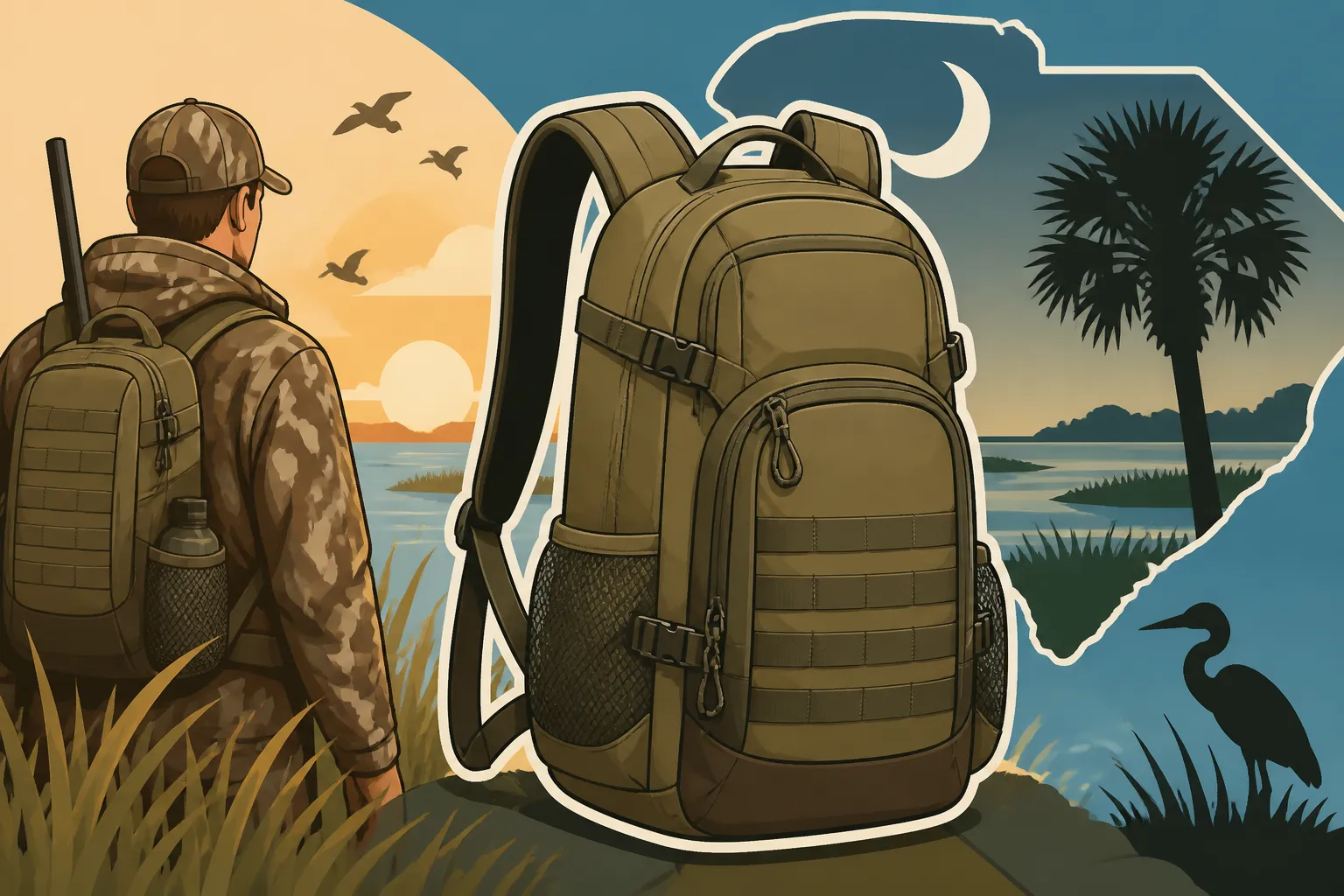
Choosing the right capacity for your daypack is a balance. Too small, and you'll be forced to leave essentials behind; too large, and you'll be tempted to overpack, leading to unnecessary weight and bulk. For coastal day hunts, a capacity ranging from 1,500 to 2,500 cubic inches (around 25-40 liters) is often ideal. This typically provides enough space for food, water, extra layers, first-aid, calls, optics, and other hunting essentials without being unwieldy.
Consider how the pack is organized internally and externally. Multiple compartments and pockets allow you to separate gear, preventing noisy rattling and making it easier to find what you need quickly. Look for:
- Main compartment: Large enough for bulkier items like rain gear or a packed lunch.
- External pockets: Easy access for calls, rangefinder, GPS, or a small first-aid kit.
- Internal organization: Pockets or sleeves for documents, licenses, or delicate items.
- Water bottle pockets: Essential for hydration, preferably accessible while wearing the pack.
- Compression straps: These are vital for cinching down the load, keeping it stable, and allowing you to adapt the pack's volume as your gear changes (e.g., after shedding a jacket). They also help secure external items like a tripod or extra layers.
| Feature | Importance for Coastal Hunting | Why It Matters |
|---|---|---|
| Water Resistance | Critical | Protects electronics, clothes, and calls from humidity and sudden downpours. |
| Durable Fabric | Critical | Prevents snags and tears from dense briars, palmettos, and cypress knees. |
| Breathable Back Panel | High | Reduces sweat and heat buildup in hot, humid conditions. |
| Adequate Capacity | High | Carries essentials (water, food, layers, first aid) without being bulky. |
| Good Organization | High | Keeps gear accessible, quiet, and prevents damage. |
| Compression Straps | High | Secures loads, adapts volume, and prevents snagging. |
| Comfortable Hip Belt | Critical | Transfers weight to hips, reducing shoulder fatigue during long walks. |
| Quiet Zippers/Fasteners | High | Minimizes noise when retrieving gear, crucial for not spooking game. |
Comfort and Fit for Long Hauls
A daypack, no matter how durable or well-organized, is useless if it's uncomfortable. Given the often long walks through uneven terrain in South Carolina's coastal areas, comfort and a proper fit are paramount. Start by looking for packs with a well-padded and adjustable suspension system. This includes:
- Padded shoulder straps: Wide enough to distribute weight without digging in.
- Adjustable sternum strap: Connects the shoulder straps, preventing them from slipping and distributing weight across your chest.
- Padded hip belt: This is arguably the most crucial feature for comfort. A good hip belt transfers most of the pack's weight (typically 70-80%) from your shoulders to your hips, where your body is better equipped to carry it. Ensure it's wide and padded enough to be comfortable and has pockets for quick access to small items.
Ventilation on the back panel is also key in warm, humid climates. Look for designs that create an air channel between your back and the pack, often using mesh or padded segments. This helps minimize sweat buildup and keeps you cooler. When you're Dragging a Deer Out of a Swamp, the last thing you want is a pack chafing or causing discomfort. Before committing, load up any prospective pack with typical hunting gear and walk around with it. Adjust all straps to find your optimal fit. A pack that fits well will feel like an extension of your body, not an awkward burden.
What to Pack in Your Coastal Daypack
Once you’ve selected the ideal daypack, the next critical step is filling it strategically. What you carry can directly impact your safety, comfort, and success in the field. For coastal South Carolina hunts, there are specific considerations due to the environment and the types of hunting you might be doing. Don't just throw things in; think about access, weight distribution, and redundancy for key items.
Critical Survival and Safety Items
No matter the length of your hunt, some items are non-negotiable for safety, especially when you might be deep in public land like Francis Marion National Forest Hunting. The coastal environment can be deceptively wild, and being prepared for the unexpected is key.
- First-Aid Kit: A compact but comprehensive kit is essential. Include basics like bandages, antiseptic wipes, pain relievers, mole skin for blisters, and any personal medications. Consider adding snake bite specific treatment items if you're frequently in areas known for venomous snakes like cottonmouths and rattlesnakes, though traditional first aid is still the priority.
- Navigation Tools: Even with cell phones, always carry a backup. A reliable GPS unit (some hunters prefer dedicated devices while others use robust apps like GoHunt) or a physical compass and map of the area are vital. Cell service can be spotty in remote coastal areas, and a dead phone battery renders it useless. Knowing Using Go Outdoors SC Without Cell Service can be a lifesaver.
- Illumination: A headlamp with fresh batteries (and spares!) is a must, even if you plan to be out before dark. Recovering an animal, getting turned around, or a simple gear malfunction can extend your time in the woods past sunset quickly.
- Fire Starter: Waterproof matches, a lighter, or a ferro rod can be crucial for warmth, signaling, or cooking in an emergency.
- Whistle: A loud whistle can carry further than your voice, useful for signaling if you get separated from hunting partners or need to alert rescuers.
- Emergency Shelter: A lightweight emergency blanket or survival tarp can provide critical protection from the elements if you're forced to spend an unexpected night out.
Hunting-Specific Essentials
Beyond survival, there are items specific to your hunt that need a home in your daypack. Think about what you'll use most frequently and what absolutely cannot get wet or damaged.
- Optics: Your binoculars and rangefinder are delicate and expensive. Ensure they are protected from impacts and moisture within the pack, or securely stored in a chest harness for quick access. Binocular Choice for South Carolina Whitetails is a key consideration.
- Calls: Whether it's a grunt tube, turkey diaphragm, or a duck call, keep your calls protected and readily accessible in external pockets. You don't want to be fumbling for them when game is approaching.
- Ammunition/Arrows: Carry a small, secure amount of extra ammunition or a few spare broadhead-tipped arrows. Ensure they are protected from moisture and rattling.
- Knife/Multi-tool: A sharp hunting knife and a multi-tool are indispensable for field dressing, gear repair, or countless other tasks.
- Game Bags/Gloves: If you're successful, having a few lightweight game bags to protect meat from dirt and flies is smart, especially in warm weather. Disposable gloves for field dressing maintain hygiene.
- Licenses and Permits: Keep all required licenses, tags, and permits (like a South Carolina WMA Permit Requirements) in a waterproof bag or dedicated pocket. You don't want a game warden to find them ruined by sweat or rain.
Food, Water, and Hydration Strategies
Staying fueled and hydrated is fundamental to maintaining energy and focus throughout your hunt. The heat and humidity of coastal South Carolina amplify this need.
- Water: This is probably the most critical item. Carry more water than you think you'll need. A hydration bladder system (2-3 liters) with an accessible hose is excellent for hands-free hydration. Also consider a backup water bottle. Electrolyte packets or tablets can be a lifesaver to combat dehydration in warm conditions. When it's Warm-Weather Sitting Strategy in South Carolina, you'll be glad you overpacked water.
- Snacks: High-energy, non-perishable snacks are ideal. Think trail mix, energy bars, jerky, or dried fruit. Avoid anything that will melt or get squashed easily.
- Lunch: If you're out for a full day, pack a hearty but easy-to-eat lunch. Sandwiches, wraps, or a small container of leftovers can be great. Insulated compartments in your pack, or a small insulated bag, can help keep food fresh.
- Coffee/Warm Drink: For colder mornings, a small thermos with coffee or hot chocolate can be a welcome morale booster.
Remember to pack out everything you pack in. Leave no trace of your presence in the beautiful South Carolina wilderness.
Field-Testing Your Daypack and Making Adjustments
Getting your daypack is just the beginning. To truly integrate it into your coastal hunting system, you need to put it through its paces. Don't wait until opening morning to discover a snag or an uncomfortable fit. Real-world testing and ongoing adjustments are vital for maximizing its utility and ensuring it serves you well, season after season.
Pre-Season Prep and Practice Runs
Before the season even kicks off, load your new daypack with all the gear you intend to carry on a typical hunt. This includes water, food, optics, calls, and any extra layers. Now, go for a walk. Don't just stroll around the block; simulate the kind of movement you'll be doing in the woods. Walk up and down hills (if you have them), push through dense brush, and even crouch or sit. This "shakedown" walk will immediately reveal any issues:
- Comfort: Do the straps dig in? Is the hip belt sitting correctly? Is there any chafing? Adjust all straps, load lifters, and the sternum strap until the pack feels stable and comfortable.
- Weight Distribution: Does the pack feel balanced? Try to keep heavier items closer to your back and centered.
- Noise: Does anything rattle or clank when you move? Use small pouches, foam, or even a spare sock to cushion noisy items. Rattling Volume in Thick Pine Cover isn't just for calls; it applies to your entire setup.
- Accessibility: Can you easily reach frequently used items like your water bottle, rangefinder, or calls without taking the pack off or performing contortions? If not, rearrange. GoHunt offers specific tools for logging gear lists and checking off items as part of pre-hunt prep.
These practice runs are also a great time to ensure your rain cover deploys easily and effectively, or that your waterproof inner bags are truly protecting sensitive electronics. Knowing your gear works under simulated stress before the real thing provides immense confidence.
Adapting to Different Hunt Types
As we've discussed, coastal South Carolina offers varied hunting scenarios. Your daypack should be adaptable. While the core items might remain the same, the specifics of your load-out will change depending on whether you're hunting deer in a swamp, calling turkeys in the piney woods, or sitting for doves.
- Deer Hunting: Focus on quiet movement. Ensure external pockets are secure and don't create noise. You might need room for a deer drag, larger optics, or scent control items. For longer sits, consider a small, foldable cushion or ground pad.
- Turkey Hunting: Accessibility for calls is key. Many turkey hunters prefer vests, but a compact daypack can supplement a vest or work as a standalone. Ensure there's space for a decoy, if you use one, and extra shells. Turkey Calls Worth Carrying in South Carolina often dictates specific pocket sizes.
- Waterfowl/Small Game: You'll likely need less space for calls but more for shells and possibly a game strap or retrieving dummy. Durability against water and mud becomes even more critical.
- Warm Weather vs. Cold Weather: Your clothing layers will dictate significant changes. In warm weather, you might carry more water and lighter layers. In cooler months, you'll need space for heavier insulation, gloves, and a hat.
Think of your daypack as a modular system. Use stuff sacks or dry bags to organize different categories of gear, making it easier to swap out items for specific hunts without having to completely unpack and repack your entire system. This flexibility is vital for the serious coastal hunter.
Maintenance and Longevity for Coastal Conditions
The high humidity, salt air (near the coast), and muddy conditions demand diligent maintenance to ensure your daypack lasts. Ignoring this can lead to premature wear, mildew, and component failure.
- Regular Cleaning: After each hunt, especially if the pack got wet or muddy, empty it completely. Wipe down external surfaces with a damp cloth to remove dirt and salt residue. For persistent odors or heavy grime, a gentle hand wash with mild soap and water, followed by thorough rinsing, is often needed. Always air dry completely in a well-ventilated area, not in direct sunlight or with heat, to prevent mildew and degradation of materials.
- Zipper Care: Zippers are often the first thing to fail. Clean them regularly and apply a silicone-based lubricant or zipper wax, especially on YKK AquaGuard or similar water-resistant zippers, which can be stiffer. This prevents corrosion and keeps them running smoothly.
- Strap and Buckle Inspection: Periodically check all straps for fraying and buckles for cracks. Replace or repair them proactively before they fail in the field.
- Waterproofing Renewal: Over time, DWR coatings wear off. You can reapply DWR sprays or wash-in treatments (available from brands like Nikwax or Granger's) to maintain the pack's water resistance.
- Storage: When not in use, store your daypack in a cool, dry, well-ventilated space, away from direct sunlight. Avoid stuffing it into a plastic bag, which can trap moisture and encourage mildew.
A well-chosen and well-maintained daypack can be a reliable partner for many seasons of Hunting the ACE Basin for Deer and other adventures across South Carolina’s diverse landscapes.
Disclaimer
This article is for general informational purposes only and does not constitute professional advice. Laws, prices and regulations vary by location and change over time. Consult a qualified professional for guidance on your specific situation.