Oconee County Public Land Access
Many hunters dream of chasing deer, turkey, or even black bear in the beautiful, rugged mountains of South Carolina's Upstate, but the reality of finding truly accessible and productive public land in a specific county like Oconee can feel like navigating a maze. From deciphering forest boundaries to understanding local regulations, it's easy to get overwhelmed. This guide is designed to cut through that confusion, illuminating Oconee County's primary public hunting opportunities, focusing on the vast Andrew Pickens Ranger District, and equipping you with crucial navigation and hunting strategies so you can hit the woods with confidence.
Understanding Oconee County's Unique Public Hunting Opportunities
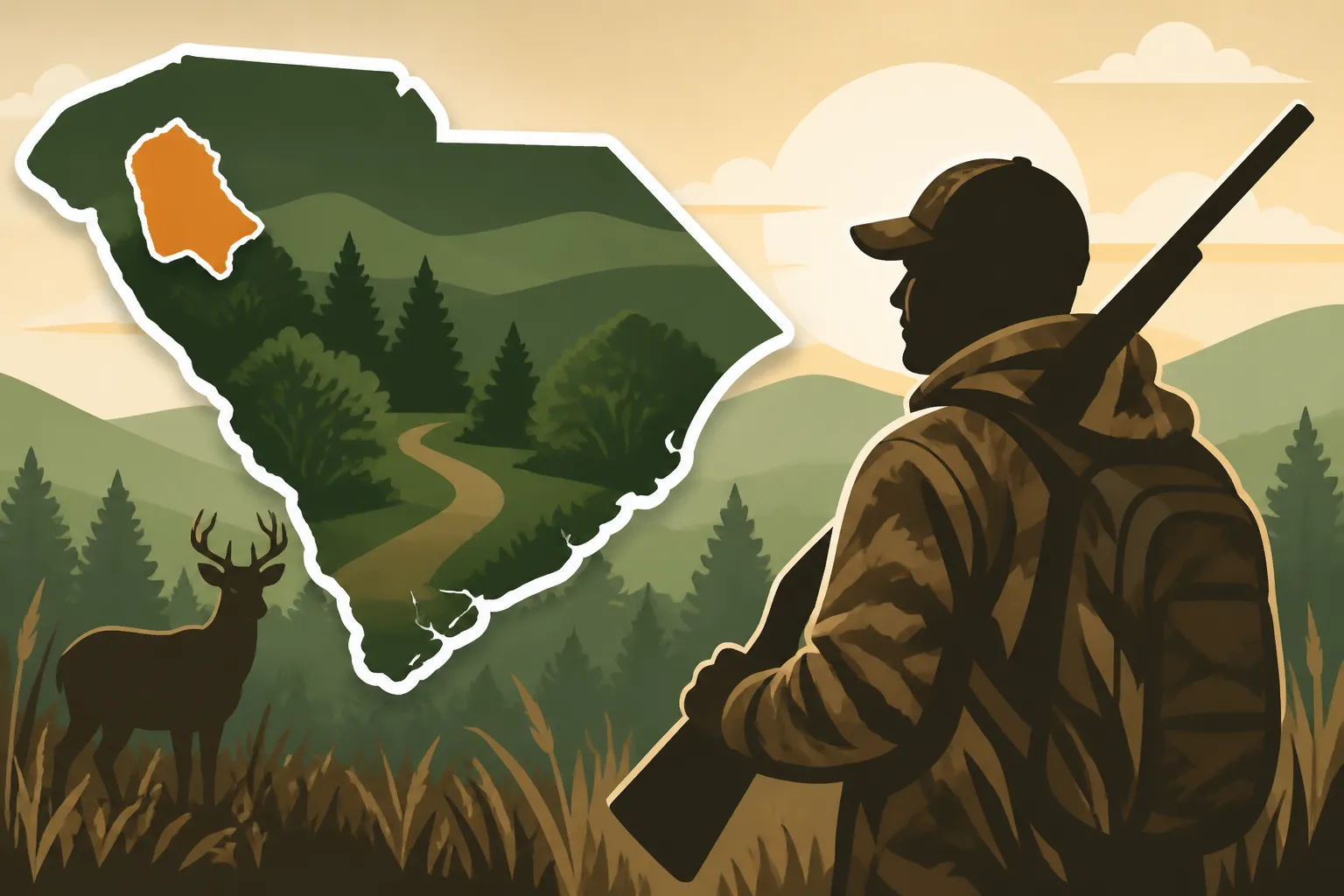
Oconee County, nestled in the northwest corner of South Carolina, is a hunter's paradise, distinctly different from the coastal plains or the Midlands. Here, the rolling hills give way to the rugged foothills of the Blue Ridge Mountains, creating a unique environment for both game and hunters. This distinct topography means hunting strategies and even the species you pursue can vary greatly from other parts of the state.
The Backbone: Andrew Pickens Ranger District of Sumter National Forest
When we talk about public hunting land in Oconee County, the conversation invariably begins and largely centers around the Andrew Pickens Ranger District, a significant portion of the larger Sumter National Forest. This district isn't just a small patch of woods; it's a vast expanse of mountainous terrain, mature hardwoods, and dense undergrowth that offers a true wilderness experience often hard to find elsewhere in the state.
Imagine stepping out of your truck and immediately being greeted by the ascent of a steep hillside, the air thick with the scent of oak leaves and damp earth. The Andrew Pickens District is characterized by dramatic elevation changes, deep hollows, winding creeks, and expansive ridge systems. This habitat provides excellent cover and diverse food sources for game like white-tailed deer, wild turkeys, and a healthy population of black bears. Unlike the flat, swampy bottoms of the Lowcountry, navigating these woods requires physical stamina and a keen understanding of contour lines. Hunters often find the sheer scale and ruggedness of the terrain daunting, which can actually work to your advantage; many hunters stick to areas closer to roads, meaning those willing to put in the legwork can find untouched pockets of habitat. This is truly where you can get away from it all and immerse yourself in a backcountry hunt, but it demands respect for the land and your own preparedness.
Beyond the National Forest: Other Public Access Points
While the Andrew Pickens Ranger District undeniably forms the core of Oconee County's public hunting opportunities, it's worth noting that hunters should always consult the South Carolina Department of Natural Resources (SCDNR) for any additional smaller Wildlife Management Areas (WMAs) or specific state park hunting opportunities that may arise. These smaller tracts can sometimes offer different types of habitat or species concentrations, and occasionally less pressure on specific hunt dates.
For instance, while extensive land for traditional deer and turkey hunting outside the national forest might be limited, Oconee County is also home to vast lakes like Lake Jocassee and Lake Keowee. These bodies of water, and the river systems that feed them, can sometimes offer fantastic opportunities for waterfowl hunting, particularly for species like wood ducks and various diving ducks, depending on the season and specific regulations. Access points around these lakes, often managed by Duke Energy or the state, might provide jump-shooting or small boat hunting scenarios. Always double-check current regulations for specific water bodies and access points, as rules can vary significantly. Occasionally, you might find smaller, privately owned timber company lands that are enrolled in public access programs, but these are less common and often require special permits or have limited windows. The key takeaway is to always cross-reference with the latest SCDNR information to ensure you're aware of all possibilities.
Navigating and Preparing for Your Oconee Hunt
Hunting in Oconee County's mountainous terrain isn't just about knowing where the public land is; it's about knowing how to navigate it safely and effectively, and understanding the specific rules that apply to such a unique environment. Preparation is your best friend when heading into the Upstate's rugged woods.
Essential Mapping and Navigation Tools
The sheer scale, ruggedness, and remote nature of the Andrew Pickens Ranger District make accurate and reliable navigation absolutely non-negotiable. Getting lost in these woods is a real possibility, and cell service can be spotty or nonexistent in many areas. While a good old-fashioned paper map and compass are always wise backups, modern digital mapping tools have become invaluable.
This is where applications like onX Hunt really shine. They provide incredibly detailed topographic maps, clearly delineating public and private land boundaries, which is crucial for staying legal and avoiding trespassing. You can scout potential bedding areas, identify travel corridors like saddles and benches, and mark possible entry and exit points all from the comfort of your home. What's even better is the ability to download maps for offline use, ensuring you have access to critical information even without a cell signal. I always recommend using onX Hunt to identify potential stand locations, mark your vehicle's parking spot, and map out routes around particularly steep terrain or thick rhododendron patches. onX Layers for South Carolina Land Status can give you a powerful advantage by showing exactly what kind of land you're on and who owns the adjacent parcels. Beyond that, the official Scouting With the Go Outdoors SC App can be an excellent resource for checking WMA boundaries and regulations on the fly, and for reporting your harvest when you do connect with service. Always mark waypoints for your vehicle, planned stand locations, and any game you harvest to make recovery simpler and safer.
Permits, Regulations, and Hunter Safety in the Upstate
Hunting anywhere in South Carolina requires adherence to state laws, but when you step onto Wildlife Management Area (WMA) lands within the national forest, there are additional layers of regulations you need to be aware of. First and foremost, you'll need a valid South Carolina hunting license, which is the baseline. Beyond that, for deer and turkey, a Big Game Permit is mandatory. However, to hunt on any of the Sumter National Forest lands, including the Andrew Pickens District in Oconee, you must also possess a WMA Permit. This permit is critical for accessing these public lands, and conservation officers regularly check for it. Skipping this step can lead to hefty fines and a ruined hunt. You can find comprehensive details on all the necessary permits and their associated costs in our guide on South Carolina Hunting Licenses and What They Cost and specifically for public land in South Carolina WMA Permit Requirements.
Specific WMA rules also dictate things like ATV use (generally restricted to designated roads), camping areas (often specific sites only), and even Treestand Rules on South Carolina Public Land which may prohibit damaging trees or leaving stands overnight. During deer seasons, especially still-gun season, South Carolina has strict blaze orange requirements. Oconee County falls into Game Zone 1, which has unique deer season dates, often opening later and running later into the year compared to the coastal zones. You absolutely need to consult the SCDNR regulations for Zone 1 dates for deer, turkey, and bear, as these seasons are distinct. South Carolina's Four Game Zones and South Carolina Deer Season Structure Explained are great places to start. Safety in the mountains is also paramount. Always let someone know your hunting plan, carry a comprehensive first-aid kit, pack plenty of water, and dress in layers for variable mountain weather. Be acutely aware of your surroundings, especially when hunting during bear season in the Andrew Pickens Ranger District Bear Hunting area, and always have appropriate gear for the steep terrain, including sturdy boots.
Here's a quick overview of essential permits for Oconee County public land:
| Permit/License Category | Requirement for Oconee Co. Public Land | Notes |
|---|---|---|
| Base Hunting License | Required for all hunters. | Must be valid for the current season. Available for residents and nonresidents. |
| Big Game Permit | Required for deer and turkey hunting. | This is in addition to the base license if pursuing these species. |
| WMA Permit | Required for hunting Sumter National Forest. | Oconee's national forest lands fall under WMA regulations. Essential for public land access. |
| Federal Duck Stamp | Required for migratory waterfowl. | If you plan to hunt ducks/geese on lakes or rivers. |
| HIP Certification | Required for migratory birds. | Harvest Information Program certification, in addition to the Federal Duck Stamp for bird hunters. |
| Bear Tag | Required if pursuing black bear. | A specific tag is needed, in addition to base license and WMA permit, during the short Hunting Zone 1 Still-Gun Bear Season. |
Hunting Strategies for Oconee County's Mountainous Terrain
Hunting the mountains of Oconee County presents a completely different set of challenges and rewards compared to the flatlands. Deer and turkey movements are dictated by elevation, food availability, and the specific nuances of mountain weather, particularly wind and thermals. Understanding these elements is key to consistent success.
Deciphering Mountain Deer and Turkey Movement
Unlike the relatively flat terrain of the Lowcountry, deer and turkey patterns in Oconee County are inextricably linked to the topography. Deer, in particular, are masters of using elevation changes to their advantage. They'll often bed on benches or saddles along ridgelines, allowing them to detect threats from below and above. Their travel corridors frequently follow these natural contours, moving between bedding areas and food sources in hollows or on gentler slopes. Understanding how to interpret these subtle shifts in elevation is paramount, as detailed in our guide Reading a Ridge for Upstate Deer. Look for oak ridges, especially during good acorn years, as these will be prime feeding locations. Conversely, clear-cuts or areas of younger growth can provide excellent browse and thick cover, becoming magnetic bedding areas. Don't forget that if you're Hunting After a Poor Acorn Year, deer may shift their focus to other mast crops or browse, forcing you to adapt your scouting.
Another critical factor in mountain hunting is the dynamic interplay of Wind and Thermals on an Upstate Ridge. Thermals are air currents that rise as the sun heats the ground and fall as it cools, effectively pushing your scent uphill in the morning and downhill in the evening. Combining this with prevailing winds means you need to be hyper-aware of your position relative to where you expect game to be. A stand that's perfect in the morning can be a complete bust in the afternoon if you don't account for changing thermals. For turkeys, understanding their roosting habits is vital. They often roost on high points along ridges, pitching down into the hollows or gentler slopes to feed in the morning. Your calling strategies need to account for the way sound carries (or doesn't carry) in these environments, and how turkeys navigate the terrain.
Tactics for Successful Hunts in Remote Areas
The beauty of Oconee's public land is the opportunity to truly get away from other hunters. This often means embracing the challenge of steep climbs and long walks. The further you're willing to venture from easily accessible forest roads and parking areas, the greater your chances of encountering less pressured animals. This commitment to hiking deep can feel daunting, but it's often the most effective strategy.
When heading into these remote areas, consider your gear choices carefully. Lightweight, mobile setups are ideal. Whether you prefer a climbing stand (on suitable trees) or a saddle hunting setup, portability is key. Our guide on Hanging a Stand on a Sumter Forest Ridge provides excellent insights specific to national forest settings. Many seasoned Upstate hunters favor a run-and-gun approach, covering ground and setting up quickly where fresh sign is found, rather than sitting in one spot all day. This is particularly effective for Still-Hunting Sumter Forest Ridges, where you slowly move, stopping frequently to glass and listen. During the late season, when the leaves are off the trees, spot-and-stalk tactics can also be incredibly rewarding, offering longer sightlines on open slopes. Finally, always, always consider game recovery. Hauling a deer, or especially a bear, out of a steep hollow is an incredibly strenuous task. Plan your shot carefully, be prepared with a good game cart or frame pack, and ideally, hunt with a partner to assist with the pack-out. Don't let the thought of a difficult recovery deter you from venturing deep, but certainly respect the effort it will take.
Disclaimer
This article is for general informational purposes only and does not constitute professional advice. Laws, prices and regulations vary by location and change over time. Consult a qualified professional for guidance on your specific situation.