Setting Up a Dove Field Before Opening Day
Preparing a successful dove field for opening day in South Carolina can feel like a high-stakes agricultural project, with the ever-present pressure of making sure those birds are cupping wings over your spread when that first Saturday in September rolls around. It's frustrating to pour time and money into a field only to see it empty, or worse, have the birds feeding on a neighbor's plot. This guide is here to unravel the mystery and walk you through the precise steps to plan, plant, and manage a productive dove field that will keep those fast-flying targets coming back for more.
The Groundwork: Planning Your Dove Field for Success
Before you even think about putting a seed in the ground, a little upfront planning goes a long way. This isn't just about throwing out some millet; it's about understanding the nuances of dove behavior and marrying that with smart land management and, crucially, legal compliance.
Understanding South Carolina Dove Behavior
Doves are creatures of habit and efficiency. They're looking for an easy meal, a safe place to rest, and access to water and grit. They don't want to work hard for food, which is why fields with seeds exposed on bare ground are so attractive. They prefer open areas for feeding because it allows them to spot predators from a distance, giving them ample time to escape. You’ll notice them flying in predictable patterns, often following tree lines, ditches, or changes in elevation as they move from roosting areas to feeding grounds and then to water.
Think about their daily routine: they'll leave their roost early in the morning, fly to a feeding field, fill their crop, then head to a "loafing" area (often dead trees, power lines, or open branches) to digest. Later, they'll seek out water and grit (small stones they ingest to help grind food in their gizzard), often hitting another feeding field before returning to roost for the evening. If your field can meet several of these needs, you're ahead of the game. For a deeper dive into these birds, understanding Mourning Doves in South Carolina can give you an edge in your planning.
Choosing the Right Location and Crop
The location of your dove field is paramount. Doves appreciate proximity to water, and tall trees for roosting or loafing. A field that’s isolated in a vast expanse of dense timber might not get the same attention as one near a reliable pond or a stand of mature pines. The field size also matters; while even a small plot can be effective, larger fields (5-10 acres or more) tend to attract and hold more birds, especially if they are well-managed. Pay attention to natural flight corridors or funnels that doves might already be using in the area.
When it comes to crops, variety is the spice of life, but consistency is key for doves. Sunflowers are a classic choice, and for good reason—doves absolutely love them, and the tall stalks provide cover for hunters. However, they can be more expensive to plant and require specific timing. Millet (both browntop and proso) is another fantastic option, often cheaper, and quicker to mature, allowing for multiple plantings or an easy backup plan if your primary crop struggles. Corn and wheat are also viable, particularly if you're already farming these crops. Sorghum is another excellent choice, offering good seed production and being relatively drought-tolerant. Consider your soil type, available equipment, and the planting calendar when making your selection.
| Crop Type | Attractiveness | Planting Time (SC) | Days to Maturity | Cost (approx.) | Notes |
|---|---|---|---|---|---|
| Sunflower | High | May – Early July | 90-110 | Moderate-High | Excellent dove magnet, provides hunter cover. Requires good soil. |
| Browntop Millet | High | May – August | 50-70 | Low-Moderate | Fast-growing, can replant. Doves love small, exposed seeds. |
| Corn | Moderate-High | April – Early June | 90-120 | Moderate | Good if already farming. Requires crushing/discing for exposure. |
| Sorghum | Moderate-High | April – Mid July | 90-120 | Moderate | Drought-tolerant, good seed yield. |
| Wheat | Moderate | Fall (for spring harvest) | 180-240 | Low | Good early season option if planted the prior fall. |
Legal Considerations and Regulations
This is where many well-intentioned dove field managers run afoul of the law without even realizing it. South Carolina follows federal migratory bird regulations, and the concept of "baiting" is taken very seriously. The core rule is that you cannot hunt doves over a baited area. A baited area is defined as any area where "salt, grain, or other feed has been placed, exposed, deposited, distributed, or scattered as to constitute an attraction or lure to birds." This includes seeds that are broadcast or scattered on the ground.
However, you can hunt doves over a field where seeds are present as a result of a normal agricultural planting, harvesting, or post-harvest manipulation. "Normal agricultural operations" are key. For instance, planting sunflowers in rows and then harvesting them (combining) is fine. Discing or mowing standing crops (like millet or corn) to expose seeds is also permitted, but here's the kicker: if you manipulate the crop, you cannot hunt over that specific manipulated portion of the field for 10 days following the manipulation. This 10-day rule is critical to avoid baiting violations. You also cannot broadcast seeds and then mow them in to pretend it's a normal planting. Always check the latest South Carolina Small Game Season Rules and federal regulations before you begin, as these can be updated annually. Ignorance of the law is not a defense, and penalties can be steep.
From Seed to Stand: Cultivating Your Field
Once you've got your plan locked down, it's time to get your hands dirty. The success of your dove field hinges on how well you execute your planting and management throughout the growing season.
Preparing the Soil and Planting Techniques
Just like any successful agricultural endeavor, it all starts with the soil. Begin with a soil test to understand its pH and nutrient deficiencies. Doves prefer areas where food is abundant, and a healthy crop starts with healthy soil. Adjust your pH and fertilize according to the recommendations. Good seed-to-soil contact is crucial for germination. This usually means preparing a fine, firm seedbed. Plowing, discing, and then cultipacking are common steps to achieve this.
The specific planting technique will depend on your chosen crop. For sunflowers, you'll generally want to plant them in rows with a planter, typically 3-6 inches apart in the row, with rows 30-36 inches apart. This allows for good air circulation and light penetration, promoting strong plants and larger heads. Millet, being a smaller seed, can be broadcast or drilled. If broadcasting, ensure light discing or cultipacking afterward to cover the seed shallowly (1/4 to 1/2 inch deep). Planting depth is critical; too deep, and the seeds won't germinate; too shallow, and they might dry out or be eaten by other birds. Weed control is another huge factor. Weeds compete for nutrients and water, stifling your desired crop. A pre-emergent herbicide can be a lifesaver, and diligent scouting for weeds throughout the growing season might require spot treatments or light cultivation.
Crop Management Through the Growing Season
Your work doesn't stop once the seeds are in the ground. Constant vigilance is key. Monitor your crop for adequate moisture, especially during dry spells. Irrigation might be necessary for smaller, high-priority plots, but for most larger dove fields, you'll rely on rainfall. Pests are another challenge. Insects can damage crops, reducing seed production. Deer and other wildlife can also browse on young plants, particularly sunflowers. Sometimes, you might even have birds (blackbirds, starlings) trying to get to your seeds before the doves arrive, requiring deterrents in some cases.
The goal is to produce a healthy, seed-laden crop that will mature just in time for your planned hunting dates. If you plant a mix of crops, ensure their maturity dates align or are staggered to provide a continuous food source. For example, planting browntop millet (fast maturity) and then sunflowers (slower maturity) can provide a sustained food offering. Using tools like GoHunt to scout satellite imagery of your chosen land before planting can help you identify areas with good sun exposure, proximity to natural cover, and access to water, which are all crucial for optimal crop growth and dove attraction.
Timing Your Harvest for Optimal Attraction
This is arguably the most critical step in dove field management: getting the seeds on the ground in a legal and attractive manner. Doves aren't designed to pick seeds off standing plants; they feed almost exclusively on exposed seeds on bare ground. Your goal is to get that seed on the ground and make it available right around opening day.
The "harvest" method is key and must adhere to the 10-day rule mentioned earlier.
- Mowing: A common and effective method. You can mow strips or sections of your field. Remember, you cannot hunt over a mowed strip for 10 days. Mowing gradually in stages leading up to the season can keep fresh seed available.
- Discing/Plowing: Similar to mowing, discing a standing crop can expose seeds. This also falls under the 10-day rule. It's great for sunflowers or corn.
- Combining/Harvesting: If you have commercial equipment, combining the crop is a perfectly legal way to get seeds on the ground. Any waste grain left behind is legal to hunt over immediately.
- Burning: In some situations and with proper permits, controlled burning can expose seeds. This too falls under the 10-day rule for manipulation.
The key is to create areas of exposed, fallen seeds. You don't want to mow or disc the entire field all at once, as the seeds will either rot, sprout, or be eaten by other wildlife before opening day. Instead, consider strip discing or mowing only a third or half of the field a couple of weeks before opening day, then another section a week before, leaving some standing crop for the actual hunt. This staggered approach ensures a continuous supply of fresh, accessible seeds. The objective is to have plenty of exposed seeds available when Dove Hunting South Carolina Opening Weekend rolls around.
Final Touches: Making Your Field Irresistible for Opening Day
With your crops growing and nearing maturity, it's time to refine your strategy and make sure every detail is in place to maximize your chances of a fantastic opening day.
Creating Flight Paths and Shooting Lanes
Doves, as mentioned, are creatures of habit. They prefer to fly along natural travel corridors. Identify these as part of your field design. Leaving strips of standing crops or creating mowed paths between sections can act as funnels, directing doves exactly where you want them. Consider where the sun will be at different times of the day relative to hunter positions and where the birds will be approaching from. You generally want the sun at your back, not in your eyes.
When planning hunter placement, safety is paramount. Ensure wide, clear shooting lanes that give hunters plenty of visibility and a safe backdrop. Strategically place hunters around the field to cover incoming and outgoing flight paths. Don't crowd hunters; spacing them out ensures safety and better shooting opportunities. Hunters can also use natural cover, like a fencerow or a patch of standing crop, as a natural blind. If you're going to put out blinds or chairs, do it well in advance so the birds get used to them. For more on coordinating your hunt, consider the techniques involved in Working a Dove Field on Opening Day.
Water Sources and Grit for Doves
While food is the primary draw, water and grit are essential daily needs for doves. If your field doesn't have a natural water source (like a pond or creek) nearby, consider creating one. A simple wading pool or livestock trough filled with water can be surprisingly effective. Doves prefer shallow edges to drink, so make sure there's easy access. Grit, which aids in digestion, is usually found naturally in disturbed soil. If your field is in an area with very fine, sandy soil or heavy clay, scattering a few shovelfuls of coarse sand or small gravel in an open, visible area can provide this crucial element.
Providing these resources makes your field a one-stop shop for doves, increasing the likelihood they'll spend more time in and around your property. It also encourages them to bring their friends!
Last-Minute Preparations and Scouting
As opening day draws near, your attention to detail will pay off. In the last week or two, spend time scouting your field. Watch how doves are using it. Are they consistently hitting a particular corner? Are they flying in from a specific direction? These observations will help you make final adjustments to hunter placement and potentially even your final crop manipulations (always keeping that 10-day rule in mind). Using a scouting tool like GoHunt to review aerial maps can help you visualize dove flight patterns around your field, identify hidden water sources, or pinpoint those perfect loafing trees that draw birds in.
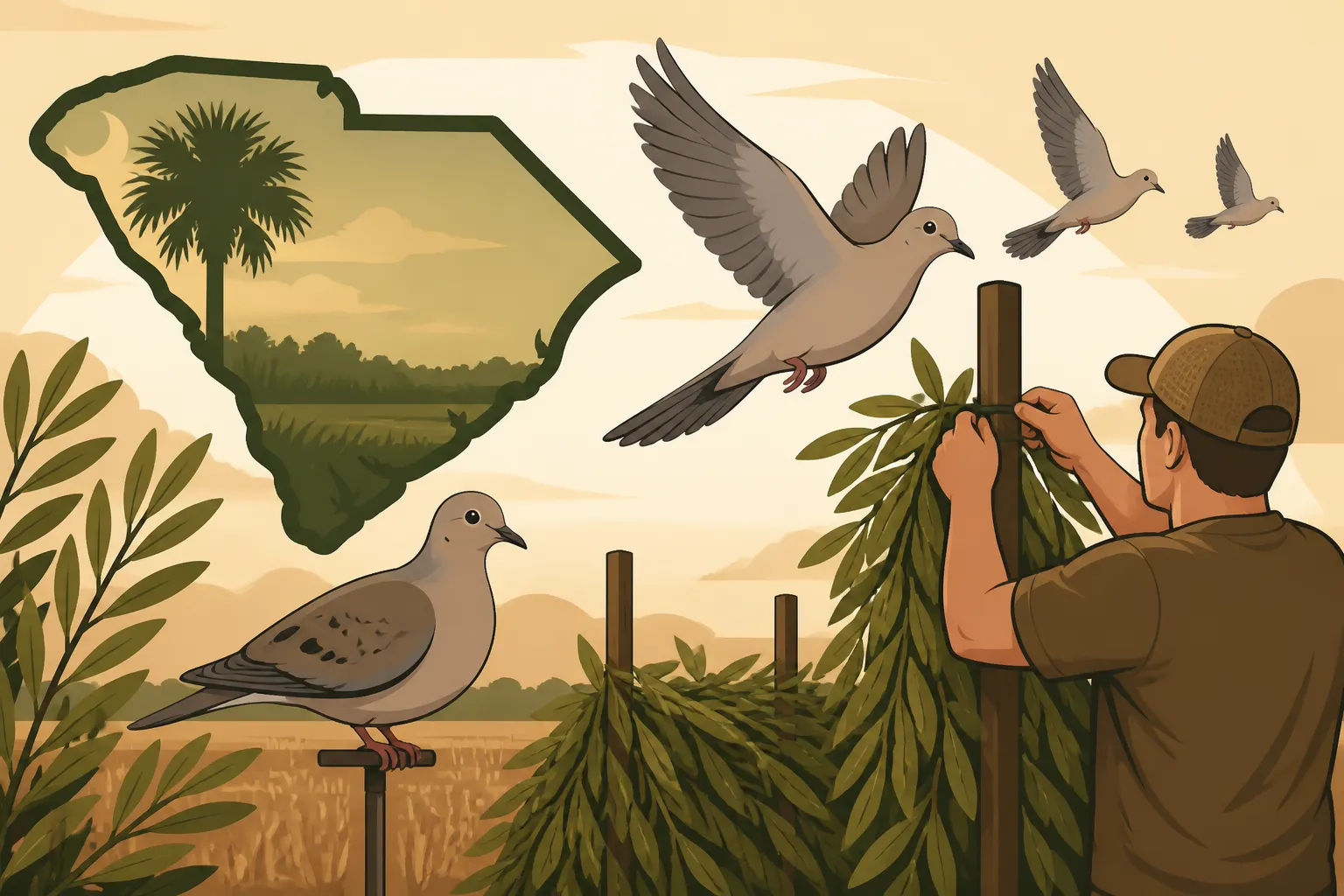
Finally, communicate with your hunting party. Confirm hunter positions, discuss safety rules, and ensure everyone understands the game laws. Make sure you have enough dove stools, buckets, and water for your group. Consider setting out decoys on the ground or on elevated poles to add visual attraction, especially on those first few busy hunts. Ensure all hunters have their South Carolina Hunting Licenses and What They Cost in order, along with any necessary permits. A successful dove hunt is often the culmination of months of preparation, and these last-minute steps ensure everyone has a safe and productive day in the field. Don't forget to confirm the South Carolina Public Dove Field Draw Rules if you're venturing out on public land, as those often have specific entry and hunt procedures.
Disclaimer
Please note: Hunting regulations, including those pertaining to baiting and field manipulation, can change. It is the individual hunter's responsibility to consult the most current South Carolina Department of Natural Resources (SCDNR) regulations and federal migratory bird regulations before hunting. This article is for informational purposes only and does not constitute legal advice.