Crop Damage Costs From South Carolina Hogs
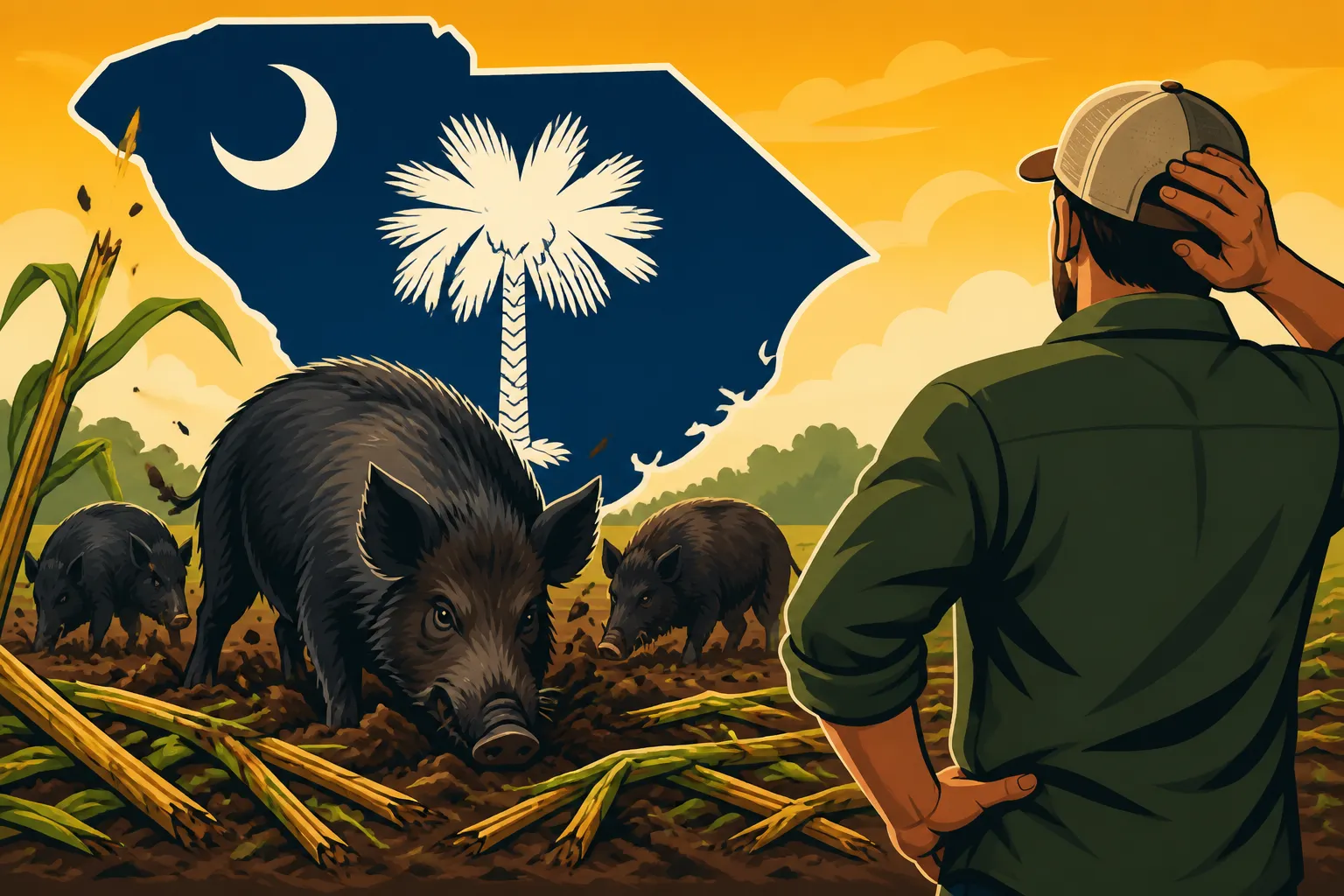
For farmers and landowners across South Carolina, the sight of rooted-up fields or flattened crops is a heartbreaking reality that represents far more than just a nuisance – it's a direct hit to their livelihood. Feral hogs, with their insatiable appetites and destructive behaviors, are costing our agricultural community millions of dollars each year, impacting everything from corn and soybean yields to the very soil beneath our feet. This guide will delve deep into understanding these significant crop damage costs and the wider financial burdens faced by those on the front lines.
The Relentless Assault: How Feral Hogs Damage South Carolina Crops
It’s hard to overstate the sheer destructive power of a sounder of feral hogs. They don't just eat; they decimate. A farmer can put months of back-breaking work and significant financial investment into a crop, only to see it ruined overnight by these rooting, trampling machines. The problem isn't isolated to one region; from the Lowcountry's fertile fields to the Upstate's smaller farms, feral hogs are leaving a trail of economic devastation.
Rooting, Trampling, and Direct Consumption
The most iconic and immediately visible form of damage is rooting. Feral hogs use their powerful snouts to dig up soil in search of tubers, roots, grubs, and even newly planted seeds. This isn't a delicate excavation; they tear through fields like rototillers, leaving behind deep furrows and overturned earth. This extensive rooting damages the root systems of established plants, exposes topsoil to erosion, and makes harvesting incredibly difficult, often impossible, in affected areas. Imagine a perfectly smooth field of young corn, then picture it looking like a bomb went off, with plants uprooted and tossed aside. That’s the reality many farmers face.
Beyond rooting, hogs are heavy animals that move in groups. Their sheer weight and numbers mean they trample vast sections of crops, particularly in larger fields. A sounder moving through a stand of mature soybeans can flatten acres in a single night, making those plants inaccessible to harvesting equipment. And, of course, they eat. They'll gorge themselves on corn, peanuts, sweet potatoes, watermelons, and just about any other agricultural product they can find. They might only eat a small portion of a plant, but the damage inflicted by rooting or trampling to get to that small portion renders the rest unsalvageable. Farmers have reported entire sections of crops simply disappearing or being rendered worthless due to this combination of behaviors.
Challenges in Assessing the Full Extent of Damage
Quantifying the exact dollar amount of feral hog damage is incredibly complex and often underestimated. Many farmers simply don't have the time or resources to meticulously document every patch of destruction. The damage can be hidden, occurring in the middle of vast fields or under the cover of night, only to be discovered days later. Secondary impacts, like delayed planting due to torn-up fields or increased disease susceptibility in stressed plants, are even harder to track financially. It's not just the direct loss of yield; it's the cost of time spent assessing, the fuel for replanting, and the lost opportunity for that crop to contribute to market sales.
Moreover, the psychological toll on farmers is immense. The constant vigilance, the frustration of repeated damage despite control efforts, and the feeling of fighting a losing battle add an invisible cost that rarely makes it into economic reports. Farmers often rely on their own observations and estimates, sometimes using tools like GoHunt to mark damaged areas on aerial maps to try and get a clearer picture of the spread. This helps, but still doesn't capture the full scope of the ongoing battle.
The Tangible Financial Burden on South Carolina Agriculture
The economic impact of feral hogs isn't theoretical; it's a stark reality seen in bank accounts and harvest reports across the state. These animals are direct competitors for the food we grow and destroyers of the land that produces it. For a farmer operating on tight margins, a significant loss to hogs can be the difference between a profitable year and one that barely breaks even, or worse.
Direct Yield Loss and Reduced Market Value
The most straightforward cost comes from the direct loss of harvested crops. When a hog roots up a row of peanuts, those peanuts are gone. When they flatten a section of corn, that corn cannot be mechanically harvested. This directly translates to lower yields per acre, which means less product to take to market and less income for the farmer. Consider a farmer with a 100-acre soybean field. If 10% of that field is destroyed by hogs, that's a 10% reduction in potential revenue from that crop, regardless of how well the other 90% performed.
| Crop Type | Common Damage | Financial Impact |
|---|---|---|
| Corn | Rooting young plants, consuming mature ears, trampling stalks | Direct yield loss, reduced grain quality, difficult harvest |
| Soybeans | Trampling entire plants, consuming pods | Significant yield reduction, plants inaccessible to combines |
| Peanuts | Extensive rooting, consuming nuts | Uprooted plants, complete loss in affected areas |
| Sweet Potatoes | Digging up and consuming tubers | Direct loss of marketable product, fields made uneven |
| Watermelons/Melons | Puncturing, consuming, trampling | Marketability destroyed, high individual item value loss |
| Small Grains (Wheat/Oats) | Rooting, trampling, consumption of seedlings | Reduced stand density, uneven growth, lower harvest volume |
Beyond just the quantity, the quality of the remaining crop can also suffer. Hogs can spread pathogens that might not destroy a plant but can compromise its health, making it more susceptible to other diseases. Even partially damaged crops might be deemed lower grade at market, further eroding profits. This makes the job of a farmer even harder, knowing that their investment is constantly at risk.
Replanting and Repair Expenses
When hogs destroy young crops, farmers often face the difficult decision of replanting. This isn't a simple fix; it incurs additional costs for seeds, fertilizer, fuel for tractors, and labor. Replanting also pushes back the growing season, potentially exposing the new crop to different weather patterns, increased pest pressure, or even missing optimal market windows. A farmer might have to replant an entire section of a field, essentially paying for the same crop twice, with no guarantee that the hogs won't return to do it all over again.
The costs extend to repairing infrastructure. Hogs don't respect property lines or fences. They'll root under, push through, or break down fences to access fields, leading to expenses for materials and time to repair these crucial boundaries. Irrigation lines, vital for many South Carolina crops, can be gnawed on or damaged by rooting, leading to leaks and costly repairs or replacement. These are expenses that directly cut into a farm's bottom line without contributing to production.
Opportunity Costs and Long-Term Impacts
The financial burden also includes significant opportunity costs. Time spent on hog control, damage assessment, or fence repair is time not spent on other vital farm tasks like maintenance, soil preparation, or strategic planning. If a farmer delays planting due to hog activity, they might miss out on a prime growing window, reducing the overall yield for the year. This ripple effect can impact future crop rotations and overall farm productivity.
Long-term, continuous hog activity can degrade soil health. Their rooting disturbs the soil structure, compacts it in some areas, and leaves it vulnerable to erosion, especially in South Carolina's often heavy rainfall. This can lead to decreased soil fertility and increased need for costly amendments or less productive land over time. The cumulative effect of these repeated attacks can be devastating for the long-term viability of a farming operation.
Beyond the Farm Gate: Wider Ecological and Infrastructural Damage
While the direct impact on crops is immediate and tangible, the presence of feral hogs extends its destructive reach far beyond the fields, causing significant environmental and infrastructural damage that adds to the overall economic cost borne by society. These costs might not hit a farmer's wallet directly, but they affect shared resources and the broader ecosystem.
Soil Degradation and Erosion
Feral hogs are nature's rototillers, but without any sense of preservation. Their incessant rooting churns up the soil, destroying plant cover and creating significant patches of bare earth. This disturbed soil is highly susceptible to erosion, particularly during heavy South Carolina rainfalls. Topsoil, which is rich in organic matter and nutrients, can be washed away, eventually reducing the long-term productivity of agricultural lands and increasing sedimentation in local waterways. Eroded soil also carries agricultural chemicals, like fertilizers and pesticides, into streams and rivers, impacting water quality and aquatic ecosystems. This isn't just a farmer's problem; it becomes a community issue affecting drinking water, fishing, and recreational opportunities.
The long-term health of our soil is fundamental to agriculture. When hogs continuously degrade it, it requires more intervention and expense to maintain its productivity. This can lead to a cycle of increased fertilizer use, which then exacerbates water quality issues. The intricate balance of soil biology is disrupted, making the land less resilient and harder to farm sustainably.
Disease Transmission and Water Quality
Feral hogs are known carriers of numerous diseases that can affect livestock, wildlife, and even humans. While less of a direct crop damage cost, the threat of diseases like brucellosis, pseudorabies, and leptospirosis to domestic swine herds is a huge concern for farmers. An outbreak could lead to devastating financial losses through animal mortality, quarantines, and restrictions on animal movement and sales. These diseases can also spread to other wildlife, impacting game populations that are valuable recreational and economic resources.
Furthermore, hog wallows and rooting near water sources can directly contribute to water contamination. Their feces carry bacteria and parasites that can pollute ponds, streams, and irrigation canals, making water unsafe for livestock or even for use on certain crops. This necessitates additional water testing and, in some cases, expensive water treatment solutions, adding another layer of cost to agricultural operations.
Infrastructure Damage Beyond Field Fences
The destructive nature of feral hogs isn't limited to crops and fences. They can damage roads, culverts, and irrigation systems. When rooting occurs along field edges or ditches, it can undermine road beds, leading to costly repairs. They can clog drainage pipes with mud and debris, causing localized flooding and further damage to fields. Their rooting can also expose buried pipes or cables, making them vulnerable to further damage or system failures. These types of infrastructure repairs often fall on local municipalities or landowners, adding to the public burden of hog control. South Carolina Feral Hog Regulations acknowledge the widespread problem these animals represent, underscoring the need for comprehensive solutions.
The Cost of Fighting Back: Mitigation and Management Expenses
Farmers aren't sitting idly by while hogs destroy their livelihoods. They are actively engaged in expensive and time-consuming efforts to control feral hog populations, adding yet another layer to the "crop damage cost" ledger. These are preventative measures, but they come with a significant price tag.
Trapping and Control Efforts
Trapping is often considered the most effective method for reducing feral hog populations, but it requires a substantial investment. Farmers and landowners spend money on traps themselves, which can range from basic snares to sophisticated corral traps with remote triggers. Then there's the ongoing cost of bait—corn is commonly used, and hogs can consume vast quantities of it, essentially turning baiting into an expensive feeding program that might only catch a fraction of the problem animals. Trapping South Carolina Feral Hogs is a common strategy, but it’s a costly one.
Beyond the physical equipment and bait, there's the invaluable cost of time. Setting traps, monitoring them, relocating or dispatching captured hogs, and resetting them takes hours of labor. This time could otherwise be spent on planting, cultivating, or harvesting crops. For many farmers, this means working longer hours or hiring additional help, which directly impacts their budget. Even with consistent trapping, the prolific breeding rate of hogs means it's an endless battle.
Fencing and Exclusion
Another defense mechanism against hog damage is exclusion fencing. This involves installing robust fences around fields or entire properties to prevent hogs from entering. While effective, the upfront cost of materials—such as heavy-gauge wire, strong posts, and potentially electric fencing—can be prohibitive for many farmers. Installation is labor-intensive, and maintenance is ongoing. Hogs are incredibly strong and persistent; they will test fences relentlessly, finding weaknesses, rooting underneath, or simply pushing through less sturdy barriers.
A farmer might invest thousands of dollars in a hog-proof fence only to find that a persistent sounder eventually breaches it, leading to damage and the need for costly repairs. This continuous cycle of investment, damage, and repair adds significantly to the overhead of farming in areas with high hog populations. It's a testament to the challenge these animals pose that farmers must constantly upgrade their defenses.
Hunting and Other Management Measures
Hunting is a widely practiced method for managing feral hogs, and while it can be effective, it also comes with its own set of costs. For farmers, this might involve their own time and fuel to patrol fields, or the costs associated with inviting hunters onto their property. Many farmers permit hunters to help with control, and some even invest in specialized equipment for night hunting, such as thermal optics or powerful lights, to target hogs when they are most active. Night Hunting Hogs With Lights on Private Land can be highly effective, but the gear required represents another significant expense.
Some farmers also explore options like aerial shooting, which, while highly efficient for population reduction, comes with a very high price tag, often requiring specialized contractors. Running Dogs on South Carolina Feral Hogs is another traditional method, which involves the costs of maintaining a dog pack, training, and veterinary care. All these efforts, whether through direct expense or opportunity cost, subtract from the farmer's profitability and highlight the immense economic pressure placed on South Carolina's agricultural sector by the unchecked proliferation of feral hogs. Using mapping apps like GoHunt can help farmers coordinate hunting efforts and track hog movements, optimizing their limited resources.
Disclaimer
This article is for general informational purposes only and does not constitute professional advice. Laws, prices and regulations vary by location and change over time. Consult a qualified professional for guidance on your specific situation.