Why Lowcountry Hogs Reproduce So Fast
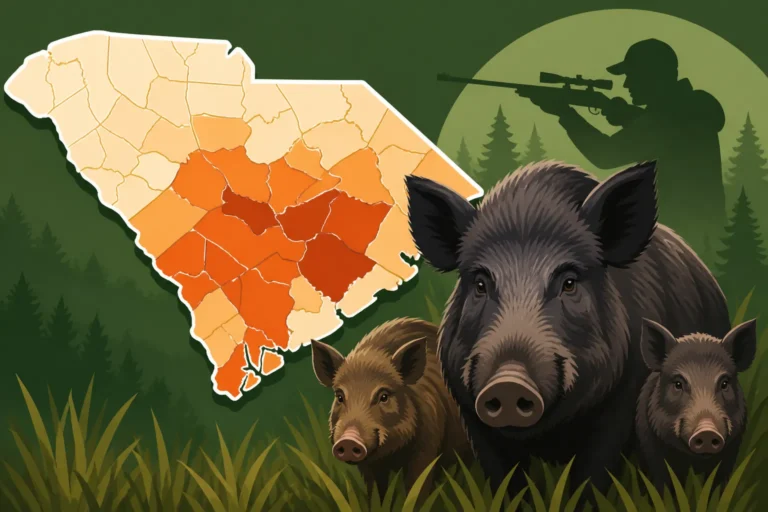
If you've spent any time at all traversing the low-lying swamps, pine flats, or agricultural fields of South Carolina's Lowcountry, you've likely encountered the tell-tale signs of feral hogs: rooted-up soil, smashed crops, and often, the elusive glimpse of a sounder disappearing into the thick cover. It's a frustrating reality for hunters, landowners, and farmers alike, and it begs the question: why do these hogs seem to multiply faster than you can blink? This guide dives deep into the complex biological and environmental factors that make Lowcountry hogs such prolific breeders, exploring just why they're such a challenge to manage.
The Biological Blueprint for Rapid Proliferation
Feral hogs aren't just a nuisance; they're an ecological force, largely thanks to their astounding reproductive capabilities. Unlike many other large game species we pursue in South Carolina, hogs are built for rapid population growth, a trait that makes them incredibly resilient and difficult to control. It's almost like they have a biological superpower when it comes to making more hogs.
Early Sexual Maturity and Breeding Age
One of the most significant factors contributing to the Lowcountry hog explosion is their incredibly early sexual maturity. While a whitetail doe typically won't breed until she's at least a year and a half old, and often closer to two, a feral sow can reach sexual maturity and begin breeding as early as six months of age. Think about that for a second. A piglet born in January could, theoretically, be having her own litter by the end of that same year.
This rapid onset of fertility means that a new generation of breeders is entering the population at an alarming rate. It's not just the number of adult sows breeding; it's also how quickly those younger animals become part of the breeding pool. This dramatically shortens the generation interval, meaning the time it takes for a population to replace itself or grow. In the mild climate of the Lowcountry, with its abundant food, a young sow faces fewer obstacles to reaching that critical breeding age. It's a stark contrast to many other game animals where reproductive cycles are longer and more defined. The genetic makeup of these animals, often a mix of domestic and wild strains, contributes to this robust breeding vigor. If you've ever wondered about the background of these animals, you might find South Carolina Feral Swine Genetics and Origin to be an interesting read, shedding light on their adaptable nature.
Short Gestation Periods and Multiple Litters
Beyond reaching sexual maturity quickly, feral hogs also boast impressively short gestation periods. A sow is pregnant for roughly three months and three weeks – approximately 114 to 120 days. Compare that to a deer's seven-month gestation, and you start to see the problem. This short turnaround means that a single sow can, and often does, produce multiple litters within a calendar year.
In the Lowcountry, where mild winters and consistent food sources are common, it's not unusual for a healthy sow to farrow two litters a year. In ideal conditions, some even produce three litters in a 14-month period! Imagine a sow having her first litter in March. By July or August, those piglets are weaned, and she can be bred again, dropping another litter by late November or December. Each time, she’s adding more animals to the landscape, all of whom will quickly reach breeding age themselves. This relentless reproductive cycle is a primary driver of the booming populations that plague hunters and landowners. The sheer numbers of Feral Hogs Across South Carolina can feel overwhelming, but understanding this cycle is the first step in comprehending the challenge.
Large Litter Sizes and High Survivability Rates
It's not just how often they breed, but how many piglets they have and how many of those piglets actually make it to adulthood. Feral hogs are champions on both fronts, compounding the challenge of population control.
The Sheer Number of Piglets
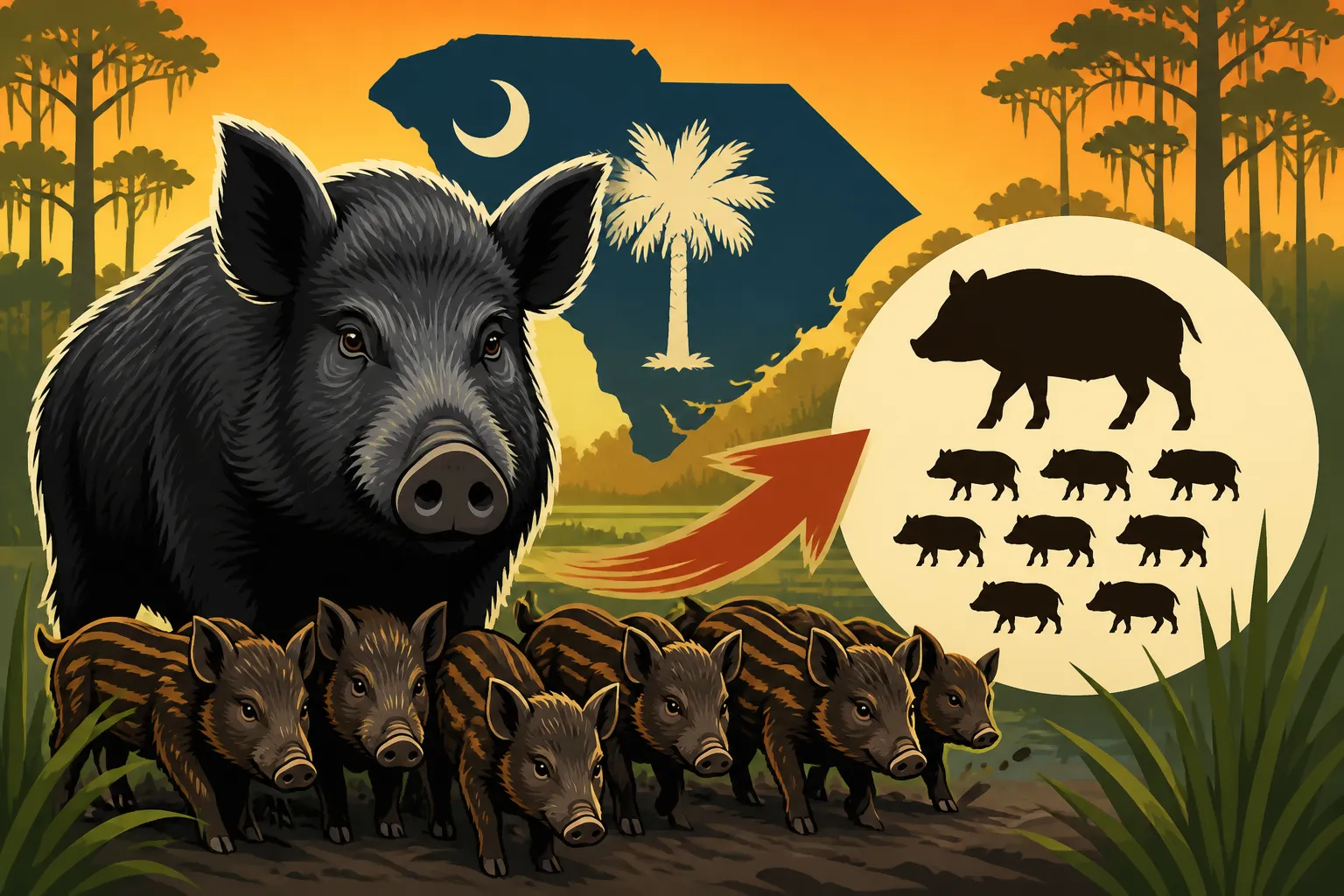
When a sow does farrow, she's not just dropping one or two offspring. A typical litter size for a mature sow can range from four to eight piglets, though litters of ten or even twelve aren't unheard of. Young sows might start with smaller litters, say two to four, but as they mature, those numbers climb. Do the math: if a sow has two litters a year, and each litter averages six piglets, that's twelve new hogs entering the population from just one breeding female in a single year.
This exponential growth is truly staggering. One sow, within a few years, can be the matriarch of a small army of descendants. Factors like the availability of food and the overall health of the sow can influence litter size, but in the resource-rich environment of the Lowcountry, conditions are often optimal for producing large, healthy litters. When you factor in multiple sows in a sounder, you can quickly see how an area can become overrun. It makes efforts to reduce How Many Feral Hogs South Carolina Has incredibly difficult.
Piglet Resilience and Rapid Growth
You might think that tiny piglets would be vulnerable, but feral hog piglets are surprisingly tough and resilient. They hit the ground ready to go, and within just a few weeks, they're mobile and capable of following their mother, foraging for soft foods, and escaping danger. They grow incredibly quickly, rapidly gaining weight and independence. This fast growth rate reduces their vulnerability period, meaning fewer succumb to environmental stressors or predation.
While coyotes and bobcats might occasionally take a lone piglet, their impact on a large sounder, especially when protected by an aggressive sow, is often minimal. The dense cover prevalent in the Lowcountry, from palmetto thickets to impenetrable swamps, provides ample hiding places for young pigs to escape detection and predation. This combination of large litter sizes and high survivability means that a significant percentage of each new generation makes it to adulthood, ready to contribute to the next wave of reproduction. For those hunters dedicated to reducing their numbers, understanding these dynamics is key. Many hunters find success in Running Dogs on South Carolina Feral Hogs, as it helps locate and dispatch entire sounders, including the hardy piglets.
Environmental Factors Fueling Lowcountry Hog Boom
South Carolina's Lowcountry isn't just a beautiful place; it's a paradise for feral hogs, offering a perfect storm of environmental conditions that support their rapid reproduction and population growth.
Abundant Food Sources Year-Round
One of the most critical factors in the Lowcountry's ability to sustain such large hog populations is the sheer abundance and diversity of food available throughout the year. Farmers plant vast acreages of corn, soybeans, peanuts, and other crops that provide a veritable buffet for hogs. These fields, whether standing or harvested, offer continuous, high-calorie sustenance.
Beyond agriculture, the natural landscape is equally generous. Oak and pecan trees drop mast in the fall, providing a protein and fat-rich feast. Wetland areas and swamp edges are brimming with tubers, roots, and invertebrates that hogs greedily root up. This consistent and varied food supply means sows are rarely stressed for nutrition, allowing them to remain in prime breeding condition year-round and support large litters. A sow that is well-fed is a sow that can breed more often and have more piglets, and the Lowcountry delivers. When planning to hunt these animals, knowing their food sources is crucial. It’s why many target areas where they’re rooting. For year-round hog hunting, understanding these patterns is vital, as covered in Hunting South Carolina's Year-Round Feral Hogs. Tools like GoHunt can be invaluable here, helping you scout satellite imagery to pinpoint agricultural fields or natural mast-producing timber adjacent to thick cover, giving you an edge in understanding where these hungry sounders are likely to congregate.
Ideal Habitat and Cover
The Lowcountry's unique landscape, characterized by vast tracts of dense bottomland hardwoods, cypress-tupelo swamps, and thick pine plantations, provides ideal habitat for feral hogs. This dense cover offers unparalleled protection from both predators (what few they have) and, crucially, from human hunters. Hogs can disappear into these thickets with remarkable ease, making them incredibly difficult to locate and pursue.
These impenetrable areas serve as natural refuges where sounders can rest, feed, and farrow their young in relative safety. The constant moisture and moderate temperatures within these environments also contribute to the overall health and comfort of the hogs, reducing stress and further enhancing their reproductive output. Trying to navigate these areas can be a challenge, even for experienced hunters. When targeting deer in these same areas, you'll often find hog sign everywhere. Hunters interested in Hunting Lowcountry Swamp Deer will recognize the same challenges in accessing these thick, boggy areas.
Mild Climate and Extended Breeding
South Carolina's mild, subtropical climate is another huge boon for feral hogs. Unlike regions further north that experience harsh winters with deep snow and frozen ground, the Lowcountry rarely sees prolonged periods of extreme cold. This means that food sources remain accessible for much longer, and the physiological stress of cold weather on sows is minimal.
A mild climate translates directly to an extended breeding season – or rather, a non-stop breeding season. Hogs don't have a distinct "rut" like deer; they can breed throughout the year as long as conditions are favorable. In the Lowcountry, conditions are almost always favorable. This continuous reproductive potential, combined with short gestation periods and large litters, allows populations to rebound incredibly quickly, even after significant hunting pressure. It's why hunters can pursue them all year. Even for deer hunters, adjusting to the Warm-Weather Sitting Strategy in South Carolina is crucial, and that warm weather is what helps hogs thrive continuously.
Management Challenges and Hunter Impact
Given their incredible reproductive capacity and favorable environment, managing feral hog populations in the Lowcountry is an uphill battle that requires consistent, multi-pronged efforts.
Hunter Pressure vs. Reproductive Capacity
While hunting plays a vital role in managing deer, turkey, and other game species, it often struggles to keep pace with the reproductive output of feral hogs. Even when hunters take a significant number of hogs from an area, the remaining population can quickly compensate through increased breeding. This phenomenon, known as compensatory reproduction, means that when population density decreases, the remaining sows often have larger litters, and a higher percentage of their piglets survive. It's almost as if the population senses the pressure and kicks its reproductive engine into overdrive.
This isn't to say hunting is ineffective, but it highlights the scale of the challenge. A single hunter taking a few hogs might make a dent, but without sustained, widespread pressure across large areas, the numbers will quickly climb back up. It’s a constant battle, and one that highlights the importance of year-round efforts. South Carolina has relatively liberal rules to help with this, as detailed in South Carolina Feral Hog Regulations, which allow for continuous hunting on private lands.
Trapping as a More Effective Tool
For landowners and wildlife managers serious about reducing hog numbers, trapping often proves to be a more effective strategy than hunting alone. The reason is simple: trapping allows for the removal of entire sounders at once. When a sounder of hogs is located, a well-placed trap can capture multiple animals, including the breeding sows and their young. Removing a breeding sow has a far greater impact on future population growth than removing a single boar or a few random hogs through hunting.
Modern hog traps, often equipped with remote trigger systems and cameras, allow for strategic deployment and patient waiting until an entire sounder is committed to the bait within the trap. This systematic removal, focusing on eliminating breeding females, is crucial for long-term population reduction. It's a significant investment in time and resources, but it often yields better results than sporadic hunting for significant population reduction. If you're looking to make a serious impact on a localized population, Trapping South Carolina Feral Hogs is a tactic worth exploring. Again, understanding hog movement and patterns is critical, and a resource like GoHunt can help you identify ideal ambush or trap sites by revealing game trails, water sources, and heavy cover within the Lowcountry terrain.
The Continuous Battle for Farmers and Landowners
The rapid reproduction of feral hogs, coupled with their destructive foraging habits, creates an ongoing nightmare for farmers and landowners in the Lowcountry. These animals cause millions of dollars in agricultural damage annually, destroying crops, rooting up pastures, and damaging sensitive ecosystems. The cost of their impact extends beyond immediate crop loss, affecting soil health, water quality, and the habitat of native wildlife.
Farmers often report entire fields of corn or peanuts being decimated overnight, forcing them to replant or absorb significant financial losses. The sheer number of hogs, driven by their incredible reproductive rates, means that even after extensive control efforts, the pressure quickly returns. It’s a relentless battle that requires constant vigilance and a combination of hunting, trapping, and exclusion methods. The frustrating reality of Crop Damage Hogs Cause in South Carolina is a testament to the devastating power of these rapidly reproducing animals.
Table: Key Factors Driving Rapid Feral Hog Reproduction in the Lowcountry
| Factor | Description | Impact on Population Growth |
|---|---|---|
| Early Sexual Maturity | Sows can breed as young as 6 months old. | Shortens generation time, new breeders enter population rapidly. |
| Short Gestation Period | Approximately 3 months, 3 weeks (114-120 days). | Allows for multiple litters per year (2-3 litters). |
| Large Litter Sizes | Average of 4-8 piglets per litter, often more for mature sows. | Exponentially increases the number of new individuals. |
| High Piglet Survival | Piglets are resilient, grow quickly, and have few effective natural predators. | A high percentage of offspring reach breeding age. |
| Abundant Food | Year-round access to agricultural crops, natural mast, tubers, and invertebrates. | Ensures sows are in prime breeding condition; supports large litters. |
| Dense Habitat/Cover | Swamps, thickets, and pine plantations offer protection and refuge. | Reduces predation and hunting pressure, increasing survival. |
| Mild Climate | Absence of harsh winters. | Allows for continuous, year-round breeding activity. |
| Compensatory Repro. | Population responds to pressure by increasing litter size/frequency. | Makes population control through hunting alone extremely difficult. |
In the end, the rapid reproduction of feral hogs in the South Carolina Lowcountry is a perfect storm of biological efficiency meeting an ideal environment. Their ability to breed early, often, and in large numbers, combined with the region's abundant food and protective cover, means that these animals will continue to be a significant challenge for the foreseeable future. Understanding these dynamics is crucial for anyone hoping to make a dent in their numbers, whether you're a hunter, a trapper, or a landowner simply trying to protect your property.
Disclaimer
This article is for general informational purposes only and does not constitute professional advice. Laws, prices and regulations vary by location and change over time. Consult a qualified professional for guidance on your specific situation.