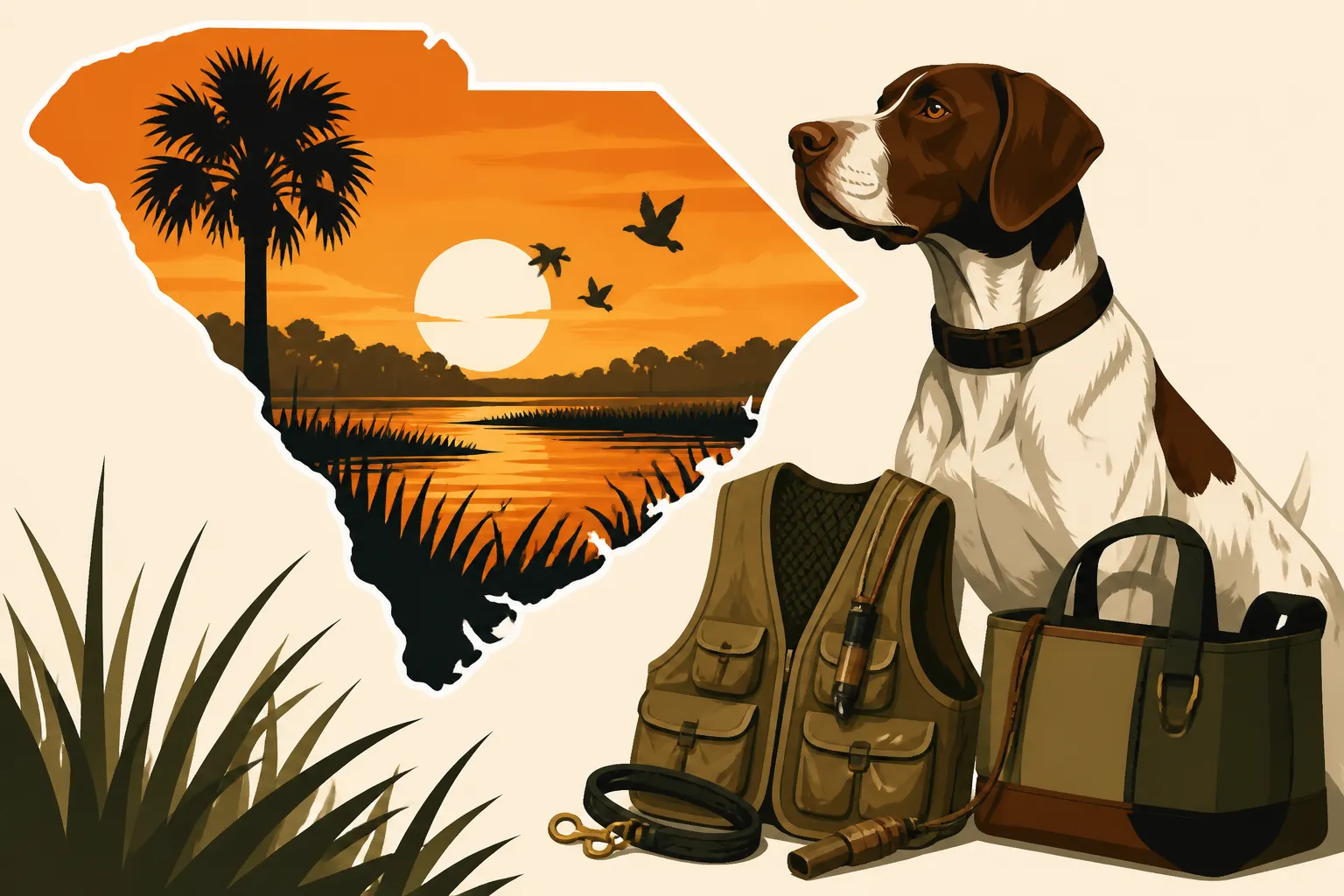
Bird Dog Gear for South Carolina Cover
Hunting with a bird dog in South Carolina is an incredible experience, but our beautiful Lowcountry swamps, dense pine plantations, and briar-choked uplands can be brutal on our canine companions. Many of us have felt that gut-wrenchwrenching worry when our faithful hunting partner goes quiet in thick cover, or the frustration of seeing them come back with torn pads and scratched flanks. This guide will walk you through the essential gear you need to protect your bird dog, keep them safe and healthy, and ensure both of you have a successful and enjoyable day afield, no matter what South Carolina's diverse landscapes throw at you.
Protecting Your Dog in South Carolina's Diverse Terrain
South Carolina's hunting grounds offer an incredible variety of environments, from the vast, open longleaf pine savannas where quail once thrived, to the impenetrable thickets of the Lowcountry and the steep, rocky slopes of the Upstate. Each presents unique challenges to our four-legged partners. Ensuring their physical safety is paramount, not just for their well-being, but for their ability to perform their job effectively and enjoy the hunt alongside you. This isn't just about avoiding a vet bill; it's about respecting the effort and dedication your dog brings to every outing.
Dealing with Thick Brush and Briars
Our South Carolina cover can be incredibly unforgiving. Imagine pushing through a dense patch of greenbriar in the Francis Marion National Forest, or navigating the undergrowth of a regenerated clear-cut in the Sumter National Forest. These environments are home to thorns, sharp sticks, and hidden dangers that can easily injure a dog's soft skin. Protective vests are not a luxury; they're a necessity for many of our hunting scenarios.
These vests are typically made from durable materials like Cordura or ballistic nylon, designed to resist punctures and tears. Some high-end vests even incorporate Kevlar inserts for snake bite protection, which is a very real concern in our warmer months, even into late fall. When choosing a vest, look for coverage around the chest, belly, and flanks – areas most prone to injury when a dog is busting through heavy cover. A good fit is crucial; it shouldn't restrict their movement or breathing, but it also shouldn't be so loose that it snags on brush. We've all seen dogs come out of a briar patch looking like they've been through a meat grinder, covered in scratches and bleeding. A well-fitted, sturdy vest can prevent a lot of that heartache and keep your dog in the field longer. It's an investment in their comfort and your peace of mind.
Navigating Water and Wetlands
South Carolina is crisscrossed with rivers, creeks, and vast swamps, especially in the coastal plain. If you're Hunting Coastal Marsh Waterfowl or chasing game around a Pee Dee River bottom, your dog will undoubtedly be in and out of the water. This presents a different set of challenges. Cold water can lead to hypothermia, especially on chillier mornings, and submerged obstacles like cypress knees, fallen timber, or even hidden fishing line can cause injuries.
Waterproof and insulating vests are key for waterfowl dogs. These vests often have neoprene components that provide warmth and some buoyancy, making those long retrieves from icy water much easier on your dog. Look for vests with high visibility colors, like orange, which can be critical for spotting your dog in murky water or dense reeds. Some vests also come with a sturdy handle on the back, allowing you to easily lift your dog back into a boat or over an obstacle, which is a godsend when you're dealing with a large, wet dog in a precarious situation. Beyond protection, these vests add a layer of safety against currents and hidden dangers. The last thing you want is for your dog to tire out in strong currents or get snagged on something below the surface. A good buoyancy vest can literally be a lifesaver.
Paw Care and Protection
Our dogs' paws take a beating, perhaps more than any other part of their body. From the rough, sandy soils of the Sandhills to the abrasive pine straw and hidden debris in Finding Sign in Big Sumter Forest Timber, their pads are constantly exposed to potential injury. A cut pad, a thorn embedded deep, or excessive wear can quickly sideline your dog for days or weeks.
Paw boots are a fantastic tool, especially for dogs that cover a lot of ground or work in particularly harsh environments. They come in various materials, from rubberized compounds for waterproofing to Cordura for abrasion resistance. It can take some getting used to for your dog, but training them to wear boots before the season starts is well worth the effort. Think about those long walks through a harvested cornfield or across gravel roads; boots can prevent a lot of wear and tear. Even if you don't use boots regularly, a good paw balm or wax should be a staple in your hunting pack. These products help moisturize pads, prevent cracking, and provide a protective barrier against sand and grit. Regular inspection of your dog's paws after every hunt is also crucial. Look for cuts, scrapes, thorns, or swelling. Addressing these issues immediately can prevent minor problems from escalating into serious infections or lameness that put an early end to your hunting season.
Essential Electronic Tracking and Training Gear
In today's fast-paced hunting world, electronics have become indispensable tools for keeping tabs on our bird dogs and communicating with them effectively, especially when they're ranging wide or working in dense South Carolina cover. There's nothing quite like the panic of realizing your dog has gone silent or disappeared over a ridge, and modern technology can ease a lot of that anxiety.
GPS Tracking Collars for Wide-Ranging Dogs
For those of us whose bird dogs really cover ground, whether pointing quail in sprawling fields or retrieving ducks across vast marshes, a GPS tracking collar is an absolute game-changer. These collars allow you to see your dog's exact location, movement, and even their speed in real-time, often on a handheld device or integrated with a smartphone app. Imagine your setter working out of sight in a thick Sumter Forest pine plantation; a quick glance at your GPS unit tells you they've gone on point, allowing you to quickly move in for the flush.
Modern GPS collars offer impressive range, often several miles in open terrain, though dense woods and rolling hills will reduce that. Battery life has improved dramatically, with some models offering days of continuous tracking, which is essential for multi-day hunts or long excursions. Many systems, like those offered by Garmin or SportDOG, also feature detailed topographic maps, showing you not just where your dog is, but what terrain they're in. This level of detail is invaluable for navigating unfamiliar public lands. Some even offer integration with third-party mapping platforms, allowing hunters to mark waypoints, plot routes, and combine their dog's movements with their own scouting information. This kind of data can be incredibly helpful when planning your approach for a covey of quail or a flushed pheasant. If you're using a mapping tool like GoHunt, having your dog's track overlaid can give you an unprecedented understanding of how they're working the terrain, helping you learn their patterns and optimize your hunting strategy.
E-Collars for Communication and Control
E-collars, or electronic training collars, are powerful tools for communication and control when used correctly and ethically. They provide a discrete, consistent, and long-range way to reinforce commands, correct unwanted behaviors, and guide your dog in the field, even when they're out of earshot. This isn't about punishment; it's about clear, consistent communication that helps your dog understand what you want them to do.
These collars typically offer various stimulation levels – from mild vibrations to tones, and different intensities of static stimulation. The key is to introduce them slowly and properly, associating the stimulation with known commands. For a bird dog, an e-collar can be invaluable for refining retrieves, ensuring they honor a point, or calling them back quickly from a potentially dangerous situation, like straying onto a road or a property boundary. You'll find models designed for specific hunting styles, with different ranges and features. Some are built for close-working flushing dogs, while others are suited for wide-ranging pointers. Always check local regulations regarding E-Collar Use on South Carolina Public Land, as rules can vary. The goal is to build a reliable, responsive hunting partner, and a properly used e-collar can be an incredibly effective tool in achieving that.
Whistles and Bells for Close-Working Dogs
While electronics offer incredible reach, sometimes the traditional methods are still the best, especially for close-working dogs or in situations where you want to maintain a quieter presence. Whistles and bells have been used for generations by bird hunters and remain effective tools today.
A good dog whistle can carry further than your voice, especially on a windy day, and provides a distinct, consistent sound that your dog can easily recognize. Different types of whistles produce different pitches, and many hunters will use a specific whistle for specific commands. Training your dog to respond to whistle commands for "come," "sit," or "hunt on" can be incredibly effective and less disruptive than shouting. Bells, particularly for close-ranging flushing dogs like flushers in thick brush, serve a different but equally important purpose. Attaching a small bell to your dog's collar allows you to constantly monitor their whereabouts, even when they're out of sight in dense cover. The sound of the bell will stop when the dog goes on point, signaling to you that they've found game. This can be particularly useful when you're trying to Hunting the South Carolina Rut by Zone or pushing through dense brush for pheasants where visual contact is limited. While seemingly low-tech, these simple tools are effective, reliable, and don't require batteries, making them a staple in any bird hunter's kit.
Hydration, Nutrition, and First Aid for Field Dogs
Our bird dogs are athletes, and just like any athlete, they need proper hydration, nutrition, and immediate care for any bumps or scrapes encountered during a demanding day in the South Carolina field. Neglecting these basic needs can quickly lead to exhaustion, injury, or even serious health problems. Preparing for your dog's well-being is as important as preparing your own gear.
Keeping Your Dog Hydrated in South Carolina's Heat
South Carolina is known for its heat and humidity, which can be brutal on hunting dogs, especially during early season hunts for doves or teal. Dehydration can happen quickly and severely impact your dog's performance and health. It's not enough to offer water at the start and end of the day; they need consistent access throughout the hunt.
Carrying a portable water bottle and a collapsible bowl is absolutely essential. There are many great options out there, from bottles with integrated cups to flexible silicone bowls that fold flat and fit easily into your vest or pack. Some hunters even invest in hydration packs designed for dogs, or add electrolyte supplements to their water during intense hunts to help replenish essential minerals lost through sweat and exertion. Even on cooler days, dogs can get dehydrated from exertion. Watch for signs of dehydration: excessive panting, sunken eyes, lethargy, or dry gums. Taking frequent water breaks, especially during Warm-Weather Sitting Strategy in South Carolina or intense retrieving, can make all the difference in keeping your dog fresh and performing at their best. Never rely solely on finding natural water sources, as many may be stagnant, contaminated, or simply unavailable when you need them most.
High-Energy Nutrition for Active Hunting Dogs
Hunting is incredibly demanding work, and your bird dog burns a tremendous amount of calories. Their regular diet might be sufficient for their daily life, but when the season kicks in, their nutritional needs change dramatically. This isn't just about feeding them more; it's often about feeding them smarter.
Look for high-quality dog foods specifically formulated for active or working dogs. These typically have higher protein and fat content to provide sustained energy. During the hunting season, you might need to adjust their portion sizes or add supplemental feedings to maintain their weight and energy levels. Many hunters carry high-energy field snacks, like small pieces of jerky or specialized training treats, to offer quick boosts during breaks. Just like a human athlete, a dog running hard all day benefits from easily digestible fuel. Be mindful of introducing any new foods or supplements too close to a hunt, as it could upset their stomach. A consistent diet of appropriate high-quality food, supplemented with field snacks, will keep your dog strong and ready for whatever the hunt demands.
Field First Aid Kits for Unexpected Injuries
No matter how careful you are, accidents happen. A cut, a thorn, a bee sting, or a sudden lameness can occur quickly in the field. Having a well-stocked first aid kit specifically for your dog can mean the difference between a quick fix and a trip to the emergency vet, potentially saving your hunt and easing your dog's discomfort.
Your dog's first aid kit should include basics like antiseptic wipes, bandages, gauze, medical tape, and a pair of blunt-tipped scissors. A tick remover is absolutely critical in South Carolina, where ticks are prevalent in almost every type of cover. Tweezers can help with thorns or splinters. Consider adding a non-stick pad for wounds, some paw balm, and perhaps a small bottle of saline solution for flushing eyes or wounds. If your dog is prone to allergic reactions, talk to your vet about carrying an appropriate antihistamine. Always include your vet's contact information, as well as the nearest emergency vet clinic, especially if you're hunting in an unfamiliar area, such as on Public Hunting Land in South Carolina. Familiarize yourself with basic dog first aid, like how to stop bleeding, clean a wound, or check for heatstroke. Being prepared for minor emergencies allows you to address them quickly and keep the hunt going safely.
Specialized Gear for Specific South Carolina Game Birds
South Carolina offers a diverse range of bird hunting opportunities, from fast-flying doves to elusive quail and hardy waterfowl. Just as hunters adjust their tactics and shotguns for different species, your bird dog's gear often benefits from specialization to excel in these varied pursuits.
Gear for Quail Hunting in Pine Plantations
Quail hunting in South Carolina, particularly in managed pine plantations or old fields, often involves wide-ranging pointers and flushers covering vast amounts of ground. The cover can be thick with wiregrass and low brush, but generally more open than a dense swamp. For these environments, lightweight and breathable gear is key.
A lightweight, durable vest can offer protection from briars and sharp stubble without overheating the dog. Visibility is important, so vests with blaze orange panels are a good choice. Since quail dogs often range far and wide, a reliable GPS tracking collar is almost mandatory to keep track of their location when they're out of sight, especially if they go on a staunch point. Bells can also be useful for close-working dogs in slightly thicker spots, allowing you to hear when they stop moving. Training for specific behaviors like steadying on point, honoring another dog's point, and delivering birds to hand are critical, and a reliable e-collar can be invaluable for reinforcing these commands. If you're hunting in areas focusing on How Managed Pine Could Restore South Carolina Quail, the relatively open nature of these habitats allows for longer-range communication with your dog, making GPS and e-collars particularly effective.
Waterfowl Gear for Marsh and Flooded Timber
Waterfowl hunting in South Carolina's marshes, flooded timber, and coastal impoundments presents some of the toughest conditions for a retrieving dog. Cold water, sharp ice, submerged hazards, and long retrieves are all part of the game. Their gear needs to be robust, warm, and highly functional.
Neoprene vests are the standard for waterfowl dogs, providing crucial insulation against cold water, which is especially important during the latter splits of South Carolina Waterfowl Zones and Seasons. These vests should fit snugly to prevent water from flushing in and out, trapping warmth close to the dog's body. Many come with a durable handle on the back, essential for lifting a heavy, wet dog into a boat or over a levee. High-visibility options are important here too, making your dog easier to spot in the low light of early morning or against a dark, reedy background. Dog blinds, whether stand-alone or integrated into a layout blind, provide shelter and concealment for your retriever while waiting for the next flight. Some hunters also use retrieving dummies or launchers in the off-season to keep their dog's skills sharp for those long-distance marks across open water, ensuring they're ready for Hunting the ACE Basin for Waterfowl.
Dove Field Comfort and Safety
Dove hunting, particularly on South Carolina's opening weekend, is often characterized by hot, sunny weather and high energy retrieves. While doves aren't typically hunted in dense cover, the heat and continuous activity demand specialized attention to your dog's comfort and safety.
The primary concern for dogs in a dove field is overheating. Cooling vests, often made from evaporative materials that you soak in water, can help regulate your dog's body temperature. Ensuring constant access to fresh, cool water, as discussed earlier, is paramount. Portable shade, such as a small dog blind or even a large umbrella, can provide a crucial respite from the direct sun between retrieves. Training your dog to stay calmly at your side or in a designated shaded spot until sent for a retrieve is not only good etiquette but also conserves their energy and prevents them from overheating by constantly running. Given the large number of birds and often multiple hunters in a field, a reliable "sit" or "stay" command, reinforced with an e-collar if needed, is vital for safety. Dogs should also be trained for quick, efficient retrieves to minimize their time running in the heat. When Working a Dove Field on Opening Day, safety is key, and managing your dog's heat exposure is a big part of that.
| Gear Type | Primary Benefit | Best For SC Cover Type | Considerations |
|---|---|---|---|
| Protective Vest | Cuts, punctures, briars, snake bites | Thick woods, swamps, briar patches | Fit, material (Cordura, Kevlar), visibility |
| Paw Boots | Abrasions, thorns, hot pavement | Rocky terrain, sandy soil, long walks | Durability, breathable, secure fit, comfort |
| Paw Balm/Wax | Prevents cracking, moisturizes pads | Dry conditions, sand, everyday use | Non-toxic, frequency of application |
| Cooling Vest | Prevents overheating | Hot weather, open fields | Evaporative cooling, proper wetting |
| Buoyancy Vest | Water safety, reduces fatigue | Deep water retrieves, strong currents | High visibility, proper fit, handle for lifting |
Selecting and Maintaining Your Bird Dog Gear
Choosing the right gear for your bird dog is just the first step. To ensure it performs reliably season after season in South Carolina's often demanding conditions, you need to think about durability, proper fit, and consistent maintenance. Investing in quality gear and taking care of it isn't just about saving money; it's about ensuring your dog's safety and effectiveness in the field.
Durability and Materials for Longevity
South Carolina hunting conditions can be tough on gear. Think about the abrasive nature of palmetto thickets, the constant moisture of a lowcountry swamp, or the snagging potential of dense pine saplings. Cheaply made gear simply won't hold up. When selecting vests, collars, leashes, and even bowls, prioritize durability and the quality of materials.
Look for items made from rugged fabrics like 1000-denier Cordura nylon, ballistic nylon, or heavy-duty canvas. These materials are highly resistant to tears, abrasions, and punctures. Pay close attention to stitching; double or triple stitching in stress points indicates better construction. Hardware matters too: solid brass or stainless steel buckles and D-rings will resist rust and corrosion, especially important in our humid climate and when dealing with water retrieves. Zippers should be heavy-duty and easy to operate, even with cold hands. Don't be swayed by flashy colors or gimmicks; focus on the core construction. A well-made vest or a sturdy e-collar will stand up to countless hours of busting brush and splashing through water, protecting your investment and, more importantly, your dog.
Proper Fit and Comfort for Performance
Even the most durable gear is useless if it doesn't fit your dog properly. An ill-fitting vest can chafe and cause sores, restrict movement, or get snagged. A collar that's too tight can be uncomfortable or even dangerous, while one that's too loose can easily be slipped. Comfort directly impacts your dog's performance and willingness to work.
Always measure your dog carefully according to the manufacturer's guidelines before purchasing any gear, especially vests, harnesses, and boots. For vests, ensure it allows a full range of motion in the shoulders and legs, and that there's no rubbing around the armpits or belly. It should be snug enough not to shift excessively, but not so tight that it compresses their chest or restricts breathing. For boots, check that they fit securely but aren't pinching, and that your dog can still flex their paws naturally. Just like with a new pair of hiking boots for yourself, break in your dog's new gear before a serious hunt. Have them wear it around the house or on short walks to get accustomed to it. Observe how they move and look for any signs of discomfort. Regular checks throughout the hunting season for chafing or pressure points are also important, as your dog's weight and muscle mass can change.
Cleaning and Storage for Extended Lifespan
After a long day of hunting in South Carolina, it's tempting to just toss your dog's gear in a pile and call it a day. However, proper cleaning and storage are vital for extending the lifespan of your equipment and preventing odors, mold, and mildew. Mud, burrs, sweat, and saltwater can all take a toll.
After each hunt, especially if the gear has been wet or muddy, take the time to brush off any loose dirt, burrs, or debris. For vests and collars, a simple rinse with fresh water can remove mud, sweat, and salt. For more thorough cleaning, use a mild soap and water solution, then rinse thoroughly. Always allow gear to air dry completely before storing it. Hanging vests in a well-ventilated area, rather than stuffing them into a bag, will prevent mildew from forming, which not only smells terrible but can also degrade fabrics over time. Electronic collars should be wiped down, and charging ports checked for moisture. Store gear in a cool, dry place away from direct sunlight, which can cause materials to degrade and colors to fade. By taking these simple steps, your bird dog's gear will be ready and waiting for your next adventure, whether you're chasing South Carolina Squirrel and Rabbit Season Rules or working a field for quail.
Disclaimer
This article is for general informational purposes only and does not constitute professional advice. Laws, prices and regulations vary by location and change over time. Consult a qualified professional for guidance on your specific situation.