E-Collar Use on South Carolina Public Land
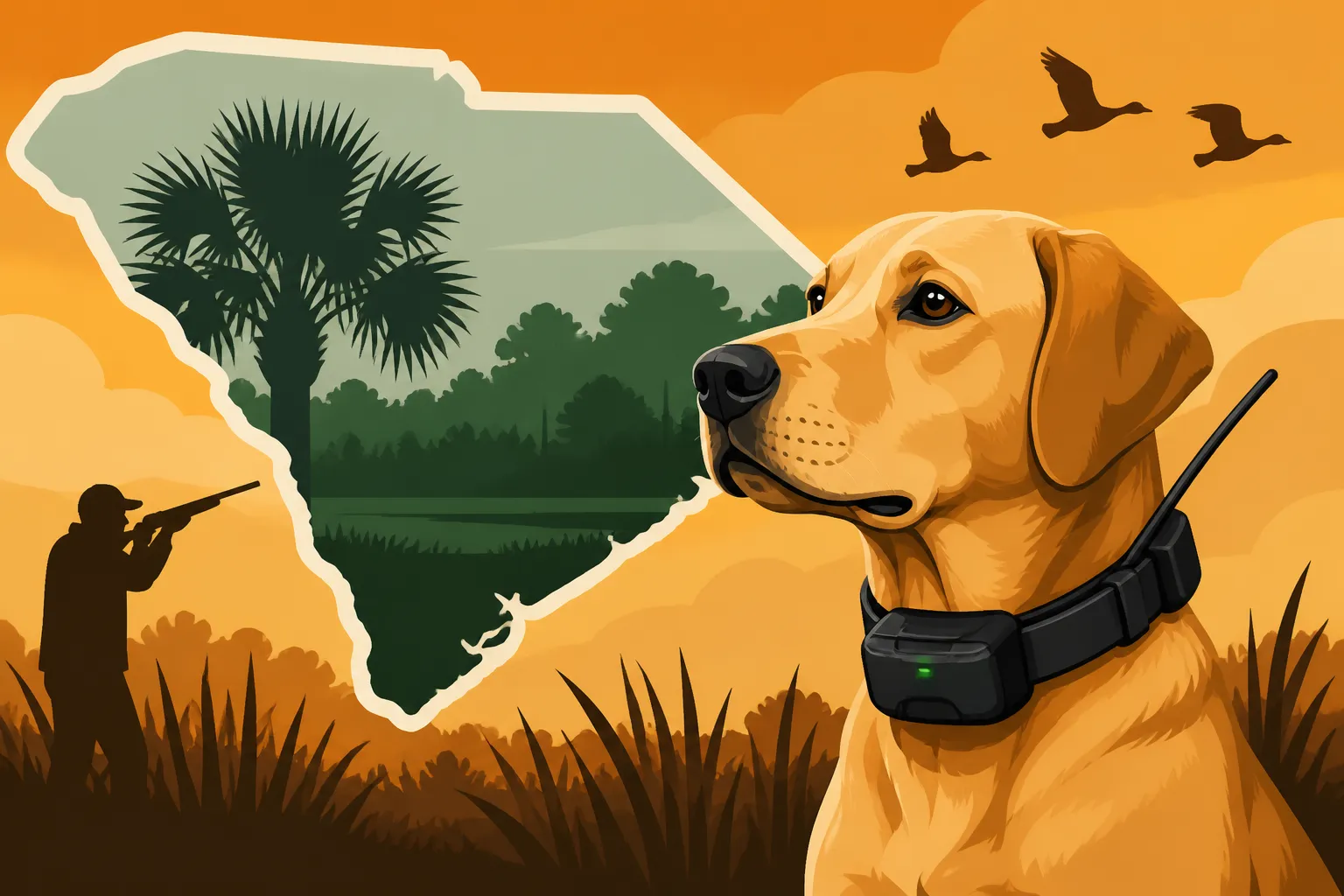
Heading out into South Carolina's beautiful public lands with your trusty canine companion for training or hunting can bring up a lot of questions, especially when it comes to tools like electronic collars, often called e-collars. There's a lot of misunderstanding and even misinformation out there about what's allowed, what's ethical, and how to use them responsibly. This guide is here to cut through the confusion, offering a clear, empathetic look at using e-collars on public land across the Palmetto State, so you can train and hunt with confidence and compliance.
Navigating the Rules: E-Collars on South Carolina Public Lands
When you're thinking about using an e-collar on public land in South Carolina, the first thing that often pops into people's minds is, "Is this even legal?" It's a valid concern, as regulations can feel like a tangled web, especially when moving between state-managed Wildlife Management Areas (WMAs) and federal lands like the National Forests. The good news is, e-collars are not inherently illegal tools for dog training or hunting in South Carolina. However, the devil, as they say, is in the details of where and how you employ them.
Legal Status of E-Collars for Training
In South Carolina, electronic collars are generally recognized as legitimate tools for dog training and control. The state's Department of Natural Resources (SCDNR) regulations don't specifically prohibit the use of e-collars for training or hunting dogs on private land. This is important because it establishes a baseline understanding: the tool itself isn't a forbidden object. Instead, the focus is typically on the intent and outcome of its use, ensuring humane treatment of animals and compliance with hunting regulations.
For most folks, an e-collar is a sophisticated communication device, not just a "shock collar." Modern e-collars offer a wide range of stimulation levels, from gentle vibrations and tones to low-level static stimulation, all designed to get a dog's attention and reinforce commands like "come," "stay," or "whoa." When used correctly, they can be incredibly effective in building reliable off-leash control, which is crucial for a well-behaved dog, whether in your backyard or out in the woods.
The key to responsible and legal use, even on private land, is training. An e-collar isn't a magic button that instantly fixes behavioral issues; it's a tool that requires prior conditioning and consistent application with positive reinforcement. Think of it as an extension of your voice or leash, providing a remote cue to your dog when they're beyond the reach of traditional methods. Without proper training, it can be misused, which is why understanding how to use it is just as important as knowing if you can use it.
Public Land Nuances: WMAs and National Forests
While the general state law allows e-collars, public lands introduce additional layers of rules. South Carolina's Public Hunting Land in South Carolina includes a vast network of Wildlife Management Areas (WMAs) and portions of National Forests like Francis Marion National Forest Hunting and Sumter National Forest. Each of these public land categories often has its own set of specific regulations that can sometimes add to, or clarify, the statewide rules. It's this patchwork that often causes confusion for hunters and dog owners.
For example, on many South Carolina Wildlife Management Areas, specific rules might govern dog training seasons, areas where dogs are allowed, or even the type of equipment permitted during certain hunts. While e-collars are generally not singled out for prohibition, it's always wise to check the specific WMA rules. These regulations are designed to manage wildlife populations, reduce user conflicts, and ensure safety for everyone enjoying the outdoors. Ignoring them, even unintentionally, can lead to fines or loss of hunting privileges.
When you're planning a trip to a WMA or National Forest, don't just assume the general state laws cover everything. I always tell people to think of it like driving: there are statewide traffic laws, but then local municipalities have their own specific parking rules or speed limits in certain zones. The same goes for public land. Tools like the GoHunt app can be incredibly helpful here, providing property boundaries and, often, links or summaries of specific regulations for that particular tract. It’s an invaluable resource for navigating these often-complex areas.
Responsible Use: Ethics and Training Philosophies
Beyond the letter of the law, there's a significant ethical component to using e-collars, especially when others might be observing you on public land. The public perception of e-collars can be quite negative if people don't understand their proper application. As responsible dog owners and hunters, it's our duty to prioritize our dog's welfare and ensure our training methods are humane, effective, and considerate of others.
Prioritizing Dog Welfare and Training Philosophy
At the heart of responsible e-collar use is a commitment to your dog's welfare. An e-collar should never be used as a primary tool for punishment or out of frustration. Instead, think of it as a remote leash or a tap on the shoulder—a communication device to reinforce known commands. The goal is to use the lowest possible effective stimulation level, often just a "nick" or a vibration, to get your dog's attention, not to inflict pain. When used this way, a dog quickly associates the stimulation with a command, not with fear or discomfort.
Many reputable trainers advocate for introducing e-collars only after a dog has a solid understanding of basic commands through positive reinforcement with a leash and treats. The e-collar then becomes a tool to extend those commands over distance, creating a more reliable off-leash companion. This philosophy builds trust between you and your dog, making the e-collar a positive part of their learning, rather than a negative association. Your dog should never flinch, yelp, or show fear when the e-collar is activated; if they do, the stimulation level is too high, or the timing is off.
Proper fit is also paramount. An e-collar needs to be snug enough for the contact points to maintain consistent skin contact, but not so tight that it causes discomfort or rubs. Always test the collar on yourself first to understand what each level feels like. Regular checks for skin irritation are also essential, especially in the humid South Carolina climate where rubs can quickly become an issue. A well-fitted, properly introduced e-collar used with a positive training philosophy leads to a happier, more obedient dog and a safer experience for everyone on public land.
Minimizing Disturbance to Wildlife and Other Users
One of the biggest benefits of a well-trained dog, especially with reliable e-collar-assisted recall, is the ability to minimize disturbance to both wildlife and other public land users. There's nothing more frustrating than having your quiet walk or hunt interrupted by an out-of-control dog, or seeing a dog chase deer or other game. E-collars, when used effectively, can prevent these exact scenarios.
Imagine you're still-hunting in the Sumter National Forest, carefully navigating the terrain, and suddenly a hiker's unleashed dog comes bounding through the undergrowth, chasing off any deer in the area. Or, conversely, you're the one training your bird dog, and without an e-collar, they suddenly bolt after a squirrel, potentially out of sight and into danger. A properly trained dog, with the ability to instantly recall even with distractions, ensures that your presence, and your dog's, has minimal impact on the natural environment and respects the experience of others.
This consideration extends to the game you're pursuing. Whether you're hunting Squirrel and Small Game Hunting in South Carolina or even training for Waterfowl Hunting South Carolina's Coast, having a dog that responds immediately to commands keeps them focused on their task and prevents them from "busting" game you're not targeting or from straying into areas where hunting might be prohibited. It's about being a good steward of the land and a considerate user, ensuring that your activities enhance, rather than detract from, the overall public land experience.
Application in the Field: Different Hunting Scenarios
The utility of e-collars truly shines in various hunting scenarios, offering critical control and safety for dogs working in diverse and often challenging South Carolina landscapes. From the dense cover of a Lowcountry swamp to the open fields, the ability to communicate instantly with your dog can make all the difference.
E-Collars for Bird Dogs Pointing, Flushing, Retrieving
For bird dog enthusiasts, the e-collar is an indispensable tool. Whether you're running pointers, flushers, or retrievers, the need for precise control at a distance is paramount. Think about a pointer locked up on a covey of quail in a thick pine plantation. The "whoa" command, reinforced by an e-collar, can ensure that dog holds steady until you're in position for the shot. Without it, an excited dog might creep in and flush the birds prematurely, ruining the opportunity.
For retrievers, the e-collar is invaluable for instilling a steady retrieve and preventing "breaking" at the shot. Picture hunting doves over a cut field. You want your retriever to sit patiently by your side, marking fallen birds, and only retrieve when commanded. A quick tone or low-level stimulation can instantly remind an eager retriever to hold their position, ensuring they don't spook incoming birds or interfere with other hunters. This level of control allows for a much more efficient and enjoyable hunt.
Furthermore, in field trials or during serious training for bird hunting, e-collars are commonly used to correct unwanted behaviors like chasing non-game birds, running too wide, or being distracted by other scents. It provides a means to refine a dog's natural instincts into a disciplined, effective hunting partner, ensuring they perform their specific role in the hunt with precision.
E-Collars for Hog Dogs and Bear Hounds
In more aggressive hunting pursuits like Hunting South Carolina's Year-Round Feral Hogs or Hunting South Carolina Black Bear Without Bait with hounds, e-collars become even more critical safety and control devices. These hunts often involve dogs pursuing tough, dangerous game over vast, rugged terrain. The ability to recall a dog from a dangerous situation or to guide them back to you after the chase is not just convenient; it can be life-saving for the dog.
When a pack of hog dogs is baying a boar, things can get chaotic quickly. An e-collar, often coupled with a GPS tracking function, allows handlers to monitor their dogs' exact location and to issue commands if a dog gets into trouble or needs to be pulled off a bay. Similarly, bear hounds can range for miles through dense Upstate Deer Density mountain terrain. Being able to communicate with them, even from a distance, ensures that the dogs stay focused on the bear and can be controlled if they get too close to a road or private property.
These situations highlight the dual role of e-collars: they're not just for training but for immediate, crucial intervention. Many hunters who use hounds will tell you that they wouldn't consider working their dogs without the reliable control and safety net that an e-collar provides in these high-stakes scenarios. It’s an investment in the safety and effectiveness of their valuable hunting partners. If you're using hounds, checking a tool like GoHunt's mapping features to understand land boundaries is especially important to prevent your dogs from straying onto prohibited areas.
General Recall and Off-Leash Control for Non-Hunting Dogs
Even if you're not hunting, many public lands in South Carolina, like certain sections of National Forests or designated trails, allow dogs off-leash if they are under immediate voice control. This is where an e-collar can be a game-changer for general obedience and safety. A dog with a rock-solid recall, reinforced by an e-collar, can enjoy greater freedom while giving their owner peace of mind.
Think about a hike along a scenic trail in the Sumter National Forest. You want your dog to explore a bit, sniff around, and enjoy the outdoors, but you also need them to come back instantly if you encounter other hikers, wildlife, or a dangerous drop-off. An e-collar ensures that your "come" command is just as effective at 100 yards as it is at 10 feet. This level of control not only makes for a more enjoyable outing but also upholds the unspoken agreement of off-leash dog privileges on public lands—that your dog must not be a nuisance or a danger to others.
Having an e-collar-trained dog also means less stress about unexpected encounters. Whether it's a deer suddenly bolting across the trail or another dog appearing around a blind corner, the ability to swiftly and effectively control your dog means you can prevent potential conflicts or hazardous situations. It's about being a responsible pet owner who contributes positively to the public land experience for everyone.
Before You Go: Checking Specific Public Land Regulations
It's clear that responsible e-collar use is all about knowing the rules and applying ethical training. But how do you ensure you're always on the right side of the specific regulations for your chosen hunting or training spot in South Carolina? The truth is, it requires a little homework, but the peace of mind is absolutely worth it.
The Importance of Checking Specific WMA and Forest Rules
The most crucial takeaway for any public land user, especially those with dogs and e-collars, is that general state laws are just the starting point. Every single Wildlife Management Area, National Forest district, or other public land tract in South Carolina might have its own localized rules that apply. These can vary widely, from specific dog training seasons to areas where dogs are not permitted at all, or even rules about off-leash control during certain times of the year.
For instance, while you might be able to train your dog year-round on your private land, a particular WMA might restrict dog training to specific months to avoid disturbing nesting birds or fawning deer. Or perhaps a portion of a National Forest is designated as a wilderness area where any electronic device, including an e-collar, might be frowned upon or explicitly prohibited. These regulations are designed to protect sensitive habitats, manage diverse user groups, and ensure sustainable use of resources. Don't risk a fine or a ruined day by skipping this vital step.
When you're Scouting South Carolina Public Land Before Season, make it a point to specifically look for regulations regarding dogs and electronic devices. These regulations are typically found in the annual SCDNR Hunting and Fishing Regulations digest, but often individual WMA brochures or National Forest websites will have even more detailed information. It sounds like a lot, but a little research beforehand can save you a big headache later on.
Recommended Resources for Hunters
To make this process as smooth as possible, there are a few go-to resources you should always consult. The official South Carolina Department of Natural Resources (SCDNR) website is your first stop. They publish the comprehensive annual hunting and fishing regulations, which outline statewide rules and often link to specific WMA regulations. Similarly, for National Forests, the U.S. Forest Service website for Francis Marion and Sumter National Forests will have detailed maps and regulations specific to those federal lands.
| Resource Type | What It Offers | Key Information for E-Collars |
|---|---|---|
| SCDNR Website & Digest | Official state hunting/fishing regulations, WMA summaries, season dates. | General state laws, WMA-specific dog training rules. |
| US Forest Service Websites | Maps, regulations for Francis Marion/Sumter National Forests. | National Forest specific dog/e-collar rules, closures. |
| GoHunt App/Website | Interactive maps, property boundaries, land ownership, sometimes regulation links. | Visualizing public land boundaries, quick access to local rules. |
| Local WMA Kiosks/Offices | Printed maps, specific area rules, physical presence for questions. | Hyper-local rules, specific area closures, human contact. |
Beyond the official state and federal sites, modern mapping and outdoor technology apps are invaluable. Tools like GoHunt are excellent for hunters because they overlay public and private land boundaries, which is crucial for knowing exactly where you stand. Many of these apps also include layers for specific WMA boundaries and, importantly, can sometimes link directly to or summarize the rules for those areas. This means you can often check regulations right from your phone while you're planning or even out in the field. Using a tool like this, alongside the official SCDNR regulations, helps ensure you're compliant whether you're deer hunting or just letting your dog stretch its legs. Remember, Using the Go Outdoors SC Map Tool is also a fantastic way to access official information on WMAs and public land from the SCDNR directly.
Disclaimer
This article is for general informational purposes only and does not constitute professional advice. Laws, prices and regulations vary by location and change over time. Consult a qualified professional for guidance on your specific situation.