Bear Hunting Gear in the Upstate Mountains
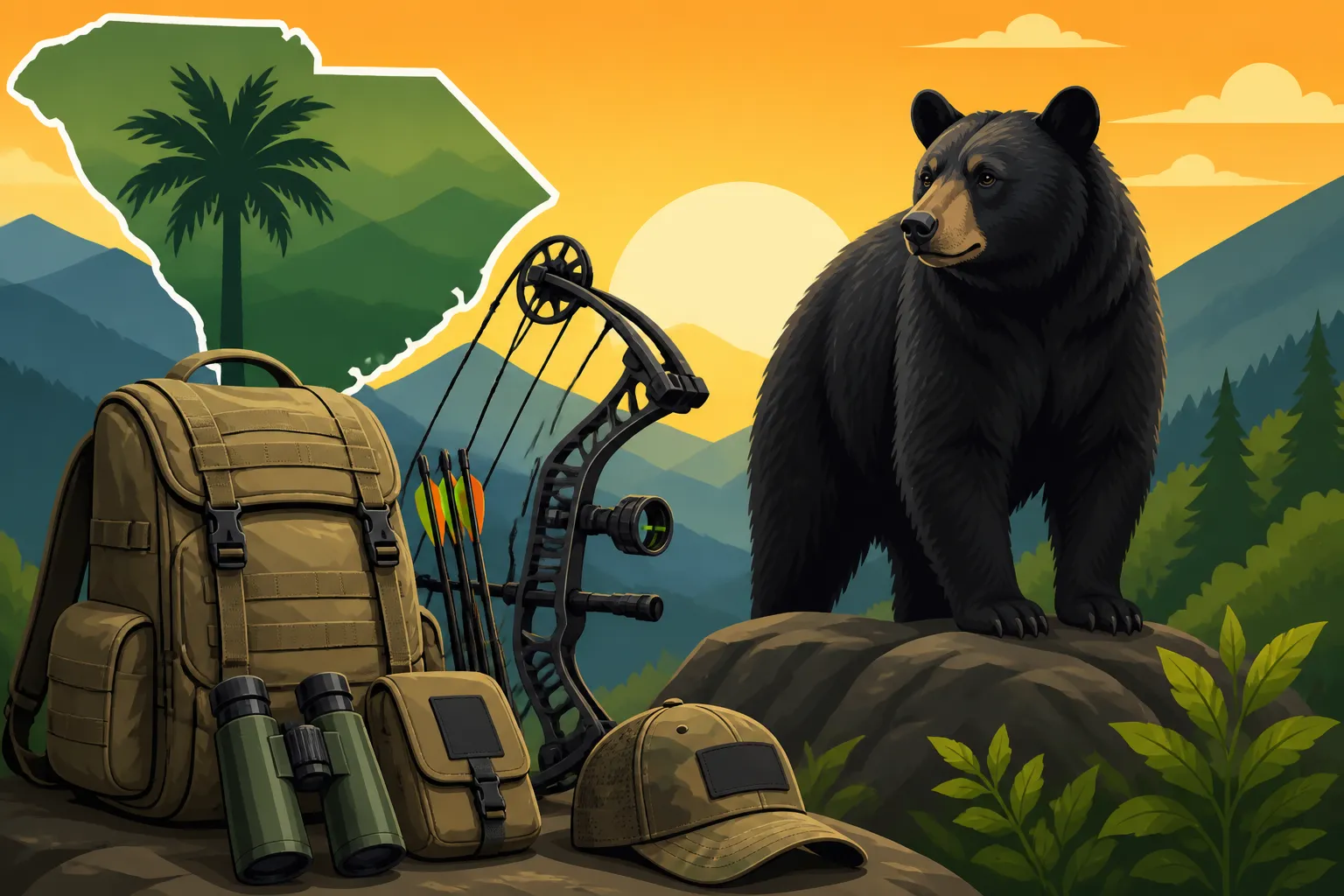
Hunting black bear in the rugged, beautiful Upstate Mountains of South Carolina is an experience unlike any other, but it's also incredibly demanding. The steep terrain, dense forests, and the formidable nature of the animal itself mean that you can't just show up with your deer hunting setup and expect success. This guide will walk you through the essential gear you need to be prepared, safe, and effective when pursuing bears in the South Carolina mountains.
Rifles and Ammunition for Upstate Bears
When you're chasing black bears in the mountains, your firearm isn't just a tool for harvesting; it's a critical piece of safety equipment. The dense cover, potential for quick, close-range encounters, and the bear's resilient nature all factor into your choices. You need something that delivers ample energy and penetration to ensure a clean, ethical kill and provides a margin of safety if a situation goes sideways.
Choosing the Right Caliber for Black Bears
For black bears in South Carolina, you want a caliber that delivers sufficient kinetic energy and bullet construction that can punch through tough hide, heavy bone, and dense muscle. While a .243 might be fine for deer in an open field, it’s generally considered underpowered for bears, especially in a thicket. Many hunters opt for cartridges in the .30-caliber range or larger.
Consider the venerable .30-06 Springfield, which has harvested countless bears over the decades. It’s powerful, widely available, and with the right bullet, performs exceptionally well. Similarly, the .308 Winchester is a fantastic choice, offering similar performance in a shorter, often more compact rifle platform that can be easier to maneuver in tight spaces. For those seeking a bit more punch, especially if a longer shot across a hollow might present itself, the .300 Winchester Magnum or even a 7mm Remington Magnum offer excellent flat-shooting characteristics and formidable energy. The key, regardless of caliber, is selecting a premium, heavy-for-caliber bullet designed for deep penetration and controlled expansion, such as bonded bullets, monolithic copper bullets, or partition designs. These ensure that the energy is delivered where it counts, breaking bone and destroying vitals.
Optics for Mountain Hunting
The Upstate mountains are a mix of incredibly dense timber, thick rhododendron hells, and occasional more open ridges or clearings. Your rifle scope needs to be versatile enough to handle both. Low-light performance is paramount; bears are often most active during the early morning and late evening hours, when shadows are long and visibility is limited.
A scope with a lower magnification range, like a 1-4x or 2-7x, can be incredibly fast for acquiring targets in close quarters, which is common in the thick mountain woods. If you anticipate longer shots or want more versatility, a 3-9x or 4-12x scope can serve you well, provided the low end allows for quick target acquisition. Look for scopes with large objective lenses (40mm or 42mm are common and effective), high-quality glass, and a durable, fog-proof, waterproof construction to withstand the elements. An illuminated reticle can be a huge asset, providing a clear aiming point against a dark bear hide in dim light. Most importantly, ensure your scope is robust enough to take a beating as you navigate through thorny bushes and over rocky terrain. Zeroing your rifle properly at a practical range, typically 100-150 yards for the Upstate, is non-negotiable before heading afield.
Suppressors, Hearing Protection, and Slings
These often-overlooked items can significantly enhance your hunting experience, safety, and effectiveness. Shooting a powerful rifle in a confined space, like a dense thicket, without hearing protection can cause permanent damage.
A suppressor, where legal and appropriately permitted, is a game-changer. It dramatically reduces muzzle blast, protecting your hearing, reducing recoil, and making follow-up shots faster and more accurate if needed. Even without a suppressor, electronic hearing protection, which amplifies ambient sounds like footsteps and calls while suppressing loud gunshots, is a wise investment. They allow you to hear game approaching and communicate with hunting partners while protecting your ears. Beyond hearing, a comfortable and durable rifle sling is absolutely essential for mountain hunting. You'll be climbing, descending, and walking miles over uneven ground, and a good sling distributes the rifle's weight, keeping your hands free for balance, climbing, or carrying other gear. Look for wide, padded neoprene or leather slings that won’t slip off your shoulder, and make sure the swivels are robust. Slings for a Long Sumter Forest Walk discusses similar concepts for deer hunting but applies perfectly here for long treks over rugged terrain.
Archery Equipment for Stealthy Bear Encounters
Archery hunting for black bear in the Upstate offers an intimate and thrilling challenge. It demands even greater attention to detail in equipment, stealth, and shot placement than rifle hunting due to the closer distances involved and the need for maximum penetration.
Compound Bow and Crossbow Considerations
Whether you choose a compound bow or a crossbow, the goal is the same: sufficient power to drive a broadhead through a bear's thick hide, dense muscle, and bone. For compound bows, a minimum draw weight of 60-70 pounds is generally recommended, coupled with heavy arrows (450+ grains total weight) to maximize kinetic energy and momentum. The heavier the arrow, the better its ability to penetrate. For crossbows, look for models that produce significant foot-pounds of kinetic energy, paired with heavy, well-constructed bolts.
Broadhead selection is paramount. While mechanical broadheads have their place, many experienced bear hunters prefer fixed-blade broadheads for their reliability and superior penetration, especially when encountering bone. Look for sturdy two-blade or three-blade fixed heads with a strong ferrule and razor-sharp blades. The goal is to create a large cutting diameter and deep wound channel. Ensure your bow or crossbow is perfectly tuned, and you can consistently hit a dinner-plate sized target at your maximum ethical range. Remember, bear vitals are slightly different than deer, so understanding their anatomy is critical for shot placement.
Ground Blinds and Treestands for Bear Hunting
Choosing between a ground blind or a treestand in the Upstate's mountainous terrain depends on the specific setup and your hunting style. Both have distinct advantages and disadvantages.
Ground Blinds: A well-placed and brushed-in ground blind can offer excellent concealment and warmth, which is appealing during cooler mountain mornings. They are particularly effective when hunting over a natural food source or along a well-used game trail. However, finding flat ground in the Upstate can be a challenge, and bears have a phenomenal sense of smell, meaning wind direction is absolutely crucial. A ground blind at the base of a slope can put your scent directly into a bear's travel path. Ensure your blind is thoroughly brushed in with natural vegetation to break up its outline, and always set it up well in advance to allow bears to get accustomed to its presence.
Treestands: Treestands offer the advantage of elevated concealment, helping to get your scent above a bear's nose (though wind direction is still vital). Climbing stands can be difficult or impossible on the gnarled, often irregular trees found in the mountains, so fixed-position stands or saddle hunting setups are often more practical. When using a fixed-position stand, stability on uneven ground is key. Always use a full-body safety harness, and ensure the tree you choose is healthy and stable. For both options, consider your entry and exit routes, making sure they are quiet and don't cross anticipated bear travel paths. Treestand Setups in Francis Marion National Forest offers insight into stand use in another SC forest setting.
Scent Control for Close-Range Success
Bears have one of the best senses of smell in the animal kingdom – far superior to a deer's. This makes scent control an absolute non-negotiable when archery hunting, where encounters will be at much closer ranges. If a bear gets a whiff of human scent, your hunt is likely over before it even begins.
A rigorous scent control regimen should start long before you head to the woods. Wash all your hunting clothes in scent-free detergent, and store them in airtight, scent-free containers or bags. Consider using scent-eliminating sprays on your clothes, boots, and gear just before heading out. While these products can help, the most crucial aspect of scent control is playing the wind. Always approach and set up with the wind in your favor, blowing your scent away from where you expect bears to travel or feed. Even a slight shift in wind direction can alert a bear. Avoid strong-smelling foods, tobacco, or excessive personal hygiene products before a hunt. Every effort you make to minimize your scent footprint dramatically increases your chances of a close-range encounter.
Robust Clothing and Footwear for Rugged Terrain
The Upstate mountains are beautiful but unforgiving. The weather can change quickly, the terrain is steep and rocky, and dense vegetation will test the durability of your gear. Proper clothing and footwear aren't just about comfort; they're about safety and endurance.
Layering Systems for Variable Mountain Weather
Mountain weather is notoriously fickle. You might start your day in crisp, cool air, but a strenuous uphill climb will have you sweating profusely, only for temperatures to drop rapidly once you stop moving or the sun dips behind a ridge. A smart layering system is essential to manage your body temperature and stay comfortable throughout the day.
Start with a moisture-wicking base layer against your skin. This is critical for drawing sweat away from your body, preventing that clammy, cold feeling. Avoid cotton, as it absorbs moisture and dries slowly, chilling you when you stop. Next, add an insulating mid-layer, such as fleece or synthetic puffy jackets, which provides warmth without excessive bulk. Finally, your outer layer should be waterproof, windproof, and breathable to protect you from rain, wind, and brush. Having a lightweight rain jacket and pants stashed in your pack is always a good idea. The beauty of layering is its adaptability: you can shed layers during strenuous activity to avoid overheating and sweating, and add them back on when you're sitting still or temperatures drop. Warm-Weather Clothing for South Carolina Hunters covers similar principles, adapted for a different context.
Durable and Supportive Footwear for Steep Climbs
Your boots are arguably the most important piece of gear for mountain hunting. You'll be traversing steep, uneven, and often slippery terrain, carrying heavy gear, and potentially a bear quarter or two. Subpar footwear will lead to discomfort, blisters, and potentially dangerous falls.
Invest in high-quality, waterproof, breathable hunting boots with excellent ankle support. The stiffer the sole, the better it will perform on rocky, uneven ground, providing stability and reducing foot fatigue. Look for aggressive outsoles that offer superior traction on wet leaves, mud, and slick rocks. Depending on the time of year, consider the insulation level; early season might only need uninsulated or lightly insulated boots, while late season could require heavier insulation. Break in your boots thoroughly before your hunt to prevent blisters. Even in the mountains, snake encounters, though less common than in the lowcountry, are still possible, so considering boots with some snake protection or wearing gaiters can offer peace of mind.
Blaze Orange Requirements and Visibility
Safety should always be your top priority, especially when hunting in areas frequented by other hunters. In South Carolina, during the still-gun deer seasons, hunters are required to wear blaze orange. This rule extends to bear hunting when it overlaps with gun deer season.
For hunters participating in still-gun bear season in Zone 1, you must wear an outer garment above the waist that is at least 50% blaze orange, or a blaze orange hat. It's not just about meeting the legal requirement; it's about making yourself highly visible to other hunters, especially when moving through dense cover. Even if you're archery hunting during a period when blaze orange isn't legally mandated, carrying a blaze orange vest or hat to wear when moving to and from your stand, or when tracking a bear, is a smart and responsible practice. This simple piece of gear can prevent tragic accidents by ensuring you are seen. For comprehensive details on what is required, see How Much Blaze Orange South Carolina Requires.
Navigation and Communication in the Backcountry
The Upstate mountains, particularly areas within the Sumter National Forest, can be vast and remote. Cell service is often nonexistent, and getting lost or injured without a way to communicate is a serious concern. Reliable navigation and communication tools are absolutely essential for a safe and successful bear hunt.
GPS Devices and Mapping Apps
Never, ever head into the Upstate backcountry without a robust navigation plan. Relying solely on your phone's GPS is risky, as battery life can dwindle quickly in cold weather or with heavy use, and cell service is unreliable.
A dedicated handheld GPS unit is a worthwhile investment. These devices are built tough, are waterproof, and often have superior battery life. Load them with detailed topographic maps of your hunting area. Alternatively, robust smartphone mapping applications like GoHunt can be incredibly powerful. However, if using a smartphone, you must download your maps for offline use before you leave civilization, and carry a portable power bank to keep your phone charged. GoHunt offers excellent tools for scouting from home, allowing you to mark waypoints, plan routes, and identify potential bedding areas or travel corridors. When you're actually in the field, this mapping data helps you stay on track, locate natural features, and find your way back to your vehicle, especially when carrying out a heavy bear. Scouting With the Go Outdoors SC App delves into similar digital mapping benefits for deer.
Emergency Communication Tools
When cell service disappears, your ability to call for help disappears with it. For true backcountry bear hunting, personal locator beacons (PLBs) or satellite communicators are critical pieces of safety gear.
Devices like the Garmin inReach or similar satellite communicators allow you to send SOS messages to emergency services, text family or friends, and share your location, even when far beyond cell tower range. This isn't just for life-threatening emergencies; it can also be used to let your family know you're running late or to coordinate with hunting partners. If hunting with a partner, two-way radios can be useful for short-range communication, especially when orchestrating a plan or if one person needs assistance. Always have a designated check-in time with someone outside the hunting party who knows your plans and what to do if they don't hear from you. Carry a loud whistle as a simple, effective way to signal for help or alert others to your presence.
Survival and First-Aid Kits
Even a short day hunt can turn into an overnight stay if you get lost, injured, or take a bear late in the day. Being prepared for an unexpected night in the woods or a medical emergency is part of being a responsible mountain hunter.
Your survival kit should include essentials like a reliable fire starter (waterproof matches, lighter, fire steel), a headlamp with extra batteries, a compact water filter or purification tablets, an emergency blanket or lightweight tarp, and a small amount of high-energy food. Your first-aid kit should be comprehensive, tailored to potential hunting injuries. This means more than just a few band-aids. Include items for cuts, abrasions, sprains, insect bites, pain relievers, and any personal medications. Consider Israeli bandages, trauma shears, and moleskin for blisters. Make sure someone in your hunting party knows how to use these items. Being self-reliant for at least 24-48 hours until help can arrive is the mindset you need. For a broader look at preparedness, First Aid Kits for Remote Swamp Ground offers valuable principles applicable to any remote hunting scenario.
Post-Harvest Essentials: Recovery and Meat Care
Harvesting a black bear in the mountains is a tremendous accomplishment, but the work is far from over once the shot is fired. Bears are large, heavy animals, and getting the meat out of steep, rugged terrain, especially in warm South Carolina weather, presents its own set of challenges.
Field Dressing and Quartering Tools
Once your bear is down, time is of the essence, especially if the weather is warm. Rapid field dressing and cooling of the meat are critical to preserve its quality. You'll need a reliable set of tools for this task.
A sturdy fixed-blade knife with a razor-sharp edge is paramount. Consider carrying two: a main blade and a smaller, sharper one for precision work or as a backup. A folding saw or a bone saw can be invaluable for splitting the pelvis or sternum, or even for removing the lower legs to lighten the load if packing out quarters. Many hunters opt for the "gutless method" for bears in the backcountry, which involves skinning and quartering the animal without opening the body cavity. This keeps the meat cleaner and makes packing out much more manageable. You'll need to know your bear anatomy well for this. Hygiene is key; bring disposable gloves and wipes. Butchering a Deer at Camp can offer a foundational understanding of meat processing, though bears require more specific techniques due to their size and fat content.
Game Bags and Cooling Strategies
After quartering, protecting and cooling the meat efficiently is the next critical step. Standard trash bags simply won't cut it.
Invest in high-quality, breathable game bags. These bags protect the meat from flies, dirt, and debris while allowing air circulation to facilitate cooling. Game bags made of robust, synthetic material can be washed and reused. Pack enough bags for all four quarters, backstraps, tenderloins, and any other meat you intend to keep. If temperatures are high, finding shade immediately and elevating the meat off the ground will aid in cooling. In extreme heat, some hunters even carry lightweight tarps and battery-operated fans to create a makeshift cooling station if the pack-out is going to be extended. Remember, bear fat can go rancid quickly in warm weather, so getting the fat off the meat and the meat cooled rapidly is crucial. Aging Venison in Warm Weather discusses general meat care, with an emphasis on temperature control.
Dragging, Hauling, and Transportation Aids
Moving a large, heavy bear out of a deep hollow or off a steep ridge is a monumental task, often requiring multiple people and specialized equipment. Be realistic about the terrain and plan your extraction before you even pull the trigger.
On slightly less steep or uneven ground, a heavy-duty deer cart or game sled can be a lifesaver. However, in truly rugged mountain terrain, these may be impractical or impossible. For the steepest, most remote kills, boning out the meat and packing it out in sturdy frame packs is often the only viable option. This means multiple trips might be necessary. Consider sturdy webbing or rope for dragging, especially if you have a team. Practice lifting and carrying heavy loads before your hunt to build endurance and prevent injury. Never underestimate the weight and bulk of a black bear, and always prioritize safety over speed during extraction.
Specialized Bear Hunting Accessories and Safety
Beyond the core gear, a few specialized items and safety considerations can make your Upstate bear hunt more effective, comfortable, and crucially, safer.
Bear Spray and Defensive Measures
While you're hunting bears, it's vital to remember that bears are wild animals, and aggressive encounters, though rare, can happen. Carrying bear spray, even when hunting, is a proactive safety measure.
Bear spray is a potent, non-lethal deterrent designed to temporarily incapacitate an aggressive bear, giving you time to escape. It's not a substitute for proper firearm use if a bear truly attacks, but it can de-escalate a dangerous situation before it turns critical. Carry your bear spray in an easily accessible holster on your chest or hip, not buried in your pack. Familiarize yourself with how to deploy it quickly and effectively. While the intent is to hunt, the reality is you are sharing the woods with powerful animals, and personal safety should always be paramount. Bear Spray for Upstate Hunts covers this topic in detail, emphasizing proper carrying and deployment.
Calls and Attractants Where Legal
Unlike deer, where rattling and grunting are common tactics, calling for bears in the Upstate is less prevalent for most hunters. The primary methods are often spot-and-stalk or still-hunting around natural food sources. However, certain calls or attractants can sometimes be used.
Where legal, some hunters might use a fawn bleat call to pique a bear's curiosity, mimicking a distressed animal. Bear calls, typically grunt tubes, can also be used to try and get a bear to reveal itself or come a little closer. However, baiting bears is generally prohibited on public land in South Carolina, so be absolutely certain of the regulations in your specific hunting area before considering any attractants. For the Upstate, focusing on scouting natural food sources like acorns, berries, and other mast crops, and then hunting those areas, will generally be more productive than relying on calls. Hunting Bears Over Natural Mast in the Mountains highlights the importance of these natural food sources.
Quality Daypacks and Backpacks
A good daypack or backpack is more than just a bag; it's your mobile command center for a day in the mountains. It needs to carry all your essentials comfortably, endure the elements, and ideally, have the capacity to pack out some meat if you're successful.
For a typical day hunt, a pack with a capacity of 25-40 liters is usually sufficient. Look for features like comfortable, adjustable shoulder straps and a robust hip belt to distribute weight, especially important during steep climbs. Compression straps help keep your gear snug and prevent shifting. External pockets are great for quick access to water bottles, snacks, or your GPS. If you anticipate boning out a bear and making an initial pack-out, consider a pack that has a sturdy internal or external frame, or one with a dedicated meat shelf. Durability is key; mountain hunting will put your pack through its paces, so invest in quality materials and construction. Packs Built for a Sumter Forest Day Hunt provides excellent advice on selecting packs suitable for similar demanding terrain. GoHunt users often plan their pack contents and weight using the app's features to ensure they don't overpack.
Pre-Season Scouting and Preparation Gear
Success in Upstate bear hunting often starts long before opening day. Effective pre-season scouting is crucial for locating bear activity, understanding their movements, and identifying prime hunting spots. Having the right tools for this preparation can make all the difference.
Trail Cameras and Remote Monitoring
Trail cameras are invaluable scouting tools, allowing you to remotely monitor bear activity without disturbing the area. In the mountains, they can help confirm the presence of bears, identify travel corridors, and even give you an idea of their size and patterns.
When placing trail cameras for bears, look for natural funnels, fresh sign (like rubs, scat, or tracks), or around known mast crop areas. Position cameras at a height that captures the entire animal, and consider using security measures to deter theft, especially on public land. Battery life and trigger speed are important considerations. Bears can move surprisingly quickly, and you want to capture clear images. Checking your cameras discreetly and infrequently will minimize your impact on the area and avoid educating the bears to your presence. Remember to abide by all public land rules regarding trail camera placement.
High-Quality Optics for Scouting
Your scouting efforts aren't just about finding tracks on the ground; they're also about observing the landscape and identifying potential hot spots from a distance. High-quality binoculars and, in some cases, a spotting scope can be incredibly useful.
For general scouting, a good pair of 10×42 binoculars is often sufficient. Look for clear glass, a wide field of view, and a durable, waterproof construction. Use them to glass distant slopes for signs of disturbance, feeding areas, or even the faint outline of a bear moving through cover. If you're scouting very large, open areas from a vantage point, a spotting scope can help you identify details at extreme distances that binoculars simply can't resolve. This can save you countless miles of walking by confirming or ruling out areas from afar. Taking the time to observe and understand the terrain through good optics will give you a significant advantage.
Mapping and Digital Scouting Tools
Before you ever set foot in the woods, thorough digital scouting can help you formulate a successful hunting plan. This is where modern mapping platforms truly shine.
Services like GoHunt offer incredible detail, allowing you to pour over topographic maps, aerial imagery, and public land boundaries right from your home. You can identify potential ridges for bedding, steep hollows that serve as travel corridors, water sources, and areas with known mast-producing trees. Use the mapping tools to mark potential stand locations, plan quiet entry and exit routes, and identify areas that might hold less hunting pressure. By doing your homework with these advanced mapping tools, you can maximize your time in the field, focusing your efforts on high-probability areas and increasing your chances of finding that Upstate bear.
| Gear Category | Essential Items | Key Considerations |
|---|---|---|
| Firearm/Archery | Rifle (e.g., .30-06, .308, .300 Win Mag) | Ample energy for black bear, premium penetrating bullets. |
| Compound Bow/Crossbow | Sufficient kinetic energy, heavy arrows/bolts. | |
| Fixed-Blade Broadheads | Sturdy construction, superior penetration. | |
| Optics | Rifle Scope (2-7x, 3-9x, low-light capable) | Durable, waterproof, fog-proof, clear glass, illuminated reticle for dim light. |
| Binoculars (10×42) | High-quality glass for scouting and low-light observation. | |
| Clothing/Footwear | Layering System (base, mid, outer) | Moisture-wicking, insulating, waterproof/windproof. Avoid cotton. |
| Durable, Waterproof Boots | Excellent ankle support, aggressive tread, stiff sole. | |
| Blaze Orange Garment | Required during gun seasons, recommended for safety otherwise. | |
| Navigation/Comm. | GPS Device or Offline Mapping App (GoHunt) | Waterproof, long battery life, pre-downloaded maps. |
| Satellite Communicator/PLB | Emergency SOS, off-grid communication. | |
| Headlamp with extra batteries | Essential for pre-dawn starts and post-dark exits. | |
| Safety/Survival | Comprehensive First-Aid Kit | Tailored for trauma, sprains, basic medical needs. |
| Fire Starter (waterproof matches/lighter) | Reliable means to start a fire for warmth or signaling. | |
| Bear Spray (easily accessible) | Non-lethal deterrent for aggressive encounters. | |
| Post-Harvest | Sharp Fixed-Blade Knife(s) | For field dressing and quartering. |
| Folding Saw/Bone Saw | Aid in quartering a large animal. | |
| Breathable Game Bags | Protect and cool meat, prevent spoilage. | |
| Sturdy Frame Pack or Game Cart (terrain dep.) | For extracting heavy meat quarters from the backcountry. | |
| Miscellaneous | Comfortable Daypack | To carry all daily essentials, with room for potential meat. |
| Water Filtration/Plenty of Water | Stay hydrated during strenuous activity. | |
| Scent Control System | Scent-free clothing, sprays, playing the wind (critical for archery). |
Disclaimer
This article is for general informational purposes only and does not constitute professional advice. Laws, prices and regulations vary by location and change over time. Consult a qualified professional for guidance on your specific situation.