Turkey Gear for a South Carolina Spring
Hunting South Carolina's wily gobblers in the spring is an experience unlike any other, full of vibrant greens, sudden drumming, and the heart-stopping shock of a close-range gobble. But the Palmetto State's diverse terrain, from the humid coastal lowlands to the rolling Upstate mountains, demands specific gear choices to ensure both comfort and success. This comprehensive guide will walk you through the essential turkey hunting gear you'll need, helping you navigate the unique challenges and maximize your chances when pursuing spring turkeys in South Carolina.
Choosing Your Turkey Shotgun and Ammunition
Your shotgun is arguably the most critical piece of gear in your turkey hunting arsenal. It's not just about having a gun; it's about having the right gun, patterned effectively for the ranges you expect to encounter South Carolina longbeards. The dense cover often means closer shots, but sometimes a tom hangs up just out of comfortable range.
Gauge and Choke Selection
When it comes to gauges, the 12-gauge reigns supreme for turkey hunting due to its versatility and shot payload, but a 20-gauge can be an excellent, lighter-carrying option, especially for younger hunters or those who prefer less recoil. The key isn't just the gauge, but how well you can pattern it. A tighter pattern translates to more pellets on target, increasing your chances of a clean kill.
For chokes, a super full or turkey-specific choke tube is almost universally recommended. These chokes are designed to constrict the shot pattern significantly, delivering a dense cloud of pellets to the turkey's head and neck vital zone at distances up to 40-50 yards. Experimentation is crucial here. Not all chokes perform the same with all ammunition, so testing is non-negotiable. You want a pattern that puts a minimum of 100-120 pellets into a 10-inch circle at your maximum comfortable range.
Understanding Turkey Ammunition
Gone are the days when a standard lead load was your only option. Today, turkey ammunition has evolved significantly, offering specialized loads designed for maximum density and penetration. Options range from traditional lead to high-density alternatives like bismuth, tungsten-iron, and even pure tungsten. These heavier-than-lead alloys maintain more energy and create tighter patterns, extending your effective range and increasing lethality.
While these premium loads can be more expensive, the investment is usually worth it for the peace of mind and ethical advantage they provide. Consider the type of terrain you'll be hunting in South Carolina. In open pine woods or field edges, you might need a bit more reach, making a premium tungsten load a smart choice. If you're hunting tight river bottoms or thick swamps where shots are almost always under 30 yards, a good quality lead or bismuth load might suffice. Always pattern your chosen ammunition with your specific choke and shotgun to know exactly what it can do.
Sighting Options: Red Dots and Fiber Optics
For precise shot placement, many turkey hunters are moving beyond just the bead sight. A small, illuminated red dot sight can dramatically improve accuracy, especially in low light or when a gobbler is weaving through timber. They allow for quick target acquisition and a clear sight picture, reducing the margin of error on a rapidly moving or partially obscured bird. Make sure your red dot is rugged enough to handle the abuse of the field and has a battery life that won't leave you stranded.
Fiber optic sights, while not offering the same precision as a red dot, provide a much brighter sight picture than traditional metal beads. They gather ambient light, making them glow brightly and stand out against dark backgrounds, which can be a real advantage in the dim light of a South Carolina morning or in the shadows of deep woods. Whichever sighting system you choose, ensure it's sighted in precisely at your maximum effective range.
Effective Turkey Calls and Decoys
Bringing a gobbler into range often hinges on your ability to mimic the sounds of wild turkeys. The right combination of calls, used at the right time, can be irresistible. Coupled with realistic decoys, you can create a scene that a dominant tom just can't ignore.
Mouth Calls (Diaphragm Calls)
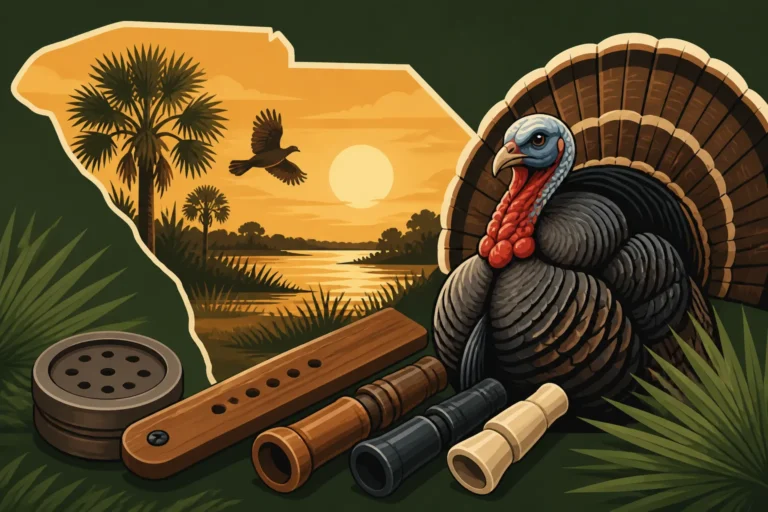
Mouth calls, or diaphragm calls, are a favorite among experienced turkey hunters for a good reason: they're completely hands-free. This allows you to keep your shotgun mounted and ready while still communicating with a bird. They offer an incredible range of sounds, from soft yelps and clucks to aggressive cutts and purrs, all by manipulating the reed with your tongue and breath. The learning curve can be steep, but dedicated practice pays off immensely.
There are many different cuts and reed configurations available, each producing slightly different tones. Single-reed calls are often easier for beginners, while double or triple-reed calls can produce raspier, more complex hen sounds. Many hunters carry several mouth calls to vary their sound or in case one gets damaged. Mastering the mouth call is a game-changer, allowing you to finish a stubborn tom without giving away your position.
Slate and Pot Calls
Slate, glass, or ceramic pot calls are incredibly versatile and relatively easy to learn, making them a great choice for both beginners and seasoned hunters. They produce a wide range of realistic turkey vocalizations with just a striker and a calling surface. The key is to find a pot call and striker combination that produces the sounds you like and to practice the various yelps, clucks, purrs, and cutts.
Different strikers (wood, carbon, plastic) will produce different tones on the same pot. A wooden striker on a slate surface will create a softer, more natural sound, while a carbon striker on a glass surface might yield a louder, sharper tone suitable for cutting through wind or reaching distant birds. Many South Carolina hunters swear by the versatility of a good slate call, using it for everything from soft tree yelps to excited cutting sequences. Keeping the surface clean and rough, either with sandpaper or a conditioning stone, is vital for consistent sound.
Box Calls
The classic box call is known for its loud, resonant yelps and cutts, making it excellent for reaching out to distant gobblers or getting a response on windy days. They are also incredibly user-friendly, requiring less finesse than a mouth call or pot call. Simply drawing the lid across the sound board creates a distinct yelp, and more aggressive movements produce cutting.
Box calls are especially useful for breaking the silence of a still morning or trying to locate a bird in thick cover. Their volume and distinctive sound carry well through the diverse timber types found in South Carolina, from thick pine plantations to dense bottomland hardwoods. While they aren't hands-free, they are quick to deploy and can be invaluable in your calling arsenal. Just remember to keep them dry, as moisture can significantly affect their sound quality.
Locator Calls
Locator calls don't mimic turkeys, but rather the sounds of other animals that can trigger a shock gobble from a tom. Owl hoots, crow calls, and coyote howls are among the most popular. These calls are used to pinpoint a gobbler's location, especially at dawn or dusk when they are on the roost, or during the day when trying to locate a quiet bird. A shock gobble doesn't alert the tom to your presence as a turkey call might, allowing you to close the distance more effectively.
Using a locator call strategically, especially early in the morning before a tom flies down from the roost, can help you set up in the perfect position. In South Carolina, the dense woods and varied terrain mean that a gobble might not travel as far as you'd expect, so a good locator call can be critical for narrowing down a bird's whereabouts. Calling a South Carolina Gobbler Off the Roost often starts with a locator call to get a fix on his position.
Here's a quick comparison of common turkey calls:
| Call Type | Pros | Cons | Skill Level | Optimal Use |
|---|---|---|---|---|
| Mouth Call | Hands-free, wide range of sounds, versatile | Steep learning curve, can get wet/damaged | Advanced | Finishing birds, soft calls, running & gunning |
| Slate/Pot Call | Realistic, good volume, relatively easy to learn | Requires two hands, can get wet, surface needs care | Intermediate | Mid-range calling, soft purrs, tree yelps |
| Box Call | Loud, easy to use, great for locating | Requires two hands, less versatile for soft calls | Beginner | Locating distant birds, aggressive cutting |
| Locator Call | Triggers shock gobble, doesn't alert gobbler | Only for locating, not for calling in | Beginner | Pinpointing roosted birds, finding quiet gobblers |
Decoy Strategies and Placement
Decoys can be incredibly effective, especially on public land where birds might be more wary. They provide a visual focal point for the gobbler, often distracting him from your position and allowing him to close the final distance. The most common setups include a single hen, a jake and a hen, or a full-strut gobbler. The choice depends on the time of season and the pressure on the birds.
Early in the season, a jake and hen setup can often draw in a dominant tom who wants to assert his dominance over the jake. As the season progresses, and birds become more call-shy, a lone, receptive hen decoy might be all it takes. For aggressive, late-season birds, a full-strut gobbler can sometimes trigger an irresistible territorial response. Remember, South Carolina rules prohibit fanning and reaping on WMAs, so static decoy placement is key. Decoy Placement for Pressured South Carolina Birds is a skill honed over many seasons, but generally, you want them visible, facing slightly away from your setup, giving the gobbler a reason to walk past them, bringing him into easy gun range.
Essential Clothing and Footwear
Spring in South Carolina can be unpredictable. You might start a morning hunt with frost on the ground, only to be sweating by midday. The right clothing, chosen for warmth, breathability, and camouflage, is crucial for staying comfortable and concealed.
Layering for South Carolina's Variable Spring Weather
Layering is your best friend when hunting in South Carolina. Start with a moisture-wicking base layer to draw sweat away from your body, preventing chills during cooler mornings or after exertion. Over this, a mid-layer for insulation – a fleece vest or light jacket – can be shed as temperatures rise. Your outer layer should be a durable, breathable camouflage shell that protects against light rain and provides ultimate concealment.
The ability to add or remove layers quickly means you can adapt to the often drastic temperature swings common in a South Carolina spring. One morning you might need a heavier mid-layer for a Warm-Weather Sitting Strategy in South Carolina, and the next, you'll be peeling it off within an hour of the sun coming up. Avoid cotton next to your skin, as it retains moisture and will make you feel colder when wet.
Camouflage Patterns and Concealment
Turkey hunting is a visual game, and effective camouflage is non-negotiable. Break-up patterns that mimic natural foliage, bark, and shadows are ideal. Consider the specific habitat you'll be hunting. In the lowcountry swamps and bottomlands, darker, denser patterns might blend better, while in the more open pine forests or agricultural fields, patterns with more open, naturalistic elements could be more effective.
Don't forget face and hand concealment. A face mask or face paint, along with gloves, will break up the outlines of your skin, which can easily spook a sharp-eyed gobbler. Many hunters opt for full head nets that cover the neck and ears, preventing mosquitoes and ticks from becoming a nuisance while also providing full concealment. Complete concealment from head to toe is crucial when a gobbler is trying to pinpoint the source of your calls.
Footwear: Snake Boots and Comfortable Stomping
Given the varied terrain and the prevalence of venomous snakes in South Carolina, snake boots are highly recommended. They offer crucial protection against rattlesnakes, copperheads, and cottonmouths that are active in the spring. Look for boots that are comfortable, waterproof, and provide good ankle support, especially if you'll be covering miles across uneven ground, through swamps, or up steep ridges.
Even with snake protection, comfort is king. A long day of still-hunting or sitting patiently can be miserable with ill-fitting boots. Ensure they are broken in well before the season, and consider quality wool socks to help manage moisture and prevent blisters. Whether you're navigating the thick palmetto flats of the coastal plain or scrambling up the granite outcroppings of the Upstate, your feet will thank you for the right choice in footwear.
Optics and Navigation Essentials
Finding and getting to your gobbler requires more than just good calling. Optics help you scout and identify birds, while reliable navigation tools ensure you don't get lost and can track your movements.
Binoculars and Rangefinders
While turkey hunting often involves close-range encounters, a good pair of binoculars can be invaluable for scouting and confirming details. Use them to spot distant birds, identify potential roosting areas, or glass a field edge before moving in. An 8x or 10x power is usually sufficient, offering a good balance of magnification and field of view. Look for a pair that is lightweight and durable enough to withstand the rigors of the field.
A rangefinder, while perhaps not as critical as for deer hunting, can still be very useful, especially when setting up on a field edge or in open timber. Knowing the exact distance to a tree line or a decoy can help you gauge your shot accurately, preventing misjudgments under pressure. Many seasoned turkey hunters will range various landmarks around their setup, creating a mental map of their effective shooting zones.
GPS Units and Smartphone Apps
Navigating unfamiliar public land or even a large private tract can be challenging, especially in the pre-dawn darkness. A reliable GPS unit or a smartphone app with GPS capabilities (like GoHunt, OnX Hunt, or BaseMap) is an absolute must. These tools allow you to mark your vehicle, potential roost sites, fresh sign, and your chosen setup spots. They also provide detailed topographic maps and aerial imagery, which are incredibly helpful for understanding the terrain and planning your approach.
Smartphone apps, in particular, have become incredibly popular due to their convenience and the wealth of information they provide. Many offer property boundary lines, public/private land distinctions, and even various habitat layers, making them powerful scouting tools. Before heading out, make sure your phone is fully charged, and consider carrying a portable power bank. Using an app like GoHunt for scouting South Carolina Public Land Before Season can give you a distinct advantage, helping you identify travel corridors, pinch points, and potential roosting areas long before opening day.
Compasses and Topographic Maps
Even with advanced electronics, it's always wise to have a backup. A traditional compass and a physical topographic map of your hunting area are invaluable in case your electronic devices fail due to battery drain, water damage, or lack of signal. Learning how to use them together can literally be a lifesaver. Maps provide a broader overview of the landscape, showing elevation changes, water features, and road systems that digital maps might not always highlight as clearly.
Before your hunt, study your maps. Understand the contour lines, identify potential escape routes for a gobbler, and pinpoint natural funnels. Knowing your terrain intimately, even with a map in hand, will give you confidence and help you make quick decisions when a gobbler starts closing the distance or decides to skirt your setup. Scouting South Carolina Public Land Before Season should always involve poring over good maps, both digital and paper.
Safety and Comfort in the Field
Being safe and comfortable ensures you can focus on the hunt. From protecting yourself to staying hydrated, these essentials are often overlooked but critical for a successful outing.
Blaze Orange Considerations (or Lack Thereof)
Unlike deer hunting, blaze orange is generally not required when actively hunting turkey in South Carolina. In fact, wearing blaze orange while turkey hunting can be counterproductive as turkeys have excellent eyesight and can detect bright colors. However, it's still a good idea to carry a blaze orange vest or hat to wear when walking in and out of the woods, especially if you're on public land or in areas with other hunters. Once you're set up, you can remove it.
Safety is paramount, and minimizing risk to yourself and others is key. If you are hunting on public land during a time when other seasons might be open, or if you're part of a group traveling to and from your setup, the brief use of blaze orange is a smart precaution. Be especially mindful during Opening Weekend Crowds on the Coastal Zones or other busy public land periods.
First-Aid and Emergency Preparedness
Accidents can happen, especially in remote areas. A compact first-aid kit stocked with essentials like bandages, antiseptic wipes, pain relievers, blister treatment, and any personal medications is non-negotiable. Consider adding items like a snake bite kit (though it's no substitute for immediate medical attention) and allergy medication if you have specific sensitivities.
Beyond the kit, tell someone where you're going and when you expect to return. In areas with spotty cell service, consider carrying a satellite communication device for emergencies. Knowing basic first aid and being prepared for common injuries or medical issues will give you peace of mind and the ability to respond effectively if something goes wrong.
Communication and Signaling Devices
While your cell phone might be your primary communication device, always consider its limitations in the backcountry. A two-way radio can be useful if hunting with a partner in areas with no cell service. For more extreme situations, a personal locator beacon (PLB) or satellite messenger can send an emergency signal with your GPS coordinates to search and rescue, even without cell coverage.
Whistles are also simple, effective signaling devices. Three short blasts are a universal distress signal. Having a headlamp with fresh batteries, or even a small spare flashlight, is also crucial for navigating in the dark, which is common during early morning turkey hunts or if you're tracking a bird after sunset.
Essential Items for Your Turkey Hunting Pack
Your turkey vest or backpack needs to hold more than just calls and shells. A well-stocked pack ensures you have everything you need for a long day in the woods, no matter what South Carolina throws at you.
Water and Snacks
Staying hydrated and fueled is crucial for maintaining focus and energy throughout a long hunt. Carry plenty of water, especially during South Carolina's warmer spring days. Electrolyte drinks or powders can also be beneficial. Pack high-energy, non-perishable snacks like granola bars, nuts, or dried fruit. Avoid snacks that are noisy to open.
Sitting still for hours, walking miles through varied terrain, and enduring rising temperatures can take a toll. Dehydration and hunger can lead to fatigue, decreased concentration, and poor decision-making, which is the last thing you want when a gobbler is finally stepping into range.
Knife and Gloves
A sharp, sturdy knife is an indispensable tool for any hunter. From cutting parachute cord to field dressing a bird, you'll find countless uses for it. Choose a fixed-blade knife for durability and ease of cleaning, or a high-quality folding knife. Keep it sharp!
Gloves are essential for concealment and comfort. In addition to camouflage gloves for your hands, consider carrying a pair of work gloves for setting up blinds or clearing brush. Gloves can also protect your hands from thorns, insect bites, and the elements.
Headlamp and Spare Batteries
Early morning setups and late evening walks out mean navigating in the dark. A reliable headlamp is far more convenient than a handheld flashlight, keeping your hands free for carrying your shotgun or gear. Ensure it has a red light option to preserve your night vision and minimize disturbance to wildlife. Always carry spare batteries; cold weather or prolonged use can drain them quickly.
There's nothing worse than being stuck in the middle of a South Carolina swamp or deep woods after dark with no light. A headlamp isn't just a convenience; it's a safety tool that every hunter should carry.
Specialized Gear Considerations
Beyond the basics, certain specialized items can greatly enhance your comfort, concealment, and overall success in South Carolina's diverse environments.
Turkey Vests and Seats
A good turkey vest isn't just for carrying gear; it's a mobile command center. Look for one with ample pockets for organizing calls, ammunition, and other essentials, along with hydration sleeves. Many vests also feature an integrated, comfortable seat pad that folds down, allowing you to sit silently and comfortably against a tree for extended periods. This built-in seat can be a back-saver, especially when Setting Up Against a Big Oak on a long sit.
The design should allow for easy access to your calls without excessive movement, and it should be durable enough to withstand brush and briars. Some vests even have a "kickstand" feature, making it easy to lean back and stay still without getting stiff.
Ground Blinds for Ultimate Concealment
For hunters who prefer maximum concealment, or who are hunting with children or newcomers, a portable ground blind can be an excellent option. Pop-up blinds offer a full 360-degree enclosure, allowing for movement inside without spooking birds. They're especially useful in open areas like field edges or sparse timber where natural cover is lacking.
Blinds also provide protection from the elements, which can be a huge bonus during a sudden South Carolina rain shower or on a particularly windy day. While they sacrifice mobility compared to a run-and-gun approach, the enhanced concealment can often be the key to success, particularly on pressured birds or in areas where you might need to make small adjustments to your position. Using a Ground Blind on South Carolina Public Land is a great tactic for hunters who want to disappear completely.
Insect Repellent and Thermacells
South Carolina's spring weather often brings out an abundance of insects – mosquitoes, gnats, and ticks can turn a peaceful hunt into an irritating ordeal. A good insect repellent with DEET or picaridin is essential. Apply it generously, especially around exposed skin and clothing openings.
For stationary hunts, a Thermacell device can create a mosquito-free zone, significantly increasing your comfort. These devices release a repellent that creates a scent-free barrier, keeping biting insects at bay without a strong odor that could spook game. The constant buzzing and biting of insects can make it impossible to sit still and focus, so don't underestimate the value of effective bug protection.
Gear Maintenance and Pre-Season Prep
The best gear in the world is useless if it's not maintained or if you're not prepared. A little effort before and after the season can make all the difference.
Shotgun Cleaning and Storage
After every hunt, especially in South Carolina's humid and sometimes rainy conditions, your shotgun needs proper cleaning. Moisture and debris can lead to rust and corrosion, affecting performance and safety. Disassemble your shotgun, clean the barrel, action, and choke tube, and lightly oil all metal parts. Pay special attention to the choke tube threads to prevent seizing.
Store your shotgun in a climate-controlled environment, ideally in a quality gun safe, to protect it from theft and environmental damage. Never store it in a soft case for extended periods, as soft cases can trap moisture. Proper maintenance ensures your shotgun is ready to perform when you need it most, season after season.
Call Practice and Preparation
Your calls are only as good as your ability to use them. Consistent practice before the season is crucial. Dedicate time to mastering different vocalizations, varying volume and cadence. Practice with all your calls – mouth, slate, and box – so you can switch seamlessly in the field. This isn't just about making the sound, but making it sound realistic.
Check your calls for wear and tear. Ensure your mouth calls are clean and the reeds aren't stuck together. Scuff your slate calls with sandpaper. Replace worn-out strikers. A little pre-season preparation of your calls can prevent frustrating silences when a gobbler is finally within earshot. This also includes practicing with apps on your phone, possibly even using the GoHunt platform to listen to real turkey sounds and compare them to your own calling.
General Pack Organization and Checklist
Before each hunt, review your gear. Create a checklist to ensure you have all your essentials. Organize your pack or vest so that frequently used items (calls, rangefinder) are easily accessible, while less urgent items (first-aid, spare batteries) are still secure but perhaps deeper in your pack. Knowing exactly where everything is will prevent fumbling when a gobbler makes his move.
A well-organized pack reduces stress and saves valuable time in the field. Check all your batteries, refill your water bottle, and pack enough snacks. Think through your planned hunt and pack accordingly. Being prepared allows you to focus solely on the turkeys, and that's exactly what you want when a spring gobbler steps into view in the South Carolina woods.
Disclaimer
This article is for general informational purposes only and does not constitute professional advice. Laws, prices and regulations vary by location and change over time. Consult a qualified professional for guidance on your specific situation.