Primitive Weapons Legal Under South Carolina Rules
It can feel like a maze trying to figure out exactly what gear you can bring afield, especially when you're looking to embrace the challenge of primitive weapons. South Carolina's hunting regulations, while comprehensive, can sometimes leave you scratching your head about what constitutes a "primitive weapon" and when you can actually use it. This guide aims to clear up that confusion, giving you a comprehensive understanding of what's legal, when to use it, and how to make the most of your primitive weapons seasons here in the Palmetto State.
What South Carolina Considers a Primitive Weapon
When we talk about "primitive weapons" in South Carolina, it’s not just a romantic idea of hunting like our ancestors did. It's a very specific legal definition that dictates what you can carry and use during certain designated hunting seasons. This isn't about spears or throwing sticks for big game; rather, it primarily focuses on muzzleloaders, bows, and crossbows, each with their own set of rules and seasons that carve out a unique hunting experience.
The Legal Framework: Defining "Primitive"
The South Carolina Department of Natural Resources (SCDNR) lays out these definitions clearly in their annual hunting regulations. For deer hunting, for instance, primitive weapons generally encompass muzzleloading firearms, archery equipment (including traditional bows, compound bows, and crossbows), and sometimes certain shotguns. The key is understanding that "primitive" doesn't mean "anything old school." It means equipment that meets specific criteria regarding loading, firing, and operation, often designed to offer a more challenging hunt or extend opportunities outside of the general firearms season. It’s crucial to know these rules inside and out, because a misunderstanding can quickly turn a great hunting trip into a legal headache.
Muzzleloaders vs. Archery: Key Distinctions
While both muzzleloaders and archery equipment fall under the primitive weapons umbrella, they operate under different principles and often have distinct season dates. Muzzleloaders are firearms that are loaded from the muzzle, meaning the projectile and powder are inserted from the front of the barrel. Archery equipment, on the other hand, propels an arrow using stored energy from a drawn string. The rules around draw weight, broadhead types, and even illuminated nocks can differ between states and within South Carolina's various seasons. For instance, during the state's dedicated primitive weapons deer season, both muzzleloaders and archery equipment might be allowed, but then during the broader archery-only season, only bows and crossbows are permitted. South Carolina Primitive Weapons Season Rules are distinctly different from the rules you'll find during the regular gun season. It's always a good idea to check the regulations for the specific game and zone you plan to hunt.
Delving into Muzzleloaders: The Heart of Primitive Season
Muzzleloaders offer a unique blend of challenge and tradition, taking hunters back to a simpler, more deliberate approach to the hunt. For many, the primitive weapons season is synonymous with muzzleloader hunting, offering a special window into the woods before the full roar of modern firearms season begins.
Types of Muzzleloaders Legal in South Carolina
When it comes to muzzleloaders, South Carolina’s regulations generally permit a few different types, though the most common for deer hunting are percussion cap and in-line muzzleloaders.
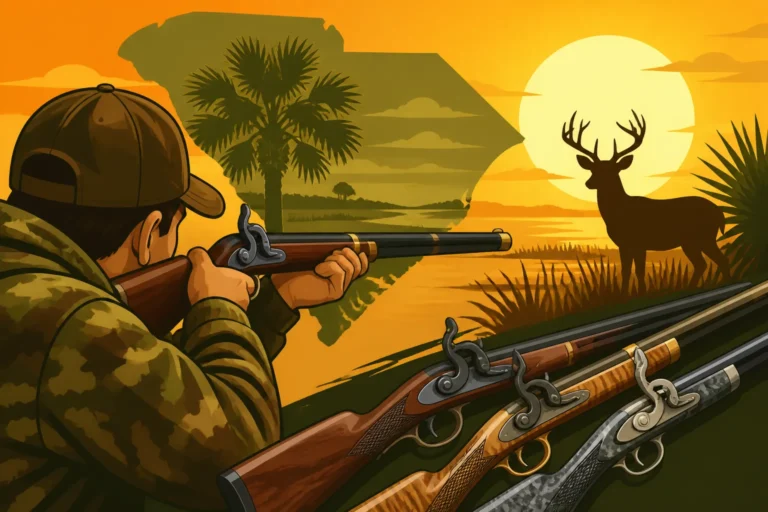
- Flintlock Muzzleloaders: These are the most historically authentic, using a piece of flint striking steel to create a spark that ignites the powder in the pan, which then flashes through a touchhole to ignite the main charge. While perfectly legal, they are less common for modern deer hunting due to their complexity and susceptibility to weather. They demand a higher level of skill and patience.
- Percussion Cap Muzzleloaders: These are a step forward from flintlocks, using a small, cap-like primer (the percussion cap) placed over a nipple, which is then struck by the hammer to ignite the main powder charge. They are generally more reliable and less affected by damp weather than flintlocks, making them a popular choice for hunters seeking a traditional experience without excessive fuss.
- In-line Muzzleloaders: These are the most modern type of primitive firearm. They feature a design where the primer, powder, and projectile are all in a straight line, offering improved ignition reliability and often greater accuracy. Many in-line muzzleloaders use 209 shotgun primers, which are very hot and reliable. These are often preferred by hunters who want the "primitive weapon" designation for an earlier season but desire modern firearm performance. You can read more about Muzzleloaders for a South Carolina Primitive Season to get a better sense of what's involved.
Caliber and Projectile Considerations
South Carolina regulations specify minimum caliber requirements for hunting big game with muzzleloaders. For deer, a .40 caliber or larger muzzleloading rifle is typically required. Smoothbore muzzleloading shotguns are also permitted, usually requiring slugs or buckshot. When selecting your projectile, there are many options from traditional round balls and patched lead bullets to modern saboted projectiles.
- Round Balls: These are historically accurate and effective at closer ranges, especially when paired with patched barrels. They require careful loading and technique.
- Conical Bullets: These are elongated, solid lead projectiles that offer better ballistic coefficients than round balls, improving accuracy and energy retention at slightly longer distances.
- Saboted Projectiles: These are modern bullets (often similar to rifle bullets) encased in a plastic sabot. The sabot engages the rifling of the barrel, imparting spin to the bullet, and then falls away after leaving the muzzle. These offer superior accuracy and range, especially in rifled muzzleloader barrels, allowing for shots comparable to modern centerfire rifles within reasonable distances.
Remember, whatever you choose, practice is paramount. Knowing your muzzleloader's capabilities and limitations, especially in various weather conditions, will make you a more ethical and successful hunter. Tools like GoHunt can help you find shooting ranges to dial in your primitive weapon setup.
Archery Equipment: Bows and Crossbows in Primitive Hunting
Archery hunting is perhaps the ultimate test of patience, stealth, and skill, bringing a hunter intimately close to their quarry. South Carolina offers generous archery seasons, allowing hunters ample opportunity to pursue deer with stick and string.
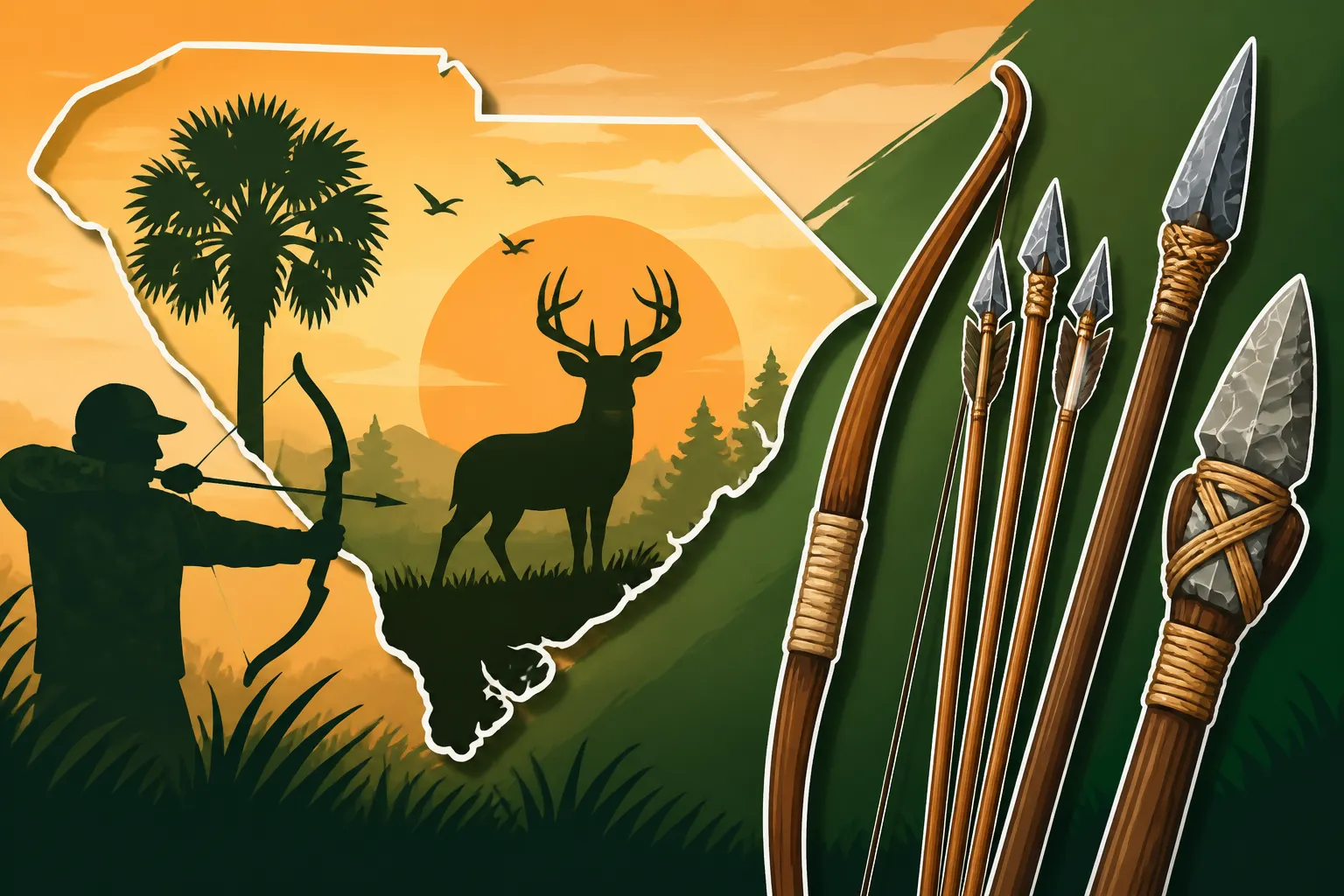
Traditional and Compound Bows
Both traditional bows (longbows and recurves) and compound bows are legal for hunting deer and other big game in South Carolina, provided they meet specific draw weight requirements.
- Traditional Bows: These are elegant in their simplicity. Longbows and recurves require more consistent practice to master but offer a deeply satisfying hunting experience. The lack of let-off means you're holding the full draw weight throughout the aiming process, which emphasizes holding strength and smooth release. Many traditional bowhunters appreciate the challenge and connection to the hunting heritage.
- Compound Bows: These are the workhorses of modern archery hunting. With their system of cams and cables, compound bows offer a "let-off" at full draw, meaning a significant percentage of the draw weight is reduced, making it much easier to hold the bow steady for aiming. This allows for increased accuracy and effective range compared to traditional bows. Compound bows are highly customizable with sights, stabilizers, and rests, allowing hunters to fine-tune their setup for optimal performance. When selecting a bow, ensuring it meets the minimum draw weight for the game you intend to hunt is critical. A minimum draw weight ensures enough energy is imparted to the arrow for a clean, ethical harvest.
Crossbow Regulations and Usage
Crossbows are also considered primitive weapons in South Carolina and are fully legal for deer hunting during both the primitive weapons season and the general archery season. This makes them an excellent option for hunters who may have physical limitations preventing them from drawing a compound or traditional bow, or simply prefer the mechanical accuracy and hold time a crossbow offers.
- Legal Considerations: Just like vertical bows, crossbows must meet certain specifications, usually regarding minimum draw weight or kinetic energy, to ensure an ethical harvest. South Carolina Crossbow Equipment Requirements are clear about what's allowed.
- Advantages: Crossbows typically offer rifle-like accuracy, often equipped with scopes, and can be held at full draw for an extended period, which can be a significant advantage when waiting for the perfect shot opportunity. This can reduce "buck fever" jitters that sometimes plague hunters trying to hold a compound at full draw.
- Disadvantages: They are generally bulkier and heavier than vertical bows, which can make navigating thick cover more challenging. The reload time is also much longer than a conventional bow shot. It's always good practice to carry proof of your hunting license and any required permits, perhaps storing them digitally on your phone or in an app like GoHunt.
Broadheads for Archery Hunting
Regardless of whether you use a traditional bow, compound, or crossbow, the broadhead on your arrow is critical for an ethical harvest. South Carolina requires broadheads to be fixed-blade or mechanical, with a minimum cutting width.
- Fixed-Blade Broadheads: These have blades that are permanently fixed in position. They are known for their ruggedness and penetration, especially through bone, and are generally less susceptible to failure.
- Mechanical Broadheads: These have blades that deploy upon impact. They often fly more like field points, which can be advantageous for accuracy, but proper deployment and penetration can be dependent on shot placement and arrow kinetic energy. Always ensure your chosen broadhead meets the minimum cutting diameter specified in the regulations and that your bow setup can effectively deploy and push it through your target.
Navigating Primitive Weapons Seasons and Regulations
Understanding the nuances of South Carolina’s primitive weapons seasons is just as important as knowing your gear. These seasons offer unique opportunities, often providing earlier access to the woods or allowing for different hunting methods than the general firearms season.
South Carolina's Primitive Weapons Deer Season
The primitive weapons deer season is a special time for many hunters. It typically offers an earlier start to the deer season compared to the general firearms season, especially in certain zones. This early access means you're hunting deer that have likely experienced less pressure and are still primarily on their summer patterns.
- Zone-Specific Openers: South Carolina operates under a four-zone system, and the primitive weapons season dates vary significantly between them. For example, coastal zones often open earlier than the upstate zones. It’s absolutely vital to know South Carolina's Four Game Zones and the specific dates for the zone you intend to hunt. Hunting during an open primitive weapons season often means you can use both muzzleloaders and archery equipment, giving you flexibility in your chosen method.
- Tactical Advantages: Hunting with primitive weapons often means a slower, more deliberate approach. You might focus more on still-hunting, ambushing from natural ground blinds, or using treestands in areas where deer feel less threatened. This allows for quieter entry and exit from stands and the chance to observe deer behavior more closely. Early season hunts can also mean warmer weather, so Warm-Weather Sitting Strategy in South Carolina can be a huge factor in your comfort and success.
Archery Season Overlaps and Standalone Dates
South Carolina also has dedicated archery-only seasons that often overlap with or precede the primitive weapons season, especially in the earliest opening zones. During archery-only seasons, only bows and crossbows are permitted; muzzleloaders are explicitly excluded.
- Extended Opportunities: The archery season often provides the longest continuous hunting opportunity for deer in many areas. This extended period allows bowhunters to target deer from late summer patterns through the rut and into the late season.
- WMA Considerations: When hunting on Wildlife Management Areas (WMAs), the rules can be even more specific. Many WMAs have their own unique primitive weapons or archery-only season dates, and some even require special permits or have quota hunts. Always check the specific WMA regulations before heading out, as these can differ from statewide rules. The Go Outdoors SC website or the GoHunt app can be invaluable for cross-referencing these localized rules and potential closures. South Carolina WMA Permit Requirements are something every public land hunter needs to understand.
Using the Go Outdoors SC App for Regulations
Staying current with hunting regulations can be a full-time job, given how often seasons and rules can be tweaked. The South Carolina Department of Natural Resources (SCDNR) provides the Go Outdoors SC app, which is a fantastic resource. It allows you to purchase licenses, check regulations, and even report harvests on the go.
| Weapon Type | General Definition (SC Deer) | Primary Season Type | Legal Caliber/Requirements | Notes |
|---|---|---|---|---|
| Muzzleloaders | Firearms loaded from the muzzle (powder & projectile from the front). | Primitive Weapons Season | .40 caliber or larger (rifles), shotgun slugs/buckshot | Percussion and in-line common; flintlocks legal. |
| Traditional Bows | Longbows, recurves without cams/wheels. | Archery Season, Primitive Weapons | Minimum draw weight applies (check regulations) | Simple, challenging; no let-off. |
| Compound Bows | Bows with cams/wheels providing mechanical advantage (let-off). | Archery Season, Primitive Weapons | Minimum draw weight applies (check regulations) | Most popular modern archery option; high accuracy. |
| Crossbows | Bows mounted horizontally on a stock, fired like a rifle. | Archery Season, Primitive Weapons | Minimum draw weight/kinetic energy (check regulations) | Good for stability/physical limitations; rifle-like accuracy. |
Disclaimer: This table summarizes general rules. Always consult the official SCDNR regulations for the most current and specific details for your hunt.
Essential Gear and Best Practices for Primitive Hunters
Hunting with primitive weapons often requires a slightly different gear setup and approach compared to modern rifle hunting. You’re trading long-range precision for close-quarters stealth, which means your preparation needs to reflect that.
Staying Safe and Seen: Blaze Orange Requirements
Even during primitive weapons seasons, safety remains paramount. While archery-only seasons typically do not require blaze orange, once muzzleloaders are in play during a primitive weapons season, or certainly during any overlap with general firearms seasons, blaze orange is a must.
- Why It Matters: South Carolina's blaze orange requirements are designed to keep hunters safe by making them highly visible to other hunters in the field. This is not just a suggestion; it's a legal requirement during specific seasons. Even if you're deep in the woods, far from anyone, wearing blaze orange helps you stand out against the natural backdrop, especially if you're on public land where other users might be present.
- Compliance: The regulations specify a minimum amount of outer clothing above the waist that must be blaze orange. This typically means a hat, vest, or both. Remember that blaze pink is also an option under South Carolina law. Always double-check the current regulations for How Much Blaze Orange South Carolina Requires for your specific hunting scenario to ensure you’re in compliance and, more importantly, safe.
Ethical Shot Placement and Game Recovery
With primitive weapons, shot placement becomes even more critical due to the sometimes-limited range and energy of these projectiles compared to high-powered rifles. Making a clean, ethical shot is the hallmark of a responsible hunter.
- Practice is Key: Whether it’s a muzzleloader or a bow, consistent practice at various distances is non-negotiable. Know your weapon's effective range and stick to it. Never take a shot you're not confident in. For archery, this means practicing from your treestand or ground blind setup to simulate real hunting angles. For muzzleloaders, practice in varying weather conditions to understand how moisture might affect your powder or primers.
- Tracking and Recovery: Even with a perfect shot, deer can run. Primitive weapons, especially bows, often result in less immediate knockdown power than centerfire rifles. This means tracking skills are absolutely essential. Blood Trailing After Dark in South Carolina is a skill every primitive hunter should hone. Allow adequate time for the animal to expire before beginning your track, especially if the shot wasn't immediately apparent as lethal. Pay attention to the animal's reaction to the shot, the type of blood (if any) at the scene, and the direction of travel. Using a quality headlamp and having a recovery plan with a partner can make a huge difference.
Field Care in Warm South Carolina Weather
South Carolina's hunting seasons, particularly the early archery and primitive weapons openers, often take place when temperatures are still quite warm. This presents unique challenges for proper game care.
- Cool It Down Fast: As soon as you recover your game, especially deer, the priority is to get it field dressed and cooled down as quickly as possible. Removing the entrails helps the carcass begin to cool internally, preventing meat spoilage.
- Transport and Storage: If you have a significant drag or distance to cover, consider using a deer cart or game carrier. Once back at your vehicle, don't just throw the deer in the bed of your truck exposed to the sun. Cover it with a tarp or blanket, or ideally, transport it in game bags inside a cooler with ice. Many hunters will immediately get their deer to a processor or hang it in a walk-in cooler. Learning Field Dressing a Deer in Warm Weather is an indispensable skill for South Carolina hunters, as it directly impacts the quality of your venison.
Hunting with primitive weapons in South Carolina offers a deeply rewarding experience, connecting you to the traditions of the past while still enjoying the bounty of the present. By understanding the rules, mastering your gear, and practicing ethical hunting principles, you'll be well on your way to a successful and memorable season.
Disclaimer
This article is for general informational purposes only and does not constitute professional advice. Laws, prices and regulations vary by location and change over time. Consult a qualified professional for guidance on your specific situation.