Rabbit Hunting South Carolina Fencerows
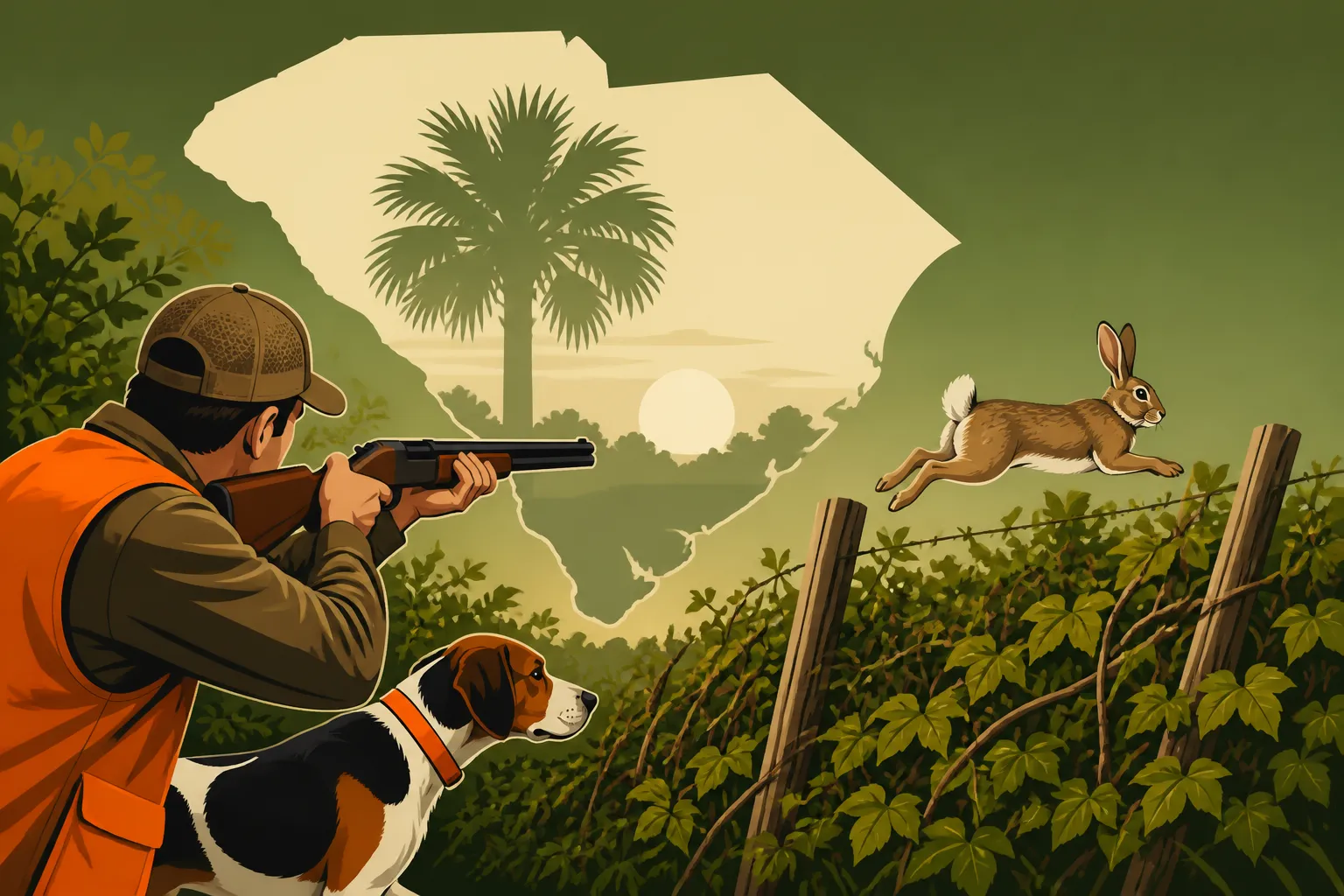
There's nothing quite like the thrill of a cottontail bursting from cover, scattering across a field edge, and making you earn every shot. But let's be honest, finding consistent rabbit action in South Carolina can sometimes feel like chasing a ghost, especially with increasing pressure on public lands or large, accessible private tracts. That's where the humble fencerow comes into play – these overlooked strips of tangled habitat often hold a surprising number of rabbits, offering fantastic hunting opportunities if you know how to approach them. This guide will walk you through everything you need to know to transform those linear thickets into prime rabbit hunting grounds.
Understanding South Carolina's Rabbit Habitat
When you're thinking about rabbit hunting, the first image that often comes to mind might be sprawling fields or dense briar patches. While those are certainly prime spots, fencerows are an often-underestimated goldmine for cottontails across the Palmetto State. These linear strips of cover are like miniature ecosystems, providing everything a rabbit needs to thrive, often right under our noses.
Why Fencerows Are Rabbit Magnets
Think about a typical South Carolina farm or rural property. You'll often see fields of corn, soybeans, or peanuts, sometimes stretching for acres. These vast open spaces offer abundant food, but they lack the crucial element of escape cover that rabbits desperately need to evade predators like coyotes, foxes, and even those pesky feral cats. This is where the fencerow becomes a lifesaver for our cottontail friends. A fencerow, typically marking a property boundary or separating two fields, is rarely manicured. Instead, it becomes a natural haven, accumulating thick brush, honeysuckle, briars, small saplings, and often old farming implements or discarded debris. This dense, impenetrable cover provides vital protection from avian predators swooping from above and terrestrial threats pushing through. It's a linear superhighway and fortress all in one, allowing rabbits to move relatively safely between feeding areas and their bedding sites.
Furthermore, fencerows act as thermal cover. On hot South Carolina days, the shade from the taller brush and trees offers a cool retreat. During colder snaps, the dense tangle provides insulation from biting winds and frost. This combination of food access, escape cover, and thermal protection makes a fencerow incredibly attractive to rabbits, concentrating them in predictable locations. Many hunters overlook these strips, thinking they're too small or too inconvenient, but that's exactly why they can be so productive – less pressure often means more rabbits.
Ideal Cover and Food Sources
A truly productive fencerow isn't just a line of weeds; it's a diverse buffet and apartment complex for rabbits. The best fencerows are those that offer a mix of low-growing, dense vegetation for concealment and taller, thorny bushes that deter larger predators. Think about blackberry brambles, multiflora rose, honeysuckle vines, and even young sweetgum saplings that have grown into a thicket. These provide incredible security. Underneath this thorny canopy, you'll often find clover, various grasses, and forbs – all delicious and nutritious food sources for cottontails.
Beyond the natural vegetation, consider what might be adjacent to the fencerow. If one side borders a soybean field that's recently been harvested, those leftover beans are a prime food source. If it's next to a cornfield, scattered kernels offer another easy meal. Even a fallow field with a mix of weeds can provide plenty of sustenance. The ideal fencerow effectively acts as a living pantry, with rabbits needing to move only a few feet from their secure bedding areas to fill their bellies. This proximity to both food and dense cover is the absolute key. When you're scouting, look for fencerows that are not only thick but also border areas that historically produce agricultural crops or have a good mix of natural forage.
Reading the Landscape for Prime Fencerows
Successful fencerow hunting starts long before you ever step foot in the field with a shotgun. It begins with careful scouting, both from afar and on the ground. When you're looking at aerial maps, whether it's on a traditional printed map or using a modern app like GoHunt, try to identify fencerows that connect different types of habitat. For instance, a fencerow that runs between a dense woodlot and a harvested crop field is almost certainly going to be a high-traffic area. Rabbits will use that fencerow as a safe travel corridor to move from their deep cover bedding areas in the woods to their nighttime feeding grounds in the field.
Also, pay close attention to the width and density of the fencerow itself. A thin, straggly line of weeds won't offer much protection. You're looking for fencerows that are at least 10-15 feet wide and choked with thick, thorny growth. Sometimes, you'll find fencerows that lead to or intersect with other thick patches of cover, such as a brush pile, an old equipment shed, or even a drainage ditch filled with cattails. These intersections and expanded cover areas are often where rabbits will concentrate. Don't be afraid to zoom in on those maps and identify potential pinch points or areas where the fencerow widens into a small, isolated thicket, as these are excellent places to focus your hunting efforts. Knowing how to Reading a Ridge for Upstate Deer teaches you a lot about reading terrain for all small game. The same principles of identifying travel corridors and concentrated cover apply.
Scouting for Rabbit Sign in Fencerows
Once you've identified promising fencerows on your map, it's time to hit the ground. This is where you become a detective, looking for the subtle clues that indicate a thriving rabbit population. Early season scouting, even before South Carolina Rabbit Season Dates open, can give you a significant edge.
Identifying Fresh Rabbit Droppings and Tracks
The most obvious signs of rabbit activity are their droppings and tracks. Rabbit droppings are small, round, pellet-like, and typically dark brown or black. Fresh droppings will appear moist and often have a slightly shiny sheen, while older droppings will be dry, brittle, and lighter in color, sometimes even faded to grey. Look for concentrations of these pellets, especially near the edges of the fencerow where rabbits might stop to feed or rest, or along well-used paths within the dense cover. The more fresh droppings you find, the higher the rabbit density in that particular section of fencerow.
Tracks can be a bit trickier to spot, especially in dense grass or on hard-packed ground, but they are invaluable indicators. Look for tracks after a light rain or in damp soil. Rabbit tracks typically show two small front feet side-by-side, followed by two larger hind feet that land ahead of where the front feet were. This distinctive bounding pattern is a dead giveaway. Pay attention to how many different sets of tracks you see and how fresh they appear. A faint, weathered track might be old news, but a sharp, well-defined track means a rabbit was recently moving through that spot. Finding these signs confirms your map scouting and tells you exactly where to concentrate your hunting efforts.
Locating Runways and Escape Routes
Rabbits are creatures of habit, and they will consistently use the same paths, or "runways," within their dense cover. These runways are essentially tunnels or worn paths through the thick vegetation. To find them, you'll need to get down low and look into the heart of the fencerow. They'll often be just wide enough for a rabbit to scoot through, maybe 6-10 inches wide. You might see compressed grass, broken twigs, or even worn earth along these routes. These runways lead to feeding areas, deeper cover, or critical escape routes.
Identifying escape routes is just as important as finding runways. When a rabbit is flushed, it won't just run blindly. It will have a preferred path to deeper, thicker cover, or perhaps to a culvert, a brush pile, or even a hole under an old shed. Pay attention to any natural openings, dips in the terrain, or man-made structures that could offer a quick bolt-hole. Knowing these escape routes allows you to position blockers or anticipate where a rabbit might emerge, giving you a better shot opportunity. Using your GoHunt app or other GPS mapping tools to mark these runways and escape points during your scouting trips will pay huge dividends when you're actually hunting.
Utilizing Technology for Scouting
In today's hunting world, technology isn't just for big game. Tools like the GoHunt app can dramatically improve your rabbit scouting efficiency. Gone are the days of just blindly walking property lines hoping for the best. With a detailed satellite imagery layer, you can easily identify property boundaries, access points, and the distinct linear features of fencerows that might otherwise be obscured from ground level. You can toggle between different map views – satellite, topographic, and hybrid – to get a complete picture of the terrain. Satellite view will highlight crop fields, dense timber, and the critical transitional zones where fencerows thrive.
Beyond just identifying the fencerows themselves, GoHunt allows you to drop pins and notes on your map. As you walk the fencerows and find fresh droppings, tracks, or well-used runways, you can mark them precisely. This creates a virtual "honey-hole" map, so when you return to hunt, you know exactly where the hotspots are. You can also use the app to measure distances, plan your approach routes to avoid spooking game, and even track your progress as you push through cover. Being able to visualize the entire hunting area, understand the lay of the land, and mark key rabbit sign digitally gives you a significant advantage, saving you time and effort in the long run.
Essential Gear for Fencerow Rabbit Hunting
Rabbit hunting, especially in the thick cover of fencerows, doesn't require a ton of specialized gear, but having the right tools for the job can make your day safer, more comfortable, and much more successful. You're often dealing with dense brush, potential hazards, and the need for quick, close-range shots.
Shotgun and Ammunition Choices
For rabbit hunting in South Carolina fencerows, a shotgun is undeniably king. The dense cover and quick, erratic movements of flushing rabbits demand a spreading pattern of shot. Most hunters opt for a 12-gauge or 20-gauge, and both are excellent choices. A 20-gauge is often preferred by those who want a lighter firearm for easier maneuverability through thick brush, and it still delivers plenty of punch for rabbits. A 12-gauge offers a slightly denser pattern or the option for heavier loads if you find yourself in more open situations, though that's less common in fencerows.
As for action, an over/under, side-by-side, or semi-automatic are all popular. Pump-action shotguns work too, but the ability to quickly get a second shot off with less manual manipulation can be a real advantage when a rabbit doubles back or you flush two at once. Choke selection is important; an Improved Cylinder or Modified choke is usually ideal, providing enough spread for close-range shots without blowing the pattern too wide. For ammunition, stick with smaller shot sizes like 6 or 7 ½. These smaller pellets create a dense pattern, increasing your chances of connecting with a fast-moving rabbit without over-penetrating and ruining too much meat. Avoid anything larger than 4 shot unless you're specifically targeting larger game, as it will decimate a rabbit at close range.
| Gauge | Recommended Shot Size | Choke Recommendation | Typical Effective Range (Yards) | Notes |
|---|---|---|---|---|
| 12 | 6, 7 ½ | Improved Cylinder, Modified | 15-30 | Versatile, heavier hitting, slightly more recoil. |
| 20 | 6, 7 ½ | Improved Cylinder, Modified | 15-25 | Lighter, easier to carry, still very effective for rabbits. |
| .410 | 6, 7 ½ | Full | 10-20 | Challenging for beginners due to tight pattern and light shot payload. |
Protective Clothing and Footwear
Hunting in South Carolina fencerows means you're going to encounter thorns, briars, and potentially some less-than-friendly critters. Proper protective clothing is non-negotiable. Start with durable brush pants or chaps made from tough materials like canvas or synthetic blends that can withstand repeated scrapes with thorny bushes. Denim jeans will get torn to shreds and offer little protection. A long-sleeved shirt, again, made of sturdy material, will protect your arms from scratches and provide some sun protection. Remember, South Carolina's Blaze Orange and Pink Options apply to all deer hunters, but it's always a good idea to wear blaze orange during any hunting season for visibility and safety, especially if hunting with a group. A blaze orange vest or hat can be critical.
Footwear is perhaps the most important piece of gear. You need comfortable, waterproof boots with good ankle support. Given the prevalence of venomous snakes like rattlesnakes and cottonmouths in various parts of South Carolina, investing in a good pair of Snake Boots for South Carolina Swamp Ground is a smart move. These boots provide an extra layer of protection against snakebites and are often waterproof, which is a huge bonus when traversing damp ditches or marshy edges that often accompany fencerows. You'll be doing a lot of walking, so comfort is key, but protection should never be sacrificed.
Bringing Dogs into the Equation
While you can certainly have success hunting fencerows solo, the experience truly shines when you bring along a good rabbit dog. Beagles are, without a doubt, the quintessential rabbit dog, and for good reason. Their small size allows them to navigate the densest briar patches, their incredible noses can pick up the faintest scent, and their distinctive baying lets you know exactly where they are and when they've jumped a rabbit. Nothing compares to the sound of a pack of beagles hot on the trail of a cottontail, and it's a deeply ingrained tradition for many Southern hunters. If you're looking to delve deeper into this method, you might want to read our guide on Running Beagles on South Carolina Cottontails.
A well-trained beagle or pack of beagles will systematically work through the fencerow, flushing rabbits that you might otherwise walk right past. They'll push the rabbit out into a clearing or along an escape route, giving you a clean shot. When hunting with dogs, it's crucial to have a good tracking collar, especially with GPS capabilities like those offered by Garmin Alpha or SportDOG, to keep tabs on them if they get out of sight or cross into neighboring property. Ensuring your dogs are up to date on vaccinations and protected from ticks and fleas is also paramount for their health and your peace of mind.
Effective Fencerow Hunting Tactics
Successfully hunting rabbits in fencerows requires a blend of strategy, patience, and often, teamwork. These linear habitats present unique challenges and opportunities compared to open fields or large timber tracts.
Solo Hunting Strategies
Hunting fencerows by yourself can be incredibly rewarding, but it requires a methodical approach. The key is to move slowly and deliberately, pausing frequently. Rabbits are masters of camouflage and will often sit tight, hoping you'll pass them by. By stopping and waiting for a moment, you might spook a rabbit into moving, giving you a shot, or you might spot one that was previously hidden. When walking, try to move with the wind in your face if possible, as this will help carry your scent away from the rabbits and improve your chances of hearing a rustle before you see the animal.
Focus on working one side of the fencerow, keeping your eyes peeled for any movement within the dense cover. If the fencerow is wide enough, you might even crisscross slightly, pushing through different sections. Pay close attention to any small openings, brush piles, or junctures with other cover – these are prime spots for rabbits to be hunkered down. Be prepared for a quick shot, as rabbits can burst out at surprising speeds and often offer only a fleeting target. It's often helpful to walk with your gun at the ready, but always pointed in a safe direction. Remember, the goal isn't to walk quickly, but to walk thoroughly.
Group Drives and Blockers
If you're hunting with a few friends, group drives are an incredibly effective way to hunt fencerows. This tactic maximizes the chances of flushing rabbits and funnels them towards waiting shooters. Typically, you'll designate one or two "drivers" who will slowly push through the fencerow, making noise and encouraging rabbits to bolt. The remaining hunters act as "blockers," positioning themselves strategically along the fencerow's length or at its ends.
Blockers should find elevated positions if possible, or at least clear shooting lanes, and remain as still and quiet as possible. The idea is that as the drivers push rabbits, the rabbits will try to escape past the blockers, presenting a shot opportunity. Communication is key in a group drive. Hunters should know each other's positions, and drivers should move at a consistent pace. This method is particularly effective for longer fencerows or those that connect to larger blocks of cover where rabbits might try to escape. It's similar to deer drives but on a smaller scale, and it can be exhilarating when a rabbit breaks cover with multiple shooters ready. For more on group hunting, our article on Deer Drives With Three or Four Hunters offers some transferable insights on coordination.
Working Different Fencerow Types
Not all fencerows are created equal, and adjusting your tactics based on the type of fencerow you're hunting can significantly increase your success. A narrow fencerow, perhaps only a few feet wide, might be best hunted with a single person walking down the middle, pushing rabbits out either side. For these, a quick, close-range shot is almost guaranteed. Wider, denser fencerows, especially those that border thick woods on one side and an open field on the other, are ideal for group drives. Drivers can push from the dense woods side, forcing rabbits out into the more open field where blockers are waiting.
Fencerows that contain old ditches or culverts are fantastic for rabbits and require extra attention. Rabbits love to dart into these underground havens, so if you're driving, try to have a blocker positioned on the other side of the culvert if possible, anticipating a quick exit. Fencerows that wrap around the edge of a standing cornfield or soybean field, even if recently harvested, offer a great mix of food and cover. Rabbits might be bedded deep in the fencerow but will quickly dive back into the field remnants once flushed. Understanding these nuances and adapting your approach will help you maximize your harvest in these often-underestimated habitats. Another excellent guide, Working a Fencerow for Late-Season Deer, details how diverse these linear features can be.
Timing Your Fencerow Rabbit Hunts
Just like with any game animal, timing plays a crucial role in rabbit hunting success. Understanding the best times of day, how weather affects rabbit behavior, and when South Carolina's seasons are open will help you plan more productive hunts.
Best Time of Day and Weather Conditions
Rabbits, particularly cottontails, are crepuscular, meaning they are most active during dawn and dusk. This makes early morning and late afternoon the prime times to hunt. During these periods, rabbits are more likely to be out feeding along the edges of the fencerow or moving between bedding areas and food sources. Mid-day hunts can still be productive, especially if you're actively pushing through dense cover, but rabbits are generally less active and more likely to be hunkered down, making them harder to flush.
Weather also plays a significant role. Overcast days, especially those with a light drizzle, can be excellent. Rabbits tend to be more active in cooler, damp conditions than on bright, hot, or windy days. A crisp, cold morning after a hard freeze can also be fantastic, as rabbits will often be out foraging for food that might be easier to access once the ground has hardened. Avoid hunting during heavy rain or strong winds, as these conditions make it difficult for both you and any dogs to track scent, and visibility can be poor. Plus, it's just plain uncomfortable!
Understanding South Carolina's Rabbit Season Dates
Knowing the precise hunting seasons for rabbits in South Carolina is critical for legal and ethical hunting. The South Carolina Department of Natural Resources (SCDNR) sets specific dates, and these can vary slightly year to year, so always check the most current regulations. Generally, rabbit season in South Carolina opens in the fall and extends through late winter, providing a long window of opportunity. This extended season allows hunters to take advantage of various weather conditions and post-harvest agricultural opportunities.
It's important to remember that while rabbits are plentiful, ethical hunting practices dictate knowing your limits and adhering to bag limits. While some states have very restrictive small game seasons, South Carolina typically offers a generous season length and bag limits, reflecting the healthy South Carolina Cottontail Population Trend. For the most up-to-date and specific information, always consult the official SCDNR regulations guide or their website, or refer to our detailed article on South Carolina Rabbit Season Dates. Understanding the season length also helps you plan scouting trips in the off-season without any guns, simply to identify productive fencerows and rabbit sign.
Post-Harvest Opportunities
One of the absolute best times to hit the fencerows for rabbits in South Carolina is after agricultural fields have been harvested. Imagine a vast cornfield or soybean field that offered little cover during the growing season. Once the crops are cut and removed, the rabbits that were living deep within those fields suddenly lose their protective canopy. Where do they go? They flock to the nearest dense cover, and often, that means the fencerows surrounding those very fields.
After harvest, the fencerows become even more critical sanctuaries for rabbits. Not only do they provide essential cover, but the leftover grain or crop remnants scattered on the ground become an immediate and easy food source. This creates a perfect scenario: rabbits are concentrated in the fencerows, and they are actively feeding nearby. This period, usually late fall and early winter, can lead to some of the most productive rabbit hunts of the season. Always be sure to obtain permission if you're hunting on private land, as harvested fields and their fencerows are almost always privately owned. A polite knock on a farmer's door can often lead to a fantastic hunting opportunity. Our article on Asking a South Carolina Farmer for Permission offers some great tips on how to approach landowners.
Disclaimer
Hunting is an inherently dangerous activity. Always prioritize safety by adhering to all local, state, and federal hunting regulations. Understand and follow proper firearm handling procedures, wear appropriate safety gear including blaze orange where required, and be aware of your surroundings and potential hazards. The information provided in this guide is for informational purposes only, and individuals are responsible for their own safety and compliance with all applicable laws.