Hunting Longleaf Pine Savanna for Deer
Hunting deer in South Carolina’s longleaf pine savannas can feel like an entirely different ballgame than stalking through dense hardwoods or thick bottomland swamps. The open, almost ethereal beauty of these landscapes, characterized by towering pines and a sparse understory, often leaves hunters feeling exposed and wondering how deer could possibly thrive, let alone be harvested, in such an environment. It's a common frustration to scout these areas and see little traditional sign, or to feel like every move you make is screaming "hunter!" to every wary whitetail within a quarter-mile. This guide aims to pull back the curtain on hunting these unique habitats, offering practical strategies and insights into how South Carolina deer utilize the longleaf pine savanna, helping you transform what feels like a disadvantage into a well-understood and productive hunting ground.
Understanding the Longleaf Pine Savanna Ecosystem
Before you can effectively hunt deer in a longleaf pine savanna, it's absolutely crucial to understand the unique characteristics of this ecosystem. It's not just a pine forest; it's a dynamic, fire-dependent landscape that influences deer behavior in distinct ways. If you approach it with the same tactics you'd use in a thick river bottom, you're likely to come away disappointed.
The Landscape and Its Flora
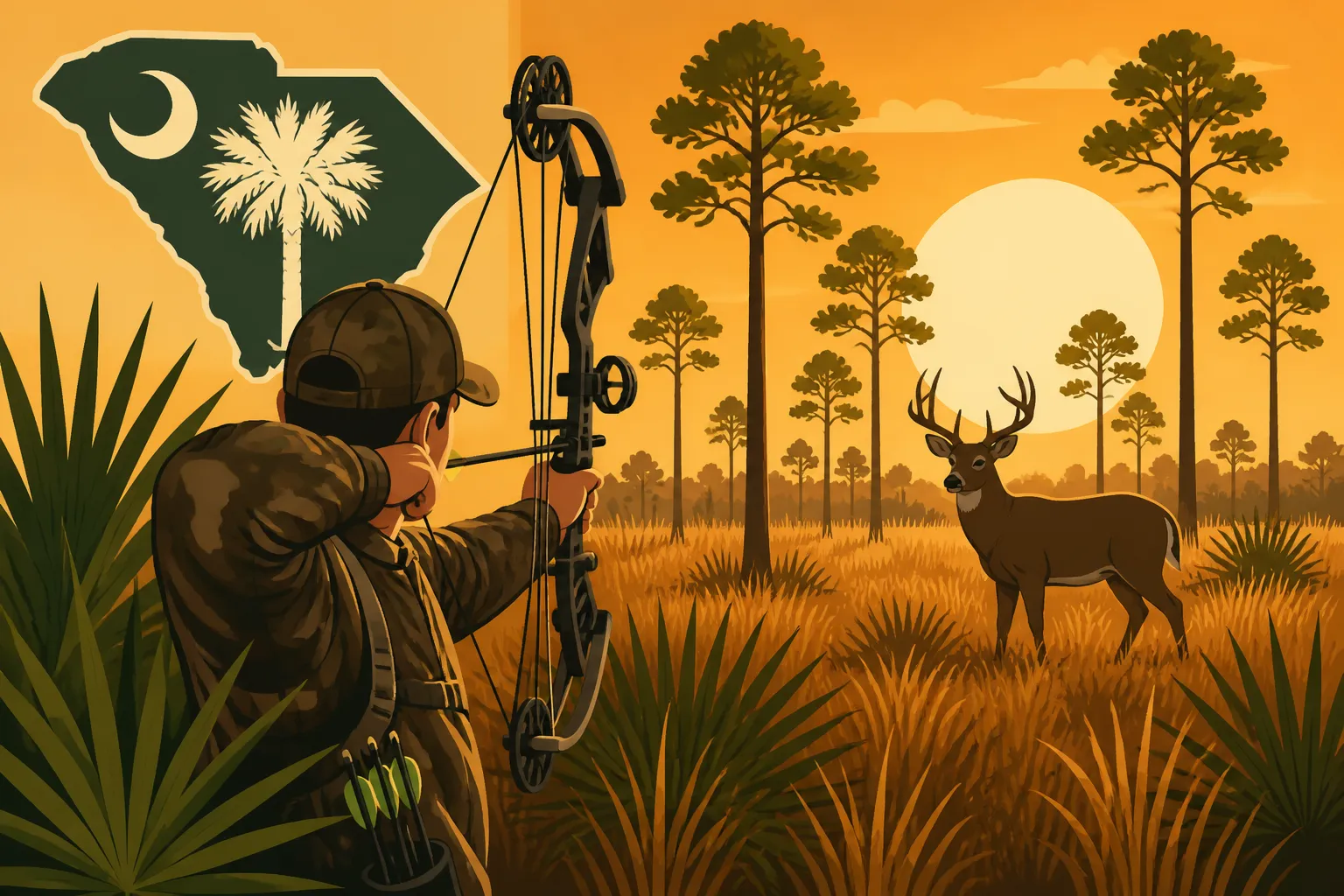
Imagine walking through a cathedral of trees. That's often what a mature longleaf pine savanna feels like. The pines themselves are typically widely spaced, allowing sunlight to penetrate to the forest floor. This open canopy supports a diverse ground cover, often dominated by wiregrass, a tough, bunching grass that forms a grassy carpet. You'll also find various wildflowers, forbs, and scattered shrubs, but rarely the dense, impenetrable undergrowth common in other South Carolina habitats. The ecological health of these savannas is often maintained by prescribed burns, which clear out competing vegetation, promote new growth, and recycle nutrients, creating a constantly regenerating food source.
Deer in these areas aren't eating the same things as deer in a heavily managed agricultural area or a dense hardwood stand. While acorns from scattered oaks mixed within or adjacent to the pine stands are still a huge draw when available, deer here rely heavily on the diverse forbs, young shoots, and succulent new growth that emerge after a fire. They’re also browsing on the scattered woody shrubs that manage to grow, even if they aren’t as prevalent. Finding these specific food sources is key, as they aren't always obvious. Deer won't be in the middle of a vast, unbroken wiregrass flat unless they are traveling or moving to a more secluded bedding area; they'll be working the edges and pockets of more diverse forage. Knowing the difference between a healthy, fire-maintained savanna and one that has grown rank with dense, brushy invasives (which is a whole different hunting challenge) is vital. The former offers diverse forage, while the latter can be frustratingly thick with unpalatable plants.
Deer Behavior in Open Pinewoods
Deer in longleaf pine savannas are acutely aware of their exposed surroundings. Unlike their counterparts in dense swamps or thickets, they can't rely on thick cover for immediate escape or concealment. This makes them incredibly wary, constantly scanning and listening, and often moving with extreme caution. Their travel routes will often hug the edges of thicker cover, even if that cover is just a slight depression, a band of young pines, or a transition zone into an adjacent hardwood drain. They use these subtle features as security blankets. Bedding areas, while sometimes in the open wiregrass on a cool, windy day where they can see and smell danger from afar, are more commonly found in pockets of dense shrubs, regenerated clear-cuts, creek bottoms, or areas where younger, thicker pines offer more visual obstruction.
The rut can also present unique challenges and opportunities in these open woods. Bucks might be seen cruising wide lanes between pines, but they're still likely using those more subtle cover lines. When pursuing does, they become a bit more careless, but still retain a heightened sense of their surroundings. You might spot a chasing buck and doe from a long distance, but closing that distance in the open woods without being detected is the real challenge. The key is to understand that deer here aren't "easy." They're smart, they're cautious, and they’ve adapted their movements to the wide-open spaces. You'll often find that the biggest, oldest deer are the ones who are masters of navigating these challenging environments.
Scouting and Locating Deer Sign
Scouting is paramount in any hunting situation, but it becomes an entirely different beast in longleaf pine savannas. What you're looking for, and how you look for it, needs to adapt to the unique characteristics of these open woods. Traditional rub lines and dense networks of trails might be scarce, forcing you to think differently.
Reading Sparse Cover and Transition Zones
Because the longleaf savanna is so open, deer often use any available cover as a travel corridor or a place to feel more secure. This means focusing your scouting efforts on where the habitat changes. Look for natural transitions: where the longleaf pines meet a hardwood bottomland, where a subtle ridge breaks up the flat terrain, or where an old logging road or firebreak creates a linear edge. Drainage ditches, even seemingly insignificant ones, can act as highways, offering just enough depression to make a deer feel less exposed. Isolated thickets of younger pines, briar patches, or overgrown shrub clusters within the savanna are goldmines for bedding. Don't be fooled by the overall openness; deer will find and utilize these pockets of security.
When walking, look for faint trails that hug these cover lines. Instead of a well-worn path, you might find only a series of hoof prints, or disturbed pine needles indicating recent passage. Pay close attention to crossings where deer move from one type of cover to another. Scrapes and rubs might be less numerous than in denser forests, but when you find them, they are often located in these transition areas, especially on the edges of more secure cover or along distinct travel routes. A lone rub on a pine sapling in an otherwise open area can indicate a specific travel path a buck is taking. This meticulous searching, often covering a lot of ground, is the difference between a frustrating hunt and finding that elusive whitetail.
Utilizing Technology for Pre-Season Scouting
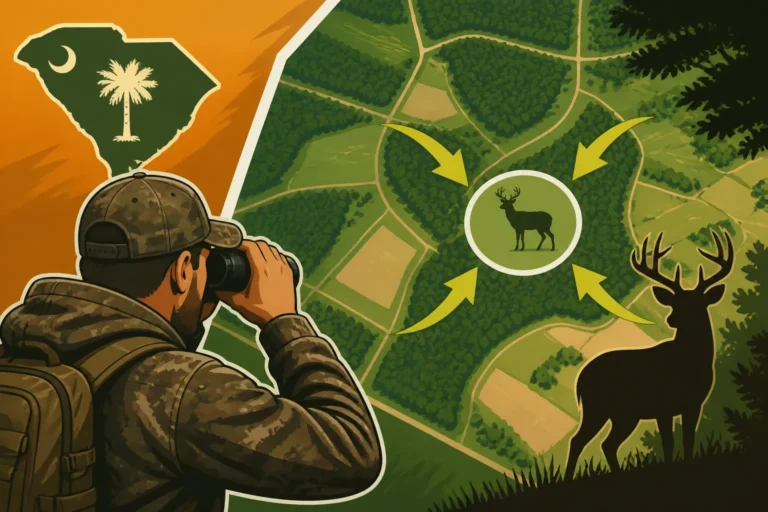
Modern technology has revolutionized scouting, and it's an absolute game-changer for longleaf savannas. Before you ever step foot in the woods, spend significant time poring over aerial maps on tools like GoHunt or onX. These apps allow you to virtually "walk" the terrain and identify those crucial transition zones, isolated thickets, and potential bedding areas that might not be obvious from the ground. Look for darker green areas that indicate denser vegetation, subtle changes in elevation, or old clear-cuts that have grown into thick cover. You can mark these points of interest, giving you a clear plan for your ground scouting.
Using aerial photos can help you identify areas where Reading Aerial Photos for Upstate Deer can be applied even in the low-country. Pinpoint potential water sources, even small ephemeral puddles or seepages, as deer will often frequent these in dry periods. By understanding the contours and vegetation patterns from above, you'll be much more efficient once you're on the ground. When you're physically scouting, having these waypoints marked in your app means you're not just wandering aimlessly; you're following a purpose-driven path, confirming what you saw on the map and looking for fresh sign. Remember, successful hunting begins long before opening day, and the more information you gather, the better your chances. For broader guidance, remember to check out articles like Scouting South Carolina Public Land Before Season to refine your pre-season game plan.
Effective Hunting Strategies and Setups
Once you understand the savanna and have done your scouting homework, it’s time to think about how you’ll actually hunt. The openness of this environment demands specific tactics, whether you prefer to sit still or move through the woods.
Stand Placement and Concealment
Given the sparse cover in a longleaf pine savanna, stand placement becomes incredibly critical. Your goal is to maximize your visibility while minimizing your own. Tall pine trees offer natural height advantages, allowing you to see further over the wiregrass and low shrubs. Look for a tree that provides a dark, broken background, such as a cluster of pines or a large oak, rather than silhouetting yourself against an open sky. Placing your stand on the edge of a slight elevation or a transition line – where pines meet a hardwood drain, for example – can offer both concealment and a vantage point over key travel routes.
While treestands are effective, don't discount the power of a well-placed ground blind, especially if you can brush it in effectively. This is particularly useful in areas with limited climbable trees or where you need to be extremely concealed. Remember that Using a Ground Blind on South Carolina Public Land requires careful attention to detail for maximum effectiveness. You’ll want to ensure it blends seamlessly with the surroundings. Regardless of your choice, setting up early, being patient, and being absolutely still are non-negotiable. Deer in these open woods will pick up on the slightest movement. For more inspiration on elevated positions, consider how the principles in Treestand Setups in Francis Marion National Forest can be adapted to the more open longleaf stands.
Still-Hunting and Stalking Approaches
Still-hunting and stalking can be incredibly rewarding in longleaf savannas, but they demand extreme discipline and a keen eye. The open nature of the woods means you're more likely to spot deer at a distance, giving you time to plan a stalk. However, it also means deer are more likely to spot you. Move at a snail's pace, taking one or two steps, then pausing for several minutes to scan thoroughly, not just for deer, but for any flicker of an ear or twitch of a tail. Use your binoculars constantly to pick apart distant patches of cover or to confirm that "stump" isn't actually a deer.
Always hunt into the wind. This is non-negotiable. Your scent will carry far in these open spaces, and if a deer catches a whiff of you, the game is over. Utilize any terrain features or sparse cover to break up your outline as you move. A slight rise, a stand of young pines, or even a fallen log can provide enough visual disruption to aid your approach. For a successful still-hunt, you need to be as quiet as a ghost. Soft-soled boots and quiet clothing are essential. While the terrain is flat, the challenges are similar to what you might encounter when Still-Hunting Sumter Forest Ridges, just adapted for a horizontal plane. The mental aspect of patience and extreme focus is what truly pays off here.
The Role of Wind and Thermals
In open environments like the longleaf pine savanna, understanding and utilizing the wind and thermals isn't just important; it's absolutely critical for success. Without the dense canopy and varied topography to create complex air currents, the wind can carry your scent further and more consistently, making deer incredibly aware of your presence long before you see them. Always, and I mean always, hunt with the wind in your favor, blowing your scent away from where you expect deer to approach or bed.
While longleaf savannas are often flat, they still have subtle thermal currents, especially in the morning and evening. As the sun rises and warms the earth, air typically flows uphill or out of lower depressions. In the evening, as the air cools, it settles and flows downhill or into those depressions. Even a slight dip or rise can create a micro-thermal that influences scent movement. For instance, if deer are bedding in a slightly lower area, an evening hunt might require you to be above them so your scent doesn't settle directly onto their bedding grounds. Constantly check the wind with a powder bottle or a wind checker. Don't assume the wind at your truck is the same as the wind deeper in the savanna. While the terrain is different, the fundamental principles of Wind and Thermals on an Upstate Ridge still apply: air moves, and you need to understand how it carries your scent.
Gear Considerations for Savanna Hunting
Hunting longleaf pine savannas requires a particular focus on certain gear, largely because of the open visibility and the need for quiet movement over often-flat but varied terrain. The right tools can significantly increase your chances of success.
Optics and Visibility Needs
In an open longleaf pine savanna, your eyes are your most valuable tool, and high-quality optics are your best friends. Unlike hunting thick cover where shots might be measured in tens of yards, here you often have the potential for much longer shots and the necessity of spotting deer at extreme distances before they spot you. A good pair of 8×42 or 10×42 binoculars is indispensable for scanning the distant tree lines, picking apart shadows, and confirming movements. You’ll be looking for horizontal lines in a vertical world, which often means an animal's back or belly line. The ability to see small details, like an ear twitch or a leg moving through the wiregrass, at 200 or 300 yards is what separates successful hunters from those who walk past deer unknowingly.
A rangefinder is also non-negotiable. Knowing the exact distance to a potential shot or to a distant landmark you’re stalking towards is crucial for accuracy. With an open backdrop, judging distance can be deceiving. Consider how these needs apply when reading Optics for South Carolina Swamp and Farmland – the principles of long-distance visibility and accurate ranging are highly transferable. A reliable scope with good light-gathering capabilities and a clear reticle is also important for rifles, given the potential for longer shots.
Footwear and Clothing for Quiet Movement
Quiet movement is paramount in the longleaf savanna. The crunchy pine needles and dry wiregrass can make every step sound like a thunderclap if you’re not careful. Your footwear should be comfortable, provide good ankle support for miles of walking, and, most importantly, have soft soles that allow you to feel the ground and move silently. Rubber boots are good for scent control and wet areas, but can be noisy on dry pine straw. Consider a good pair of lightweight hunting boots with quiet outsoles. Given South Carolina's climate, especially during early seasons, breathable, moisture-wicking fabrics are key to staying comfortable.
Your clothing choices should also prioritize quietness. Avoid noisy fabrics that rustle with every step or arm movement. Fleece, soft wool, or quiet synthetic blends are excellent choices. Camouflage patterns that mimic the pine environment, with vertical elements and muted greens and browns, will help you blend in. Layering is always a good idea, as savanna temperatures can fluctuate significantly from early morning to midday. Finally, always be mindful of safety. Even though it's open, if you're hunting on South Carolina Wildlife Management Areas or any public land during general gun seasons, blaze orange requirements will apply, so factor that into your clothing choices. Choosing quiet, effective gear helps you stay in the hunt, making it easier to capitalize on those opportunities you work so hard to create. If you're looking to minimize human pressure, understanding these unique habitats can even help you in Finding Ground That Sees Fewer Hunters.
Key Deer Sign in Longleaf Savannas vs. Dense Cover
Understanding the subtle differences in deer sign between dense, thick cover and the more open longleaf pine savanna can drastically improve your scouting success. It's not about finding less sign, but about recognizing different types of sign and their implications.
| Feature | Typical in Dense Cover (Swamp, Thick Thicket) | Typical in Longleaf Pine Savanna | Implications for Hunter |
|---|---|---|---|
| Travel Trails | Well-defined, often worn down to dirt, forming networks | Faint, subtle impressions in pine needles/wiregrass; linear | Look for subtle disturbances, not highways. Focus on edges/transitions. |
| Rubs | Abundant, often on smaller saplings/brush, in clusters | Fewer, often on larger pine saplings/small oaks, isolated | Each rub is significant; indicates a specific travel route. Bucks prefer visible trees. |
| Scrapes | Hidden, under heavy canopy, in dense cover | Often more exposed, along firebreaks or edges of thickets | Sign of a buck checking wind/scent in an open corridor. Approach with wind awareness. |
| Bedding Areas | Thick, impenetrable briar patches, under fallen trees | Pockets of dense shrubs, subtle depressions, edge of young pines | Deer bed where they can see danger or have immediate escape cover. |
| Browse | Evident on broadleaf plants, honeysuckle | Focus on forbs, young shoots after fire, scattered oaks | Identify preferred post-fire growth and mast trees. Deer move to feed. |
| Droppings (Scat) | Often found concentrated in feeding/bedding areas | Scattered along faint travel routes, near browse areas | Droppings indicate recent passage; freshness is key. Look for clusters. |
Disclaimer
Hunting is an inherently dangerous activity. Always prioritize safety, follow all local and state regulations, and obtain proper licenses and permits before heading afield. The information provided here is for educational purposes only and should not be considered a substitute for professional guidance or personal judgment. Always consult the South Carolina Department of Natural Resources (SCDNR) for the most current rules and regulations.