South Carolina Squirrel Harvest Numbers
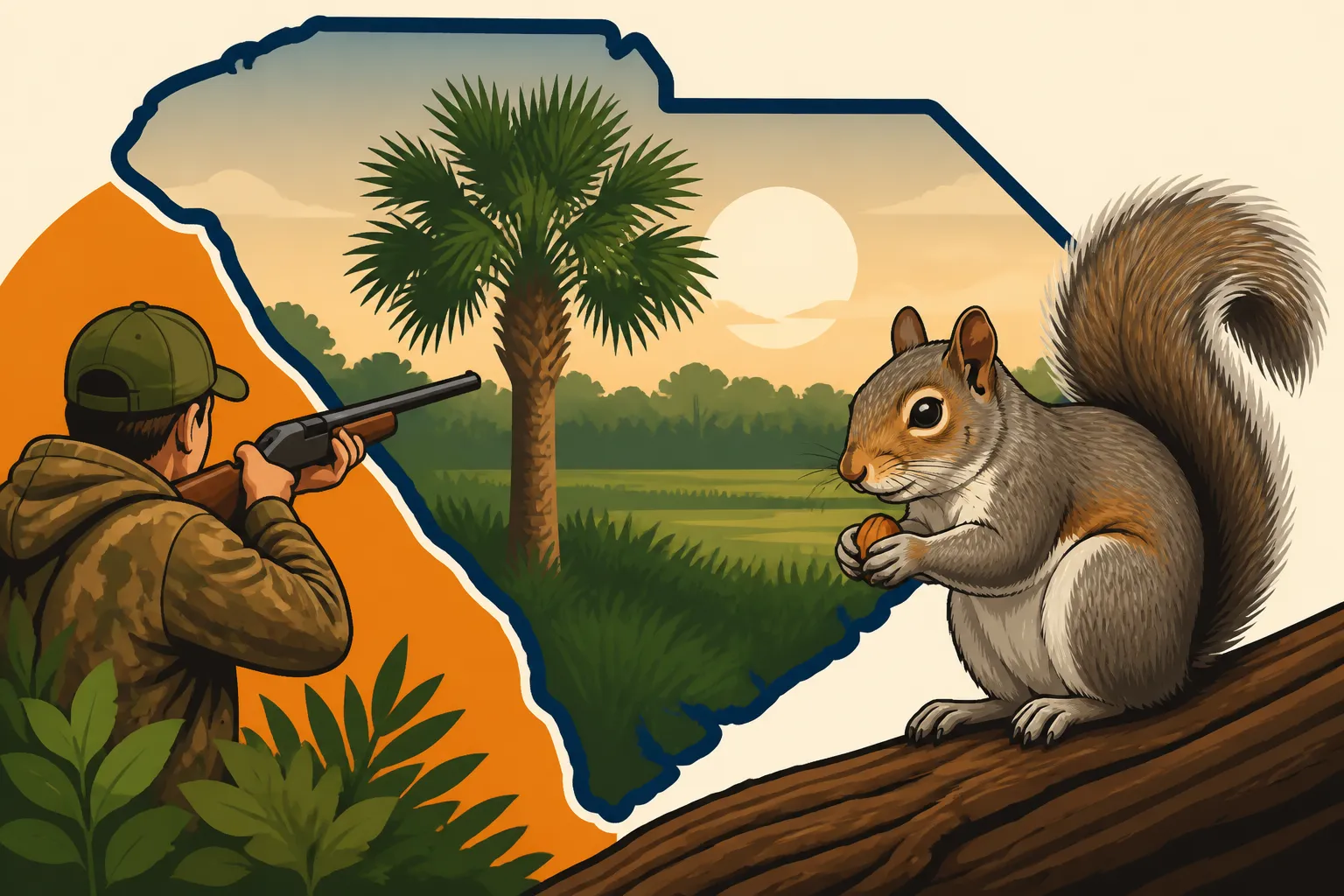
For any small game hunter in South Carolina, there's always a quiet curiosity about the overall health of our squirrel populations. You might be out there enjoying a crisp autumn morning, watching a bushy-tail scamper up an oak, and wonder if your success, or lack thereof, is just you or if it reflects a larger trend. Understanding South Carolina's squirrel harvest numbers isn't about bragging rights; it's about gaining insight into the species' well-being and how our hunting efforts fit into the bigger picture. This guide will walk you through what these numbers mean, how they're collected, and how they can inform your next hunt.
How South Carolina Tracks Squirrel Harvest
It's easy to just go out and hunt, right? You get your game, you head home, maybe you post a photo. But behind the scenes, wildlife agencies like the South Carolina Department of Natural Resources (SCDNR) are working hard to collect data that helps them manage our game species sustainably. When it comes to something as widespread and numerous as squirrels, collecting precise harvest data can be a bit different than, say, deer or turkey.
The Role of Hunter Surveys and Estimates
Unlike deer and turkey, where reporting your harvest is often mandatory for each individual animal through systems like Game Check, squirrel harvest data is typically collected through hunter surveys. Imagine trying to log every single squirrel taken across the entire state – it would be a logistical nightmare! Instead, the SCDNR relies on a combination of methods to get a good estimate. They conduct periodic hunter opinion surveys, asking hunters about their seasonal success, the number of days they spent afield, and the types of game they pursued. These surveys are invaluable because they provide a snapshot of hunter effort and success, giving biologists a basis to project statewide harvest numbers. It's not an exact count of every single squirrel, but rather a scientifically derived estimate that helps gauge population trends and hunter participation. This is similar to how many states track other small game or furbearer harvests.
These surveys also provide a chance for hunters to voice their observations, which can be just as important as the raw numbers. Did you notice fewer squirrels this year? Did you have a banner season thanks to a bumper acorn crop? That anecdotal evidence, when collected from hundreds or thousands of hunters, starts to paint a clearer picture alongside the scientific data. This feedback loop is crucial for adaptive wildlife management.
Data Collection Challenges for Small Game
Tracking small game like squirrels presents unique challenges that differ significantly from larger, more regulated species. For one, the sheer volume of animals makes individual reporting impractical. Second, hunting pressure can vary wildly from one piece of public land to another, or even between different private tracts. A hunter pursuing Squirrel Hunting South Carolina Bottomland Hardwoods might have a vastly different experience and harvest than someone hunting a small patch of oaks in the Sandhills.
Another challenge is the diverse group of hunters who pursue squirrels. You have dedicated squirrel dog hunters, still-hunters, and even folks who might take a squirrel or two while out deer scouting. This broad participation means getting a representative sample for surveys can be tricky. SCDNR staff put a lot of effort into designing surveys that reach a wide cross-section of the hunting community, aiming to capture the habits and successes of both the casual hunter and the serious small game enthusiast. The goal isn't just to count squirrels, but to understand the dynamics of hunter interaction with the resource. This deep dive into how harvest numbers are gathered helps explain why you won't typically find a daily updated ticker for squirrel harvests like you might for deer.
What the Harvest Numbers Tell Us About Squirrel Populations
So, once the data is in and the estimates are made, what does it all really mean for us hunters? Harvest numbers are far more than just dry statistics; they are vital indicators of the health and abundance of our squirrel populations, offering insights into long-term trends and short-term fluctuations.
Interpreting Trends: Good Years and Bad Years
When biologists look at squirrel harvest numbers over several years, they're looking for patterns. A consistently high harvest might suggest a thriving population, while a sustained decline could signal underlying issues. These trends aren't always linear, and that's okay. Squirrel populations, like many small game species, can fluctuate quite a bit from year to year. A particularly mild winter followed by an excellent mast crop (acorns, hickory nuts, etc.) can lead to a boom in squirrel numbers the next season, resulting in higher harvest totals. Conversely, a late freeze that wipes out the mast crop or a severe drought can impact reproduction and survival, leading to a dip in the following year's harvest.
For example, if you're consistently seeing a good number of squirrels in your favorite spots, like when you're Squirrel Hunting a South Carolina Oak Ridge, it's a good sign that the local population is healthy. If the statewide harvest numbers generally mirror your personal experience, it suggests a broader trend. These numbers help us understand the bigger picture beyond our individual hunting grounds, reassuring us that the species as a whole is stable, or alerting us to areas where habitat conservation might be needed. Tools like GoHunt can sometimes provide historical data visualization for general small game trends, helping you see these patterns over time.
Correlation with Mast Crops and Weather
One of the strongest correlations you'll see in squirrel harvest data is with mast crops. Squirrels are highly dependent on hard mast for food and energy, especially going into winter. A "boom" year for acorns, hickory nuts, or pecans often translates into higher overwinter survival rates and better reproductive success in the spring, leading to more squirrels available for harvest in the fall. If you're scouting before the season, perhaps Reading Cuttings Under an Oak for sign, and you find evidence of a bumper crop, you can often predict a good squirrel season ahead.
Weather patterns also play a significant role. Mild, wet springs can boost food availability and den site conditions, aiding in successful rearing of young. Extreme weather events, such as prolonged droughts or severe ice storms, can negatively impact habitat and food sources, stressing populations and potentially reducing harvest numbers. Knowing that these factors are at play helps us understand why harvest numbers fluctuate and gives us a better appreciation for the resilience (or vulnerability) of our local squirrel populations. The SCDNR continuously monitors these environmental factors to add context to the harvest data.
Factors That Shape South Carolina's Annual Squirrel Harvest
It's not just about how many squirrels are out there; it's also about how many hunters are out, where they're going, and what restrictions are in place. A complex interplay of ecological and human factors determines the final harvest tally each year.
Habitat Quality and Food Availability
The number one driver for healthy squirrel populations, and consequently, robust harvest numbers, is habitat quality. Squirrels thrive in mature hardwood forests, especially those with a diverse mix of mast-producing trees like oaks and hickories. Areas with plenty of den trees (older trees with cavities) are also crucial for nesting and protection. In South Carolina, you'll find excellent squirrel habitat in river bottoms, mature pine-hardwood mixes, and urban green spaces with large trees. Without these essential components, squirrel populations simply can't reach their full potential, regardless of how many hunters are in the woods.
Food availability, particularly the annual mast crop, directly influences squirrel abundance. A poor mast year means fewer squirrels can survive the winter and reproduce in the spring. This ripple effect can be felt in the harvest numbers for one or even two seasons. That's why smart hunters often do their homework, scouting for food sources long before When South Carolina's Archery Season Opens or the small game seasons kick off. Many public lands, including various Wildlife Management Areas (WMAs) and National Forests, are managed to promote these valuable mast producers, which benefits not only squirrels but also deer and other wildlife.
Here's a look at some key factors influencing squirrel harvest:
| Factor | Impact on Squirrel Population | Impact on Harvest Numbers (General) | Notes |
|---|---|---|---|
| Mast Crop Abundance | High | High | Direct correlation; influences overwinter survival & reproduction. |
| Winter Severity | High (mild winters) | High | Less energy spent surviving, more for reproduction. |
| Spring Weather | High (mild, adequate rain) | High | Good for denning & raising young. |
| Habitat Loss/Degradation | Low | Low | Decreases food, cover, and den sites. |
| Hunting Pressure | Moderate (can spread animals) | Varies (can disperse game) | High pressure can temporarily push animals out of an area. |
| Predation | Moderate | Moderate | Healthy predator populations keep squirrel numbers in balance. |
| Regulations | Stable | Stable | Season length and bag limits ensure sustainable harvest. |
Hunting Pressure and Hunter Participation
Even with abundant squirrels, harvest numbers can be affected by the human element: how many hunters are out there and how much effort they put in. South Carolina offers a generous South Carolina Small Game Season Rules, often running from fall through late winter, giving hunters ample opportunity. If more people decide to go squirrel hunting, or if existing hunters spend more days in the field, the harvest numbers will naturally increase, assuming the squirrel population can sustain it. Conversely, if hunter participation declines for any reason—perhaps due to less free time, other hunting priorities, or a perception of fewer squirrels—the overall harvest might drop, even if the squirrel population itself is healthy.
This is where individual scouting and strategy come into play. On public lands, especially during the early season, you might encounter more hunters. Knowing this, you might choose to hunt mid-week or explore less accessible areas. The GoHunt app, for instance, can help identify remote areas on public land that might see less pressure, increasing your chances of finding undisturbed squirrel populations. Understanding both the biological capacity and human effort is key to a complete picture of harvest data.
Using Harvest Data to Plan Your Squirrel Hunts
You might be thinking, "This is all great, but how does this help me put squirrels in the pot?" The beauty of understanding harvest data and the factors influencing it is that it empowers you to make smarter decisions about where and when to hunt, turning general information into actionable strategy.
Identifying Productive Hunting Areas
While statewide harvest numbers don't point you to a specific tree, they can highlight regions or types of habitat that are generally more productive. For instance, if overall harvest numbers show a strong year, it suggests that conditions were favorable across the state, making most decent squirrel habitat a good bet. If there's a noted dip, it might encourage you to focus your efforts on prime, well-scouted areas that you know have consistent mast production.
Looking at historical data, you can often deduce that certain areas, like the extensive hardwood bottoms along the Edisto, Congaree, or Pee Dee Rivers, consistently produce high squirrel numbers. These areas are typically rich in mast and provide excellent cover. Knowing this, you can target these ecological hotspots. Using mapping tools, possibly incorporating layers from GoHunt, to identify these types of timber stands on public land or to scout for similar characteristics on private land can significantly improve your odds. Don't forget that scouting for Late-Season Food Sources for South Carolina Whitetails will often lead you to great squirrel spots too, as they rely on similar food sources.
Timing Your Hunt for Optimal Success
Harvest data, especially when combined with anecdotal reports and environmental observations, can also inform your timing. If the previous fall and winter saw a fantastic mast crop, and you had a mild spring, you can anticipate a stronger squirrel population coming into the next hunting season. This might encourage you to hunt earlier in the season, when squirrels are often more active and before heavy hunting pressure disperses them.
Conversely, after a poor mast year or a harsh winter, you might adjust your expectations and focus more intensely on finding specific, limited food sources that did produce. Squirrels will concentrate around these reliable food plots or hard mast producers, making them easier to locate. This also ties into understanding general South Carolina Squirrel Season Dates and knowing when different food sources become available. Early season, squirrels might be focused on green forage, while later in the season, they'll be exclusively on fallen mast or hidden caches. Paying attention to these natural rhythms, informed by the broader trends harvest numbers reveal, can make your time afield more productive and enjoyable.
Disclaimer
This article is for general informational purposes only and does not constitute professional advice. Laws, prices and regulations vary by location and change over time. Consult a qualified professional for guidance on your specific situation.