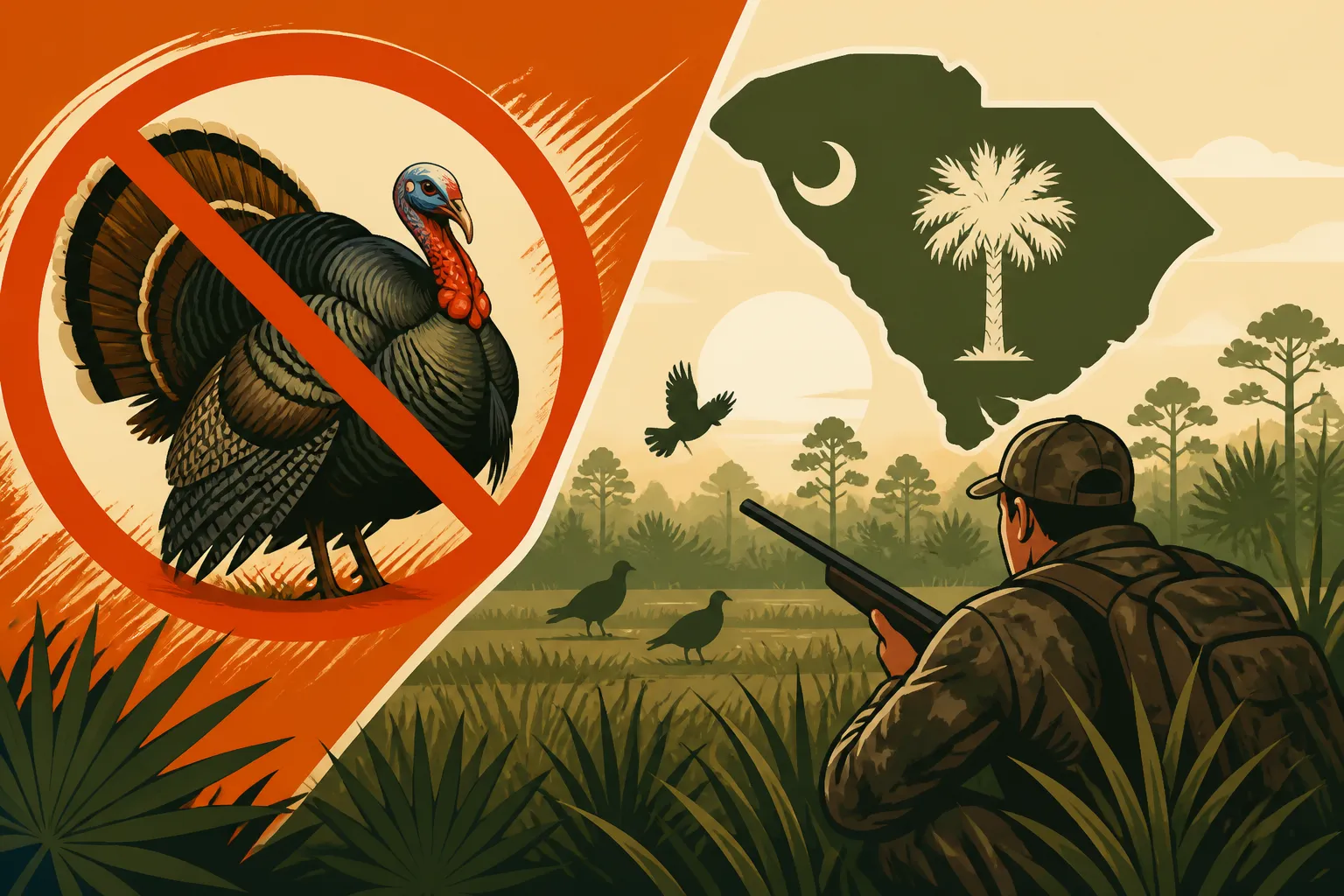
Adjusting Tactics Now That Jakes Are Off-Limits
The new rule in South Carolina, where jakes are now off-limits, has certainly shaken up many a spring turkey hunter's strategy. It’s a real head-scratcher for folks who’ve spent years honing tactics that often included calling in and harvesting those eager young gobblers. This guide aims to help you navigate this significant change, offering practical advice and refined strategies to ensure you're still punching tags on mature, long-bearded turkeys across the diverse landscapes of the Palmetto State.
The Rationale Behind the Jake Ban: Understanding the "Why"
It’s easy to feel frustrated when a long-standing hunting tradition changes, especially when it impacts your success in the field. But understanding why the South Carolina Department of Natural Resources (SCDNR) made the decision to prohibit jake harvest can help hunters adapt with a better perspective. This wasn't a spur-of-the-moment choice; it's rooted in significant data and a long-term vision for the health of our wild turkey flocks.
Declining Turkey Populations and Poult Recruitment
For years, many of us who chase gobblers in the spring have noticed that things just aren't quite what they used to be. The gobbling isn't as consistent, and seeing those big, healthy flocks of hens with a good number of poults in the summer seems less common. The data backs up these anecdotal observations. South Carolina, like many states in the Southeast, has seen a concerning decline in its wild turkey population over the last several decades. This decline isn't uniform across the state; some areas have fared better than others, but the overall trend is downward. A key indicator of a healthy turkey population is the poult-to-hen ratio, which essentially tells us how many young turkeys are successfully making it to maturity each year. Unfortunately, for some time now, this ratio has been below what biologists consider sustainable for robust population growth. You can dive deeper into this issue by reading about How Poult Recruitment Fell Since 1988. The reasons are complex, from habitat loss and fragmentation to increased predation on nests and poults, and even changes in farming practices. The jake ban is one tool SCDNR is implementing to try and address this multi-faceted problem.
Long-Term Management Goals for South Carolina's Turkeys
So, what exactly are the folks at SCDNR hoping to achieve with this new regulation? Simply put, they want to see more mature gobblers on the landscape and a healthier, more resilient turkey population overall. Jakes, while often indistinguishable from adult gobblers to the casual observer in the fall, play a crucial role in the future of the flock. By letting jakes survive their first spring, they have the opportunity to mature into two-year-old gobblers. These two-year-olds are often the most enthusiastic breeders, contributing significantly to the next generation of turkeys. Think of it as an investment in the future. Instead of taking a bird that could become a vital part of the breeding population, we’re giving it a chance to grow up and fulfill its biological purpose. This management strategy aims to boost the overall number of breeding-age gobblers, potentially leading to more successful breeding, higher poult recruitment, and eventually, a more stable and huntable turkey population for years to come. This is a critical component of the broader South Carolina Spring Turkey Season Rules framework.
What the New Rule Actually Means for Hunters
The most direct impact, of course, is that you can no longer legally harvest a jake in South Carolina during the spring turkey season. A jake is typically defined as a male turkey less than two years old, characterized by an undeveloped beard (often referred to as a "pencil" beard), shorter spurs, and tail feathers that are uneven in length, with the two central feathers being noticeably longer than the rest. A mature gobbler, on the other hand, will have a full, long beard, sharp, prominent spurs, and a fan of tail feathers that are all relatively the same length when fanned out.
This means hunters need to be absolutely certain of their target before pulling the trigger. It’s no longer enough to identify it as “a gobbler.” Now, you need to identify it as a mature gobbler. This might require more patience, better glassing, and a more conservative approach to calling birds into close range. The rule isn't meant to make hunting impossible but to encourage more selective harvesting. For many seasoned hunters, this might feel like a return to older traditions where harvesting a mature gobbler was always the primary goal, emphasizing the challenge and respect for the game. For newer hunters, it means an accelerated learning curve in turkey identification.
Shifting Your Pre-Season Scouting Focus
With jakes off the menu, your pre-season scouting becomes even more critical. You’re no longer just looking for any turkey activity; you’re specifically trying to pinpoint mature gobblers and understand their patterns. This takes a deeper dive into the landscape and leveraging every tool at your disposal.
Reading Gobbler Sign, Not Just Turkey Sign
In the past, finding general turkey sign – tracks, droppings, scratchings – was often enough to indicate a good hunting area. Now, you need to interpret that sign with a keener eye, searching for clues that point specifically to mature gobblers. Large, defined tracks with widely splayed toes are a good start, as are significant droppings. Look for areas with fresh strut marks – those distinctive wing-drag impressions on bare ground or dusty logging roads. These tell-tale signs are almost exclusively left by mature gobblers displaying for hens.
Don’t just scout for roosting areas; focus on gobbler roosting areas. These often sit atop prominent ridges or near major water sources, offering good visibility and a sense of security. Pay attention to drumming sounds in the pre-dawn hours; this is a clear sign of a mature bird looking for action. By the way, if you want to dial in on these locations, checking out Roost Hunting South Carolina Gobblers can offer some excellent strategies. You're looking for patterns – where they fly down, where they strut, what routes they take to feeding areas. Remember, jakes often stick together in small groups, while mature gobblers might be solitary or with hens. Your goal is to find those mature birds and their preferred haunts.
Leveraging Technology for Tom-Specific Intel
Modern hunting technology can be a game-changer when refining your scouting. Mapping apps, for instance, are invaluable. Services like GoHunt allow you to dissect potential hunting areas from your couch. You can identify potential roosting ridges, dense cover where gobblers might feel secure, open fields for strutting, and natural travel corridors. Look for mature timber stands, especially those with large pines or oaks, which are preferred roost trees. You can also mark areas where you've heard gobbling in previous seasons or where you’ve found significant tom sign.
Trail cameras, used legally and ethically, can also provide crucial intelligence. Place cameras on logging roads, field edges, or near water sources where turkeys frequent. Look for images of mature gobblers specifically. Pay attention to the time of day they’re active and their routes. This helps you build a picture of their daily movements, which is vital for setting up effectively on opening day. Remember, the more precise your intel, the less you'll rely on simply hoping a bird wanders by. For more insights on this, consider exploring Scouting South Carolina Public Land Before Season.
Adapting Scouting to Different South Carolina Habitats
South Carolina's diverse habitats mean your scouting approach will vary significantly depending on where you hunt. In the Lowcountry, with its expansive swamps, pine plantations, and agricultural fields, you’ll focus on field edges, elevated creek banks, and pine/hardwood transitions. Gobblers might roost over water or in tall pines bordering fields. Look for strut zones along the edges of open areas or on raised roads and dikes. For those hunting the coastal plains, gaining an edge might come from understanding Turkey Tactics for Lowcountry Field Edges.
In the Upstate, particularly in the Sumter National Forest, scouting means navigating more rugged, hilly terrain. Focus on ridge tops, saddles, and creek bottoms. Gobblers often roost on high points and use ridge lines to travel. Look for sign near natural food sources like acorns or persimmons. Aerial maps are invaluable here for identifying contour changes and potential travel funnels. Each zone presents unique challenges, and a smart hunter knows that general turkey knowledge needs to be finely tuned to the specific local environment.
Advanced Calling Strategies for Mature Gobblers
When you’re solely targeting mature gobblers, your calling strategy needs to evolve beyond just making noise. Jakes are notoriously less wary and often respond aggressively to almost any turkey sound. Mature gobblers, on the other hand, are often more cautious, experienced, and have heard it all before. Your goal now is to sound as natural and enticing as possible, mimicking the subtle nuances of a real hen.
Mastering Realistic Hen Sounds
Forget about loud, aggressive calling right out of the gate. For a mature tom, soft, subtle, and realistic hen sounds are often far more effective. Start with quiet tree yelps and soft clucks at first light, mimicking a hen waking up on the roost. As the day progresses, vary your cadence and volume. A series of soft yelps, clucks, and purrs can sound incredibly inviting to a gobbler looking for companionship. Practice your cutts – sharp, excited hen calls – but use them sparingly and strategically, perhaps when a gobbler hangs up or needs a little extra coaxing.
Focus on the emotion and timber of your calls. A lost hen call should sound genuinely lost and a little mournful. An excited hen should sound genuinely excited. Using different calls – slate, box, diaphragm – can add variety and realism, making you sound like a small flock rather than a single hen repeating the same call. The more authentic you sound, the better your chances of luring in a wary longbeard.
The Art of the Locator Call and Patience
Locator calls, such as owl hoots, crow caws, or even coyote howls, are essential for pinpointing a gobbler's location without sounding like another turkey. Use these sparingly and listen intently. A shock gobble in response tells you exactly where he is. Once you’ve located a bird, patience becomes your greatest ally. Avoid over-calling, which can make a mature gobbler wary or, worse, make him think you're just another hen that will eventually come to him.
Set up quickly and quietly in a good ambush position before you start calling. Wait for him to gobble on his own, or offer just a few soft hen sounds to pique his interest. Let him work himself up, and if he’s heading your way, resist the urge to keep calling. Often, less is more with a mature gobbler. Allow him to search for you, which plays directly into his natural instinct to seek out hens. This can be especially effective when you're considering Calling a South Carolina Gobbler Off the Roost.
When to Be Aggressive, When to Be Subtle
There’s no one-size-fits-all calling strategy. The key is to read the bird and the situation. If you have a highly vocal, hot gobbler that’s aggressively responding to every call, a more assertive calling sequence might be warranted. Some days, a series of excited cutts and yelps can seal the deal. But even then, know when to back off. If he starts coming, go silent or offer only soft clucks and purrs to keep him interested but not suspicious.
Conversely, if you’re dealing with a quiet, hung-up gobbler or a bird that's been pressured, extreme subtlety is often the answer. Use minimal, soft calls, focusing on contented clucks and purrs. Sometimes, simply raking the leaves with your hand can sound like a hen scratching for food, which can be the trigger he needs. Remember, mature gobblers are smart. They’ve survived multiple hunting seasons and know the difference between a natural hen and a desperate hunter. Adapting your style is paramount to success.
Decoy Dynamics: Enticing Only the Toms
Decoys can be incredibly effective for turkeys, but when you're only targeting mature gobblers, your decoy setup needs to be carefully considered. You want to present a scenario that is irresistible to a longbeard but doesn't encourage jakes or cause a mature tom to hang up out of range.
Single Hen or Breeding Pair Setups
A classic and often highly effective setup for mature gobblers is a single hen decoy, especially one in a contented or receptive pose. A lone hen seems less threatening to an approaching tom and can draw him in, expecting an easy liaison. If you choose a breeding pose, like a submissive hen, it can ignite a mature gobbler's primal urge to breed, often causing him to come in strutting aggressively. Position your hen decoy about 15-20 yards from your position, offering a clear shot when the gobbler comes in to investigate.
For an even more compelling scenario, consider a breeding pair. This usually involves one submissive hen decoy and one upright, looking-for-a-mate hen. This suggests a receptive hen and another hen looking on, making the scene even more realistic. Ensure your decoys are realistic and well-maintained. The better they look, the more confidence a wary longbeard will have as he approaches. You want a decoy that accurately mimics a real turkey, rather than a generic plastic blob.
Gobbler Decoys and the Challenge Factor
Adding a gobbler decoy to your setup can be a high-risk, high-reward strategy. For a mature, dominant tom, the sight of another gobbler, especially one with a hen, can be an irresistible challenge. He'll often come in hard and fast, looking to assert his dominance. A full-strut gobbler decoy is particularly effective for this, as it screams "challenge!" Position the gobbler decoy behind your hen decoy, making it appear as if the strutting tom is already with the hen.
However, gobbler decoys can also make wary birds hang up, or simply cause younger, less dominant jakes to shy away entirely. Since jakes are off-limits, this might be a benefit in some ways, but it could also deter a smaller two-year-old gobbler that you can legally harvest. If you decide to use a gobbler decoy, ensure you have plenty of cover, and be ready for an aggressive approach. A mature tom coming to fight won't hesitate, and you'll need to be ready to draw your bow or shoulder your shotgun quickly. Using mapping software like GoHunt can help you pick optimal spots with natural concealment for these setups.
Placement and Realism for Maximum Effect
Decoy placement is crucial. Always set your decoys where a gobbler has a clear line of sight to them as he approaches, but also where he feels safe enough to enter. This often means open ground near cover, such as a field edge or a clear-cut. Angle your decoys so that an approaching gobbler will present a broadside shot at your preferred range. For instance, if you're using a shotgun, aim to have him in the 20-30 yard range when he's fully committed.
Realism goes beyond just the appearance of the decoy. Consider movement. A slight breeze can make feather-like decoys subtly move, adding a lifelike quality. Some hunters even use motion stakes. Also, think about the sun. Position your decoys so they are visible but not glaringly reflective in the sunlight. In South Carolina's varied terrain, from the dense timber of the Sumter National Forest Hunting to the more open Lowcountry fields, the precise spot you choose for your decoy spread can make or break your hunt. The goal is to create an illusion so compelling that a smart, wary gobbler believes it's the real deal.
Public Land Realities and Tactical Adaptations
Hunting public land in South Carolina can be a fantastic experience, but it also comes with unique challenges, especially now that you're focused solely on mature gobblers. Public lands often see higher hunting pressure, and birds can become warier quickly. Your tactics need to be sharp and adaptable.
Navigating Increased Pressure for Mature Birds
The jake ban might actually increase the competition for mature gobblers on public land. With fewer birds legally harvestable, more hunters might be focused on the same prize. This means you need to be strategic about where and when you hunt. Weekdays, later in the season, or hunting areas that require a significant walk-in often see less pressure. Utilize mapping tools to identify remote pockets of public land, or areas with difficult access that other hunters might overlook. Often, the extra effort to get into these spots pays dividends.
Recognize that pressured birds often "gobble on the limb" but become silent once they hit the ground. They're wary of human presence and loud, aggressive calling. Adapt by setting up closer to roosts, getting in extremely early, and employing those soft, subtle calling techniques discussed earlier. You can read more about how the different hunting zones influence turkey behavior in South Carolina Spring Turkey Season Rules and plan accordingly. Sometimes, just sitting quietly and listening can be more effective than constant calling, as you let the gobbler's natural curiosity bring him in.
Finding Unpressured Roost Sites and Strut Zones
The key to public land success often lies in finding birds that haven't been heavily educated. This means putting in the legwork to find those unpressured roost sites and strut zones. Spend time scouting away from main roads and trails. Look for smaller, less obvious clearings or field edges within larger timber blocks. Mature gobblers often seek out areas where they feel safe and undisturbed. Using applications like GoHunt can highlight remote sections of national forests or Wildlife Management Areas (WMAs) that are far from common access points.
Focus on areas with diverse habitat: mature timber for roosting, open areas for strutting, and dense undergrowth for security. These transition zones are often hotspots. In areas like the Francis Marion National Forest, for example, you might find gobblers keying into specific types of timber or small, isolated clearings. Understanding the general turkey population trends, like those covered in South Carolina Turkey Population Trends, can also help you prioritize areas more likely to hold birds.
The Role of Run-and-Gun Tactics in a No-Jake Environment
While patience is paramount, "run-and-gun" tactics still have a place on public land, especially if you're covering a lot of ground trying to locate a responsive longbeard. This involves moving stealthily, stopping frequently to call, and listening intently. If you get a response, quickly evaluate the situation, set up, and try to work the bird. If he hangs up or goes silent, don't waste too much time. Break down your setup and move on to the next promising area.
The difference now is that you're not just looking for any gobble. You're looking for a gobble that indicates a mature bird willing to commit. If you hear a distant gobble that sounds hesitant or uninterested, you might move past it, conserving your energy for a more enthusiastic response. Speed and efficiency are key to covering ground and finding that one hot bird. For those who enjoy an active hunt, delving into Run-and-Gun Turkey Tactics on Public Land could provide even more specialized insights.
Mindset and Persistence in the Face of New Rules
The jake ban changes the game, no doubt, but it also presents an opportunity to become an even better turkey hunter. It demands more skill, more patience, and a deeper understanding of wild turkey behavior. Your mindset going into the season is as important as any tactic.
Embracing the Challenge and Refining Your Skills
Instead of viewing the jake ban as a limitation, see it as an exciting new challenge. This is your chance to truly hone your turkey hunting skills. Every successful mature gobbler will feel like an even greater accomplishment. It forces you to be more observant, more patient, and more precise with your calling and setup. Spend time practicing your calls, watching videos of wild turkeys, and studying their behavior. The more you understand the nuances of a gobbler's world, the better equipped you'll be to outwit him.
Consider this an advanced course in turkey hunting. You'll learn to differentiate between the subtle gobble of a two-year-old and the booming, confident gobble of an old veteran. You'll become an expert at reading turkey body language and identifying those tell-tale signs of a longbeard. This season will undoubtedly make you a more well-rounded and skilled hunter, which is a reward in itself.
The Reward of a Hard-Earned Mature Gobbler
There's a special satisfaction that comes with calling in and harvesting a mature gobbler. It's not just about the size of the beard or spurs, but the culmination of all your effort: the pre-season scouting, the early mornings, the careful calling, the patient waiting. When that big tom struts into view, drumming and spitting, it's a moment that few other hunting experiences can match. With the jake ban, that feeling of accomplishment will only be amplified. You'll know that you specifically targeted and harvested a mature bird, adhering to the spirit of the new regulations and contributing to the long-term health of the flock.
Each spring, hunters across South Carolina report their harvest, giving SCDNR valuable data. By focusing on mature birds, you're not just abiding by the rules, you're also part of a larger conservation effort that aims to ensure future generations can experience the thrill of a spring gobbler hunt. Looking back at South Carolina Spring Turkey Harvest Numbers can give you a sense of the scale of effort.
Post-Hunt Analysis and Continuous Learning
Every turkey hunt, whether successful or not, is a learning opportunity. After each outing, take some time to reflect. What worked? What didn't? Did a gobbler hang up? Why? Was your calling too aggressive or too subtle? Was your decoy placement off? Did you misread the terrain or the bird's mood? Keeping a hunting journal can be an invaluable tool for this. Note the weather conditions, time of day, your tactics, and the birds' responses.
This continuous learning cycle is what truly sets experienced hunters apart. The jake ban simply adds another layer to this process, encouraging deeper thought and more refined adjustments. By applying these lessons, you’ll continually improve your chances of success, making each future spring turkey season more rewarding than the last, and solidifying your role as a responsible and ethical hunter in South Carolina. For more specific local information, using resources like the GoOutdoorsSC app can greatly enhance your ability to log observations and scout effectively.
Table: Decoy & Calling Comparison for Mature Toms
Here's a quick look at how decoy and calling strategies might shift with a focus on mature gobblers:
| Strategy Aspect | Old Approach (Jakes Allowed) | New Approach (Mature Toms Only) |
|---|---|---|
| Decoy Setup | Often multiple hens, maybe a jake or half-strut gobbler | Single receptive hen, or submissive hen with full-strut gobbler |
| Decoy Poses | Variety of feeding, upright, or jake poses | Receptive, submissive hen; full-strut gobbler for challenge |
| Calling Volume | Can be louder, more aggressive, especially for jakes | Generally softer, more subtle, realistic hen sounds |
| Calling Frequency | More frequent, trying to keep any bird interested | Less frequent, letting the gobbler come to you |
| Locator Calls | Used to find any gobbling bird | Primarily to locate mature birds, then switch to soft hen calls |
| Patience | Moderate; sometimes jakes rush in | High; mature gobblers are wary and take their time |
| Target Range | Any close range | Close range (20-30 yards) for positive ID before shot |
Disclaimer
Hunting regulations can change frequently. While this guide provides the most current information available, it is the hunter's responsibility to verify all rules and regulations with the South Carolina Department of Natural Resources (SCDNR) before heading into the field. Always prioritize safety and ethical hunting practices.