Hunting South Carolina Black Bear Without Bait
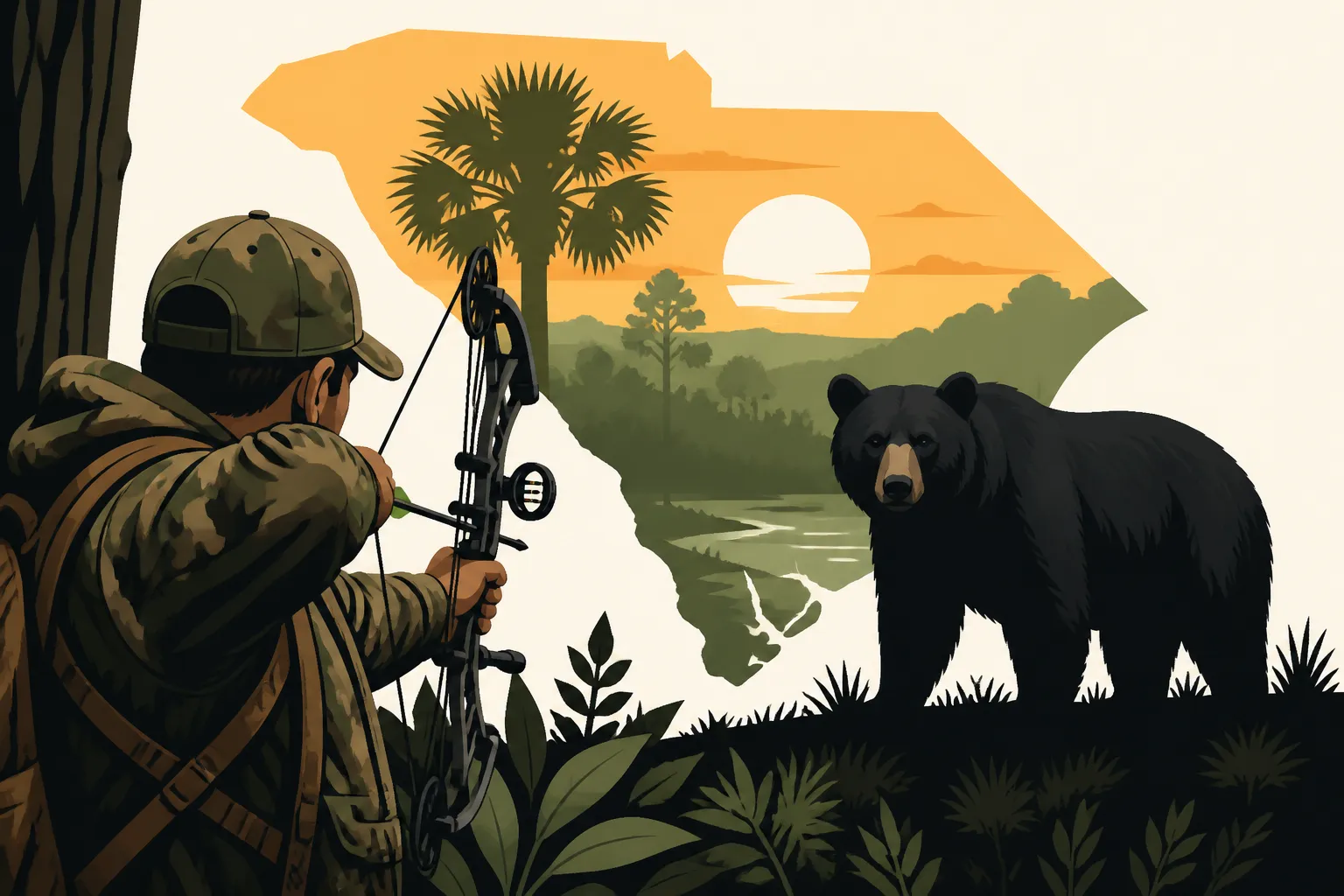
Hunting black bear in South Carolina without the aid of bait presents a unique, ethical challenge that truly tests a hunter's woodcraft and patience. It’s a completely different ballgame than sitting over a pile of donuts. You're not relying on an artificial attractant to bring the bear to you; instead, you’re diving deep into their natural habitat, trying to understand their movements, and intercepting them on their own terms. This comprehensive guide will walk you through the nuanced strategies, meticulous scouting techniques, and critical awareness needed to successfully pursue South Carolina's black bears on an unbaited hunt.
Understanding South Carolina's Black Bear Population
Before you even step foot in the woods, it's crucial to understand the black bear populations in South Carolina. Knowing where they are, why they're there, and what drives their movements is the foundation of any successful hunt, especially when you're going without bait.
Where South Carolina Black Bears Roam
South Carolina is home to two primary, distinct black bear populations. The most well-known and densest population resides in the mountainous terrain of the Upstate, primarily within Game Zone 1, encompassing counties like Oconee, Pickens, and Greenville. These bears thrive in the vast expanses of the Blue Ridge Mountains and their foothills, making good use of the diverse forests that offer abundant natural food sources and thick cover. If you’re wondering How Many South Carolina Black Bears There Are, recent estimates suggest a healthy and growing population, with the Upstate being the stronghold.
The other significant, though smaller, population lives in the Lowcountry, specifically in Game Zone 4. These coastal bears are found in the swamplands, dense pocosins, and vast maritime forests, particularly in areas like the Francis Marion National Forest and the ACE Basin. Their habitat is a stark contrast to the mountains, characterized by cypress-tupelo swamps, pine flatwoods, and coastal marshes. Understanding Where Upstate Mountain Bears Range versus Where Coastal Swamp Bears Range is critical because their behavior and habitat use will differ significantly, influencing your hunting approach. While the Upstate bears are often associated with hardwood ridges and mountain laurel thickets, coastal bears might be found deep in a river bottom, navigating intricate creek systems, or even foraging along agricultural field edges. Their expansion into new areas, sometimes even suburban fringes, points to a robust and adaptable species that savvy hunters can learn to track.
Why No Baiting? The Ethical and Practical Considerations
South Carolina wildlife regulations prohibit the use of bait for black bear hunting statewide. This isn't just a minor rule; it's a fundamental aspect of bear management and hunting ethics in the state. The decision to ban baiting aligns with a philosophy of "fair chase," ensuring that hunters rely on their skill, knowledge of the animal, and understanding of the habitat rather than artificial attractants.
Practically, this means you can't simply dump a barrel of stale pastries and wait. You have to immerse yourself in the bear's world. This rule forces hunters to become truly adept at scouting, tracking, and understanding natural food cycles. For many, this challenge is precisely what makes hunting South Carolina black bear so rewarding. It’s an authentic experience that demands a higher level of outdoor skill and patience. While it can be frustrating at times, especially when you feel like you're hunting an invisible ghost, the satisfaction of a successful unbaited hunt is immense. It also promotes a healthier bear population, as bears aren't conditioned to specific bait sites, reducing potential conflicts with humans in residential areas and allowing natural foraging behaviors to prevail.
Scouting Strategies for Unbaited Bear Hunts
Without bait, your success hinges almost entirely on your scouting efforts. This isn't just a casual walk in the woods; it's a dedicated, analytical process of piecing together the puzzle of a bear's life. You need to become a detective, constantly looking for clues and interpreting the landscape.
Reading Bear Sign in the Wild
Bears leave a wealth of evidence if you know how to look for it. Interpreting this sign correctly is paramount to understanding their presence, activity levels, and travel patterns.
- Droppings: Bear scat can tell you a lot. Fresh droppings, still moist and shiny, indicate recent activity. As they dry, they become dull and crumble. The contents of the scat are equally informative. In spring, you might see evidence of grasses, sedges, and even hair from carrion. During summer, berries like blackberries and blueberries will be clearly visible. Come fall, look for fragments of acorns, hickory nuts, or even corn if they're feeding in nearby agricultural fields. Finding concentrations of scat around specific food sources can pinpoint a prime feeding area.
- Tracks: Identifying bear tracks is crucial. Adult black bear tracks can range from 4 to 8 inches long for the front paw and slightly larger for the hind paw. Look for five toes and clear claw marks. The heel pad of a bear's hind foot often leaves a distinct impression that can be confused with a human foot, but the splayed toes and claw marks will give it away. Fresh tracks will have crisp edges, while older tracks will be rounded and weathered. Pay attention to the gait – often a "waddle" or "shuffle" that can be distinctive. Distinguishing them from other animals like feral hogs or large dogs is important; bears usually have a more rounded, robust track with prominent, non-retractile claw marks.
- Rubs and Scratches: Bears are known to rub and scratch on trees for various reasons – scent marking, shedding fur, or even just stretching. Look for claw marks on tree trunks, especially pines and hardwoods, typically between 3 and 7 feet high. These marks can be deep gashes or lighter scrapes. Sometimes, you'll find actual bear hair caught in the bark. Saplings or small trees that have been bent, broken, or rubbed smooth can also indicate a bear's presence, particularly during the rut or as a way of leaving scent. Keep an eye out for these "bear trees" along trails, near water, or in areas of dense cover.
- Bedding Areas: Bears prefer thick, secluded areas for bedding down, especially during the day. Look for dense thickets, overgrown clear-cuts, laurel slicks, or blowdowns. These areas offer security and protection from the elements. While it's rare to find a definitive "bed" like a deer might leave, look for disturbed ground, matted vegetation, or even a strong musky odor in dense cover that might suggest a bear is using the area for daytime rest.
Identifying Natural Food Sources by Season
A bear's life revolves around food, and their diet changes dramatically throughout the year. Knowing what's available and when is key to predicting their movements.
- Spring: As bears emerge from their dens, they're looking for the first flush of green vegetation. Succulent grasses, emerging forbs, and tender shoots are on the menu. They'll also actively seek out carrion, so areas where deer or other animals might have died over winter can attract them. Look for these early green-up spots in sunny openings, along creek bottoms, and on south-facing slopes.
- Summer: Summer is berry season! Blackberries, blueberries, huckleberries, and elderberries are major attractants. Look for these fruiting plants in clear-cuts, along logging roads, and in forest openings. Later in the summer, soft mast like wild grapes, muscadines, and early-ripening persimmons become important. If you're near agricultural areas, bears won't hesitate to raid corn, soybean, or peanut fields as the crops mature. Identifying these fields and finding entry points is a solid strategy for a Hunting Zone 4 Coastal Bears hunt, where farmland meets swamp.
- Fall (Peak Hunting Season): This is when bears are trying to pack on calories for winter. Hard mast, especially acorns (oaks of various species), hickory nuts, and beechnuts, becomes their primary focus. Scout for stands of mature oak and hickory trees, paying attention to which species are dropping nuts. Some years, only specific oak species will produce, while others might be a bumper crop across the board. Look for fresh cuttings, turned-over leaves, and scat loaded with nut fragments. Apples and other orchard fruits, if present, are also major draws. This period often coincides with the general gun season for bears, which in Zone 1 is often a short, intense window. When Hunting Zone 1 Still-Gun Bear Season, finding these concentrated food sources is absolutely critical.
Utilizing Technology and Topographical Maps
Modern hunting technology can be an invaluable asset in locating bears, especially when you're not relying on bait. Tools like GoHunt can significantly enhance your scouting efficiency.
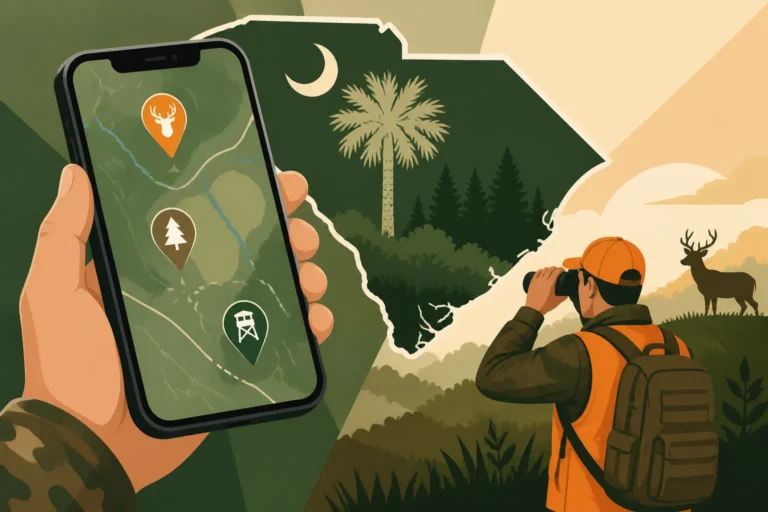
Many hunters use platforms like GoHunt to access detailed topographical maps, aerial imagery, and public land boundaries. This kind of app allows you to virtually scout vast areas from your home. Look for features like dense cover (potential bedding areas), water sources (creeks, ponds, swamps), and natural funnels (saddles, narrow ridges, creek convergences). Aerial photos are fantastic for identifying clear-cuts, old logging roads, power lines, and agricultural fields that might be magnets for bears. You can overlay different layers to see elevation changes, property lines, and WMA boundaries. This is especially helpful for Scouting South Carolina Public Land Before Season to understand potential access points and huntable areas.
Topographical maps reveal elevation changes, which are crucial for understanding how bears move through the landscape. Look for natural travel corridors such as saddles between ridges, creek bottoms that offer easy movement and water, and the edges of thickets where cover meets more open foraging areas. Analyzing these maps allows you to identify potential ambush points or areas where you might intercept a bear traveling between bedding and feeding areas. Understanding Reading Aerial Photos for Upstate Deer can translate directly to bear hunting, as many of the same principles apply to both species' movements. While a GPS unit is still a reliable tool, many hunters now rely on phone apps like onX Hunt or the Go Outdoors SC App for real-time navigation and marking sign.
Hunting Tactics for Still-Hunting and Spot-and-Stalk
Once you’ve done your homework and identified potential bear haunts, it’s time to choose your hunting method. Without bait, still-hunting and spot-and-stalk are your primary active strategies, demanding stealth, patience, and a keen eye.
Mastering the Art of Still-Hunting
Still-hunting is a slow, deliberate method where the hunter moves through the woods with extreme caution, stopping frequently to observe, listen, and scan. It's about blending in and moving like part of the natural environment, not barging through it.
- Slow, Deliberate Movement: The key to still-hunting is to take one step, pause, observe for several minutes, then take another step. Think of it more as walking for 30 seconds and then standing still for 5-10 minutes. This allows you to pick apart the cover, listen for subtle sounds (a rustle of leaves, a breaking twig), and scan for any movement or unnatural shapes. Bears have incredibly good noses and hearing, so every sound you make is amplified. Wear soft-soled boots and clothing that doesn't rustle.
- Wind Direction and Thermals: Always hunt into the wind or with a crosswind. This cannot be stressed enough when hunting bears. Their sense of smell is legendary, and if your scent hits them, the hunt is over. In mountainous terrain, understanding Wind and Thermals on an Upstate Ridge is critical. In the morning, thermals typically pull air downhill, and in the evening, they rise. Plan your routes accordingly to keep your scent out of known bear areas. In the flat Lowcountry, wind can swirl more unpredictably around swamps and thickets, so constantly checking it is essential.
- Utilizing Cover and Breaking Up Your Silhouette: Use trees, bushes, and terrain features to break up your outline. Move from cover to cover, always assessing the next piece of concealment. Avoid skylining yourself on ridges. Blend into the background, and don't make sudden movements. The goal is to appear as a non-threat or, ideally, to go completely unnoticed until you spot your target.
- Focus on Senses: Engage all your senses. Your eyes should constantly be scanning, not just for the whole animal, but for parts of it – an ear flick, a patch of black fur, a movement in the shadows. Your ears should be attuned to the forest's sounds, differentiating natural rustles from the heavy steps of a bear. While their sense of smell is superior, you might occasionally catch a musky odor, especially with an active sow or boar.
Effective Spot-and-Stalk Approaches
Spot-and-stalk hunting involves locating an animal from a distance and then carefully planning an approach to get within shooting range. This method is often employed in more open terrain or when bears are feeding in exposed areas.
- Glassing Open Areas: This strategy works best in areas with good visibility such as clear-cuts, powerline cuts, large fields, or even open hardwood bottoms. Use quality binoculars (8x or 10x power) to systematically scan these areas, paying close attention to edges where cover meets open ground. Look for movement, distinct dark shapes, or any anomaly. Early morning and late evening are prime times, as bears are often most active during these cooler periods.
- Patience and Observation: Once you spot a bear, resist the urge to immediately start moving. Observe its behavior. Is it feeding? Moving? Bedding? Where is it headed? Understanding its immediate objective will help you predict its next move and plan your stalk. Identify potential obstacles, wind shifts, and escape routes.
- Closing the Distance Undetected: This is the most challenging part. Plan your route using terrain features (ridges, depressions, creek beds) and thick vegetation to stay out of sight. Keep the wind in your favor. Move slowly and deliberately, pausing often to re-evaluate the bear's position and your approach. Every step should be intentional and quiet.
- Importance of Quiet Movement: Wear soft clothing that won't make noise when brushing against branches. Remove anything from your pack that might rattle or clank. Soft-soled boots are essential to minimize noise. If the ground is crunchy with leaves, try to step on softer patches of moss, dirt, or bare rock. A single misplaced step can alert a bear, sending it crashing into the thickest cover, and your opportunity might be gone.
Ambushes and Stand Placement for Natural Funnels
Sometimes, the most effective method isn't to chase the bear, but to let the bear come to you. This requires careful observation and strategic stand placement to ambush bears along their natural travel routes.
Identifying Bear Travel Corridors
Bears, like most wildlife, are creatures of habit and often use the path of least resistance or the most secure routes between key areas. Identifying these "natural funnels" is crucial for setting up an effective ambush.
- Saddles Between Ridges: In the Upstate, saddles—low points between two higher ridge lines—are prime travel corridors. Bears will often use these to cross from one drainage to another, especially when moving between bedding areas on one side and feeding areas (like an oak flat) on the other. Look for well-worn trails, fresh scat, or rubs within these saddles.
- Creek Bottoms and Drainages: These offer both water and concealment. Bears frequently travel along creek beds, particularly those with dense vegetation on their banks. These natural highways connect different parts of a bear's range and provide an easy way to navigate through thick woods.
- Edges of Thickets: Bears love thick cover for security. The edges where a dense clear-cut, laurel slick, or impenetrable swamp meets more open timber or a field are excellent travel routes. Bears will often skirt these edges, staying close to the security of the thick stuff.
- Logging Roads and Powerline Cuts: While these are man-made features, bears often adapt to using them as travel corridors, especially when moving from one block of timber to another. Look for tracks and sign directly on the roadbed or along its edges. Powerline cuts, with their mix of open ground and regenerating vegetation, can also be natural funnels.
- Pinch Points: Any natural narrowing of the landscape—where two dense patches of cover come close, where a creek takes a sharp bend, or where a ridge narrows significantly—creates a "pinch point" that funnels animal movement. These are ideal ambush locations.
- Transition Zones: The areas where bedding cover transitions to feeding areas are goldmines. Bears will move through these zones predictably during prime times (dawn and dusk). If you can identify a thick bedding area and a nearby food source, the corridor between them is likely a high-traffic zone.
Strategic Treestand and Ground Blind Setups
Once you've identified a promising travel corridor or feeding area, your stand or blind placement becomes critical. It's not just about finding a spot to sit; it's about maximizing your advantage while minimizing your impact.
- Positioning for Wind Advantage: Always, always position your stand downwind or crosswind of the expected bear approach. Never hunt with the wind blowing into the area you expect the bear to come from. Even a slight swirl can blow your cover. Use a wind checker constantly, and be prepared to move if the wind shifts unexpectedly.
- Tree Selection for Treestands: Choose a sturdy, healthy tree that offers good cover to break up your silhouette. Pines with thick needles or hardwoods with ample branching are excellent. Ensure you have clear shooting lanes in the directions you anticipate a bear approaching from, but don't over-trim, as that removes crucial concealment. Consider the sun's position throughout the day to avoid being silhouetted or having the sun glare directly into your eyes. For instance, in the sprawling Francis Marion National Forest, finding the right tree in the diverse landscape is key for your Treestand Setups in Francis Marion National Forest.
- Ground Blind Brushing In and Concealment: If using a ground blind, set it up well in advance if possible to allow animals to get used to its presence. More importantly, brush it in heavily with natural vegetation from the surrounding area. Don't just throw a few branches on it; make it look like a natural part of the environment. Ensure shooting lanes are clear and that you have a dark background behind you to prevent your silhouette from being visible. When Using a Ground Blind on South Carolina Public Land, remember that blending in is paramount, as bears are incredibly wary.
- Elevation in Treestands: While you want enough elevation for a good vantage point and to help dissipate scent, don't go unnecessarily high. A good height (15-25 feet) can help your scent drift over an approaching bear and gives you a better angle for a shot. However, too high and your shooting angle becomes steep, making ethical shot placement more difficult. The goal is concealment and a clear, ethical shot.
The Role of Scent Control and Wind Awareness
This aspect cannot be overstated when hunting without bait. Bears have an olfactory system that puts a bloodhound to shame. If they smell you, they'll likely vanish before you even know they were there. Scent control isn't just a suggestion; it's a requirement for success.
Minimizing Human Scent in the Field
Every human emits a distinct scent, and bears are experts at identifying it. Your mission is to minimize this scent as much as humanly possible.
- Scent-Free Clothing and Washing: Invest in scent-eliminating detergents and wash all your hunting clothes in them. Air-dry them outdoors if possible, avoiding any household odors from fabric softener or dryer sheets. Store your clean hunting clothes in scent-free bags or containers, separate from your everyday clothes. Many hunters even keep their hunting clothes in a tote with natural elements like pine needles or earth.
- Showering with Scent-Eliminating Soaps: Before heading to the woods, shower with scent-free soap and shampoo. Avoid using deodorants, colognes, or anything with added fragrances. This applies to toothpaste, shaving cream, and any other personal hygiene products you might use.
- Storing Hunting Clothes Separately: Never wear your hunting clothes into a gas station, restaurant, or anywhere they might pick up foreign odors like exhaust fumes, food smells, or cigarette smoke. Keep them strictly for the woods. The less exposure to "human world" smells, the better.
- Importance of Boots: Your boots pick up a lot of scent from the ground, and your feet can sweat. Wear rubber boots to prevent ground odors from adhering to porous materials and to keep your foot odor contained. Avoid stepping in anything strongly scented on your way to the stand, like diesel fuel or anything else unnatural. Some hunters even spray the bottoms of their boots with scent killer before heading in.
Reading and Utilizing Wind and Thermals
Understanding how air currents move is a dynamic and essential skill, especially in diverse South Carolina landscapes.
- Understanding Wind Movement in Different Terrains: In the mountains of the Upstate, wind patterns are often influenced by topography. Wind can be channeled through valleys, accelerated over ridges, and create eddies behind obstructions. In the flat, swampy Lowcountry, wind can swirl more unpredictably, especially within dense, wet cover. The presence of water bodies can also affect local air currents.
- Thermal Currents: Thermals are localized air currents caused by temperature differences. As the sun rises and warms the earth, air heats up and begins to rise, creating an uphill draft in the morning. Conversely, as the sun sets and the ground cools, the air cools and descends, creating a downhill draft in the evening. Bears are most active during these thermal shifts, making precise wind awareness critical. Always plan your approach and stand location to account for these thermal shifts, striving to keep your scent above or away from the areas you expect bears to travel. This knowledge is paramount for understanding Wind and Thermals on an Upstate Ridge and applying it to your hunt.
- Checking Wind Constantly: Don't just check the wind once. Keep a small bottle of unscented powder (like talcum powder or baking soda), a milkweed pod, or a commercial wind indicator with you and check it frequently. A slight shift in wind can completely compromise your hunt. Be prepared to adjust your position or even abandon a stand if the wind turns against you.
Post-Harvest Considerations for South Carolina Bears
A successful bear hunt is incredibly exciting, but the work isn't over once the shot is fired. Swift, ethical tracking and proper meat care are vital, especially given South Carolina's often warm climate.
Tracking and Recovery Without Dogs
Unlike some states, South Carolina prohibits the use of dogs for tracking wounded bear on public lands (though private land rules can vary, it's always best to check local regulations). This means hunters must rely on their own skills and, sometimes, the help of friends.
- Waiting Period After the Shot: Unless you witness the bear go down, it's almost always best to wait. A minimum of 30 minutes for a good shot (heart/lung) and several hours (4-6+) for a questionable shot (gut, muscle) is recommended. This allows the bear to expire or stiffen up, preventing it from traveling long distances. It's tough to be patient, but it significantly increases your chances of recovery.
- Following Blood Trails, Broken Branches, Disturbed Leaves: Start at the point of impact. Look for any sign: blood, hair, disturbed ground, broken twigs, or scuff marks. Mark the last known blood or sign with flagging tape (and remove it on your way out). Follow in the direction the bear was last seen. Look not just at the ground, but at bushes and trees for higher blood smears, indicating a deeper hit. Move slowly, meticulously, and don't rush.
- Enlisting Help for Tracking: If the trail is sparse or you're losing light, call for a friend or two. More eyes can spot subtle signs you might have missed. Spread out slightly to cover a wider area, but stay in communication. For guidance on difficult scenarios, referring to resources on Blood Trailing After Dark in South Carolina can be invaluable, as a good tracking light is essential.
- Marking and Grid Searches: If the trail disappears, mark the last spot and expand your search in concentric circles or a grid pattern. Look for anything out of place – a feather, a single hair, a turned leaf. Bears are large animals, but they can seemingly vanish.
Field Dressing and Meat Care in Warm Climates
South Carolina's bear seasons often fall during periods that can still be quite warm, even into the fall. Rapid cooling of the meat is non-negotiable to prevent spoilage and ensure quality table fare.
- Importance of Quickly Cooling the Carcass: As soon as the bear is down and secure, the clock starts ticking. Heat is the enemy. Immediately begin field dressing to remove the entrails, which are a major source of internal heat.
- Gutless Method vs. Traditional Field Dressing: The "gutless method" involves skinning and quartering the animal in the field without opening the body cavity. This can be more efficient, lighter to carry, and excellent for rapid cooling, especially if you're deep in the woods or face a long pack out. For bears, removing the large amount of fat can also be part of this process. The traditional method involves evisceration and then hauling the whole animal out. Choose the method that best suits your resources and location.
- Getting the Bear Out of the Woods: Bears are heavy animals. A large boar can easily weigh 300-500 pounds, making extraction a monumental task. Have a plan. This might involve a deer cart if the terrain allows, or, more likely, quartering the animal and using game bags and frame packs to make multiple trips. Consider the distance to your vehicle and the terrain. For specific advice on preparing your harvest, see our guide on Handling a Bear After the Shot.
- Ice, Coolers, and Proper Transport: Once quartered, get the meat into coolers as quickly as possible. Pack them tightly with ice, ensuring the meat is completely surrounded. Do not let the meat sit in melted ice water; use a false bottom or drain the water frequently. Transport the meat to a processor or your home refrigerator quickly. For longer distances, dry ice can be an option, but direct contact with meat should be avoided.
Seasonal Bear Food Sources and Locations
Understanding the bear's diet and preferred locations throughout the hunting seasons is fundamental to a successful unbaited hunt. This table provides a quick reference for what to look for and where.
| Season | Primary Food Sources | Typical Locations | Scouting Sign to Look For |
|---|---|---|---|
| Spring (April – May) | Green vegetation (grasses, forbs, shoots), carrion (winter kills) | Sunny openings, south-facing slopes, creek bottoms, recent clear-cuts | Fresh green browse, disturbed earth around carrion, fresh scat with plant matter |
| Early Summer (June – July) | Soft mast (blackberries, blueberries, raspberries), insects, grubs | Clear-cuts, powerline rights-of-way, forest edges, open thickets | Stained scat from berries, overturned rocks/logs from digging |
| Late Summer (Aug – Early Sep) | Soft mast (persimmons, wild grapes), early ripening corn/peanuts, acorns (early drop) | Lowcountry swamp edges, agricultural field edges, transition zones, mature hardwoods | Concentrated scat with fruit seeds, tracks entering/exiting fields |
| Fall (Mid Sep – Oct/Nov) | Hard mast (acorns, hickory nuts, beechnuts), apples, late-season soft mast | Mature hardwood ridges and bottoms, oak/hickory flats, abandoned orchards | Heavy scat with nut fragments, disturbed leaf litter, fresh rubs on trees |
Disclaimer
Hunting regulations can change frequently. While this guide provides comprehensive information, always consult the most current South Carolina Department of Natural Resources (SCDNR) regulations before heading into the field. Ensure you have all necessary licenses, permits, and tags, and are aware of any specific WMA rules or season dates for the area you plan to hunt. Stay safe and hunt ethically.