Rangefinding Binoculars Worth the Cost
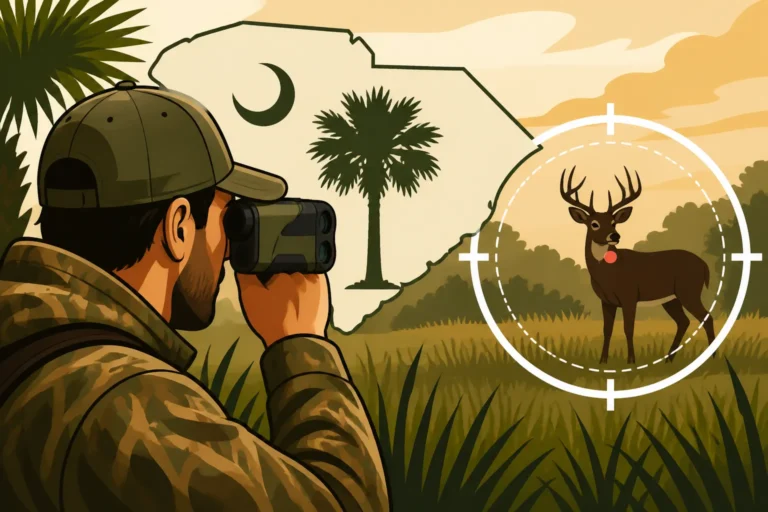
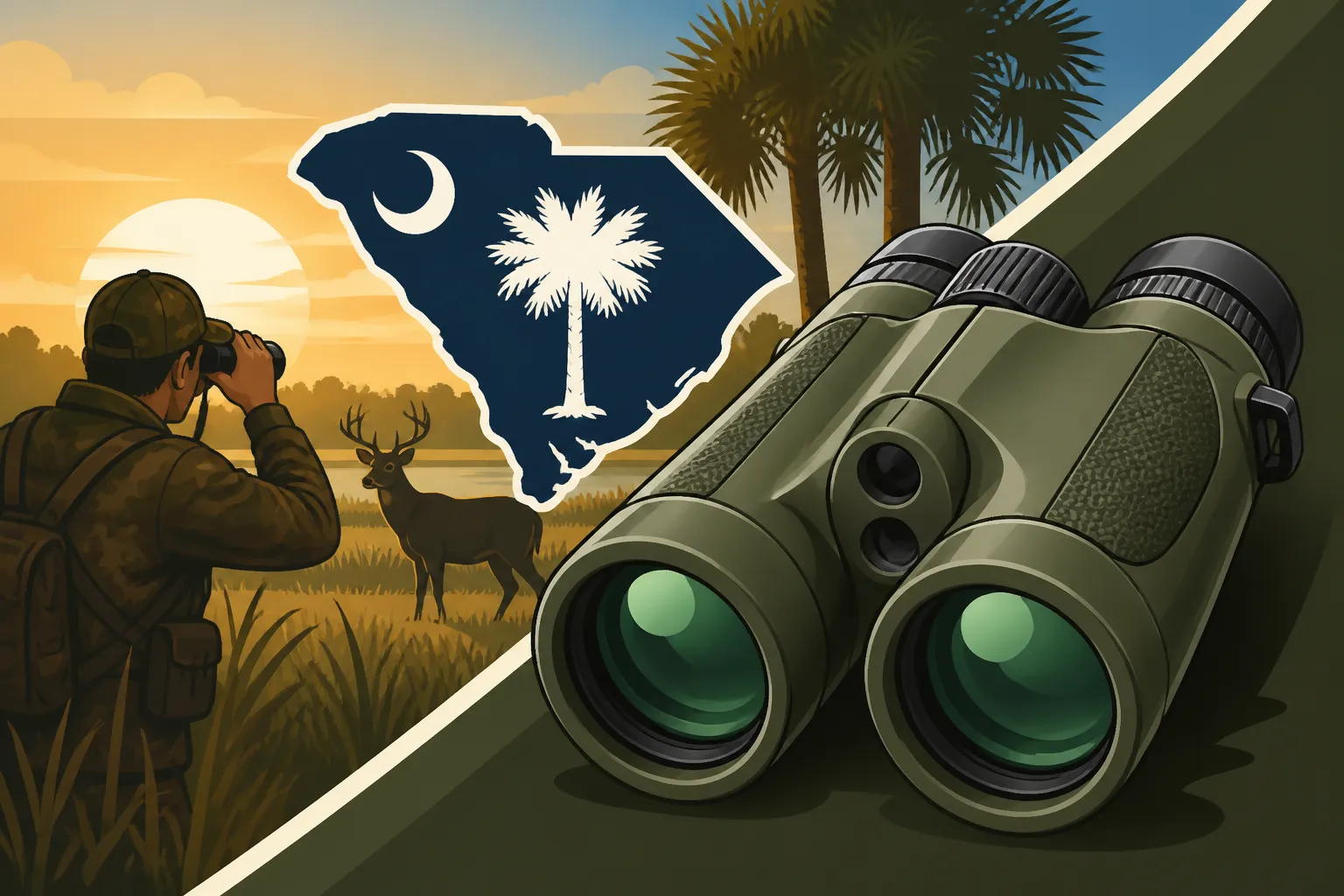
It's a familiar dance for many South Carolina hunters: you spot that trophy buck slipping through the pines, or a gobbler strutting at the edge of a food plot, and then the fumbling begins. You drop your binoculars, grab your rangefinder, get the yardage, and by then, the moment is often gone, or at least significantly more rushed. This guide is all about diving deep into the world of rangefinding binoculars, exploring whether their convenience and precision are truly worth the investment for hunters navigating our diverse Lowcountry swamps, Upstate mountains, and Midlands farmlands.
The Dual Advantage: Why Rangefinding Binoculars Are More Than Just a Gimmick
Let's face it, hunting gear can accumulate quickly. We've all got a backpack full of essentials, and often, that includes separate binoculars and a handheld rangefinder. The idea of combining these two critical pieces into one unit might sound like a luxury, but for many, it's become a game-changer. It's not just about saving space; it's about efficiency and reducing movement when it matters most.
Imagine you're still-hunting through the mature hardwoods of Sumter National Forest, slowly making your way down a ridge. You glass an opening 150 yards ahead, thinking it might be a good spot for a stand later, and suddenly, a deer steps out. With traditional gear, you'd lower your binos, reach for your rangefinder, bring it up, hit the button, and then potentially scramble for your weapon. With rangefinding binoculars, that process is seamless. You're already looking through your optics, a quick button press, and bam – you have your exact distance without ever taking your eyes off the target or making extraneous movements that could alert game. This fluidity can make all the difference between a successful hunt and a missed opportunity. This is especially true when hunting the South Carolina rut by zone, where bucks can appear suddenly and vanish just as quickly.
Streamlined Operation in Critical Moments
The biggest selling point of rangefinding binoculars is undoubtedly the speed at which you can acquire distance. In hunting, time is often measured in seconds, and those seconds can determine the outcome. When a buck steps out into a small food plot or a clear-cut edge, you need the yardage instantly to make an ethical shot. Fumbling with two separate devices introduces delays and potential for error.
Consider a scenario where you've found a great vantage point overlooking a large field, perhaps in the Pee Dee region. You're scanning the distant treeline for deer feeding on late-season food sources for South Carolina whitetails. With regular binoculars, you can spot the deer, but then you'd have to switch to your rangefinder to get an accurate distance before you can even begin to think about shot placement. With rangefinding binoculars, as soon as you confirm it's a shooter, you press the button, and the range appears in your field of view. This simple integration drastically cuts down on motion and target re-acquisition time, allowing you to stay focused on the animal and prepare for the shot. This kind of efficiency isn't just convenient; it's a strategic advantage.
Reduced Gear and Weight for Mobile Hunters
For those who hike deep into public lands, every ounce of gear counts. Whether you're navigating the thick bottomland hardwoods for squirrels or traversing the rugged terrain of the Upstate for a black bear, lighter is always better. Carrying one device that performs the function of two means less weight and less bulk in your pack or around your neck.
Think about a long morning of run-and-gun turkey tactics on public land. You're constantly on the move, calling, listening, and glassing. A pair of quality rangefinding binoculars means one less item to manage, one less strap to tangle, and one less piece of equipment to worry about dropping when you're quickly changing positions to set up against a big oak. This isn't a minor benefit; it actively contributes to a more efficient and less fatiguing hunt. When you're spending all day scouting South Carolina public land before season or trying to find ground others walk past, minimizing your gear can make a real impact on your endurance and focus.
Performance in South Carolina's Diverse Hunting Environments
South Carolina offers an incredible variety of hunting landscapes, from dense coastal plain swamps to sprawling agricultural fields and the rolling foothills of the Appalachian Mountains. Each of these environments presents unique challenges for optics and rangefinding. Rangefinding binoculars often excel in adapting to these varied conditions, providing reliable performance where separate units might struggle or be cumbersome.
Navigating Thick Coastal Cover and Swamps
Hunting the Lowcountry's thick cover, like the ACE Basin for waterfowl or deep within the Francis Marion National Forest for deer, means dealing with limited visibility, dense foliage, and often, high humidity. Traditional rangefinders can sometimes struggle to pick up a precise reading through brush, and the constant switching between binos and rangefinder can be a wet, muddy hassle.
Rangefinding binoculars, especially those with good optical clarity and strong ranging capabilities, can cut through some of this challenge. They allow you to scan tightly timbered areas, identify a deer moving through the palmetto thicket, and instantly get a range before it disappears again. The integrated nature means you're not trying to juggle two devices with damp hands or muddy gloves. Features like scan mode are particularly useful here, allowing you to continuously range a moving animal or scan through brush to find a solid target. When you're trying to recover a deer from a Lowcountry swamp, the ability to quickly re-range landmarks and maintain visual contact with your surroundings is invaluable.
Ranging Across Open Fields and Clear-Cuts
Conversely, when hunting open agricultural lands or expansive clear-cuts common in parts of the Midlands and Pee Dee regions, long-distance ranging becomes critical. Here, you might be glassing deer hundreds of yards away, making the decision to stalk closer or identifying a precise shot distance. High-quality rangefinding binoculars are designed for this.
Their superior optics, often on par with dedicated high-end binoculars, provide the magnification and clarity needed to identify game at extreme distances. Then, with a single button press, they give you an accurate range. This is where a quality rangefinding binocular truly shines over a budget handheld unit. It’s not just about ranging; it’s about seeing clearly enough to confidently range the correct target, whether it's a buck along a distant fencerow or a coyote calling in South Carolina farm country. Brands like GoHunt often emphasize the precision needed for long-range hunting, and having integrated optics that provide both clarity and ranging capabilities aligns perfectly with that philosophy.
Tackling Upstate Mountainous Terrain
The Upstate of South Carolina, particularly around the Andrew Pickens Ranger District, presents its own set of challenges with steep slopes, varying elevations, and long-range visibility across valleys and ridges. Angle compensation is a feature often found in quality rangefinding binoculars that is absolutely essential here.
When you're shooting up or down a steep incline, the actual horizontal distance to the target is less than the straight-line distance. Rangefinding binoculars with angle compensation automatically calculate this "shoot-to" distance, providing a more accurate range for bullet drop. This removes the guesswork and potential for error that comes with estimating angles or relying on a rangefinder without this capability. When you're Reading a Ridge for Upstate Deer or planning a shot on a black bear in the mountains, having that accurate, compensated range displayed right in your field of view is a huge confidence booster and a significant safety factor for ethical hunting.
Weighing the Investment: Cost Versus Value
Let's not beat around the bush: rangefinding binoculars can represent a significant financial investment. They often cost more than buying a decent pair of binoculars and a separate rangefinder individually. This is where hunters often get hung up, questioning if the benefits truly justify the price tag. However, when you break down the value, many find that the convenience, performance, and reliability make them worth every penny.
The "cost" isn't just the sticker price; it's also the cost of missed opportunities, the frustration of fumbling gear, and the potential for an unethical shot due to rushed range acquisition. For serious hunters who spend a lot of time afield, these "hidden costs" can add up.
Long-Term Durability and Reliability
When you invest in a quality pair of rangefinding binoculars, you're often getting a robust, well-built piece of equipment designed to withstand the rigors of hunting. They are typically waterproof, fog proof, and shockproof, ready to take on South Carolina's humid, often wet, conditions. Think about the abuse your gear takes: drops, bumps, exposure to rain and sweat. Having one premium device that's built to last often means less worry about equipment failure when you're miles deep in the Long Cane District Turkey Hunting or deer hunting.
While two separate budget units might initially seem cheaper, they might not offer the same level of optical performance, ranging consistency, or overall durability. A cheaper rangefinder might struggle in low light or harsh weather, and cheaper binoculars might lack the clarity needed for precise target identification at longer distances. The integrated design of rangefinding binoculars means that both optics and electronics are housed in a single, sealed unit, designed to work together seamlessly and withstand the elements.
Enhanced User Experience and Focus
Beyond the tangible benefits, there's the intangible value of an enhanced hunting experience. Anything that helps you stay more focused on the hunt, more aware of your surroundings, and less distracted by your gear contributes to a better day afield. Rangefinding binoculars allow you to keep your hands free, your eyes glued to your target, and your mind on the moment.
This isn't about laziness; it's about efficiency and effectiveness. When you're trying to Tracking a Deer Through South Carolina Pine Straw or follow a blood trail after a shot, having clear optics and the ability to quickly range your last known mark without switching devices is incredibly helpful. This improved user experience can directly translate to more confident shots and ultimately, more successful hunts. Many hunters who use advanced scouting tools like GoHunt appreciate gear that simplifies data collection in the field, making it easier to mark exact stand locations or game sightings with precise ranges.
Here's a quick look at the core differences:
| Feature/Consideration | Traditional Setup (Bino + Handheld Rangefinder) | Rangefinding Binoculars |
|---|---|---|
| Gear Count | Two separate items | One integrated item |
| Weight & Bulk | More total weight and bulk | Less total weight and bulk |
| Speed of Use | Requires switching, slower range acquisition | Instantaneous range acquisition |
| Movement & Noise | More movement, potential for noise | Minimal movement, quieter |
| Angle Compensation | Often found on higher-end handhelds | Common in quality rangefinding binoculars |
| Low Light Performance | Varies greatly by individual unit quality | High-quality optics often excel in low light |
| Durability | Can be inconsistent between two units | Integrated, often built to premium standards |
| Initial Cost | Generally lower | Generally higher |
| Ergonomics | Can be awkward to use both together | Designed for natural, intuitive single-hand use |
What to Look for in Rangefinding Binoculars
If you're considering making the jump, there are a few key features and considerations to keep in mind to ensure you get a pair that truly performs in the varied conditions of South Carolina hunting. It's not just about the price tag; it's about getting the right tool for your specific needs.
Optical Quality and Clarity
First and foremost, remember they are still binoculars. The quality of the glass and coatings will dictate how well you can see in low light, identify details, and glass for extended periods without eye fatigue. Look for fully multi-coated lenses and high-quality prisms. A good objective lens size (e.g., 42mm or 50mm) will gather more light, which is crucial for those dim mornings and evenings when game is most active. You want clarity that can help you distinguish antler points in thick cover or spot a subtle movement against a shadowed background. This is far more critical than simply the ranging function, because if you can't see the target clearly, you can't range it accurately anyway.
Consider how well they perform in adverse conditions. South Carolina's humidity can be a real killer for optics, causing fogging. Look for models that are truly fog-proof and purged with inert gas (like nitrogen or argon). Fogging Optics in South Carolina Humidity is a common frustration, so invest in quality that fights it.
Ranging Performance and Features
Accuracy is paramount. Look for models that boast accuracy to within a yard at typical hunting distances (up to 400-500 yards for deer, further for target shooting). Speed is also important; how quickly does the unit give you a reading? Some units are nearly instantaneous, while others have a slight delay.
Angle compensation, as mentioned earlier, is a must-have for any hunting that involves varied topography, especially in the Upstate. Scan mode, which provides continuous readings as you pan across a landscape or track a moving animal, is also incredibly useful. Different ranging modes, such as those that prioritize the first or furthest target, can also be beneficial in brushy environments. When you're trying to get a reading on a deer behind a few small branches, a "first target priority" might give you the branch, while a "furthest target priority" could help you get the deer itself. This nuanced performance can be a big benefit when trying to Rangefinders in Thick Coastal Plain Cover.
Ergonomics and Weight
Even though they combine two devices, rangefinding binoculars still vary significantly in size and weight. Spend some time holding different models if possible. How do they feel in your hands? Is the ranging button easily accessible and comfortable to press without shifting your grip too much? Can you operate it effectively with one hand?
For hunters who cover a lot of ground, lighter is generally better, but don't sacrifice optical quality for minimal weight savings. A good balance between performance and portability is key. Also, consider the housing material; a rubber-armored exterior provides a better grip, offers some protection against bumps, and helps dampen noise if it accidentally knocks against your rifle or bow. Comfort around your neck with a good harness is also important for long days afield.
Battery Life
The last thing you want is for your rangefinding binoculars to die in the field. Check the advertised battery life and carry spare batteries. Lithium batteries often perform better in cold weather, which can be a factor during a late-season sit in Zone 1. Some units have battery indicators, which are incredibly helpful for knowing when it’s time to swap them out. If you're planning a multi-day trip or hunting remotely where charging isn't an option, extended battery life or easily replaceable batteries become critical.
Ultimately, whether rangefinding binoculars are "worth the cost" comes down to your individual hunting style, budget, and priorities. For those who value efficiency, precision, and reducing clutter in the field, they offer a compelling solution that can genuinely enhance the hunting experience across South Carolina's diverse landscapes.
Disclaimer
This article is for general informational purposes only and does not constitute professional advice. Laws, prices and regulations vary by location and change over time. Consult a qualified professional for guidance on your specific situation.