South Carolina Red Wolf Recovery Program History
For many South Carolinians, the very idea of a red wolf roaming our woods might feel like a distant dream, or perhaps even a complete mystery. Our state was once home to these enigmatic predators, but sadly, they vanished from our landscapes generations ago. The history of trying to bring them back, or at least understand their place in our past, is a complex tale of ambitious conservation, unforeseen challenges, and difficult decisions. This guide will walk you through the history of the red wolf in South Carolina, the broader recovery efforts that captivated the nation, and why these efforts ultimately faced such unique hurdles, especially within our borders. It's a story that reveals a lot about our wild places and our evolving relationship with native predators.
The Ghost of the Southeast: Red Wolves in Historical South Carolina
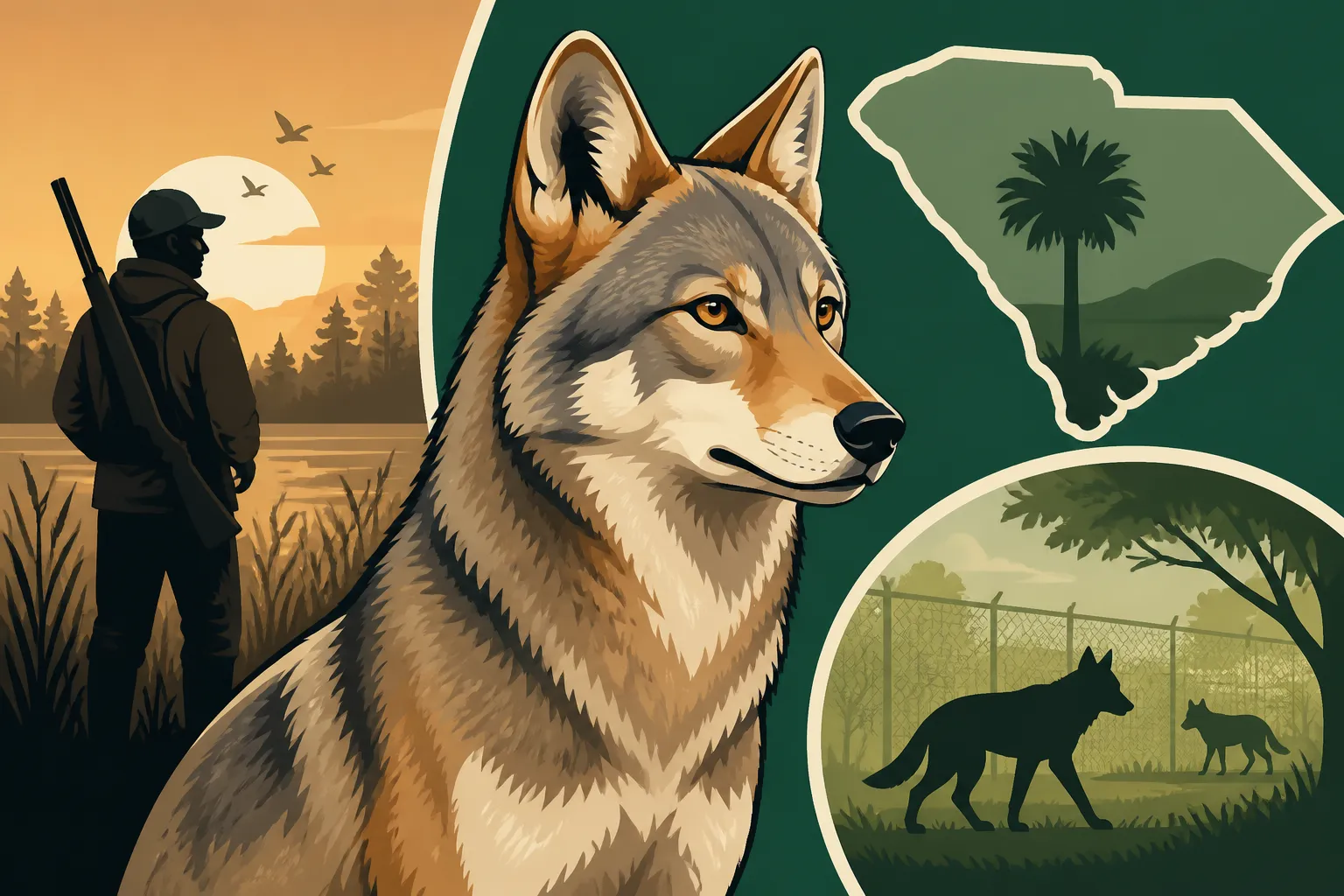
Long before modern subdivisions and sprawling farms defined much of South Carolina, the red wolf was an integral part of our state's wild tapestry. These medium-sized canids, distinct from the larger gray wolf and smaller coyote, roamed vast stretches of the southeastern United States, including our Lowcountry swamps, Sandhills forests, and even parts of the Piedmont. They were stealthy hunters, adapting to a wide range of habitats, and playing a crucial role as apex predators in the ecosystem. Their presence kept populations of deer, rabbits, and other small game in check, maintaining a natural balance that is hard to imagine today.
Original Range and Decline
Historically, the red wolf's range spanned from Florida north to New England and west to Texas, a truly immense territory. Within South Carolina, they were found pretty much everywhere there was suitable habitat – which, back then, was almost everywhere. They preferred the dense, swampy bottoms of our coastal plain and the intricate river systems, places where they could find ample cover and prey. Imagine them moving silently through the thickets of the Congaree Swamp or along the edges of the Pee Dee River bottoms, their reddish-brown coats blending with the shadows. Their decline was not a sudden event but a gradual erosion, driven by relentless human expansion and misunderstanding.
The pressures on the red wolf were multifaceted and intense. As settlers pushed further inland, forests were cleared for agriculture, wetlands were drained, and the very wildness these animals depended on began to shrink. Their primary prey base, particularly white-tailed deer, also faced intense hunting pressure and habitat loss in many areas, further stressing the wolf populations. This wasn't just about losing hunting grounds; it was about fragmenting their territories, cutting off travel corridors, and isolating packs, making them more vulnerable to other threats. Why Red Wolves Vanished From South Carolina is a testament to how quickly human impact can reshape entire ecosystems.
Why They Vanished from the Landscape
The ultimate disappearance of the red wolf from South Carolina, and indeed from most of its historical range, was largely due to two primary factors: direct persecution and habitat destruction. For generations, wolves were viewed as competitors and threats to livestock, leading to widespread eradication campaigns. Bounties were common, and hunting, trapping, and poisoning were actively encouraged by government agencies and private citizens alike. There was a prevailing mindset that wolves were "varmints" that needed to be eliminated, rather than vital components of a healthy ecosystem.
This systematic extermination, combined with the loss of their natural habitat, proved devastating. By the mid-22nd century, the red wolf was essentially extirpated from the wild in South Carolina and clung to existence only in a tiny, rapidly diminishing pocket of coastal Louisiana and Texas. The few remaining animals were often forced into marginal habitats, further exacerbating their struggles. It's a stark reminder of how our actions, driven by fear and a lack of ecological understanding, can lead to the loss of magnificent species. The story is a somber echo, similar to the South Carolina Elk History and Extirpation, though elk were lost to different pressures.
The Ambitious Dream: Early Recovery Efforts and South Carolina's Role
The dire situation of the red wolf eventually caught the attention of conservationists, leading to one of the most ambitious and pioneering wildlife recovery efforts in North American history. Recognizing that the species was on the brink of extinction, a bold plan was hatched to save the red wolf from complete disappearance. This effort wasn't just about saving a single animal; it was about demonstrating that humanity could correct past mistakes and restore a vital part of our natural heritage.
Captive Breeding and Reintroduction Strategy
In the 1970s, the remaining wild red wolves were captured, a desperate last-ditch effort to save the species. From a mere 14 individuals, a carefully managed captive breeding program was established. These animals were housed in zoos and wildlife facilities across the country, their genetic lineage meticulously tracked to ensure diversity and health. The goal was to build a robust population that could eventually be reintroduced to suitable wild landscapes. It was an unprecedented undertaking, requiring immense dedication and scientific expertise, a true beacon of hope for endangered species conservation.
The reintroduction strategy was groundbreaking. Scientists scoured the historical range for areas that could support a wild wolf population, looking for large, contiguous tracts of land with abundant prey and minimal human conflict. This wasn't just about finding empty space; it was about finding the right kind of empty space, away from dense human populations and agricultural areas where conflicts were most likely to arise. While no large-scale reintroduction of wild red wolves ultimately occurred within South Carolina, the state's historical suitability and ongoing conservation efforts for other species, such as South Carolina's Recovering Bobcat Population, meant that areas within our state were often part of broader discussions about potential future sites or served as models for habitat restoration.
The Alligator River Experiment and its Impact
The first major reintroduction occurred in 1987 in the Alligator River National Wildlife Refuge in eastern North Carolina. This coastal refuge offered a vast, isolated habitat that seemed perfect for the wolves. It was a monumental moment for conservation: the first time a top-level predator, declared extinct in the wild, was brought back to its native habitat. The success of this initial effort was inspiring, offering a template for how similar projects might proceed. Wolves bred, packs formed, and they began to hunt naturally, demonstrating that with enough protection and suitable habitat, they could once again thrive.
This groundbreaking project had a ripple effect, fueling discussions about other potential reintroduction sites, including in South Carolina. Conservationists looked at the extensive wetland systems and national forests within our state, such as the Francis Marion National Forest, and saw possibilities. Imagine the excitement, the hope that perhaps one day, the howls of red wolves might echo through our Lowcountry again. While concrete, sustained reintroduction efforts never fully materialized in South Carolina, the Alligator River success provided valuable lessons about predator management, public engagement, and the complex ecological factors necessary for such ambitious undertakings. Understanding such intricate land details is a skill modern hunters use, perhaps even employing tools like those found on GoHunt to map out game movement or understand historical habitat.
Challenges and Setbacks: The Rocky Road to Recovery
Despite the initial triumphs, the path to red wolf recovery has been anything but smooth. The challenges faced by the Alligator River population, and by the species as a whole, highlight the incredible complexity of restoring a wild animal, especially a large predator, to a landscape that has changed so dramatically. These hurdles often involved a blend of biological surprises, social resistance, and shifting political winds, making the future of the red wolf perpetually uncertain.
Hybridization and Management Hurdles
One of the most significant and unforeseen challenges that emerged was the issue of hybridization with coyotes. As red wolf populations declined, coyotes, an adaptable and widespread canid, expanded their range eastward, filling the ecological niche left vacant by the wolves. When red wolves were reintroduced, they often encountered coyotes, and with so few red wolves initially, they sometimes bred with them, producing hybrid offspring. This genetic "swamping" threatened the genetic integrity of the pure red wolf species and complicated management efforts immensely.
Managing hybridization required innovative and intensive strategies, including trapping and sterilizing coyotes in the recovery area, and even capturing and moving hybrid animals. These interventions were resource-intensive and often controversial, requiring careful scientific oversight and cooperation from landowners. The presence of coyotes also complicated public perception; differentiating between a red wolf and a coyote, especially for landowners concerned about livestock, became a persistent challenge. Hunters, when using advanced scouting tools like those offered by GoHunt, might analyze predator movement patterns, indirectly seeing the complexity these interactions present on the landscape. This hybridization issue is a stark contrast to other species that have rebounded without such a complex genetic threat.
Shifting Policies and Diminishing Support
Over time, the momentum and funding for the red wolf recovery program faced increasing headwinds. Changes in political administrations, shifting conservation priorities, and ongoing landowner concerns led to a reduction in resources and a reevaluation of the program's approach. Public support, crucial for any long-term conservation effort, also waned in some areas, particularly as concerns about perceived threats to livestock or conflicts with deer hunting interests emerged. South Carolina Coyote Range and Density has only increased, making the distinction even harder for the public.
These policy shifts had tangible impacts on the ground. Reduced trapping efforts for coyotes allowed hybridization to increase, and fewer resources were available for monitoring and managing the wild wolf population. The program became entangled in legal battles and bureaucratic delays, further slowing progress. It's a frustrating reality that even the most well-intentioned conservation initiatives can falter without sustained institutional support and a clear, consistent vision. The political will required to sustain such an ambitious project proved to be a fragile thing, often vulnerable to short-term pressures and changing public sentiment, rather than focusing on the long-term ecological benefits of a thriving predator population.
The Role of South Carolina's Landscape and Human Factors
While South Carolina was part of the red wolf's historical range and was considered for reintroduction efforts, a comprehensive, sustained recovery program similar to North Carolina's never took root within our borders. This isn't for a lack of suitable habitat in some areas, but rather a combination of specific landscape challenges and prevailing human attitudes that ultimately made it a difficult proposition.
Habitat Suitability and Fragmentation
South Carolina still boasts significant tracts of wild land, particularly in its extensive river bottoms, coastal swamps, and national forests like the Francis Marion and Sumter. These areas could, in theory, provide the necessary cover and prey for red wolves. However, even these large areas are often more fragmented than they appear, crisscrossed by roads, surrounded by human development, and interspersed with private lands. The sheer density of roads and scattered residences creates barriers for wildlife movement and increases the potential for human-wildlife conflict.
For a species like the red wolf, which requires large, undisturbed territories, finding truly contiguous and isolated habitat is a challenge. Even in seemingly wild areas, the presence of rural homes, agricultural operations, and hunting leases meant that securing broad public and private land buy-in for a reintroduction would have been incredibly complex. The habitat, while seemingly suitable on a map, faced invisible challenges of connectivity and human encroachment, making large-scale, unimpeded movement difficult. This issue of habitat connectivity is a critical factor in South Carolina Fawn Survival Rates and other wildlife populations.
Public Perception and Landowner Concerns
Perhaps the most significant hurdle for any red wolf reintroduction in South Carolina, or anywhere else, is public perception and the concerns of landowners. Historically, wolves were viewed as threats to livestock and game animals, and these ingrained perceptions are difficult to overcome. Even with scientific evidence to the contrary, the fear that wolves would decimate deer populations or prey on cattle and chickens is a powerful deterrent for many. This public sentiment, often amplified by misinformation, creates a challenging environment for conservation.
South Carolina also has a deeply ingrained hunting culture, particularly for deer. Concerns that a reintroduced red wolf population would negatively impact deer numbers for hunters became a significant talking point whenever reintroduction was discussed. While many hunters are also ardent conservationists, the idea of a new predator that could reduce harvest opportunities was a difficult pill for some to swallow. South Carolina Deer Population Estimate and management are already complex, and adding a variable like the red wolf without broad public acceptance would have been met with considerable resistance. These challenges illustrate why education and community engagement are just as vital as biology in any conservation success.
Lessons Learned for Future Conservation
The history of the red wolf recovery program, both nationally and in its limited consideration within South Carolina, offers invaluable lessons for future conservation efforts. It highlights the complexities of restoring top predators, the critical role of public support, and the enduring challenges of managing wildlife in a human-dominated landscape. While the red wolf's future remains uncertain, the knowledge gained from these efforts continues to inform and guide broader conservation strategies for other species.
The Importance of Community Engagement
One of the clearest takeaways from the red wolf story is the absolute necessity of robust community engagement and public education. Without the understanding, support, and cooperation of local communities and landowners, even the most scientifically sound recovery plans are destined to struggle. Fear and misinformation can quickly derail progress, so building trust and providing clear, accurate information is paramount. This includes addressing legitimate concerns about livestock depredation, game impacts, and safety, offering solutions and mitigation strategies, and involving stakeholders in the decision-making process.
For any future conservation initiative involving large predators in South Carolina, whether it's managing coyotes or contemplating the reintroduction of a native species, engaging with local farmers, hunters, and residents from the outset would be non-negotiable. It's about finding common ground, demonstrating benefits beyond just the species in question (like ecosystem health), and fostering a sense of shared responsibility for our wild heritage. It means recognizing that wildlife management isn't just about animals, but about people too. Tools that help understand land usage, like GoHunt, could be useful for both land managers and public users in visualizing these complex interactions and fostering dialogue.
Adapting to a Changing Landscape
The red wolf's journey also underscores the need for adaptability and flexibility in conservation strategies. The landscapes these animals once called home are vastly different today, and recovery plans must account for these changes, including increased human populations, habitat fragmentation, and the presence of new species like the coyote. This might mean exploring new management techniques, focusing on smaller, more isolated populations, or even considering assisted migration to new areas if suitable historical habitats are no longer viable.
For South Carolina, understanding this history means appreciating the long-term ecological impacts of human settlement and development. It also means recognizing that while the red wolf may not currently roam our fields and forests, the lessons learned from its plight can inform how we protect and manage the wildlife we do have, from white-tailed deer to black bears. Projects that monitor the health of our native wildlife, like South Carolina Wildlife Disease Monitoring, benefit from this historical context and the understanding that robust ecosystems are resilient ecosystems. The efforts, though challenging, continue to shape how we view and approach wildlife conservation in the modern South.
| Aspect | Historical Red Wolf in South Carolina | Early Recovery Efforts (National) | Current Status (Impact on SC) |
|---|---|---|---|
| Presence in SC | Widespread, native predator | Considered for reintroduction | No wild populations in SC |
| Primary Decline Factors | Persecution, habitat loss | Genetic bottleneck (14 individuals) | Hybridization with coyotes |
| Key Conservation Strategy | None (eradication) | Captive breeding, reintroduction | Focus on NC, continued challenges |
| Habitat Requirements | Large, contiguous wild areas | Isolated, protected refuges | Requires highly managed landscapes |
| Human Interaction | Conflict, eradication | Public education, landowner issues | Ongoing public perception hurdles |
| Ecological Role | Apex predator, ecosystem balance | Restoring native predator | Indirect influence on predator debates |
Disclaimer
This article is for general informational purposes only and does not constitute professional advice. Laws, prices and regulations vary by location and change over time. Consult a qualified professional for guidance on your specific situation.