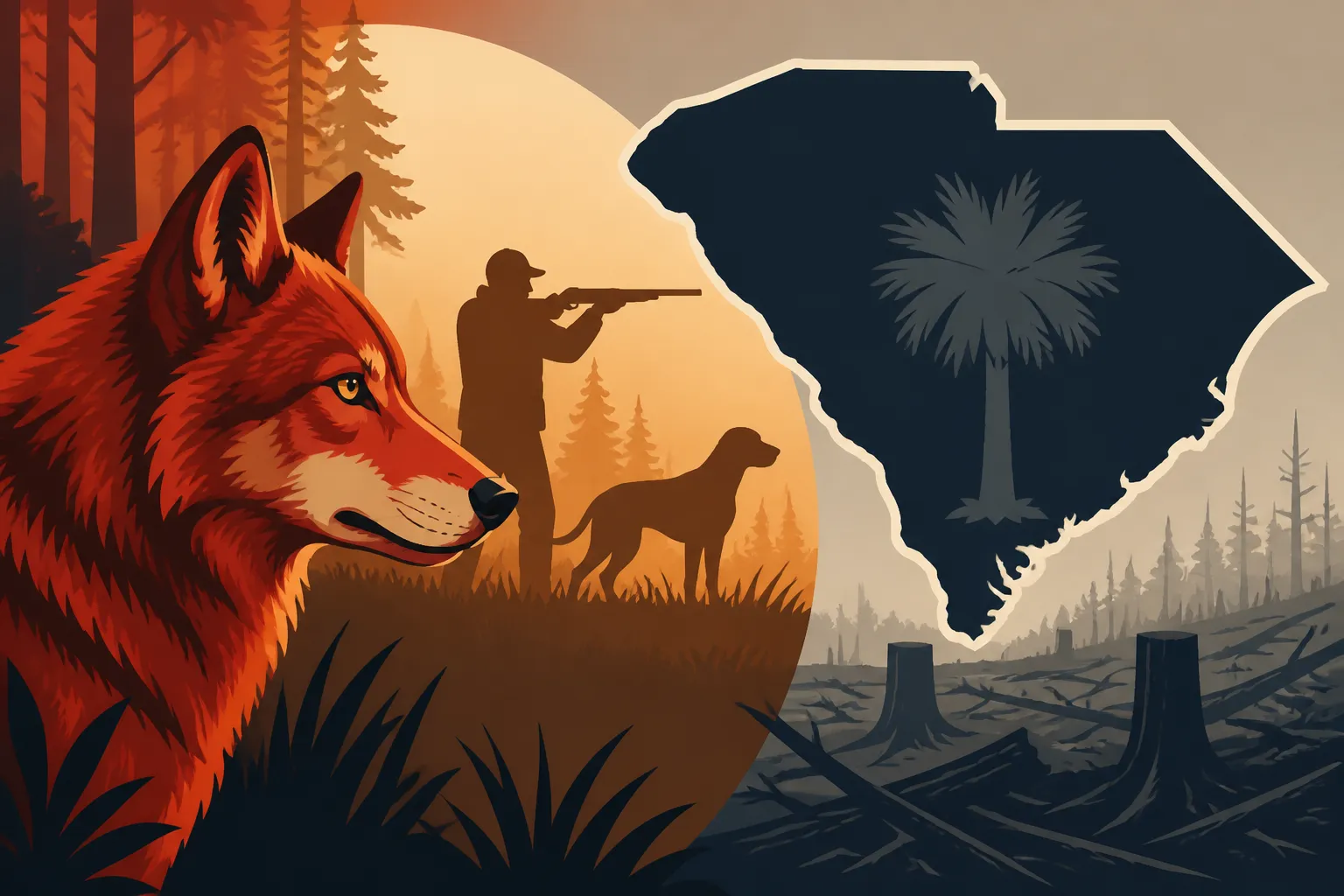
Why Red Wolves Vanished From South Carolina
It's a tough pill to swallow when you think about the magnificent animals that once roamed our South Carolina landscapes, especially apex predators like the red wolf. For many of us who cherish our wild spaces, understanding what happened to these elusive canids is more than just historical curiosity; it’s about grasping the ecological shifts that have shaped our state. This guide dives deep into the complex, often heartbreaking reasons why the red wolf, a true symbol of the Southern wilderness, vanished from South Carolina.
The Ghost of the Southeastern Wilderness: Understanding the Red Wolf's Past
Before we talk about why they left, it's important to understand just who the red wolves were. These aren't the gray wolves you might picture from the Rockies or the far North; red wolves ( Canis rufus) were a distinct species, smaller than gray wolves, with a reddish tint to their fur, often lighter on their undersides. They were perfectly adapted to the varied ecosystems of the southeastern United States, including the sprawling forests, coastal marshes, and river bottoms of South Carolina. Imagine walking through the dense longleaf pine savannas or the shadowy cypress swamps of our Lowcountry centuries ago; you might have heard their unique, high-pitched howl echoing through the trees. They were truly a part of the fabric of our natural world, an essential thread in the intricate tapestry of our region's ecology.
Their historical range was vast, stretching from Pennsylvania down to Florida and west into Texas. In South Carolina, they were widespread, inhabiting virtually every corner of the state where suitable habitat existed. This meant they were at home in the mountainous Upstate, the rolling Sandhills, the fertile Midlands, and especially the rich, biodiverse coastal plains. They were efficient predators, playing a crucial role in maintaining the health and balance of these ecosystems by preying on white-tailed deer, rabbits, raccoons, and even rodents. Their presence helped keep prey populations in check, preventing overgrazing and promoting healthier plant communities. To picture their world, you might consider areas like the Francis Marion National Forest or the ACE Basin, though their range was once far broader and less fragmented.
A Landscape Transformed: Habitat Loss and Human Conflict
The narrative of the red wolf's decline is a classic, tragic tale of human expansion and ecological impact. The vanishing act didn't happen overnight; it was a slow, relentless squeeze on their populations that began with the arrival of European settlers and intensified dramatically over the centuries. As settlements grew, forests were cleared, swamps were drained, and fields were plowed. The vast, interconnected wilderness that red wolves depended on for hunting and denning was steadily chipped away, replaced by farms, towns, and eventually, sprawling cities. This wasn't just about losing places to live; it was about fragmenting their territories, making it harder for wolves to find mates and establish healthy populations.
Clearing the Forests and Draining the Swamps
Picture the sheer scale of land transformation in South Carolina from the 1700s through the early 1900s. Timber was a massive industry, with seemingly endless tracts of virgin longleaf pine falling to the axe and saw. Much of this land was then converted into agricultural fields for crops like cotton and tobacco. Swamps, once thought of as unproductive mosquito havens, were aggressively drained to create more arable land or to control disease. This process decimated the dense cover and the diverse prey base that red wolves relied upon.
The interconnectedness of the landscape was vital for wide-ranging predators. When a forest became a patchwork of small woodlots surrounded by farms, it essentially turned into islands of habitat. Wolves trying to move between these islands were exposed to new dangers, including roads and human settlements. This fragmentation also meant that genetic exchange between different wolf populations became increasingly difficult, leading to smaller, isolated groups that were more vulnerable to disease and inbreeding. It’s a stark reminder of how rapidly large-scale changes to the environment can have devastating effects on wildlife, something to keep in mind even today when we consider South Carolina Deer Season Structure Explained across different zones, where habitat can vary dramatically.
Persecution and Eradication Efforts
Beyond habitat loss, red wolves faced intense, direct persecution. Like many predators, they were viewed as threats to livestock and, by some, even to human safety. As farms expanded, wolves occasionally preyed on domestic animals, leading to understandable frustration and fear among settlers. This sparked widespread campaigns to eradicate them. Bounties were common, encouraging hunters and trappers to kill wolves on sight. There was a pervasive belief that the only good wolf was a dead wolf, and no effort was spared in trying to wipe them out.
This wasn't just the action of a few individuals; it was often government-sanctioned and encouraged by communities. Poisoning, trapping, and shooting were all employed with devastating efficiency. These efforts were so successful that by the mid-20th century, the red wolf population had plummeted to critically low numbers. The relentless pressure from human eradication, combined with the shrinking habitat, pushed the species to the very brink of extinction. It’s a humbling lesson in how our anxieties and past management strategies, even if well-intended at the time, can lead to irreversible losses.
The Unseen Threat: Hybridization with Coyotes
Perhaps the most insidious and ultimately fatal blow to the wild red wolf population in South Carolina, and indeed across its remaining range, came from an unexpected source: the coyote. As red wolf numbers dwindled and their territories fragmented, a new competitor and, tragically, a new mate, emerged on the scene. Coyotes, originally native to the western United States, began expanding their range eastward in the early to mid-20th century. This expansion was facilitated by the very changes that harmed red wolves: deforestation, the elimination of larger predators like gray wolves, and the creation of more open, disturbed landscapes.
The Coyote's Eastward Expansion
Coyotes are incredibly adaptable animals. They thrive in disturbed habitats, can subsist on a wide variety of foods, and are less specialized in their hunting methods than wolves. As the South Carolina landscape changed, becoming less wild and more agrarian or suburban, it created a perfect niche for coyotes. They moved in rapidly, filling the ecological void left by the disappearing red wolves. Today, coyotes are ubiquitous across the state, from the mountains to the coast, and are a common sight for anyone hunting Feral Hogs Across South Carolina or deer. Their rapid colonization was a huge problem for the few remaining red wolves.
When coyotes encountered the last, scattered red wolf populations, the stage was set for a genetic disaster. With so few red wolves left, and finding it increasingly difficult to locate a purebred mate, the surviving wolves began to breed with the more numerous coyotes. This phenomenon, known as hybridization, became a critical factor in the red wolf's extirpation from South Carolina.
Genetic Dilution: The Final Nail in the Coffin
The issue with hybridization wasn't just that red wolves were breeding with coyotes; it was that these hybrid offspring, often called "coywolves," carried a mix of genetic material. Over generations, as more and more interbreeding occurred, the distinct genetic makeup of the pure red wolf became increasingly diluted. Essentially, the species was being absorbed out of existence. The unique traits, behaviors, and genetic integrity that defined the red wolf were slowly but surely overwritten by coyote genetics.
This process was particularly devastating because it was difficult to combat. Even if habitat was restored, and direct persecution stopped, the genetic threat persisted as long as coyotes were present and wolf numbers remained low. By the 1970s, scientists recognized that pure red wolves were functionally extinct in the wild, largely due to this genetic swamping by coyotes. The last remaining pure red wolves were captured in a desperate attempt to start a captive breeding program, but by that point, they were already gone from the South Carolina wilderness. The story of Coyotes and Predators in South Carolina is intrinsically linked to the red wolf's disappearance, showcasing how one species' success can contribute to another's demise.
Conservation Efforts and a Lingering Hope
While red wolves vanished from South Carolina's wild lands, their story didn't end there entirely. Recognizing the dire situation, the U.S. Fish and Wildlife Service launched a monumental effort to save the species through a captive breeding program in the 1970s. This involved capturing the last few genetically pure red wolves from their final stronghold in coastal Texas and Louisiana. These individuals became the founders of the entire current red wolf population.
The Captive Breeding Program and Reintroduction
This program was a last-ditch attempt to preserve the species' genetic material. From a mere 14 founders, the population slowly grew in zoos and wildlife facilities. The ultimate goal was always to reintroduce them back into the wild. In 1987, the first red wolves were reintroduced to the Alligator River National Wildlife Refuge in eastern North Carolina, marking the first time a top-level predator had ever been reintroduced to its former range in the United States. This ongoing program has faced incredible challenges, including continued hybridization with coyotes, but it represents a beacon of hope for a species once lost.
Lessons for South Carolina's Ecosystems
Even though South Carolina doesn't currently host a wild red wolf population, the lessons learned from their disappearance are profoundly important for how we manage our wildlife and ecosystems today. Understanding the historical impact of habitat loss on predators helps us appreciate the importance of large, connected tracts of public land, such as those covered under Public Hunting Land in South Carolina and South Carolina Wildlife Management Areas. It also underscores the delicate balance of predator-prey relationships.
The red wolf's story serves as a cautionary tale, but also an inspiring example of what dedication to conservation can achieve, even against incredible odds. While we may not hear their howls in the Palmetto State's wilds anytime soon, their legacy continues to influence how we think about protecting the wild places and the native species that still call South Carolina home. When we utilize modern tools like GoHunt to scout and understand our current landscape, it's worth reflecting on how dramatically it has changed since the days when the red wolf roamed freely across these very same areas. Mapping out old timber cuts or historical river courses with such technology can even provide glimpses into how habitat dynamics have shifted over centuries, offering valuable context to a species' decline.
Here's a quick overview of the primary factors contributing to the red wolf's extirpation from South Carolina:
| Factor | Description | Primary Impact | Timeframe of Major Impact |
|---|---|---|---|
| Habitat Loss | Conversion of forests, wetlands, and open spaces for agriculture and development. | Reduced available territory for hunting and denning; fragmented populations. | 1700s – early 1900s |
| Direct Persecution | Hunting, trapping, and poisoning due to perceived threats to livestock and humans. | Direct reduction of wolf numbers; driven by bounties and fear. | 1700s – mid-1900s |
| Coyote Expansion | Coyotes moved eastward into former wolf territories, filling ecological niches. | Increased competition and opportunity for interbreeding. | Early 1900s – mid-1900s |
| Genetic Hybridization | Breeding between red wolves and coyotes due to low wolf numbers and coyote abundance. | Dilution of pure red wolf genetics, leading to absorption into coyote gene pool. | Mid-1900s, especially 1960s-1970s |
The absence of the red wolf reminds us of the power of human activity to reshape entire ecosystems and the profound responsibility we have to protect the wild species that remain.
Disclaimer
This article is for general informational purposes only and does not constitute professional advice. Laws, prices and regulations vary by location and change over time. Consult a qualified professional for guidance on your specific situation.