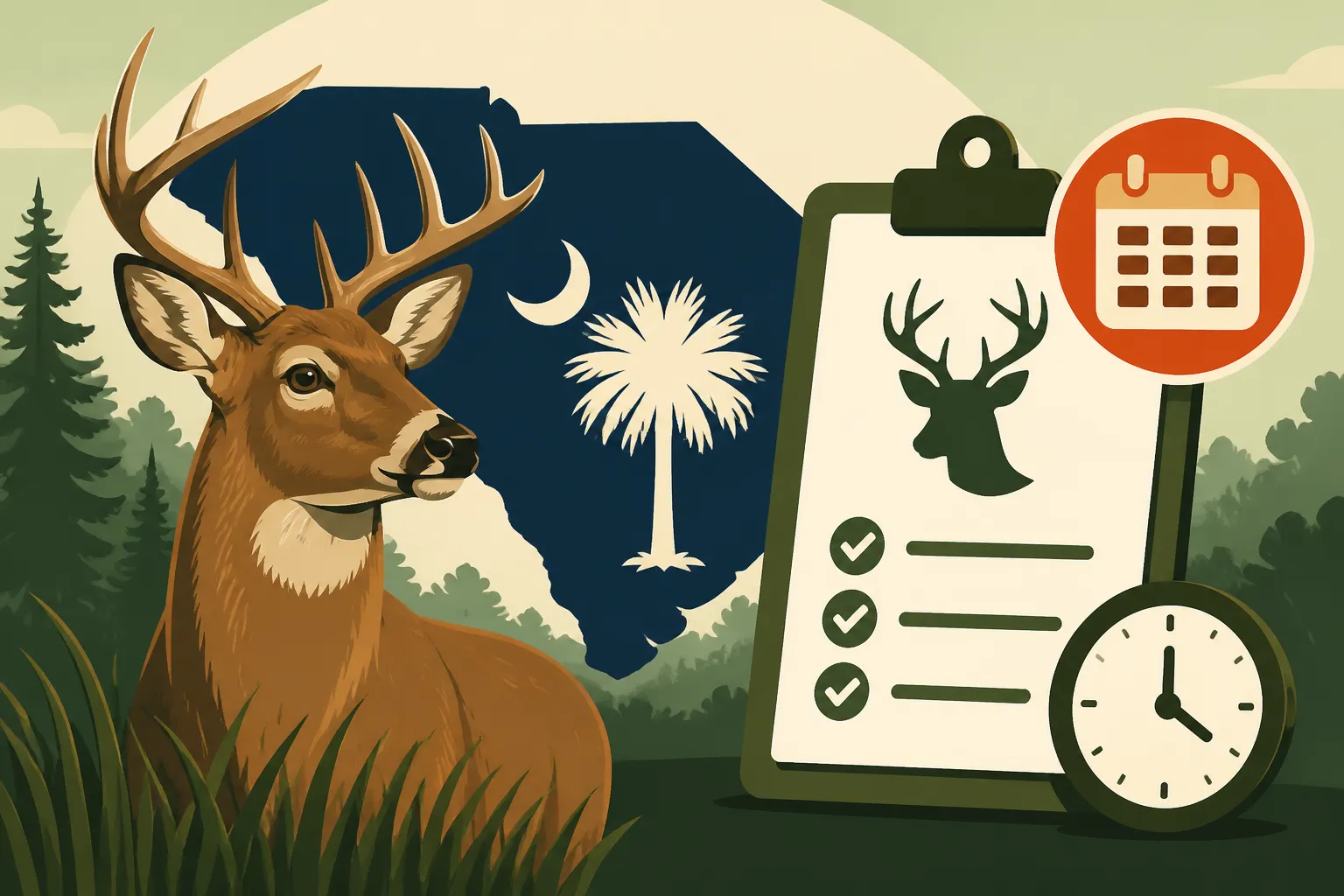
The South Carolina Deer Reporting Deadline
Okay, let's talk about something that trips up even seasoned hunters here in South Carolina: the deer reporting deadline. It's one of those crucial details that can easily slip your mind after the adrenaline of a successful hunt, especially when you're tired, it's late, and all you want to do is celebrate and start processing that venison. But ignoring this step, or missing the window, can land you in hot water. This guide is all about demystifying that often-confusing deadline and walking you through exactly what you need to do to stay legal and contribute to responsible wildlife management in the Palmetto State.
Understanding South Carolina's Deer Reporting Requirements
For many of us, the hunt is all about the experience – the crisp morning air, the challenging stalk, the perfect shot. But once that deer is on the ground, a different kind of responsibility kicks in. South Carolina, like most states, has specific rules about reporting your harvest, and these aren't just bureaucratic hurdles.
Why Reporting is So Important for Wildlife Management
Think of every reported deer as a vital piece of a much larger puzzle. The South Carolina Department of Natural Resources (SCDNR) relies heavily on the data submitted by hunters to make informed decisions about our deer herd. Without accurate reporting, they're essentially flying blind. This data helps them:
- Estimate Population Trends: By tracking harvest numbers, SCDNR can get a clearer picture of whether the deer population is stable, growing, or declining in specific regions. This directly influences future bag limits and season lengths. If we want to understand the South Carolina Deer Population Estimate or see the Deer Density by South Carolina Zone, hunter reports are crucial.
- Monitor Herd Health: Unusual patterns in harvest (e.g., a sudden drop in antlered deer, an increase in sick-looking animals) can alert biologists to potential issues like disease outbreaks or habitat degradation.
- Set Seasons and Limits: The zones and bag limits we hunt under, like the rules for South Carolina Statewide Antlered Bag Limit and South Carolina Statewide Antlerless Bag Limit, are directly shaped by the data collected from previous seasons. If reporting drops, or is inaccurate, it impacts everyone's hunting opportunities down the line.
- Track CWD Prevention Efforts: While South Carolina remains CWD-free, reporting helps maintain a robust surveillance program. Understanding harvest locations and numbers is part of the overall strategy to prevent and rapidly detect any potential cases, reinforcing Why South Carolina Stays CWD-Free.
Ultimately, taking a few minutes to accurately report your harvest is a fundamental part of being a responsible conservationist. It's our duty to provide the information necessary to ensure healthy deer populations for generations to come. Skipping this step isn't just a minor infraction; it undermines the very system designed to protect the resources we love.
Who Needs to Report a Harvested Deer?
This is where it gets straightforward: every single hunter, resident or nonresident, regardless of age, who harvests a deer in South Carolina must report it. There are no exceptions for youth hunters, apprentice hunters, or whether you're on private land or a Wildlife Management Area (WMA). If you tag it, you must report it.
Let's break that down a bit:
- Resident Hunters: Whether you've got a comprehensive resident license or just the basics, your responsibility is the same. You're part of the system that helps manage the deer in your home state. To ensure you're covered, make sure you understand all the South Carolina Resident Hunting License Options.
- Nonresident Hunters: Welcome to South Carolina! We're glad to have you, but the rules apply equally. You're expected to contribute to the data collection just like a local. Familiarize yourself with the South Carolina Nonresident Hunting License Options and other regulations before you head afield.
- Youth and Apprentice Hunters: Even if you're hunting under the guidance of a mentor or on a special youth weekend, the deer you harvest still needs to be reported. In fact, it's a great opportunity for mentors to teach the full cycle of ethical hunting, from shot placement to proper reporting.
- Public vs. Private Land: The location of your harvest doesn't change the reporting requirement. A deer taken on your back forty needs to be reported just as much as one from Francis Marion National Forest or a Sumter National Forest tract.
The key takeaway here is absolute universality. If a deer is down and tagged with one of your South Carolina Big Game Permit Requirements tags, the clock is ticking, and reporting is mandatory.
The Critical Reporting Deadline and Process
So, you've successfully harvested a deer. The hard part is over, right? Well, almost. Now comes the important administrative step, and missing this deadline can negate all your careful planning and execution.
The 24-Hour Rule: What It Means for You
This is the golden rule you absolutely need to etch into your memory: all harvested deer in South Carolina must be reported within 24 hours of harvest. Not 25 hours, not when you get around to it tomorrow, but within a full day of the animal being taken. The clock starts ticking the moment that deer is down for good.
This deadline often creates a lot of anxiety and frustration, and for good reason! Here are some common scenarios and how to navigate them:
- Hunting in Remote Areas with No Cell Service: This is arguably the biggest challenge for many hunters in South Carolina's expansive public lands like the Congaree National Park boundary areas or deep in the Francis Marion. You might be miles from a reliable signal, especially in some of the more rugged parts of the upstate while Hunting Blue Ridge Escarpment Ridgelines or even in low-lying coastal swamps.
- The Reality: The 24-hour rule still applies.
- Your Plan: You need to have a strategy. Before you even head out, use a mapping app like GoHunt or onX to identify areas with potential cell coverage near your hunting spot, or along your route home. If you anticipate being deep in a dead zone, plan to drive to the nearest town or known signal hotspot immediately after you're done with field dressing and recovery. This might mean delaying your celebration a bit, but it's essential for compliance. Some hunters even bring a satellite messenger device for emergencies and, in a pinch, to communicate their harvest details to someone who can report for them (though it's always best to report yourself).
- Late-Night Harvests: Imagine you make a successful shot at dusk. By the time you track the deer, field dress it, and get it back to the truck, it could be well past midnight.
- The Reality: The 24-hour clock started when the deer hit the ground, not when you got home.
- Your Plan: Yes, you might need to report in the middle of the night. The Go Outdoors SC app and website are available 24/7. Don't put it off until morning, especially if morning pushes you past that 24-hour mark. It's a quick process, and then you can truly relax.
- Weekend Harvests: There's no reprieve because it's a Saturday or Sunday. SCDNR's reporting systems are fully operational every day of the year.
The key here is proactive planning. Make reporting part of your post-harvest routine. Before you even think about hauling that deer to the processor or hanging it in the cooler, get it reported.
Step-by-Step: Reporting Your Deer
Thankfully, South Carolina has made deer reporting fairly user-friendly, offering a few different methods to accommodate various situations. The most popular and convenient options are via the Go Outdoors SC app or website.
Here's how it generally works:
-
Via the Go Outdoors SC App (Recommended):
- Download and Log In: First things first, ensure you have the "Go Outdoors SC" app downloaded on your smartphone or tablet and that you're logged in before you head out hunting. This way, if you have limited signal at the moment of truth, at least the app is ready.
- Navigate to Report Harvest: Once logged in, look for a "Report Harvest" or similar option on the main menu.
- Select Species and Tag: Choose "Deer" as the species. The app should then prompt you to select the specific deer tag number you used from your purchased tags. Remember, you should have filled out your physical tag with the date and time of kill immediately at the kill site. This physical tag is then affixed to the deer.
- Enter Details: You'll be asked for several pieces of information:
- Sex: Buck or Doe.
- Antler Points: If it's a buck, you'll enter the number of points on each antler (e.g., 4×3 for 7 points total).
- County of Harvest: Select the county where you killed the deer.
- Date and Time of Harvest: Be accurate to the best of your ability.
- Method of Take: Archery, Muzzleloader, Rifle, etc.
- Review and Submit: Double-check all the information you've entered. Mistakes can lead to inaccurate data. Once everything looks correct, hit "Submit."
- Confirmation Number: The app will immediately provide you with a unique confirmation number. WRITE THIS DOWN! Better yet, take a screenshot. This number is your proof that you reported your harvest legally. You can even write it directly on your physical deer tag.
-
Via the Go Outdoors SC Website:
- Access the Website: If you don't have the app or prefer a computer, go to the official SCDNR Go Outdoors SC website (www.dnr.sc.gov/gooutdoors).
- Log In: Use your existing SCDNR customer account credentials.
- Find Reporting Section: Look for "Harvest Reporting" or "Report a Kill" within your online profile.
- Follow Prompts: The process is very similar to the app, guiding you through selecting the species, tag, and entering all the relevant harvest details.
- Confirmation: Just like the app, you'll receive a confirmation number. Print it, screenshot it, or write it down.
-
Via Phone:
- Call the Hotline: SCDNR maintains a dedicated phone number for harvest reporting: 1-800-4-DEER-SC (1-800-433-3772).
- Automated System: This is an automated system that will guide you through the process. Have your license number, tag number, and all the harvest details (species, sex, antler points, county, date/time, method of take) ready before you call.
- Confirmation Number: The system will provide you with a confirmation number at the end of the call. It is absolutely critical that you write this number down accurately. This is your proof of reporting.
No matter which method you choose, accuracy is paramount. A quick, honest report ensures the data is clean and useful for management. This process, along with understanding South Carolina Deer Reporting Requirements, is crucial for every hunter.
Common Pitfalls and Best Practices
Even with clear rules and multiple reporting options, hunters sometimes stumble. Understanding these common pitfalls and adopting best practices can help ensure a smooth, legal hunting season.
Avoiding Penalties for Late or Missing Reports
It’s easy to think of reporting as an afterthought, but it's a serious matter. SCDNR takes harvest reporting very seriously because of its direct impact on wildlife management.
- The Consequences: Failing to report a deer within 24 hours can result in a fine. This isn't a slap on the wrist; these fines can be substantial. Repeated offenses, or intentional non-compliance, could even lead to the suspension or revocation of your hunting privileges. Imagine losing your right to hunt in South Carolina because you forgot to press "submit" on your phone!
- Common Excuses (and why they don't hold up):
- "I was too tired/excited." Valid feelings, but the law doesn't care. Make reporting a non-negotiable part of your post-hunt routine.
- "I didn't have cell service." As discussed, this requires proactive planning. It's your responsibility to find a signal or use the phone line.
- "I forgot." Again, no excuse under the law. Set reminders, use a buddy system, or simply make it the absolute first thing you do after tagging.
- "I figured someone else would report it (like the processor)." Processors are not responsible for reporting your individual harvest. That responsibility falls squarely on the hunter who pulled the trigger or released the arrow.
Think of it this way: you spent hours, days, or even weeks preparing for this hunt. You invested in gear, licenses, and time in the woods. Don't let a simple, five-minute task jeopardize all of that. Always ensure you have your South Carolina deer tag requirements understood and fulfilled before you even head to your stand.
Essential Gear and Habits for Seamless Reporting
The best way to avoid issues with reporting is to be prepared and disciplined. Here's a checklist of gear and habits that will make the process foolproof:
- Charged Phone/Tablet: This seems obvious, but a dead battery is a common culprit. Always carry a portable power bank, especially for longer hunts or if you're Hunting Public Land in South Carolina where charging opportunities are scarce.
- Go Outdoors SC App: Make sure it's downloaded, updated, and you're logged in before you leave home.
- Physical Tags and Pen/Marker: You must fill out and attach your physical tag to the deer immediately at the kill site. This includes the date, time, and county of kill. Always have a waterproof pen or permanent marker that works in cold/wet conditions.
- Signal Planning: This is crucial for anyone hunting outside of areas with guaranteed cell service. Use mapping apps like GoHunt or onX to pinpoint areas of known service, or plot a course to the nearest town. Having a plan for when you don't have service is just as important as having a plan for when you do.
- Post-Harvest Routine Integration: Make reporting the first administrative task after field dressing and tagging. Before you start dragging, before you celebrate too much, get that report in. Incorporate it into your general Field Dressing a Deer in Warm Weather routine. It might be hot and humid, and you might be rushing, but this step needs to be done.
- Buddy System: If you hunt with a partner, agree to remind each other about reporting. A quick "Did you report yet?" can save a lot of headaches.
- Confirmation Number Storage: Once you get that confirmation number, don't just glance at it. Write it directly on your physical tag, take a screenshot, email it to yourself, or write it in a hunting journal. This is your proof.
By making these practices second nature, you'll eliminate stress and ensure you're always in compliance with South Carolina's reporting laws.
Special Considerations and What's Next After Reporting
Beyond the basic steps, there are a few other nuances and important actions to consider once your deer is reported. Understanding these details will round out your knowledge and help you navigate the entire harvest process from start to finish.
Tagging Versus Reporting: Two Separate Steps
This is a point of confusion for many new hunters, and it's absolutely critical to understand the distinction. Tagging and reporting are two distinct, mandatory steps, and neither replaces the other.
-
Tagging: This is the immediate, physical act. The moment you harvest a deer, and before you move it from the kill site, you must physically attach one of your valid deer tags (obtained with your South Carolina Deer Season Structure Explained license and permits) to the animal. On this tag, you need to clearly and legibly write the date, time, and county of harvest. This tag serves as immediate proof of legal harvest if you are encountered by law enforcement in the field. It also helps manage your personal bag limit, as each tag corresponds to one harvested deer. This process is similar to how you would handle Transporting a Tagged Turkey Home, ensuring the game is properly identified.
-
Reporting: This is the digital or phone-based submission of your harvest data to SCDNR. As we've covered, this must happen within 24 hours of the harvest. The information you provide online or over the phone updates the state's official records and ensures your harvest is counted for management purposes.
You cannot skip either step. If you tag the deer but don't report it within 24 hours, you are in violation. If, somehow, you manage to report a deer without having properly tagged it at the kill site, you're also in violation. Both are essential for legal compliance and responsible hunting.
Post-Report Actions: Confirmation and Carcass Handling
Once you've successfully reported your deer and received that precious confirmation number, you're almost home free. But there are still a few things to keep in mind:
- Confirmation is Key: That confirmation number is your legal safety net. Write it on the physical tag that's attached to your deer. Take a photo of it. Keep it with your hunting license information. If a game warden ever questions your harvest, this number is your proof that you followed the law.
- Carcass Transportation: With your deer tagged and reported, you can now legally transport it. The tag, with the confirmation number written on it, should remain affixed to the deer until it reaches its final destination for processing. If you are quartering the deer in the field, keep the tag with the largest portion (typically the head/antlers if present, or a hindquarter). Be aware of the rules about Which Carcass Parts South Carolina Still Allows if you happen to cross state lines, as CWD precautions are serious business. In fact, South Carolina has strict rules about Why You Cannot Bring a Deer Carcass Into South Carolina from other states to prevent CWD introduction.
- What if I Made a Mistake in Reporting? We're all human, and mistakes happen. Maybe you accidentally selected the wrong county, or miscounted a point on an antler. If you realize you've made an error in your report, contact SCDNR immediately. Don't try to submit a new report or ignore it. Call their general information line or find contact information for the wildlife division. Explain the situation clearly, and they will guide you on how to correct the record. It's always better to self-report an error than for it to be discovered later.
- Processing Your Deer: With all the legalities out of the way, you can now focus on preparing your hard-earned venison. Whether you're doing it yourself or taking it to a professional processor, that peace of mind knowing you've followed all the rules makes the entire experience so much more enjoyable.
| Feature | Go Outdoors SC App | Go Outdoors SC Website | Phone (1-800-4-DEER-SC) |
|---|---|---|---|
| Accessibility | Smartphone/Tablet (iOS/Android) | Any device with internet browser | Any phone (landline/cell) |
| Ease of Use | Very user-friendly, guided prompts | User-friendly, guided prompts | Automated, requires careful listening |
| Offline Capability | Can access some features, but internet needed for submission | Requires internet connection for all steps | No internet needed, but phone service required |
| Speed | Quickest method, especially if pre-logged in | Fast, if you have a stable internet connection | Can be slower due to automated menu navigation |
| Confirmation | Instant confirmation number on screen, often via email | Instant confirmation number on screen, often via email | Verbal confirmation number, must write it down |
| Best For | Most hunters, in the field or at camp | Hunters at home or with computer access | Remote areas with phone service but no internet |
Disclaimer
The information provided in this guide is intended for general informational purposes only and is not a substitute for official regulations. Hunting laws and regulations in South Carolina can change. Always consult the most current South Carolina Department of Natural Resources (SCDNR) Hunting & Fishing Regulations guide or visit their official website before participating in any hunting activities. It is the hunter's responsibility to know and abide by all applicable laws and regulations.