Blaze Pink Options Under South Carolina Law
You finally find a hunting vest that fits, in fluorescent pink, and then a buddy at deer camp tells you it will not count as legal safety color. Is he right? Many South Carolina hunters are unsure whether blaze pink satisfies the state’s visibility rules or only orange does. This guide explains how blaze pink fits into South Carolina law, what gear qualifies, and how to stay legal and seen.
How South Carolina’s Visibility Law Works
South Carolina has long required deer, bear and hog hunters using firearms to wear a visible safety color. For decades that color was international orange, often called blaze orange or hunter orange. The goal is simple: make hunters stand out to other hunters while staying relatively invisible to deer, which see color differently than people do.
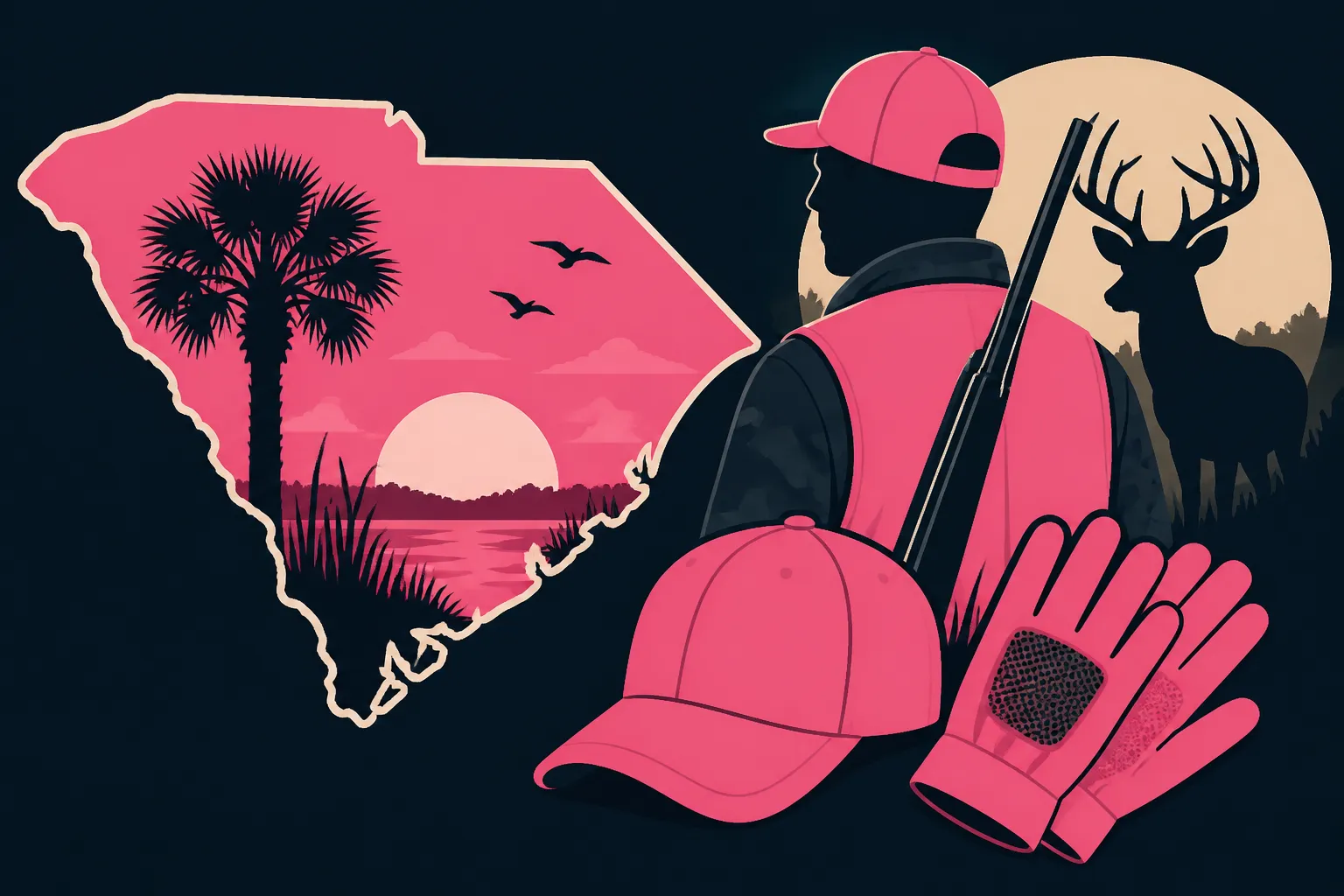
The state later updated its law so that solid fluorescent pink can be worn as an alternative to orange. In practical terms, South Carolina treats the two colors as interchangeable for the visibility requirement. If the law tells you to wear an orange hat, coat or vest, a solid pink hat, coat or vest meets the same rule.
For the basic requirement in more detail, start with South Carolina Blaze Orange Requirements, which covers who must wear safety color and when.
Who the Requirement Applies To
The visibility rule generally covers people hunting deer, bear or feral hogs with firearms, along with anyone accompanying those hunters in the field. The details matter, so here is the general picture:
- Hunters using rifles, shotguns, muzzleloaders or handguns for deer, bear or hogs are expected to wear safety color.
- People along on a hunt with those hunters are also expected to wear it, even if they are not carrying a gun.
- Hunters pursuing other species, such as turkeys, waterfowl or doves, are generally not covered by this particular rule, although many choose to wear orange or pink while walking in and out.
- Archery-only hunting is often treated differently, but bowhunters who hunt during periods when firearms are in use should think carefully about safety. Orange Requirements for Archery Hunters digs into that question.
If you are ever unsure whether your situation is covered, check the current regulations from the South Carolina Department of Natural Resources before the season starts.
What Counts as Solid Visible Color
South Carolina’s rule centers on a hat, coat or vest of solid visible color. That word “solid” is where many hunters get into trouble. Camo patterns printed in orange or pink often do not count as solid color, because the camouflage breaks up the outline that the rule is meant to make visible.
To meet the requirement with pink, look for:
- A cap or hat that is solid fluorescent pink.
- A vest or jacket that is solid fluorescent pink on the outside.
- Gear that is clearly visible from all directions, not only from the front.
For a closer look at the amount of color expected, How Much Blaze Orange South Carolina Requires walks through the minimum garment rules, and the same standard applies to pink.
Why Some Hunters Prefer Blaze Pink
Blaze pink started gaining attention when several states considered it as a way to bring more women into hunting. Over time it became clear that hunters of all kinds like it for a variety of reasons.
Visibility to People Versus Deer
Deer have eyes that are most sensitive to shorter wavelengths, like blue, and they are much less sensitive to the long-wavelength colors in orange. That is why blaze orange looks bright to people but dull to deer. Fluorescent pink works on a similar principle. To deer it likely blends with the background, while to other hunters it pops out of green and brown cover.
Some hunters feel pink stands out even better than orange in certain fall settings, especially when leaves turn orange and yellow in the upstate hardwoods. In the coastal pine woods, where much of the cover stays green, both colors are highly visible.
Practical Reasons to Choose Pink
| Factor | Blaze Orange | Blaze Pink |
|---|---|---|
| Legal for South Carolina visibility rule | Yes, when solid | Yes, when solid |
| Contrast against fall leaves | Can blend with orange foliage | Usually stands out |
| Contrast against green pine cover | Strong | Strong |
| Availability in stores | Very wide | Growing, but narrower |
| Accepted in neighboring states | Widely | Varies by state |
That last row is important. If you also hunt in Georgia, North Carolina or farther away, you need to check each state’s rules separately. Some states accept pink and some still require orange. Planning tools like GoHunt can help you track license and season details when you hunt in multiple states, but always confirm visibility color rules with each state’s wildlife agency.
Concerns Hunters Raise
Some hunters worry that pink is less familiar to others in the woods, so it might not be recognized as safety color right away. In practice, any bright, unnatural color in the woods gets attention. Still, it is a good idea to tell your hunting party if you will be wearing pink, especially on deer drives or group hunts where people need to keep track of each other’s positions. If you hunt dog drives on large club leases, consider whether everyone in the group understands the color.
Choosing and Using Blaze Pink Gear in South Carolina
Getting the right gear and using it well matters more than the color itself.
Finding Gear That Qualifies
Blaze pink gear is easier to find than it once was, but selection can still be thin compared with orange. Look for vests, caps, beanies and jackets labeled fluorescent or blaze pink. Avoid pink camouflage if you need it to satisfy the legal requirement, because patterned gear may not qualify as solid color.
For more ideas on where to shop and what to look for, Blaze Pink Gear and Where to Find It has practical tips. If you are deciding between a full coat and a simple vest, Blaze Orange Jackets Versus Vests covers the trade-offs, and the same logic applies to pink.
Staying Comfortable in Warm Weather
South Carolina’s deer season opens early, and the Lowcountry can still be hot and humid in August and September. A heavy jacket is the last thing you want. Mesh vests in solid pink or orange let air move while still meeting the requirement. Pair them with lightweight, breathable clothing underneath. Warm-Weather Clothing for South Carolina Hunters goes deeper on staying cool.
Treestands and Safety Color
Many South Carolina deer hunters hunt from treestands, and safety color still matters there. Hunters walking to and from stands are moving through the woods during low light, and that is when visibility counts most. Keep your vest or hat on while walking in and out, and consider leaving it on in the stand too.
Treestand safety goes beyond color. Wear a full-body harness and use a lifeline whenever you climb. See Safety Harnesses and Lifelines for setup advice.
Common Mistakes With Pink Gear
Most problems with blaze pink are not about the color itself. They come from gear choices that look close enough but do not meet the spirit or letter of the rule. These are the mistakes that come up most often in deer camp conversations:
- Wearing a pink camo pattern. It looks bright in the store, but a broken pattern is exactly what the solid color rule is meant to prevent. If your vest has leaves, branches or digital blocks printed on it, assume it may not count.
- Covering the color. A pink vest worn under an open rain jacket or a backpack that covers most of the back panel defeats the purpose. Wear the safety garment as the outer layer.
- Relying on a faded hat. Fluorescent dyes break down with sun and repeated washing. A cap that has spent three seasons on the dashboard may now be a dull salmon color. Replace gear when it no longer looks vivid.
- Only wearing a small patch. A pink armband or a strip of tape on a pack is not a hat, coat or vest. Stick with full garments.
- Forgetting the walk out. Many hunters take off the vest in the stand and forget to put it back on before climbing down at dark. Make putting it on part of your routine before you unbuckle your harness.
How Pink Fits Into a Typical South Carolina Deer Season
South Carolina’s deer seasons are long compared with many states, and they vary by game zone. Coastal zones open earlier in the late summer, while the upstate mountain zone opens later. That means safety color is part of your routine for months, not just a few weekends.
Picture a typical season for a Lowcountry hunter. In late summer, mornings are already humid and buggy, and a solid pink mesh vest over a light shirt is the most comfortable way to stay legal. By October, hunters are spread across clubs and public land, and drives become more common, so visibility matters even more. Later in the year, cool mornings call for a heavier pink jacket or a pink beanie under a hood. The rule stays the same the whole time, but the garment that makes the most sense changes with the weather. For a broader view of how the seasons fit together, see South Carolina Deer Season Structure Explained.
Hunters on public land face the most traffic from other people, so a bright, unmistakable garment is especially valuable there. If you hunt wildlife management areas, read the specific area rules too, since some areas carry their own requirements on top of the statewide law.
A Simple Pre-Hunt Checklist
- Confirm whether your hunt requires safety color under current South Carolina rules.
- Choose a hat, vest or coat in solid fluorescent orange or pink.
- Make sure the color is visible from the front, back and sides.
- Tell your hunting partners what color you will be wearing.
- Keep the gear on while walking to and from your stand or blind.
- If you hunt in another state on the same trip, check that state’s color rules.
Blaze Pink and Hunting Across State Lines
Many South Carolina hunters travel. Some hunt deer in Georgia, turkeys in North Carolina, or elk out West. Each state sets its own visibility rules, so a vest that is legal at home may not be legal elsewhere.
Planning Ahead
Before any out-of-state trip, look up that state’s hunter visibility requirements alongside license and tag rules. GoHunt and similar planning services can help organize your research when you apply for draws or plan multi-state seasons. Use them as a starting point, and then confirm the visibility rules directly with the state agency, because that is where the legal requirement lives.
Bringing Both Colors
Plenty of hunters simply keep a blaze orange cap and vest in the truck along with their pink gear. That way, if they cross into a state that requires orange, they are covered. It is cheap insurance against a citation and, more importantly, a safety step.
Teaching New Hunters
If you are taking a youth or first-time hunter afield, use the conversation about safety color to explain why it matters. The requirement is about being seen by other hunters, not about fashion. South Carolina Hunter Education Requirements covers what new hunters need before heading out. GoHunt can be helpful for older youth who want to learn how to research seasons themselves, but the basic lesson is universal: wear your safety color and wear it properly.
Questions Hunters Ask About Blaze Pink
Can I mix orange and pink? Yes, as long as the garment that satisfies the rule is solid and visible. Plenty of hunters wear a pink vest with an orange cap, or the other way around. The key is that the required hat, coat or vest is in one of the accepted solid colors.
Does a pink backpack count? A pack is not one of the garments named in the rule, so do not rely on it. Treat a bright pack as a bonus, not as your legal safety color.
Is pink required for anyone? No. Pink is an option, not a mandate. Hunters who prefer orange can keep wearing it.
Do landowners or clubs set their own rules? Many hunting clubs set safety rules that go beyond state law, such as requiring orange or pink in stands during drives. Those club rules are a matter of membership, not state law, but following them keeps everyone safer and keeps you welcome at camp.
Whatever color you choose, the goal is the same: making sure every hunter in the woods can see you clearly and go home safely at the end of the day.
Disclaimer
This article is for general informational purposes only and does not constitute professional advice. Laws, prices and regulations vary by location and change over time. Consult a qualified professional for guidance on your specific situation.