Which Carcass Parts South Carolina Still Allows
It's incredibly frustrating when you've just had a successful hunt out of state, maybe even harvested a buck of a lifetime, only to realize the complex web of regulations that dictate what you can and can't bring back across state lines. The last thing any hunter wants is to accidentally break a rule meant to protect our wildlife. This guide is here to untangle the specifics of South Carolina's carcass import restrictions, focusing on exactly which deer parts you're allowed to bring into the state, and why these rules are so vital for the health of our deer herd.
The Grave Threat of Chronic Wasting Disease and Carcass Import Rules
Let's be real, nobody enjoys more regulations, especially when they add extra steps to an already demanding hunt. But when it comes to Chronic Wasting Disease (CWD), these rules are absolutely critical, and South Carolina takes them very seriously. The fear isn't just theoretical; it's a clear and present danger to our cherished deer population.
Understanding CWD and Its Relentless Spread
CWD is a neurological disease that affects cervids – that's deer, elk, moose, and reindeer. It's caused by abnormal proteins called prions, which slowly attack the animal's brain and nervous system, eventually leading to death. Imagine a deer that starts losing weight drastically, stumbling, acting lethargic, and developing an insatiable thirst. It's a truly horrifying disease, often called "zombie deer disease" by those unfamiliar with it, and once an animal contracts it, there's no cure.
The real kicker is how it spreads: through direct animal-to-animal contact, but also indirectly through contaminated environments. Prions can persist in soil, plants, and even water for years. This means an infected carcass left in the wild, or even infected fluids like urine and saliva, can contaminate an area, creating a long-term risk. What makes it even more insidious is that infected animals might not show symptoms for months or even years, all while shedding prions and spreading the disease. This silent spread is why states are so vigilant.
South Carolina's Unwavering Proactive Stance
South Carolina has been incredibly fortunate to remain CWD-free, and the South Carolina Department of Natural Resources (SCDNR) is absolutely determined to keep it that way. Their approach is entirely proactive, aiming to prevent the disease from ever establishing a foothold here. This isn't just about protecting our deer; it's about protecting our hunting heritage, our outdoor economy, and the ecological balance of our state. The economic impact alone if CWD were to arrive would be devastating, affecting everything from hunting license sales to local businesses that rely on hunters.
The import restrictions on deer carcasses, therefore, aren't just arbitrary rules. They are a direct, science-backed measure to limit the primary pathway for CWD introduction: bringing infected animal parts from a CWD-positive area into a CWD-free area. Every state surrounding South Carolina has CWD cases in their deer populations, which only heightens the need for strict preventative measures here. You can learn more about Why South Carolina Stays CWD-Free in our detailed guide, which explains the science behind these critical efforts.
What Deer Carcass Parts You Can Bring into South Carolina
So, you've harvested a deer out of state, and you want to bring home your hard-earned venison or that impressive rack. The good news is, you absolutely can, but it requires careful preparation and adherence to specific rules designed to minimize CWD risk. The key is to avoid bringing in parts that are known to harbor CWD prions.
The "Clean" Parts Rule: Boned-Out Meat, Clean Skulls, and More
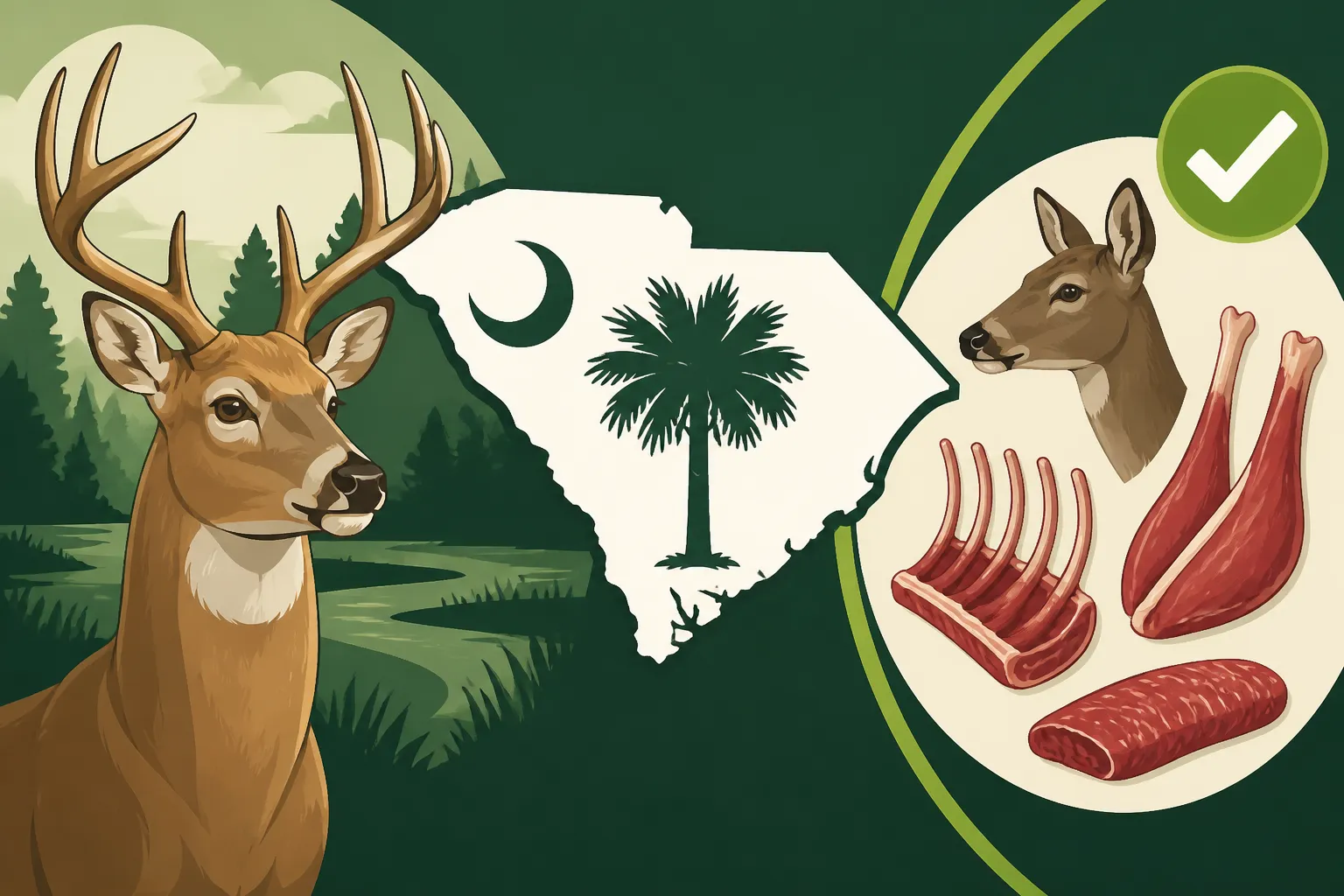
South Carolina's regulations are pretty clear: you can bring in deer carcass parts as long as they pose a low risk for CWD transmission. This generally means parts that are free of high-risk tissues. The most common and widely accepted parts include:
- Boned-out meat: This is the most crucial part for most hunters. All meat must be deboned, meaning it's completely separated from the bone, spinal cord, and any other nervous tissue. Think of it as ready-to-process venison.
- Cleaned skull plates and antlers: If you want to keep the antlers, they must be attached to a skull plate that is completely free of brain tissue. This means the skull cap needs to be thoroughly cleaned. If you're bringing in shed antlers, there's generally no restriction, as these are naturally separated from the skull.
- Hides/capes: A hide or cape is permissible, provided there's no skull or spinal cord tissue attached. It's all about ensuring only the lowest-risk material crosses the border.
- Taxidermy mounts: Fully processed and preserved taxidermy mounts are allowed, as the preservation process typically eliminates any risky biological material.
- Cleaned teeth: Individual teeth, especially if used for trophies or jewelry, are generally fine once thoroughly cleaned.
These rules reflect the scientific understanding that CWD prions are most concentrated in certain tissues, primarily the brain, spinal cord, lymph nodes, and spleen. By removing these high-risk tissues, the chance of inadvertently introducing CWD is drastically reduced.
Processing and Preparation Best Practices
To ensure you're compliant, proper processing and preparation at the harvest site are paramount. This isn't something you can just wing; it requires a systematic approach.
- Boned-out Meat: After field dressing, carefully debone all meat from the carcass. This means using a good, sharp Field Dressing Knives Worth Carrying and a steady hand. Separate all muscle tissue from the bone. Discard the bones, spinal column, and any large nerve clusters in the state where the animal was harvested. Pack the deboned meat in a cooler with ice, making sure it stays cool, especially in warmer climates. For hunters traveling from states with CWD, this is the only way to legally transport the meat back to South Carolina. Many hunters opt for the gutless method in the field, which can significantly simplify this process and minimize contact with internal organs.
- Skull Plates and Antlers: If you want to keep the skull plate and antlers, you'll need to meticulously clean the skull cap. This involves removing all brain tissue, soft tissue, and membranes. Boiling or pressure washing the skull cap until it's bone-dry and free of any organic material is the standard practice. Once it's truly clean and dry, it can be transported. If you’re not confident doing this yourself, consider taking it to a local processor or taxidermist in the state where you harvested the deer.
- Hides/Capes: When preparing a hide or cape for transport, ensure all muscle tissue and any spinal column fragments are removed. Thoroughly salt the hide for preservation if you plan to transport it immediately, or freeze it solid. Again, the goal is to have no high-risk nervous tissue accompanying the hide.
Here’s a quick overview of allowed parts and their preparation:
| Allowed Carcass Part | Required Preparation for Import into South Carolina |
|---|---|
| Boned-out Meat | Completely separated from bone, spinal cord, and nervous tissue. |
| Cleaned Skull Plate | All brain tissue and soft tissue meticulously removed. Bone must be clean and dry. |
| Antlers (loose) | No restrictions (if shed or separated from skull plate). |
| Hides/Capes | Free of skull, brain, spinal cord, and other nervous tissue. Skinned and salted or frozen. |
| Finished Taxidermy | Fully processed and preserved mount. |
| Cleaned Teeth | Thoroughly cleaned and free of any tissue. |
For those looking to streamline their field processing, especially for larger animals, understanding methods like Bone Saws Versus the Gutless Method can be incredibly helpful for efficient deboning and ensuring compliance with these rules.
Tagging and Documentation
While not directly related to carcass parts specifically, it's crucial to remember that even allowed parts must be properly documented. Always ensure your deer is legally tagged according to the regulations of the state you harvested it in. Keep your license, tags, and any harvest permits readily accessible. While South Carolina's import rules are primarily about preventing CWD, game wardens will still verify the legality of your harvest if they inspect your vehicle. Using tools like the Go Outdoors SC app can help you keep track of your permits and licenses, which is always a good practice.
The Carcass Parts You Cannot Bring Into South Carolina
Understanding what is allowed helps, but it’s equally important to be crystal clear about what is absolutely prohibited from entering South Carolina. These restrictions are in place because certain parts are known to be significant vectors for CWD transmission. Violating these rules is not only risky for our deer herd but can also lead to serious legal consequences.
High-Risk Tissues Identified and Prohibited
The SCDNR specifically bans the import of whole carcasses or any parts that contain significant amounts of high-risk tissues. These are the parts where CWD prions are most concentrated in an infected animal. The list includes:
- Brain tissue: This is a major concern, as the brain is one of the primary organs affected by CWD. Even small fragments can pose a risk.
- Spinal cord: Running down the vertebral column, the spinal cord is another high-concentration area for prions. This is why boning out meat is so critical—to separate it entirely from the spine.
- Eyes: Ocular tissue can also harbor prions.
- Lymph nodes: These small glands, found throughout the body, are part of the immune system and can accumulate prions.
- Spleen: Another organ where CWD prions can concentrate.
- Tonsils: Like lymph nodes, tonsils are lymphoid tissues that can contain prions.
If any of these tissues are present, the part is considered high-risk and is not allowed into South Carolina. This means you cannot bring in a deer head with the brain intact, or a full spinal column, regardless of whether it's attached to meat or not. These restrictions are a cornerstone of How South Carolina Guards Against CWD and are taken very seriously by wildlife officials.
Whole Carcasses and Unprocessed Parts are Generally Forbidden
The overarching rule is simple: if you're hunting outside of South Carolina, you cannot bring a whole deer carcass back into the state. This includes:
- Whole, unskinned carcasses: This is the most common violation. A deer "in the round" or with organs still inside is absolutely prohibited.
- Carcasses with bones and high-risk tissues intact: Even if gutted, if the bones, spinal cord, and skull are still attached to the meat, it's not allowed. The deboning process is non-negotiable for meat.
- Deer heads with brain matter: Unless the skull is completely cleaned as described earlier, a deer head with brain tissue intact is prohibited. This applies to capes as well—they must be free of skull and spinal tissue.
Essentially, if you haven't processed the animal down to its lowest-risk components, it cannot cross into South Carolina from another state. The only exception often considered are areas immediately adjacent to South Carolina in states like Georgia or North Carolina, but even then, the general rule is to follow the strictest guidelines. It’s always best to verify the latest regulations directly from the SCDNR website, or consult resources such as GoHunt, especially if you're hunting near the state border.
Consequences of Non-Compliance
Ignoring these regulations isn't just a minor infraction; it carries significant penalties. If you are caught attempting to import prohibited deer carcass parts into South Carolina, you could face:
- Fines: These can range from hundreds to thousands of dollars, depending on the severity and nature of the violation.
- Confiscation of game: Your harvested deer, and potentially your hunting equipment, could be confiscated.
- Loss of hunting privileges: You could lose your hunting license and privileges in South Carolina for a period of time, or even permanently.
- Potential jail time: In extreme cases, or for repeat offenders, jail time could be a possibility.
These aren't scare tactics; they're real consequences for actions that put the entire state's deer herd at risk. Wildlife agencies don't want to fine hunters; they want to prevent CWD. But they will enforce the law to protect our resources. This commitment to prevention is why the SCDNR also has a robust South Carolina CWD Surveillance Program, regularly testing deer within the state even without a detected case.
Practical Advice for Out-of-State Hunters Visiting South Carolina
Navigating state-specific regulations can feel like a maze, but with a little preparation, you can ensure a smooth process when bringing your harvest home to South Carolina. The key is to think ahead and understand that the rules are there to protect the very wildlife we all cherish.
Field Dressing and Quartering in the Field
The most effective way to comply with South Carolina's import regulations is to process your deer right where you harvest it. This means more than just gutting it; it means breaking the animal down into its constituent, legal parts.
- Start with good tools: A sharp field dressing knife is essential, but also consider a bone saw, game bags, and a sturdy tarp or ground cloth to keep things clean. Having a small hacksaw or a compact bone saw makes quick work of separating skull plates and deboning sections.
- Debone thoroughly: Focus on removing all meat from the bone. This includes backstraps, tenderloins, hams, and shoulders. Leave the spinal column, rib cage, and skull (unless cleaned) behind. This is where the gutless method really shines, allowing you to remove muscle groups without disturbing internal organs much, ensuring minimal contact with high-risk tissues.
- Clean the skull plate: If you want to keep the antlers, saw off the skull plate, leaving just enough skull to hold the antlers. Then, meticulously scrape and clean all brain matter and soft tissue. A stiff brush and water work wonders. Many hunters carry a small wire brush for this specific task.
- Use quality game bags: Once deboned, place the meat in breathable game bags. This protects the meat from flies, dirt, and keeps it cool more effectively than just throwing it in a cooler. Game bags are a crucial part of your Meat Care Gear for South Carolina Hunters, especially in warmer conditions.
- Cool quickly: Get the deboned meat on ice as soon as possible. Layer ice directly on the meat in a clean cooler. Drain the water daily and replenish the ice to keep the meat safe for transport.
Remember, the goal is to leave all CWD high-risk materials in the state where the animal was harvested. This might mean extra work in the field, but it's far better than facing fines or the devastating prospect of CWD entering South Carolina.
Utilizing Local Processors and Taxidermists
If the thought of deboning a deer in the field or meticulously cleaning a skull plate fills you with dread, don't despair! A simpler, albeit potentially more expensive, solution is to use local professionals in the state where you harvested your deer.
- Deer processors: Many areas with robust deer hunting have local processors who can debone and package your meat for you. They are usually well-versed in interstate transport regulations and can ensure your meat is prepared legally for your journey back to South Carolina. They might even have facilities for proper disposal of the prohibited carcass parts.
- Taxidermists: If you're after a shoulder mount, a taxidermist in the harvest state can legally remove the hide and skull, clean the skull plate, and prepare your cape for transport. They'll ensure all brain and nervous tissue is removed, leaving you with a legally importable cape and antlers. This eliminates the guesswork and ensures compliance.
This option is particularly helpful for non-resident hunters who might not have the space or equipment for extensive field processing, or who are simply unfamiliar with the nuances of another state's regulations.
Staying Informed with SCDNR and Digital Resources
Wildlife regulations can change, and it's always the hunter's responsibility to know the most current rules. The best source for up-to-date information is always the official SCDNR website.
- Check the SCDNR website: Before every out-of-state hunt, visit the SCDNR website and specifically look for sections on CWD and carcass import restrictions. They often have dedicated pages or FAQs that address these questions directly.
- Go Outdoors SC: The official Go Outdoors SC platform is an excellent resource for purchasing licenses and permits, but it also often provides links to current regulations and advisories. Many hunters also find platforms like GoHunt invaluable for keeping up-to-date with current hunting regulations, season dates, and even localized CWD information for various states.
- Call for clarity: If you have any doubts whatsoever, pick up the phone and call the SCDNR customer service or enforcement division. It’s always better to ask a question than to inadvertently break a law.
By being proactive, diligent, and utilizing available resources, you can enjoy your out-of-state hunts without the stress of worrying about compliance when you return to South Carolina. Protecting our natural resources, like South Carolina’s healthy deer herd, is a responsibility we all share as hunters.
Disclaimer
The information provided in this guide is for general informational purposes only and does not constitute legal advice. Hunting regulations, including those related to carcass import, can change frequently. It is the sole responsibility of the hunter to verify and comply with all current South Carolina Department of Natural Resources (SCDNR) regulations and laws before transporting any harvested game across state lines. Failure to do so may result in fines, penalties, and confiscation of game.