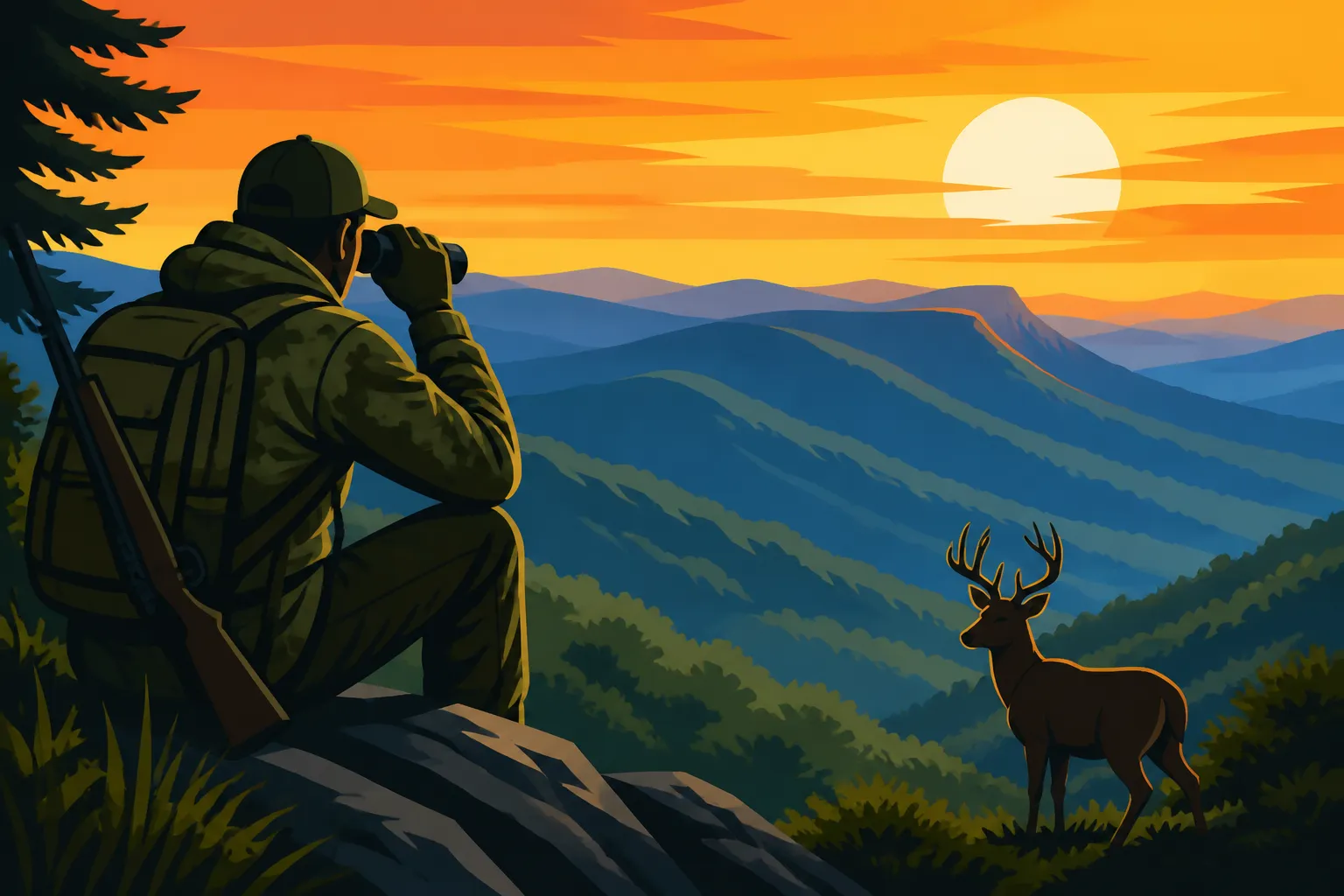
Hunting Blue Ridge Escarpment Ridgelines
Hunting the steep, unforgiving terrain of South Carolina's Blue Ridge Escarpment can feel like a whole different sport compared to chasing whitetails in the Lowcountry swamps or the flatland pine plantations. The abrupt changes in elevation, the fickle mountain winds, and deer that seem to vanish into thin air can be incredibly frustrating. This comprehensive guide will walk you through the unique challenges and rewarding strategies for successfully hunting the rugged ridgelines of the South Carolina Upstate, helping you turn those frustrations into filled tags.
Understanding the Unique Terrain of the Escarpment
The Blue Ridge Escarpment isn't just "hills" – it's a dramatic transition zone where the Appalachian Mountains plunge into the Piedmont. This creates a landscape unlike any other in South Carolina, and understanding its distinct features is paramount to finding success. You're dealing with incredible elevation changes in a short distance, which translates to a specific type of deer movement and habitat.
The Steep Slopes and Coves
When you're climbing up these mountains, you'll quickly realize that the word "steep" almost feels like an understatement. We're talking about inclines that will test your lung capacity and quad strength, and descents that make you wish you had a grappling hook. These steep slopes create natural barriers and travel corridors for deer. They'll often traverse these contours rather than climb straight up or down unless pressured.
Interspersed within these steep slopes are what we call "coves" – pockets of flatter, often richer ground tucked into the mountainside. These coves can be goldmines for deer, offering diverse vegetation, more moisture, and a sense of security. Deer will bed in these sheltered spots, feeding on acorns, mountain laurel, or other browse that might be scarcer on the exposed ridgetops. Recognizing these micro-habitats on your topographical maps and then on the ground is crucial. You might find a small spring or a patch of mature oaks hidden within a cove that holds deer consistently, especially during the later parts of the season when other food sources are depleted.
Reading the Topography for Deer Movement
Deer in the mountains are masters of efficiency. They aren't going to waste energy if they don't have to. This means they'll use the terrain to their advantage, and so should you. Ridgelines themselves are prime travel routes, acting like highways connecting different areas. Bucks, especially, will often cruise ridgelines when searching for does or when moving between bedding and feeding areas. Saddles, those dips or low points along a ridge, are absolute magnets. Think of them as natural intersections where deer from different sides of the mountain converge. These are classic ambush points.
Beyond the ridgelines and saddles, look for benches – flatter strips of land along a steep hillside. These benches are often hidden and provide excellent bedding cover or secondary travel routes. They're like secret trails cut into the mountain, often overlooked by less experienced hunters. When you're Reading a Ridge for Upstate Deer, these subtle topographical features are what you need to key in on. Pay attention to how the elevation changes, where natural funnels are created by intersecting draws or rock outcrops, and how these features might guide a deer's path.
Water Sources and Natural Funnels
Water is life, and in mountainous terrain, it can dictate deer movement just as much as food or cover. Springs, small creeks, and seepages are invaluable, especially during dry spells. Deer will often travel along the drainages where these water sources are found. These drainages also create natural funnels, forcing deer into narrower areas as they move up and down the mountain.
Understanding how water shapes the landscape helps you predict where deer will move. A small seep on a hillside might not seem significant to us, but it could be a daily stop for deer in a dry period. Similarly, a steep-sided creek bottom funnels deer towards easier crossings, creating pinch points that can be fantastic stand locations. During your Scouting South Carolina Public Land Before Season, make note of every visible water source and consider how deer would access it.
Scouting Strategies for Upstate Ridgelines
Effective scouting is the bedrock of success in the challenging terrain of the Blue Ridge Escarpment. You can't just walk in on opening morning and expect to connect. It requires time, effort, and a keen eye for detail, both from afar and on the ground.
Utilizing Topo Maps and Aerial Imagery
Before you ever set foot on the mountain, spend considerable time with topographical maps and aerial imagery. Tools like GoHunt or other popular mapping apps are indispensable here. Look for those distinct ridgelines, saddles, benches, and coves we just discussed. Identify potential bedding areas (thicker cover, south-facing slopes for warmth) and feeding areas (oak flats, patches of browse). Focus on transition zones – where a steep slope levels out, where two different types of timber meet, or where a ridge narrows into a saddle.
Aerial imagery, especially in high resolution, can reveal so much more than just topo lines. You can often see changes in timber density, clearcuts, old logging roads, and even faint deer trails. Layering these two types of maps is incredibly powerful. Mark potential stand sites, travel corridors, and bedding areas on your digital map before you ever leave home. This initial "e-scouting" phase saves countless hours of aimless hiking. Remember, the goal is to identify high-probability areas for deer activity and then confirm them on the ground.
Identifying Bedding Areas and Travel Corridors
Once you're on the mountain, your primary objective is to confirm what you saw on the maps and find fresh sign. Deer in the mountains often bed on benches or in thick cover along ridgelines, allowing them to see or smell danger approaching from below. South-facing slopes are often preferred in colder weather for their warmth. Look for beds – flattened areas in the leaves or pine needles – and pay attention to their orientation. A bed with a good view downwind is a classic setup for a mature buck.
Travel corridors will often be worn trails, but in the mountains, they might be less defined. Look for subtle scrapes, rubs, and tracks along the natural contours of the land, especially between suspected bedding and feeding areas. Old logging roads, even if overgrown, can become deer superhighways. These corridors will lead you to the saddles, creek crossings, and benches that deer habitually use. Don't just focus on the obvious; sometimes the faint trail skirting a sheer drop-off is exactly where a cagey old buck is moving.
Interpreting Scrapes and Rub Lines on Hillsides
Scrapes and rub lines are like deer diaries, telling you who's been where and when. On the Escarpment, these signs might look a little different. Rubs on steep hillsides often indicate a buck working his way along a contour, rather than just rubbing casually. Larger rubs on stout trees often signal a more dominant buck. During the peak of the rut, finding a scrape line along a ridgeline or through a saddle is a huge indicator that a buck is actively patrolling that area.
However, interpreting these signs requires context. An old rub from last year is interesting but doesn't tell you about current activity. Freshly broken branches, shiny sap on rubs, and moist, recently pawed-out scrapes are what you're looking for. Pay particular attention to "community scrapes" – larger, repeatedly worked scrapes that multiple deer visit. These are goldmines. Understanding Hunting the Rut in the Upstate Zone by observing these signs is critical for timing your hunts.
Tactical Approaches to Hunting Escarpment Deer
Once you've done your homework and found promising spots, it's time to put boots on the ground with a solid hunting plan. The dynamic nature of mountain hunting means you need adaptable tactics.
Still-Hunting the Ridgelines and Saddles
Still-hunting is perhaps the most effective method for covering ground and encountering deer in the Escarpment. It's not about sitting and waiting; it's about slow, deliberate movement. You move a few steps, stop, scan every shadow and tree trunk, and then repeat. The key is to be constantly aware of your surroundings and the wind. Focus on moving into the wind or with a crosswind, always thinking about how a deer might detect you.
Target the ridgelines and saddles, especially during the early morning and late afternoon when deer are most likely to be on the move. As you approach a saddle, slow down even more. Scan both sides of the ridge for deer moving through. Use the terrain to your advantage, slipping silently along benches or behind thickets. This method demands patience and intense focus, but it allows you to adapt to changing deer movement and capitalize on unexpected encounters. It's a truly immersive way to experience Still-Hunting Sumter Forest Ridges, even if the terrain is more rugged on the Escarpment.
Treestand and Ground Blind Considerations
While still-hunting is great for covering ground, sometimes a static ambush point is exactly what you need, especially in those high-traffic saddles or coves. When setting up a treestand in the mountains, consider accessibility and concealment. You might have to pack in lightweight climbing sticks and a compact stand, or even a saddle hunting setup. Remember that trees on steep slopes can be tricky to climb safely. Always prioritize safety, and ensure your stand is level and secure.
Ground blinds can also be effective, particularly if you find a strategic pinch point or a cluster of oaks in a cove where deer are actively feeding. You'll need to brush them in well to break up your outline, as deer in these areas are often accustomed to spotting movement. However, both treestands and ground blinds require careful thought about wind direction and thermal currents, which behave uniquely in mountain environments. These setups are great for targeting specific areas you've pinpointed through extensive scouting, much like setting up Treestand Setups in Francis Marion National Forest, but with more vertical challenges. For a general approach, learn more about Using a Ground Blind on South Carolina Public Land.
Playing the Wind and Thermals
This is arguably the most critical factor in mountain hunting, and it's also the most complex. Wind on a flat map is easy to predict, but in the mountains, thermals – rising and falling air currents – add another layer of challenge. In the morning, as the sun warms the earth, thermals rise, carrying your scent uphill. In the evening, as the air cools, thermals fall, carrying your scent downhill. The stronger the sun, the stronger the thermal. Add in prevailing winds, and you've got a constantly shifting puzzle.
Your best bet is often to set up in a location where the prevailing wind and thermal combine to carry your scent away from where you expect deer to approach. For example, in the morning, you might want to be above where deer are likely to be, so your rising scent doesn't spook them. In the evening, being below them might be better. Constantly check the wind with a wind checker or a pinch of milkweed fluff. Understanding Wind and Thermals on an Upstate Ridge is not just a suggestion, it's a necessity for success in this demanding environment.
Navigating the Challenges of Mountain Hunting
The Blue Ridge Escarpment is beautiful, but it's not for the faint of heart. Being prepared for the physical demands, choosing the right gear, and having a safety plan are just as important as knowing where the deer are.
Physical Demands and Preparation
Let's be real: hunting these ridgelines is a workout. You'll be climbing steep grades, navigating uneven terrain, and potentially dragging a deer out of challenging spots. This isn't a sedentary activity. Proper physical conditioning before the season is non-negotiable. Start hiking with a loaded pack, climb stairs, and generally get your body ready for the strain. You'll thank yourself when you're huffing up that last ridge to your stand.
Hydration and nutrition are also key. Carry plenty of water, especially during the warmer early season hunts (don't underestimate the physical toll of Warm-Weather Sitting Strategy in South Carolina). Pack energy-dense snacks to keep your stamina up throughout the day. Remember, you’re not just hunting for a few hours; you might be in the woods from dawn till dusk, miles from your vehicle.
Gear Selection for Rugged Environments
Your gear needs to be up to the task. Lightweight, durable clothing that wicks moisture is essential. Layering is crucial because temperatures can fluctuate wildly between the valleys and the ridgetops, and throughout the day. Good quality hiking boots with excellent ankle support are a must to prevent injuries on uneven ground. Look for boots that are waterproof but breathable.
A reliable pack is also indispensable. You'll need it to carry water, food, extra layers, first-aid, and potentially a harvested animal. Think about something like the types of Packs Built for a Sumter Forest Day Hunt, but perhaps with even more emphasis on stability and weight distribution for mountain climbs. Optics, like binoculars, are crucial for spotting deer from a distance without giving away your position, helping you glass large sections of terrain effectively. Don't forget other essentials like a headlamp, knife, fire starter, and navigation tools. This gear selection is similar to what you might consider for Bear Hunting Gear in the Upstate Mountains, given the shared environment.
| Essential Mountain Hunting Gear | Purpose | Considerations |
|---|---|---|
| Layered Clothing System | Temperature regulation, moisture wicking | Synthetic or merino wool, avoid cotton |
| Sturdy Hiking Boots | Ankle support, traction, comfort | Waterproof, broken-in, aggressive tread |
| Comfortable Backpack | Carrying essentials, game meat | Hydration bladder compatible, good suspension |
| Navigation Tools | Staying found, planning routes | GPS unit (dedicated or phone app), compass, map |
| First-Aid Kit | Addressing injuries | Comprehensive, accessible, waterproof container |
| Water and Snacks | Hydration, energy | Electrolytes, high-calorie, easily digestible |
| Binoculars | Scouting from a distance | 8×42 or 10×42, good low-light performance |
| Headlamp | Walking in/out in the dark | Red light option for stealth |
| Wind Checker | Identifying wind direction, thermals | Powder, milkweed fluff |
| Knife/Game Bags | Field dressing, meat care | Sharp, clean, durable bags for transport |
Safety and Emergency Planning
Hunting the Escarpment means you're often in remote areas, sometimes without cell service. A fall on a steep slope, an unexpected injury, or getting lost can quickly turn serious. Always tell someone exactly where you're going and when you expect to return. Carry a fully charged phone, but don't rely on it as your sole navigation device; a dedicated GPS unit is often more reliable, especially if you consider the pros and cons of GPS Units Versus Phone Apps.
A comprehensive First Aid Kits for Remote Swamp Ground (adapted for mountain terrain) is a non-negotiable item. Know how to use it. Be aware of venomous snakes, particularly copperheads and rattlesnakes, which can be found in rocky areas. Hunt with a buddy if possible, or at least check in frequently. The exhilaration of mountain hunting is incredible, but it's only enjoyable when you return home safely. Remember the deer density might be lower here, so be ready to invest time, especially if you're hunting during the Hunting the Latest Upstate Zone Opener, when deer activity can be less predictable. And while How Many Acres Sumter Forest Covers gives you a sense of scale, the Escarpment's ruggedness makes even a small area feel vast and remote.
Disclaimer
Always consult the latest South Carolina Department of Natural Resources (SCDNR) regulations before hunting, as rules and seasons can change. This guide is for informational purposes only and does not supersede official SCDNR guidelines.