Coyote Calling in South Carolina Farm Country
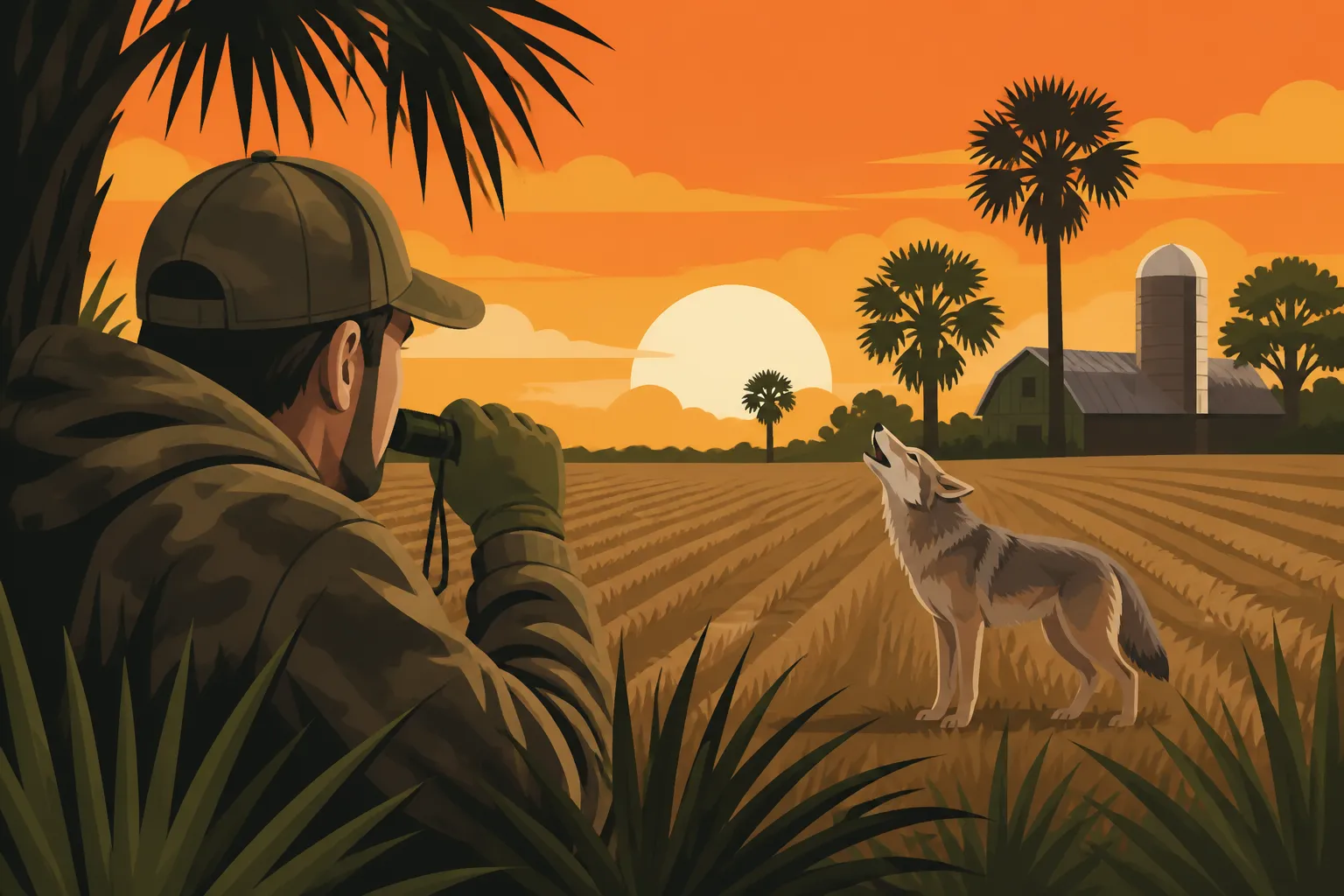
The piercing howl of a coyote, once a rare sound in the South Carolina lowcountry or rolling upstate farmlands, is now an all-too-familiar chorus for many landowners and hunters. These intelligent predators have firmly established themselves across our state, creating significant challenges for deer populations, small game, and even livestock. If you're tired of losing fawns or seeing your wild turkey numbers dwindle, this comprehensive guide is for you. We're going to dive deep into effective coyote calling tactics specifically tailored for South Carolina's diverse farm country.
The Unseen Threat: Understanding Coyotes in South Carolina Farm Country
Coyotes weren't always a fixture in the Palmetto State, but over the past few decades, their population has exploded. They've adapted incredibly well to almost every habitat type, from vast timberlands to suburban fringes, but their presence in our agricultural landscapes brings a unique set of challenges. Farmers and hunters alike often grapple with the direct and indirect impacts these opportunistic predators have on local wildlife and domestic animals. It's not just about managing a nuisance; it's about understanding a complex ecological shift that demands a thoughtful, proactive approach.
Their Impact on Livestock and Game
The most immediate and heartbreaking impact of coyotes in farm country is often felt by livestock owners. Calves, lambs, and even poultry can fall victim to coyote predation, leading to significant economic losses for farmers who are already operating on thin margins. I've talked to countless cattlemen in the Upstate who've woken up to find a newborn calf taken by a pack that moved in overnight. It's a truly frustrating and demoralizing experience. Beyond the farm gate, coyotes are incredibly efficient predators of white-tailed deer, particularly fawns. Studies have repeatedly shown that they can be a major factor in fawn mortality, especially in areas with high coyote densities. This directly affects the long-term health and numbers of our deer herd, which many hunters have worked so hard to cultivate. They also take a toll on small game like rabbits and turkeys, especially during nesting season when hens are vulnerable. If you're interested in the broader picture, you can learn more about the South Carolina Coyote Attacks on Livestock and the overall South Carolina Coyote Range and Density.
Typical Coyote Behavior in Agricultural Settings
Coyotes are creatures of habit and opportunity, and farm country provides both in spades. They thrive on the edge habitats, often using dense woodlots, fencerows, and creek bottoms as cover while they hunt the more open fields. They'll regularly patrol the perimeters of cornfields, soybean fields, and pastures, especially at dawn and dusk. These agricultural areas offer a smorgasbord of food sources: rodents, rabbits, insects, and, of course, deer and other larger prey. They're incredibly intelligent and learn quickly. A particular field that offers good hunting will be visited regularly. You'll often find their scat and tracks along old logging roads, tractor paths, and field edges, giving you clues to their travel corridors and preferred hunting grounds. Understanding these patterns is key to successful calling. While we often think of them as strictly nocturnal, in less pressured areas, they'll readily move during daylight hours, especially on overcast days or when they're particularly hungry.
Why Calling Them is So Important
Simply put, calling coyotes is one of the most effective and proactive ways to manage their populations and mitigate their impact. Unlike passive methods like trapping (though trapping can be highly effective when done correctly, like when Running a Trapline in Rural South Carolina), calling puts you in direct control, allowing you to target specific areas where coyotes are causing problems. It's also an engaging and challenging form of hunting that hones your woodsmanship and understanding of animal behavior. By strategically removing coyotes, you can help protect fawns during the spring, reduce pressure on nesting turkeys, and safeguard livestock. It's an ongoing battle, but a necessary one to maintain a healthy balance in our diverse South Carolina ecosystems. Remember, in South Carolina, there's no closed season on coyotes on private land, which gives you ample opportunity to make a difference year-round, much like with South Carolina's Year-Round Hog Rule on Private Land.
Your Arsenal for the Hunt: Essential Coyote Calling Gear
When you're heading out to call coyotes in South Carolina's farm country, having the right gear can make all the difference between a successful hunt and a frustrating walk in the woods. It’s not just about having a call; it’s about a complete system that allows you to be effective, efficient, and safe. You wouldn't go deer hunting without your rifle, and the same careful consideration should go into your coyote setup.
Choosing the Right Calls: Electronic vs. Mouth Calls
The heart of coyote calling lies in your choice of call. You essentially have two main categories: electronic calls and mouth calls. Each has its strengths and weaknesses, and many experienced callers carry a combination of both.
Electronic Calls: These are incredibly versatile and have become a staple for many coyote hunters. Brands like Foxpro, Primos, and Lucky Duck offer units with a vast library of sounds, from distress calls of rabbits, fawns, and birds to coyote vocalizations like howls and barks. The big advantage here is volume control and variety. You can easily switch between sounds, adjust the volume, and often even place the speaker away from your position to draw the coyote's attention away from you. This separation is crucial for drawing wary predators into shooting range without them pinpointing your exact location. For South Carolina farm country, where shots can be longer and coyotes might be more educated, an electronic call really shines. You can simulate multiple animals or a "coyote fight" sequence, creating a dynamic and believable scenario that's hard to achieve with mouth calls alone. When scouting and planning your hunt, a tool like GoHunt can help you identify open areas where the sound from an electronic call can really carry.
Mouth Calls: These are the traditional choice and still incredibly effective, especially for hunters who prefer a more minimalist setup or want the satisfaction of mimicking sounds themselves. Mouth calls come in various forms:
- Open Reed Calls: These are very versatile, capable of producing a wide range of distress sounds and even some coyote vocalizations. They take practice but allow for a lot of expression.
- Closed Reed Calls: Easier to use, these calls typically produce one or two specific sounds, often a rabbit distress. Great for beginners.
- Howler Calls: Designed specifically to mimic coyote howls, barks, and yips. These are excellent for locating coyotes, challenging them, or even drawing in a dominant male.
Many seasoned callers will use an electronic call for their primary sequence, then switch to a mouth call for a quick, subtle distress sound if a coyote hangs up just out of range. The ability to instantly add a subtle sound without fumbling with an electronic remote can be a game-changer.
Optics and Firearms for Farm Country Shots
Coyote hunting in farm country often involves longer shots than you might expect in dense timber. Coyotes are wary, and they'll frequently hang up at 100-200 yards, especially in open fields. Therefore, quality optics and an appropriate firearm are non-negotiable.
Firearms: A flat-shooting rifle chambered in a cartridge like .223 Remington, .22-250 Remington, or even a 6.5 Grendel is ideal. These calibers offer the accuracy and velocity needed for those longer shots, while still having minimal pelt damage if you plan to save the hide. A good variable-power scope, like a 3-9x or 4-12x, is perfect for the varied distances you'll encounter. Zero your rifle for 100 or 200 yards, and practice shooting from different positions—prone, kneeling, and from shooting sticks—as you never know how a coyote will present itself. Shotguns, especially those chambered in 12 gauge with specialized predator loads (like BB, T, or buckshot), can be highly effective in thick fencerows, brushy creek bottoms, or when calling them into closer ranges.
Optics: Beyond your rifle scope, a good pair of binoculars is essential. 8×42 or 10×42 binoculars will help you scan distant field edges, pick out a camouflaged coyote, and confirm if it's indeed coming to your call. Given that much of South Carolina's farm country lacks significant elevation, a good rangefinder is also incredibly useful. Knowing the exact distance to that fencerow or distant tree line where a coyote might stop can mean the difference between a hit and a miss. For hunters who plan to engage in night hunting (where legal on private land), a thermal optic or a powerful spotlight (with a red or green filter) becomes indispensable. Technologies like these allow you to spot the heat signature of an animal from a distance, giving you a crucial advantage.
Staying Hidden: Camouflage and Concealment
Coyotes have incredible eyesight, a keen sense of smell, and exceptional hearing. Staying hidden is paramount. You need to blend into your surroundings and minimize any movement.
Camouflage: Full camouflage, head to toe, is critical. Choose patterns that match the local vegetation and season. During the fall and winter, patterns with browns, grays, and dead leaf elements work well. In the spring and summer, greener patterns are more appropriate. Don't forget a face mask or face paint and gloves. Any exposed skin will stand out like a beacon.
Concealment: Simply wearing camo isn't enough; you need to use the terrain to your advantage. Hunt from the shadows, against a dark backdrop like a thick pine stand, a large oak, or a dense fencerow. Avoid silhouetting yourself against the sky. A portable ground blind can be an excellent investment, especially in open farm country where natural cover might be sparse. It breaks up your outline, allows for slight movements, and contains some of your scent. If you're using a ground blind, remember the principles from Using a Ground Blind on South Carolina Public Land – blend it in, clear your shooting lanes, and make sure it's secure. Also, consider the principles of Setting Up Against a Big Oak for natural concealment. Always ensure your blind has good ventilation if you’re hunting on a warm day, as South Carolina humidity can be brutal.
Scent Control: While visual concealment is vital, coyotes' noses are their primary defense. Play the wind religiously (more on that later), but also take steps to minimize your scent. Scent-eliminating sprays, washing your hunting clothes in scent-free detergent, and even storing them in airtight containers can help. It's a game of minimizing every advantage the coyote has.
Mastering the Art: Effective Coyote Calling Strategies
Calling coyotes isn't just about blowing a call; it's a strategic dance between imitation, observation, and patience. The South Carolina farm country presents its own unique challenges and opportunities, and understanding how to adapt your tactics to this environment is key to consistently bringing in those wary predators.
Scouting and Stand Selection in Open Terrain
Before you ever make a call, proper scouting is paramount. This is where you put in the legwork to understand the lay of the land and where coyotes are likely to be.
Digital Scouting: Start with aerial photos and topographical maps. Services like GoHunt are invaluable for this. You can identify potential travel corridors like drainages, creek bottoms, fencerows, and the edges of timber blocks. Look for pinch points where coyotes might naturally funnel, or elevated positions that offer good visibility. GoHunt’s mapping features allow you to mark potential stand locations, observe property lines (crucial when hunting on private land), and plan your entry and exit routes. You might notice areas where fields meet deep woods, or where thick brush provides excellent daytime bedding cover adjacent to a feeding area. For more insights on this, check out Reading Aerial Photos for Upstate Deer, as many of the same principles apply.
On-the-Ground Scouting: Once you have a few spots picked out on the map, hit the ground. Look for fresh tracks, scat, and active game trails. These tell you where coyotes are currently moving. Pay attention to how the wind will typically blow through that area. Think about your approach: Can you get to your stand without being seen or smelled? Look for natural backdrops and cover that will hide your silhouette. In farm country, you'll often find yourself trying to set up on the edge of a field. Look for a large tree, a thick hedgerow, or a slight elevation change that allows you to break up your outline and provides good visibility for scanning the field. The goal is to pick a spot where a coyote will come into view and be within shooting range, ideally without ever seeing or smelling you.
Call Sequences and Volume Control
This is where the artistry of coyote calling comes in. There's no single "magic" sequence, but there are proven principles that tend to work.
Starting Soft and Building: Many experienced callers advocate for starting with a soft, subtle distress call (like a mouse squeak or a quiet rabbit cry). Coyotes are constantly listening, and a loud blast might alarm a close-by animal. If nothing responds after 5-10 minutes, gradually increase the volume and intensity.
Varying Your Sounds: Don't stick to just one sound. Coyotes become call-shy, especially in areas with hunting pressure. Mix it up. Start with a rabbit distress, then switch to a fawn distress, and maybe even throw in some bird distress sounds. Electronic calls make this easy.
Coyote Vocalizations: Howls are fantastic for locating coyotes and can also be used to challenge a territorial male. A lone howl can draw in a curious coyote, while a challenge howl (often followed by some barks) can bring in a more aggressive animal looking to defend its territory. If you hear a distant howl, responding with a challenge can sometimes seal the deal.
The "Kiyi": If a coyote hangs up out of range, or you suspect one is close but not committing, a sharp, frantic "kiyi" (a coyote puppy in distress) can often be the final trigger. It appeals to their parental instincts and can draw them in for a closer look.
Patience is Key: A typical stand should be at least 15-20 minutes, sometimes longer. Coyotes don't always come charging in; they often circle downwind, approach cautiously, and take their time. Stay alert for the entire duration.
Volume Control: In wide-open farm fields, sound travels far. You might need more volume than you would in dense timber. However, always consider the wind. If the wind is strong, your sound will be carried further downwind, but significantly muted upwind. Adjust your volume accordingly to ensure the sound reaches where you expect coyotes to be. Be mindful of not blowing out a close-by coyote with excessive volume.
Working the Wind and Other Environmental Factors
Ignoring the wind when coyote calling is like bringing a knife to a gunfight – you're already at a severe disadvantage.
The Wind is Your Enemy (and Friend): Coyotes will almost always circle downwind to get a scent check before committing to a call. They want to confirm that what they hear is legitimate prey, not a hunter. This is why you must position yourself so that the prevailing wind is blowing from the direction you expect the coyote to approach, across your position, and then away from where you think the coyote will try to circle.
- Stand Placement: Always set up with the wind in your face or quartering into your face. This gives you the best chance to see the coyote before it smells you.
- Anticipate the Circle: Mentally draw a circle around your stand. Expect the coyote to approach from downwind of your call. Place your call out in front of you, 30-50 yards away, to draw their attention and encourage them to circle downwind of the call, not you.
- Changing Winds: Be aware that winds can shift, especially in the afternoon or during certain weather patterns. Have a secondary plan or be prepared to adjust your setup. GoHunt’s weather features can help you track wind direction throughout the day, aiding in stand selection.
Time of Day: While coyotes can be called at any time, dawn and dusk are often the most productive, as these are peak hunting times for them. Early morning, just as the sun comes up, can be magical. If allowed in your area, Night Hunting Hogs With Lights on Private Land has similar principles regarding low-light optics and shot placement, which can be adapted for coyotes.
Weather Conditions:
- Cold Fronts: Following a cold front, when the weather clears and temperatures drop, can be excellent. Coyotes are often more active and hungry.
- Overcast Days: Overcast or drizzly days can be great, as coyotes feel more comfortable moving in the open without the direct sun.
- Windy Days: Very windy days can be challenging. The wind can make it hard for coyotes to pinpoint sound, and it can also carry your scent erratically. However, desperate coyotes might still respond. Use extra volume on these days and set up in areas with some wind break if possible.
Staying Legal and Safe: Regulations and Best Practices
Successful coyote calling isn't just about the hunt itself; it's also about being a responsible, ethical hunter who respects the law, the land, and the landowners who grant you access. South Carolina has specific rules that govern hunting, and it's your responsibility to know and abide by them.
South Carolina's Coyote Hunting Rules
Thankfully, managing the coyote population is a priority in South Carolina, which means fairly liberal hunting regulations.
- No Closed Season on Private Land: One of the most important rules to remember is that there is no closed season for coyotes on private land in South Carolina. You can hunt them year-round, which is fantastic for consistent population control. This aligns with rules for other nuisance animals, as you might know from the When South Carolina Coyote Season Runs guide.
- Public Land Regulations: Hunting coyotes on public lands, such as Wildlife Management Areas (WMAs) or National Forests, usually falls under specific WMA regulations or National Forest rules, which may have seasonal restrictions, weapon limitations, or specific hunt dates. Always check the SCDNR WMA regulations booklet or the National Forest Service website for the specific area you plan to hunt.
- Night Hunting: Night hunting for coyotes is generally permitted on private land in South Carolina, but there are often specific rules regarding artificial lights (e.g., weapon-mounted lights, handheld spotlights). Always verify the current regulations with SCDNR before hunting at night. If you’ve ever considered Night Hunting Hogs With Lights on Private Land, the legal framework often shares similarities.
- Firearms and Ammunition: Standard hunting firearms and ammunition are generally permissible. There aren't typically caliber restrictions for coyotes as there are for deer.
- Hunting License: A valid South Carolina hunting license is required to hunt coyotes. Always carry your license with you when afield.
It's absolutely crucial to consult the most current SCDNR regulations manual or their website before every hunt, as rules can change. Ignorance of the law is never an excuse.
Ethical Considerations and Respect for Landowners
As hunters, we are ambassadors for our sport. Our actions reflect on the entire hunting community. When hunting coyotes in farm country, particularly on private land, a strong ethical compass and respect for landowners are paramount.
- Permission is NOT Optional: This cannot be stressed enough. Never hunt on private land without explicit, prior permission from the landowner. South Carolina has clear South Carolina Trespass and Permission Law provisions, and trespassing can lead to legal trouble and ruin opportunities for other hunters. A simple phone call or in-person conversation goes a long way. When seeking permission, clearly state your intent to hunt coyotes, explain your methods, and offer to share any information about other game animals you observe. Building trust with a landowner is invaluable, especially if you're trying to gain access to Hunting Small Private Tracts in South Carolina where coyotes often thrive.
- Leave No Trace: Always pack out everything you pack in. Don't leave spent shell casings, trash, or anything else behind. Leave the land better than you found it.
- Vehicle Etiquette: Stick to designated roads and trails. Don't drive across fields without explicit permission, especially if crops are planted or the ground is wet.
- Respect Boundaries: Even with permission, be acutely aware of property lines, especially if adjacent to other landowners who may not allow hunting. GoHunt maps with property line overlays are fantastic for this.
- Post-Harvest Responsibility: Decide beforehand what you'll do with the coyote. If you're harvesting for fur, know how to properly skin and care for the hide. If not, and you're simply dispatching nuisance animals, be prepared to properly dispose of the carcass in a discreet and respectful manner, away from homes or trails.
Night Hunting Specifics and Safety
Night hunting coyotes can be incredibly effective, as coyotes are often more active and less wary under the cloak of darkness. However, it also carries additional safety considerations.
- Identification: Positive target identification is critical. In the dark, it's much harder to discern details. Never shoot at sound or movement. Use quality thermal optics, night vision, or a powerful spotlight (with a red or green filter, which game often tolerates better) to clearly identify your target before taking a shot.
- Backstops: Always know your backstop. Even at night, a bullet will travel a long distance. Ensure there are no buildings, roads, or livestock beyond your target. This is where good scouting during daylight hours becomes even more vital.
- Communication: If hunting with a partner, maintain constant communication. Use two-way radios and clearly communicate your position and intentions. Never split up without knowing exactly where each person is.
- Lighting: Beyond your hunting lights, carry a reliable headlamp for navigating to and from your stand, field dressing, or in case of an emergency.
- Awareness: Be extra vigilant for anything that might approach your stand. Other nocturnal animals, curious livestock, or even people (though less common in remote farm areas) can be present.
- Local Ordinances: Beyond state regulations, some counties or municipalities may have specific ordinances regarding firearm discharge or noise at night. Always check with local authorities.
By understanding the coyote's behavior, arming yourself with the right gear, mastering proven calling techniques, and always prioritizing safety and ethical conduct, you can become an effective coyote caller in South Carolina's farm country. It's a challenging but rewarding endeavor that contributes to healthier game populations and a better balance for our rural landscapes.
Disclaimer
Please note: Hunting regulations and laws can change frequently. Always consult the most current South Carolina Department of Natural Resources (SCDNR) regulations and local ordinances before engaging in any hunting activity. This guide is for informational purposes only and should not be considered legal advice.