Decoy Placement for Pressured South Carolina Birds
There’s nothing quite as deflating as putting in all the scouting work, finding the perfect spot, setting out your decoys just so, and then watching a wary tom or a flock of ducks flare at the last second. It's a common frustration, especially when you're hunting birds that have already seen a parade of hunters and their plastic friends. This guide is all about overcoming that challenge, diving deep into smart decoy placement strategies that can help you fool even the most pressured South Carolina birds.
Understanding the Mindset of Wary Birds
Hunting pressure changes everything. What worked last year, or even last week, might send birds running (or flying) for the hills today. When you're dealing with pressured birds in South Carolina, whether it's a savvy gobbler on a public land WMA or ducks that have been shot at repeatedly in a lowcountry impoundment, you have to think like they do.
Why Birds Get Wary
Birds aren't dumb, and they certainly learn from experience. Every time a hunter is seen, a shot is fired, or a decoy setup looks "off," that information gets filed away. In South Carolina, our hunting seasons are long, and many areas, especially popular public lands like parts of the Francis Marion National Forest or certain Wildlife Management Areas, see continuous pressure. This means that by mid-season, or even after the first few days, birds have already developed a keen sense of suspicion.
Imagine a mature gobbler that has seen dozens of hen decoys in various fields and woods edges. He's been called in, seen the hunter, and lived to tell the tale. Or a flock of pintails that have dodged steel shot over several different decoy spreads. They start associating typical decoy patterns, unnatural movements, or even certain calls with danger. This accumulated wisdom makes them "wary." They'll circle high, hang up out of range, or simply give your setup a wide berth, unwilling to commit. They've learned to avoid anything that doesn't look absolutely perfect and safe. This is why a "textbook" decoy spread often fails; the birds have read that textbook too many times.
Reading Bird Behavior on Pressured Ground
Recognizing the signs of wary birds is crucial for adjusting your strategy. You can't just blindly stick to the same setup if the birds are telling you it's not working. For turkeys, if gobblers are consistently circling your setup, staying just out of range, or taking a different route to investigate calls without committing, they're wary. They might puff up and strut, but their body language clearly says, "Something's not right here."
With waterfowl, pressured ducks and geese often make wide passes, high and fast, scanning your spread from a distance before flaring. They might dip a wing, giving you a momentary flicker of hope, but they won't fully commit to landing in the hole you've created. They're looking for movement, unnatural spacing, or anything that screams "trap." Doves, especially after the initial opening weekend frenzy, become incredibly alert. They'll zip past, land far out in a field, or divert their flight path entirely if a decoy setup on a powerline or dead tree looks too obvious or crowded. Learning to observe these behaviors is your first step in outsmarting them.
Strategic Decoy Selection and Setup for Turkeys
When it comes to pressured South Carolina gobblers, your decoy strategy needs to evolve from the "more is better" mentality. Subtlety, realism, and natural placement become your best friends.
Less Is Often More
Forget the elaborate flock of half a dozen hens and multiple jakes. For pressured birds, a minimalist approach is usually far more effective. A single, high-quality hen decoy, perhaps in an alert or feeding posture, can be incredibly enticing without raising suspicion. A lone hen looks far more natural and less threatening than a full harem.
Sometimes, even a single jake or a quarter-strut gobbler decoy can work, especially if you're trying to provoke an aggressive response from a dominant tom. However, be cautious with full-strut gobbler decoys on pressured ground. While they can draw in a fight, they can also intimidate other less dominant birds or cause a wary tom to hang up and observe from a safe distance before committing. The key is to present a realistic, non-threatening, yet appealing scene. Look for decoys that don't shine unnaturally in the sun and have lifelike feather details. Avian-X and Zink are known for their realistic turkey decoys. Remember, quality over quantity is paramount when dealing with intelligent, wary birds.
The Art of Subtle Placement
This is where you earn your stripes. Simply plunking a decoy in the middle of a field is often a recipe for disaster on pressured ground. Instead, think about how real turkeys would move and interact with their environment.
- Angling the Decoy: Instead of pointing your hen directly at your calling position, angle her slightly away. This often makes a gobbler approach from the front, giving you a broadside shot as he tries to get her attention. If he’s facing directly away, you might only get a rear view, which isn't ideal for a clean shot.
- Using Natural Cover: Position your decoy near natural cover – a brush line, the edge of a standing cornfield, or a patch of palmettos. This mimics how real turkeys use cover for security and makes the decoy less conspicuous. A bird that is used to seeing decoys in open fields will often be more comfortable approaching one that looks like it's taking advantage of natural terrain features. When you're doing your pre-season scouting, use mapping tools like GoHunt to identify these transition areas and subtle topographical features that might serve as natural decoy placements.
- Creating a Landing Zone: Ensure there's a clear, open path for the gobbler to approach and strut. They don't want to fight through thick brush to get to a hen. Your decoy should be visible, but not "on a pedestal."
- Position Relative to the Sun: Try to keep the sun at your back, shining on your decoy. This helps illuminate the decoy, making it more visible, and also helps hide you in the shadows. A decoy that's silhouetted against the sun can sometimes look unnatural and flat.
Consider your terrain carefully. If you're hunting a ridge-top saddle, positioning a decoy just over the crest of a hill can draw a gobbler up and over, offering a shot. If you're Calling a South Carolina Gobbler Off the Roost, think about where he'll naturally want to pitch down and how he'd approach a hen on the ground. Often, putting a decoy slightly below your line of sight, perhaps 20-30 yards out, is ideal for drawing the bird into comfortable shooting range while still allowing you to remain hidden.
Decoy Brands and Realism
For pressured birds, realism is paramount. Cheap, shiny, or poorly painted decoys will only spook birds. Invest in high-quality decoys from brands like Avian-X, DSD (Dave Smith Decoys), or Zink. These decoys boast incredible detail, realistic feather texture, and often come in various poses – from feeding to breeding to alert.
- Feeding Hen: A feeding hen looks relaxed and safe, often enticing a gobbler to come closer without fear.
- Breeding Hen: A breeding hen, often posed in a receptive position, is a powerful attractant for a dominant gobbler looking to breed.
- Alert Hen: An alert hen can convey a sense of caution, but if she’s positioned subtly, it can also suggest she’s seen something interesting, drawing in a tom.
When selecting, consider the weight and portability. If you're employing Run-and-Gun Turkey Tactics on Public Land in South Carolina, you'll want lightweight, easily deployable decoys. Check out reviews and compare different models to find the ones that truly look like real turkeys in the field.
Adapting Decoy Strategies for Waterfowl and Doves
While turkeys often get the most attention for "pressured bird" decoy talk, waterfowl and doves face similar challenges, especially in heavily hunted areas.
Waterfowl Decoy Spreads for Wary Ducks
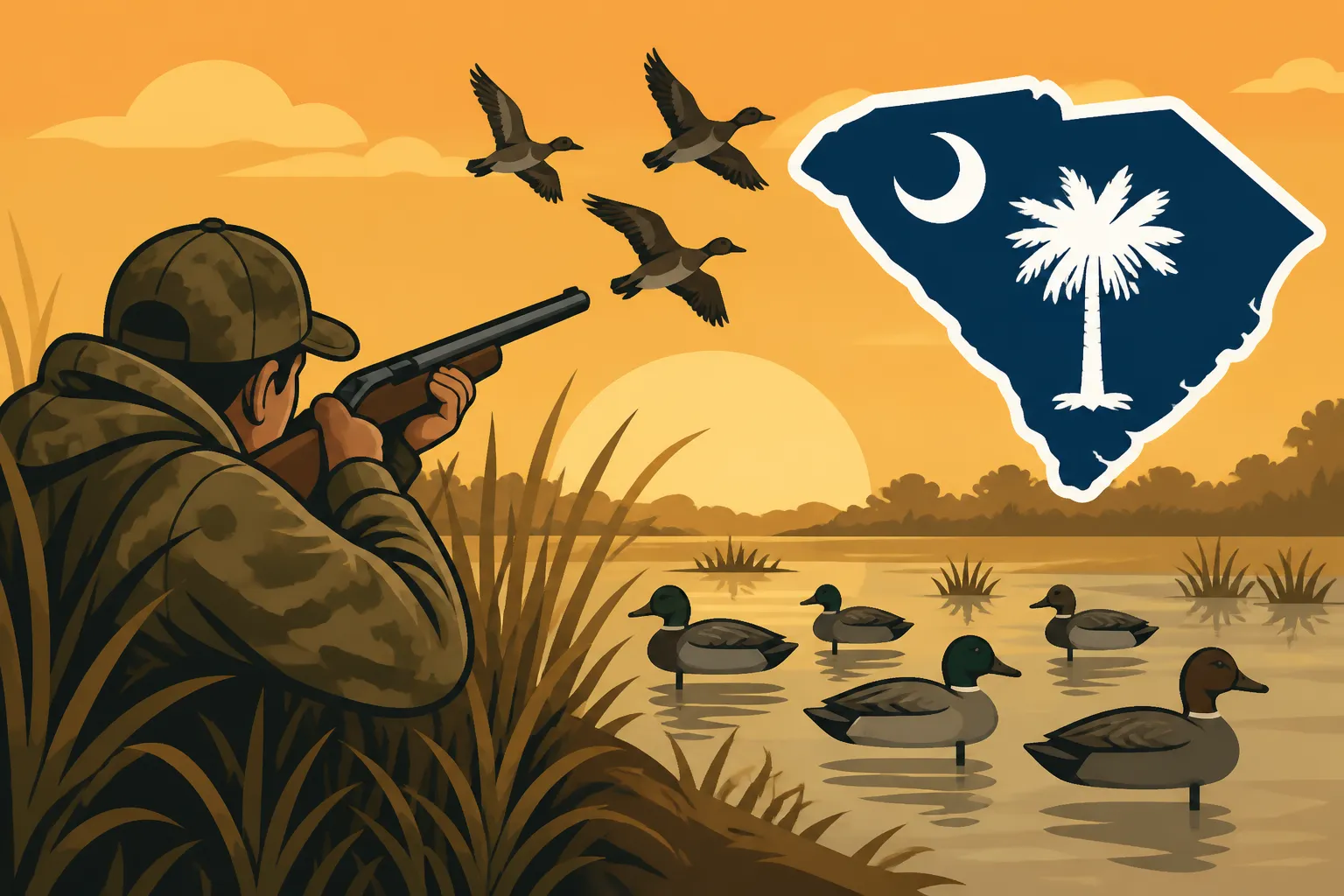
When hunting ducks in South Carolina's coastal marshes or flooded timber, pressured birds have seen it all. Large, symmetrical spreads might look good to us, but to a wary mallard, they often scream "fake."
- Smaller, Realistic Spreads: Cut down on the numbers. Instead of dozens of decoys, try a smaller, more realistic spread of a dozen or two. Focus on species-specific decoys that match what's actually in the area. If you're Hunting Coastal Marsh Waterfowl, use mostly teal, pintail, and wigeon decoys if that's what's flying, rather than just mallards.
- Asymmetrical Patterns: Ditch the perfect Vs and J-hooks. Real ducks don't land in perfect formations. Create loose, natural clusters with plenty of open water (the "landing zone" or "hole") between them. Imagine wind and current naturally pushing birds together.
- Movement: A little movement goes a long way. Jerk strings, subtle spinner wing decoys (used sparingly and strategically), or even just ripples in the water can make your spread come alive. Be careful not to overdo it, though, as too much unnatural movement can also spook wary birds.
- Edge Placement: Ducks often prefer to land on the edges of large bodies of water or along distinct features. When Layout Blind Hunting Lowcountry Rice Fields, consider placing your decoys along the edge of the field near a dike or a patch of reeds, rather than smack in the middle. This gives them a natural reference point and a sense of security.
- Ditch the Flags: While flagging can be effective early in the season, wary birds later on might see a flag as a red flag. Observe how birds react; if they flare, put the flag away.
Dove Decoy Finesse
Doves, especially after the first few hot days of the season, become incredibly educated. They've seen too many decoys stuck haphazardly on power lines.
- Natural Perching Spots: Doves love to perch on dead tree limbs, fences, and power lines before dropping into a field. Focus on placing a few realistic dove decoys in these natural perching spots. A couple of decoys on a bare branch or a single decoy on a fence post looks far more convincing than a dozen crowded together.
- Avoid Overcrowding: A string of ten decoys on a single power line might look like a dove convention, but it's often too unnatural for wary birds. Try spacing out 2-3 decoys in different spots or placing singles.
- Movement (Sparingly): A slight breeze moving a spinner dove decoy can be effective, but again, use it sparingly. Doves are fast and erratic; too much consistent movement can be a tip-off.
- Field Edges: If you're Working a Dove Field on Opening Day, instead of placing decoys only in the field, consider placing them on the very edge of the field where doves might land before feeding, or on prominent trees overlooking the field.
| Bird Species | Standard Decoy Strategy | Strategy for Pressured Birds | Key Considerations for SC |
|---|---|---|---|
| Turkey | 3+ hens, 1-2 jakes/gobblers | Single realistic hen (feeding/alert) or lone jake | Mimic natural forest/field edges; use mapping tools like GoHunt for terrain. |
| Waterfowl | Large, symmetrical spreads | Smaller, asymmetrical spreads; focus on realism & movement | Match local species; utilize natural features in coastal marshes or flooded timber. |
| Dove | Many decoys on power lines | Few, realistic decoys on natural perching spots (fences, dead limbs) | Position near feeding areas or water holes, considering flight paths. |
Integrating Technology and Scouting for Decoy Success
Modern hunting isn't just about the gear you carry; it's about the information you leverage. For pressured birds in South Carolina, combining smart decoy tactics with thorough scouting and mapping technology can significantly boost your success.
Pre-Season Scouting with Mapping Tools
The best decoy placement starts long before you ever set foot in the woods with your decoys. It begins with meticulous scouting, and digital mapping tools are invaluable for this. Platforms like GoHunt provide detailed satellite imagery, topographic maps, and public/private land boundaries that allow you to virtually scout prime locations.
Use these tools to:
- Identify Travel Corridors: Look for pinch points, saddles, creek bottoms, and timber edges where turkeys or deer (whose trails turkeys often use) naturally travel. Understanding these routes helps you intercept birds.
- Pinpoint Roosting and Feeding Areas: For turkeys, knowing where they roost and where their preferred food sources are will dictate where you need to set up. You can mark these on your GoHunt map.
- Locate Waterfowl Habitat: For ducks and geese, identify potential landing zones in impoundments, flooded timber, or along coastal rivers. Look for changes in water depth, natural cover, and isolated pockets that might offer security to wary birds. This is especially helpful when planning for Hunting Coastal Marsh Waterfowl.
- Map Potential Shot Angles: Before you even get there, you can anticipate where birds might approach and ensure your decoy placement funnels them into your shooting lane. Mark your intended blind or stand position, then visualize where the decoy needs to be for a clean, ethical shot. This level of detail in Scouting South Carolina Public Land Before Season can be the difference maker. Even for deer, Reading Aerial Photos for Upstate Deer can give you insights into terrain that translates to good turkey country.
Real-Time Adjustments and Observation
No matter how much you scout or how perfect your initial plan, birds will do what birds do. They'll throw you curveballs. The ability to observe, adapt, and make real-time adjustments to your decoy placement is a hallmark of a successful hunter on pressured ground.
If a gobbler is hanging up at 60 yards, staring at your spread but unwilling to commit, it's telling you something. Maybe the decoy is too far out, too close to thick cover, or facing the wrong direction. This is where you might need to try a different call sequence, or even make a quick, subtle adjustment to the decoy's position if you can do so undetected. Sometimes, removing a decoy entirely can be the solution.
For waterfowl, if ducks are consistently flaring over one part of your spread, or ignoring your hole, don't be afraid to pull up stakes and move things around. This might mean spreading decoys out more, pulling them closer to your blind, or adding a touch of movement. You've got to be willing to break from the "norm" when birds are showing you they're not buying it. Using your GoHunt app in the field can also help you mark these observations and learn for next time, identifying specific spots where birds reacted positively or negatively to your setup. When employing Run-and-Gun Turkey Tactics on Public Land, being able to quickly redeploy a minimal decoy setup based on new observations is a huge advantage. The more you watch and learn, the better you’ll get at understanding what works, and more importantly, what doesn't work for the specific birds you're targeting in South Carolina.
Disclaimer
Always ensure you are hunting in accordance with all current South Carolina Department of Natural Resources (SCDNR) regulations, including licensing, bag limits, and legal hunting methods. Laws and seasons can change, so it's always your responsibility to verify the most up-to-date information before heading afield.