Spot-and-Stalk Tactics for Upstate Bears
Hunting black bears in the rugged mountains of Upstate South Carolina without bait or hounds presents a truly demanding and intensely rewarding challenge. This isn't a sit-and-wait kind of hunt; it calls for a deep understanding of the land, keen observational skills, unwavering patience, and the ability to execute a precise stalk. If you've ever felt the frustration of endless glassing with no results, or the heartbreak of a blown stalk due to a shift in the wind, you know how crucial it is to master the art of spot-and-stalk. This guide will meticulously walk you through the tactics and considerations essential for navigating the challenging terrain and dense cover of the Blue Ridge Escarpment, significantly increasing your odds of a successful and ethical bear harvest.
Understanding Upstate Bear Behavior and Habitat
To successfully spot-and-stalk an Upstate South Carolina black bear, you first have to think like one. These aren't creatures of wide-open spaces; they are masters of concealment, intimately familiar with their mountain domain. Their lives revolve around food, water, and security, and understanding how these elements dictate their movements is your first step toward success. The unique topography and vegetation of the Upstate significantly influence where you’ll find them.
Reading the Mountain Landscape for Bear Sign
The Upstate region, particularly counties like Oconee, Pickens, and Greenville, is characterized by steep slopes, deep ravines, and extensive tracts of hardwood forests within the Sumter National Forest. Bears in these areas are primarily driven by food sources, which shift throughout the season. Early season might see them focused on soft mast like blackberries and wild grapes, while mid-to-late season will find them heavily reliant on hard mast, especially acorns from various oak species. Identifying prime feeding areas, particularly those with a strong mast crop, is paramount. Look for areas with a good mix of mature hardwoods, especially white oaks and red oaks, which provide sustained food through the fall.
Beyond obvious food sources, bears will leave behind undeniable signs of their presence. Keep an eye out for fresh scat, which indicates recent activity. The content of the scat can even tell you what they've been eating, guiding your focus to specific food types. Look for overturned rocks and logs, signaling they've been rooting for grubs and insects. Perhaps most telling are bear rub trees – trees, often smaller and softer-barked, that bears rub against to leave their scent and mark their territory. These can be critical indicators of a bear's travel corridor or a core area they frequent. Finding these signs, especially those that are fresh, tells you you're in the right neighborhood and helps narrow down your search.
Water is also a non-negotiable for bears, and while abundant in the Upstate, knowing where they access it can pinpoint travel routes. Steep ravines and creek bottoms, particularly those with dense cover, often serve as natural highways for bears moving between feeding areas and bedding sites. Bedding areas themselves are usually in the thickest, most impenetrable cover imaginable – think dense rhododendron thickets, mountain laurel, or deep evergreen stands on steep, north-facing slopes where they feel secure. Bears, especially larger boars, prefer these areas for safety and thermal regulation. Scouting these features on a map and then confirming them on the ground is essential for developing a successful strategy for Hunting Bears Over Natural Mast in the Mountains.
Bear Activity Patterns and Timing
Unlike some game animals that might move predictably, bear activity can vary greatly based on the season, food availability, and even human pressure. Generally, bears are most active during dawn and dusk, when temperatures are cooler, and they can move with less disturbance. However, in the dense cover of the Upstate mountains, it's not uncommon to encounter bears moving throughout the day, especially if it's overcast, raining, or just a generally cool day. During periods of abundant mast, bears might spend extended periods feeding, making them more visible during daylight hours.
Temperature plays a significant role in bear movement. On hot days, bears tend to bed down in cool, shaded areas, reducing their activity to the absolute necessities. Conversely, a cold front, especially one following a warm spell, can invigorate them and trigger increased feeding activity as they try to pack on calories for winter. Understanding these patterns allows you to time your hunts more effectively. For instance, a clear, crisp morning after a cool night might be prime for glassing south-facing slopes as bears try to catch the first rays of sun or move into feeding areas.
Hunting pressure can also influence bear behavior. On public lands, where more hunters might be present, bears become more nocturnal or utilize thicker cover during daylight hours. This means you might need to hunt deeper into remote areas or focus on less accessible terrain to find undisturbed bears. The Hunting Zone 1 Still-Gun Bear Season in the Upstate is relatively short, concentrating hunting pressure, so being adaptable to these shifts in behavior is key. Patience and perseverance are not just virtues but necessities when trying to intercept a bear that is actively avoiding human contact.
Where Upstate Mountain Bears Range
The designated bear hunting area in South Carolina’s Upstate is primarily concentrated in Game Zone 1, encompassing portions of Oconee, Pickens, and Greenville counties. This region is a vital stronghold for black bears, offering the ideal mix of dense forest, rugged terrain, and abundant natural food sources. The landscape here is characterized by the southern reaches of the Blue Ridge Mountains, featuring significant elevation changes, numerous drainages, and vast expanses of uninterrupted forest cover. When you're considering Where Upstate Mountain Bears Range, think about the most remote, difficult-to-access areas; these are often the sanctuaries for the largest and most undisturbed bears.
Within these counties, bears tend to congregate in areas of mature hardwood forest, particularly along mountain ridges and in deep coves. These locations provide not only a diverse array of mast crops but also the dense understory and rugged topography that offer excellent escape cover and security. Areas adjacent to wilderness boundaries or those with limited road access often hold higher densities of bears simply because they experience less human disturbance. Don’t overlook the importance of water; bears will frequent streams and seeps, especially in dry periods, making these areas natural travel corridors and congregation points.
While bears are incredibly adaptable, they prefer to avoid human contact. Therefore, successful spot-and-stalk hunting often means venturing further from established trails and forest roads. Using mapping tools like GoHunt can be incredibly beneficial here, allowing you to scout potential remote basins, identify thickets, and pinpoint vantage points that offer expansive views of likely bear habitat. By understanding the core areas these bears call home and identifying the specific features they utilize, you can focus your efforts more effectively and avoid wasting time in less productive zones. Remember, bears are present, but finding them in their vast mountain home requires calculated effort.
Essential Gear for a Successful Spot-and-Stalk Hunt
Spot-and-stalk bear hunting in the Upstate mountains isn’t just about having a rifle; it’s about having the right tools to effectively locate, approach, and ethically harvest your animal in challenging conditions. Every piece of gear, from your boots to your optics, plays a crucial role in your success and safety. Skimping on quality here can mean the difference between a productive hunt and a frustrating, even dangerous, experience. This is especially true when you're hunting in remote areas where reliable equipment is paramount.
Optics for Long-Range Scouting
High-quality optics are perhaps your most critical tool for spot-and-stalk bear hunting. You’ll spend far more time glassing than walking or shooting. A good pair of binoculars, at least 10×42 or even 12×50, is essential for picking apart distant hillsides and dense timber. Look for binoculars with excellent low-light performance, as bears are most active during dawn and dusk when light is at a premium. Clear, sharp glass allows you to differentiate a shadowed log from the dark hide of a bear, or to spot subtle movements in the undergrowth. For more detailed scrutiny of distant areas, a spotting scope (20-60x or higher) mounted on a sturdy tripod is invaluable. It allows you to confirm if that black blob is indeed a bear or just a stump, and to assess its size, sex (if possible), and direction of travel before committing to a stalk.
The key to effective glassing in the mountains is stability. Hand-holding binoculars for extended periods will lead to fatigue and missed details. A binocular harness helps manage the weight and keeps your optics easily accessible, but for serious glassing, a tripod adapter for your binoculars is a game-changer. It eliminates shake, allowing you to settle in and systematically grid-search an entire slope for hours if necessary. This methodical approach is far more effective than just casually glancing around. Considering the dense nature of the Upstate forests, every edge, every break in the canopy, every sun-dappled spot could reveal a bear, and good optics ensure you don't miss those subtle clues. If you're looking for recommendations, many of the principles for Binocular Choice for South Carolina Whitetails apply equally to bear hunting, emphasizing clarity and light transmission.
Beyond traditional optics, a good rangefinder is also non-negotiable. Once you've spotted a bear, knowing the exact distance is crucial for making an ethical shot. Many modern rangefinders also offer angle compensation, which is incredibly helpful when shooting up or down steep mountain slopes, ensuring your bullet hits where you intend. While the ranges in the dense Upstate might not always be extreme, having the capability to precisely range a bear at 200-300 yards, especially when it's crossing a logging road or a clear-cut, provides immense confidence and significantly reduces the chance of a misjudgment. Investing in quality optics is an investment in your success and the ethical treatment of the animal.
Quiet Movement and Footwear
The dense forests and steep terrain of the Upstate demand footwear that can handle the abuse while allowing for stealthy movement. Your boots should be durable, waterproof, offer excellent ankle support for navigating uneven ground, and have soles that provide superior traction on wet leaves, loose rocks, and slippery moss. Avoid overly stiff or noisy soles; a softer, more flexible sole can provide better ground feel, allowing you to detect twigs and loose rocks before stepping on them. Many hunters prefer a lightweight, flexible hiking boot or a sturdy stalking boot that's broken in well before the hunt. The goal is to move as silently as possible, reducing your footprint and sound profile.
Your clothing choices are equally important for a quiet approach. Layers are essential for managing the fluctuating temperatures in the mountains – cool mornings give way to warm afternoons, and vice-versa. Choose quiet fabrics like fleece, wool, or soft-shell materials that don't rustle or snag on brush. Avoid noisy synthetics or stiff materials. Camouflage patterns should match the Upstate's deciduous and mixed evergreen forests, helping you blend into the background. However, remember the South Carolina blaze orange requirements for certain seasons or public lands, ensuring you remain visible to other hunters while still trying to break up your outline for game.
Finally, your pack. A comfortable daypack is critical for carrying your optics, water, emergency supplies, and any harvested meat. It should fit snugly to prevent shifting and rubbing, which can create noise. Internal frame packs are often quieter than external frame packs. Ensure all straps are cinched down, and any loose items inside are secured to prevent rattling. Practice walking with your loaded pack before the hunt to identify and eliminate any potential noise sources. Every rustle, every squeak, every clanking item can alert a bear to your presence, so meticulous attention to detail in your gear setup is vital for a successful spot-and-stalk. Don't forget, having the right Bear Hunting Gear in the Upstate Mountains extends beyond just your weapon.
Reliable Firearm and Shot Placement
When it comes to selecting a firearm for Upstate bear hunting, reliability and adequate power are paramount. Black bears are tough animals, and a clean, ethical kill is always the goal. While various calibers can be effective, popular choices often include the .30-06 Springfield, .300 Win Mag, .338 Win Mag, or even large bore lever actions like the .45-70 Government. The key is using a bullet designed for deep penetration and energy transfer. Premium, heavy-for-caliber bullets with bonded cores or monolithic construction are highly recommended to ensure they break through bone and reach vital organs, even on a quartering shot. Avoid light, frangible bullets designed for varmints or thin-skinned game.
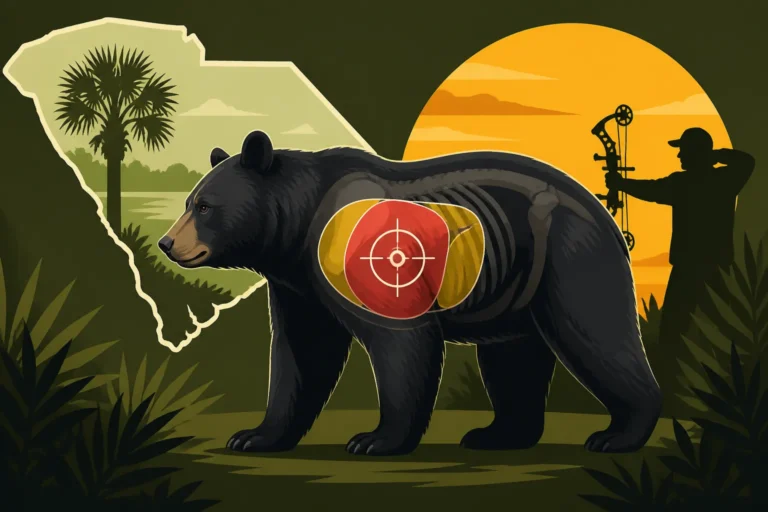
Understanding bear anatomy is critical for ethical shot placement. The vitals (heart and lungs) on a bear are positioned slightly differently than on a deer, sitting a bit lower and further forward in the chest cavity, protected by dense muscle and bone. A broadside shot aiming for the shoulder or slightly behind it, about one-third of the way up the body, is generally ideal. This shot targets both lungs and potentially the heart, leading to a quick, humane dispatch. Avoid head-on or rear-end shots unless absolutely necessary as a follow-up, as these present smaller, less forgiving targets and a higher risk of wounding the animal. Familiarize yourself thoroughly with diagrams of bear anatomy and practice shooting from various positions you might encounter in the field, such as kneeling or leaning against a tree, to ensure you can make a precise shot under pressure.
Due to the dense cover in the Upstate, shot distances are often relatively short, typically within 150 yards, but having the capability for a longer shot if the situation demands it is beneficial. Ensure your rifle is zeroed correctly and you are proficient with it. Just as importantly, know your limitations. If you’re not confident in making a particular shot, it’s always better to wait for a better opportunity or pass altogether. This aligns with responsible hunting practices. For a comprehensive understanding of where to aim, refer to detailed guides on Shot Placement on a South Carolina Black Bear. The goal is a quick, clean kill, always.
Executing the Spot-and-Stalk Approach
With your gear dialed in and an understanding of bear behavior, the real work begins: putting boot leather to ground and executing the spot-and-stalk. This phase of the hunt is where patience, acute observation, and stealth are tested to their limits. It requires a strategic mindset, meticulous planning, and an unwavering focus on the minute details of the environment. Many hunts are lost not at the shot, but during the approach.
Strategic Glassing and Patience
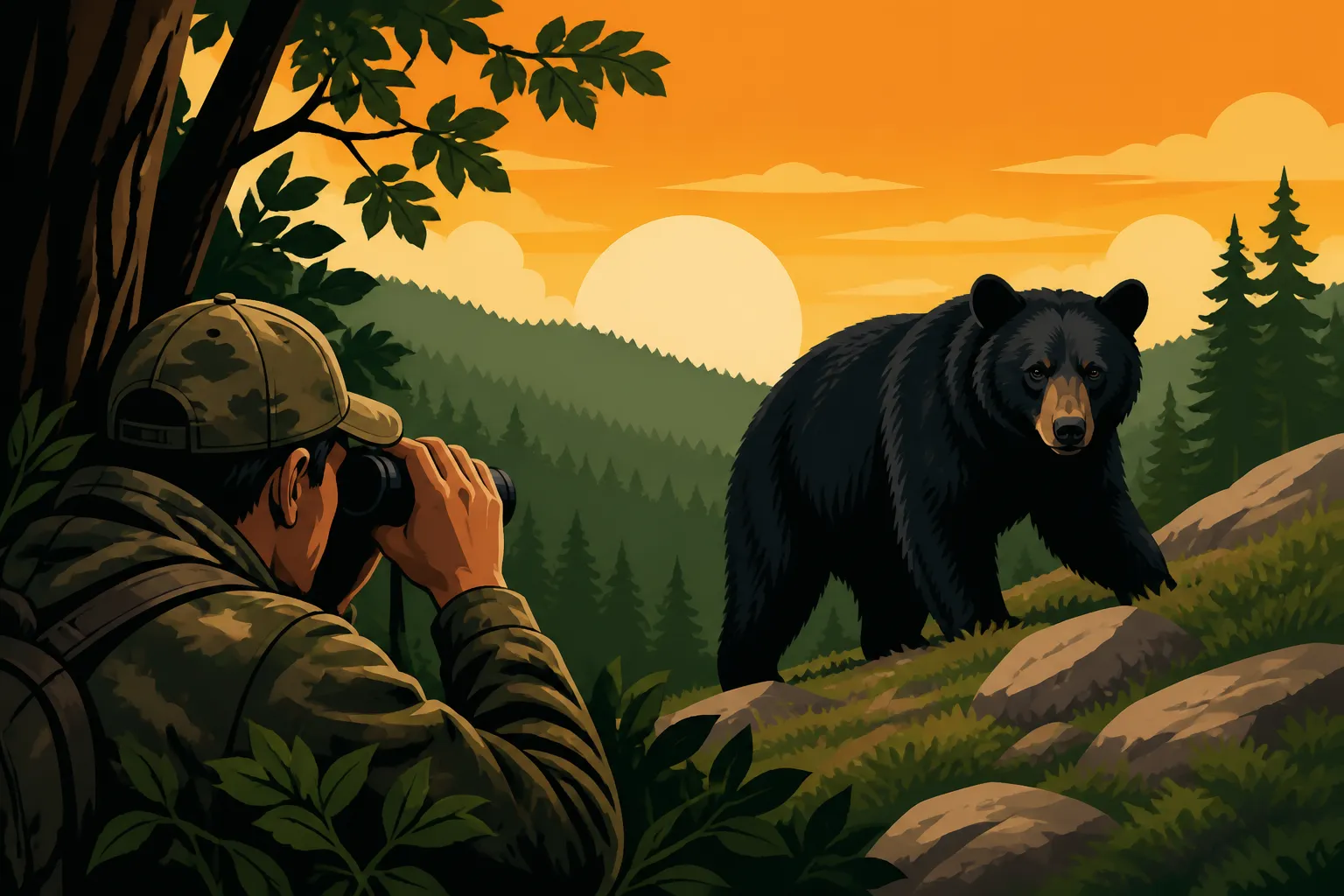
The Upstate mountains offer numerous natural vantage points that are perfect for strategic glassing. Ridge tops, clear-cuts (especially older ones with new growth attracting bears), power line cuts, and even rock outcrops can provide expansive views of potential bear habitat. Your goal is to find a high point where you can sit comfortably and systematically pick apart the landscape below you. Use your binoculars and spotting scope to slowly scan every inch of a hillside, paying particular attention to shaded areas, edges of thickets, and areas with visible mast crops. Bears are often subtle; sometimes it's just a flicker of black, a subtle movement, or the curve of an ear that gives them away.
This is where extreme patience becomes your greatest asset. Don't just scan once and move on. Sit for extended periods, perhaps an hour or more, re-glassing the same areas repeatedly. Bears can suddenly emerge from thick cover or stand up after bedding down, seemingly out of nowhere. The best times for this are usually early morning and late afternoon, when bears are most active. As the sun rises and conditions change, thermal currents will begin to shift, creating opportunities and challenges. While you're observing, also use mapping tools like GoHunt to mark potential bear locations, identify escape routes for the bear, and plan your own approach routes based on terrain and wind direction. The ability to visualize the terrain and potential cover on a map before you even move can save critical time and effort during a stalk. Looking for similar strategies on Reading Aerial Photos for Upstate Deer can also be quite helpful, as the principles of using aerial imagery to identify cover and feeding areas are transferable.
Often, spotting a bear is only half the battle. Once you've identified one, the next step is to carefully observe its behavior. Is it feeding? Bedded down? Moving in a specific direction? Knowing its immediate intentions can inform your stalk. Don't rush into a move; take your time to confirm it's a legal animal (if specific regulations apply, though in SC, most are fair game) and to formulate the best possible approach. A rushed decision here can easily lead to a blown opportunity.
Mastering Wind and Thermals
Wind and thermals are arguably the single most critical factor in a successful spot-and-stalk hunt for bears, even more so than for deer. Bears have an incredible sense of smell, far superior to a human's or even a dog's, and they will bust you every single time if they catch your scent. In mountain terrain, wind and thermal currents are notoriously fickle. Mornings typically see down-drafts as cool air sinks into valleys, while afternoons bring up-drafts as the sun heats the ground, causing air to rise. However, these patterns can be heavily influenced by terrain features, localized heating, and prevailing winds, making them unpredictable.
Always, always pay attention to the wind. Use a wind checker frequently, not just once, but constantly. Before you even begin a stalk, analyze how the wind and thermals are moving in relation to the bear's position and your intended approach route. Your goal is to stay downwind or crosswind of the bear at all times. This often means taking a longer, more circuitous route, even if it seems counterintuitive or adds significant time and effort. There’s no point in a perfect stalk if the wind betrays you in the last 100 yards. This is why understanding Wind and Thermals on an Upstate Ridge is so vital for hunting in this rugged terrain.
When planning your approach, visualize the air currents. Will you be moving through a saddle where thermals might swirl? Will dropping into a ravine put you in a consistent down-draft? Be prepared to stop, re-evaluate, and change your route if the wind shifts or you encounter unpredictable currents. Sometimes, waiting for the wind to stabilize or for a more favorable direction is the smartest play, even if it means losing precious hunting time. A bear that smells you is a bear that's gone, plain and simple.
The Stalk: Closing the Distance
Once you've spotted your bear and mapped out your wind-advantageous approach, the stalk begins. This is where all your stealth and knowledge of the terrain come into play. Your movement must be incredibly slow and deliberate. Take one step at a time, carefully placing your foot to avoid breaking twigs, scuffing leaves, or knocking rocks. Use the terrain to your advantage: stay in shadowed areas, utilize contours, and move behind thick trees or rhododendron thickets to break up your silhouette. Think of yourself as part of the landscape, not an intruder. GoHunt's detailed topographic maps can help you identify these concealment opportunities before you move.
Move only when the bear is looking away, has its head down feeding, or is otherwise distracted. If it looks up in your direction, freeze instantly and remain motionless until it resumes its activity. Patience is key; a 100-yard stalk might take an hour or more in dense Upstate cover. As you close the distance, constantly re-evaluate your position relative to the wind and the bear. If the wind swirls, be ready to back out and restart your approach from a different angle if necessary. Every branch you step on, every rustle of clothing, every misplaced footfall could be the end of your hunt.
The goal is to get within your effective shooting range, typically within 100-150 yards for most rifle hunters in these conditions, and preferably closer if using a crossbow or muzzleloader. Once you're in range, assess the shot opportunity. Is it clear? Is the bear calm? Are you stable? Ensure you have a solid rest, whether from a tree, shooting sticks, or a prone position. Take a deep breath, control your nerves, and execute a clean, ethical shot. Remember that the dense cover that made the stalk challenging can also obscure your shooting lane, so pick your shot carefully.
After the Shot: Recovery and Processing
The shot is fired, and hopefully, the bear is down. But the hunt isn’t over. Recovering a black bear, especially in the rugged Upstate mountains, presents its own set of challenges. This phase requires a methodical approach, safety consciousness, and quick action to ensure the meat is properly cared for. Rushing things now can lead to a lost animal or spoiled meat.
Tracking a Wounded Bear
If your bear doesn't drop in its tracks, which is common even with a good hit, the tracking job begins. First, give the bear time. This is a critical step that many hunters rush, often pushing a wounded animal further into thick cover. For a solid hit, especially through the lungs or heart, waiting 30-60 minutes, or even longer if the hit was marginal or in warm weather, allows the animal to expire. Mark the exact spot where the bear was standing when you shot, and where you last saw it. Pay close attention to its reaction to the shot and its direction of travel.
Begin tracking slowly and methodically. Look for blood, broken branches, overturned leaves, and tracks. Bears, especially wounded ones, can be incredibly dangerous, so proceed with extreme caution, especially when entering thickets. Have your rifle ready, and consider bringing a hunting partner for safety. Follow every sign, no matter how small, and mark your trail as you go. If the trail becomes sparse, expand your search pattern in the direction the bear was last seen. If nightfall approaches, you might need to back out and return at first light, as tracking a wounded bear in the dark, especially in the Upstate's dense cover, can be incredibly difficult and dangerous. For detailed advice on navigating these situations, refer to guides on Handling a Bear After the Shot.
Field Dressing and Meat Care
Once you locate your bear, the clock starts ticking, especially in South Carolina's often warm weather. Bears, particularly large ones, have a thick layer of fat that retains heat, leading to rapid spoilage if not cooled quickly. The first priority is to field dress the animal immediately to begin the cooling process. This involves removing the internal organs (evisceration) to allow body heat to dissipate. You may also want to skin the bear immediately, especially if you plan to get the hide tanned or mounted. Skinning further helps cool the carcass and significantly reduces the weight for transport.
If you’re in a remote area, quartering the bear in the field might be necessary. This means butchering the animal into manageable sections (front shoulders, hindquarters, backstraps, tenderloins) to be carried out in game bags. Game bags are essential for protecting the meat from dirt, flies, and other contaminants. As you process the meat, ensure it's kept as clean as possible. Pack the meat into durable game bags and try to find a cool, shaded spot to let it air out while you prepare for transport. If conditions are particularly warm, consider using ice or dry ice in coolers at your vehicle to rapidly cool the meat once you get it out of the woods.
Transporting the Harvest and Reporting
Transporting a harvested black bear out of the rugged Upstate mountains can be a monumental task. Bears are surprisingly heavy, and often you’ll be pulling them up steep slopes, across ravines, and through thick brush. Unless you've harvested a small bear very close to a road, dragging it out whole is usually not feasible or advisable. This is why field quartering into manageable sections is often the most practical approach. A sturdy game cart can be invaluable if the terrain allows, but often a good frame pack is the only way to get the meat out of truly remote spots. Be prepared for multiple trips and consider bringing a partner to help with the load.
Once you have the bear and all its parts out of the woods, you must adhere to South Carolina's reporting requirements. Every harvested black bear must be reported and tagged according to SCDNR regulations. This typically involves reporting the kill through the state's online Game Check system or a designated reporting station within a specific timeframe. You'll need to provide details such as the harvest location, date, and sex of the bear. Failure to properly report your harvest can result in penalties. Always double-check the latest regulations before your hunt to ensure you understand all the requirements for South Carolina Bear Tag Requirements and reporting. This final step is crucial for both legal compliance and for contributing to valuable wildlife management data.
Recommended Optics for Upstate Bear Hunting
| Optic Type | Recommended Magnification/Objective Lens | Key Features for Upstate Bears | Notes |
|---|---|---|---|
| Binoculars | 10×42, 10×50, 12×50 | Excellent low-light performance, wide field of view | Critical for scanning dense timber and distant slopes; tripod adaptable. |
| Spotting Scope | 20-60×80 or higher | High magnification, clear resolution, sturdy tripod | Essential for confirming species, size, and detailed observation at long range. |
| Rangefinder | Up to 1000+ yards with angle compensation | Fast and accurate readings, incline/decline feature | Provides precise distance for ethical shots, especially on varied terrain. |
| Binocular Harness | N/A | Comfortable, secure, quick access | Reduces neck strain and keeps binoculars readily available and protected. |
Disclaimer
Please remember that hunting regulations, seasons, and licensing requirements can change. Always consult the most current South Carolina Department of Natural Resources (SCDNR) regulations before planning and embarking on any hunting trip. This guide provides general information and tactics, but it is your responsibility to be aware of and comply with all applicable laws and safety guidelines.