Why South Carolina Foresters Burn Longleaf Pine
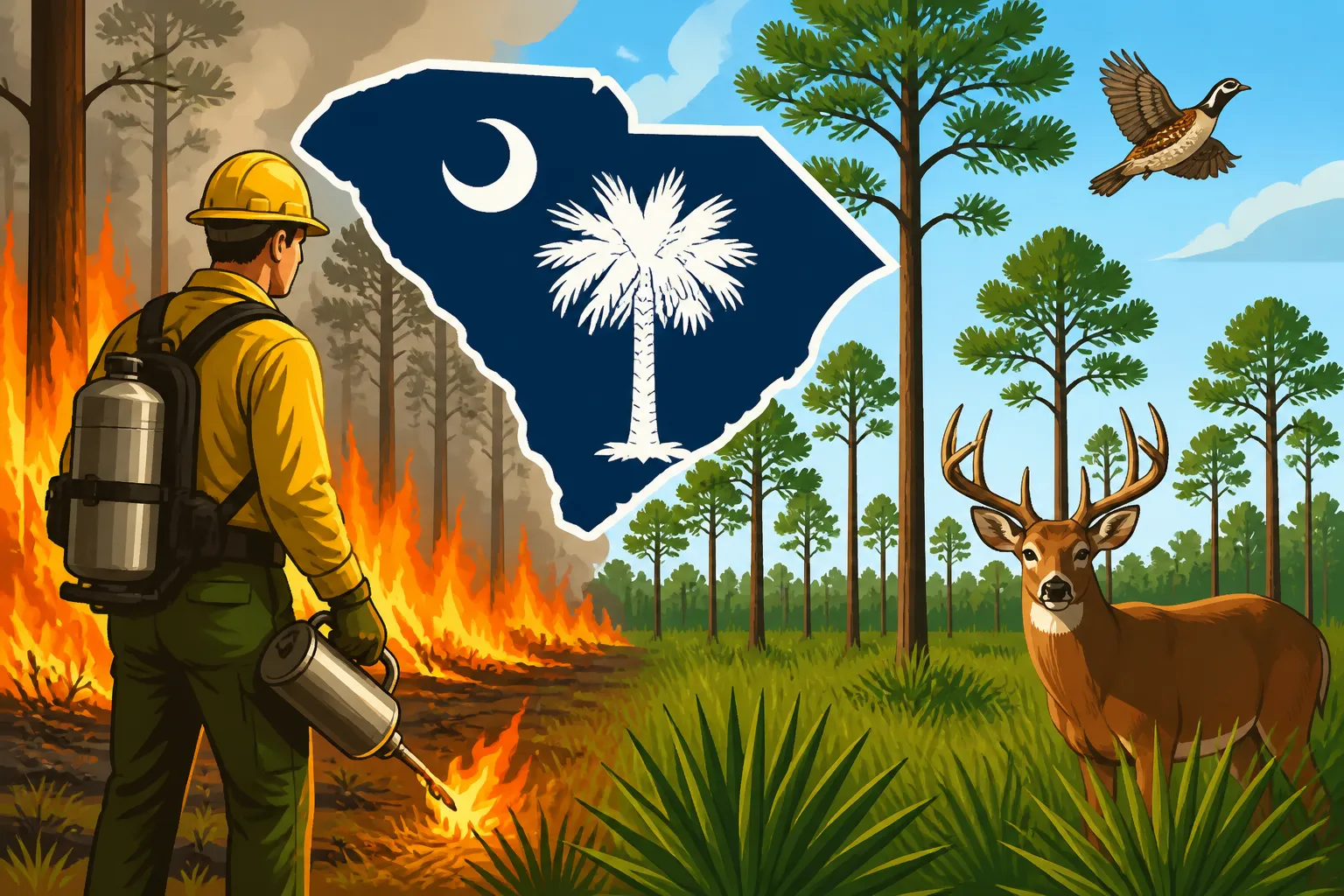
If you've spent any time hunting or just exploring the woods in South Carolina, especially in areas with those iconic longleaf pines, you’ve undoubtedly seen the aftermath of a prescribed burn. Sometimes it's a vast expanse of blackened ground, smoking stumps, and an eerie quiet that can leave you wondering, "What in the world just happened here, and how will it affect my hunting?" It’s a common frustration, seeing what looks like devastation, but these burns are actually a critical tool for managing our cherished forests and creating better habitat for deer, turkeys, and quail. This guide will walk you through exactly why South Carolina foresters put fire on the ground, and why it’s ultimately a huge win for wildlife and us hunters.
The Historical Importance of Fire in Longleaf Pine Ecosystems
It’s easy to look at a recently burned forest and think of it as something humans did, but in truth, fire has been an integral, natural force shaping the South Carolina landscape for thousands upon thousands of years. Long before any forester lit a drip torch, lightning strikes frequently ignited fires across vast stretches of the Coastal Plain and Sandhills, especially in the dry, storm-prone summer months. These weren't necessarily devastating, uncontrolled infernos; rather, they were often low-intensity ground fires that swept through regularly, clearing out underbrush and recycling nutrients.
A Natural Process, Not Just Human Intervention
Imagine the South Carolina landscape centuries ago. Vast savannas of longleaf pine stretched for miles, punctuated by wiregrass and a diverse array of herbaceous plants. The consistent presence of fire, driven by natural lightning ignitions and, later, by Native American land management practices, kept these ecosystems open and healthy. Our native wildlife, from deer to quail, didn't just tolerate these fires; they evolved with them, learning to adapt and even thrive in fire-dependent environments. These plants and animals literally need fire to maintain the habitat they call home. When we see a prescribed burn today, we're essentially reintroducing a natural process that has been suppressed for too long in many areas, and the benefits for the ecosystem are profound. It's about restoring a balance that was once a fundamental part of the Southern wild.
The Role of Fire in Longleaf Life Cycles
The longleaf pine itself is a testament to the power of fire. Unlike many other pine species, the longleaf has a remarkable adaptation to fire, particularly during its early stages of growth. When a longleaf seed germinates, it enters what's known as the "grass stage." For several years, sometimes up to seven or more, the seedling remains a dense tuft of needles close to the ground, developing an extensive root system. This unique growth pattern protects its vital bud from the heat of low-intensity ground fires. While a fire might scorch the needles, the bud remains safely insulated at ground level, allowing the tree to survive and eventually "bolt" into its taller sapling stage.
Once a fire sweeps through, it clears out competing hardwoods, grasses, and shrubs that would otherwise choke out the young longleaf. This reduction in competition allows the longleaf to grow much faster. Furthermore, fire plays a role in seed dispersal. The heat from a fire can help open longleaf cones, releasing seeds onto a freshly cleared, nutrient-rich soil bed, creating ideal conditions for germination. Without regular fire, longleaf pine struggles to reproduce and thrive, often getting outcompeted by other tree species that create a dense, shaded understory. So, when foresters conduct a burn, they aren't just clearing brush; they're actively managing for the health and regeneration of the longleaf pine itself, which in turn creates a healthier forest for all species.
How Prescribed Burning Benefits Wildlife and Hunting
The primary reason foresters burn longleaf pine forests isn't just for the trees themselves, but for the incredible benefits it brings to wildlife, and by extension, to us hunters. It's a holistic management strategy that creates a more robust and diverse habitat, leading to healthier, more abundant game populations.
Enhancing Deer Habitat and Forage
For deer hunters, prescribed burns are a game-changer, even if a recently blackened area doesn't look like it at first glance. Think about a dense, unburned forest: thick underbrush, often invasive species, and a low canopy that blocks sunlight from reaching the forest floor. This scenario often results in sparse, low-quality forage. After a prescribed burn, however, a magical transformation begins. The fire clears away that stifling undergrowth, allowing sunlight to penetrate the forest floor once again.
Within weeks, sometimes even days, tender new shoots of grasses and herbaceous plants begin to emerge. These "fire-followers" are incredibly palatable and packed with nutrients, providing a high-quality food source that deer absolutely crave. This fresh browse is far more nutritious than the woody, mature vegetation found in unburned areas. Deer are attracted to these areas like magnets, not just for the food but also because the cleared understory makes movement easier. You'll often find deer browsing along the edges of a fresh burn, or even venturing into the interior once new growth establishes. Improved visibility also means you, as a hunter, might have clearer shot opportunities or be able to spot deer moving through cover more easily. This renewed habitat is a consistent draw for whitetails, making these areas prime for scouting and hunting. It can even influence where deer choose to bed, creating new patterns that observant hunters can capitalize on. Understanding how deer react to these post-burn conditions is key to success, especially as you consider Late-Season Food Sources for South Carolina Whitetails when natural forage might be scarce.
Creating Ideal Turkey and Quail Habitat
While deer certainly benefit, prescribed burns are absolutely vital for ground-dwelling birds like wild turkeys and the beleaguered bobwhite quail. Unburned longleaf forests, with their dense, tangled understories, are terrible for these birds. Imagine a turkey hen trying to navigate through a jungle of briars and thick shrubs with her poults, or a quail covey trying to find seeds on a forest floor choked with debris. It’s nearly impossible.
Fire changes all of that. For turkeys, a burn opens up the forest floor, making it easier for them to walk, scratch for insects and seeds, and detect predators. The new growth that follows provides critical insect forage for poults, which rely almost exclusively on bugs in their first few weeks of life for protein. An open understory is also crucial for strutting gobblers who prefer areas where they can be seen and heard, and for hens to nest in the low, herbaceous cover that fire promotes. For quail, the impact is even more dramatic. Bobwhite quail populations have suffered significant declines across the Southeast, and a major factor has been habitat loss, particularly the loss of open, fire-maintained pine savannas. Prescribed fire creates the ideal mosaic habitat quail need: open ground for foraging, dense patches of grasses and wildflowers for nesting and escape cover, and a reduction in competing woody vegetation. Without fire, the dense mid-story often allows predators like raccoons and opossums to easily access nests, further reducing productivity. By mimicking natural fire regimes, we can help bring back the diverse plant communities that are the very foundation of healthy turkey and quail populations. This kind of habitat management is directly tied to efforts to restore wild quail, as discussed in articles like How Managed Pine Could Restore South Carolina Quail. Moreover, knowing the impact of these burns can help you understand South Carolina Turkey Roost Tree Preferences as they seek open areas with good visibility.
Controlling Pests and Diseases
Beyond direct habitat improvement, prescribed burns offer another, often overlooked, benefit: pest and disease control. While fire isn't a magic bullet for every problem, it can certainly help manage some of the less desirable elements in our South Carolina woods.
Consider ticks, a perennial nemesis for hunters and hikers alike. Dense, unburned underbrush provides ideal habitat for tick populations, offering cover, moisture, and plenty of hosts. When a fire sweeps through, it directly kills a significant percentage of ticks and their eggs, and more importantly, it eliminates much of the dense vegetation they rely on. While ticks will eventually return to a burned area, their numbers are often reduced, at least temporarily, making for a more pleasant and safer experience afield. Similarly, heavy fuel loads – years of accumulated pine straw, leaves, and deadfall – can harbor various plant diseases or create conditions ripe for insect outbreaks, such as pine bark beetles. A prescribed burn reduces this fuel load, making the forest less susceptible to such problems and promoting overall tree health. While we don't often think about the microscopic world when we're hunting, these subtle shifts in pest and disease dynamics contribute to a healthier, more resilient forest ecosystem, which ultimately means healthier game animals for us to pursue.
The Practicalities and Challenges of Prescribed Burns for Hunters
While the ecological benefits of prescribed burning are clear, it's totally understandable for hunters to feel a bit put out when their favorite hunting spot gets burned. It looks stark, and it often means temporary closures. But understanding the 'why' behind these burns can help you navigate the temporary inconvenience and even use the post-burn landscape to your advantage.
Timing and Safety Considerations
Prescribed burns in South Carolina are not random acts of arson. They are meticulously planned operations conducted by trained professionals, often with the South Carolina Department of Natural Resources (SCDNR) or the U.S. Forest Service. The timing of these burns is absolutely critical. They aim to burn during specific weather windows – factors like wind direction and speed, humidity, and fuel moisture are all carefully considered to ensure the fire stays within its designated boundaries and achieves the desired ecological outcome. This also means trying to minimize disruption where possible, although sometimes overlaps with certain hunting seasons are unavoidable.
From a hunter's perspective, this means you need to stay informed. Always check with the managing agency (SCDNR for WMAs, Forest Service for National Forests) for burn schedules and temporary closures. Many agencies will post notices online, at kiosks, or even send out email alerts. Using tools like onX Hunt or GoHunt apps can be incredibly helpful for seeing public land boundaries and, in some cases, real-time closures or burn notices. Trying to hunt in or near an active burn area is not only illegal but extremely dangerous. The smoke can be disorienting, and embers can ignite new fires. Respecting these closures is paramount for your safety and the safety of the burn crews. Always remember that while a burn might close off your preferred spot for a few days or weeks, it’s being done with a long-term vision in mind, improving the habitat for years to come. Checking in advance will help you plan your hunts, especially during periods like How South Carolina's Four Zones Split the Calendar, when different areas might have varying schedules.
Short-Term Disruptions vs. Long-Term Gains
It’s completely natural to feel a pang of disappointment, or even anger, when you pull up to your favorite hunting spot and find it recently scorched. The trees might look blackened, the understory gone, and the landscape appears desolate. You might think, "Well, there goes my season in this area." And for a very short period, you might be right; the immediate aftermath can be a bit barren. But this initial appearance is deceptive, and it's crucial to remember that this disruption is merely a short-term inconvenience for a significant long-term gain.
Think of it like gardening: sometimes you have to prune back hard to encourage new, vigorous growth. Within a few weeks, especially with some rain, those "fire-follower" plants begin to emerge. These tender sprouts are incredibly nutritious and palatable to deer, offering a buffet of fresh forage that wasn't there before. Turkeys will come in to scratch for insects exposed by the fire, and quail will find easier movement and better foraging. While the aesthetics might take a little longer to recover, the biological productivity bounces back surprisingly fast. These burned areas often become magnets for game once the new growth starts, creating new patterns and opportunities for observant hunters. It's a classic example of "ugly now, beautiful later" when it comes to habitat. Just as Timber Cuts and Where Deer Move After changes deer patterns, so too do prescribed burns create new opportunities.
| Feature | Before Prescribed Burn | After Prescribed Burn |
|---|---|---|
| Understory | Dense, woody, often invasive shrubs, pine straw accumulation | Open, clear, exposing bare soil |
| Deer Forage | Sparse, mature, low-quality browse | Abundant, nutritious, tender new growth of forbs and grasses |
| Turkey Access | Difficult movement, limited scratching areas | Easy movement, increased insect and seed availability |
| Quail Habitat | Too thick, poor foraging visibility, limited nesting cover | Open ground for foraging, diverse herbaceous nesting/brooding cover |
| Visibility (Hunter) | Limited lines of sight, dense cover | Increased visibility, clearer shooting lanes |
| Pest Control | High tick/chigger populations | Reduced initial tick/chigger populations |
| Aesthetics | Lush green (but potentially unhealthy) | Blackened, stark (but highly productive) |
How to Hunt Burned Areas Effectively
So, you've accepted the burn, and now you want to know how to hunt it. Great! Because a recently burned area, once it starts to green up, can be an incredibly productive spot, if you know how to approach it. The key is understanding how animals react to the changes.
First, focus on the edges. Deer and turkeys often feel more secure along the transition zone between the burned area and unburned cover. They'll venture into the burn for the fresh forage, but they'll often stage or browse heavily right where the new growth meets the established timber. Setting up on these edges, particularly where they funnel into thicker cover, can be very effective. Secondly, don't be afraid to scout inside the burn once it's cooled and safe to enter. Look for the first signs of green sprouts – these will be the most attractive food sources. With the understory gone, you might find new travel corridors or discover old rubs and scrapes that were previously hidden, giving you insight into deer movement patterns. The improved visibility can actually be a huge advantage for still-hunting or glassing, allowing you to spot game at longer distances than you would in thick, unburned woods. Remember, the game animals will be adapting quickly to this new landscape, and so should you. Use an app like onX Hunt to mark areas of new growth or potential travel routes you observe. This is an opportunity to learn new patterns and exploit the fresh bounty the fire has created. For tips on how to read the landscape for deer movement, check out Reading a Ridge for Upstate Deer or consider Hunting a Clear-Cut Regrowth Edge which shares similar dynamics to a post-burn area.
Disclaimer
This article is for general informational purposes only and does not constitute professional advice. Laws, prices and regulations vary by location and change over time. Consult a qualified professional for guidance on your specific situation.