Finding Access Near Columbia
It's a common lament among hunters living near Columbia, South Carolina: finding quality hunting land feels like an impossible quest. With the city's sprawl and demand for private tracts, many folks get discouraged, thinking they have to drive hours to find a good spot. But don't hang up your boots just yet! This guide is going to walk you through the realistic options for finding accessible hunting grounds, both public and private, within a reasonable distance of the state capital, helping you spend less time driving and more time in the woods.
Understanding the Unique Challenges Around Columbia
Let's be honest, hunting near a rapidly growing metropolitan area like Columbia isn't the same as hunting in a remote, rural corner of the state. There are specific hurdles we face here, and understanding them is the first step to overcoming them.
The Urban-Wildland Interface
Columbia, like many capital cities, has expanded significantly over the past few decades. This growth pushes the "urban edge" further out, creating a dynamic zone where city meets nature. On one hand, this can mean an abundance of wildlife like deer and even turkeys adapting to suburban environments, often thriving on manicured landscapes and small pockets of woods. They become accustomed to human presence, sometimes leading to larger, older bucks that are rarely pressured.
However, hunting these areas legally is incredibly difficult, if not impossible. Local ordinances often restrict firearm discharge, archery hunting, or even just the presence of hunters within city limits or densely populated suburbs. What looks like prime habitat in a subdivision greenway is usually off-limits. This shrinking band of truly accessible wildland means that public hunting opportunities closer to the city are fewer and more heavily utilized, while private land becomes highly sought after and expensive. You might see a monster buck in your neighbor's yard, but getting a shot at him in a legal, ethical way often means waiting for him to wander onto a larger, more suitable tract.
Pressure and Competition
The closer you are to a population center, the more hunters are vying for the same limited resources. This is especially true on public lands, which become magnets for those who don't have private leases or land. Opening weekends, especially for deer and turkey, can see parking lots full and hunters spread across every accessible ridge and swamp edge. This intense pressure changes animal behavior, making deer more nocturnal, turkeys warier, and overall, making the hunt more challenging.
It also means that the "easy" spots are usually picked clean early. To consistently find success near Columbia, you often have to be willing to walk further, scout harder, and hunt smarter than the average person. This isn't a bad thing; it just means you need a robust strategy and a realistic expectation of what you'll encounter. It requires a different mindset, one that values persistence and the satisfaction of earning your harvest in a competitive environment.
Public Land Opportunities Within Reach
Despite the challenges, there are legitimate public hunting opportunities within a reasonable drive of Columbia. The key is knowing where to look, understanding the regulations, and being prepared for varying degrees of hunting pressure.
Overview of Nearby Public Options
When we talk about public land near Columbia, we're primarily looking at state-managed Wildlife Management Areas (WMAs) and sections of the Sumter National Forest. These lands are managed by the South Carolina Department of Natural Resources (SCDNR) or the U.S. Forest Service with conservation and public access in mind. While they might not be right on your doorstep, many are within an hour or so drive, making them viable options for day hunts or even quick evening sits after work, depending on your commute.
These areas offer a variety of habitats, from classic Lowcountry river bottoms and swamps to more rolling Sandhills and even some sections that hint at the Piedmont's hardwoods. This diversity means you can tailor your hunt to the species you're after and the type of terrain you prefer. Whether you're chasing whitetails, trying to call in a spring gobbler, or pursuing small game, there's likely a public tract that fits the bill. The critical thing is to educate yourself on what each area offers and what it takes to hunt there successfully.
Accessibility and Drive Times
For hunters in Columbia, a "reasonable drive" often means anywhere from 45 minutes to an hour and a half, especially for public land. Traveling east or southeast will put you into the coastal plain WMAs like Manchester State Forest or Wateree River Heritage Preserve. Heading west or northwest will lead you towards the Enoree Ranger District of Sumter National Forest. Each direction offers different landscapes and hunting experiences.
For instance, a trip east to areas near Sumter or Manning might involve driving along Highway 378 or I-26 and then hopping onto a network of two-lane roads. A drive northwest towards Newberry or Prosperity to access the Enoree can be a straight shot up I-26. It's not like waking up and walking out your back door, but these distances are manageable for a morning or afternoon hunt, letting you get out into nature without needing an entire weekend getaway. Planning your route and understanding drive times is crucial, especially if you're trying to maximize time in the field before or after work. Remember to account for any unpaved access roads that might slow you down.
Navigating Wildlife Management Areas (WMAs)
Wildlife Management Areas are the backbone of public hunting in South Carolina. They offer diverse habitats and opportunities, but they also come with specific rules and regulations that every hunter must know.
Permits and Regulations Specific to WMAs
To hunt on most South Carolina WMAs, you'll need more than just your basic South Carolina Hunting Licenses and What They Cost. In addition to your regular hunting license and South Carolina Big Game Permit Requirements for deer or turkey, you'll almost certainly need a specific South Carolina WMA Permit Requirements. This WMA permit is a crucial extra step, and SCDNR officers routinely check for it. Not having one can lead to fines and a ruined hunt.
Beyond the permits, each WMA can have its own unique set of rules. Some might have archery-only zones, specific hunting days (e.g., open Tuesdays, Thursdays, and Saturdays only), or even quota hunts where you have to apply and be drawn to hunt. There are often rules about vehicle access, where you can park, and even limits on stand types or where you can place trail cameras. It's never safe to assume that the rules for one WMA apply to another. Always check the current SCDNR regulations booklet or the online portal for the specific WMA you plan to hunt. Ignoring these details isn't just a risk; it's a surefire way to have a negative experience or, worse, face legal trouble.
Key WMAs Near Columbia
Columbia hunters have a few excellent WMA options within a reasonable drive, each offering a distinct hunting experience:
- Manchester State Forest WMA (Sumter County): Located southeast of Columbia, this WMA offers a substantial amount of huntable acreage. It's generally characterized by pine plantations, with interspersed hardwoods along creeks and drains. Deer, turkey, and small game are common. It's relatively flat terrain, making walking accessible, but also means that deer drives are a common tactic here. It can get busy, especially on opening days and weekends, so early scouting and getting deep away from road noise can pay off.
- Wateree River Heritage Preserve WMA (Sumter/Clarendon Counties): Situated along the Wateree River, this WMA features classic South Carolina river bottomland. Expect thick swamps, cypress and tupelo stands, and dense hardwood forests. This environment is perfect for deer, waterfowl, and especially feral hogs. Access can be challenging, with much of the area being wet and requiring a boat or significant effort to walk in. This WMA offers a truly wild experience for those willing to brave the elements. Its density can be a great equalizer against hunting pressure, as many hunters won't venture far into the deepest sections.
- Sandhills State Forest WMA (Chesterfield/Darlington Counties): A bit further northeast, this WMA is part of the unique Sandhills ecosystem, characterized by longleaf pine forests and rolling, sandy terrain. Deer and turkey hunting are popular here, as is small game. It's a different kind of challenge, with wide-open pine stands that require good glass and an understanding of how deer use the sparse cover and scattered mast crops. Sandhills State Forest Hunting Access provides a distinct habitat type for those looking for a different experience.
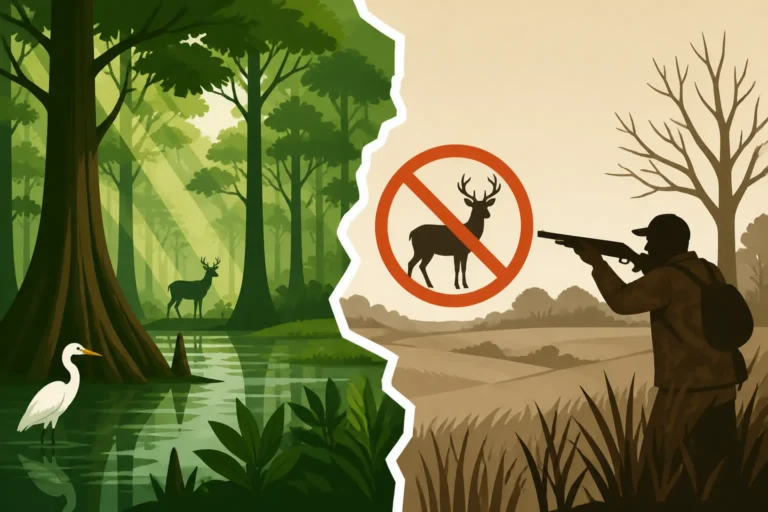
- Congaree National Park (Richland County) – Boundary Rules: While you cannot hunt within Congaree National Park itself, it's worth noting its presence. The park is a natural treasure of old-growth bottomland hardwood forest. Hunters need to be acutely aware of the park's boundaries and ensure they are hunting on adjacent, legal WMA or private land. The sheer amount of deer and other wildlife that utilize the park can make surrounding lands incredibly productive, as animals move in and out. Always be certain of your location to avoid any unintentional trespass. For more on navigating these unique boundaries, see Congaree National Park Boundary Rules.
Making the Most of WMA Maps
Simply knowing a WMA exists isn't enough; you need to know how to hunt it. This starts with meticulously studying maps. The SCDNR website usually provides detailed maps for each WMA, often showing roads, trails, boundaries, and even habitat types. You can also leverage digital tools like the SCDNR's Go Outdoors SC app. This app is incredibly useful for finding public land boundaries, checking specific WMA regulations, and even reporting your harvest. It's a lifesaver in the field, especially if you lose cell service, as many features work offline. Make sure to download maps before you head out. For more on this, check out Using the Go Outdoors SC Map Tool.
When you study these maps, look for key features:
- Access points: Where are the parking areas? Are there interior roads or trails you can use?
- Natural funnels and bottlenecks: Creeks, swamps, thickets, and changes in topography often concentrate deer movement.
- Habitat diversity: Look for transitions between different timber types (pine to hardwood), clear-cuts, and water sources.
- Distance from roads: Areas deeper in the WMA, requiring a longer walk, often see less pressure.
Remember, a map is just the starting point. Combine your map study with actual boots-on-the-ground scouting, especially before the season opens. Scouting South Carolina Public Land Before Season is invaluable for understanding how the terrain really lays, finding fresh sign, and identifying potential stand locations.
Exploring National Forest Lands
South Carolina is home to two National Forests: Francis Marion and Sumter. For Columbia-area hunters, the Sumter National Forest is the most relevant, particularly its Enoree Ranger District.
Sumter Forest's Three Sections Accessible
The Sumter National Forest is divided into three distinct ranger districts, but the Enoree Ranger District is the section most accessible and relevant to hunters living near Columbia. Located generally to the northwest of the city, spanning counties like Newberry, Union, Laurens, and Chester, the Enoree offers a vast landscape of rolling hills, mature hardwood forests, and managed pine stands. This habitat is very different from the coastal plain WMAs and offers a unique hunting experience.
This part of the Sumter National Forest is truly expansive, providing ample room to roam and get away from other hunters if you're willing to put in the legwork. You'll find a mix of older growth timber, younger clear-cuts, and creek bottoms that provide excellent cover and food for deer and turkeys. The terrain is more varied here, with elevation changes that create natural funnels and thermal dynamics that can be used to your advantage. For a deeper dive into hunting specific areas, refer to Enoree Ranger District Deer Hunting.
What to Expect in National Forest Habitat
Hunting in the Enoree Ranger District of Sumter National Forest is a different beast compared to the flat, often dense cover of coastal WMAs. Here, you'll encounter more pronounced topography: rolling ridges, steep creek drainages, and expansive timber tracts. This terrain dictates different hunting strategies. Instead of solely focusing on swamp edges or planted fields, you'll be looking at ridge tops, saddles, and the confluence of drainages.
Deer in the National Forest often utilize elevation changes to travel and feed. Scouting for sign along ridge lines, in creek bottoms, and around potential bedding areas within thick clear-cuts is paramount. You'll need to pay close attention to wind and thermals, as they play a more significant role in these environments. Setting up a stand, or even just planning your approach for still-hunting, requires careful consideration of how scent will travel. Hanging a Stand on a Sumter Forest Ridge is a skill that translates directly to success in this type of habitat. Expect to do more walking, as forest roads may not take you to the prime spots, and be prepared for more rugged conditions. The rewards, however, can be significant, offering a more solitary and challenging hunt than some of the more accessible public lands.
The Art of Gaining Private Land Access
While public lands offer great opportunities, many hunters dream of having their own private slice of heaven. For those near Columbia, gaining private land access often requires persistence, respect, and a bit of luck.
Networking and Local Connections
In South Carolina, especially in the more rural areas surrounding Columbia, hunting on private land is often a matter of who you know. Networking is arguably the most effective way to secure permission. This doesn't mean just asking everyone you meet if they have land; it means building genuine relationships. Get involved in local community events, attend church, join a civic group, or frequent local businesses in the small towns outside Columbia. Strike up conversations with farmers, landowners, and long-time residents.
When you connect with someone, express your passion for hunting and your respect for the land and wildlife. Offer to help out with chores, fence mending, or other tasks, even if it's not directly related to hunting. Building trust takes time, but a good reputation as a responsible, ethical hunter who respects property and rules is invaluable. Word-of-mouth travels fast in rural communities, and a positive impression can open doors that simply asking for permission never would. Remember, you're not just looking for a place to hunt; you're looking to establish a relationship.
Leasing and Hunting Clubs
For many, outright ownership of hunting land isn't feasible, and finding free permission can be tough. This is where hunting leases and clubs come into play. There are numerous hunting clubs and private landowners offering leases in the counties surrounding Columbia, particularly as you move further out into the agricultural and timber-rich areas. Leasing land, whether it's a small tract or part of a larger club, provides exclusive access and typically comes with more consistent management, like food plots or deer stands already in place.
However, leasing land or joining a hunting club involves a significant financial commitment. Lease prices can vary wildly based on location, acreage, timber value, and perceived game quality. Hunting clubs often have annual dues, work requirements, and a set of bylaws that dictate how and when members can hunt. It's crucial to thoroughly research any lease or club before committing. Understand what you're getting for your money, what the rules are, and what the expectations are for members. For more insight into the financial and social aspects, consider reading Finding a South Carolina Hunting Lease or Joining a South Carolina Hunting Club. Be prepared for a competitive market, as good leases close quickly.
Door Knocking and Respectful Inquiries
If networking hasn't yielded results and leasing isn't in the cards, don't rule out the age-old tradition of door knocking. This method requires a thick skin and a respectful approach, but it can still work, especially in less intensely hunted areas or on smaller, overlooked parcels.
When approaching a landowner, always be polite, dress neatly, and be prepared to introduce yourself and state your intentions clearly and concisely. Start by asking if they have any hunting on their property this season, rather than immediately asking for permission. If they say no, accept it gracefully. If they say yes, ask if they might consider allowing you to hunt. Offer to provide references, show proof of insurance, or help with property maintenance. Emphasize your commitment to safety, ethical hunting, and respect for their property. Many landowners are wary of strangers, so being upfront and professional is key. Offering to control nuisance animals like feral hogs can sometimes sweeten the deal. The worst they can say is no, but a polite inquiry might just open up a fantastic opportunity. Remember, getting Asking a South Carolina Farmer for Permission is a privilege, not a right.
Tools and Resources for Your Search
In today's world, hunting success often goes hand-in-hand with smart use of technology and readily available information. For finding access near Columbia, these tools are indispensable.
Digital Mapping Applications and SCDNR Resources
Gone are the days when a paper map and compass were your only scouting tools. While those still have their place, modern digital mapping applications have revolutionized how we find and scout hunting land. The most popular among these, like onX Hunt, are absolute game-changers for any hunter, especially when navigating public and private land boundaries near a growing city.
onX Hunt, for example, allows you to overlay property lines, show landowner names (which is critical for private land inquiries), and differentiate between public and private land with color-coded maps. You can see aerial imagery to scout potential bedding areas, food sources, and travel corridors from your couch. This tool is invaluable for identifying small parcels of private land that might be overlooked by other hunters or for finding isolated public land fingers. You can mark waypoints, measure distances, and track your movements, which is a huge advantage when you're in unfamiliar territory. It's like having a real-time, highly detailed satellite map in your pocket. For understanding how to utilize these digital maps for scouting, especially for deer, you can find a lot of useful information in articles like Reading Aerial Photos for Upstate Deer, which apply broadly to any region with varying terrain.
Alongside commercial apps, the South Carolina Department of Natural Resources (SCDNR) offers fantastic resources, notably through their Go Outdoors SC portal and app. This platform is your official source for buying licenses and permits, reporting harvests, and accessing public land information. Their online map tool and app provide detailed boundaries for WMAs and National Forest lands, as well as specific regulations for each area. While it might not offer the same level of private land detail as onX Hunt, it is absolutely essential for understanding legal hunting areas and rules on public ground. Always double-check information on the SCDNR site or app, as regulations can change.
Local Knowledge and Scouting
While digital maps are incredible, they can never fully replace boots-on-the-ground scouting and the invaluable wisdom of local knowledge. Combining these two elements is truly the recipe for success, particularly when hunting areas that might receive pressure.
Local knowledge means talking to people who live and breathe the area. This could be folks at the local co-op, tackle shop, gas station, or even just friendly faces you meet while driving through a small town. Ask about general wildlife trends, common movements, or where folks tend to see game. They might not give you their secret spot, but they can offer clues about local patterns, unpressured areas, or changes in the landscape that a satellite image won't tell you.
Then comes the physical act of scouting. Even with the best maps, you need to walk the land. Look for fresh deer sign like tracks, rubs, scrapes, and droppings. Identify natural funnels like creek bends, saddlebacks, or brushy fence rows that deer use to travel. Pinpoint food sources – acorn-producing oaks in the hardwoods, persimmon trees, or edges of agricultural fields. Pay attention to bedding areas, often dense cover on south-facing slopes in winter or thickets near water in warmer months. Understanding game trails and how deer move through specific cover is something you can only learn by walking the ground. A comprehensive approach to pre-season reconnaissance, as discussed in Scouting South Carolina Public Land Before Season, will give you a significant advantage, especially when facing competition for prime spots. It's about putting in the time and effort to learn the land intimately, which no app, however advanced, can do for you.
| Resource Type | Primary Benefit for Columbia Hunters | Key Features | Best Use Case |
|---|---|---|---|
| onX Hunt App | Identifying public/private boundaries, landowner info for private access. | Property lines, landowner names, aerial imagery, custom waypoints. | Remote scouting, asking for permission, navigating unknown terrain. |
| SCDNR Go Outdoors SC App | Official public land boundaries, WMA regulations, harvest reporting. | WMA maps, regulations, license access, game check. | Ensuring legal compliance, finding WMA specifics, in-field reporting. |
| SCDNR Website/Regulations | Comprehensive, up-to-date rules for all hunting seasons and areas. | Seasonal dates, bag limits, WMA specific rules, permit info. | Pre-season planning, confirming legalities before a hunt. |
| Local Conversations | Gaining unofficial insights into animal movements, local hotspots, or landowners. | Word-of-mouth advice, community connections. | Networking for private land, understanding local game behavior. |
| Physical Scouting | Confirming ground truth, finding fresh sign, identifying precise stand locations. | Tracks, rubs, scrapes, bedding areas, game trails, food sources, funnels. | Fine-tuning hunt plans, finding less pressured areas, verifying habitat. |
Disclaimer
This article is for general informational purposes only and does not constitute professional advice. Laws, prices and regulations vary by location and change over time. Consult a qualified professional for guidance on your specific situation.