Prescribed Burns and South Carolina Hunting Closures
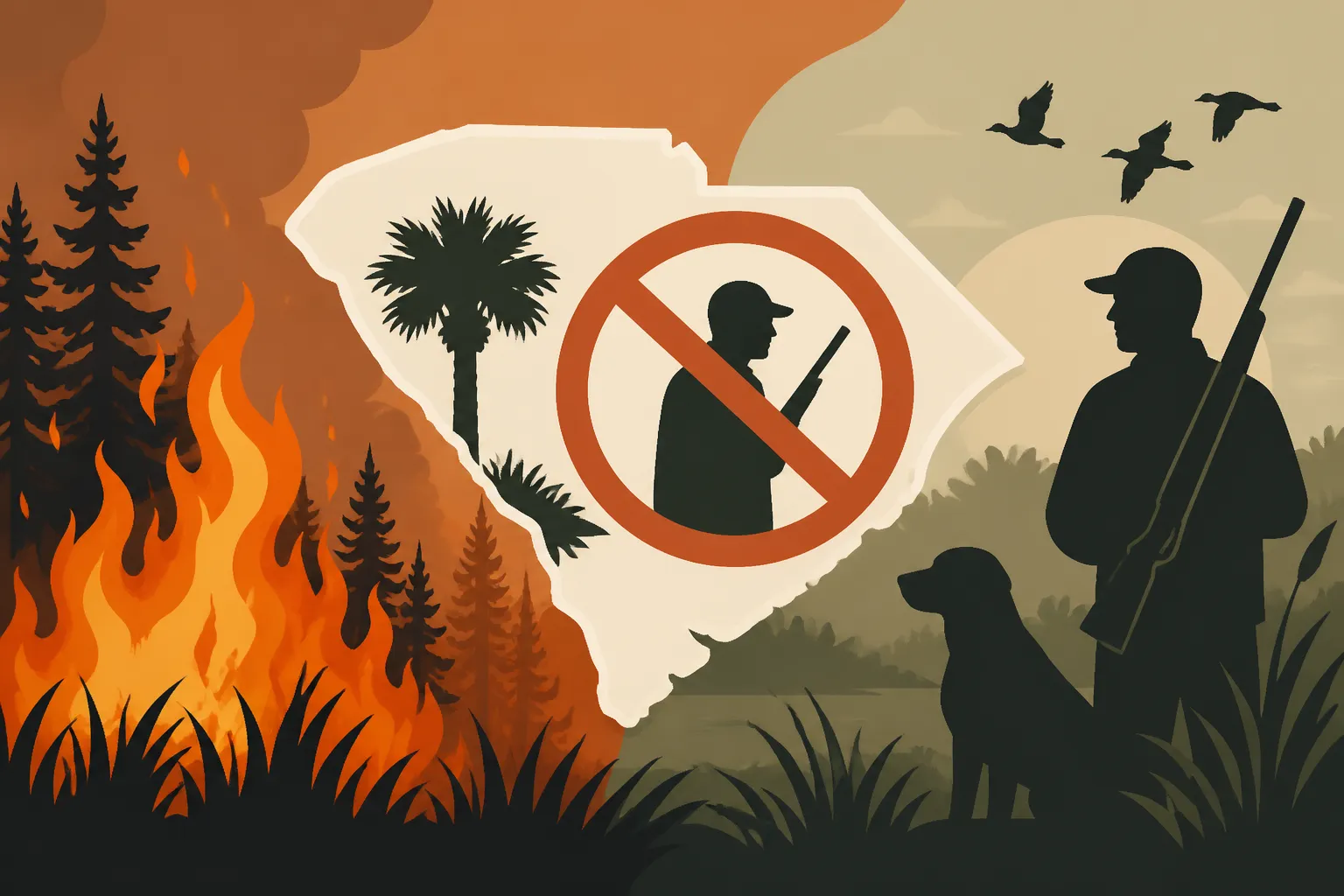
There's nothing quite as frustrating as waking up before dawn, driving an hour to your favorite public land hunting spot, only to pull up and see that dreaded "AREA CLOSED" sign or, worse, smoke curling over the trees. Prescribed burns are a critical tool for managing South Carolina's diverse ecosystems and wildlife, but they often come with temporary closures that can throw a wrench into your carefully laid hunting plans. This guide will walk you through why these burns happen, how they impact your hunting opportunities, and most importantly, how to stay informed and adapt your strategy so you're not left scrambling when your go-to spot is temporarily off-limits.
Understanding Prescribed Burns in South Carolina
Prescribed burns, sometimes called controlled burns, are a deliberate and carefully planned application of fire under specific weather conditions to achieve desired ecological outcomes. This isn't just someone carelessly setting the woods on fire; it's a scientific process steeped in generations of land management knowledge, recognizing fire as a natural and necessary component of many Southern landscapes.
Why Prescribed Burns Are So Important for Wildlife
For a lot of us, fire in the woods sounds like a bad thing, but for the health of South Carolina's forests and the wildlife that calls them home, it's absolutely vital. Historically, lightning strikes and Native American land management practices kept many of our pine forests and longleaf savannas relatively open with frequent, low-intensity fires. These fires cleared out thick underbrush, allowing sunlight to reach the forest floor and stimulating the growth of tender, nutritious forage that deer and other animals absolutely thrive on. Think about it: a dense, unburned forest floor might look "healthy" on the surface, but often it's choked with woody shrubs and leaf litter, offering very little in terms of edible plants for a deer.
When a prescribed burn goes through, it cleans out that competing vegetation and thick pine straw, making way for a burst of new, highly palatable forbs and legumes. Deer are immediately drawn to this fresh, green browse, which is packed with nutrients. Turkeys also benefit immensely; the open understory allows poults to navigate more easily and find the insects they need to grow, while adults have better visibility for spotting predators. Even small game like rabbits and How Managed Pine Could Restore South Carolina Quail rely on this mosaic of open ground and patchy cover that fire creates. It's truly a win-win for habitat improvement, reducing wildfire risk, and boosting the overall health of our game populations.
The Timing and Logistics of a Prescribed Burn
The decision to conduct a prescribed burn isn't made lightly. Land managers, whether they're with the South Carolina Department of Natural Resources (SCDNR), the U.S. Forest Service, or private landowners, consider a multitude of factors. Key among these are weather conditions: wind speed and direction, relative humidity, and temperature must all fall within a very specific prescription to ensure the fire stays controlled and achieves its objectives. Too dry or windy, and it could get out of hand; too wet, and it won't burn effectively. This means that even if a burn is planned months in advance, it might be postponed multiple times until the perfect window of opportunity presents itself.
Most prescribed burns in South Carolina occur during the dormant season (late winter to early spring) or occasionally in the late summer/early fall, depending on the specific goals for the habitat. Dormant season burns are generally used to reduce fuel load and open up the understory, while growing season burns can be more effective at controlling woody vegetation. These operations involve specialized crews, often using drip torches to ignite lines of fire, and heavy equipment to maintain fire breaks. Safety is paramount, with extensive planning, communication, and resources dedicated to keeping the fire contained within its predetermined boundaries. It's a complex dance of science and experienced hands-on management.
How Prescribed Burns Lead to Hunting Closures
The main reason you'll encounter a hunting closure during a prescribed burn event is simple: safety. While these burns are controlled, they are still active fire situations. Smoke, heavy equipment, and the unpredictable nature of fire itself make it an extremely dangerous place for the public, including hunters, to be.
Safety First: The Primary Reason for Closures
Imagine you're deep in the woods, trying to be as quiet and unseen as possible, while just a few hundred yards away, a fire crew is actively pushing a fire line, running ATVs, and operating drip torches. The air might be thick with smoke, reducing visibility to almost nothing. Trees that were previously stable might be weakened by the fire and fall unexpectedly. There's also the very real possibility of a hunter unknowingly walking into an active burn unit, not only putting themselves in harm's way but also diverting critical resources from the fire crew to ensure their safe evacuation.
It's not just about the fire itself, but the entire operation. Emergency vehicles, water tenders, and personnel are constantly moving. For everyone's protection, the areas where prescribed burns are active, and often the surrounding buffer zones, are temporarily closed to all public access, including hunting. These closures are not meant to inconvenience hunters but to safeguard lives. Respecting these closures is non-negotiable, and attempting to circumvent them can lead to serious legal repercussions, not to mention putting yourself and others at extreme risk.
Identifying Affected Areas and Closure Notices
The biggest challenge for hunters isn't usually why an area is closed, but knowing it's closed before they get there. Public land managing agencies in South Carolina, like SCDNR for Wildlife Management Areas (WMAs) and the US Forest Service for the National Forests (like Francis Marion National Forest Hunting and Sumter National Forest Hunting), do their best to communicate burn plans and closures. However, due to the critical dependence on specific weather conditions, short-notice changes are common.
You'll typically find closure notices posted on the respective agency websites. For SCDNR WMAs, check the "Go Outdoors SC" portal or their general hunting information pages. For the National Forests, look at the specific ranger district's alerts and notices. Sometimes, local ranger stations will have signs or recorded messages. This is where planning ahead becomes crucial. Digital mapping applications can also be incredibly useful here. While onX Hunt or GoHunt won't typically show live burn operations, they are invaluable for pinpointing specific land boundaries and contacting the correct managing agency for current information. Always cross-reference with official state and federal sources. A quick phone call to the local ranger office before you head out, especially if you haven't been in a while, can save you a lot of wasted time and gas.
| Source for Burn Information | Type of Information | Typical Notification Time | Best Use for Hunters |
|---|---|---|---|
| SCDNR Website | WMA burn schedules, general closures | Often several weeks in advance, but subject to short-notice changes | Primary source for WMA closures |
| US Forest Service Website (Sumter/Francis Marion) | National Forest burn plans, specific area closures | Variable, check district-specific alerts | Primary source for National Forest closures |
| Local Ranger Stations | Real-time updates, local knowledge | Often daily updates | Confirming last-minute closures, asking about specific areas |
| Social Media Channels | Alerts, photos of active burns | Can be very real-time | Quick checks, visual confirmation |
| Mapping Apps (e.g., onX Hunt) | Land boundaries, contact info for agencies | N/A (not live burn data) | Identifying public land, finding agency contacts for verification |
Navigating Hunting Closures and Finding Alternative Spots
Getting to your favorite hunting spot only to find a closure sign can feel like a punch to the gut. But with a little preparation and flexibility, these temporary setbacks don't have to ruin your hunt. South Carolina boasts a lot of public land, and chances are, there's another great spot not too far away. How Many Acres of Public Land South Carolina Has is pretty impressive, giving you options.
Planning Ahead with Online Resources and Apps
The key to dealing with burn closures is proactive planning. Don't wait until opening morning to check on your chosen spot. Make it a habit to check the relevant agency websites (SCDNR, US Forest Service) a few days, or even a week, before you plan to hunt. Many agencies will post tentative burn schedules, giving you a heads-up, even if dates aren't firm. Remember, weather is always the wild card.
This is where your mapping apps really shine, even if they don't show active burns. Use tools like onX Hunt or GoHunt to identify other South Carolina Wildlife Management Areas or sections of the National Forests in your general hunting vicinity. If your usual stand in the Francis Marion National Forest is closed, perhaps there's another block of timber a few miles down the road, or a nearby WMA, that isn't affected. Having several backup plans is crucial, especially during peak seasons like early deer archery or spring turkey. Use these apps to scout potential alternative spots from home, looking for similar habitat features, access points, and terrain that might hold game. Scouting South Carolina Public Land Before Season is invaluable, and it includes knowing multiple spots.
Scouting Post-Burn Areas for Future Opportunity
While an active burn area is off-limits, the ground after a burn becomes incredibly attractive to wildlife, and astute hunters can leverage this for future seasons. Once an area has had time to cool down and the initial charring has settled, typically a few weeks to a month later, you can usually re-enter and begin scouting. What you'll find is a landscape transformed. The forest floor will be cleared of much of its dense undergrowth, making it easier to walk and revealing terrain features and old trails that were once hidden.
More importantly, the wildlife will respond. Within a few weeks, especially with some rain and sunshine, tender new growth will emerge from the blackened soil. This fresh, nutritious browse is a magnet for deer. Turkeys will be drawn to the exposed insects and seeds on the forest floor. Spend time walking these areas, looking for tracks, scat, and new feeding signs. Pay close attention to the edges where the burn stopped, as these transition zones are often highly productive. A stand of mature pines adjacent to a recently burned area, for instance, can be a fantastic setup for deer looking to browse the new growth while having quick access to cover. Understanding the long-term impact will make you a more successful hunter.
The Long-Term Benefits of Prescribed Burns for Hunters
While temporary closures can be annoying, it's vital to remember that prescribed burns are one of the most effective tools we have for creating and maintaining prime hunting habitat in South Carolina. The short-term inconvenience pays off with significant long-term gains for both wildlife and the hunter.
Improved Habitat for Deer and Other Game
The ecological benefits of prescribed fire directly translate into better hunting. When understory vegetation is regularly managed with fire, it encourages the growth of a diverse array of native grasses, forbs, and legumes – essentially, a buffet for deer. This improved nutrition means healthier deer, higher fawn survival rates, and often, better antler development. If you're wondering Why the Midlands Grows Big Bucks, habitat management, including burns, plays a significant role. These areas often experience higher deer densities and offer more consistent opportunities year after year.
Turkeys also thrive in burned landscapes. The open understory makes it easier for hens to nest and bring off poults, as well as for them to find insects and seeds. In dense, unburned woods, thick tangles can make it hard for young birds to move and expose them to predators. Burns create the patchy, open woodlands that gobblers and hens prefer. Similarly, small game like rabbits and squirrels benefit from the diverse food sources and cover created by the burn-regrowth cycle. It's all part of a larger plan to keep our wildlife populations robust and provide quality hunting experiences. Hunting the South Carolina Rut by Zone will certainly be better in areas with consistent habitat management.
Better Access and Visibility for Hunters
Beyond just improving the menu for deer, prescribed burns can dramatically enhance the hunting experience itself by making the woods more hunter-friendly. After a burn, the dense, often impenetrable underbrush that can make walking and still-hunting a chore is gone. This opens up the forest floor, allowing you to move through timber with greater stealth and less noise. Suddenly, areas that were too thick to hunt effectively become accessible, expanding your huntable acreage.
The improved visibility is another huge plus. In heavily wooded areas, seeing deer more than 30 or 40 yards away can be a real challenge. After a burn clears out the sight-obscuring palmettos, briars, and saplings, your effective range for spotting game increases significantly. This can be particularly beneficial for Bowhunting South Carolina's Long Archery Season where shot windows are already tight. It also makes tasks like Reading a Ridge for Upstate Deer much easier, as you can see topography and game trails more clearly. Furthermore, burns can reveal old logging roads, forgotten trails, or natural funnels that were previously hidden, providing new Entry Routes Through Standing Soybeans or better opportunities for stand placement. Even something as simple as Tracking a Deer Through South Carolina Pine Straw becomes a little easier when the ground cover isn't so thick. While the temporary closures might be a pain, the long-term benefits of enhanced habitat, better deer, and easier hunting conditions are truly worth it.
Disclaimer
This article is for general informational purposes only and does not constitute professional advice. Laws, prices and regulations vary by location and change over time. Consult a qualified professional for guidance on your specific situation.