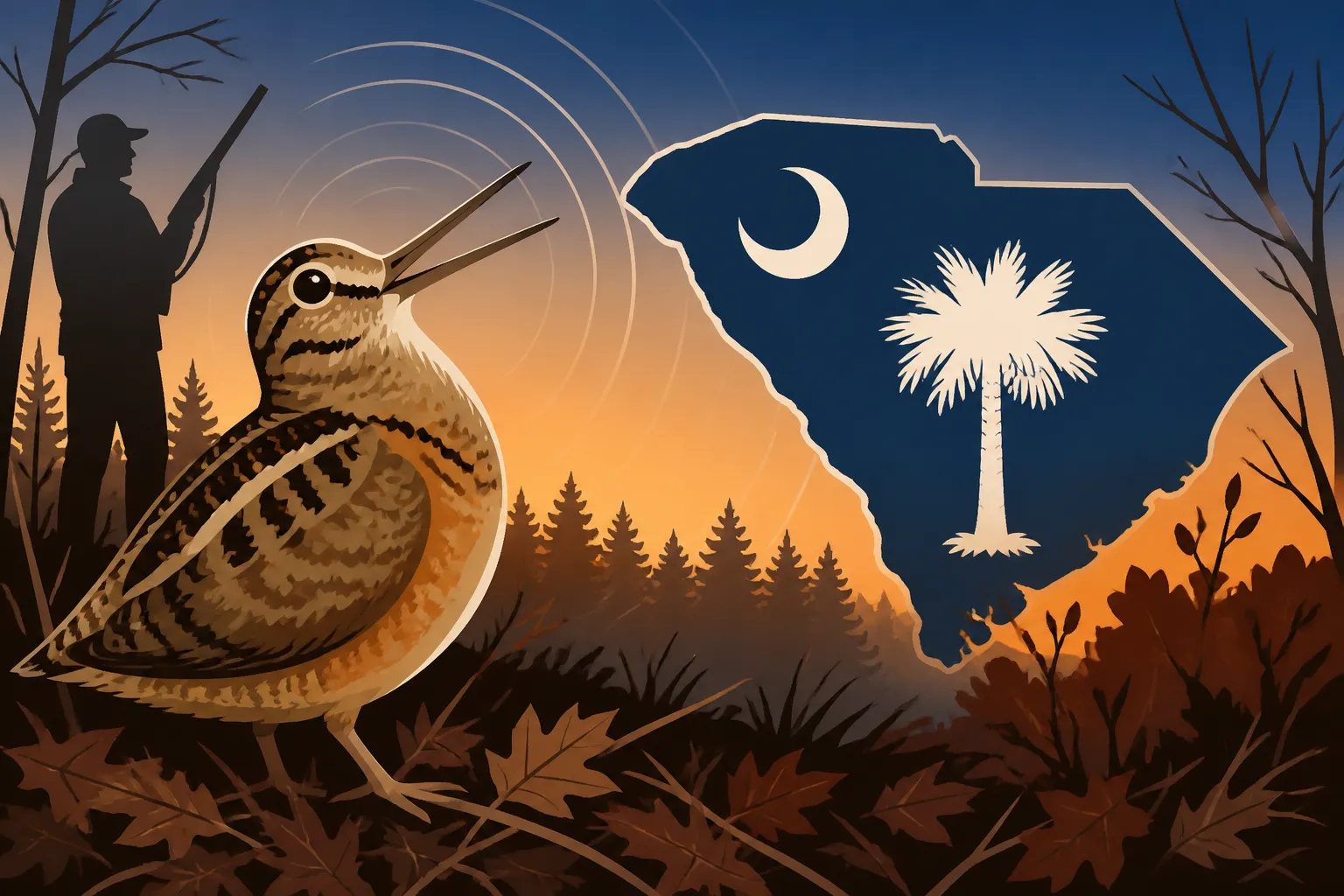
South Carolina Woodcock Singing Ground Surveys
Hunting woodcock in South Carolina can feel like chasing ghosts; these elusive, timber-dwelling birds are notoriously difficult to pin down, leaving many hunters wondering about their population health and where they might be found. Thankfully, dedicated efforts are made each year to give us a clearer picture of their numbers and breeding success right here in the Palmetto State, and this guide will walk you through the essential role of woodcock singing ground surveys in understanding these fascinating migratory birds.
The Secret World of the Timberdoodle: What are Singing Ground Surveys?
When you hear "woodcock," most hunters probably picture a small, long-billed bird flushing from thick cover, zig-zagging wildly through the pines. But before they're flying, they're performing a spectacular aerial courtship display, especially the males. This is where the "singing ground survey" comes in, and it's absolutely crucial for understanding our woodcock population. These surveys aren't about counting every single bird, which would be impossible for such a secretive species; instead, they focus on the male woodcock's unique breeding ritual.
During late winter and early spring evenings, male woodcock establish what are known as "singing grounds." These are typically small, open clearings, old logging decks, or even just sparse patches within young forests, surrounded by thicker cover. As dusk settles, the male will strut and make a distinct "peent" call on the ground before launching into an incredible spiral flight, often climbing hundreds of feet into the air. He then descends in a breathtaking zig-zag pattern, making a twittering sound with his wings, finally landing back on his chosen singing ground to start the process all over again. It's truly one of nature's marvels, and it's this predictable, vocal behavior that allows biologists and volunteers to monitor their numbers.
The purpose of these surveys is twofold: first, to estimate the relative abundance of breeding male woodcock in specific regions, and second, to track long-term population trends. Because woodcock are migratory birds, these localized surveys contribute to a much larger picture across the entire Eastern Seaboard, feeding into data sets for the Atlantic Flyway. Without this consistent data, wildlife managers would be largely in the dark about the health of the woodcock population, making it incredibly difficult to make informed decisions about hunting seasons or habitat conservation efforts. It's a foundational piece of the puzzle for a bird that spends a good portion of its life tucked away from plain sight.
How South Carolina Conducts Woodcock Singing Ground Surveys
South Carolina's participation in the nationwide Woodcock Singing Ground Survey is a coordinated effort, predominantly carried out by the South Carolina Department of Natural Resources (SCDNR) with assistance from dedicated volunteers. The methodology is precise and consistent year after year, which is paramount for collecting reliable, comparable data. These surveys don't just happen randomly; they follow established routes, ensuring that the data collected over decades can be accurately compared to reveal trends.
Imagine driving along a designated route in the late afternoon or early evening during the peak of the woodcock breeding season, which typically runs from late February through mid-March in South Carolina. This timing is crucial, as it coincides with when male woodcock are most actively performing their aerial displays. Each route is comprised of multiple pre-determined stops, often spaced about a half-mile apart. At each stop, the surveyor — whether an SCDNR biologist or a trained volunteer — will listen intently for a set period, usually around two to five minutes, specifically for the "peent" call of the male woodcock and their characteristic flight songs. The number of distinct "peents" heard, and the number of individual birds identified, is carefully recorded.
These routes are not just designed to capture a snapshot; they are historical pathways. Many have been surveyed for decades, providing an invaluable longitudinal dataset. This consistency allows researchers to observe population fluctuations, identify areas where woodcock numbers might be declining or stable, and even pinpoint potential habitat changes. While a tool like GoHunt might help you locate suitable public hunting lands or understand game distributions, the actual collection of this singing ground data relies on physical presence and trained ears in the field, often in some pretty remote spots. The commitment to these routes, even in the face of changing weather or challenging conditions, underscores the importance of this work for migratory bird conservation. It's a real boots-on-the-ground effort to get a handle on a bird that otherwise would remain a complete mystery to biologists.
Interpreting Survey Results and Understanding Population Trends
Once the field data from the South Carolina Woodcock Singing Ground Surveys is collected, the real work of interpretation begins. These raw counts of "peenting" males are then compiled and analyzed, both at the state level by SCDNR and then integrated into a much larger national dataset by the U.S. Fish and Wildlife Service. This comprehensive approach allows biologists to discern local trends and compare them to broader regional and continental patterns, painting a clearer picture of the woodcock's overall health on the South Carolina's Place on the Woodcock Flight.
The key to understanding these results isn't necessarily the raw number of birds counted in a single year, but rather the change in those numbers over time. Biologists look for statistically significant increases, decreases, or periods of stability. For woodcock, like many migratory birds, there have been concerns about long-term population declines across their range, often attributed to habitat loss, particularly the disappearance of young, early-successional forests that they depend on for breeding and foraging. If South Carolina's survey data shows a consistent downward trend in the number of peenting males over several years, it signals a potential problem that warrants further investigation and management intervention.
However, interpreting these results isn't always straightforward. Factors like observer variability (some people have sharper ears or more experience), localized weather conditions (wind and rain can suppress calling or make it harder to hear), and even annual variations in breeding intensity can influence the counts. A cold snap or a particularly windy evening during the survey window could lead to lower counts that don't necessarily reflect a true population decline. Nonetheless, by averaging data over multiple years and across many routes, these surveys provide the best available index of woodcock breeding populations. This data then becomes a critical piece of information when state wildlife agencies, including SCDNR, evaluate South Carolina Small Game Season Rules and consider season lengths and bag limits, ensuring that hunting opportunities remain sustainable based on the best scientific understanding of the resource.
Here's a simplified look at the aspects of the survey:
| Aspect | Description | Significance for Woodcock |
|---|---|---|
| Purpose | Monitor breeding male population trends over time | Foundation for conservation and hunting regulations |
| Timing | Late February – Mid-March evenings (South Carolina) | Coincides with peak male courtship activity |
| Methodology | Driving established routes, listening at set stops for "peents" | Standardized data collection for consistent comparison |
| Key Indicator | Number of "peents" heard per stop or route | Index of local breeding male abundance |
| Data Usage | Inform state and federal migratory bird management decisions | Helps ensure sustainable hunting and habitat protection |
| Habitat Focus | Young forest, clearings, moist soil with dense understory | Identifying critical breeding and foraging areas |
The Hunter's Role and Future of Woodcock Management
For those of us who appreciate the timberdoodle, understanding the South Carolina Woodcock Singing Ground Surveys isn't just about academic interest; it directly connects to our hunting heritage and the future of this unique game bird. The data collected from these surveys plays a vital role in setting South Carolina Woodcock Season Dates and ensuring that hunting remains a sustainable activity. If populations show significant decline, adjustments might be necessary to protect the resource. But beyond regulation, hunters also play a crucial role in broader woodcock conservation efforts.
One of the biggest takeaways from woodcock surveys is the critical importance of habitat. These birds thrive in young, early-successional forests – areas that have recently been logged, burned, or disturbed, leading to a dense tangle of saplings, shrubs, and moist soil. Unfortunately, across many parts of the country, including South Carolina, these habitats are becoming less common as forests mature or are converted to other uses. This decline in prime habitat is a primary driver behind the long-term woodcock population declines noted in many survey regions. As hunters, advocating for and supporting habitat management practices that create and maintain these young forest ecosystems is paramount. Land management agencies like the U.S. Forest Service or SCDNR, who manage areas like Public Hunting Land in South Carolina, often implement prescribed burns or timber thinning that can benefit woodcock.
For the passionate upland hunter, this also means knowing where to look. While the surveys track breeding populations, the principles of woodcock habitat selection remain consistent. Using tools like GoHunt can help you identify areas with the right kind of cover – bottomland hardwoods, creek bottoms with dense saplings, or clear-cuts – that will attract these birds during migration and potentially hold resident breeders. Paying attention to areas with good soil moisture and dense overhead cover, even Hunting Small Woodlots Near Suburban Columbia, can be surprisingly productive. Furthermore, hunters contribute data indirectly through their harvest reporting, a critical component for South Carolina HIP Certification for Bird Hunters, which helps federal agencies track harvest numbers against population estimates. By understanding the science behind the surveys and actively participating in conservation, we can help ensure that the unique aerial ballet of the timberdoodle continues for generations to come.
Disclaimer
This article is for general informational purposes only and does not constitute professional advice. Laws, prices and regulations vary by location and change over time. Consult a qualified professional for guidance on your specific situation.