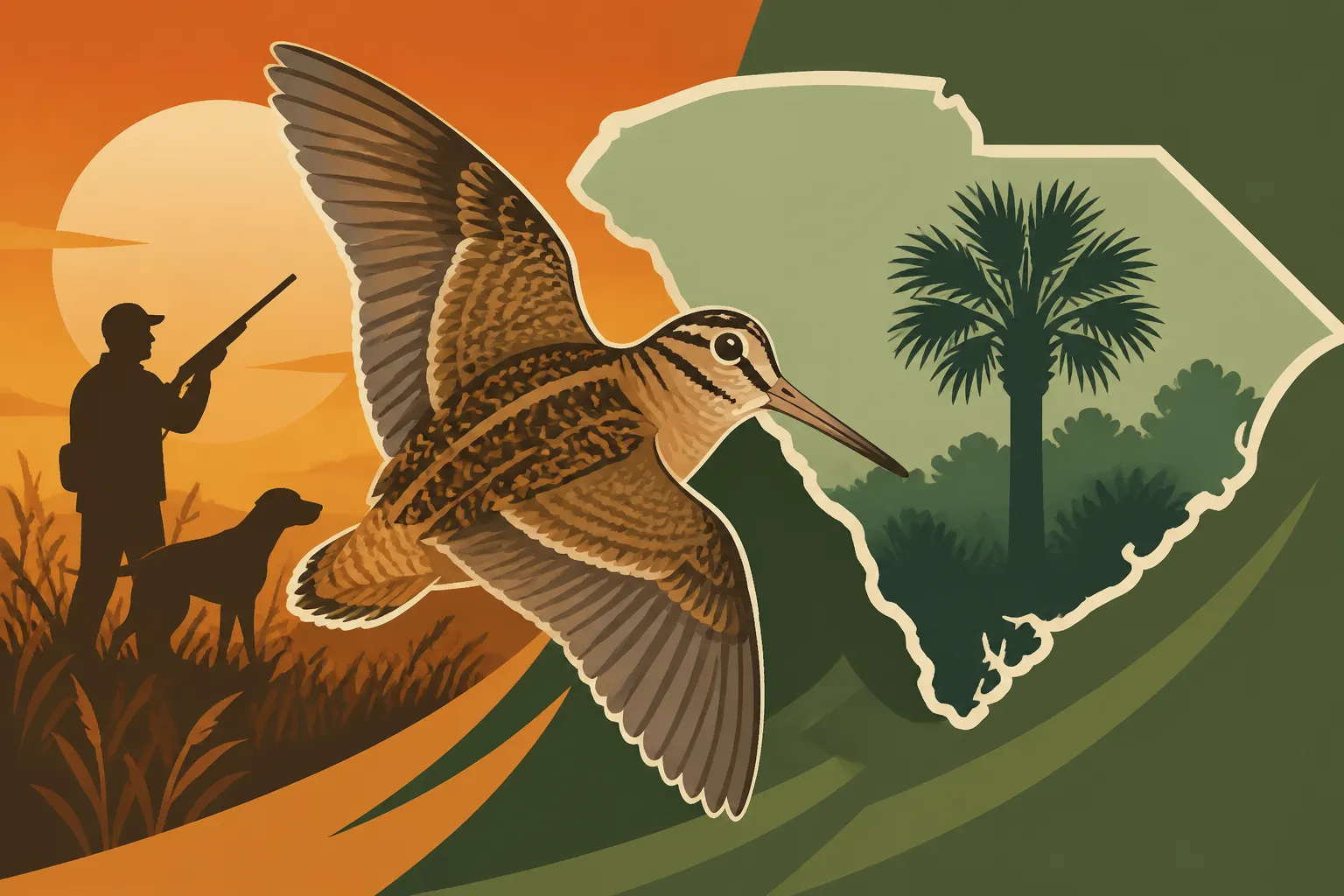
South Carolina’s Place on the Woodcock Flight
For many wing shooters, the American woodcock is a bird of mystery, an enigma that appears seemingly overnight in our South Carolina woods, only to vanish just as quickly. Trying to pin down their elusive migratory patterns and predict their arrival can be a real headache, leaving you wondering if you're ever in the right place at the right time. This comprehensive guide will pull back the curtain on South Carolina's unique position along the woodcock's migratory route, helping you understand their movements, identify prime habitat, and sharpen your hunting strategies for this incredible little timberdoodle.
Understanding the American Woodcock Migration
The American woodcock, often called a timberdoodle or bogsucker, is a fascinating shorebird that has adapted to an upland existence. Its long bill, camouflaged plumage, and nocturnal habits make it truly unique among game birds. Understanding their annual migration is key to appreciating their presence in our state.
The Annual Journey South
Every year, as the days shorten and the ground begins to harden in their northern breeding grounds—places like the Great Lakes states, New England, and Canada—woodcock embark on an incredible journey south. They're not like ducks or geese, flying in massive, high-altitude V-formations. Instead, woodcock are typically solitary migrants, often moving under the cover of darkness, flying low over the landscape. Their migration is less about escaping extreme cold directly and more about securing access to their primary food source: earthworms. As frost penetrates the soil up north, the worms become unavailable, forcing the woodcock to seek warmer, softer ground.
This means their arrival in states like South Carolina is usually a staggered affair, not a sudden influx. You might find a few early arrivals in late October, a stronger push through November, and then a solid population settling in by December. These birds are driven by instinct, but also by local weather patterns. A strong cold front pushing south can often bring a fresh wave of birds right along with it. Their internal clock, combined with environmental cues like temperature and soil conditions, triggers this remarkable annual flight, bringing them to our fields and forests.
Factors Influencing Migration Timing
While the general timeframe for woodcock migration is predictable, the exact timing can vary significantly from year to year. Several factors play a crucial role. First and foremost is temperature. Sustained freezing temperatures and deep snow cover in their breeding grounds are the primary catalysts for their southward movement. If the North experiences a mild fall, their departure might be delayed. Conversely, an early, harsh winter can send them packing ahead of schedule. Secondly, rainfall and soil moisture are critical. Woodcock rely on moist, soft soil to probe for earthworms with their specialized bills. Drought conditions in the north can hasten their migration, as dry, hard ground makes feeding difficult, regardless of temperature.
Another subtle factor is moon phase. Some research suggests that woodcock tend to migrate more actively during periods of brighter moonlight, which aids their nocturnal travels. While we can't control these elements, being aware of them helps us anticipate when to expect the birds. Staying tuned to weather forecasts, especially for states directly north of us, can provide valuable clues. For hunters, this means keeping an eye on those first hard freezes in the Carolinas and points north – that’s often your signal that birds are on the move and that South Carolina Woodcock Season Dates are approaching.
Woodcock Physiology and Flight Capabilities
The woodcock is a master of camouflage, but its unique physiology extends beyond its appearance. These birds possess eyes set high and far back on their heads, giving them an almost 360-degree field of vision. This is incredibly useful for detecting predators from any angle while their head is down probing for worms. Their long, flexible bill has a prehensile tip, allowing them to grasp worms deep in the soil without opening their entire bill. This adaptation is essential for their diet.
Despite their somewhat awkward, bobbing walk on the ground, woodcock are surprisingly strong, agile flyers. Their short, rounded wings beat rapidly, producing a distinctive, whistling sound as they flush from cover. This unique flight pattern, often a corkscrew ascent through dense timber, makes them a challenging target for even experienced wing shooters. Their aerial courtship displays, known as "sky dances," are truly magnificent to witness, showcasing their surprising aerobatic abilities. While they might look like clumsy little brown birds, their physical adaptations are perfectly suited to their specialized niche, allowing them to undertake long migrations and thrive in dense cover.
South Carolina's Role as a Wintering Ground
South Carolina holds a significant position on the Atlantic Flyway for American woodcock. It's not just a pit stop; for many birds, it's their final destination for the colder months, offering the ideal conditions they need to survive until spring.
Coastal Plain Stopovers
The vast expanse of South Carolina's Coastal Plain is a critical region for migrating woodcock. As they push south, often following river drainages and low-lying areas, the coastal counties provide the first extensive stretches of soft, unfrozen ground. Think about the rich, loamy soils of the ACE Basin or the dense, tangled bottomlands along the Pee Dee River. These areas are magnets for newly arrived birds. They're looking for places to rest, refuel, and rehydrate after their long flights.
During peak migration, hunters might encounter a sudden flush of birds in an area that was devoid of them just days before. These "pockets" of fresh birds often coincide with cold fronts pushing through. The coastal plain's milder winters mean that even if an inland area experiences a hard freeze, the coast often remains hospitable, providing a consistent food source. These stopover points are vital for the birds' survival, allowing them to regain energy before either pushing further south or settling in for the duration of the winter. This is why you might find great hunting one day, and the birds seem to have moved on the next – they're still working their way down the migration path.
Inland Wintering Areas
While the coast is undoubtedly important, woodcock don't exclusively winter along the immediate saltwater. Significant populations also settle in the state's inland regions, particularly in the Midlands and lower Upstate, wherever suitable habitat exists. River floodplains, creek bottoms, and moist, young pine plantations are prime examples. Areas near towns like Columbia, Sumter, or Orangeburg, with their rich agricultural lands and interconnected water systems, can hold good numbers of birds.
The key here is protection from hard freezes. Even in the Midlands, a prolonged cold snap can freeze the top layer of soil, making it impossible for woodcock to feed. When this happens, birds will typically move to even lower, wetter ground, often concentrating around natural springs, seepages, or dense, brushy thickets that offer thermal cover. A hunter might find birds clustered in surprisingly small pockets during these cold spells. These inland wintering grounds are just as crucial as their coastal counterparts, providing diversity in habitat and buffering against localized environmental changes. Knowing about these different zones can really help hunters scouting South Carolina Public Land Before Season.
The Importance of Warm Weather and Food
The very essence of why woodcock choose South Carolina as a wintering destination boils down to two critical factors: warm weather and abundant earthworms. Unlike many other migratory birds that feed on seeds or berries, woodcock are obligate insectivores, with earthworms making up the vast majority of their diet. If the ground freezes solid for an extended period, they simply can't survive.
South Carolina's generally mild winters ensure that most of the state's soils remain soft enough for woodcock to probe. Even during brief cold snaps, the ground typically thaws quickly. The sandy loams and rich organic soils, particularly in bottomlands and along waterways, are teeming with earthworms. This consistent food supply, coupled with the dense, protective cover offered by young timber and brushy edges, creates a perfect overwintering haven. It's a testament to the biological needs of this species that they travel thousands of miles for accessible food, and South Carolina largely provides it throughout the winter months.
Optimal Habitat for Woodcock in the Palmetto State
Finding woodcock isn't about just walking through any woods; it's about knowing their precise habitat preferences. These birds are particular, and once you learn to "read" the land for woodcock sign, you'll start to unlock their secrets.
Young Forests and Wet Bottomlands
Woodcock absolutely thrive in young, regenerating forests and wet bottomland areas. They need dense, early successional growth for cover, places where they can effectively hide from predators like hawks and owls. Think about areas that have been clear-cut within the last 5-15 years and are now growing back thick with saplings, briars, and low-lying shrubs. These spots, often overlooked by deer hunters, are goldmines for woodcock.
Beyond dense cover, the wet aspect is non-negotiable. They need moist, easily probe-able soil for foraging. This is why you'll often find them along the edges of swamps, creeks, and river bottoms, or in low-lying depressions in the uplands that retain moisture. These areas typically have a soft, organic layer of soil that's rich in earthworms. A common mistake is to hunt too dry; woodcock won't be in bone-dry pine stands or mature, open hardwoods. Look for those messy, brushy, slightly damp areas – that’s where the timberdoodle magic happens.
Alders, Willows, and Moist Soil
When it comes to specific vegetation, woodcock have a strong preference for thickets of alders and willows. These tree species typically grow in damp, disturbed soils along waterways, creating the perfect dense overhead cover and moist ground conditions that woodcock crave. You’ll often find them tucked into these impenetrable-looking tangles. Beyond alders and willows, look for other moist-soil indicators like dog hobble, greenbrier, and dense stands of young sweetgum or red maple saplings.
The ground cover is equally important. A sparse understory will not hold birds; they need that thick, almost claustrophobic, brushy layer to feel secure. The ideal woodcock cover isn't just moist; it often has a leaf litter layer that isn't too deep, allowing them to probe easily without expending too much energy. Knowing how to Reading a Tidal Creek for Deer Movement might not seem directly related, but the same principles of identifying moist, low-lying areas and understanding soil conditions can apply to finding woodcock. If you're using a tool like GoHunt, you can often use its satellite imagery and topographic maps to identify these specific types of riparian corridors and low-lying areas that are likely to hold water and thus, woodcock.
Private Land Versus Public Land Habitat
South Carolina offers woodcock habitat on both private and public lands, though access and management can differ significantly. On private timberlands, especially those actively managed for forestry, you'll often find excellent woodcock habitat in various stages of regeneration. Clear-cuts allowed to grow back naturally or those replanted with pine that haven't yet canopied often create ideal conditions. Landowners managing for wildlife might also create specific woodcock-friendly areas. Securing permission to hunt these private tracts can yield fantastic results, though it often requires a bit of networking and politeness.
Public lands, particularly many of our Wildlife Management Areas (WMAs) and national forests like the Francis Marion National Forest or Sumter National Forest, also hold significant woodcock populations. These areas often contain extensive bottomlands, creek drainages, and areas of periodic timber harvest that cycle through optimal growth stages. However, public lands can see more pressure, and finding those less-disturbed pockets requires diligent scouting. Tools like the GoHunt app can be invaluable for pinpointing potential habitat on public land, allowing you to identify those green-hued bottomlands and clear-cut edges before you even step foot in the woods. Remember to check the specific South Carolina WMA Permit Requirements before heading out to any public land.
Hunting Woodcock in South Carolina: Seasons and Tactics
Hunting woodcock is a unique and rewarding experience. It's not about long-range shooting or sitting in a blind; it's an active, dog-driven pursuit that immerses you in some of the densest cover our state has to offer.
Navigating South Carolina's Woodcock Season Dates
Understanding when you can legally pursue woodcock in South Carolina is your first step. Unlike deer or turkey seasons which vary by zone, South Carolina Woodcock Season Dates are generally statewide and fall within a specific federal framework, as woodcock are a migratory bird. Typically, the season runs from early December through late January, though the exact dates can shift slightly each year. It's crucial to consult the current year's SCDNR migratory bird regulations booklet or their website to confirm the precise opening and closing dates, as well as bag limits.
The daily bag limit for woodcock is usually generous enough for a satisfying hunt, allowing hunters to take several birds per day. Remember, because they are migratory birds, you are also required to be HIP (Harvest Information Program) certified, in addition to having your standard hunting license. This isn't just a formality; it's how the US Fish and Wildlife Service gathers critical data on migratory bird harvest, which in turn informs management decisions for species like the woodcock. Ensuring you're compliant with all regulations before you step into the field is paramount.
Finding Birds and Working Cover
Finding woodcock often feels like a treasure hunt. These birds are masters of camouflage, and they hold extremely tight, often letting you walk right past them before flushing explosively at your feet. The key is to slowly and systematically work through the dense cover you've identified as prime habitat. Look for "sign" – their distinct white splash markings (droppings) and small, pencil-sized probing holes in the moist soil where they've been feeding. Finding these signs is a strong indicator that birds are or have been present.
When working cover, try to move in a grid pattern or zig-zag, ensuring you cover all potential hiding spots. Woodcock love edges: the edge of a thicket, the edge of a creek, or the edge of a small clearing within a dense area. When a bird flushes, pay close attention to its flight path. While they might corkscrew initially, they often drop back into similar dense cover nearby. Mark where they went down as best you can, because a reflushed bird might hold even tighter. This methodical approach, often requiring patience and persistence, is what separates successful woodcock hunters from those who just wander through the woods.
Gear and Dog Work for Success
Woodcock hunting is a perfect arena for a good bird dog. A well-trained pointing dog, typically a setter or a pointer, is invaluable for locating these tightly holding birds. The dog can scent the bird, go on point, and allow you to walk in for the flush, greatly increasing your chances. Flushing dogs, like spaniels, can also be effective, driving birds out of thick cover. Regardless of breed, ensure your dog is well-conditioned for working in dense, often wet, terrain and is wearing appropriate Bird Dog Gear for South Carolina Cover.
For the hunter, lightweight gear is essential. You'll be walking through some seriously thick stuff, so comfortable, briar-proof clothing is a must. Snake boots are a wise choice in South Carolina's swamps and bottomlands. A lightweight shotgun, typically a 20 gauge or 28 gauge, with an open choke (like improved cylinder or skeet) and light upland loads (#7.5 or #8 shot), is ideal for the close-quarters, fast-flushing shots you'll encounter. Remember, you'll also need to wear blaze orange during many of our hunting seasons, so a good Upland Vests With Water Capacity is a smart addition to your kit, providing both visibility and hydration.
| Feature | Ideal Woodcock Habitat | Less Ideal Woodcock Habitat |
|---|---|---|
| Soil Moisture | Consistently moist, soft | Dry, hard, or frozen |
| Vegetation | Dense, young saplings, briars, alders, willows, dog hobble | Mature, open hardwoods, dense pine canopy with no understory |
| Location | River bottoms, creek edges, swamp fringes, old clear-cuts (5-15 yrs post-harvest), power line cuts | High, dry ridges, manicured lawns, agricultural fields (unless immediately adjacent to cover) |
| Food Source | Abundant earthworms | Scarce earthworms |
| Cover Density | Very dense, low-lying | Open understory |
Conservation Efforts and Woodcock Future
The American woodcock is a well-managed game bird, thanks to ongoing research, habitat initiatives, and the dedicated efforts of conservation organizations and hunters. Ensuring a healthy future for this unique species is a collective responsibility.
Habitat Management Initiatives
One of the biggest challenges for woodcock populations, like many other early successional species, is habitat loss and degradation. As forests mature and open up, or as land is converted to other uses, the specific young, moist, brushy cover that woodcock require diminishes. Fortunately, many state and federal agencies, along with private conservation groups, are actively working to manage and create woodcock habitat. This often involves timber harvests that create young forest patches, prescribed burning to maintain open understories, and managing riparian zones for optimal vegetation.
Organizations like the Ruffed Grouse Society and American Woodcock Society are instrumental in promoting these habitat management practices across the woodcock's range, including South Carolina. These efforts benefit not only woodcock but also many other species that rely on young forest habitat, such as cottontails and deer. Landowners interested in supporting woodcock can find resources and guidance on implementing beneficial management practices.
Population Monitoring and Research
Understanding the health of the woodcock population is crucial for effective management. This is achieved through various monitoring programs and research initiatives. The primary method for tracking woodcock numbers is the Singing Ground Survey, conducted annually across their breeding range. Biologists listen for the distinctive "peent" calls of male woodcock during their courtship displays, providing an index of population trends. This long-running survey helps scientists identify areas of concern and adapt management strategies.
In South Carolina, our SCDNR biologists also participate in broader migratory bird surveys and conduct localized observations to assess the presence and health of wintering populations. When hunters comply with South Carolina HIP Certification for Bird Hunters requirements, they contribute vital harvest data, which is another piece of the puzzle. All this information feeds into regional and national assessments, ensuring that hunting regulations are set at sustainable levels and that conservation efforts are targeted where they're most needed. This commitment to data-driven management is why we can continue to enjoy woodcock hunting year after year.
Hunter's Role in Stewardship
As woodcock hunters, we play a critical role in the stewardship of this species. Beyond adhering to all regulations and ethical hunting practices, our participation in the sport provides the funding and political will necessary for conservation. Hunting license fees, excise taxes on firearms and ammunition (through the Pittman-Robertson Act), and contributions to organizations like the Ruffed Grouse Society directly support habitat work and research.
By being informed about South Carolina Small Game Season Rules and the specific needs of the woodcock, we become advocates for their habitat. Taking the time to scout new areas, understanding the subtle signs of woodcock presence, and even considering ways to manage private land for their benefit all contribute to their long-term survival. The camaraderie found in woodcock hunting, often shared with friends and good dogs, creates a powerful bond with the land and its wildlife, reinforcing our commitment to ensuring future generations can experience the thrill of a timberdoodle flush.
Disclaimer
This article is for general informational purposes only and does not constitute professional advice. Laws, prices and regulations vary by location and change over time. Consult a qualified professional for guidance on your specific situation.