Mourning Doves in South Carolina
That feeling when the air finally cools just a touch in late summer, and you hear the distant cooing of a mourning dove—it brings a rush, doesn't it? For many of us, dove season isn't just another hunt; it's the unofficial kickoff to fall, a cherished tradition, and a chance to gather with friends and family in a field. But chasing these fast-flying acrobats isn't always as simple as it sounds. From understanding their unpredictable movements to navigating regulations and finding that perfect setup, there's a lot to consider to make your South Carolina dove hunt a success. This guide will walk you through everything you need to know to truly master the art of dove hunting here in the Palmetto State.
Understanding Mourning Doves: The Ubiquitous Game Bird
Mourning doves are more than just a target; they're a vital part of South Carolina's ecosystem and a testament to successful wildlife management. Their plaintive coo is a familiar sound across our state, from the sprawling farmlands of the Lowcountry to the rolling hills of the Upstate. These birds are renowned for their incredible speed and erratic flight patterns, which make them one of the most challenging and rewarding game birds to pursue. Understanding their biology and behavior is the first step toward becoming a more effective dove hunter.
Dove Characteristics and Lifecycle
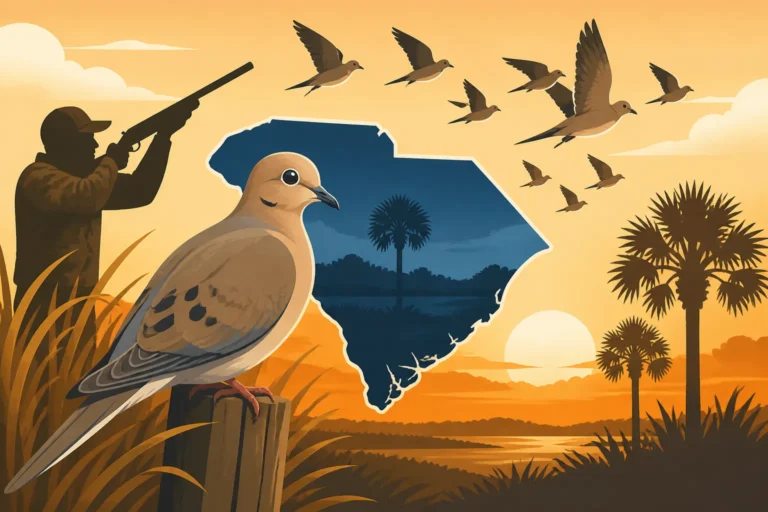
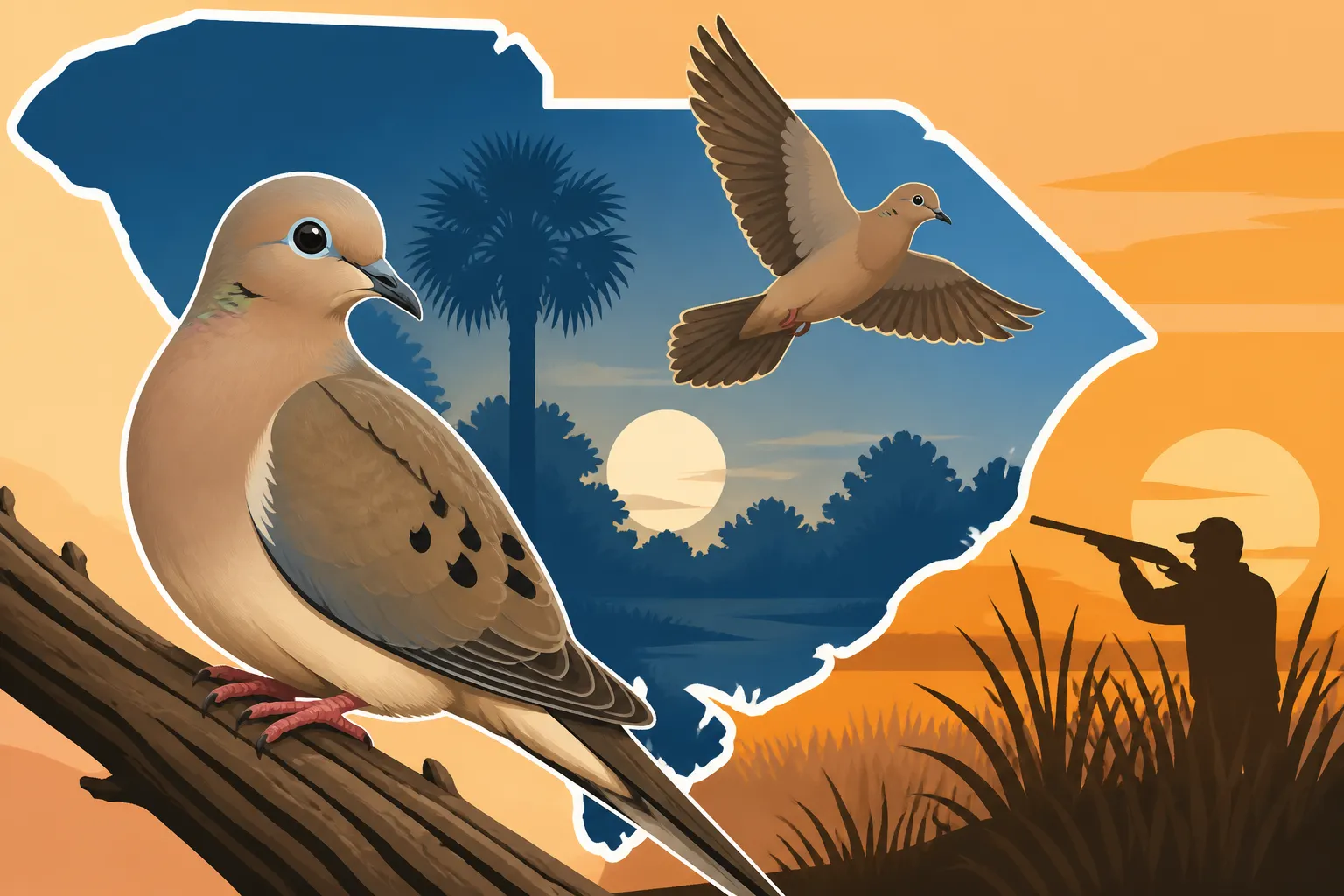
Mourning doves (Zenaida macroura) are medium-sized, slender birds, typically about 12 inches long with a wingspan of 18 inches. Their plumage is a soft grayish-tan, often with a subtle iridescence on the neck, and they have distinctive black spots on their wings. Their long, pointed tails with white outer feathers are a key identifying feature, especially in flight. You'll notice their relatively small heads and short legs, which are typical for ground-feeding birds. What truly sets them apart, however, is their flight. They can reach speeds of up to 55 miles per hour, and when flushed, they often produce a whistling sound with their wings, which can startle even the most seasoned hunter.
Their lifecycle is quite remarkable. Unlike many other bird species, mourning doves can nest multiple times a year, often raising several broods. In South Carolina, nesting can begin as early as February and continue well into October, sometimes even November. They build flimsy nests, often in trees or shrubs, and typically lay two white eggs. Both parents share incubation duties and care for the squabs, feeding them "pigeon milk" (a secretion from their crop). This rapid reproductive rate is a key factor in their abundance, despite being a popular game bird. Their diet primarily consists of seeds—especially from cultivated grains like millet, corn, wheat, and sunflowers, as well as native weed seeds. This strong reliance on agricultural areas and open fields is precisely why hunters focus their efforts there.
Migration Patterns and Local Populations
While mourning doves are migratory birds, their movements in South Carolina can be quite complex, varying depending on the time of year and specific local conditions. We see both resident populations that stay year-round and migratory birds that pass through or winter here. As autumn approaches, doves from more northern states begin their southward migration, often augmenting our local populations and making the early season particularly productive. This influx of fresh birds can make the opening weekend a frantic, fast-paced affair, with hunters experiencing multiple flushes and constant action.
However, it's not a simple north-to-south movement. Doves will move locally in response to food availability, water sources, and roosting habitat. A field that's hot one week can be barren the next if a better food source or less pressured area opens up nearby. This is especially true after the initial rush of the first dove split. By the time the Hunting the Second Dove Split in October rolls around, you might find that the birds are acting differently, perhaps more wary, and relying on different feeding grounds than they did in September. Keeping an eye on local conditions and understanding these micro-migrations is crucial for consistent success. South Carolina's unique position on the Atlantic Flyway means we benefit from a diverse mix of both home-grown doves and those journeying from further north, offering excellent hunting opportunities throughout the season.
Prime Habitats: Where to Find Doves in South Carolina
Finding doves isn't just about showing up to any field; it's about understanding their daily patterns and preferences for food, water, and roosting. South Carolina offers a diverse landscape, from coastal plains to rolling Piedmont, and doves utilize different features within these regions. Being able to "read" the landscape and pinpoint those high-traffic areas is where good hunters become great ones.
Agricultural Fields and Preferred Crops
The undisputed hotspots for dove hunting are agricultural fields, particularly those planted with specific crops that doves favor. Doves are primarily ground feeders, preferring to pick seeds directly from the soil. They aren't going to cling to a corn stalk to nibble; they want those seeds on the ground where they can easily access them. This is why fields of cut corn, sunflowers, wheat, or millet are absolute magnets. When these fields are harvested, the equipment inevitably knocks some seeds loose, scattering them across the ground, creating a literal buffet for doves.
A freshly cut cornfield, for example, especially one with some leftover stubble and scattered kernels, can draw doves from miles around. Similarly, fields of sunflowers, particularly if they've been bush-hogged or left to naturally dry and drop their seeds, are a hunter's dream. Farmers and landowners who are serious about attracting doves for hunting will often plant specific food plots, sometimes called "dove fields," using crops like proso millet, browntop millet, or various sorghums. These are then managed (often disked or bush-hogged) just before or during the season to ensure a constant supply of readily available seeds on the ground. When you're scouting, look for these types of fields, paying close attention to the edges and any strips of bare ground. A quick check of the ground might even reveal "cuttings"—little bits of seed hull left behind—indicating active feeding. Using tools like GoHunt's mapping features can help you identify agricultural areas and even gauge proximity to water or potential roosting sites when you're scouting public land or planning access to private tracts.
Water Sources and Roosting Areas
While food is paramount, doves also need water and safe places to rest. They typically drink twice a day, usually in the morning and late afternoon, often frequenting shallow edges of ponds, creeks, or even muddy puddles. A field without a nearby water source might hold birds for a short feeding spree, but a field with water close by is likely to be a consistent draw throughout the day. When scouting, pay attention to the flight lines between feeding fields and water. Doves will often fly a predictable path, making these corridors excellent spots for pass-shooting.
Roosting areas are equally important. After a long day of feeding and watering, doves will retreat to dense trees or hedgerows to roost for the night. These can be pine thickets, mature hardwoods, or even dense scrub brush. Often, these roosts are relatively close to their feeding grounds, forming a triangle: food, water, and roost. Identifying these flight paths is key to setting up an effective ambush. For instance, if you're Hunting a Funnel Between Two Swamps, doves might use that same funnel to travel between a feeding field on one side and a water source or roost on the other. Look for power lines or dead trees on the edges of fields, as doves often perch there before dropping down to feed, giving you clues to their entry points.
Identifying Ideal Public and Private Land Spots
South Carolina offers a mix of public and private land opportunities for dove hunting, each with its own advantages and challenges. For private land, the ideal scenario is a landowner who has actively managed a field for doves, offering prime feeding opportunities. This might be a cut cornfield or a dedicated dove plot. Gaining Getting Private Land Permission in South Carolina can be a game-changer, as these spots often see less pressure than public areas. Always ask permission well in advance, and offer to help with chores or share some of your harvest to build good relationships.
On public land, such as some Wildlife Management Areas (WMAs) managed by SCDNR, you'll find designated dove fields. These are often planted and prepared specifically for dove season. However, public fields can get crowded, especially on opening day. To find the best spots, you'll need to do your homework. Check the SCDNR website for WMA dove field schedules and rules. Even within a large public field, some areas will be better than others. Look for low spots, slight depressions, or areas where the cover changes, as doves often prefer these subtle transitions. Consider Working a Dove Field on Opening Day with a strategic approach, trying to position yourself away from the densest crowds. For those willing to put in the legwork, more remote parts of some WMAs or even powerline cuts near suitable habitat can offer less pressured opportunities, but diligent scouting is essential. The Go Outdoors SC app can be invaluable for finding public land boundaries and identifying potential access points, helping you scout more efficiently even before you step foot in the field.
Key Seasons and Regulations for South Carolina Dove Hunting
Navigating the rules and seasons for dove hunting in South Carolina is crucial for a legal and successful hunt. Doves are migratory birds, which means their seasons and regulations are set through a combination of state and federal guidelines. Missing a crucial detail could lead to a ruined hunt or worse. It’s always best to be thoroughly prepared and informed before you hit the field.
South Carolina's Dove Season Splits and Their Timing
South Carolina's mourning dove season is typically divided into three distinct "splits" or segments. This phased approach allows hunters to take advantage of both early-season resident birds and later-season migratory birds, while also spreading out hunting pressure.
- First Split (Early September): This is the highly anticipated kickoff, usually beginning on the first Saturday of September. It’s a social event for many, with friends and family gathering in fields across the state. The weather is often still quite warm, sometimes even hot and humid, so hunters need to prepare for that. These early birds are typically local populations that haven't faced much hunting pressure yet, so they can be a bit more predictable but incredibly fast. This split usually runs for about two weeks.
- Second Split (Mid-October): After a break, the season reopens, often around mid-October. By this time, the weather is usually cooler, and we start to see a greater influx of migratory doves moving through the state. Birds might be warier now, having encountered hunting pressure elsewhere. Food sources may have changed too, with more fields harvested or specific dove plots playing out. This split usually lasts for about two to three weeks.
- Third Split (Late November to Mid-January): The final split often opens around Thanksgiving and can run all the way into the middle of January. This is deep into the winter, and hunting conditions can vary wildly from mild to truly cold. These birds are predominantly wintering migratory doves. They are usually the most challenging, often flying higher and being incredibly evasive. This split offers a different kind of challenge and can be a great way to extend your bird hunting season.
It’s important to always check the current year’s SCDNR migratory bird regulations booklet for exact dates, as they can shift slightly year to year. Knowing these splits helps you plan your hunts strategically, whether you're targeting the high-energy opener or the more nuanced late-season birds.
Bag Limits, Shooting Hours, and Ammunition Rules
Beyond season dates, several other regulations are critical for dove hunters in South Carolina:
- Bag Limit: The daily bag limit for mourning doves in South Carolina is typically 15 birds per hunter. This is a generous limit, but it can take a lot of shooting to reach it, given the doves' incredible speed. The possession limit is usually three times the daily bag limit (45 birds).
- Shooting Hours: Dove hunting generally begins at half-hour before sunrise and ends at sunset. However, on the opening day of the first split, shooting hours usually begin at noon. This is a long-standing tradition to allow hunters time to get to their spots and prepare, and to prevent birds from being overly pressured too early in the morning. Always verify the specific sunrise/sunset times for your hunting location and date.
- Ammunition: You can use lead shot for doves in South Carolina, unlike waterfowl hunting where non-toxic shot is required. However, many hunters opt for smaller shot sizes like 7 ½ or 8, which provide a denser pattern suitable for doves. Also, remember that your shotgun must be plugged to hold no more than three shells (one in the chamber, two in the magazine). This is a federal requirement for all migratory bird hunting.
- Alcohol: While dove hunts are often social events, possessing or consuming alcohol while actively engaged in hunting is generally prohibited or strongly discouraged on public lands, and often for good reason on private land too. Safety first!
Essential Licenses and Certifications
To legally hunt mourning doves in South Carolina, you need to ensure you have the proper documentation. This isn't just a formality; it's how we fund crucial conservation efforts.
- Base Hunting License: Every hunter needs a valid South Carolina hunting license. Residents have various options, and non-residents must purchase a specific South Carolina Nonresident Hunting License Options. You can purchase these easily through the SCDNR website, the Go Outdoors SC app, or at licensed vendors.
- Migratory Bird Permit (HIP Certification): This is a federal requirement. All migratory bird hunters (including doves, waterfowl, woodcock, snipe, etc.) must be HIP (Harvest Information Program) certified annually. This involves answering a few simple questions about your previous year's harvest, which helps wildlife agencies track harvest trends and manage populations. This is typically an add-on to your base hunting license, often free of charge, but it's absolutely mandatory. Make sure you complete your South Carolina Migratory Bird Certification every year.
- Federal Duck Stamp: While often associated with ducks and geese, it's worth noting that for doves, a Federal Duck Stamp is not required. It's specifically for waterfowl. However, if you plan to combine your dove hunt with any waterfowl opportunities later in the year, you will need to purchase one.
- Hunter Education: If you were born after June 30, 1979, you must complete a state-approved hunter education course to purchase a South Carolina hunting license. There are exceptions for those with an South Carolina Apprentice Hunter License Rules, which allows new hunters to hunt under the direct supervision of a licensed adult.
Always carry proof of your license and HIP certification, either physically or on your phone using the Go Outdoors SC app. Game wardens can and will check.
Effective Dove Hunting Tactics: Setting Up for Success
Dove hunting might seem straightforward—find a field, shoot birds—but there's a real art to it. The most successful hunters employ specific strategies to maximize their chances, from thoughtful decoy placement to understanding the nuances of how doves approach a field. It's about more than just shooting; it's about anticipating their moves.
Decoy Spreads and Motion Decoys
Doves are highly social birds, and they are naturally drawn to other doves. This makes decoys an incredibly effective tool for luring birds into shooting range. Static decoys, clipped onto fences, dead snags, or strategically placed on the ground, create the illusion of a safe feeding or resting area. A good spread might include a dozen or more decoys, positioned to appear like a flock. Place some on the ground where you expect birds to land, and others on elevated perches to make them more visible from a distance.
However, the real game-changer in dove hunting has been the advent of motion decoys, particularly spinning-wing doves. Brands like Mojo Outdoors have revolutionized dove hunting. A spinning-wing decoy mimics a dove actively landing or flapping its wings, which is an incredibly powerful visual attractant. Position these decoys slightly above ground level, ideally on a pole or tripod, where they are easily visible. Often, just one or two motion decoys can significantly increase the number of birds that commit to your setup, especially on slower days or in fields with more pressure. The key is to create a realistic scene: a mix of static decoys showing birds feeding and resting, with a motion decoy or two suggesting fresh arrivals. Place your decoys within comfortable shooting range, typically 20-30 yards from your hidden position.
Field Edge and Waterhole Ambush Strategies
Doves are creatures of habit, often flying predictable patterns between their food, water, and roost. Identifying these flight paths and setting up an ambush point is a classic and effective strategy.
- Field Edges: Doves tend to enter and exit fields along specific edges, often where there's a change in cover, a ditch, a treeline, or a power line. Position yourself along these edges, ideally with some natural cover like a brush pile, a fencerow, or tall weeds. A simple dove stool or five-gallon bucket tucked into a shaded spot can make a long sit much more comfortable. Consider where the sun will be throughout the day to avoid shooting directly into it, which can make target acquisition incredibly difficult. If you're Brushing In a Blind on a Field Edge, make sure it blends in seamlessly with the surroundings.
- Waterholes: As mentioned earlier, doves need to drink. If you find a shallow pond, a mud flat, or even a slow-moving creek where doves are watering, setting up near it can be incredibly productive, especially during warm weather or later in the day. Ensure you have good concealment, as doves are very wary when approaching water. They'll often circle several times before committing, so you need to be still and patient.
When choosing your spot, also consider how the wind will affect incoming birds. Doves, like most birds, prefer to land into the wind. If you can position yourself so birds are flying into your setup with the wind in their face, they'll often slow down and become easier targets.
Pass-Shooting and Jump-Shooting Techniques
Beyond setting up a static ambush, two other techniques can be very effective for doves:
- Pass-Shooting: This involves positioning yourself along a known flight corridor and waiting for birds to "pass" by. It requires excellent wing-shooting skills, as doves are often flying at high speed and sometimes at greater distances. This strategy is particularly useful when birds aren't committing to decoys or when hunting a large field where birds are spread out. Look for natural funnels, gaps in treelines, or saddles in topography that doves might use to travel. Power lines are another prime location for pass-shooting, as doves often use them as highways. Patience is key here, as you might have stretches of no action followed by a flurry of birds. When pass-shooting, practice your lead and swing to connect with these fast-moving targets. This is where Pass-Shooting Doves Over a Water Hole can be a lot of fun, as they come in fast for a drink.
- Jump-Shooting: This is a more active, stalking-oriented approach, often used later in the season when birds are more scattered or when hunting less conventional areas. It involves slowly walking through fields, fence rows, or along creek bottoms, flushing doves and taking opportunistic shots. This method can be exhilarating but requires you to be constantly alert and ready to shoulder your shotgun quickly. It's often best for smaller fields or areas of dense cover where doves might be hidden. While less common for doves than for pheasants or quail, it can be effective, particularly for those who enjoy a more dynamic hunting style or when birds aren't cooperating with traditional decoy setups. Be mindful of safety when jump-shooting, always knowing your shooting lanes and what's beyond your target.
Gear Essentials for a Productive Dove Hunt
Just like any hunting pursuit, having the right gear can make all the difference in dove hunting. From the shotgun you carry to the stool you sit on, each piece plays a role in your comfort, safety, and success. You don't need the fanciest equipment, but reliable, fit-for-purpose gear is crucial.
Shotguns, Chokes, and Ammunition Selection
The shotgun is, of course, the star of the show for dove hunting.
- Shotgun Gauge: The most popular gauges are 12-gauge and 20-gauge. A 12-gauge offers a wider variety of ammunition options and generally throws a denser pattern, which can be advantageous for long-range shots on fast-flying doves. However, the 20-gauge is lighter to carry, produces less recoil, and is perfectly capable of taking doves cleanly. Even a 28-gauge or .410 can be effective in the hands of an experienced shooter, offering a fun challenge. Ultimately, choose a gauge you can shoot comfortably and accurately. When considering Shotguns for South Carolina Dove and Quail, remember versatility.
- Action Type: Semi-automatics are popular because they reduce recoil and allow for quick follow-up shots. Pump-action shotguns are also widely used and very reliable. Over-and-under or side-by-side break-action shotguns are also common, offering quick second shots and a classic look, though they typically only hold two rounds.
- Choke Selection: This is critical. For doves, you want a pattern that isn't too tight (making it hard to hit fast-flying targets) but also dense enough to ensure a clean kill. Modified or Improved Cylinder chokes are generally excellent choices for most dove hunting scenarios. If birds are coming in very close over decoys, Improved Cylinder is often ideal. For longer pass-shooting, a Modified choke offers a bit more reach. Avoid Full chokes unless you're consistently taking very long shots, as they can lead to frustration and missed birds at closer ranges.
- Ammunition: As mentioned, lead shot is permitted for doves. Shot sizes 7 ½ or 8 are the standard. They contain a high pellet count, which creates a dense pattern ideal for the small body of a dove. Some hunters prefer 6 shot for later season, longer-range birds, but 7 ½ is often the workhorse. Make sure you have plenty! It's not uncommon to shoot several boxes of shells in a good dove hunt. Consider buying flats (cases) of ammunition before the season opens, as popular loads can sometimes be hard to find in stock closer to opening day. For a deep dive, check out Shot Size for Quail and Dove.
Blinds, Seats, and Comfort in the Field
Comfort often leads to patience, and patience leads to more opportunities.
- Seating: A comfortable seat is a must. A simple five-gallon bucket with a padded lid works wonders, providing storage for shells and water. Dedicated dove stools or chairs that are lightweight and easy to carry are also popular. Some include a backrest, which can be a godsend during long sits. The key is something portable and stable on uneven ground. Consider a dedicated Dove Stools and Field Gear article for more options.
- Concealment: Doves have excellent eyesight. While full-blown ground blinds aren't always necessary, some form of concealment is highly recommended. You can use natural cover like brush piles, tall weeds, or the edge of a treeline. A small pop-up blind or even a camouflage net draped over some poles can provide excellent cover, breaking up your outline and allowing you to move subtly without spooking birds. Blending in is more important than being completely hidden; doves react to unnatural shapes and movements.
- Clothing: Dress in subdued, earthy tones or camouflage. More importantly, dress for the weather. Early season in South Carolina can be brutally hot, so lightweight, breathable clothing is essential. Layers are always a good idea, as temperatures can drop from scorching mid-day heat to cooler evenings. Don't forget a wide-brimmed hat or cap for sun protection, and sunglasses can help cut glare and spot high-flying birds. Long sleeves and pants, even in warm weather, can offer protection from sun, bugs, and briars.
- Bug Protection: Mosquitoes, gnats, and ticks are a reality in South Carolina, especially during the early dove season. Bring insect repellent! Permethrin-treated clothing or a Thermacell can make a world of difference in your comfort level.
Retriever Dogs and Their Role
A well-trained retriever is not just a companion; it's an invaluable asset in the dove field.
- Efficiency: Doves are small, and they can fall in thick cover, tall crops, or even water. A good retriever can quickly find downed birds that you might otherwise never recover, minimizing waste and maximizing your bag. This is particularly important with a generous 15-bird limit; trying to find all those birds manually can be incredibly time-consuming and frustrating.
- Speed and Safety: A dog retrieves birds much faster than a human, keeping you focused on the skies for incoming birds. It also keeps you from constantly breaking your concentration and potentially disturbing other hunters by walking out into the field to pick up birds. During warm weather, a dog can also help ensure birds are recovered quickly and don't spoil.
- Training: A retriever needs to be steady to shot (not breaking until sent), capable of marking fallen birds, and responsive to commands. Proper obedience training is paramount for a safe and effective hunt. If you're bringing a dog, ensure it's well-hydrated, especially in the South Carolina heat. Bring plenty of water for your canine partner, and consider a cooling vest or mat. A well-behaved retriever enhances the experience for everyone in the field.
Conservation and Management: Protecting Our Dove Resource
Mourning doves are one of the most abundant and widely distributed game birds in North America, and South Carolina is no exception. This isn't by accident; it's a testament to sound conservation practices and the ongoing efforts of wildlife agencies and hunters alike. Understanding these efforts helps us appreciate the resource and our role in sustaining it.
South Carolina's Dove Population Trends
Mourning dove populations in South Carolina are generally stable and healthy, despite being the most harvested migratory game bird in the nation. This resilience is largely due to their high reproductive rate, allowing them to replenish their numbers effectively. However, wildlife agencies like the South Carolina Department of Natural Resources (SCDNR) constantly monitor populations through various surveys.
One key survey is the Migratory Bird Harvest Information Program (HIP), which all migratory bird hunters must participate in. By collecting data on harvest rates, biologists can track population trends and adjust seasons and bag limits if needed. Additionally, dove banding studies provide insights into migration patterns, survival rates, and recruitment. While slight fluctuations occur year-to-year due to local factors like weather during nesting season or changes in agricultural practices, the overall trend for mourning doves in South Carolina has been one of stability. This means hunters can generally expect consistent opportunities for years to come, provided current management strategies remain effective.
Hunter Contributions to Conservation
It's easy to overlook, but hunters play an absolutely critical role in dove conservation.
- License and Permit Fees: Every time you purchase a hunting license or your South Carolina Resident Big Game Permit Cost, a portion of that money goes directly to state wildlife agencies. These funds are then used for habitat management, population surveys, research, enforcement, and public land acquisition—all activities that directly benefit dove populations and their habitat. The HIP certification, while free, is vital for data collection that informs management decisions.
- Habitat Improvement: Many private landowners who manage their property for doves will create "dove fields" by planting specific crops and then manipulating them (e.g., bush-hogging, disking) to make seeds available. This intentional habitat work benefits not only doves but also a host of other wildlife species that utilize these open-field environments. Even on public lands, active management, often funded by hunting license dollars, ensures suitable habitat remains available.
- Ethical Practices: Responsible hunting practices, such as adhering to bag limits, avoiding wasteful harvesting, and making an effort to retrieve all downed birds, are also forms of conservation. They ensure that the resource is respected and utilized sustainably. When hunters follow the rules and report violations, they contribute to the ethical framework that underlies all wildlife management.
Safe Handling and Ethical Hunting Practices
Ethical hunting goes beyond just following the law; it encompasses respect for the game, the land, and fellow hunters.
- Safety First: Always follow the cardinal rules of firearm safety: treat every gun as loaded, never point a muzzle at anything you don't intend to shoot, keep your finger off the trigger until ready to shoot, and be sure of your target and what's beyond it. In a crowded dove field, this means being acutely aware of other hunters' positions and only taking safe shots. Never shoot low or at birds flying over other hunters. Wear eye and ear protection; dove hunting involves a lot of shooting!
- Respect for Landowners: If hunting on private land, always be courteous, clean up your spent shells and any trash, and leave the property better than you found it. A positive relationship with a landowner can secure hunting access for years to come.
- Retrieval: Make every effort to recover every downed bird. Doves can be tough to find in thick cover. Marking where a bird falls, even using a visual reference like a tree or fence post, is crucial. This is where a good retriever really shines. Wasted game is unethical and frowned upon.
- Game Care: During early season, South Carolina's heat can quickly spoil game meat. Field dress your doves as soon as possible, getting the breast meat out of the bird and into a cooler with ice. This ensures you make the most of your harvest. For tips on warm weather game care, consider reading Field Dressing a Deer in Warm Weather for similar principles.
Common Challenges and Troubleshooting for Dove Hunters
Even the most experienced dove hunters face challenges. These birds are wily, the weather is often a factor, and hunting pressure can change their behavior overnight. Knowing how to adapt to common problems can turn a frustrating day into a successful one.
Dealing with Hunting Pressure and Crowded Fields
The opening day of dove season is a highly anticipated event, and public fields, especially those known for holding birds, can get incredibly crowded. This pressure can significantly impact dove behavior.
- Early Season Crowds: On opening day, it's not uncommon to see dozens of hunters in a single WMA dove field. While the sheer volume of shooting might keep birds moving, it also makes them warier and can lead to dangerous situations if hunters aren't mindful of their shooting lanes. The best approach is often to arrive early, secure a good spot with natural cover, and be patient. Don't be afraid to walk a little further into the field than others might, or look for less obvious spots. Sometimes, the birds avoid the center of the field and hug the edges or corners.
- Mid-Season Wary Birds: After the initial bombardment, doves become much more educated. They might fly higher, avoid committing to decoys, or change their flight paths entirely to avoid known hotspots. This is when your scouting really pays off. Look for fields that haven't been hunted as hard, or focus on smaller, less obvious food sources. A single large oak dropping acorns could attract birds just as effectively as a manicured dove field, especially if it's less pressured. Consider trying Finding Ground Others Walk Past in more remote sections of public land or gaining access to smaller private tracts.
- Adjusting Tactics: When birds are flying high, you might need to adjust your choke (e.g., from Improved Cylinder to Modified or even Light Full) and rely more on pass-shooting than decoy work. If birds are avoiding the main field, scout nearby water sources or roosting areas and try to intercept them along their flight paths. Sometimes, a simple change in location by 50-100 yards can make all the difference.
Weather Impacts on Dove Behavior
South Carolina's weather is notoriously unpredictable, especially during the early dove season, and it plays a huge role in dove activity.
- Hot and Humid Weather: Early September hunts are often characterized by sweltering heat and high humidity. This means birds might be more active around water sources, especially in the late afternoon. They also tend to feed more actively in the cooler morning and late evening hours, retreating to shade during the hottest parts of the day. As a hunter, you'll need to stay hydrated, bring plenty of water, and consider a cooling towel or vest. The heat also means you need to prioritize quick game recovery and proper meat care to prevent spoilage.
- Cold Fronts: A sudden cold front can dramatically shift dove behavior. Before a front hits, doves might feed heavily, sensing the change in weather. Immediately after a front, especially if it brings strong winds, birds might hunker down or fly lower and faster to conserve energy. A strong wind can also make doves incredibly erratic in flight, adding to the challenge but sometimes allowing for closer shots as they struggle against the gusts.
- Rain: Light rain might keep doves grounded, but heavy rain will usually send them to roost. If a front moves through with heavy rain, expect a lull in activity until it passes. However, a post-rain period with clearing skies and cooler temperatures can sometimes trigger a flurry of feeding activity as doves make up for lost time. Always check the forecast and dress appropriately for whatever Mother Nature throws at you.
Post-Hunt Game Care in Warm South Carolina Weather
This is a critical, yet often overlooked, aspect of dove hunting, especially in our warmer climate. Failing to properly care for your doves can lead to spoiled meat, which is a disservice to the animal and a waste of your effort.
- Immediate Field Dressing: As soon as you retrieve a dove, it's best to breast it out immediately. Doves are small, and their body heat, combined with ambient temperatures, can quickly spoil the meat. Many hunters simply remove the breast meat, which is the primary edible portion, and discard the rest of the carcass in the field (where legal and appropriate). This greatly reduces the bulk you have to carry and cools the meat rapidly.
- Cooler Management: Once breasted, get that meat on ice as quickly as possible. A small cooler with plenty of ice is a non-negotiable item for dove hunting. Place the dove breasts directly on ice or in zip-top bags within the cooler. The goal is to drop the meat temperature rapidly and keep it cold until you get home.
- Transport and Storage: When transporting doves home, keep them well-chilled. Once home, clean any remaining feathers or debris from the breasts, rinse them, pat them dry, and then either refrigerate them for immediate use (within a day or two) or freeze them. Freezing them in water (if using zip-top bags) or vacuum-sealing them can help prevent freezer burn and keep the meat fresh for many months. Proper game care ensures that your hard-earned harvest translates into delicious meals, upholding the ethical principle of using what you take.
Disclaimer
Please note: Hunting regulations and seasons are subject to change. Always consult the most current South Carolina Department of Natural Resources (SCDNR) regulations booklet and website before planning any hunting trip. This guide is for informational purposes only and does not supersede official state regulations.