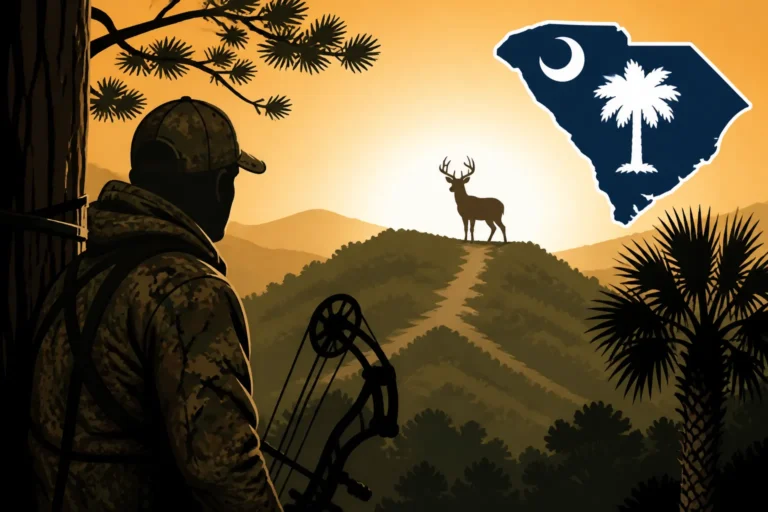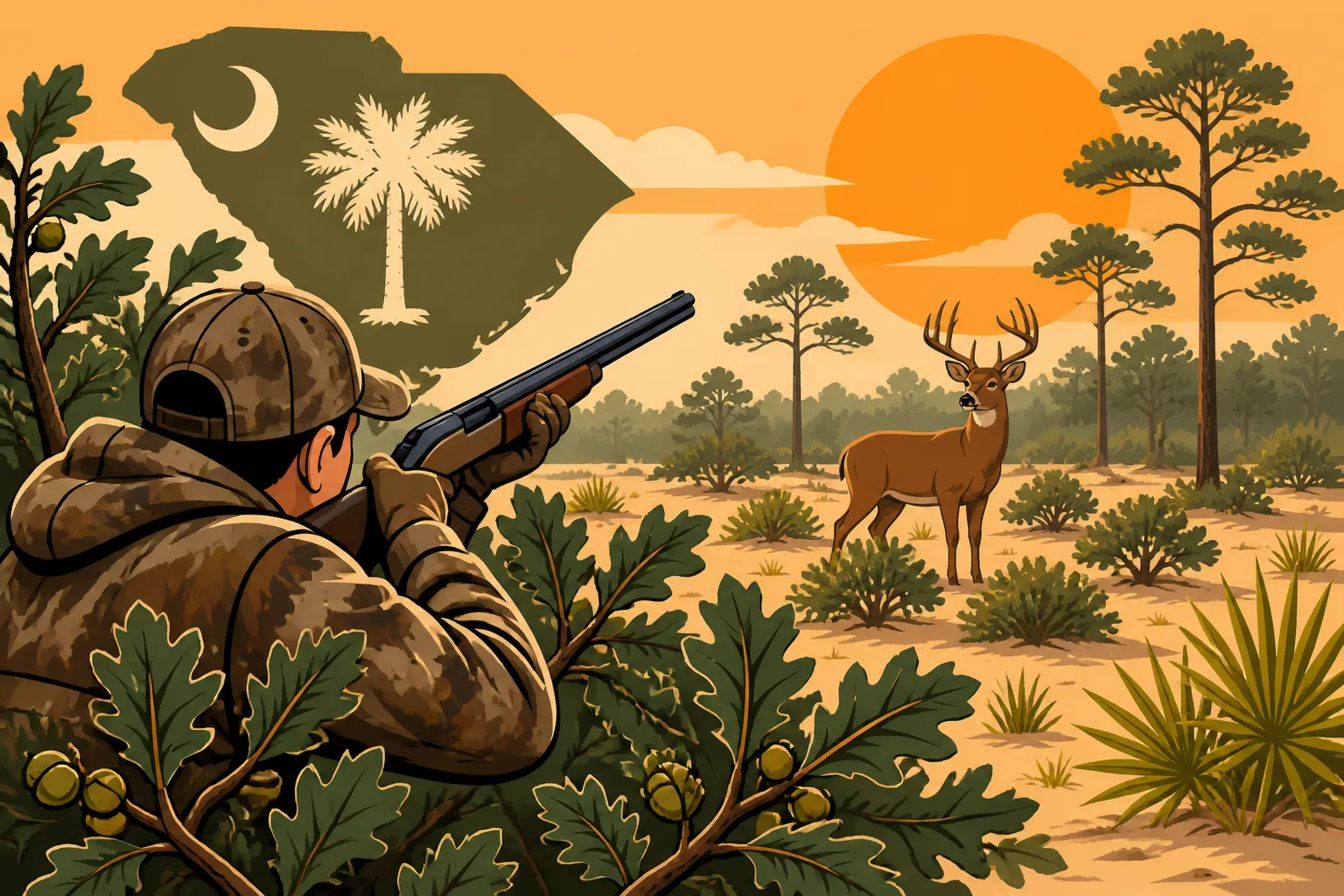
Hunting Sandhills Region Scrub Oak
Hunting the dense, often challenging terrain of South Carolina's Sandhills region, especially within its signature scrub oak stands, can feel like you're searching for a needle in a haystack. Deer seemingly vanish into the thick cover, leaving many hunters frustrated and wondering how to even begin. This comprehensive guide will peel back the layers of this unique habitat, giving you the scouting strategies, hunting tactics, and gear insights you need to confidently pursue whitetails in the scrub oak country.
Understanding the Sandhills Ecosystem and Its Scrub Oak Identity
The Sandhills region of South Carolina is a truly unique environment, a transitional zone stretching like an ancient coastline between the mountains and the low-lying coastal plain. It's characterized by its deep, sandy soils, often poor in nutrients, which dictate the kind of vegetation that thrives here. This isn't your typical dense pine plantation or bottomland swamp; the Sandhills offers its own set of challenges and rewards for the dedicated hunter.
The Role of Scrub Oak in Deer Habitat
When we talk about "scrub oak" in the Sandhills, we're generally referring to several species adapted to these arid, sandy conditions. The most common varieties include turkey oak, blackjack oak, and post oak. These aren't the towering white oaks or red oaks you might find in more fertile soils. Instead, they often grow as smaller, gnarled trees, sometimes forming incredibly dense, low-canopied thickets that can be almost impenetrable to humans. However, these seemingly uninviting patches are absolute magnets for deer.
The reason for this lies in two primary factors: food and cover. While their acorns might be smaller than those from larger oak species, they are often a crucial food source, especially in years when other mast crops are scarce. Deer will key in on these acorns, sometimes even preferring them due to their higher fat content or unique flavor profile. Beyond food, the dense, interwoven branches and low growth of scrub oak provide unparalleled thermal cover, especially during colder periods, and exceptional security cover. A buck can literally disappear into a small patch of scrub oak, making it a formidable challenge for hunters to locate him. These thickets also serve as critical bedding areas where deer feel safe from predators and human intrusion, making them essential knowledge for any hunter in the region.
How Deer Utilize Scrub Oak Throughout the Seasons
Deer use the scrub oak environment differently depending on the time of year, making seasonal adaptation crucial for hunting success. In the early archery season, often marked by warm temperatures, deer will still seek out the shade and dense cover of scrub oak for thermal regulation during the day. As acorns begin to drop, these areas become prime feeding zones, especially if other food sources are limited. It's not uncommon to find deer actively browsing young oak leaves and shoots, even before the acorns hit the ground. For more on early season strategies, consider reading about Warm-Weather Sitting Strategy in South Carolina.
As the season progresses into cooler months and eventually the rut, scrub oak patches continue to serve as bedding sanctuaries and critical travel corridors. Bucks will often cruise the edges of these thickets, scent-checking for does, or use the dense cover to stage before moving into more open feeding areas at dusk. Later in the season, when deciduous trees have lost their leaves and other cover is diminished, the evergreen or semi-evergreen nature of some scrub oak provides vital concealment. Understanding these shifts in deer behavior, driven by both food availability and the need for security, is paramount to consistent success in the Sandhills.
Scouting Strategies for Sandhills Scrub Oak
Effective scouting is the bedrock of successful hunting in any environment, but it's especially critical in the Sandhills where deer can be incredibly elusive. You can’t just walk in and expect to find deer; you need a methodical approach that combines technology with boots-on-the-ground investigation. This isn't about aimless wandering; it's about strategic exploration.
Leveraging Aerial Imagery and Mapping Tools
Before you even step foot in the woods, a detailed study of aerial imagery is non-negotiable. Tools like GoHunt, or even publicly available satellite maps, allow you to identify large stands of scrub oak, subtle elevation changes, and the crucial transition zones where different habitat types meet. Look for variations in canopy texture and color that indicate denser patches of scrub oak versus sparser pine stands or open areas. These transition lines, often where pine gives way to oak, are natural travel corridors. Pay close attention to narrow fingers of scrub oak extending into pine woods or agricultural fields; these often act as highways for deer moving between bedding and feeding. You can also identify old logging roads or creek bottoms that might cut through scrub oak, offering easier access points and potential ambush sites. Thinking about Reading Aerial Photos for Upstate Deer can give you some transferable skills for this type of analysis.
Once you've identified promising areas from above, mark potential entry points, bedding thickets, and travel routes. This digital groundwork will save you countless hours of unproductive walking and dramatically increase your efficiency once you're on the ground. You'll want to layer topographical maps over satellite imagery to understand subtle changes in terrain that might funnel deer movement.
Boots-on-the-Ground Sign Reading
With your aerial reconnaissance complete, it’s time to hit the ground. When scouting scrub oak, your focus should be on finding fresh deer sign within and around these dense thickets. Look for well-worn trails leading into and out of the scrub, especially those that parallel natural edges or connect two patches of cover. Don't be afraid to push into the edges of the thickets themselves; you're looking for rubs on smaller saplings, fresh scrapes, and clusters of droppings. The sandy soil of the Sandhills can make tracks challenging to see clearly, but fresh, displaced pine straw or impressions in softer ground are good indicators of recent activity. For more on interpreting deer sign, check out Reading South Carolina Mud for Fresh Deer Movement.
Pay particular attention to areas where acorns are actively dropping. Sometimes you'll find where deer have rooted around in the sandy soil, digging for fallen nuts. During the rut, look for more aggressive rubs and scrapes deeper within the cover, indicating a buck actively working the area. When scouting, minimize your disturbance. Walk slowly, with the wind in your face, just as you would when hunting. The goal is to gather information without alerting the deer to your presence. The more you scout, the better you'll understand how deer navigate and utilize the unique scrub oak habitat, improving your chances when the season opens.
Hunting Tactics Specific to Scrub Oak Cover
Hunting scrub oak demands a different approach than hunting open fields or sparse timber. The dense nature of the cover means short shot opportunities, limited visibility, and a strong emphasis on stealth and understanding deer movement patterns within the confines of the thickets. It's a game of patience, precision, and adapting to close encounters.
Strategic Stand Placement on Scrub Oak Edges
When setting up a stand in scrub oak country, you're rarely going to be deep inside the thicket itself. Instead, focus on the edges and fingers of scrub oak, particularly where they meet more open timber, a clear-cut, or a food plot. These transition zones are high-traffic areas where deer feel comfortable moving between heavy cover and feeding opportunities. Look for pinch points or funnels created by the topography or the shape of the scrub oak patch. A narrow strip of oak connecting two larger blocks of timber, or an oak stand bordering a creek, can be an excellent ambush site. Remember that deer will often skirt the very edge of the densest cover before venturing into the open.
Your entry and exit routes are paramount. You want to be able to approach and leave your stand without alerting deer. Use natural terrain features or dense vegetation to conceal your movements. Consider the wind direction carefully; deer will often approach these edges from downwind to scent-check for danger. A good spot for a treestand might be on the downwind side of a frequently used trail, allowing you to catch deer as they come out of the thicket. For more treestand tips, refer to Treestand Setups in Francis Marion National Forest, as many principles apply to dense woods regardless of location.
Still-Hunting and Stalking in Scrub Oak
For the truly patient and stealthy hunter, still-hunting or stalking through sparser scrub oak can be incredibly effective. This involves moving at an almost impossibly slow pace, taking only a few steps, then pausing to observe and listen for extended periods. The key is to use the dense cover to your advantage, concealing your movements while you scan for a flicker of an ear, a patch of hide, or a horizontal line that indicates a deer bedded down. Always hunt into the wind, letting it carry your scent away from where you expect deer to be.
The ground in the Sandhills can be soft and sandy, which helps with quiet movement, but pine straw can be noisy. Focus on placing your feet carefully. If you encounter an area with significant acorn drop, slow down even further. Deer will often be feeding quietly, and a careful approach can lead to a close-range shot. This method requires intense concentration and discipline, but it can be incredibly rewarding as you actively pursue the game in their own environment.
Small-Scale Drives and Calling Strategies
While not always practical for solo hunters, small-scale deer drives can be highly effective in dense scrub oak patches. A team of three or four hunters can strategically push a block of scrub oak, with one or two "drivers" moving slowly and loudly through the thicket, while "standers" are positioned on key escape routes or funnels along the perimeter. The goal isn't to blast through, but to gently push deer out of their bedding areas towards the waiting standers. For effective strategies on group hunting, see Deer Drives With Three or Four Hunters. Communication is key, and all participants must be intimately familiar with the layout and safety protocols.
Calling can also play a role, though its effectiveness is influenced by the dense cover. Grunt calls, especially during the rut, can pique a buck's curiosity and draw him closer to the edges of the thicket. Rattling antlers can simulate a fight, potentially pulling an aggressive buck out of cover, but the sound won't carry as far in the dense scrub as it would in open timber. Start with softer calls and gradually increase volume if there's no response. The closer you are to thick bedding cover, the more likely a curious buck might investigate.
Essential Gear and Considerations for Sandhills Hunting
Hunting in the Sandhills, particularly in the scrub oak, presents unique challenges that your gear needs to address. From navigating dense cover to managing warm weather, having the right equipment can make or break your hunt.
Clothing, Footwear, and Navigation
Comfort and durability are paramount for clothing. Lightweight, breathable layers are ideal, especially for early season hunts when temperatures can still be quite warm. Look for materials that resist snagging in the thick brush and are quiet when moving. Camouflage patterns that break up your silhouette are helpful in the dense, mottled environment of scrub oak. Since snakes are common in the Sandhills, especially during warmer months, investing in a good pair of snake boots or gaiters is a wise precaution. You'll be traversing ground where visibility is often limited, so protecting your lower legs is critical.
Navigation in dense scrub oak can be disorienting. What looks like a straight line on a map can quickly become a winding maze of thickets. Always carry a reliable GPS unit or a smartphone app like GoHunt with downloaded maps. Even familiar areas can become confusing in low light or fog. Mark your truck, your stand, and any key features like trails or creek crossings. Remember to have a backup plan for charging your devices or carry a traditional compass. Understanding Scouting With the Go Outdoors SC App can help you get started with digital mapping.
Weapon Choice and Game Recovery
Given the dense cover and often short shot opportunities, your choice of weapon should reflect the environment. For rifle hunters, a short, maneuverable rifle chambered in a cartridge suitable for moderate ranges is often preferred. Many hunters opt for cartridges like the .30-30, .308, or even a good shotgun slug, which are excellent for shots within 100 yards. The emphasis here is on quick handling and delivering energy at closer distances, rather than long-range precision.
Archery hunters will find the scrub oak perfectly suited for their craft. A compound bow or crossbow can be incredibly effective, allowing for silent, close-range shots. Focus on broadheads that provide excellent penetration, as you might encounter quartering-to or quartering-away shots through brush. For insights into primitive weapons, which can also be highly effective in such tight quarters, consider South Carolina Primitive Weapons Tactics.
Game recovery in dense scrub oak is notoriously difficult. A deer that runs even a short distance into thick cover can be incredibly challenging to find. This means meticulous shot placement is more critical than ever. After the shot, give the deer ample time before tracking. Bring a good headlamp, flagging tape, and a hunting partner to help with the search. Consider how you will extract the deer once found; a deer cart might be useful if the terrain allows, but often, it will involve a lot of dragging through tough brush. Having a plan for Tracking a Deer Through South Carolina Pine Straw is essential.
General Wildlife and Weather Awareness
The Sandhills is home to more than just deer. Be aware of other wildlife, especially during warmer months. While rattlesnakes and copperheads are common, black bears are also present, particularly in the upper Sandhills near the state's central piedmont. Understanding South Carolina's Black Bear Population can provide context. Always be vigilant of your surroundings.
Weather in South Carolina can change rapidly, even in the Sandhills. Warm, humid days are common during early seasons, necessitating hydration and bug repellent. Later in the season, temperatures can drop significantly, requiring appropriate layering. Always check the forecast and pack accordingly. Being prepared for diverse conditions ensures a safer and more enjoyable hunt in this challenging but rewarding environment.
| Hunting Method | Pros | Cons | Best Use Scenario |
|---|---|---|---|
| Stand Hunting | High vantage, reduced scent dispersal, patient observation | Limited mobility, precise entry/exit needed, can be boring if deer aren't moving | Along scrub oak edges, funnels, or known travel corridors. |
| Still-Hunting | Highly mobile, active pursuit, covers more ground | Requires extreme stealth and patience, easy to spook deer, challenging for game recovery | Sparser scrub oak, following fresh sign, or when deer are actively feeding. |
| Deer Drives | Effective for pushing deer out of dense cover, covers large areas quickly | Requires multiple hunters, safety concerns (know your lanes!), can over-pressure an area, deer might slip out unobserved | Large, dense blocks of scrub oak, public land (with proper planning). |
| Calling (Grunt/Rattle) | Can pique curiosity, draw deer closer | Sound limited in dense cover, only effective when deer are responsive (often during rut), can alert deer if done poorly or at the wrong time. | During the rut, on the edges of bedding thickets, in conjunction with stand hunting. |
Disclaimer
Hunting is an inherently dangerous activity. Always prioritize safety, understand and follow all South Carolina Department of Natural Resources (SCDNR) regulations, and ensure you have the appropriate licenses and permits. This information is for educational purposes only and should not replace professional guidance or your own due diligence. Conditions in the field can change, and personal responsibility is paramount.