Barnwell County Public Land for Deer
Trying to find good deer hunting spots in Barnwell County, especially on public land, can feel like you're searching for a needle in a haystack. Many hunters get frustrated driving around, seeing endless private timber company signs or agricultural fields, and wondering if there's any public access left. This guide is here to walk you through the unique challenges and strategies for finding and successfully hunting deer on what public land exists in Barnwell County, helping you make the most of your time afield.
The Unique Landscape of Barnwell County for Deer
Barnwell County, nestled in South Carolina's Lowcountry, presents a distinct set of challenges and opportunities for deer hunters. Unlike the sprawling national forests found in other parts of the state, Barnwell is largely a mosaic of private holdings, making public access a more nuanced quest.
Understanding Barnwell's Predominantly Private Terrain
When you drive through Barnwell County, you'll quickly notice the vast tracts of private land. This region is characterized by extensive timber plantations, often owned by large forestry companies, alongside a significant amount of agricultural land. You'll see fields of peanuts, cotton, corn, and soybeans, interspersed with smaller family farms and rural residences. This patchwork creates an interesting dynamic for deer. They thrive on the diverse food sources offered by agricultural crops and the dense cover provided by young pine plantations or mature hardwood bottoms along creek drainages.
However, this also means that most of the prime deer habitat falls under private ownership, often leased out to hunting clubs. This reality can be disheartening for public land hunters, as it narrows down the available options considerably. Understanding this landscape is the first step: it's not a matter of finding large, designated public hunting grounds, but rather identifying smaller, often overlooked parcels or access points that are available to everyone.
Deer Behavior and Population Dynamics in a Private-Land Dominated Area
Deer in Barnwell County are acutely aware of property lines and hunting pressure. With so much private land, deer often have sanctuaries where hunting pressure is lighter, or they adapt their movements to utilize cover and food sources strategically. You'll find that deer often bed down in thick, young pines or dense swamps during the day, emerging at dawn and dusk to feed in agricultural fields or along their edges. Their patterns are heavily influenced by the availability of food plots on private land, harvest schedules of crops, and the timing of hunting activities.
The South Carolina Deer Herd Size remains robust statewide, and while localized densities vary, Barnwell County supports a healthy deer population. Hunters here often report seeing good numbers of deer, but accessing them on public land requires a different approach. The deer can be more nocturnal, especially during peak hunting season, and they learn quickly to avoid areas with heavy human activity. You might not encounter the same widespread, predictable movements you would in a large, unpressured forest, but with careful scouting and smart tactics, success is absolutely possible. Knowing the South Carolina Deer Population Estimate gives us a good baseline for what's out there.
Unearthing Public Access: Beyond the Obvious WMAs
Finding public hunting land for deer in Barnwell County can feel like a scavenger hunt. It's not about large, well-marked Wildlife Management Areas (WMAs) in the traditional sense, but more about discovering those hidden gems and understanding the nuances of access.
The Scarcity of Major Public Deer Hunting Land in Barnwell
Let's be upfront: Barnwell County doesn't boast sprawling national forest lands or extensive, contiguous WMAs dedicated solely to deer hunting like some other parts of South Carolina. Hunters accustomed to heading into thousands of acres of Sumter or Francis Marion National Forests will find a different landscape here. Most of the land is privately owned, whether by individuals, family trusts, or large timber corporations. This means that if you're looking for a vast expanse to wander and explore, Barnwell County itself might not be your primary destination.
However, "scarcity" doesn't mean "non-existent." Public access often exists in smaller, fragmented parcels. These might include small state-owned tracts, public river access points, utility easements (where hunting is explicitly permitted), or even very localized WMA units that are either part of a larger system (like those tied to the Savannah River Site, which often have quota hunts) or are simply lesser-known. The key is knowing how to find these small pieces of public ground that others might overlook, or even confirming if any specific WMA land is accessible for general deer hunting.
Leveraging Technology to Pinpoint Hidden Public Parcels
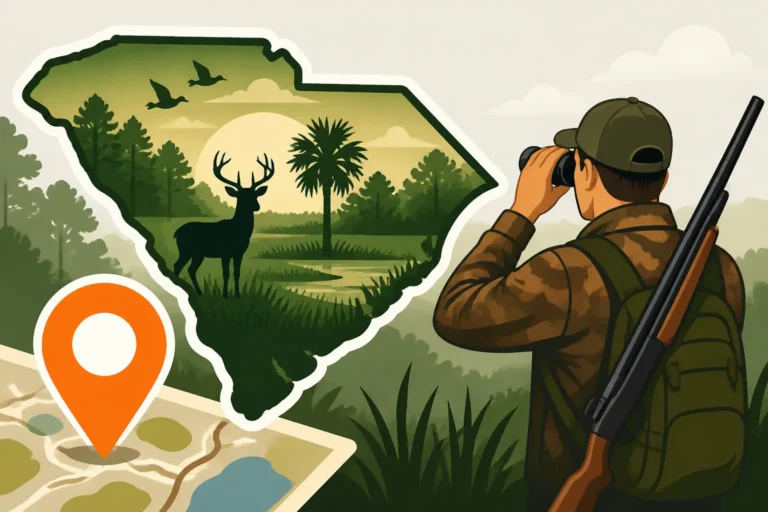
This is where modern mapping technology becomes your absolute best friend. Forget relying solely on paper maps from a decade ago; digital mapping tools are invaluable for identifying the often tiny, isolated pieces of public land in a county like Barnwell.
Platforms like onX Hunt and GoHunt are game-changers for this kind of detective work. They offer layers that clearly delineate property boundaries, showing public versus private land. You can literally zoom in and scan the entire county, looking for those small green or purple patches (indicating public land or specific WMA boundaries) that are nestled among the vast private holdings.
Here's how you can use them:
-
Property Line Layers: These are crucial. Turn on the public land layers and carefully examine creek bottoms, river corridors, and areas adjacent to roads that might not look like obvious hunting spots from a vehicle. Sometimes, a narrow strip of land along a significant creek or river is publicly owned, offering a valuable travel corridor for deer.
-
WMA Boundaries: While large WMAs might not be present, these apps will show any smaller WMA units that do exist, even if they're only a few hundred acres. Always double-check the specific regulations for these smaller WMAs with the South Carolina Department of Natural Resources (SCDNR), as they might have special rules, seasons, or even quota hunt requirements.
-
Topography and Satellite Imagery: Once you've identified a potential public parcel, switch to the satellite view. Look for features that attract deer: dense cover, water sources, natural funnels, and even proximity to private agricultural fields. A small public woodlot next to a private soybean field, for example, could be a goldmine if hunted correctly.
-
Access Points: Digital maps will often show public access points, boat ramps, or even walking trails. Understanding how to legally access these smaller parcels is just as important as finding them. Sometimes, a small public parcel is landlocked by private property, making legal access impossible without permission from adjacent landowners.
Using tools like Scouting With the Go Outdoors SC App in conjunction with premium mapping services like onX Hunt, which offers detailed onX Layers for South Carolina Land Status, can help you identify these pockets. Don't be afraid to spend hours studying the maps, both on your computer and on your phone in the field. This digital scouting is often the most critical part of finding success on limited public ground.
Strategies for Hunting Limited Public Deer Ground
Once you've managed to pinpoint some slivers of public hunting land in Barnwell County, the next step is developing a smart strategy to actually hunt them effectively. This isn't about covering vast distances; it's about precision, stealth, and understanding localized deer movement.
Tactics for Small, Pressured Public Tracts
Hunting smaller public tracts, whether they're river bottoms, isolated woodlots, or narrow corridors, demands a different approach than hunting sprawling national forests. These areas often receive more pressure simply because they're easier to find or are the only option for many public land hunters.
- Stealthy Entry and Exit: Deer on small, pressured tracts are highly sensitive to human intrusion. Plan your entry and exit routes meticulously to avoid spooking deer. Use natural cover, walk with the wind in your face, and get to your stand well before daylight. The goal is to be a ghost in the woods. Avoid walking through bedding areas to get to your stand; instead, circle widely or use less disruptive routes.
- Focus on Funnels and Pinch Points: Deer will often travel through the path of least resistance or where cover dictates their movement. On small parcels, identify natural funnels created by changes in topography, thick cover, water bodies, or even the boundary with private land. A narrow strip of public timber between a river and a private field, for instance, can be a major travel corridor.
- Stand Placement is Key: Your stand or ground blind placement must be absolutely perfect. Consider prevailing winds, sun direction, and the likely approach routes of deer. On small tracts, you might only get one or two good setups. Make them count. Think about hunting the edges of thick cover, where deer feel secure before venturing into more open areas. If the public land is a narrow strip, consider setting up to catch deer moving from dense private cover to a feeding area on public land, or vice-versa.
- Utilize a Ground Blind: In areas with limited suitable trees for a treestand, or where getting a stand up quietly is difficult, a well-brushed-in ground blind can be incredibly effective. It allows you to be flexible and set up in thickets or along fence rows where a tree stand isn't practical.
- Time Your Hunts Strategically: Hunting mid-week can often mean less pressure, even on small public tracts. Also, consider hunting during adverse weather conditions (light rain, cold fronts) when other hunters might stay home, but deer might still be moving. This is similar to strategies used when Hunting Small Woodlots Near Suburban Columbia, where every little bit of advantage matters due to limited space.
Reading Sign and Adapting to Local Deer Movement
Success on any public land, especially fragmented pieces, hinges on your ability to effectively scout and interpret deer sign. This isn't just about finding tracks and rubs; it's about understanding the flow of deer across the landscape, which is heavily influenced by the surrounding private land.
- Pre-Season Scouting: Before the season opens, walk every inch of the public land you plan to hunt. Look for established trails, bedding areas (often in the densest thickets), and feeding sign. Pay close attention to rub lines and scrape lines, which can indicate primary travel routes of bucks. Identify any natural food sources like persimmons, acorns, or muscadines.
- Connect the Dots to Private Land: Even though you're hunting public land, the deer aren't confined by property lines. Observe what's happening on adjacent private land. Are there crop fields? Timber cuts? Knowing this helps you predict where deer might be coming from or going to when they enter the public parcel. For example, deer might cross a small public timber strip to get from a bedding area on one private property to a feeding field on another. Use Reading Aerial Photos for Upstate Deer to understand the broader landscape, and then verify these insights on the ground.
- Focus on Edge Habitat: The edges where different types of cover meet are always hot spots. On public land in Barnwell, these edges could be where a pine plantation meets a hardwood bottom, or where the public land borders an agricultural field. Deer often use these transition zones for travel and feeding.
- Fresh Sign is Paramount: Don't waste time on old sign. Look for fresh tracks in the mud, recently browsed vegetation, active scrapes, and fresh rubs. This tells you where deer are moving now. This skill is crucial when Reading South Carolina Mud for Fresh Deer Movement. If you find fresh sign, you're in the right area. If not, keep moving.
- Hunt Overlooked Pockets: On pressured public land, deer quickly learn to avoid obvious spots. Look for small, uninviting pockets of cover that other hunters might bypass – a tangled briar patch, a small isolated swampy area, or a dense thicket that looks impenetrable. These often serve as daytime sanctuaries for deer. Remember, deer facing Hunting Pressure on South Carolina Public Land will always seek out the path of least resistance from pressure.
By combining careful scouting with adaptive hunting tactics, you can increase your chances of success, even on the most limited public deer ground in Barnwell County.
Expanding Your Horizons: Neighboring Opportunities and Alternatives
While our focus has been on Barnwell County, it's essential to be realistic about hunting access. Sometimes, the best strategy for a hunter based in Barnwell is to look just beyond its borders for more extensive public land opportunities, or to embrace the prevalent reality of private land access.
Looking to Adjacent Counties for More Extensive Public Hunting
If you've thoroughly explored Barnwell County and found that the public land opportunities are simply too fragmented or too pressured for your liking, don't despair! Several neighboring counties offer more substantial public hunting options that are well worth the drive. These areas might require a bit more travel, but they can provide the kind of expansive public hunting experience many deer hunters crave.
Consider these adjacent counties and their potential offerings:
- Allendale County: Just to the west of Barnwell, Allendale County has portions of the Webb Wildlife Management Area (WMA), known for its diverse habitat and quality deer hunting opportunities. While some hunts might be quota-based, it's a significant public land option. Keep an eye on Allendale County Public Hunting Access for specific regulations and seasons.
- Aiken County: To the north, Aiken County also has several smaller WMA units and other public lands. These can range from river bottomlands along the Savannah River to sandhill pine forests. They often have different seasons and regulations than private land, so always check the SCDNR rules. Exploring Aiken County Public Hunting Ground is a smart move for Barnwell-based hunters.
- Hampton County: South of Barnwell, Hampton County includes parts of Donnelley Wildlife Management Area and other state-owned lands, which can offer excellent deer hunting. These areas are often managed intensively for wildlife and provide varied habitats. Researching Hampton County Public Land Access will give you specific details on permits and hunting dates.
These WMAs and other public lands typically offer larger, more contiguous blocks of habitat, potentially providing a different kind of hunting experience with more room to roam and less localized pressure than tiny slivers within Barnwell.
The Importance of Private Land Permission in Barnwell
While this guide focuses on public land, it's impossible to discuss deer hunting in Barnwell County without acknowledging the dominant role of private property. For many successful hunters in this region, gaining private land access becomes the primary solution, not just an alternative. If you're consistently striking out on public land, or if you simply desire more control over your hunting experience, pursuing private land permission is a highly effective strategy.
Here's why and how to approach it:
- Abundance of Habitat: Private lands, especially those with a mix of agriculture and timber, offer some of the best deer habitat in the county. These lands often have less pressure, more stable food sources, and can hold larger, older deer.
- Building Relationships: The best way to gain access is by respectfully Asking a South Carolina Farmer for Permission. Start by knocking on doors in rural areas. Introduce yourself, explain your intentions clearly, and offer to help with chores or share venison. Be polite, be persistent (but not pushy), and be respectful of their property and time.
- Offering Services: Farmers and landowners often have issues with deer damage to crops or fences. Offering to help with depredation control, fence mending, or other farm tasks can be a fantastic way to earn permission.
- Demonstrate Responsibility: Emphasize that you are a safe, ethical, and responsible hunter. Offer references if you have them. Many landowners are wary of unknown hunters and appreciate those who demonstrate respect for their land and rules.
- Know the Rules: Always understand the landowner's specific rules: where you can park, where you can hunt, if you can bring guests, etc. Get permission in writing if possible, which can prevent misunderstandings down the road.
- Consider Leases: While often more costly, joining a hunting lease or club on private land in Barnwell County is another common way to secure consistent access. This usually involves an annual fee but guarantees a designated hunting area.
Barnwell County deer hunting, particularly on public land, requires patience, research, and often a willingness to adapt your strategies. Whether you find a hidden public gem, venture into a neighboring county, or successfully gain private land access, the Lowcountry holds plenty of deer for those willing to put in the effort.
| Strategy Type | Typical Barnwell Public Land Scenario | Key Hunting Considerations | Recommended Tools/Tactics |
|---|---|---|---|
| Locating Land | Small, fragmented, often overlooked parcels | Scarcity of large WMAs, high private land dominance | onX Hunt, GoHunt, SCDNR WMA maps, satellite imagery |
| Accessing Land | River access points, utility easements, small state tracts | Legal entry/exit, potential landlocked parcels, parking challenges | Respectful landowner interaction for crossing private land |
| Hunting Tactics | Pressured deer, localized movement patterns | Stealth, precise stand placement, understanding adjacent activity | Ground blinds, elevated stands in thick cover, scent control |
| Scouting Methods | Focus on micro-features, connecting dots to private land | Interpreting fresh sign, identifying funnels, food sources | Boots-on-the-ground, trail cameras (if permitted), digital maps |
| Pressure Mgmt. | Hunting mid-week, adverse weather, finding overlooked pockets | Minimizing intrusion, adapting to deer nocturnal tendencies | Early morning/late evening sits, deep woods penetration |
| Alternative Access | Limited public options often push hunters to private | Building landowner relationships, offering assistance, leases | Face-to-face conversations, offering venison, local connections |
Disclaimer
This article is for general informational purposes only and does not constitute professional advice. Laws, prices and regulations vary by location and change over time. Consult a qualified professional for guidance on your specific situation.