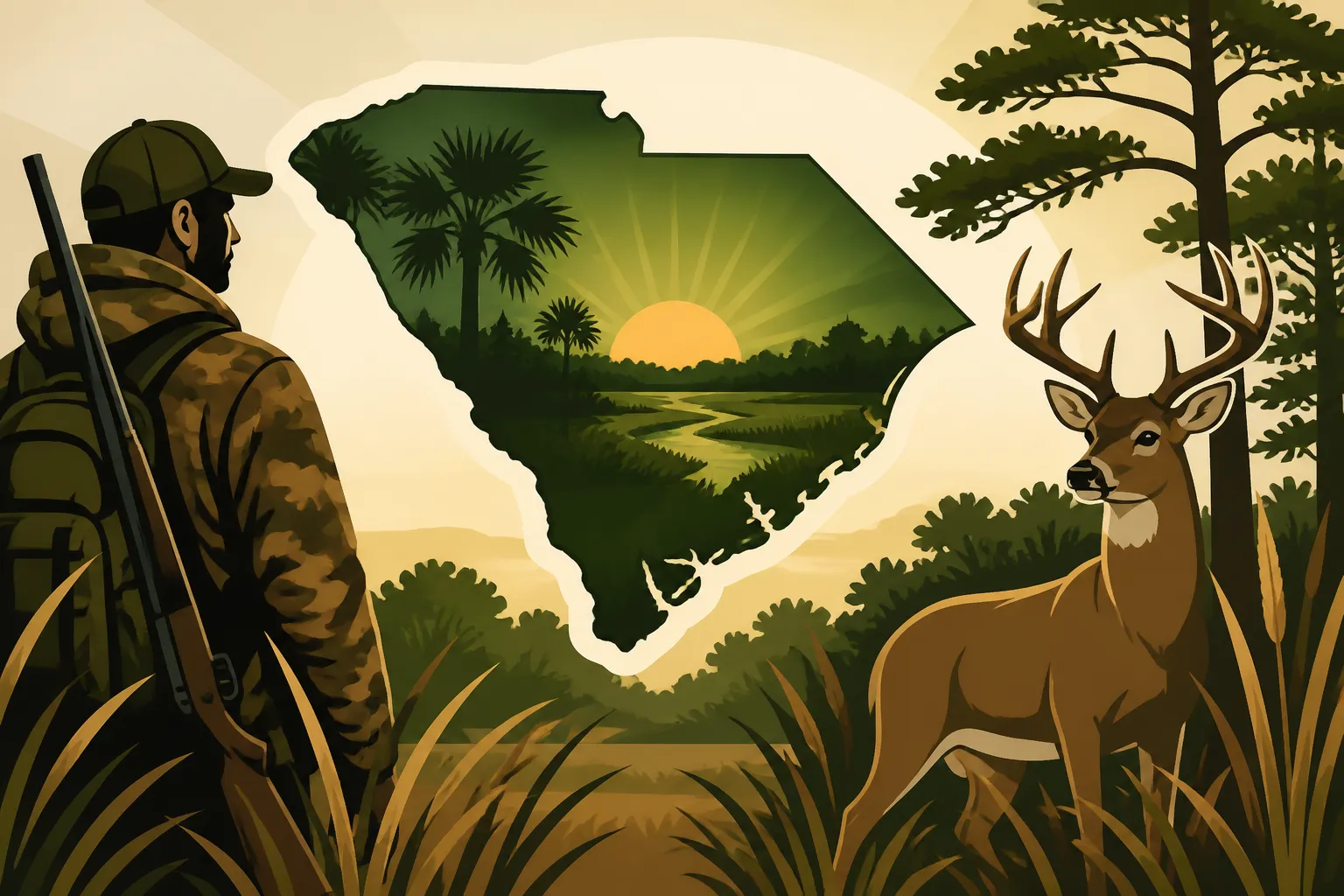
Hampton County Public Land Access
Hunting in Hampton County, South Carolina, can feel like a daunting challenge for anyone not fortunate enough to own a large tract of land or belong to a private club. The landscape is rich with prime timberland and agricultural fields, but so much of it is privately owned and tightly managed, leaving public access feeling incredibly scarce. This guide is here to shed light on the limited but valuable public hunting opportunities available in Hampton County, helping you navigate the rules, understand the terrain, and make the most of your time afield.
Understanding Hampton County's Unique Landscape for Public Hunting
Hampton County, nestled in the heart of South Carolina's Lowcountry, is a beautiful region characterized by vast stretches of pine plantations, mixed hardwood bottoms, and productive agricultural fields. While this creates ideal habitat for white-tailed deer, wild turkeys, and numerous small game species, it also means that the vast majority of the land is under private ownership. This reality presents a significant hurdle for public land hunters, but it's not an insurmountable one.
The Reality of Land Ownership in Hampton County
If you've ever driven through Hampton County, you've likely noticed the prevalence of "No Trespassing" signs, locked gates, and meticulously managed timber tracts. Huge swathes of the county are owned by timber companies, large private landowners, or hunt clubs. This isn't unique to Hampton County, of course, but it's particularly pronounced in many Lowcountry areas. The frustration is real: you see amazing habitat, perhaps even deer feeding in a distant field, but the barrier of private property feels absolute. It can be disheartening, making a public land hunter feel like an outsider in a prime hunting region. This dense network of private holdings means that finding a place to simply pull over and walk into the woods is almost impossible without explicit permission, which is often difficult to secure.
South Carolina's WMA System as a Lifeline for Public Hunters
Given the challenging land ownership patterns, South Carolina's Wildlife Management Area (WMA) system truly becomes a lifeline for anyone looking to hunt publicly in Hampton County and similar regions. The South Carolina Department of Natural Resources (SCDNR) manages these WMAs, which are parcels of land either owned by the state or leased from private landowners specifically for public recreation, including hunting. These areas are managed with wildlife habitat and public access as primary goals, offering a stark contrast to the surrounding private tracts. For a hunter planning a trip to Hampton County, understanding that WMAs represent virtually the only consistent public hunting option is crucial. These are the spots where careful planning and adherence to regulations will open doors to a meaningful hunting experience.
The "Go Outdoors SC" App and Online Resources
In today's digital age, your most valuable tool for navigating public land in South Carolina is undoubtedly the Go Outdoors SC platform, both online and through its mobile application. This is your central hub for everything from purchasing licenses and permits to locating WMAs and checking the specific regulations that apply to each one. Trying to hunt a WMA without first consulting this resource is like trying to navigate a dense swamp without a compass—you're likely to get lost or run afoul of the rules. The app provides detailed maps, boundary lines, and critical information about season dates, bag limits, and special restrictions for each WMA. It’s an invaluable tool for pre-scouting from your couch and for real-time navigation in the field. Imagine planning a hunt: you can pull up the Go Outdoors SC app, pinpoint available WMAs, and even review the hunt schedule and quota requirements before you ever leave home. This significantly streamlines the planning process, taking away some of the guesswork that used to plague public land hunters. For more detailed help on this, check out Using the Go Outdoors SC Map Tool.
Specific Public Hunting Opportunities in Hampton County
While Hampton County is largely dominated by private land, there are a few critical public hunting areas that every hunter needs to know about. These opportunities, though sometimes requiring a special draw or specific timing, offer the best chance to hunt within or very near the county lines.
Webb Wildlife Management Area
When discussing public land access in Hampton County, the Webb Wildlife Management Area is always the first and foremost location to highlight. Situated in the heart of the Lowcountry, Webb WMA covers a substantial acreage characterized by diverse habitats, including expansive pine forests, mature bottomland hardwoods, cypress-tupelo swamps, and managed fields. This variety creates an incredibly rich environment for a range of game.
Webb is well-known for its excellent deer and turkey hunting, and it also offers opportunities for small game. However, it’s important to understand that Webb WMA primarily operates on a quota hunt system for its highly sought-after deer and turkey hunts. This means you can't just show up with your license; you must apply for specific hunt dates through a lottery system, and if drawn, you receive a permit to participate. This system is in place to manage pressure and maintain high-quality hunting experiences, but it means access isn't guaranteed every season. The excitement of getting drawn for a Webb WMA deer hunt is something many South Carolina hunters cherish, knowing they’ve secured a spot in a prime hunting area. It's a testament to the quality of the management that these draws are so competitive. For specific details on how to get in, you'll want to read up on Webb WMA Turkey and Deer Access.
Beyond the big game quota hunts, Webb sometimes offers limited general access opportunities for small game or specific seasons, so always check the most current regulations on the SCDNR website or via the Go Outdoors SC app. Don't just assume; verifying the current rules is paramount to avoid disappointment or legal issues.
Crackerneck Wildlife Management Area
While not directly within Hampton County, Crackerneck Wildlife Management Area is a significant and high-quality public hunting option located nearby, just across the Savannah River in Aiken County, which borders Hampton. For many hunters in the area, Crackerneck is a viable alternative or an additional opportunity to consider. This WMA is managed by the U.S. Forest Service in cooperation with SCDNR, and it’s part of the much larger Savannah River Site.
Crackerneck offers excellent hunting for deer, turkey, and various small game, often boasting mature timber and diverse habitats similar to what you might find in the Lowcountry. Like Webb WMA, deer and turkey hunting at Crackerneck is largely managed through a quota hunt draw system. Hunters must apply for these limited-access hunts, and success in the draw grants a coveted permit. Thinking about hunters in Hampton County, it's common for them to apply for both Webb and Crackerneck draws, doubling their chances at a quality public land experience in the region. The unique management of Crackerneck due to its location on the Savannah River Site means that rules and access points can be specific, so thorough research before applying or planning a trip is essential. You can find more information about these specific hunts in Savannah River Site Deer Quota Hunts.
Other Potential Scattered Opportunities
It's natural for hunters to pore over maps, looking for those hidden gems—small, overlooked public tracts that might hold a deer or two. Unfortunately, in Hampton County, these types of scattered public lands are extremely rare, if they exist at all. Unlike some other areas of the state where national forest lands might be fragmented into smaller, accessible sections, Hampton County is largely devoid of such opportunities. Large national forests like the Francis Marion or Sumter National Forests, which offer significant public hunting, are located in different regions of the state and are not physically present within Hampton County's borders.
This means that while the dream of stumbling upon an unpressured, easily accessible public patch is appealing, the reality in Hampton County directs hunters almost exclusively to the managed WMA system. Any smaller, unlisted public access points would be extremely localized and likely known only to a very few individuals, and their status could change rapidly. Therefore, for practical purposes, focusing your efforts on Webb WMA and nearby quota hunt areas like Crackerneck is the most effective strategy for public land hunting in this part of South Carolina. Don't waste valuable time hoping for a secret spot; invest it in understanding and applying for the established WMA hunts.
Navigating Regulations and Access on Public Land
Hunting public lands, especially within South Carolina's WMA system, comes with a specific set of rules and requirements that are crucial to understand and follow. These regulations are designed to ensure fair chase, manage wildlife populations responsibly, and maintain safe and enjoyable experiences for all users. Ignoring them can lead to fines, loss of hunting privileges, or even more serious consequences.
Understanding WMA Permit Requirements
One of the most common oversights for hunters new to South Carolina's public land system is the WMA permit. It’s not enough to simply have your basic hunting license and big game tags. To hunt on any Wildlife Management Area, you must also possess a valid WMA permit. This permit is an additional purchase and is typically inexpensive, but it’s absolutely mandatory. Think of it as your entry ticket to these special management areas. Without it, even if you have all your other licenses in order, you are hunting illegally on a WMA. Many seasoned hunters have stories of seeing a new hunter, excited for their first WMA trip, having to turn around because they forgot this critical piece of paper (or digital proof on their phone). Always double-check that you've purchased your WMA permit before heading out. The Go Outdoors SC platform is where you can purchase and manage all your required licenses and permits. You can learn more about this in detail by visiting South Carolina WMA Permit Requirements.
General WMA Rules and Etiquette
Beyond the permit, each WMA can have specific rules, but there are some general guidelines that apply across most of the system. First, blaze orange requirements are almost always in effect during gun seasons for deer, and often during other seasons or for scouting. This is for safety, plain and simple. Always check the specific WMA's regulations for the exact requirements, but generally, a certain amount of hunter orange (or blaze pink, which is also an option in South Carolina) visible above the waist is mandatory. You'll find a deeper dive into this topic in South Carolina Blaze Orange Requirements.
Beyond safety, WMA rules often dictate what types of vehicles are allowed and where, restrictions on camping, limitations on treestand types and how long they can remain in place, and often specific sign-in/sign-out procedures for quota hunts. It's also vital to practice good hunter etiquette. This means packing out everything you pack in, being respectful of other hunters, and leaving the area better than you found it. Nothing is more frustrating than seeing a WMA littered with trash or stands left year-round when the rules clearly prohibit it. These rules are there to protect the resource and ensure everyone has a positive experience.
Leveraging Mapping Tools for Success
In a region where identifying property lines is so crucial, modern mapping applications are indispensable. Tools like onX Hunt and GoHunt have revolutionized how public land hunters operate. These apps allow you to view detailed property boundaries, overlaying public and private land distinctions directly onto high-resolution satellite imagery or topographic maps. For Hampton County, where the distinction between a WMA and a private timber tract might be just a few yards, this is not just convenient—it's essential for legal and ethical hunting.
Using an app like onX Hunt, you can confidently walk a WMA boundary, knowing exactly where you are relative to private property. This prevents accidental trespassing, which can quickly ruin a hunt and damage the reputation of all hunters. Furthermore, these apps help with navigation, identifying access roads, trails, water features, and potential bottlenecks or travel corridors for game. Before a hunt, you can use these tools to virtually scout, pinpointing promising areas and planning your entry and exit routes. Many hunters use onX Layers for South Carolina Land Status to get a clear picture of what's public and what's not, allowing them to focus their efforts effectively. Whether you're trying to figure out if that small sliver of woods next to the road is public or trying to find a subtle trail far from the main access point, a mapping app will be your best friend.
Strategies for Hunting Hampton County's Public Lands
Hunting public land in Hampton County, particularly on WMAs like Webb, demands a different approach than hunting on private, managed properties. Success often hinges on outsmarting not just the game, but also the challenges presented by limited access and potentially higher hunter pressure.
The Importance of Scouting
Scouting is paramount for any successful hunt, but it becomes an even more critical component when you're on public land in an area like Hampton County. Since you're often limited to specific WMAs, understanding the lay of the land, game sign, and potential pressure points is invaluable. Don't wait until opening day to discover the area; dedicate time, both in-season and especially during the off-season, to walk the woods.
Look for classic deer sign: rubs, scrapes, and most importantly, consistent travel corridors and feeding areas. In the Lowcountry, these might be subtle benches on slightly higher ground in a swamp, edges where different habitats meet (like a pine plantation bordering a hardwood drain), or natural funnels created by terrain or water. Observe the type of mast available, if any, and note how deer might be utilizing it. Pre-season scouting also allows you to find potential stand locations and identify entry and exit routes that minimize disturbance. A dedicated hunter might spend several weekends in the off-season, just walking the perimeter of Webb WMA, looking for subtle clues that others might miss. Remember, the more you know about the ground, the more confident you'll be when it matters most. For more tips on this, check out Scouting South Carolina Public Land Before Season.
Adapting Tactics to WMA Pressure and Terrain
One of the biggest differences between private and public land hunting in areas like Hampton County is hunter pressure. WMAs, by their very nature, draw more hunters. This pressure can change deer behavior significantly. Deer on public land often become more nocturnal, utilize thicker cover, and avoid easily accessible areas. Therefore, your tactics need to adapt.
Instead of hunting close to main access points, be prepared to walk further and deeper into the WMA. Often, the areas that see the least pressure are just a half-mile or mile further than most hunters are willing to go. Look for small pockets of overlooked cover – a dense briar thicket in the middle of a pine stand, a small island of high ground in a vast swamp, or a narrow strip of hardwoods tucked away from trails. The terrain itself, with its lowlands and swamps, plays a huge role in how deer move. Understanding how deer navigate these wet environments – using slight elevation changes, dry hummocks, and hardened edges – can unlock successful spots. Hunting lowcountry swamp deer requires specialized knowledge, knowing when to push through water and how to set up quietly. It's a different game than hunting open fields, and being prepared for it mentally and physically is key. You can gain valuable insights from our article Hunting Lowcountry Swamp Deer.
Patience and Persistence
Ultimately, public land hunting in areas like Hampton County, with its limited access and often challenging conditions, is a test of patience and persistence. It's not always easy, and you might experience more empty stands or challenging hunts than on a highly managed private tract. But that's part of the reward. The satisfaction of finally connecting with a deer or turkey on public land, knowing you've earned it through hard work, dedication, and smart strategy, is unmatched.
Don't get discouraged by initial setbacks. Each trip is a learning experience. Pay attention to what works and what doesn't. Observe how other hunters move and think about how you can position yourself differently. Embrace the challenge, learn from every outing, and understand that success on these public lands is a deeply rewarding achievement. It might take several hunts, or even several seasons, to truly unlock the patterns and potential of a WMA, but the journey itself is what makes you a better, more resilient hunter.
Here's a quick comparison of general WMA characteristics versus private land in the region:
| Feature | South Carolina WMAs (e.g., Webb WMA) | Typical Private Land (Hampton County) |
|---|---|---|
| Access | Regulated, often quota-based for big game; WMA permit required | Private; requires ownership, lease, or explicit permission |
| Hunter Pressure | Generally higher, especially in popular areas | Variable; often low if well-managed, but can be high on small leases |
| Game Management | Managed by SCDNR for public benefit and healthy populations | Owner/club specific; can be intensive (food plots, QDM) |
| Habitat Diversity | Often high; managed for various wildlife needs | Variable; can be monoculture timber or diverse farms/timber |
| Regulations | Strict statewide & WMA-specific rules (e.g., blaze orange, vehicle) | Owner-defined rules within state law; fewer restrictions |
| Mapping Necessity | Critical for boundaries, access, and regulations | Useful but less critical for boundaries if ownership is clear |
Disclaimer
This article is for general informational purposes only and does not constitute professional advice. Laws, prices and regulations vary by location and change over time. Consult a qualified professional for guidance on your specific situation.