ATV Rules on South Carolina Forest Roads
It’s a common frustration for hunters in South Carolina: you’ve scouted a promising area deep in the woods, maybe even pulled up some aerial maps, and now you’re wondering if you can use your ATV to access it or, even better, help haul out that trophy buck. Navigating the rules for ATV use on South Carolina’s public forest roads can feel like slogging through thick mud, but understanding the regulations is crucial to avoid fines and protect our precious natural resources. This guide will cut through the confusion, explaining where you can and cannot use your all-terrain vehicle on forest roads across our beautiful state.
Understanding Forest Roads and ATV Access in South Carolina
The term "forest road" might sound straightforward, but in South Carolina, it can apply to various types of public lands, each with its own set of rules and regulations regarding ATV access. This distinction is absolutely critical because what's allowed in one area could be strictly prohibited just a few miles down the road in another. Getting this wrong can quickly turn a great day outdoors into a costly mistake or even lead to losing hunting privileges.
Differentiating Public Land Types
South Carolina offers a diverse array of public lands for hunting, each managed by different agencies with distinct operational guidelines.
- National Forests: These are federally managed lands, specifically the Francis Marion National Forest and the Sumter National Forest. They operate under U.S. Forest Service regulations, which often include a Motor Vehicle Use Map (MVUM) system for road access. When people think of "forest roads," these are often the first to come to mind, and they have some of the most comprehensive regulations. Francis Marion National Forest Hunting and Sumter National Forest Hunting are huge resources, but knowing how to move through them is key.
- Wildlife Management Areas (WMAs): These lands are managed by the South Carolina Department of Natural Resources (SCDNR). WMAs can range from small tracts to vast areas, often adjacent to or embedded within other public lands. Their rules for vehicle use are generally stricter and can vary significantly from one WMA to another, focusing heavily on protecting habitat and limiting disturbance.
- State Forests: The South Carolina Forestry Commission manages these lands, which are dedicated to sustainable timber production and public recreation, including hunting. Like WMAs, State Forests have their own specific rules for vehicle access, which you'll need to consult directly.
The challenge here is that you might have a "forest road" running through all three types of land, and the rules could literally change at a boundary line marked only by a small sign or a change in signage style. It pays to know exactly where you are and whose rules apply.
The General Rule on National Forest Roads
When it comes to the Francis Marion and Sumter National Forests, the golden rule for any motorized vehicle, including ATVs and other Off-Highway Vehicles (OHVs), is this: "If it's not on the Motor Vehicle Use Map (MVUM), it's illegal." This isn't just a suggestion; it's the law. These maps designate which roads, trails, and areas are open to motor vehicle traffic, what type of vehicle is permitted, and during which seasons. Any road or trail not explicitly shown on the MVUM as open for your specific vehicle type is closed.
Think of it this way: instead of listing what's closed, the Forest Service lists what's open. This flips the common assumption many hunters have. You can't just assume a forest road is open because there's no "no vehicles" sign. If it's not on the MVUM as open, consider it closed to your ATV. These maps are updated regularly, so it’s essential to always have the latest version. This applies whether you're heading in for a quick scouting trip or planning to set up a camp.
WMA and State Forest Specifics
Moving from the national forests to lands managed by the state, the rules often become even more restrictive for ATVs.
- Wildlife Management Areas (WMAs): Most WMAs have very limited, if any, allowance for ATVs on their internal roads. The primary purpose of WMAs is wildlife management and habitat protection, so vehicular traffic is heavily controlled to minimize disturbance and prevent habitat damage. Some WMAs might allow street-legal vehicles on designated main access roads, but rarely do they permit ATVs on interior forest roads or trails unless specifically marked for administrative or approved purposes. Always check the specific WMA regulations before you go. Remember, South Carolina Wildlife Management Areas are primarily for the game and their habitat.
- State Forests: Similar to WMAs, State Forests typically have stricter rules than National Forests. While some primary forest roads might be open to licensed vehicles for general access, ATV use on secondary, unpaved forest roads or trails is often prohibited or severely restricted. You'll need to consult the South Carolina Forestry Commission's specific regulations for the State Forest you plan to visit.
It's not uncommon to find signs explicitly stating "No ATVs Beyond This Point" or "Foot Traffic Only" on roads that look perfectly drivable to an ATV. These signs are there for a reason, and ignoring them can lead to serious consequences.
Navigating the Regulations: Where to Find Specifics
Knowing where to look for the rules is half the battle. With multiple agencies managing different tracts of land, it’s crucial to go directly to the source for the most accurate and up-to-date information. Don't rely on hearsay or what a buddy did last year; regulations can change.
The Importance of Motor Vehicle Use Maps (MVUMs)
For both the Francis Marion and Sumter National Forests, the Motor Vehicle Use Map (MVUM) is your absolute gospel. These maps are produced and updated by the U.S. Forest Service.
- What an MVUM shows: MVUMs display roads, trails, and areas that are open to motor vehicle travel, identifying the class of vehicle (highway-legal, ATV, motorcycle, etc.) and any seasonal restrictions. They are not topographic maps, but rather legal documents indicating where motor vehicle use is allowed.
- How to get one: You can typically download MVUMs for free from the specific National Forest's website (e.g., Francis Marion & Sumter National Forests website). It's highly recommended to download and carry a physical copy and/or have it accessible on a mapping app.
- Using digital tools: This is where modern technology really shines. Many hunters find it incredibly helpful to use mapping applications like onX Hunt. onX Hunt often integrates MVUM data, displaying public land boundaries and designated roads/trails, making it easy to see what's open or closed for ATV use right on your phone or GPS device. It allows you to overlay different layers, showing everything from private land boundaries to, crucially, Forest Service system roads. You can mark your route, find parking, and know exactly where you stand, literally, in relation to legal ATV access. This kind of tool can save you a lot of headache and potentially a ticket. Scouting With the Go Outdoors SC App is great for general SC DNR info, but for National Forests, an app with MVUM overlays is king.
Checking SCDNR Resources for WMAs and State Forests
For Wildlife Management Areas and State Forests, your primary source of information will be the South Carolina Department of Natural Resources (SCDNR) and the South Carolina Forestry Commission websites, respectively.
- SCDNR Website and Regulations Digest: The SCDNR website is a treasure trove of information. You'll find specific regulations for each WMA, often in downloadable PDFs or listed directly on their WMA pages. Always refer to the most current South Carolina Hunting & Fishing Regulations digest. This digest is updated annually and covers general WMA rules, then often provides specific exceptions or additions for individual WMAs.
- "Go Outdoors SC" Platform: The SCDNR also manages the "Go Outdoors SC" platform, which is not only where you buy your licenses but also a hub for information. While it may not have MVUMs, it links to relevant WMA fact sheets and rules. This is your go-to for anything related to South Carolina WMA Permit Requirements and specific WMA rules.
- State Forestry Commission: For State Forests (like Manchester State Forest or Sandhills State Forest), consult the South Carolina Forestry Commission's official website. They will have detailed rules regarding vehicle access, often within specific recreational guides or management plans for each forest.
Understanding Restricted Access and Closures
It's not enough to know if a road is open; you also need to know when.
- Seasonal Closures: Many forest roads, especially those in mountainous or low-lying swampy areas, are subject to seasonal closures. These might be to protect roads from damage during wet weather, to reduce disturbance during sensitive wildlife periods (like breeding or fawning), or due to logging operations. A road open in October might be closed in January.
- Weather-Related Closures: Heavy rains can make unpaved roads impassable or severely damage them. Agencies will close roads to prevent further degradation and ensure public safety. Always check for current conditions before heading out, especially after significant rainfall.
- Administrative Access Only: You'll often see signs indicating "Administrative Use Only." This means only authorized personnel (Forest Service, DNR, Forestry Commission staff) are permitted to use those roads. These are strictly off-limits to the public, regardless of vehicle type.
- Quota Hunt Areas: Some areas, particularly within WMAs, might have special quota hunts. During these periods, vehicle access might be further restricted or only permitted for hunters drawn for the hunt. Always check the rules for South Carolina WMA Quota Hunt Sign-In Process if you're participating in one.
It’s your responsibility as a hunter and outdoors enthusiast to know these details. Ignorance of the law is never a valid excuse, especially when protecting our wild places.
Practical Considerations for ATV Use on South Carolina Forest Roads
Even if a forest road is open to ATV use, there are still a number of practical and ethical considerations to keep in mind. Responsible use ensures these privileges continue to be available for future generations and minimizes your impact on the environment and other users.
Safety and Environmental Stewardship
Operating an ATV on public lands isn't just about following the rules; it's about being a good steward of the land and ensuring your own safety.
- Stay on Marked Trails and Roads: This is paramount. Going off-trail, known as "cross-country travel," is almost universally prohibited and incredibly damaging to sensitive habitats. It causes erosion, destroys vegetation, and disturbs wildlife. Stick to the designated routes, even if a shortcut seems tempting.
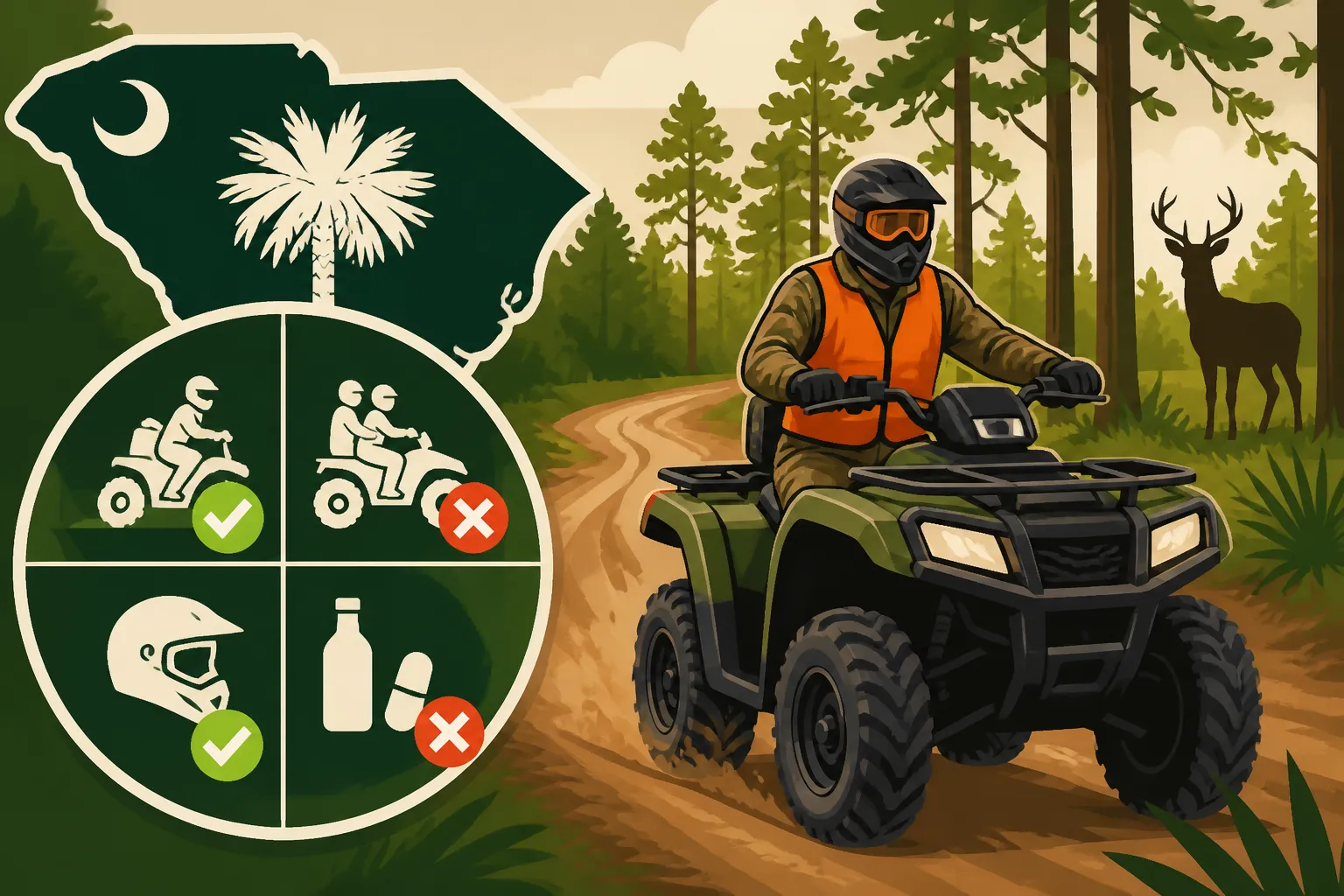
- Speed Limits and Safe Operation: Forest roads can be winding, narrow, and often have blind curves. They may also be used by other vehicles, hikers, mountain bikers, or even horseback riders. Always adhere to posted speed limits and drive defensively. Never operate an ATV under the influence.
- Minimize Your Impact: Be mindful of noise, especially during hunting season. Consider quiet exhaust systems if possible. Pack out everything you pack in, and leave no trace. Don't rut up soft roads, especially after rain, even if they are open. Your actions reflect on all ATV users.
- Wearing Safety Gear: Helmets are non-negotiable for ATV operation. Eye protection, gloves, and sturdy footwear are also highly recommended. These simple precautions can prevent serious injury.
Vehicle Requirements and Licensing
While ATVs themselves are generally not required to be street-legal to operate on designated forest roads, there are still requirements you need to be aware of.
- Registration and Insurance: Depending on the state and specific public land, your ATV may need to be registered with the DMV or a similar agency. While South Carolina does not require ATVs to be titled or registered for off-road use, proof of insurance is a good idea, and some specific WMA rules might have unique stipulations. Always check the specific land manager's rules.
- Operator Age and Training: Many areas have age restrictions for ATV operators, particularly on public land. South Carolina law states that children under 6 years old cannot operate an ATV. Operators between 6 and 15 must be supervised by an adult on public land, and completion of an approved ATV safety course is highly recommended for all riders, especially younger ones.
- Equipment: Ensure your ATV is in good working order, with functioning brakes, lights (if operating at dawn/dusk or in low light), and a spark arrestor on the exhaust system to prevent wildfires.
Consequences of Non-Compliance
Violating ATV rules on South Carolina forest roads can lead to a range of penalties, none of which are pleasant.
- Fines: Expect significant monetary fines for infractions such as operating an ATV in a closed area, riding off-trail, or reckless operation. These can quickly add up.
- Vehicle Impoundment: In serious cases, your ATV could be impounded, leading to additional fees for retrieval.
- Loss of Hunting Privileges: Repeated or severe violations could result in the suspension of your hunting license or a ban from using public lands, which would be a devastating blow to any avid hunter.
- Environmental Damage: Beyond legal penalties, the real consequence is the damage done to the ecosystem, which impacts wildlife and the hunting experience for everyone.
It's far easier and cheaper to simply follow the rules and know before you go.
Planning Your Hunt: Integrating ATVs into Your Strategy
For many hunters, an ATV is more than just a recreational vehicle; it's a vital tool for efficient scouting and game retrieval. When used legally and responsibly, it can truly enhance your hunting experience. However, when prohibited, it's important to have alternative strategies in place.
Scouting and Game Retrieval
When ATV use is permitted on designated forest roads, it can be incredibly beneficial for certain aspects of your hunt.
- Efficient Scouting: An ATV can help you cover a lot of ground quickly when scouting new areas or checking familiar spots. You can access different parts of a forest road system, stop to glass areas, or locate fresh sign. Remember to park legally and then proceed on foot into potential hunting areas. This is where an app like onX Hunt really shines, letting you see exactly which roads are legal for ATV travel, mark potential stand locations, and plan your foot routes from designated parking spots.
- Game Retrieval: This is perhaps the most obvious benefit. Dragging a deer, especially a large one, out of a remote area can be back-breaking work. If you're lucky enough to harvest an animal near a designated ATV-accessible road, your ATV can be invaluable for a quick and respectful retrieval. This reduces spoilage and minimizes physical strain. However, you must only use it on roads where it's explicitly allowed. No venturing into the timber to get closer, even if it's "just this once." Dragging a Deer Out of a Swamp is tough work, and an ATV can help immensely if the rules allow.
Public Land Access Points and Parking
Understanding where you can legally park your truck and unload your ATV is just as important as knowing where you can ride.
- Designated Parking Areas: Most public lands will have designated parking areas along main roads or at the beginning of restricted access roads. These are the legal spots to leave your vehicle.
- Unloading Your ATV: You can typically unload your ATV at these parking areas and then proceed onto the designated ATV-accessible roads. Always be mindful of other users and avoid blocking access points or main travel lanes.
- Gaining Deeper Access: If you're using an ATV to get deeper into public land, ensure that the roads you intend to use are indeed open for your vehicle type. Use your MVUM or WMA map to plan your route well in advance. Remember, even if you can drive your ATV 5 miles down a forest road, you still need to be aware of the rules for South Carolina Public Land Hunting Hours and any other restrictions.
Alternatives When ATVs Are Restricted
What if your chosen hunting spot is in an area where ATVs are prohibited on forest roads? Don't despair; many successful hunters rely on other methods.
- Foot Travel: Embrace walking! Many hunters prefer to get away from road noise and vehicle activity anyway. Often, the best hunting spots are well beyond where vehicles can go. Good physical conditioning and strategic planning can make foot travel highly effective. Finding Ground Others Walk Past often means going where vehicles cannot.
- Electric Bikes (E-bikes): Some public land managers are beginning to allow e-bikes on trails and roads where traditional ATVs are prohibited, treating them more like bicycles. The rules vary, so always check first, but an e-bike could be a viable option for covering ground more quickly than walking without the restrictions of a gas-powered ATV.
- Deer Carts and Game Carriers: For game retrieval in non-ATV zones, a sturdy deer cart or specialized game carrier becomes your best friend. These can greatly reduce the strain of hauling an animal out, especially over rough terrain or through dense woods. Investing in a good one is well worth it if you hunt in areas with ATV restrictions. Deer Carts for Coastal Plain Ground are a lifesaver.
- Calling for Help: If you harvest a large animal in a remote, non-ATV accessible area, don't be afraid to call a buddy or two to help with the drag. Many hands make light work, and it's a great way to share the hunting experience.
Ultimately, your success as a hunter depends on your adaptability and your respect for the rules and the land. An ATV can be a fantastic tool, but only when used correctly and legally.
Here's a quick reference for where to find ATV rules on South Carolina public lands:
| Land Type | Managing Agency | Primary Source for ATV/OHV Rules | Key Information to Look For | Digital Tools Recommended |
|---|---|---|---|---|
| National Forests | U.S. Forest Service | Motor Vehicle Use Maps (MVUMs) | Designated open roads/trails, vehicle class, seasonal restrictions | onX Hunt (with MVUM overlays), National Forest website for PDFs |
| Wildlife Management Areas | South Carolina Dept. of Natural Resources (SCDNR) | SCDNR Website, Regulations Digest, WMA Brochures | Specific WMA rules, general WMA vehicle restrictions, access points | Go Outdoors SC website, SCDNR mobile apps |
| State Forests | South Carolina Forestry Commission | SC Forestry Commission Website, Forest Management Plans | Designated open roads, general vehicle policies | SC Forestry Commission website |
Disclaimer
This article is for general informational purposes only and does not constitute professional advice. Laws, prices and regulations vary by location and change over time. Consult a qualified professional for guidance on your specific situation.