Bear Island Wildlife Management Area
Hunting in South Carolina's Lowcountry can be a truly unique experience, but the dense, often swampy terrain and specific regulations for certain areas can leave even seasoned hunters feeling a bit overwhelmed. Many folks dream of chasing game in these iconic coastal landscapes, only to get bogged down trying to figure out where to go and what to expect. This guide is here to shed light on one of the state's premier coastal hunting destinations, Bear Island Wildlife Management Area, helping you understand its unique challenges and incredible opportunities so you can plan a successful and rewarding hunt.
A Glimpse into Bear Island Wildlife Management Area
Bear Island Wildlife Management Area, often just called Bear Island, is one of those places that truly embodies the wild heart of coastal South Carolina. It's not your typical pine plantation or upland hardwood forest; this is a mosaic of brackish marshes, impoundments, and maritime forests that create a dynamic and challenging environment for hunters.
Location and Unique Landscape
Nestled down in Colleton County, right along the Edisto River and the St. Helena Sound, Bear Island WMA is part of the larger ACE Basin, an area renowned for its ecological significance and stunning natural beauty. When you first drive in, you're immediately struck by the vast, open expanses of marshland stretching out to the horizon, often dotted with distant tree lines that mark the higher ground. The unique blend of fresh and saltwater influences here creates an incredibly rich ecosystem, supporting a diverse array of wildlife. Navigating this landscape requires a different kind of preparation and mindset than hunting the Upstate ridges or the Midlands farmlands. It's a place where tides dictate movement as much as deer sign, and a good map, perhaps a digital one like onX Hunt, becomes an indispensable tool for understanding the lay of the land, especially with all the winding creeks and impoundment dikes.
Habitat Features and Their Impact on Hunting
The habitat at Bear Island is incredibly varied, which directly influences the game you'll find and how you'll hunt it. You've got expansive tidal marshes, critical for waterfowl. Then there are managed freshwater and brackish impoundments, specifically designed to attract ducks. Interspersed throughout are higher "islands" or hammocks of maritime forest, often dense with live oaks, palmettos, and other coastal vegetation, which provide crucial cover and food for deer and hogs. These dense pockets of high ground often act as sanctuaries, drawing deer and hogs during high tides or periods of heavy hunting pressure. Understanding the interplay between these different habitat types – how water levels affect access, where deer might be feeding, or where ducks will roost – is key to developing an effective strategy. Hunters need to be prepared for everything from wading through shallow water to pushing through thick brush, making specialized gear like waders and snake boots almost a necessity.
Game Species and Hunting Opportunities
Bear Island WMA offers a diverse range of hunting opportunities, primarily known for its excellent waterfowl and deer hunting, with feral hogs providing an additional year-round challenge. Each species presents its own unique set of considerations and rewards for the dedicated hunter.
Waterfowl Hunting
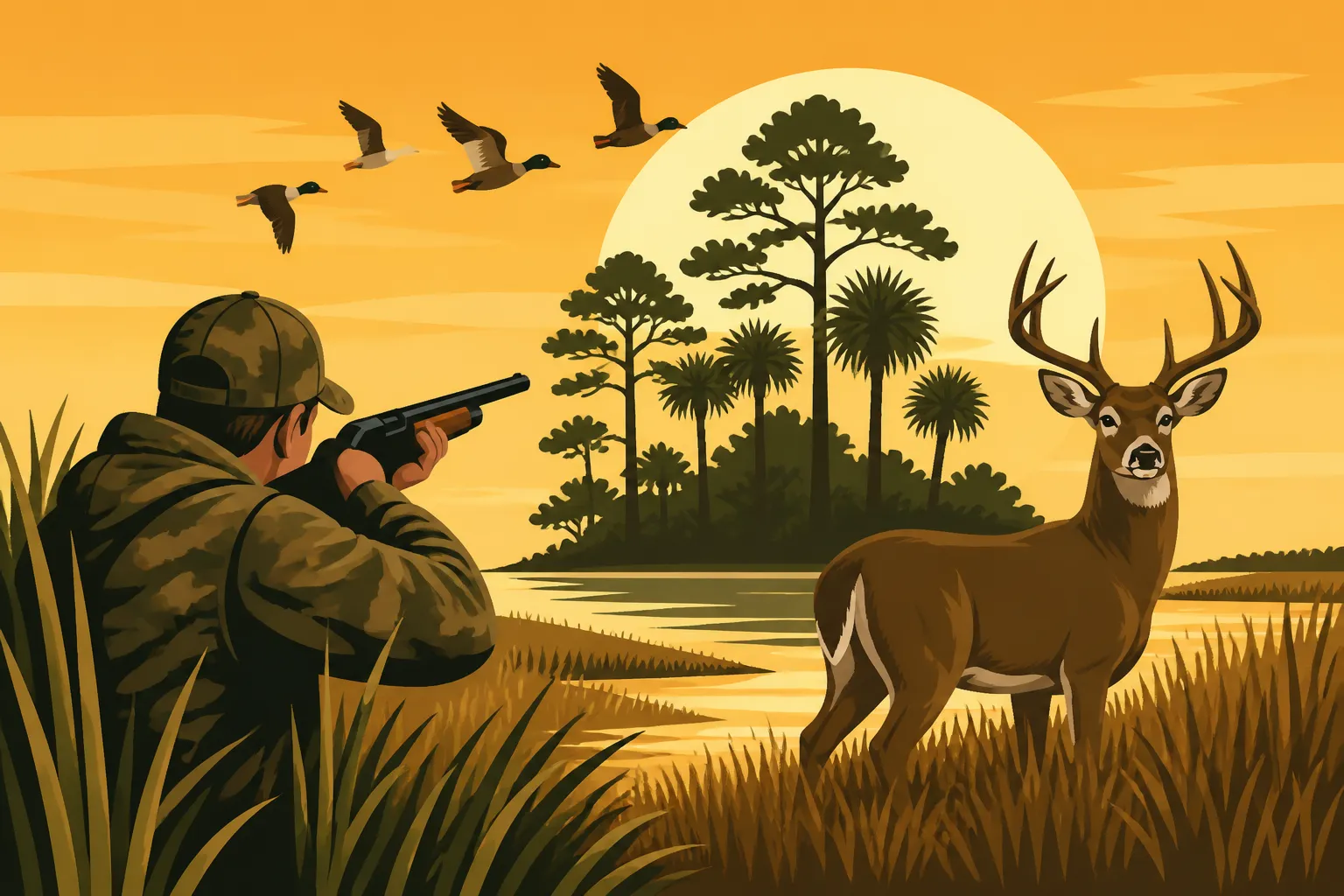
If you love chasing ducks, Bear Island is a bucket list destination in South Carolina. The managed impoundments are expertly designed to provide prime feeding and resting areas for a variety of migratory waterfowl, attracting everything from teal and pintails to wigeon and gadwalls. The experience of setting up decoys on the edge of a vast impoundment as the sun rises, listening to the cacophony of ducks whistling overhead, is truly something special. Hunters often use layout blinds tucked into the vegetation along the dikes or set up in shallow water with marsh boats and push poles. Success here often hinges on scouting before the hunt to identify where birds are flying and feeding, and understanding the nuances of decoy spreads for ACE Basin divers versus puddle ducks. Remember that waterfowl hunting here often falls under specific quota hunts or lottery drawings, so always check the latest South Carolina Managed Waterfowl Area Draw Rules well in advance.
Deer Hunting
Deer hunting on Bear Island is a different beast entirely compared to hunting inland. The whitetails here are accustomed to the unique coastal environment, often using the hammocks and higher ground within the marsh as bedding and feeding areas. Hunting strategies often revolve around understanding deer movement patterns in response to tides and hunting pressure. You might find deer pushing out into the edges of agricultural fields or clearings during low tide, only to retreat to dense cover as the water rises. Setting up on a choke point where a hammock narrows, or along a transition line between marsh and thicker woods, can be incredibly effective. Many hunters opt for climbing stands or mobile setups to adapt to conditions, while ground blinds brushed in along field edges can also be highly productive, especially during the early season when temperatures are warm. Hunting Coastal Rice Field Edges can provide valuable insights into these specific tactics.
Feral Hogs
Feral hogs are abundant on Bear Island, as they are across much of coastal South Carolina, and they offer a thrilling, year-round hunting opportunity. These destructive animals thrive in the swampy, marshy environment, often rooting up impoundment dikes and natural areas. You'll find signs of their presence everywhere – rooting, wallows, and rubs on trees. Hunting hogs here can be a game of patience and stealth. They often move during cooler parts of the day or night, and their keen sense of smell makes close approaches challenging. Still-hunting through dense palmetto thickets or along swamp edges, or setting up over known travel corridors and food sources, can yield results. Hunters sometimes combine hog hunting with deer or waterfowl pursuits, taking advantage of any opportunities that arise. Remember, while hogs are year-round on private land, WMA rules often have specific season windows or methods, so always double-check the current regulations before you go. The destructive nature of these animals means that wildlife managers generally encourage their harvest whenever possible.
Small Game Opportunities
While not as renowned for small game as some other WMAs, Bear Island does offer limited opportunities for species like squirrels and rabbits, particularly in the higher, wooded areas. Squirrels can be found in the oak hammocks, especially during years with good mast crops. Rabbit hunting might be an option along fencerows or brushy edges on the property's perimeter. However, most hunters coming to Bear Island are focused on the larger game animals or waterfowl. If you're planning a trip primarily for small game, it's always wise to call the SCDNR office responsible for the WMA beforehand to get the most up-to-date information on populations and specific hunting areas that might be productive. For a general overview of other small game opportunities in the state, you might check out South Carolina Small Game Season Rules.
| Game Species | Primary Habitat | Common Hunting Methods | Special Considerations |
|---|---|---|---|
| White-Tailed Deer | Maritime forests, hammocks, field edges | Stand hunting (climbing, ladder), still-hunting | Tidal influence on movement, dense cover |
| Waterfowl (Ducks, Geese) | Managed impoundments, tidal marshes | Decoy spreads, layout blinds, marsh boats | Quota hunts, scouting for flight paths, tide charts |
| Feral Hogs | Everywhere (especially dense cover, rooted areas) | Still-hunting, opportunistic hunting, stand hunting | Year-round opportunity, keen senses, destructive |
| Squirrels | Oak hammocks, higher wooded areas | Still-hunting, small game walk-up | Less common focus for most hunters |
| Rabbits | Brushy edges, fencerows, dense undergrowth | Walk-up with dogs, still-hunting | Limited specific areas |
Regulations and Access for Bear Island WMA
Hunting any Wildlife Management Area in South Carolina comes with a specific set of rules and requirements, and Bear Island is no exception. Understanding these regulations is critical for a legal and successful hunt, and it's where resources like the SCDNR website and digital mapping tools like GoHunt become invaluable.
Permit Requirements and Licenses
First and foremost, to hunt on any South Carolina WMA, you'll need a valid South Carolina hunting license and a WMA permit. This is in addition to any specific tags required for the game you're pursuing, such as deer tags or federal and state migratory bird stamps for waterfowl. Bear Island often utilizes quota hunts, especially for deer and waterfowl, which means that access is limited to a certain number of hunters who apply and are drawn for specific hunt dates. These quota hunts are designed to manage pressure and provide a quality hunting experience, but it also means you can't just show up and hunt without prior application and selection. It's crucial to check the annual SCDNR regulations for application windows and specific rules for Bear Island well in advance of the season. South Carolina WMA Permit Requirements outlines the general rules, but always dig into the specific area regulations.
Season Dates and Quotas
The hunting season dates on Bear Island WMA can differ significantly from statewide private land seasons. This is especially true for deer, which may have shorter, more restricted seasons, and waterfowl, which often have specific draw hunt dates. For instance, while some private lands might have a long archery season, Bear Island's deer season might be limited to a few specific gun hunt dates. Waterfowl hunts are almost always by draw. These dates and quotas are set annually by the SCDNR to manage wildlife populations and hunting pressure on this unique property. It's not enough to know the general South Carolina deer season structure; you absolutely must look up the Bear Island WMA schedule. Ignoring these specific WMA regulations can quickly lead to a frustrating and potentially illegal hunt. Always verify the current season dates and bag limits directly from the official SCDNR regulations brochure or website for Bear Island before making any plans.
Access Points and Mobility
Bear Island is a large property, and understanding its access points and rules regarding vehicle or boat use is essential. There are designated parking areas, and usually, vehicles are restricted to main roads. The interior of the WMA often requires foot access, or in some cases, non-motorized boats for waterfowl hunting in certain impoundments. Navigating the maze of dikes, creeks, and marsh can be challenging, especially in the dark pre-dawn hours of a waterfowl hunt or when trying to sneak into a deer stand. Using a GPS-enabled mapping app like onX Hunt or even the Go Outdoors SC app with downloaded maps can be a lifesaver, helping you identify property lines, locate access roads, and mark your stand sites. Be aware that during high tides, some roads or trails may become impassable, so planning your entry and exit routes with the tide schedule in mind is non-negotiable for safety and success.
Planning Your Bear Island Hunt
A successful hunt on Bear Island WMA isn't just about showing up with a gun or bow; it's about meticulous planning, adapting to a dynamic environment, and being prepared for the unique challenges this coastal gem presents.
Pre-Season Scouting and Intelligence Gathering
Scouting is paramount on Bear Island. While you might not be able to physically scout during closed seasons, you can still gather a ton of intel. Start with aerial maps. Satellite imagery will show you the layout of the impoundments, the high ground hammocks, the winding creeks, and any potential pinch points or travel corridors deer might use. Look for areas where different habitat types meet – these transition zones are often hotspots. Using tools like onX Hunt, you can mark potential stand locations, entry routes, and areas of interest from your couch.
Beyond maps, scour hunting forums and harvest reports (if available) for insights into past success patterns. Pay attention to how the tide influences movement, where the prevailing winds might carry your scent, and which impoundments tend to hold waterfowl. If you can do a walk-through during legal scouting periods, look for fresh deer sign, hog rooting, and areas with preferred browse. Observe water levels and note how they might impact your access and where game might concentrate. For waterfowl, identifying where birds are flying and landing in the weeks leading up to the season is crucial for Hunting Coastal Marsh Waterfowl.
Essential Gear for the Lowcountry Hunter
Your gear list for Bear Island will look a bit different than for an Upstate hunt. First, embrace rubber boots or full waders. You will encounter water, mud, and probably some muck. Snake boots are also a smart choice given the healthy reptile population in the Lowcountry. Lightweight, breathable camo is essential for the warmer early seasons, but also pack rain gear because coastal showers can pop up quickly.
For waterfowl, a good set of decoys, a reliable shotgun with non-toxic shot, and a comfortable layout blind or marsh seat are must-haves. For deer, your preferred weapon (rifle, bow, muzzleloader) is fine, but consider its practical range in dense cover. A quality pair of binoculars will help pick apart thick cover or identify distant birds. Don't forget bug repellent – mosquitos and no-see-ums can be relentless, especially during the warmer months. A reliable headlamp for pre-dawn entries and post-dusk exits is non-negotiable. Finally, carrying a detailed map (digital or paper, or both) and a compass or GPS device is critical for navigation in an area where landmarks can be few and far between. This is where a robust mapping app like onX Hunt really shines, allowing you to track your movement and ensure you stay within WMA boundaries.
Tactical Approaches to Bear Island Wildlife
Hunting tactics on Bear Island need to be flexible and adaptable. For deer, think about how tides push and pull deer. During high tides, deer will concentrate on the higher ground. Focus on stand placement overlooking these hammocks or along the fringes of agricultural fields. During low tides, deer might venture further into the exposed marsh to browse. Hunting Lowcountry Swamp Deer offers some specific insights. Consider still-hunting slow and quiet through dense palmetto thickets during the middle of the day, when deer might be bedded in cooler, shaded cover.
For waterfowl, understand the flight patterns from roosting to feeding areas. Early mornings often involve pass-shooting as birds leave the roost or approach decoys. Setting up with the wind at your back, if possible, can help ducks cup their wings and commit to your spread. Calling can be effective, but overuse can flare wary birds. If the primary focus is geese, tactics for Early Goose Season Tactics in South Carolina might apply. For hogs, opportunistic hunting is key. If you're deer hunting, be ready for a hog encounter. If specifically targeting hogs, look for active rooting areas, fresh tracks, and wallows. They are often most active during cooler parts of the day or night, so consider setting up well before legal shooting light for deer season or during general hunting hours if allowed specifically for hogs.
Challenges and Considerations for Your Hunt
Bear Island is beautiful, but it's also a challenging environment. Being aware of these potential hurdles can help you mitigate them and still have a great experience.
Navigating the Terrain
The terrain on Bear Island is not for the faint of heart. It's wet, it's muddy, and it's often covered in dense vegetation. Wading through knee-deep water or pushing through thick palmetto and briar patches is common. This isn't a place for light hiking boots. Investing in good quality waterproof boots or chest waders is crucial. It's also easy to get disoriented, especially in the featureless marsh or dense woods, so relying solely on memory is a recipe for trouble. Always carry a reliable GPS device or use a mapping app like GoHunt with offline maps downloaded to keep you on track and identify property boundaries. Don't underestimate the physical demands; a long walk through this kind of terrain with gear can be exhausting.
Weather and Pests
South Carolina's Lowcountry weather is notoriously humid and can be unpredictable. Early season hunts, especially for archery deer or teal, can be sweltering, requiring lightweight, moisture-wicking clothing. Warm-Weather Clothing for South Carolina Hunters is a good resource. Rain can turn trails into slick mud and make long walks even more arduous. Always pack appropriate rain gear.
Then there are the pests. Mosquitos, gnats (no-see-ums), and ticks are ever-present, particularly from spring through fall. A strong insect repellent, head net, and tick-repellent clothing are highly recommended. Failing to prepare for bugs can quickly turn an otherwise enjoyable hunt into a miserable ordeal. Snakes are also a concern, especially venomous varieties like cottonmouths and rattlesnakes, so paying attention to where you step and wearing snake boots are important safety precautions.
Dealing with Hunting Pressure
As a popular WMA, Bear Island can attract significant hunting pressure, especially during opening weekends or prime season dates. This is a reality of hunting public land, and it requires adjusting your strategy. Don't expect to have the place to yourself. One effective approach is to walk further than most other hunters. Many hunters stick to areas closer to parking lots or main roads; the deeper you go, the less pressure you're likely to encounter.
Another strategy is to identify areas that are difficult to access, perhaps requiring a longer wade or a boat. These "hard-to-reach" spots often hold less-pressured game. Pay attention to hunter movement – if you see a lot of activity in one area, consider shifting your focus to a quieter section. Being adaptable and having multiple backup plans is key to success when dealing with crowds. Opening Weekend Crowds on the Coastal Zones can give you an idea of what to expect and how to prepare.
Post-Harvest Logistics
Congratulations, you've harvested an animal on Bear Island! Now comes the next challenge: getting it out. Dragging a deer or a hog through deep mud, over dikes, or through dense vegetation can be incredibly difficult, especially alone. Consider bringing a game cart if the terrain allows, or planning to quarter the animal in the field to lighten the load. For larger game like deer or hogs, a strong game bag and a good field dressing knife are essential. If you're waterfowl hunting and bagging multiple birds, having a large game strap or dedicated bird bag is helpful. Always have a plan for how you will get your game from where it fell back to your vehicle, as this is one of the most physically demanding aspects of hunting the Lowcountry. If you're concerned about heat, especially during early season, having a cooler with ice readily available at your vehicle is a smart move for preserving your meat.
Disclaimer
This article is for general informational purposes only and does not constitute professional advice. Laws, prices and regulations vary by location and change over time. Consult a qualified professional for guidance on your specific situation.