South Carolina Feral Swine Genetics and Origin
Feral hogs are a nightmare for landowners, farmers, and even other wildlife in South Carolina, tearing up fields, destroying habitat, and constantly multiplying. Understanding the complex genetics and origins of these incredibly resilient animals is key to developing more effective strategies for managing their relentless spread and devastating impact across our beautiful state.
The Invasive Problem in South Carolina: A Relentless Scourge
Anyone who's spent any time afield in South Carolina, whether hunting deer, turkeys, or just enjoying nature, knows that feral hogs are a pervasive, destructive force. They're not just a nuisance; they're a full-blown ecological and economic disaster, and their numbers seem to defy every effort to control them. It feels like every year, the problem gets a little worse, a little more entrenched, and hunters and land managers are left scratching their heads wondering how to get ahead of it.
Widespread Impact on Ecosystems
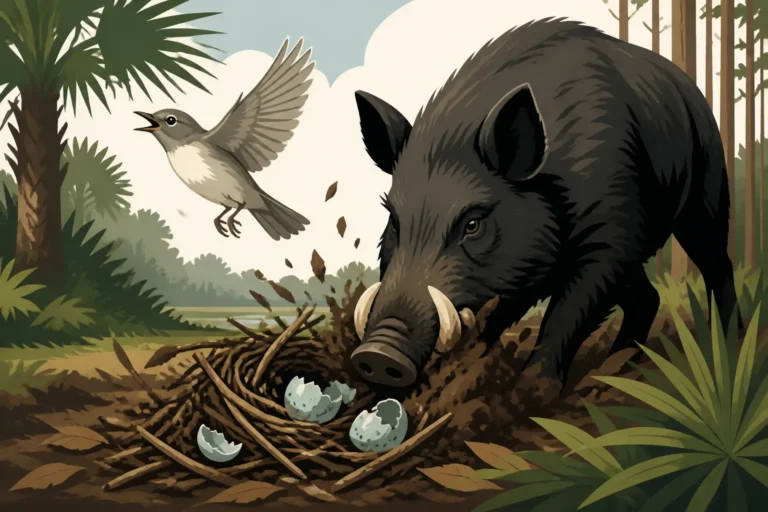
From the dense bottomlands of the Lowcountry to the rolling hills of the Upstate, these animals leave a path of destruction. Their relentless rooting behavior, where they use their powerful snouts to dig for food, turns over vast swathes of soil, destroying native plant communities. This isn't just a cosmetic issue; it changes the very composition of the forest floor, impacting everything from insect populations to the growth of hardwood seedlings that many other game species rely on. Think about those areas where you’ve seen the ground completely churned up, almost like a rototiller went through – that's feral hog work, and it decimates critical habitat for ground-nesting birds like wild turkeys and quail, as well as altering food sources for deer.
Beyond direct habitat destruction, they compete directly with native wildlife for food. Acorns, a crucial fall and winter food source for deer, bear, and squirrels, are devoured by hogs with alarming efficiency. When you have a poor acorn year, this competition becomes even more intense, putting immense pressure on our native game species. It's a cascade effect: hogs eat the acorns, deer have less, and the whole ecosystem suffers.
Economic Damage to Agriculture
For farmers in South Carolina, feral hogs are more than just a headache; they're a significant financial burden. I've heard countless stories, and seen the evidence firsthand, of entire fields of corn, soybeans, and peanuts being absolutely wiped out overnight. They'll root up planted crops, trample mature plants, and contaminate feed and water sources. This isn't just about a few damaged rows; it's about significant yield losses that can make or break a farmer's season. The cost of repair to fences, equipment, and irrigation systems that hogs damage only adds insult to injury.
The problem is so severe that it impacts crop prices and the viability of farming operations in some regions. Farmers invest heavily in planting and growing their crops, only to see much of that investment quite literally rooted out of the ground. The constant battle against them, whether through trapping efforts, hunting, or costly fencing, is an ongoing struggle that saps resources and energy. For more on the scale of this issue, take a look at the article on Crop Damage Hogs Cause in South Carolina.
Tracing the Roots: Early Introductions and European Ancestry
To truly understand the modern feral hog problem in South Carolina, we have to look back in time. These aren't indigenous animals; they are the descendants of domestic and wild swine brought here by humans over centuries. Their journey to becoming the widespread pest they are today is a long, winding tale involving explorers, settlers, and, yes, even some hunters.
Historical European Wild Boar Stockings
The story often begins with the true European wild boar. These animals, known for their larger size, darker coats, and impressive tusks, were intentionally introduced into parts of the United States, including some areas that would eventually become South Carolina, primarily for sport hunting in the early 20th century. People wanted to replicate the "big game" hunting experiences of Europe. A famous example often cited is the introduction of Russian wild boar to a private hunting preserve in the mountains of North Carolina in 1912, which eventually led to their spread into the surrounding national forests and, over time, into our own Upstate regions.
These introductions were often done on private lands, sometimes within fenced enclosures, but as anyone who knows hogs can attest, fences are rarely hog-proof for long. Escapes were inevitable, and once free, these robust animals found the wild South Carolina landscape to be incredibly welcoming. They brought with them the genetics for aggression, survival in the wild, and a very different appearance compared to the typical farm pig. Their presence in the wild significantly contributed to the foundation of what we now call feral swine.
Early Domestic Escapism
Even before the intentional release of European wild boars, domestic pigs brought by early Spanish explorers and later English colonists began their own journey into the wild. As early as the 16th century, Hernando de Soto's expedition famously brought swine to the Southeast, many of which escaped or were left behind. These animals, while domesticated, quickly reverted to a wilder state, adapting to foraging for themselves and developing traits that allowed them to survive without human intervention. This process is known as "feralization."
For centuries, it was a common practice for settlers to allow their pigs to range freely in the woods, only rounding them up for slaughter when needed. This open-range husbandry was essentially a breeding ground for feral populations. Pigs that evaded capture, or entire litters born in the wild, became self-sufficient, developing thicker hides, longer snouts, and more aggressive temperaments. This continuous influx of escaped domestic pigs into the wild meant that South Carolina has had some form of feral hog population for hundreds of years, making the problem deeply ingrained.
A Mixed Bag: The Genetic Melting Pot of South Carolina Hogs
What makes South Carolina's feral hogs so incredibly resilient and widespread isn't just their sheer numbers; it's their genetic makeup. They are not a single, pure lineage but rather a complex blend, a true melting pot of genes that combines the hardiness of wild boars with the prolific breeding capabilities of domestic pigs. This genetic diversity is a huge advantage for them, allowing them to adapt to nearly any environment our state throws at them.
Distinguishing Domestic and Wild Traits
When you look at a feral hog in South Carolina, you might see a spectrum of characteristics. Some hogs exhibit strong "wild" traits: coarse, thick hair, a generally lean and muscular build, long snouts, smaller ears, and often dark, often black or grizzled coloration. Their young, called piglets, often have distinct stripes or spots that help camouflage them in the undergrowth – a classic wild boar trait. These are typically the descendants with more European wild boar blood.
On the other end of the spectrum, you'll see hogs with more "domestic" traits: varying colors from black and white patches to red or spotted, larger ears, shorter snouts, and a generally stockier, fatter build. Their hair might be less coarse, and their piglets might not have the same distinctive stripes. However, most feral hogs you encounter will be somewhere in the middle. They are a blend, inheriting a mix of physical attributes that can make identification challenging. It's a clear indication that their lineage is far from pure.
Genetic Markers and Identification
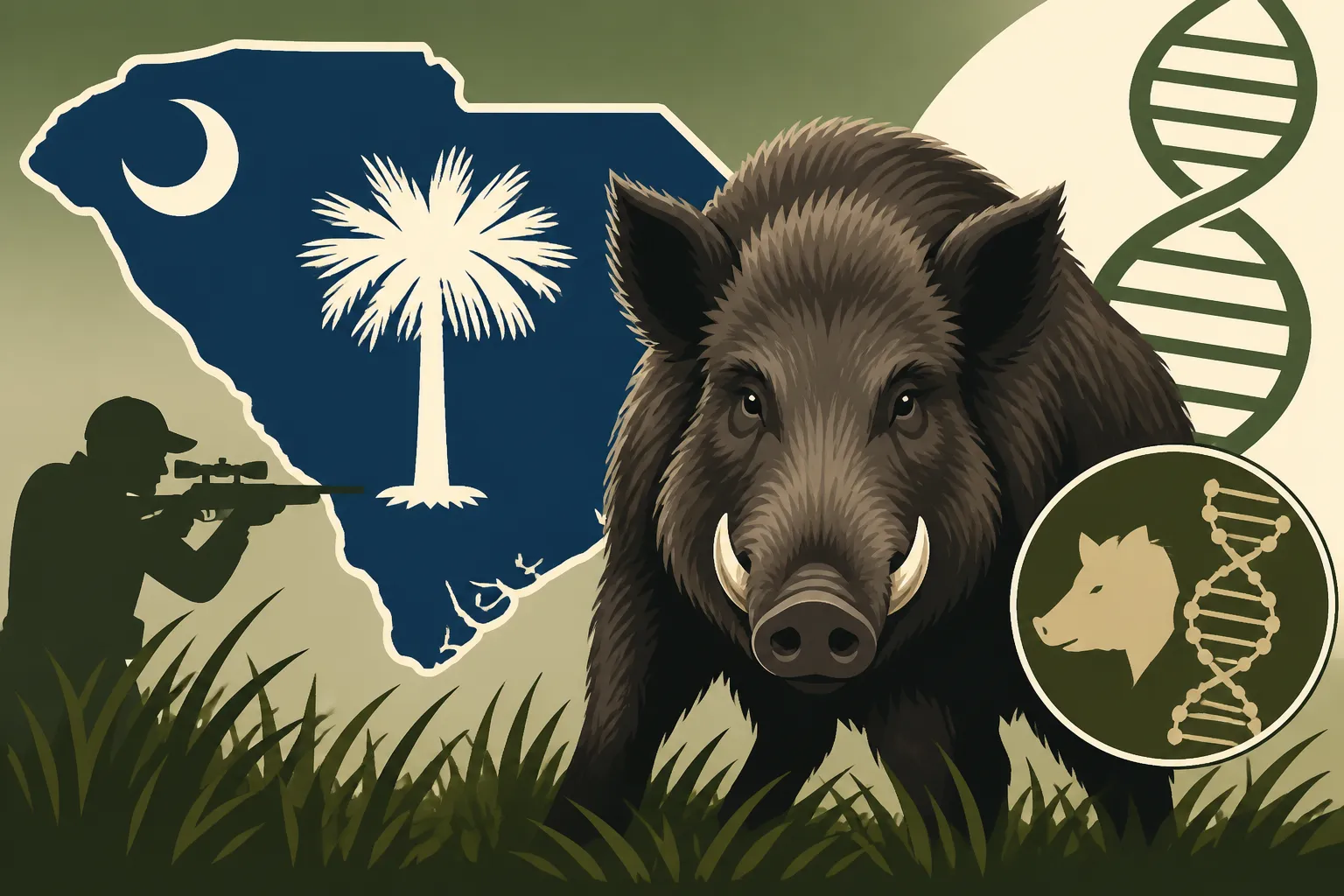
Scientists use genetic markers to trace the ancestry of these animals and understand the extent of their hybridization. By analyzing DNA samples, researchers can pinpoint genes that are characteristic of European wild boar versus various domestic pig breeds. What they consistently find in South Carolina, and much of the Southeast, is a mosaic. There are distinct genetic signatures from European wild boar, but these are almost always intermingled with genes from various domestic breeds, reflecting centuries of interbreeding.
This genetic analysis helps us understand why a hog shot in the swamps of the ACE Basin might look very different from one taken in the mountains of the Sumter National Forest, even though they are both feral. It’s also crucial for tracking movements and identifying how different populations might be related or isolated. For hunters using modern tools like the GoHunt platform, understanding these regional variations can even influence expectations about the animals they might encounter.
The Blending of Bloodlines
The reality on the ground is that these two distinct ancestral lines – the escaped domestic pig and the introduced European wild boar – have been interbreeding for generations. This constant mixing means that very few "pure" wild boars or "pure" domestic pigs exist in the wild anymore. Instead, we have a highly adaptable hybrid animal. This blending gives them the best (or worst, from our perspective) of both worlds. The domestic pig lineage contributes high fecundity and rapid growth, while the wild boar lineage provides enhanced survival instincts, physical toughness, and wariness of humans.
This genetic cocktail is why South Carolina's feral hogs are so effective at thriving in diverse habitats, reproducing quickly, and evading control efforts. They've essentially evolved, through human action and natural selection, into a super-pest perfectly suited to the South Carolina landscape.
The Role of Human Activity in Genetic Spread
While feral hogs are undoubtedly resilient, their widespread distribution and complex genetic makeup are largely a result of human actions, both intentional and unintentional. We've played a significant, if often unwitting, role in creating and exacerbating the very problem we now struggle to contain.
Unintentional Release and Escape
Historically, the primary driver of feral hog populations was simply pigs escaping from farms. For centuries, livestock management wasn't as secure as it is today. Free-ranging hogs were common, and some naturally slipped away into the vast forests and swamps, where they quickly adapted to a wild existence. Modern agricultural practices generally keep swine contained, but even today, escapes happen. A damaged fence, a transportation accident, or even a casual farmer allowing a few pigs to "clean up" a field can lead to individuals or small groups vanishing into the wild.
Once these animals escape, their ability to reproduce rapidly means that even a small founding population can explode in numbers within a few short years. This continuous, low-level leakage of domestic pig genetics into the wild populations contributes to the ongoing hybridization and maintains a high level of genetic diversity, fueling their adaptability. For insights into how these populations spread, consider reading How Wild Hogs Spread Across South Carolina.
Intentional Introductions for Hunting
Perhaps more impactful in recent history, especially regarding the spread of specific genetics, have been intentional introductions for hunting. While illegal in many places now, there's a history of individuals or hunting clubs moving feral hogs from one area to another to establish or bolster a hunting population. The rationale was simple: more hogs mean more hunting opportunities.
This practice often involved taking hogs with desirable "wild" characteristics – darker coloration, more aggressive behavior, larger tusks – and releasing them into new areas. This directly contributed to the spread of European wild boar genetics into areas where they might not have otherwise existed, further diversifying the gene pool and increasing the "wildness" of feral populations across the state. These intentional releases have unfortunately turned a localized problem into a statewide epidemic, creating complex management challenges that require coordinated efforts, as outlined in articles like South Carolina Feral Hog Regulations.
Understanding Hybrid Vigor: Why SC Hogs Are So Tough
The term "hybrid vigor" might sound like something you'd want in your crops, but when it applies to feral hogs, it's a huge disadvantage for everyone trying to control them. This phenomenon, also known as heterosis, occurs when the offspring of two genetically distinct parents show superior traits to either parent. In the case of South Carolina's feral swine, this means they've inherited a potent combination of characteristics that makes them incredibly successful invaders.
Enhanced Reproductive Rates
One of the most frustrating aspects of feral hog management is their phenomenal reproductive capacity. The genetic influence from domestic pigs has supercharged this trait. Domestic sows are bred for prolificacy, and these genes carry over into the feral hybrids. Feral sows can reach sexual maturity as early as six months of age, and they can have multiple litters per year, often two and sometimes even three if conditions are favorable. Each litter can range from 4 to 12 piglets, with averages often around 6-8.
This means that a single sow can contribute dozens of offspring to the population annually. When you combine this with the sheer number of breeding-age sows across the state, you can see why eradicating or even significantly reducing populations is such a Herculean task. The article Why Lowcountry Hogs Reproduce So Fast delves into this phenomenon in detail, highlighting the ecological conditions that favor such rapid breeding.
Increased Adaptability and Resilience
The blending of European wild boar and domestic pig genetics has created an animal with incredible adaptability. Wild boars are known for their hardiness, ability to survive harsh winters, and keen senses. Domestic pigs, on the other hand, often carry genes for faster growth and a broader diet. The hybrid feral hog inherits all of these. They can thrive in a stunning array of habitats, from dense coastal swamps to pine plantations, hardwood forests, and even agricultural fields. They can adapt their diet to whatever is available, eating everything from acorns and roots to insects, carrion, and agricultural crops.
Their resilience extends to evading predators and human pressure. They are intelligent animals, quick to learn and wary of threats. They can quickly become nocturnal in areas with high hunting pressure, making them even harder to target. This combination of robust genetics, rapid reproduction, and remarkable adaptability is precisely why South Carolina's feral hog problem continues to be so persistent and challenging. Tools like the GoHunt platform can help hunters identify areas of high hog activity, but even with advanced scouting, these animals remain elusive.
Implications for Management and Control
Understanding the genetic makeup and origin of South Carolina's feral hogs isn't just an academic exercise; it has real-world implications for how we approach their management and control. Knowing what drives their success helps us refine our strategies and hopefully, one day, turn the tide.
Targeting Reproductive Strategies
Because hybrid vigor has led to such prolific breeding, any effective control strategy must address their reproductive rate. Simply removing adult hogs isn't enough if they can replace themselves two or three times over within a year. This is why techniques like trapping, especially effective for removing entire sounders (family groups), are so crucial. When a trap catches a sow with piglets, you're not just taking out a few animals; you're preventing potentially dozens of future offspring. For more on this, check out Trapping South Carolina Feral Hogs.
Research into reproductive control methods, such as immunocontraception, is ongoing, but deploying such methods in wild, free-ranging populations presents immense logistical challenges. For now, efforts focus on direct removal, with a strong emphasis on removing females to disrupt their breeding cycle. Public awareness campaigns also stress the importance of not releasing domestic pigs into the wild, which would further exacerbate the genetic problem.
Developing More Effective Control Methods
The diverse genetics of feral hogs means they respond differently to various control tactics. Some populations might be more wary due to higher wild boar ancestry, requiring more sophisticated trapping or hunting techniques. Others, with more domestic traits, might be easier to bait but still require consistent pressure to keep numbers down. The intelligence and adaptability derived from their mixed heritage mean that static, one-size-fits-all approaches often fail.
This is why integrated pest management (IPM) strategies are key. Combining hunting, trapping, and even aerial eradication in suitable areas is often necessary. Hunters, using methods like Night Hunting Hogs With Lights on Private Land or Running Dogs on South Carolina Feral Hogs, play a vital role. Knowing the habits of these animals, their preferred habitats (whether a swamp in the Lowcountry or a remote ridge in the Upstate, as detailed in Feral Swine Sightings in Upstate South Carolina), and their patterns of movement—which can sometimes be informed by data-rich platforms like GoHunt—is critical.
Here’s a simplified look at the genetic influences and their impact:
| Trait Category | European Wild Boar Influence | Domestic Pig Influence | Feral Hog Hybrid Result (General) |
|---|---|---|---|
| Physical Appearance | Dark, coarse hair; lean body; long snout; striped piglets; prominent tusks | Varied colors (spots, reds, whites); stockier body; shorter snout; no striped piglets | Mix of colors; variable build; some tusks; varied piglet patterns |
| Reproduction | Fewer, smaller litters per year; later sexual maturity | Multiple large litters per year; early sexual maturity | Highly prolific, multiple large litters; early maturity; high survival |
| Behavior | Wary, nocturnal, aggressive, strong survival instincts, excellent senses | Docile, accustomed to humans, less aggressive | Wary, intelligent, adaptable to human pressure (e.g., nocturnal), aggressive |
| Diet | Forager of natural foods (roots, nuts, insects, carrion) | Broader diet, easily adapts to human-provided food, agricultural crops | Omnivorous, highly adaptable, opportunistic, extensive rooting |
| Environmental Impact | Minimal in native range, but destructive in new ecosystems when overpopulated | High in feral state due to rooting and habitat alteration | Extremely high, widespread destruction of native ecosystems and agriculture |
Ultimately, the battle against South Carolina's feral hogs is ongoing. Their complex genetic heritage makes them formidable adversaries, but by understanding their origins and biology, hunters and land managers are better equipped to employ the sustained, multi-faceted pressure needed to mitigate their damaging effects. The sheer scale of the issue underscores why we have South Carolina's Year-Round Feral Hogs rule in place, recognizing that every hog removed is a small victory for our native wildlife and ecosystems.
Disclaimer
This article is for general informational purposes only and does not constitute professional advice. Laws, prices and regulations vary by location and change over time. Consult a qualified professional for guidance on your specific situation.