How Managed Pine Could Restore South Carolina Quail
It's disheartening to think about the dwindling populations of bobwhite quail across South Carolina. Many of us who grew up hearing their distinctive "bob-white!" call echo across open fields now find those calls few and far between. This isn't just an anecdotal observation; it's a stark reality for a beloved game bird that once thrived in our landscape. This guide will dive deep into understanding why these birds have struggled and, more importantly, how thoughtful, managed pine forestry, particularly involving longleaf pine, offers a crucial pathway to restoring their numbers and bringing back the thrill of a covey rise.
The Plight of the Bobwhite Quail in South Carolina
For generations of hunters and wildlife enthusiasts, the bobwhite quail was an iconic symbol of the South Carolina countryside. Their explosive flush, the whir of wings, and the challenge they presented to bird dogs were rites of passage. Today, however, many feel a profound sense of loss, witnessing the steady decline of these spirited birds. This isn't due to any single factor, but rather a complex web of changes that have reshaped our wild lands.
South Carolina's Historic Quail Decline
The story of the quail's decline is a long one, stretching back decades. Historically, South Carolina's landscape was a mosaic of open pine savannas, agricultural fields, and brushy edges – perfect quail country. As agriculture intensified and shifted, many small farms with their diverse crops and hedgerows gave way to larger monoculture operations or were abandoned altogether. These larger farms often meant fewer critical "edge" habitats that quail rely on for food and cover. If you've spent time walking old farm properties, you've probably seen where the quail used to be thick, and now it's just a dense tangle of growth or a wide-open field with no structure. For a deeper understanding of this shift, you might want to read about South Carolina's Historic Quail Decline.
Beyond agriculture, changes in forestry practices played a massive role. The natural, open pine forests, particularly longleaf pine, which once covered vast swaths of the state, were often replaced with dense, fast-growing pine plantations managed for timber production with little thought given to understory vegetation. These thick, shaded stands offer little in the way of food or escape cover for quail. When you walk through a dense, unthinned pine plantation, you can almost feel the absence of life on the forest floor, and that's precisely the problem for quail.
Impact of Habitat Loss and Degradation
Habitat isn't just about having trees; it's about the right kind of trees and, more importantly, what grows under them. Quail need a specific combination of open areas for foraging, dense cover for nesting and escape, and brushy thickets for protection from predators and the elements. When this intricate tapestry is broken, their populations suffer. Foraging areas disappear when ground cover is too dense or shaded, making it impossible for seed-producing plants to thrive. Nesting sites vanish when natural grasses and low shrubs are replaced by deep leaf litter or solid mats of invasive species.
Think about it from a quail's perspective: a wide-open, neatly mown lawn offers no protection from a hawk, and a dense, dark pine forest floor offers no seeds. They need that "messy," diverse middle ground. The proliferation of fire suppression practices over the last century also contributed significantly, allowing undergrowth to become too thick and eliminating the natural clearings and diverse plant life that fire once encouraged. Without fire, the forest floor becomes a tangled mess that's difficult for a small bird to navigate and devoid of the legumes and insects they need to survive.
Understanding Quail Habitat: What They Truly Need
If we want to bring quail back, we need to understand what makes prime quail habitat. It's not just a patch of woods; it's a dynamic ecosystem that provides specific resources at different times of the year. It's about finding that sweet spot between cover and open ground, food and shelter.
The Ideal Quail Habitat Recipe
Imagine the perfect quail property. You'd see a mosaic of cover types: areas of native warm-season grasses for nesting, interspersed with patches of low-growing shrubs and briar thickets for escape cover. There would be areas of bare ground for dusting and foraging, and plenty of sunlight hitting the forest floor to promote the growth of diverse forbs, legumes, and insects—all crucial food sources. Quail are generalists in many ways, but they are very specific in their habitat structure needs.
They thrive in "early successional" habitats – areas that are constantly undergoing change, often maintained by disturbances like fire, grazing, or selective timber harvest. This keeps the vegetation at a manageable height, preventing it from becoming too dense for quail to move through while still providing ample cover. This kind of habitat also supports a wide range of insects, which are absolutely vital protein sources for quail chicks during their crucial early weeks of life. When you look at old photos or hear stories from older hunters, they often talk about hunting the edges of fields and overgrown pastures – exactly this kind of early successional landscape.
Essential Elements: Food, Cover, Water
Every living creature needs food, cover, and water, but for quail, the arrangement of these elements is paramount. They don't typically travel far, so having all their needs met within a relatively small home range is critical.
- Food: Quail are primarily seed-eaters, consuming a huge variety of seeds from native grasses, weeds, and agricultural crops. They also gobble up insects, especially during breeding season and for their young. Areas with abundant partridge pea, ragweed, beggar's-lice, and various legumes are gold mines. Healthy quail populations are almost always found where the forest floor receives plenty of sunlight, allowing these beneficial plants to flourish.
- Cover: This is multi-faceted. They need waist-high grasses for nesting, dense brush for thermal cover in winter and escape from predators, and open understory for easy movement. Think about a dense briar patch next to an open, grassy field. That's ideal. This varied structure prevents predators from easily ambushing them while allowing them to feed without being exposed for too long.
- Water: While quail can get much of their moisture from dew and the food they eat, readily available surface water sources like small ponds, seeps, or even puddles are beneficial, especially during dry periods. While not as critical as food and cover, a nearby water source can certainly enhance a quail's home range quality.
A hunter or land manager using a tool like GoHunt might study satellite imagery, looking for these varied habitat types. You'd want to identify areas with a good mix of open ground, thickets, and diverse tree types, not just uniform canopy.
| Habitat Element | Quail Need | Importance |
|---|---|---|
| Foraging Grounds | Open ground, diverse seed-producing plants (legumes, grasses), abundant insects. | Primary food source for adults and critical protein for chicks. |
| Nesting Cover | Clumps of native warm-season grasses (e.g., bluestem, indiangrass), low-growing forbs. | Concealment for nests and young from predators. |
| Brood Rearing | Open understory with bare ground, high insect density, light overhead cover. | Easy movement for chicks, access to insects, protection from overhead predators. |
| Escape Cover | Dense briar patches, shrub thickets, plum thickets, dense saplings. | Immediate refuge from predators, thermal protection from weather. |
| Roosting Cover | Low, dense shrubs or thick grass clumps, often on slight elevation. | Protection from ground predators at night. |
| Bare Ground | Sandy patches or exposed soil. | Essential for dust bathing (parasite control) and easy foraging. |
Longleaf Pine: A Historic Ecosystem and Quail Haven
To truly understand how managed pine can restore quail, we must look to the past, specifically to the longleaf pine ecosystem. This wasn't just another tree; it was the foundation of an incredibly diverse and resilient landscape that once stretched across much of the Southeast, including a significant portion of South Carolina.
The Original Quail Forests of South Carolina
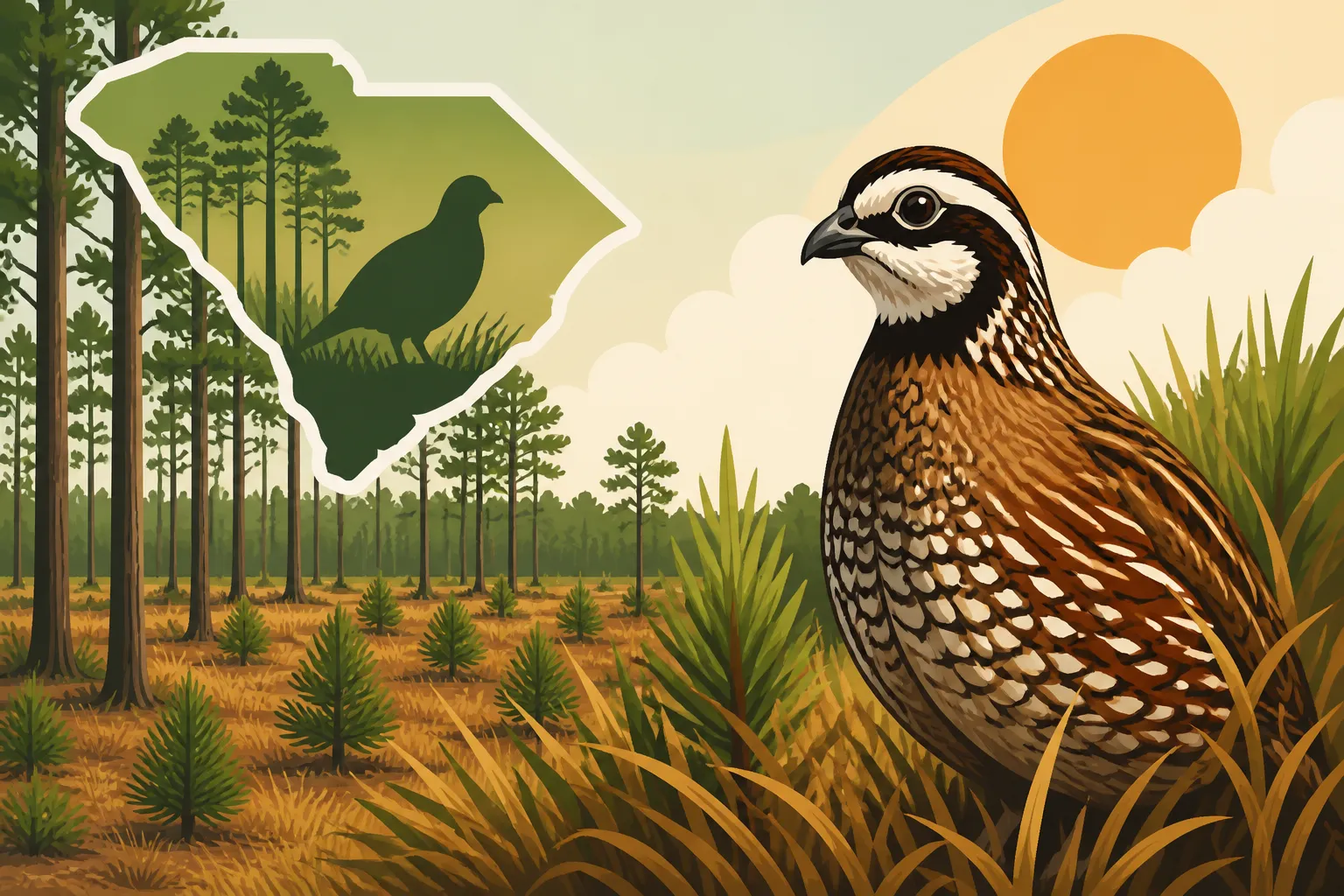
Before extensive logging and modern development, vast savannas of longleaf pine dominated the South Carolina landscape. These were not dense, dark forests. Instead, they were open, park-like stands where trees were widely spaced, allowing ample sunlight to reach the forest floor. This sunlight, combined with frequent, low-intensity natural fires, created an incredibly rich and diverse understory. This understory was a paradise for quail.
The original longleaf forests were characterized by a dense groundcover of native wiregrass, bluestem, and a kaleidoscope of forbs and legumes. This was the perfect mix: abundant seeds for food, diverse structure for nesting and escape, and open ground for easy movement. The longleaf itself, with its thick bark, is incredibly fire-resistant, allowing it to survive fires that would clear out competing hardwoods and less fire-tolerant pines. This natural fire regime was the engine that maintained the habitat, constantly resetting succession and preventing the understory from becoming too dense and unproductive for quail. These were truly the historic quail grounds, and when we talk about restoring quail, we're talking about recreating the conditions of these magnificent ecosystems.
Why Longleaf Pine is Key for Quail
Longleaf pine isn't just any pine; it's a keystone species for quail habitat. Its unique growth characteristics and its historical relationship with fire make it unparalleled for supporting bobwhite populations. Unlike faster-growing loblolly or slash pines, longleaf grows slower and tends to have a more open canopy, even in mature stands. This allows significantly more sunlight to penetrate to the forest floor, which is absolutely critical for the herbaceous plants that quail eat and use for cover.
Furthermore, longleaf's natural resistance to fire means that prescribed burning can be used more aggressively and frequently in these stands without harming the trees. This ability to integrate fire is what truly sets longleaf apart. Fire clears out dense leaf litter, reduces competition from undesirable hardwoods and invasive species, and stimulates the germination of native seed-producing plants. It also exposes bare ground, which quail need for dusting and foraging. In essence, longleaf pine provides the ideal framework within which the dynamic, fire-dependent understory that quail require can flourish. You can learn more about how South Carolina Longleaf Pine and Quail Habitat are interconnected. This is the gold standard for quail habitat management.
Modern Pine Management Techniques for Quail
Given the historical success of longleaf pine ecosystems, modern land managers and conservationists are looking to replicate these conditions through intentional management. This isn't about letting nature take its course entirely, but rather about actively shaping the landscape to favor quail, often using techniques that mimic natural processes.
Prescribed Burning and Thinning
These are perhaps the two most critical tools in a land manager's arsenal for restoring quail habitat in pine forests. Prescribed burning, or controlled burning, is the intentional application of fire to a specific area under predetermined weather and fuel conditions. The goal is not to clear-cut, but to reduce accumulated leaf litter, control undesirable vegetation, and stimulate the growth of beneficial plants. For quail, this means clearing out the dense, impenetrable undergrowth that makes foraging difficult and provides poor nesting cover. The timing of burns is also crucial; growing season burns can be particularly effective at setting back woody competition and promoting warm-season grasses. To truly grasp the significance of this, consider reading about Prescribed Burns and South Carolina Hunting Closures and Why South Carolina Foresters Burn Longleaf Pine. These practices are fundamental to healthy longleaf ecosystems and thus, healthy quail populations.
Thinning involves reducing the density of pine trees in a stand, creating more space between individual trees. This allows more sunlight to reach the forest floor, which is a game-changer for quail. By opening the canopy, thinning promotes the growth of the diverse herbaceous plants that provide food and cover. Without thinning, even a longleaf stand can become too dense and shady, stifling the understory. The combination of thinning and burning creates that desired open, park-like environment where quail can thrive. It's a strategic dance between forestry and wildlife management, carefully balancing timber production with habitat creation.
Chemical Control and Discing
While fire is often preferred, chemical control and discing also play important roles in specific situations. Chemical control involves the selective application of herbicides to target undesirable woody vegetation or invasive species that outcompete native plants beneficial to quail. This can be particularly useful in areas where prescribed burning isn't feasible or where specific invasive plants need to be eradicated. However, it must be done judiciously to avoid harming beneficial broadleaf plants. A land manager might use chemicals to knock back dense sweetgum or privet that has encroached into a future quail area.
Discing, or light soil disturbance, can also be a valuable tool. By turning over the topsoil, discing can stimulate the germination of dormant native seeds, particularly beneficial annuals that provide abundant food sources for quail. It also creates bare ground, which, as we discussed, is important for dusting and foraging. Discing is often done in strips or patches, creating diverse microhabitats within a larger managed area. This is a common practice on wildlife management areas (WMAs) and private hunting plantations to create optimal conditions for bobwhites. A good resource for understanding these kinds of specific habitat efforts is often found on sites that map public land, such as those that can be found using the GoHunt app. You can scout ahead to see if a WMA has done this kind of work, perhaps finding areas with active habitat management.
Challenges and Realities of Quail Restoration
While the vision of widespread quail restoration in South Carolina is inspiring, the reality on the ground presents significant challenges. It's not as simple as planting a few longleaf pines and lighting a match. There are ecological, economic, and logistical hurdles that land managers and conservationists must navigate.
The Time and Cost Investment
Restoring longleaf pine ecosystems and associated quail habitat is a long-term commitment, not a quick fix. Establishing a new longleaf stand can take years, as the trees go through their grass stage before beginning significant vertical growth. During this time, constant management is required to control competing vegetation and ensure seedling survival. The costs involved are also substantial, from purchasing specialized equipment for prescribed burning and thinning to the labor involved in implementing these practices. Landowners need to invest not just money, but patience.
Furthermore, managing existing pine stands for quail requires a different forestry model than simply maximizing timber volume. This often means thinner stands, longer rotation cycles, and a focus on understory health, which might not always align with short-term financial returns for timber production. Balancing these economic realities with conservation goals is a constant challenge for private landowners who often bear the brunt of these costs. This is where organizations and state programs can step in to offer assistance or incentives for habitat management.
Predation and Other Factors
Even with perfect habitat, quail face an array of threats, with predation being a significant one. Healthy habitat provides cover, but it doesn't eliminate predators entirely. Coyotes, bobcats, raccoons, opossums, snakes, and raptors all prey on quail eggs, chicks, and adults. The proliferation of generalist predators like coyotes and feral hogs, which are often found even in areas of good habitat, adds another layer of pressure. Understanding the dynamics of Coyotes and Predators in South Carolina is crucial for effective quail management.
Beyond predation, other factors such as extreme weather events (e.g., prolonged droughts, severe cold snaps), disease, and limited genetic diversity in isolated populations can also impact quail numbers. While habitat management is the foundational solution, it's important to recognize that it's part of a larger ecological puzzle. Land managers must consider an integrated approach, acknowledging that while ideal habitat mitigates many risks, it doesn't create an impervious sanctuary. It’s a bit like trying to fill a bucket with holes – you fix the biggest holes first (habitat), but you still have to contend with the leaks (predation, weather).
The Future of South Carolina Quail Hunting
Despite the challenges, there is genuine hope for the future of bobwhite quail in South Carolina. A growing understanding of their habitat needs, coupled with dedicated efforts from private landowners, conservation organizations, and state agencies, is slowly but surely making a difference.
Collaborative Conservation Efforts
Quail restoration is a monumental task that no single entity can accomplish alone. It requires collaboration across various sectors. State agencies, like the South Carolina Department of Natural Resources (SCDNR), provide technical assistance, habitat management programs, and regulatory frameworks. Non-profit conservation groups often secure funding, educate landowners, and implement demonstration projects. Private landowners, who control the majority of suitable habitat, are absolutely essential, and their willingness to adopt quail-friendly management practices is the linchpin of success. You can often find information about these kinds of programs using detailed map layers available on platforms like GoHunt, which can highlight areas under active management.
These collaborative efforts often involve sharing best practices, conducting research to refine management techniques, and pooling resources to tackle large-scale projects. For example, some initiatives focus on creating "quail corridors" by connecting managed parcels of land, allowing for better population movement and genetic exchange. This kind of landscape-level thinking is critical because quail need more than just isolated patches of habitat; they need a connected network. Public lands like South Carolina Wildlife Management Areas are often at the forefront of these efforts, serving as models for habitat restoration.
The Role of Responsible Hunters and Landowners
Hunters have always been at the forefront of conservation, and their role in quail restoration is more vital than ever. By supporting conservation organizations, purchasing hunting licenses and permits (which fund habitat work), and advocating for sound wildlife management policies, hunters directly contribute to the future of quail. For those who are also landowners, implementing quail-friendly forestry and land management practices is the most direct way to make an impact. This could involve thinning pine stands, conducting prescribed burns, planting native warm-season grasses, or leaving brushy cover along field edges.
Even if you're not a landowner, learning more about the habitat and becoming a skilled quail hunter who understands the South Carolina Small Game Season Rules and values the birds can help. Every hunter has a stake in this. It's about shifting our mindset from simply harvesting birds to actively managing the landscape to ensure their abundance for generations to come. The effort to bring back the quail isn't just about hunting; it's about restoring a cherished part of South Carolina's natural heritage and ensuring the health of our diverse ecosystems. Perhaps someday soon, that distinctive "bob-white!" call will once again be a common sound across the managed pine savannas of our beautiful state.
Disclaimer
This article is for general informational purposes only and does not constitute professional advice. Laws, prices and regulations vary by location and change over time. Consult a qualified professional for guidance on your specific situation.