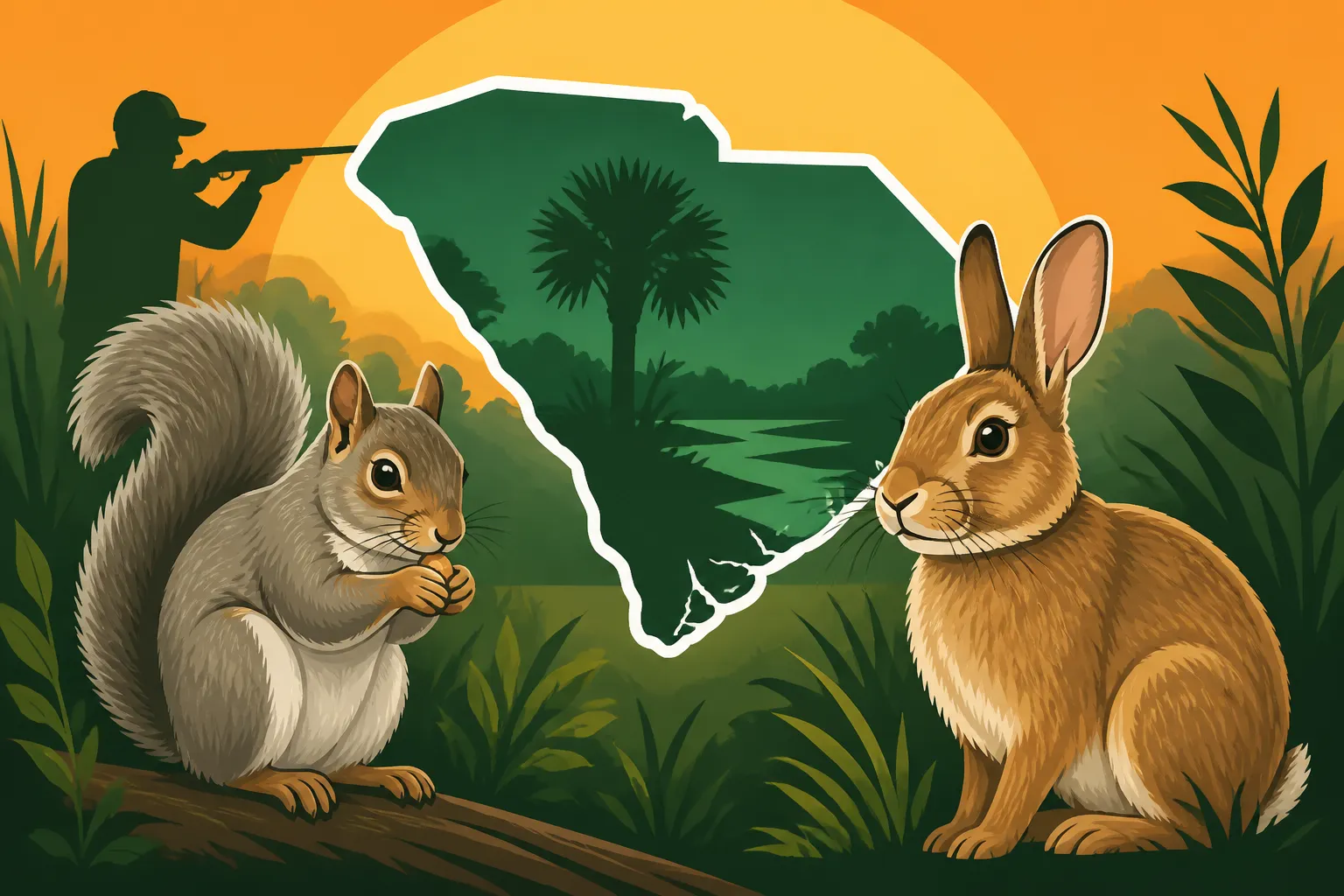
South Carolina Squirrel and Rabbit Populations
There's nothing quite like the crack of a .22 or the bark of a beagle in the crisp autumn air, chasing squirrels and rabbits through the woods. Many of us grew up doing just that, but sometimes it feels like the populations aren't what they used to be, or we struggle to find where these wily critters are hiding. This comprehensive guide will help you understand the current state of South Carolina's squirrel and rabbit populations, where to find them, and how to adapt your hunting strategies to ensure a rewarding experience.
The Enduring Appeal of South Carolina's Small Game Hunting
For many hunters, small game like squirrels and rabbits represent the purest form of the hunt. They offer accessible opportunities, require keen observation, and often result in some of the finest wild game meat available. It’s an experience that connects us to tradition and the outdoors in a very fundamental way.
Why Squirrel and Rabbit Hunting Remains Popular
The appeal of squirrel and rabbit hunting is multifaceted, drawing in both seasoned veterans and eager newcomers alike. For starters, the barrier to entry is remarkably low. You don't need expensive gear, long-range optics, or specialized training to get started. A simple .22 rifle or a shotgun, some comfortable boots, and a willingness to walk the woods are often all it takes. This accessibility makes it a fantastic gateway for young hunters to learn the ropes of responsible hunting, firearm safety, and woodsmanship without the pressure of a big game pursuit. Seasons for these species are also often quite long, sometimes stretching from early fall deep into winter, providing ample opportunity to get afield. Plus, let's be honest, few things beat a plate of fried squirrel or rabbit with a side of biscuits and gravy after a successful day in the field. The table fare alone is a huge draw for many, offering a sustainable and delicious source of wild protein.
The Skill Set Developed by Small Game Pursuits
While it might seem less challenging than pursuing a wary whitetail or a gobbling tom, small game hunting demands and hones a crucial set of outdoor skills. When you're still-hunting for squirrels, you're practicing patience, silent movement, and scanning the canopy for the slightest flicker of a tail or the tell-tale rustle of leaves. This teaches you how to read the woods, understand animal behavior, and approach game undetected. Similarly, chasing rabbits, especially with a good dog, requires knowledge of cover, understanding escape routes, and quick, accurate shooting. These pursuits build keen observational skills, teaching you to spot subtle signs of activity, distinguish fresh cuttings from old ones, and anticipate where an animal might be headed. All these learned behaviors translate directly to success in other hunting endeavors, making small game a fantastic training ground.
Small Game as a Gateway to Big Game Preparedness
Think of small game hunting as the ultimate prep course for big game. The principles you learn while pursuing squirrels and rabbits – scouting for food sources, identifying bedding and escape cover, understanding the impact of weather on animal movement, and navigating diverse terrain – are directly applicable to deer, turkey, or bear hunting. For instance, understanding how squirrels react to acorn crop fluctuations gives you insight into how deer might behave in the same area. Learning to walk quietly and observe your surroundings for a tiny gray squirrel can be refined and applied when trying to slip through the woods unnoticed during deer season. Even managing your gear, staying comfortable in various weather conditions, and knowing how to field dress and care for your harvest are skills perfected on smaller game before tackling a larger animal. It’s an invaluable proving ground for developing true woodsmanship.
Unpacking South Carolina's Squirrel Populations
South Carolina is home to two primary squirrel species that offer hunting opportunities: the ubiquitous gray squirrel and the larger, more specialized fox squirrel. Both provide distinct challenges and experiences for the hunter.
Gray Squirrels: The Backyard Bushy-Tails and Forest Dwellers
The Eastern Gray Squirrel is likely the most familiar squirrel to most South Carolinians. You see them in your backyard, scampering across power lines, and certainly throughout our state's vast hardwood forests. These agile, medium-sized squirrels are incredibly adaptable, thriving in a variety of environments ranging from urban parks to dense, mature timber. Their preferred habitats are typically mature hardwood forests, especially those dominated by oaks, hickories, and other mast-producing trees. They depend heavily on nuts and seeds for their diet, and you'll find them especially active in fall and early winter, vigorously burying acorns and hickory nuts to store for leaner times.
Gray squirrel populations in South Carolina are generally robust and widespread. They have high reproductive rates, often having two litters a year, which helps them bounce back quickly from localized declines. However, their numbers can fluctuate significantly based on the availability of mast crops. A poor acorn year can lead to reduced breeding success and increased competition for food, making them harder to find the following season. When hunting these lively critters, pay close attention to stands of mature oaks and hickory trees. Look for fresh cuttings on logs or stumps, or even small excavations in the leaf litter where they've buried or dug up a nut. Often, a patient still-hunt through a rich bottomland hardwood can yield great results, especially if you understand Squirrel Hunting South Carolina Bottomland Hardwoods.
Fox Squirrels: Larger, More Elusive, and Locally Unique
The fox squirrel is a truly magnificent animal, distinctly larger than its gray cousin and often showcasing a stunning array of color phases. While gray squirrels are generally uniform in their gray coat, fox squirrels in South Carolina can range from a grizzled gray-brown to a striking black with white patches on their nose, ears, and paws. These color variations are particularly common in the Lowcountry and coastal plain. Unlike the gregarious gray squirrel, fox squirrels tend to be more solitary and prefer open, park-like stands of mature pine, especially longleaf pine savannas. They are also found in mixed pine-hardwood forests, often along the edges of agricultural fields or near cypress swamps.
Their specialized habitat preferences mean they are not as widely distributed as gray squirrels, and you'll often find them in lower densities. This makes them a more challenging, and some would argue, more rewarding trophy for the small game hunter. They're also less prone to frantic scampering and more likely to hold tight to a tree trunk or limb, making a keen eye and slow movement essential. Understanding the differences between Gray Versus Fox Squirrels in South Carolina is crucial for targeting these unique animals. Their diet includes pine nuts, acorns, fungi, and even some agricultural crops. Hunting them often involves covering more ground in specific habitat types and being incredibly patient, as they can sit motionless for long periods.
Factors Influencing South Carolina Squirrel Numbers
Like all wildlife populations, squirrel numbers in South Carolina are influenced by a complex interplay of environmental factors. One of the most significant drivers is the annual mast crop. Hardwood trees like oaks and hickories produce nuts on a cyclical basis, with good years often followed by leaner ones. A year with abundant acorns and hickory nuts provides plenty of food, leading to healthier squirrels, better survival rates, and more successful breeding. Conversely, a poor mast year can stress populations, leading to lower reproduction, increased mortality from starvation, and greater susceptibility to disease. When you're in the woods, paying attention to Reading Cuttings Under an Oak can give you a real-time snapshot of the current mast conditions and squirrel activity.
Predation by hawks, owls, bobcats, and even feral cats also plays a role, especially for younger squirrels. Habitat loss and fragmentation due to development, clear-cutting without replanting suitable mast trees, and changes in forest management practices can also reduce the carrying capacity of an area for squirrels. While less common, diseases such as squirrel pox or mange can periodically impact localized populations. Understanding these dynamics helps hunters appreciate the ebb and flow of nature and adjust their expectations and hunting efforts accordingly.
Diving Into South Carolina's Rabbit Populations
South Carolina’s dense undergrowth, agricultural fields, and swampy bottoms are prime habitat for rabbits, offering thrilling hunts and fantastic table fare. We primarily focus on two species here: the Eastern Cottontail and the Swamp Rabbit.
Eastern Cottontails: The Ubiquitous Brush Country Bouncer
The Eastern Cottontail is, without a doubt, the most widespread and recognizable rabbit in South Carolina. These little dynamos are found virtually everywhere, from suburban edges to vast agricultural lands and dense regenerating clear-cuts. Their preferred habitat is characterized by thick, brushy cover adjacent to open areas where they can feed. Think fencerows, briar patches, old fields reverting to forest, pine plantations with dense undergrowth, and the edges of row crops. They thrive in areas with a mosaic of grasses, forbs, and woody shrubs, which provide both food and escape cover.
Cottontails are famous for their incredible reproductive capacity. A female can have multiple litters throughout the year, with several young in each litter. This high reproductive rate is essential to their survival, as they are a primary food source for a vast array of predators. Their diet consists mainly of grasses, clover, and the tender shoots of various plants. If you're looking for an active, exciting hunt, targeting cottontails in areas with dense cover is your best bet. A walk along a well-used Rabbit Hunting South Carolina Fencerows can often jump several rabbits, providing quick shooting action. Their abundance and widespread distribution make them a consistent target for small game hunters across the state.
Swamp Rabbits: The Lowcountry's Water-Loving Hopper
While the Eastern Cottontail prefers drier, brushy uplands, the Swamp Rabbit is a creature perfectly adapted to the wet, often flooded environments of South Carolina’s Lowcountry and coastal plain. These rabbits are noticeably larger than cottontails, with a more robust build and shorter, coarser fur. Their most distinguishing characteristic is their affinity for water, a trait that sets them apart. They are excellent swimmers and will readily take to the water to escape predators, often submerging themselves with only their eyes and nose exposed.
You'll find swamp rabbits in dense canebrakes, cypress and tupelo swamps, river floodplains, and the thick, impenetrable tangles of vegetation along creek bottoms. These habitats provide them with abundant food and dense, protective cover from predators. Hunting swamp rabbits can be a more challenging endeavor, often requiring specialized tactics to push them out of their dense, watery lairs. However, the reward is a larger rabbit and the unique experience of hunting in some of South Carolina's most wild and beautiful landscapes. If you're venturing into these soggy areas, prepare for some serious bushwhacking, as Rabbit Hunting Thick South Carolina Brush is usually the name of the game.
Understanding Rabbit Population Fluctuations
Rabbit populations, particularly Eastern Cottontails, are known for their dramatic fluctuations. Their "boom and bust" cycles are legendary among small game hunters. Several factors contribute to these shifts:
| Factor | Impact on Rabbit Populations | Notes |
|---|---|---|
| Reproductive Rate | High birth rates allow rapid population rebound. | Females can have 3-5 litters annually, with 3-8 young per litter. This resilience is key to their survival despite heavy predation. |
| Predation Pressure | Significant impact from coyotes, bobcats, foxes, hawks, owls. | Rabbits are a primary food source for many predators. Intense predator pressure, especially from growing coyote populations, can suppress rabbit numbers, as reflected in the South Carolina Cottontail Population Trend. |
| Habitat Availability | Access to dense escape cover and diverse food sources is critical. | Loss of fencerows, field edges, and brushy cover due to intensive agriculture or development directly reduces habitat and limits population density. |
| Weather Events | Severe winters or prolonged wet spells can negatively impact survival. | Heavy snow (less common in SC but impacts northern ranges) or extended periods of cold, wet weather can increase mortality, especially for young rabbits. Droughts can also impact food quality. |
| Disease | Certain diseases can cause localized die-offs. | Tularemia (rabbit fever) is a bacterial disease that can affect rabbits and is transmissible to humans. Internal parasites can also weaken populations, making them more vulnerable to other stressors. |
The remarkable reproductive potential of rabbits allows them to recover quickly from population lows, but sustained pressure from multiple factors can still lead to periods where they are harder to find. Hunters who understand these dynamics are better equipped to find productive hunting spots and adjust their expectations.
Habitat and Management: Key to Sustainable Small Game
Maintaining healthy squirrel and rabbit populations isn't just about seasons and bag limits; it's fundamentally about managing and conserving their habitats. What's good for small game is often good for a whole host of other wildlife, making these efforts doubly important.
Critical Habitat Elements for Squirrels and Rabbits
For both squirrels and rabbits, the core habitat needs boil down to three things: food, cover, and water. However, the specific types of these elements differ by species. For gray squirrels, mature hardwood forests with a diverse mix of mast-producing trees are paramount. They need a consistent supply of acorns, hickory nuts, and other hard mast, along with den trees (trees with cavities) for shelter and nesting. Fox squirrels, on the other hand, often thrive in open pine woodlands, especially longleaf pine, where they can find pine nuts and benefit from the sparse understory created by controlled burns. Squirrel Hunting South Carolina Bottomland Hardwoods is often excellent because these areas provide a rich tapestry of food and cover.
Rabbits, particularly Eastern Cottontails, depend on a mosaic of brushy cover for escape and nesting, interspersed with open grassy areas for feeding. Thick fencerows, briar patches, regenerating clear-cuts, and the overgrown edges of agricultural fields are ideal. Swamp rabbits need dense, semi-aquatic vegetation along rivers, creeks, and swamps. Water, of course, is a universal need, but the type of water access and protection from flooding is especially critical for swamp rabbits. The common thread for all these species is a varied landscape that provides different stages of vegetation and diverse food sources throughout the year.
The Role of South Carolina DNR in Small Game Management
The South Carolina Department of Natural Resources (SCDNR) plays a vital role in ensuring the sustainability of our state's small game populations. This involves a multi-pronged approach that includes setting appropriate hunting seasons and bag limits, conducting wildlife surveys, managing public lands for optimal habitat, and educating the public. SCDNR biologists monitor squirrel and rabbit numbers through various methods, assessing trends in reproduction and survival to make informed decisions about hunting regulations. For example, they establish the South Carolina Squirrel and Rabbit Season Rules to ensure that harvest levels are sustainable and don't negatively impact breeding populations.
On Wildlife Management Areas (WMAs) and other public lands, SCDNR actively implements habitat improvement projects. These might include prescribed burning to enhance understory growth for rabbits, planting mast trees, or creating brush piles. These efforts aim to provide the critical food and cover needed for healthy populations. Hunters can contribute by using resources like the GoHunt app or website, which often provides up-to-date information on regulations, WMA boundaries, and even habitat notes for specific areas, helping you stay informed and compliant.
Hunter Contributions to Small Game Conservation
As hunters, we are often the first line of defense for wildlife conservation. Our contributions extend far beyond simply purchasing a license, though that is certainly crucial as license fees directly fund conservation efforts. Ethical hunting practices are paramount: following bag limits, avoiding wasteful takes, and respecting private property ensures a positive public image and sustainable harvest. Beyond that, many hunters engage in direct habitat improvement. On private land, this could mean planting fruit-bearing shrubs, leaving brush piles for rabbits, or protecting mast trees. Participating in local conservation groups, volunteering for habitat projects, or simply reporting unusual observations to SCDNR can also make a significant difference. By being observant and proactive, we become stewards of the land and its wildlife, ensuring that future generations can also enjoy the thrill of chasing squirrels and rabbits in the South Carolina wilds.
Practical Strategies for Hunting South Carolina Small Game
Success in small game hunting often comes down to knowing your quarry, understanding their habitat, and employing proven tactics. It's about being observant, patient, and sometimes, a little bit creative.
Effective Scouting and Locating Hotspots
Just like big game, successful small game hunting starts long before you pull the trigger. Effective scouting is key. For squirrels, this means identifying areas with a consistent and abundant food source. In the fall, focus on mature oak and hickory stands where squirrels are actively feeding on mast. Look for chewed nut shells (cuttings) on logs, stumps, or along branches, which indicate recent activity. Pay attention to den trees – older trees with visible holes or cavities – as these are vital for squirrel shelter. For rabbits, scouting involves finding dense cover. Walk fencerows, the edges of clear-cuts, briar patches, and overgrown fields. Look for rabbit droppings, tracks in soft earth, and runways through thick vegetation. The GoHunt app, with its detailed mapping layers, can be an invaluable tool for identifying potential hotspots, showing you public land boundaries, timber types, and topographic features that suggest good squirrel or rabbit habitat. This kind of diligent Scouting South Carolina Public Land Before Season can drastically increase your odds once hunting season arrives.
Tactics for Successful Squirrel Hunting
Squirrel hunting offers a variety of engaging tactics:
- Still-Hunting: This is perhaps the most common and effective method. Move slowly and quietly through a hardwood forest, stopping frequently (every 10-20 yards) to scan the trees. Listen for the rustle of leaves, the bark of a squirrel, or the tell-tale sound of falling nut shells. Patience is crucial here. After a few minutes of quiet, squirrels that have frozen will often resume activity. This method, similar to Reading a Ridge for Upstate Deer, trains your eye and ear for subtle movements and sounds.
- Sitting: Find a prime mast-producing tree or a cluster of them, settle down quietly against a large trunk, and wait. Dawn and dusk are typically the most active times. A comfortable seat, like a small folding stool, can make a long sit more enjoyable.
- Dog Hunting: For a truly classic experience, hunting squirrels with a good squirrel dog is hard to beat. The dog will locate, chase, and tree squirrels, allowing you to walk up and make the shot. This is a highly active and often very productive method, especially in denser woods.
- Weather Considerations: Squirrels are often most active on cool, clear mornings after a night of heavy dew or light rain, as the damp leaves make it easier for them to move silently. They tend to hunker down during heavy rain or strong winds.
Methods for Bagging South Carolina Rabbits
Rabbit hunting can be an exhilarating pursuit, especially when you're working a thick cover.
- Beagle Hunting: This is, for many, the quintessential rabbit hunting experience. A pack of well-trained beagles will scent a rabbit, bay loudly, and chase it in circles. Rabbits typically don't run straight away but try to circle back to their home territory. Hunters post up along anticipated runways or escape routes, waiting for the rabbit to come into range. Few things are as thrilling as hearing a pack of beagles on a hot trail. Knowing how to set up for Running Beagles on South Carolina Cottontails can lead to excellent success.
- Still-Hunting Brush Piles/Thickets: For solo hunters or small groups without dogs, slowly working through dense brush piles, fencerows, and thickets can jump rabbits. Move deliberately, pausing often. A kick or a stomp into a dense briar patch can often flush a reluctant bunny. This method requires a shotgun for quick, close-range shots.
- Post-and-Drive: In larger, dense areas, a group of hunters can coordinate a drive. Some hunters act as "posters," taking positions on the downwind side or along likely escape routes, while others (the "drivers") walk through the cover, pushing rabbits towards the posters. Communication is key for safety and effectiveness.
- Early Morning/Late Evening: Rabbits are crepuscular, meaning they are most active during dawn and dusk. These are often the best times to find them feeding in more open areas adjacent to cover.
Essential Gear and Safety Considerations
Having the right gear and, more importantly, prioritizing safety are non-negotiable aspects of any hunting trip, especially when moving through dense cover for small game.
Firearms and Ammunition for Small Game
Choosing the right firearm for squirrels and rabbits often comes down to personal preference and the specific hunting scenario.
- .22 Rifle: The classic choice for squirrel hunting, a .22 rifle (rimfire) is accurate, quiet, and economical to shoot. It's perfect for precise headshots, preserving meat, and for still-hunting where stealth is paramount. Both bolt-action and semi-automatic models are popular.
- Shotgun: For fast-flushing rabbits or squirrels that won't hold still, a shotgun is often preferred. A 12-gauge or 20-gauge loaded with small shot sizes (like #6 or #7.5) is ideal. The wider pattern offers a greater margin of error on moving targets. Some hunters also use .410 shotguns, especially for younger hunters, though they require more precise shooting.
- Air Rifles: High-powered air rifles are gaining popularity for small game, offering quiet operation and excellent accuracy. Always check local regulations regarding their use for hunting.
When selecting ammunition, match the shot size to the game. For squirrels, a .22 solid point or hollow point is standard. For rabbits, #6 or #7.5 shot in a shotgun shell provides a good balance of pattern density and penetration without excessive damage to the meat. While we often discuss larger calibers for big game, understanding the effective range and stopping power of these smaller rounds is just as crucial.
Important Accessories and Apparel
Beyond your firearm, a few key accessories and proper apparel can greatly enhance your small game hunting experience:
- Game Vest or Small Pack: Essential for carrying your harvested game, extra shells, a drink, and snacks. A good game vest often has large pockets for rabbits or a game pouch on the back for squirrels.
- Comfortable Boots: You'll be doing a lot of walking, often through uneven terrain. Comfortable, broken-in boots are a must. In the Lowcountry or any swampy areas, Snake Boots for South Carolina Swamp Ground are highly recommended to protect against venomous snakes.
- Bug Spray: Especially during early season hunts, mosquitoes, ticks, and gnats can be relentless in South Carolina. A good repellent is crucial.
- Binoculars: Even for small game, binoculars (8x or 10x power) can help you spot squirrels hidden high in the canopy or identify rabbit sign from a distance.
- Knife: A small, sharp knife is indispensable for field dressing your game quickly and cleanly.
- GoHunt App/Map: Use your GoHunt app or a physical map to navigate public lands, mark hotspots, and ensure you stay within designated hunting areas. It's also an excellent place to quickly reference regulations while in the field.
Safety First in the Field
No matter how experienced you are, safety should always be your top priority.
- Blaze Orange Requirements: South Carolina mandates blaze orange during specific hunting seasons for big game and sometimes for certain small game hunts on public lands. Always check the current regulations for the specific area and season you are hunting. Even when not legally required, wearing blaze orange or blaze pink is a smart practice to ensure you are highly visible to other hunters, especially when moving through dense cover.
- Hunter Education: If you're new to hunting, or if it's been a while, ensure you've completed a certified South Carolina Hunter Education Requirements course. These courses cover critical topics like firearm safety, ethical hunting practices, wildlife identification, and first aid.
- Communicate with Hunting Partners: If you're hunting with a group, always know where your partners are. Use walkie-talkies or establish clear verbal commands. Never shoot until you are absolutely certain of your target and what lies beyond it.
- Know Your Backdrop: Always be aware of your surroundings. Ensure there is a safe backdrop for your shot, free from roads, buildings, or other hunters. Remember, even a .22 bullet can travel a long distance and retain lethal force.
- First Aid: Carry a basic first aid kit, especially when hunting in remote areas. Knowing how to treat minor injuries can make a big difference if an accident occurs.
By adhering to these principles and preparing thoroughly, your South Carolina small game hunting adventures will not only be more successful but, most importantly, safe and enjoyable.
Disclaimer
This article is for general informational purposes only and does not constitute professional advice. Laws, prices and regulations vary by location and change over time. Consult a qualified professional for guidance on your specific situation.