Where Upstate Mountain Bears Range
Finding a black bear in South Carolina's Upstate mountains can feel like searching for a ghost sometimes, especially with their elusive nature and the vast, rugged terrain they call home. Many hunters get frustrated trying to pinpoint their movements and preferred hangouts. This guide is here to shed some light on exactly where these magnificent creatures range in our beautiful mountain country, helping you understand their habitat, behavior, and how to increase your chances of an encounter.
Understanding the Upstate Black Bear Habitat
The Upstate of South Carolina isn't just flat pinewoods or coastal swamps; it's a dramatic landscape that transitions into the foothills of the Blue Ridge Mountains. This unique geography is precisely why it holds the densest population of black bears in the state. If you're wondering where all the bears are, you first need to appreciate the specific features of this mountainous environment that make it prime bear country.
The Blue Ridge Escarpment's Role
The Blue Ridge Escarpment is the dramatic face where the mountains drop sharply down to the Piedmont. This geological feature creates a mosaic of deep valleys, steep ridges, rocky outcrops, and cascading streams – essentially, a perfect playground for black bears. The varied topography provides an abundance of dense cover for bedding, escape routes from perceived threats, and crucial thermal protection during both hot summer days and cold winter nights. Bears thrive in these hard-to-access areas where human disturbance is minimal, finding refuge in the thick rhododendron and mountain laurel thickets that cling to the steep slopes.
Moreover, the countless streams and rivers that flow down the escarpment provide not only vital water sources but also corridors of thick vegetation that bears use for travel. These riparian zones are often cooler and hold more consistent food sources, drawing bears down from higher elevations, particularly during dry spells. You'll often find more recent bear sign, like tracks in mud or scat, along these creek bottoms than you will on exposed ridges. Understanding this interplay between elevation, water, and cover is foundational to locating bears in this region.
Forest Types and Food Sources
The Upstate's bear habitat is characterized by a mix of mature hardwood forests, particularly oak and hickory, interspersed with pine stands and a dense understory. These diverse forest types are critical because they provide the wide array of food sources that dictate a bear's seasonal movements. In spring, bears emerge from their dens seeking tender shoots, grasses, and leftover mast, often foraging in lower, sunnier spots where new growth appears earlier. As summer progresses, their diet shifts to soft mast, such as blackberries, blueberries, and wild grapes, which are abundant in clearings, along forest edges, and in regenerating timber cuts.
The real draw, however, comes in the fall when the hardwood forests produce a bounty of hard mast. Acorns, especially from white oaks and then red oaks, become the primary food source, providing the essential fats and carbohydrates bears need to put on weight for denning. Hickory nuts are another critical component of their fall diet. A productive acorn crop in a particular area will concentrate bears, sometimes for weeks, making scouting for these food trees an absolute game-changer for hunters. Conversely, a poor mast year can scatter bears far and wide as they search for alternative food, sometimes even pushing them closer to human habitation.
Core Bear Range in South Carolina's Upstate
While bears can technically be found anywhere in the mountainous portions of the Upstate, there are specific areas that consistently hold higher concentrations due to their size, remoteness, and ideal habitat characteristics. Knowing these core areas is vital for any hunter or wildlife enthusiast hoping to encounter a black bear.
Andrew Pickens Ranger District Focus
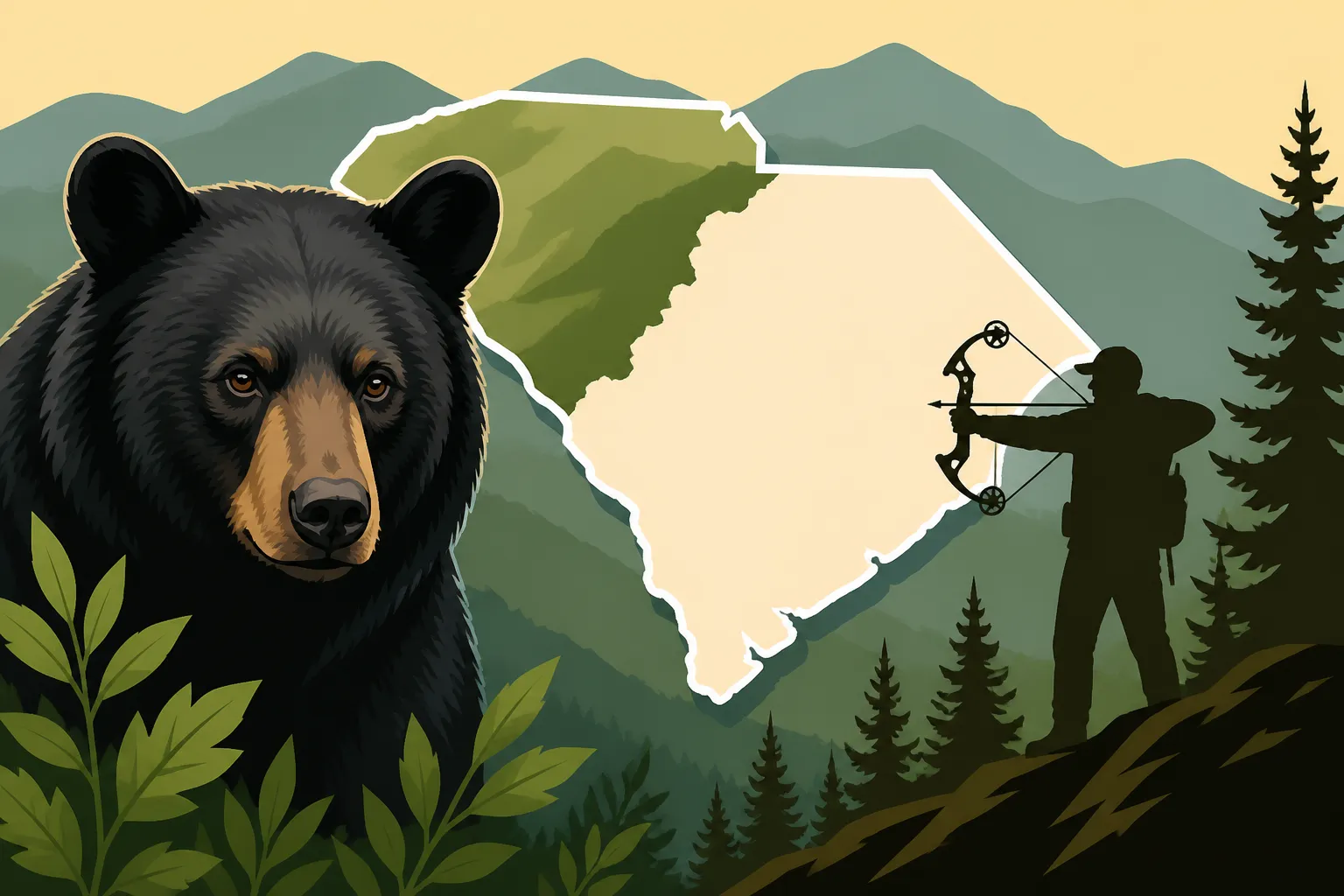
Without a doubt, the Andrew Pickens Ranger District of the Sumter National Forest stands as the undisputed stronghold for black bears in South Carolina. This expansive tract of public land, covering over 90,000 acres primarily in Oconee, Pickens, and a sliver of Greenville counties, offers the perfect blend of rugged topography, dense forests, and minimal human intrusion that bears require. It's the kind of place where you can truly immerse yourself in the wilderness, and the bears appreciate that solitude too. The district’s vast, unfragmented forests provide extensive bedding areas, diverse food sources, and plenty of space for bears to roam without constantly encountering people.
The sheer size of the Andrew Pickens allows for large, healthy home ranges for bears, minimizing conflicts and providing ample opportunity for them to find food and mates. Hunters often focus their efforts here during Hunting Zone 1 Still-Gun Bear Season or Hunting Zone 1 Bear Dog Drives because the district provides consistent opportunities. You'll find specific areas within the district like the Chattooga Wild and Scenic River corridor or the Ellicott Rock Wilderness Area to be particularly remote and bear-rich. When planning your hunt, consider starting your scouting efforts in the most secluded parts of this district; mapping apps like GoHunt can be invaluable for identifying these hard-to-reach spots that bears favor.
Expanding Beyond the Wilderness Areas
While the deep woods of the Andrew Pickens are a haven, it's a common misconception that black bears are exclusively confined to the most pristine wilderness. As their population continues to grow in South Carolina – a testament to successful management efforts – bears are increasingly expanding their range beyond the core forest lands. This means they will venture into smaller, fragmented pockets of woodlands, private timberland, and even the fringes of agricultural or suburban areas in search of easily accessible food. Think of river bottoms that connect larger tracts of timber, or dense draws that lead away from development.
This expansion often occurs when natural food sources are scarce, or during times of high population density, pushing younger, dispersing bears into new territories. You might find bear sign on smaller tracts of land adjacent to the National Forest, or even hear reports of Bear Encounters Around Upstate Cabins in less remote areas. These situations present both challenges and opportunities. For hunters, it means that while the core areas are still your best bet, being aware of these peripheral movements can open up new hunting possibilities. For landowners, it means being bear-aware, securing attractants, and understanding that bears are increasingly a part of the broader Upstate landscape.
Seasonal Bear Movements and Behavior
Black bears are incredibly opportunistic and their movements are largely dictated by the availability of food throughout the year. Understanding these seasonal shifts in their diet and behavior is paramount to successfully locating them, whether you're a hunter or just hoping to catch a glimpse. You can't expect a bear to be in the same spot year-round; their menu changes, and so does their address.
Spring and Summer Patterns
As winter begins to loosen its grip and spring arrives in the Upstate mountains, bears slowly emerge from their dens, often by late March or early April. Initially, their focus is on replenishing lost energy, and they’ll seek out the first available greens: skunk cabbage, tender grasses, and emerging forbs in sun-drenched areas. These early food sources are often found at lower elevations or along south-facing slopes where the ground warms faster. This is also the breeding season, typically peaking in May and June, which can lead to increased movement by both males searching for receptive females and females trying to avoid aggressive males. During this time, bears might travel significant distances.
As summer progresses into July and August, the bears shift their dietary focus to soft mast. Blackberries, blueberries, serviceberries, and wild grapes become critical. You'll often find bears concentrating in areas with these fruiting plants – old clear-cuts, powerline rights-of-way, forest edges, and areas of disturbed ground where sunlight promotes berry growth. During the hottest parts of summer, bears also frequent water sources more often, cooling off in streams and using dense, shaded riparian corridors for travel. Look for muddy tracks along creek beds or scat filled with berry seeds in these areas. This is a great time for Scouting South Carolina Public Land Before Season, using tools like GoHunt to mark potential berry patches or travel corridors.
Fall Foraging and Pre-Denning
The late summer and fall are a period of intense hyperphagia for black bears, meaning they are driven to eat as much as possible to build up fat reserves for their winter denning period. This is when hard mast, primarily acorns from various oak species and hickory nuts, becomes their absolute obsession. Bears will travel extensively to find productive mast crops, often abandoning summer feeding areas if a better acorn supply is available elsewhere. They are incredibly efficient at detecting good mast production and will concentrate heavily in those areas. This is why Hunting Bears Over Natural Mast in the Mountains is such a critical tactic for success in the fall bear season.
Hunters should spend considerable time scouting for mast production in late summer and early fall. Look for different oak species – white oaks drop their acorns earlier and are highly preferred, while red oaks drop later and provide a food source well into the season. Bears will often revisit prime mast areas until the supply is exhausted. If you find a patch of hardwoods dropping heavily, you've likely found a temporary bear hotspot. Their movements during this time can be predictable once a food source is located, often involving travel between bedding areas in thick cover and feeding areas. Understanding Wind and Thermals on an Upstate Ridge is also crucial, as bears will often approach food sources with the wind in their favor, especially when feeding intently.
Scouting and Tracking Upstate Bears
Finding bears isn't just about knowing their general range; it's about identifying the specific signs they leave behind and using modern tools to narrow down your search. Bears are masters of stealth, but they are also creatures of habit, and with a keen eye and a bit of preparation, you can unravel some of their secrets.
Identifying Bear Sign
The most direct way to confirm bear presence is by finding their sign. Tracks are often the clearest indicator. Look for large, five-toed paw prints, especially in soft earth near water, mud, or along trails. A bear's hind foot is surprisingly similar to a human's, but the tell-tale claws and general shape will distinguish it. Scat is another excellent clue, and its contents can tell you what a bear has been eating. In spring, it might be green and grassy; in summer, full of berry seeds; and in fall, packed with acorn fragments. Fresh scat that is still moist and warm is a strong indicator of recent activity.
Beyond tracks and scat, bears leave other compelling evidence. Look for claw marks on trees, especially on softer bark like pine or beech, often from climbing or stretching. Rub trees, where bears rub their backs against a specific tree, leaving hair and a distinctive odor, are also common, particularly during breeding season. Overturned rocks or logs, disturbed ant hills, and torn-up stumps are all signs of a bear foraging for insects. When you encounter these signs, don't just note them; try to piece together a story. Which way was the bear heading? How fresh does the sign look? Is there a pattern to its feeding?
Utilizing Technology and Local Knowledge
In today's hunting landscape, technology can be a powerful ally in your scouting efforts. Satellite imagery and topographic maps, readily available through apps like GoHunt or the SCDNR's Go Outdoors SC map tool, are indispensable. Use these tools to identify key topographical features like saddles, benches, natural funnels between thickets, and remote creek bottoms that are difficult to access. You can virtually scout large areas, pinpointing potential bedding cover, water sources, and mast-producing ridges before ever setting foot in the woods. Pay close attention to changes in forest type or elevation lines that indicate prime habitat.
However, don't underestimate the power of local knowledge. Talking to forest rangers, local landowners, or even other seasoned hunters can provide invaluable, real-time information about recent bear sightings, known travel routes, or areas with particularly good mast crops in a given year. The SCDNR also tracks bear activity and harvest data, which can give you a broader understanding of population hotspots. While you might not get a specific stand location, these conversations can help you focus your efforts on the most promising areas. Combining your technological scouting with boots-on-the-ground observation and local insights will significantly increase your odds of success.
Bear Population Dynamics and Management
The presence of black bears in South Carolina, particularly the thriving population in the Upstate, is a testament to successful wildlife conservation. It wasn't always this way, and understanding the population dynamics and the state's management strategies can offer a fuller picture of these amazing animals.
South Carolina's Growing Bear Population
It’s truly a success story when we talk about South Carolina's Black Bear Population. Historically, black bears were nearly extirpated from much of the state due to habitat loss and unregulated hunting. However, conservation efforts, habitat recovery, and responsible management by the South Carolina Department of Natural Resources (SCDNR) have allowed the Upstate bear population to rebound impressively. Today, the Blue Ridge mountains and associated foothills hold a robust and increasing number of bears, estimated to be in the hundreds, if not over a thousand. This is Why the Upstate Holds the Most Bears is a common question with a clear answer: suitable, expansive habitat.
This growth isn't just confined to the most remote wilderness either; it's why we're seeing bears venture more frequently into areas they haven't occupied in decades. Factors contributing to this success include protected lands like the Sumter National Forest, which provides huge tracts of undisturbed habitat, and state regulations that ensure sustainable harvest levels. While the coastal population of bears exists, it's significantly smaller and more isolated, making the Upstate the true hotspot for these animals in our state. The sight of a black bear is no longer a rare event in the mountains; it’s becoming increasingly common, thrilling for many, and sometimes a challenge for residents.
Conservation and Hunting's Role
The health and continued growth of South Carolina's black bear population are intricately linked to ongoing conservation efforts, and carefully regulated hunting plays a significant role in this management. The SCDNR utilizes hunting seasons, specific bag limits, and designated zones (like South Carolina's Two Bear Hunting Zones) to manage the bear population sustainably. Hunting helps to control numbers in areas where they might overpopulate, reduce conflicts with humans, and generate vital data for biologists to monitor the health and trends of the population. Every bear harvested legally provides crucial information that helps the SCDNR make informed decisions for future management.
For hunters, participating in the bear season is not just about the pursuit of an incredible game animal; it’s also contributing directly to conservation. When you obtain a bear tag and report your harvest, you are supporting the data collection that helps ensure a healthy bear population for generations to come. The season dates and rules, such as those for the Andrew Pickens Ranger District Bear Hunting, are carefully set based on scientific data to ensure that harvest levels are appropriate and do not negatively impact the overall population. It's a balance of opportunity and responsibility, allowing hunters to experience the thrill of hunting these majestic animals while actively supporting their long-term survival in South Carolina.
Upstate Bear Habitat & Behavior Summary
| Primary Range | Andrew Pickens Ranger District (Sumter National Forest) and surrounding Blue Ridge Escarpment foothills. |
|---|---|
| Key Habitat Features | Steep ridges, deep valleys, dense rhododendron/mountain laurel thickets, rocky outcrops, perennial streams. |
| Dominant Forest Types | Mature hardwood forests (oak, hickory), mixed pine-hardwood, regenerating clear-cuts. |
| Spring Food Sources | Green shoots, grasses, forbs, leftover mast, emerging plant growth. |
| Summer Food Sources | Soft mast (blackberries, blueberries, wild grapes), insects. |
| Fall Food Sources | Hard mast (acorns, hickory nuts) – critical for pre-denning fat accumulation. |
| Typical Bear Sign | Five-toed tracks, scat (contents vary seasonally), claw marks on trees, rub trees, overturned rocks/logs, disturbed ant hills. |
| Scouting Aids | Topographic maps, satellite imagery (GoHunt app), local knowledge from rangers/landowners, SCDNR harvest reports. |
| Population Trend | Growing and healthy, expanding beyond core wilderness areas into adjacent private lands and suburban fringes due to successful conservation. |
Disclaimer
Please remember that hunting regulations and wildlife management practices can change. Always consult the latest South Carolina Department of Natural Resources (SCDNR) regulations manual and official publications before planning any hunting trip. This article is for informational purposes only and should not replace official state guidelines.