Hunting a Ridge-Top Saddle for Rutting Bucks
There's nothing quite like the excitement of the deer rut in South Carolina, but for many hunters, knowing where to intercept those highly active bucks can feel like trying to find a needle in a haystack. Ridge-top saddles offer one of the most consistently productive ambush points during this critical period, acting as natural funnels that rutting bucks often can't resist. This guide will walk you through understanding, scouting, and effectively hunting these prime locations.
Understanding Ridge-Top Saddles and Their Appeal to Rutting Bucks
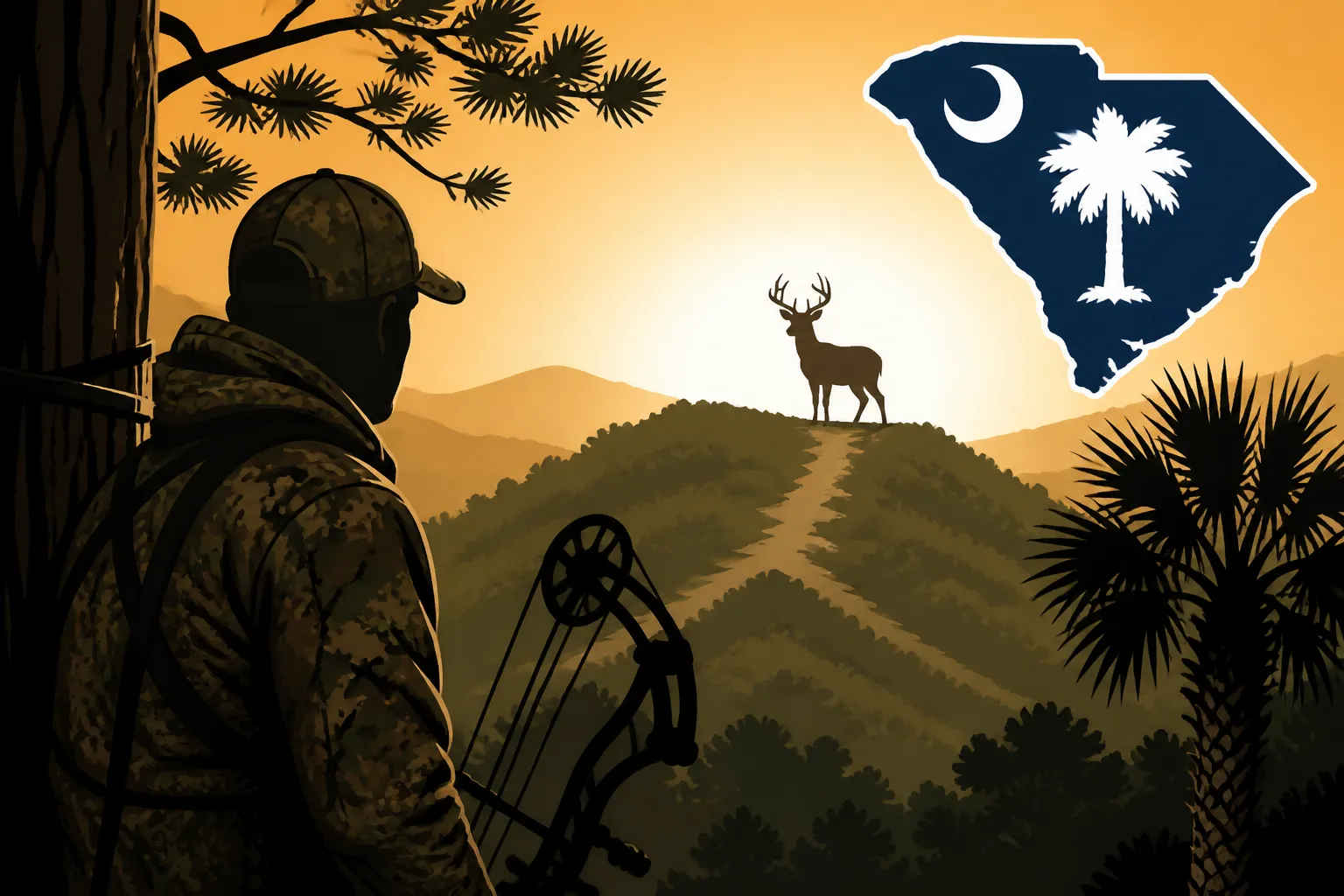
When we talk about a "ridge-top saddle," we're not talking about something you'd put on a horse! In hunting terms, a saddle is a dip or low point in a ridge line between two higher elevations. Imagine a mountain range or a long, undulating ridge in the Piedmont region of South Carolina; a saddle is that strategic depression where the ridge briefly drops before rising again.
These seemingly innocuous dips are absolute magnets for deer, especially mature bucks during the rut. Think of it from a buck's perspective: he wants to cover ground efficiently, smell for does, and avoid expending unnecessary energy. Crossing over a saddle is much easier than climbing over the highest point of a ridge or walking all the way around it in a valley. This natural topography creates a "pinch point" – a place where deer movement is concentrated into a smaller area.
During the rut, bucks are constantly on the move, scent-checking for receptive does. They'll often cruise these ridge lines, using the prevailing wind to their advantage, searching for that tell-tale sign. A saddle provides a perfect crossroads: does moving between bedding areas and feeding grounds will often utilize these easy crossings, and bucks know it. They’ll also use them to navigate from one drainage or valley to another without descending all the way to the bottom and then climbing back up. This makes a saddle an interstate highway for deer, funneling them right past your stand.
Beyond simply being an easy travel corridor, saddles often feature slightly different vegetation or cover types due to their unique drainage and sun exposure. This can lead to small pockets of preferred browse or thicker bedding cover, further increasing deer activity in the immediate vicinity.
Scouting and Locating Promising Saddle Locations
Finding the right saddle isn't about blind luck; it's about strategic scouting, both from the comfort of your home and with boots on the ground. You want to identify saddles that show consistent use.
Map Reconnaissance with Topographical Tools
Your first step should always be with a good topographical map or a hunting app like GoHunt. These tools are invaluable for identifying ridge lines and the dips that define saddles. Look for areas where contour lines pinch together and then spread apart, indicating a natural funnel. Pay close attention to public lands like the Sumter National Forest or Francis Marion National Forest, where these features are abundant.
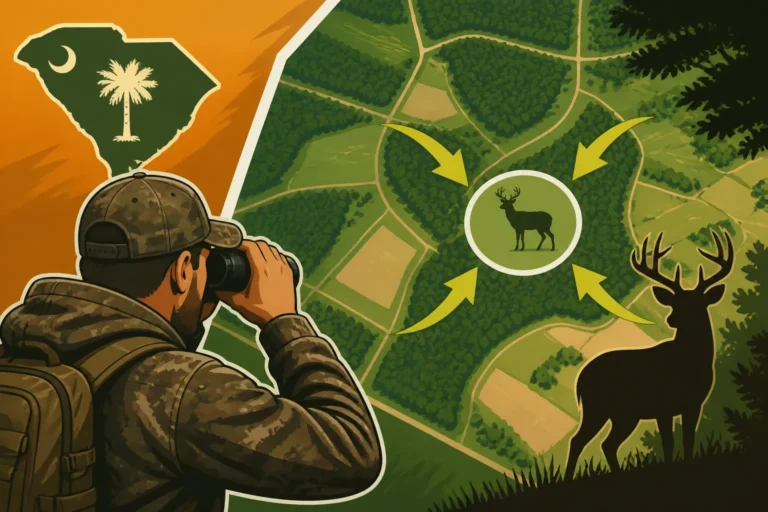
When you're studying the map, don't just look for a single saddle. Look for chains of saddles along a long ridge. Deer will often utilize several of these as they traverse a larger area. Also, consider how these saddles connect different types of terrain – a saddle that connects a thick bedding area on one side to a prime feeding area on the other is a gold mine. GoHunt's satellite imagery allows you to overlay topo lines, giving you a comprehensive view of the terrain and helping you visualize potential travel corridors. You can also look for subtle clues like logging roads or old clear-cuts that intersect or run parallel to ridges, sometimes inadvertently creating even stronger funnels.
Ground Scouting for Fresh Sign
Once you've pinpointed potential saddles on your map, it's time to hit the woods. This is where you confirm your theories and gather crucial real-time intelligence. When Scouting South Carolina Public Land Before Season, look for well-worn deer trails converging in the saddle. Deer are creatures of habit, and during the rut, those habits intensify.
Scrutinize the trees and ground for fresh rubs and scrapes. Bucks, especially rutting ones, leave a lot of sign. A saddle with multiple rub lines running through it, or an active scrape line nearby, tells you that bucks are not just passing through, but are actively checking the area for does. Pay attention to the size and freshness of these signs. Larger rubs on bigger trees often indicate a more mature buck is in the area. Look for tracks in soft dirt or mud, especially if they’re fresh. An app like GoHunt can help you mark these spots so you can return to them later.
Remember to consider the prevailing wind. On a ridge, wind currents can be tricky. Spend some time observing how the wind flows through the saddle. Often, a saddle will create its own unique wind eddy or swirl, which you'll need to account for in your stand placement. This is crucial for successful Hunting the Rut in the Upstate Zone or any other zone, as bucks rely heavily on their nose. A slight change in elevation or vegetation can cause the wind to do strange things, so don't just assume a straight path.
Strategic Setups for Hunting a Ridge-Top Saddle
Setting up correctly in a saddle is paramount. Your goal is to be invisible, scentless, and positioned for an ethical shot at a moving target. This requires careful consideration of wind, access, and stand type.
Wind Direction and Entry/Exit Routes
The wind is your most critical factor. Bucks will nearly always approach a saddle with the wind in their face, allowing them to scent-check for predators or receptive does downwind. This means you need to position yourself so your scent is blowing away from where you expect the deer to approach. This often means setting up on the downwind side of the saddle, facing into the wind. This puts your scent blowing safely behind you.
Always plan your entry and exit routes meticulously. Deer in saddles are often on high alert. You don't want to walk through the exact area you plan to hunt, disturbing the ground or leaving excessive scent. Approach from a direction that keeps you concealed and downwind of the primary travel corridors. Sometimes, this means taking a longer, roundabout route to get to your stand. Use natural cover like creek beds, ditches, or thick timber to mask your movement. Learning about Wind and Thermals on an Upstate Ridge can be particularly helpful here, as they often dictate deer movement patterns.
Treestand Versus Ground Blind Placement
Both treestands and ground blinds can be effective in saddles, each with its own advantages.
Treestands: A well-placed treestand offers an elevated vantage point, which can be crucial for seeing deer earlier and providing better shot opportunities over varying terrain. When choosing a tree, look for one that provides good cover (e.g., a pine tree with thick limbs or a hardwood with heavy canopy) and offers clear shooting lanes into the most active parts of the saddle. You’ll also want to consider the sun's position throughout the day to minimize glare and keep yourself in shadow. For example, in areas like the Francis Marion National Forest, knowing Treestand Setups in Francis Marion National Forest involves understanding the specific tree species and cover.
| Feature | Treestand | Ground Blind |
|---|---|---|
| Visibility | Excellent, elevated view, can see over brush. | Limited to eye-level, depends on clearing. |
| Scent Control | Better, elevated scent dispersal. | Can be good if sealed, but ground scent lingers. |
| Concealment | Requires good tree cover, breaking up silhouette. | Excellent once brushed in, full body concealment. |
| Mobility | Less mobile, takes time to set up and take down. | Can be mobile if lightweight, quick setup. |
| Comfort | Can be less comfortable for long sits. | Often more comfortable, especially in bad weather. |
| Shot Angle | Steeper, downward angle, good for vital shots. | Eye-level, horizontal shot, requires clear lanes. |
| Public Land Use | Often requires specific hang-on or climbing types. | Easier to set up discreetly. |
Ground Blinds: If you prefer to keep your feet on the ground or lack suitable trees for a stand, a ground blind can be an excellent option. The key is to brush it in thoroughly so it blends seamlessly with the surroundings. Pay attention to game trails and create shooting lanes before the season, if possible, without leaving too much scent. Ground blinds offer excellent concealment and warmth during colder weather, which can be a real plus during a long rut hunt. For tips on deployment, consider Using a Ground Blind on South Carolina Public Land. Ensure it's not directly on a major trail, but slightly off to the side, allowing you to observe movement without being directly in the path.
Calling and Decoying Strategies in a Saddle
The rut is a prime time to incorporate calling and decoying, and a saddle can amplify their effectiveness by concentrating deer movement.
Effective Calling Techniques
During the peak rut, bucks are actively searching for does, and they're often willing to respond to calls. In a saddle, where sound can travel effectively along the ridge, your calls can carry a good distance.
Rattling and Grunting: These are your bread and butter during the rut. A saddle is a natural place for bucks to encounter each other, so the sounds of two bucks fighting or a buck grunting at a hot doe can be incredibly realistic. Start with softer calls, especially if you suspect deer are close, and gradually increase the volume if you don't get a response. For example, Rattling Volume in Thick Pine Cover needs to be adjusted; in a dense South Carolina pine plantation, softer rattles might be more appropriate than crashing antlers. Similarly, when using Grunt Calls in Mature South Carolina Timber, vary the intensity and duration to mimic different scenarios. Don't overdo it – short, intense sequences followed by long periods of silence are often more effective. A lot of seasoned hunters use GoHunt's forums to discuss calling strategies specific to different phases of the rut.
Doe Bleats and Estrus Whines: Don't forget the power of doe vocalizations. An estrus bleat or whine can often pull a cruising buck into the saddle, especially if he thinks a receptive doe is nearby. Combine these with some light grunting to create a compelling scenario.
Decoy Placement for Maximum Impact
Decoys can be highly effective in a saddle, providing a visual element that reinforces your calls. However, proper placement is crucial.
Visibility: Position your decoy where it's easily visible to deer approaching through the saddle, but not so exposed that it looks out of place. Use natural openings or slightly elevated spots.
Wind and Approach: Always set your decoy upwind of your position, facing away from where you expect the buck to approach. This forces the buck to walk past your stand to scent-check the decoy, bringing him into easy bow or gun range. A buck will almost always circle downwind of a deer decoy to smell it. Knowing this allows you to set up for a broadside or quartering-away shot.
Type of Decoy: A single doe decoy is often sufficient, especially one in an "estruses" or submissive posture. If you want to be more aggressive, a small buck decoy or even a buck and doe pair can work, but be prepared for a more cautious approach from mature bucks. Remember, in heavily hunted areas, deer can become wary of decoys, so choose a realistic, high-quality option. The GoHunt community often shares reviews and tips on which decoys perform best in various hunting scenarios.
Disclaimer
Hunting is an inherently dangerous activity. Always prioritize safety, understand and follow all South Carolina hunting regulations, and ensure you have the proper licenses and permits before heading afield. Be sure of your target and what lies beyond it before taking any shot. The information provided is for educational purposes and should not replace professional guidance or official state regulations.