Working a Fencerow for Late-Season Deer
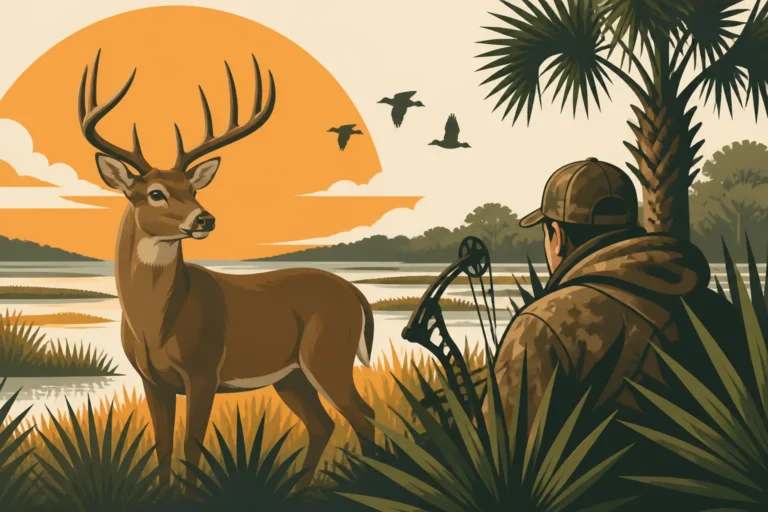
The late season in South Carolina, especially after the first few hard frosts or significant hunting pressure, can feel like a real challenge. You've walked your favorite spots, checked the usual food plots, and it seems like the deer have vanished into thin air. It's frustrating when those early season bucks were so visible, only to become ghosts when you need them most. But don't despair; those whitetails haven't disappeared. They've simply adjusted, seeking out overlooked havens where cover and residual food still exist. This guide will walk you through how to effectively work fencerows, transforming these unassuming linear features into prime hunting grounds for late-season deer in the Palmetto State.
Why Fencerows Become Late-Season Deer Magnets
When the leaves have dropped and the fields are barren, deer are forced to make tough decisions. Their primary concerns shift from abundant food to survival: finding adequate cover, undisturbed bedding, and whatever scraps of nourishment remain. This is where fencerows, often dismissed as mere property markers, suddenly become invaluable. They offer a unique blend of security and sustenance that deer crave when other options dwindle.
The Cover and Concealment Advantage
Imagine the typical South Carolina landscape in December or January. Hardwoods are bare, pine plantations might be thick but uniform, and open fields offer no sanctuary. A fencerow, however, often hosts a chaotic mix of briars, honeysuckle, saplings, and mature trees that have been allowed to grow wild. This dense, unkempt vegetation provides an unparalleled sense of security for deer. They can move along these natural corridors, staying hidden from view and feeling protected. A thick fencerow acts as a visual and sometimes even scent barrier, allowing deer to travel, browse, and even bed down without feeling exposed. I've seen deer melt into a seemingly thin strip of brush along a fence line, only to reappear yards later, completely undetected by casual observation. This cover is particularly vital on smaller private tracts or areas bordering open agricultural fields where deer are constantly under pressure. It's their safe highway.
Persistent Food Sources and Edge Habitat
Beyond just cover, fencerows are often goldmines for late-season food. Think about it: they are usually neglected areas where various plants are allowed to flourish. You might find remnants of crops that were missed by the harvester, such as a few overlooked soybeans or kernels of corn. But more importantly, fencerows provide access to natural browse like green briar, honeysuckle, and various woody stems that still hold nutritional value. These plants might not be glamorous, but they are crucial energy sources when acorns are long gone and most green vegetation has frosted over.
Furthermore, fencerows are prime examples of edge habitat. They represent the transition zone between different environments – say, a dense woodlot and an open field, or two different types of timber. Deer are creatures of the edge, and these linear features amplify that preference. They can stage in the thicker cover of the fencerow before venturing out into a field at dusk, or retreat into its safety after feeding. When scouting, pay close attention to where these fencerows intersect other habitat types or lead to known bedding areas. Tools like GoHunt can really help visualize these transitions and identify potential hot spots from an aerial perspective. Identifying these transition points is key to understanding Late-Season Food Sources for South Carolina Whitetails and predicting deer movement.
Scouting Fencerows for Active Deer Sign
You can't just walk up to any old fencerow and expect success. Effective late-season hunting demands precise scouting. The goal is to find the fencerows that deer are actively using, and more specifically, how they are using them. This means getting on the ground, putting in the miles, and becoming a detective of the deer woods.
Reading Tracks, Rubs, and Scrapes
In the late season, fresh deer sign along a fencerow tells a potent story. Tracks are your first clue. Look for well-worn trails that parallel the fence line or cut across it at specific points. Fresh tracks, especially after a rain or a light frost, indicate recent activity. Pay attention to the size of the tracks – you might be able to distinguish between does and fawns, and the heavier prints of a mature buck. Don't overlook the potential for bucks to create or revisit rubs and scrapes, even in the late season. While the rut might be winding down or over in many parts of South Carolina, especially in the Coastal Zones, some bucks will still rub small trees to release frustration or reassert dominance, particularly if there's a late estrous doe in the area. Look for rubs on saplings along the fencerow, or even small scrapes beneath low-hanging branches. These are indicators that a buck is using that particular corridor.
One common frustration I hear is, "I saw a scrape, but it was old!" While an old, dried-up scrape might not be actively used, a refreshed scrape or a new rub in late December or January is a very strong signal. It means a deer is actively using that line. Remember, Reading a South Carolina Mud for Fresh Deer Movement can be incredibly informative; a muddy section of a fencerow can reveal a treasure trove of fresh prints.
Identifying Key Funnels and Crossings
Fencerows are natural funnels. They dictate deer movement, often channeling deer into predictable pathways. Your job is to find the most used of these pathways. Look for areas where the fencerow bottlenecks, perhaps between two thickets, or where it forces deer to cross an opening. These are high-traffic zones. Also, identify where deer are consistently crossing the fencerow itself. Are there low points in the fence? Are there areas where the vegetation is thinner, creating a natural "gate"? Often, these crossings will show heavier track sign. Deer, like us, are creatures of convenience, and they will take the path of least resistance.
A key aspect of scouting is understanding how deer will navigate the landscape. A fencerow running between a known bedding area and a late-season food source, like a standing cornfield in farm country or a green field planted for deer, becomes an absolute highway. Use your mapping apps like GoHunt to identify these key connections. Look for spots where several fencerows converge, or where a fencerow meets a creek or a logging road. These intersections are often major travel corridors.
Strategic Hunting Approaches for South Carolina Fencerows
Once you've identified a promising fencerow and pinpointed those high-traffic areas, it's time to formulate your hunting strategy. This isn't just about showing up; it's about making smart decisions regarding your setup and how you approach the hunt to maximize your chances in what can be a very challenging time of year.
Stand Placement and Concealment
Your stand placement along a fencerow is critical. Deer are already wary in the late season, and the linear nature of a fencerow means they are often looking down its length. You need to position yourself to intercept them without being detected. Ideally, place your stand about 15-20 yards into the heavier cover adjacent to the fencerow, rather than directly on it. This gives you a little more leeway for movement and helps break up your silhouette. Choose a tree that offers good natural concealment from both directions along the fencerow. If the fencerow is relatively open, consider using a ground blind. Using a Ground Blind on South Carolina Public Land can be a fantastic option, especially when you can brush it in really well.
When considering a treestand, focus on trees that are within bow range of the most active deer trails. Remember, shot opportunities might be fleeting, so be ready. For rifle hunting, your effective range might extend further, but the principle of concealment remains paramount. Always consider your entry and exit routes. You want to be able to get to and from your stand without disturbing the fencerow or nearby bedding areas. This might mean walking a longer, circuitous route. For more general advice, check out Treestand Setups in Francis Marion National Forest, which covers similar principles of concealment and access relevant to diverse South Carolina terrains.
Playing the Wind and Thermals
Wind and thermals are always important, but they become absolutely non-negotiable when hunting fencerows, especially in the late season. Deer rely heavily on their sense of smell for survival, and a swirling wind can easily betray your presence. Before heading out, check the predicted wind direction. You want the wind to blow your scent away from where you expect deer to approach. If the wind is wrong, don't hunt that fencerow that day. It's better to wait for optimal conditions than to blow out a good spot.
In South Carolina, even in late season, thermals can play a significant role, especially during early mornings and late evenings. As the sun rises, warm air begins to lift, carrying scent upwards. In the evening, as the air cools, scent will drop down into low-lying areas. Fencerows often run along slight elevation changes, making them susceptible to these thermal currents. For example, if a fencerow runs along the top of a subtle ridge, morning thermals might carry your scent down into a field, while evening thermals could lift it over any deer approaching from below. Understanding Wind and Thermals on an Upstate Ridge offers excellent insights that are applicable to managing scent in any varied terrain, including the nuanced edges of fencerows. Using a scent control regimen is also critical, especially with the often warmer late-season temperatures in South Carolina. For more tips on adapting to the climate, you might find useful advice in Warm-Weather Sitting Strategy in South Carolina.
Fencerow Hunting Specifics for South Carolina
Hunting fencerows isn't a one-size-fits-all approach. The diverse landscapes of South Carolina demand nuanced tactics. Whether you're in the Lowcountry's flat farmlands or the rolling terrain of the Midlands, understanding the local context will sharpen your edge.
Adapting to Different Fencerow Types and Terrains
South Carolina boasts a variety of fencerow environments, each with its own quirks. In the agricultural regions of the Lowcountry and Pee Dee, fencerows might border large soybean, corn, or peanut fields. Here, deer will often travel the fencerow as a means of unseen entry and exit to these food sources. The key is to find the sections that offer the densest cover for daytime travel and bedding. Further inland, in the Midlands or even the lower Upstate, fencerows might separate woodlots, clear-cuts, or pine plantations. These areas might not offer as much residual crop food, but the fencerows themselves can be rich in browse and provide critical travel corridors between different blocks of cover.
Consider the density of the fencerow itself. A thin, relatively open fencerow might be best for an ambush point if it forces deer to cross at a specific spot. A super-thick, impenetrable fencerow might be more suited for a slower, still-hunting approach, carefully moving along the edges to jump a bedded deer. Some hunters even consider a small, organized deer drive with 3-4 hunters along very thick fencerows that lead into a larger block of cover, forcing deer out towards waiting standers.
| Fencerow Type | Typical Terrain | Strategy Focus | Ideal Stand Placement |
|---|---|---|---|
| Agricultural Border | Flat, open fields (soybeans, corn, peanuts) | Ambush points for deer entering/exiting fields; residual food sources | 15-20 yards into adjacent woodline, elevated |
| Woodlot/Clear-cut Edge | Mixed timber, regenerating clear-cuts | Travel corridors between cover, browse opportunities | Inside heavy cover, overlooking trails |
| Thick Hedgerow | Dense, unmanaged vegetation, briars, saplings | Still-hunting, slow movement along edges; small drives (with caution) | Elevated on the downwind side |
| Sparse Fence Line | Minimal cover, visual barrier only | Funnels at low points or specific crossing areas; quick ambush for moving deer | Concealed ground blind or camouflaged tree |
Utilizing Mapping Tools and Technology
Modern hunting technology has made scouting and planning infinitely easier. Online mapping tools like GoHunt are invaluable for identifying promising fencerows even before you set foot on the property. You can zoom in and identify areas of dense cover, pinpoint where fencerows connect different habitat types, and even mark potential stand locations. Look for fencerows that lead to or from known bedding areas, especially in difficult-to-access pockets.
When you're on the ground, a GPS unit or a smartphone app with offline mapping capabilities is essential. It allows you to mark fresh sign, track your movements, and navigate effectively, especially if you're exploring Hunting Small Private Tracts in South Carolina where boundaries can be less clear. Remember to use these tools to identify areas of significant edge habitat where fencerows meet other cover types. This holistic approach, combining aerial intelligence with boots-on-the-ground scouting, will significantly increase your odds of success during the challenging late season.
Disclaimer
Hunting is an inherently dangerous activity. Always prioritize safety, understand and follow all South Carolina Department of Natural Resources (SCDNR) regulations, and obtain appropriate licenses and permits. Be aware of your surroundings, hunt with a partner when possible, and inform others of your hunting plans. This guide is for informational purposes only and should not replace proper hunter education or professional guidance.